
Review · FLOATING MARKETS
Amphawa and Railway Markets with Boat Ride Group Tour
Banana rides this far from Bangkok are rare—and this one has real drama. You’ll watch the Maeklong Railway Market train approach from the track-side angle most people miss, then move on to Wat Bang Kung and the evening Amphawa Floating Market.
I like how the day balances two kinds of Thai culture at close range: one moment you’re looking at vendors timing their awnings to seconds, and the next you’re staring up at banyan roots holding a temple hall together. I also appreciate that the trip includes a boat ride right from the Amphawa area, so you’re not just shopping and walking in the dark.
One thing to keep in mind: the experience depends a lot on timing. If the market stalls are already closing (especially at Maeklong and Amphawa), it can feel less lively than the photos promise—so go in with flexible expectations.
In This Review
- Key highlights to know before you go
- Bangkok to Ban Kalong: the salt-farm start that sets the tone
- Maeklong Railway Market: the awnings timing game (and how to handle it)
- Wat Bang Kung: banyan roots, Thai boxing statues, and the Ayutthaya link
- Amphawa Floating Market: canal-side seafood and old wooden shopfronts
- The included boat ride: why it’s more than a checkbox
- Price and logistics: is $85.77 worth it?
- Who should book, and who should skip
- Should you book this Amphawa and Maeklong group tour?
- FAQ
- What time does this tour start?
- Where do I meet the group?
- Where does the tour drop you off at the end?
- How long is the tour?
- How many people are in the group?
- What’s included in the price besides the guide?
- Is the railway market entry fee included?
- Is the boat ride only for sightseeing?
- Is dinner included?
- Do I need to buy tickets for the temple or markets?
Key highlights to know before you go
- Maeklong from the moving-train angle: You’ll be watching the famous awning pull-back happen right as the train comes through.
- Ban Kalong’s salt-farm setting: The train station is by traditional salt farms, so the start feels calm and local.
- Wat Bang Kung’s roots + Ayutthaya Buddha: The banyan tree roots physically hold the ordination hall, which houses the Luang Por Nin Manee image.
- Amphawa’s canal-side food scene: Seafood is cooked on boats near the water’s edge, not in a food court.
- A short temple stop, not a long lecture: Wat Bang Kung is quick, focused, and easy to fit into a day trip.
- A hit-or-miss night market vibe: Depending on the day and exact timing, some stalls may be quiet or closing early.
Bangkok to Ban Kalong: the salt-farm start that sets the tone
This is a long day trip with a clear rhythm. You start at Centerpoint Siam Square around 12:00 pm, then you head out by shared air-conditioned vehicle. The total duration is about 7.5 hours, and the drive time is roughly 3 hours of that—so you’re trading an easy Bangkok afternoon for a busier, “go-go” countryside loop.
The first meaningful stop is Ban Kalong Train Station, beside traditional salt farms. That detail matters. It gives you a calmer first mental picture than jumping straight into a crowd scene. You’re not yet at the spectacle; you’re arriving at the working landscape that made the railway-market setup possible.
You’ll also have a short ticketed block here (about 15 minutes). It’s enough time to get oriented, use the moment before things get hectic, and watch how the area functions. Think of it as your buffer—because after this, the schedule is all about arrivals.
More mornings among the paddle boats
- Bangkok: Damnoen Saduak Market and Maeklong Railway Market
★ 4.5 · 26,723 reviews - The Old Siam: Damnoen Saduak and Maeklong Railway Market
★ 4.5 · 10,992 reviews - Half-Day Railway Market and Floating Market Tour in Thailand
★ 4.5 · 3,924 reviews
Maeklong Railway Market: the awnings timing game (and how to handle it)
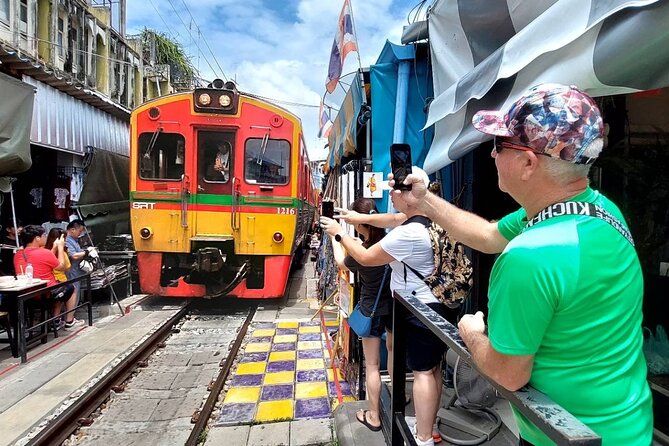
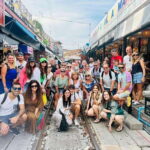
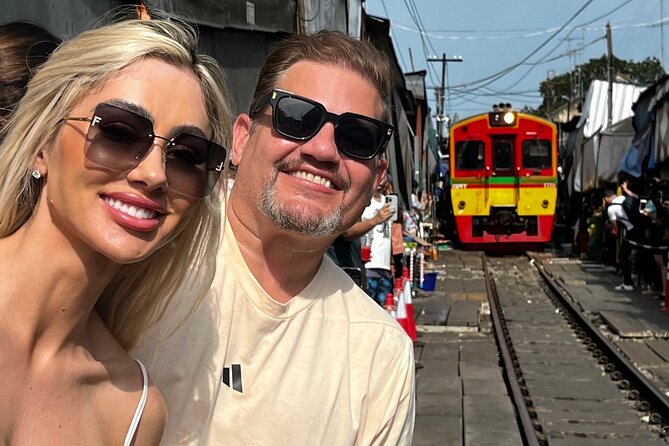
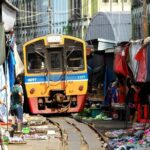
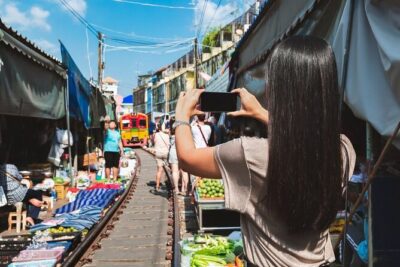
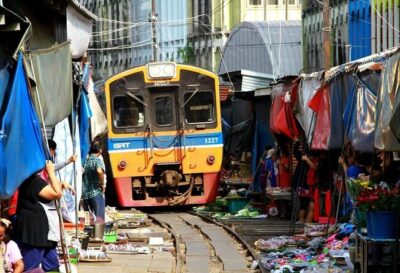
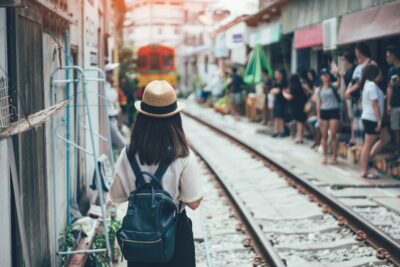
The Mae Klong Railway Market—also called the Hoop Rom Market—is famous for one reason: the market is built directly on an active railway track. That’s why the visual is so strong. Vendors snap their awnings back just before the train passes, and the whole street becomes a temporary open corridor.
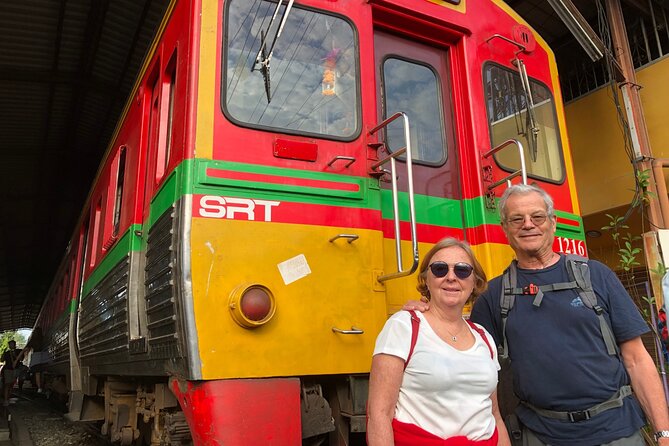
Here’s what’s especially valuable about this tour: you’re not just standing at the edge and guessing when the train will show up. You board the train at Ban Kalong and ride in to the market area. That means you experience the approach from a different angle, and you can actually follow what happens seconds before the train reaches the “busy” zone.
Now the realistic part: timing is everything. Some people have had a day where the train went through, but the market stalls were already winding down—so there were fewer open vendors to see up close. That doesn’t mean the market is fake; it means the vibe can change fast depending on what time you arrive and how quickly things wrap up.
My advice: treat Maeklong like a photo-and-senses stop, not a guarantee of dozens of active counters. You’re going for the sequence—the awning pull-back and the train movement. If you come expecting that plus some browsing, you’ll be happier than if you come expecting a fully packed market the whole time.
The market segment is listed as about 1.5 hours, and admission is free. That’s good value. You get a meaningful window without paying extra entry fees once you’re in.
Wat Bang Kung: banyan roots, Thai boxing statues, and the Ayutthaya link
After the railway scene, you pivot to something slower and more spiritual: Wat Bang Kung. This stop is about 30 minutes, with no admission fee noted for the temple.
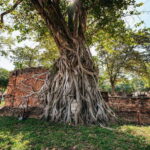
The defining feature is the banyan tree. The roots and branches form the physical structure for the ordination hall. It’s not a decorative idea—it’s a “the tree is part of the building” kind of place. That detail is one of the best reasons to stop here. You’re looking at a Thai heritage story that’s visible in wood and living roots, not just written on a sign.
Inside the ordination hall, the temple houses a golden Buddha image named Luang Por Nin Manee, described as dating back to the Ayutthaya era. Whether you focus on art history or just enjoy the sight, it gives the stop a point of gravity: you’re not only seeing plants and stone, you’re also connecting it to a named era and a specific Buddha image.
The temple grounds also include statues showing ancient boxing stances and warriors. That’s a fun contrast to the railway market’s drama. The day goes from mechanical timing to human tradition—martial poses, Thai identity, and a temple built around living growth.
Potential drawback: because it’s a short visit, you won’t have time for a long, wandering “photo marathon.” If you love temples, you may want to linger—but your schedule doesn’t. The trade is that you keep time for Amphawa later.
Amphawa Floating Market: canal-side seafood and old wooden shopfronts
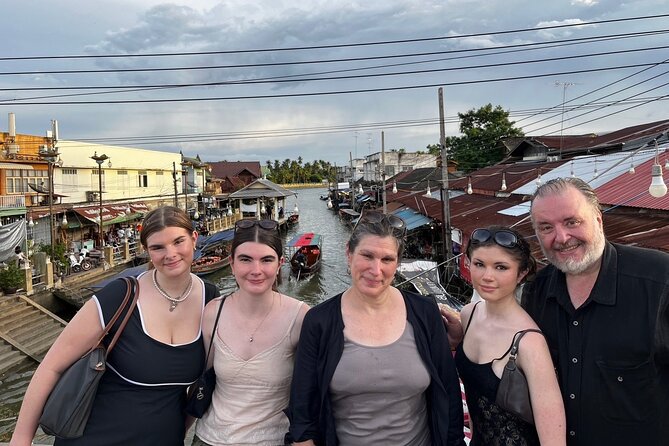
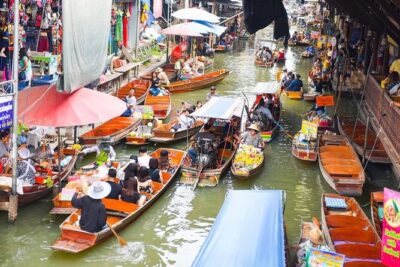
Evening is where this tour starts to feel like Thailand. Amphawa Floating Market is along a canal with old wooden architecture lining the water’s edge. The market atmosphere here is different from the railway market. It’s less about a single spectacle and more about slow browsing and eating as you go.
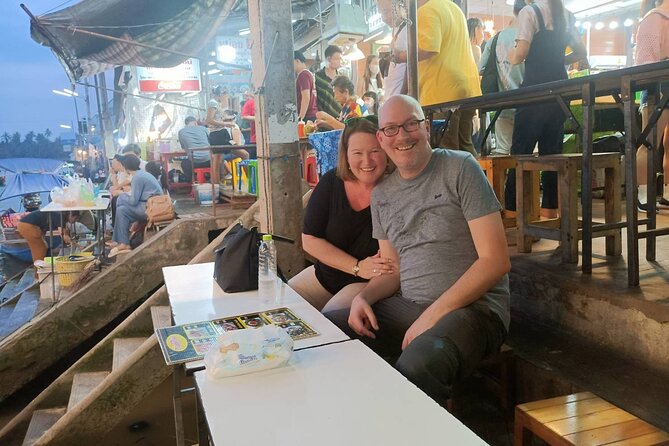
You’ll have about 2 hours at Amphawa, with admission included. This is where the “floating” part becomes practical: merchants cook fresh seafood on rowboats right next to the canal banks. It’s not abstract. You can watch food being prepared and then decide what you want to try.
You can also look for local fruit, including pomelo, which is mentioned as a taste opportunity. That kind of detail helps. It tells you the market isn’t only about snacks; it’s also about local produce and simple pleasures.
A small note for expectation-setting: some people have described the market as over-rated or quieter than hoped, with fewer active stalls at certain times. That’s the risk of any evening market excursion—if you arrive after the busiest stretch, you may see a calmer scene.
My practical tip: give yourself permission to enjoy Amphawa even if you don’t find every vendor blazing with activity. The canal setting and boat-side cooking are the main story. If those deliver, the rest is extra.
More time out on the water
The included boat ride: why it’s more than a checkbox
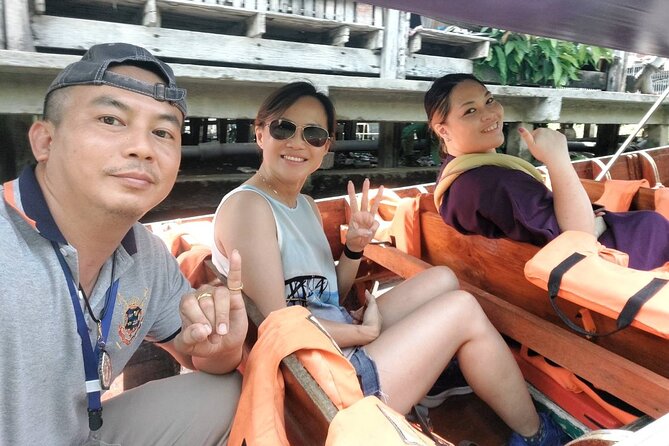
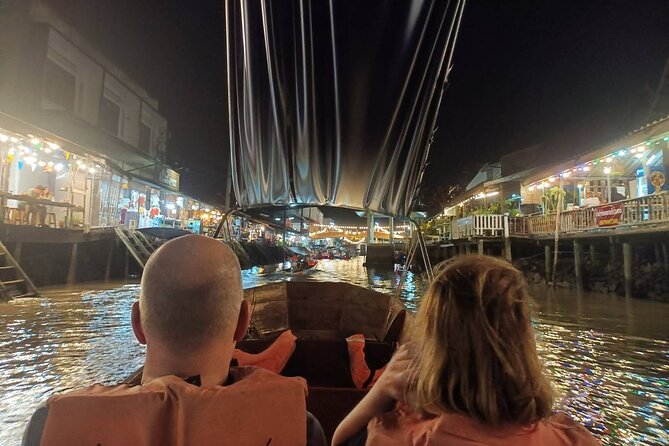
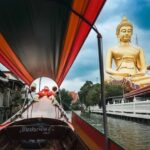
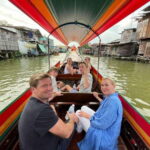
This tour includes a boat ride at the Amphawa market, and that’s not just an add-on. It changes what you can experience. Walking a market gives you one viewpoint. Riding through the waterways gives you a different sense of scale—how these communities sit along the water and move with it.
In one highlighted account, the boat portion included a chance to go out for fireflies, which turned the experience into a memorable nighttime moment. Even if you don’t think about fireflies when you book, the boat ride helps Amphawa feel like a real place, not a staged stop.
Expect this section to be part relaxing, part scenic. It’s the slow-down break after the earlier train spectacle and the short temple visit. If your feet have already had a day, that boat time will feel like a reward instead of another task.
Price and logistics: is $85.77 worth it?
At $85.77 per person, you’re paying for a full structured day. The value comes from what’s bundled, not the attractions alone.
What you get included:
- Shared air-conditioned vehicle
- Professional licensed English-speaking guide
- Train access from Ban Kalong into the Maeklong Railway Market area
- Boat ride at Amphawa
- Watching the train come out from the railway market
- Travel accident insurance
- Admission included for Ban Kalong and Amphawa (and Wat Bang Kung is free; railway market entry is free)
What you don’t get:
- Dinner
- Hotel drop-off (you’re dropped at MBK Center)
That last point matters. If you’re staying far from MBK, you’ll need to handle the final leg on your own. The good news: the drop-off is near BTS National Stadium, and you can take the BTS back to your hotel. Still, it’s not a true door-to-door finish.
Also, this is a group tour with a maximum of 15 travelers, and it’s booked fairly far in advance on average. That often helps keep the day organized, and it reduces the odds of random chaos—though you’re still at the mercy of Bangkok traffic.
Given the transport time and the included guided activities, I think the price is fair if you’re excited by the specific combo: railway-market timing + Wat Bang Kung + Amphawa canal evening. If you’re mainly after one of those three, you might feel the cost more.
Who should book, and who should skip
This tour is a great fit if you:
- Want the Maeklong train-and-market experience from a more active viewing angle
- Like a temple stop that’s short but visually distinct (Wat Bang Kung’s banyan roots)
- Enjoy night markets where food is prepared right near the water
- Prefer a guide to handle the timing so you don’t worry about the logistics
You might think twice if:
- You hate long drive days. With 3 hours on the road, it’s a commitment.
- You expect every stall to be open and every market to feel crowded. Evening markets and railway markets can vary quickly by timing.
- You need dinner included. The plan doesn’t include it, so you’ll be timing your meal either before or after.
Should you book this Amphawa and Maeklong group tour?
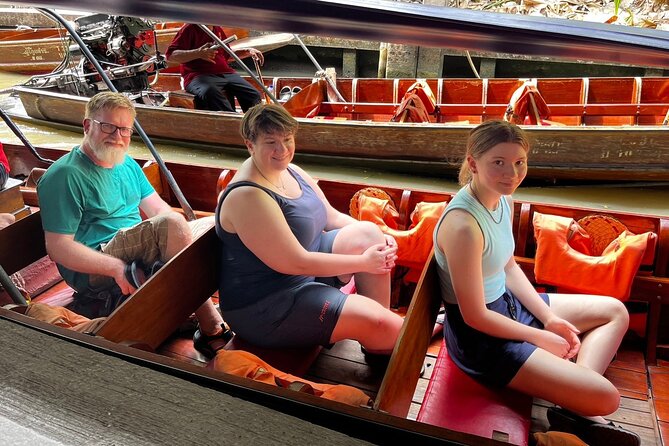
I’d book it if you want a day where the highlights have clear visual payoff: train under awnings, banyan-root temple architecture, and canal-side food with a boat ride. The included guide, transport, and bundled admission make it simpler than piecing it together yourself.
I wouldn’t book it if your main goal is a long, relaxed shopping spree at full-breath market time. The schedule is built around movement and set stops, and timing can affect how lively the stalls feel.
If you’re the type who likes practical surprises—watching how people adapt their market setup to a moving train—this is a fun way to see Thailand beyond Bangkok’s big-city loop.
FAQ
What time does this tour start?
It starts at 12:00 pm.
Where do I meet the group?
The meeting point is Centerpoint Siam Square, 292 Rama I Rd (Pathum Wan).
Where does the tour drop you off at the end?
You’re dropped at MBK Center (near BTS National Stadium).
How long is the tour?
It takes about 7.5 hours total, including around 3 hours of travel time.
How many people are in the group?
The group size is limited to a maximum of 15 travelers.
What’s included in the price besides the guide?
You get a shared air-conditioned vehicle, a boat ride at Amphawa, and admission included for Ban Kalong and Amphawa Floating Market, plus travel accident insurance.
Is the railway market entry fee included?
Entry to the Mae Klong Railway Market is free, and the tour includes your access to see the train coming through.
Is the boat ride only for sightseeing?
The tour includes a boat ride during the Amphawa portion, and it’s part of the evening experience along the waterways.
Is dinner included?
No. Dinner is not included.
Do I need to buy tickets for the temple or markets?
Wat Bang Kung admission is listed as free. Ban Kalong and Amphawa Floating Market admissions are included, and Mae Klong Railway Market entry is free.
More Tours in Bangkok


More Tour Reviews in Bangkok


More Floating Markets

Just In: Fresh Bangkok Reviews

Floating Markets, compared.
 ★ 4.5Damnoen Saduak Market and Maeklong Railway MarketFrom $2526,723 reviews
 ★ 4.5The Old Siam: Damnoen Saduak and Maeklong Railway MarketFrom $3210,992 reviews
 ★ 4.7Train Market & Floating Market with Boat RideFrom $259,547 reviews
 ★ 4.7From Bangkok: Ayutthaya & Ayothaya Floating Market Day TripFrom $486,084 reviews
 ★ 4.5Half-Day Railway Market and Floating Market Tour in ThailandFrom $323,924 reviews
 ★ 4.7Damnoen Saduak, Train Market & Mahanakhon Day TripFrom $232,162 reviews
 ★ 4.4From Bangkok: Damnoen Saduak Floating Market Guided TourFrom $1222,020 reviews
 ★ 4.5Damnoen Saduak Floating Market and Maeklong Railway Market TourFrom $441,588 reviews
Browse the lists this tour appears in