
Review · FLOATING MARKETS
Bangkok: Maeklong Railway Market and Amphawa Floating Market
Train, market, boat, fireflies. That combo is rare.
This Bangkok area day trip is built around two standout Thai market moments: the Maeklong Railway Market where vendors pull back awnings for an oncoming train, and the Amphawa Floating Market with boats threading through the canals for seafood and street snacks. I especially like that it feels hands-on with real vendors selling real things, not just photo stops. The guided stops can also be surprisingly specific, depending on who leads you—names like Toto, Champ, Nok, and Apple show up in the guide lineup—and that can make the day feel more personal than a generic sightseeing loop.
There is one catch: it’s a long day. At around 10 hours, you’ll spend a good chunk sitting in an air-conditioned vehicle, and some timing can feel stretched if you’re very fast-moving. If you prefer a slower pace, plan to treat this like a structured experience rather than a freewheeling market wander.
In This Review
- Key takeaways before you go
- Meeting at Siam Paragon: start smart, not rushed
- Maeklong Railway Market: the retracting-roof spectacle you’ll remember
- The salt farm café stop and the banyan-root temple
- The long road in air-conditioning: how to handle the 10-hour schedule
- Amphawa Floating Market: long-tail boat views and canal life
- Food and souvenirs: what to eat, what to buy, and what to skip
- Fireflies at night: the quiet payoff after the markets
- Price and value: is $48 a fair deal?
- Who should book this trip, and who should rethink it
- Should you book the Bangkok Maeklong and Amphawa day trip?
- FAQ
- How long is the tour?
- Where do I meet the guide?
- What languages are the guides?
- Is roundtrip transportation included?
- Do I get a boat ride at Amphawa?
- Are meals included?
- What should I bring?
- Is hotel pickup available?
- Can I cancel for a refund?
Key takeaways before you go
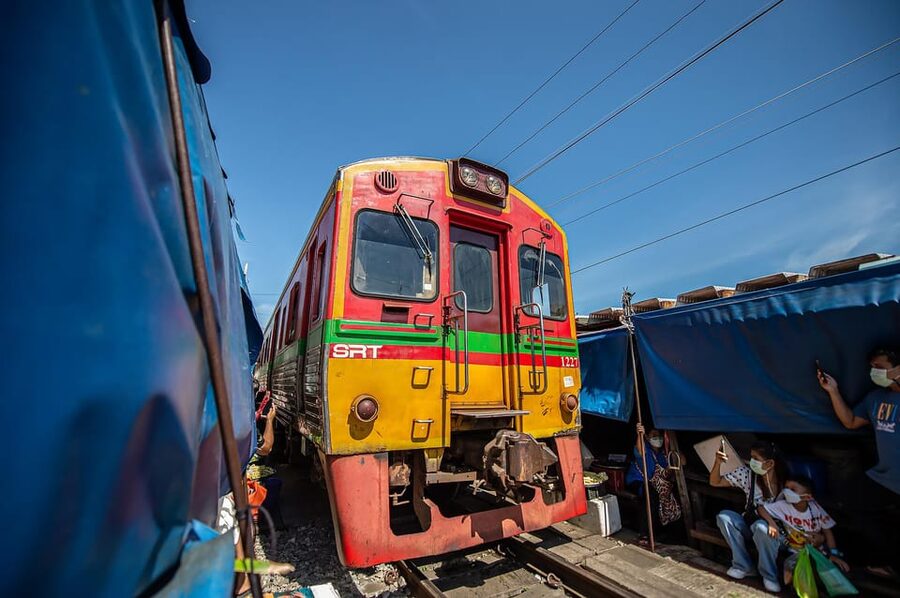
- Maeklong’s train moment: watch stalls and goods get retracted in seconds, right before the train arrives.
- Boat time at Amphawa: you don’t just walk the docks—you ride through the canals with a long-tail boat.
- Local extras included: a stop near a salt farm café and a temple area framed by banyan tree roots add variety beyond the markets.
- Food and shopping are part of the point: street snacks, seafood, and small artisanal crafts are easy to mix in.
- Evening option: the late portion can include a long-tail boat ride for fireflies in the canals at night.
Meeting at Siam Paragon: start smart, not rushed
Most of the day runs smoothly because the check-in is straightforward. You meet your guide at Siam Paragon gate no. 1 (Siam BTS Station exit 5). Arrive 15 to 20 minutes early so you’re not sprinting across a busy mall complex while other people are still finding their group.
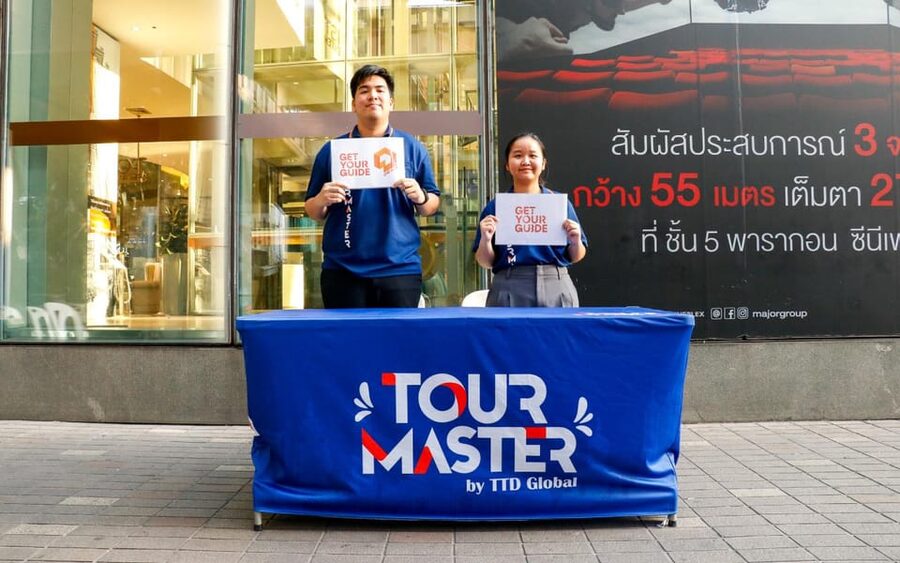
Your guide will be wearing a navy blue T-shirt and holding a GYG sign. If you’re doing hotel pickup (optional), you’ll wait in the hotel lobby about 10 to 15 minutes before the scheduled pickup time. That simple buffer matters—traffic outside Bangkok can turn a “quick transfer” into a slow slide.
Dress for comfort. You’ll be walking short distances, climbing into and out of boats, and hanging around markets where you’ll want your hands free for food and photos. Comfortable shoes beat stylish shoes here.
More mornings among the paddle boats
- Bangkok: Damnoen Saduak Market and Maeklong Railway Market
★ 4.5 · 26,723 reviews - The Old Siam: Damnoen Saduak and Maeklong Railway Market
★ 4.5 · 10,992 reviews - Half-Day Railway Market and Floating Market Tour in Thailand
★ 4.5 · 3,924 reviews
Maeklong Railway Market: the retracting-roof spectacle you’ll remember
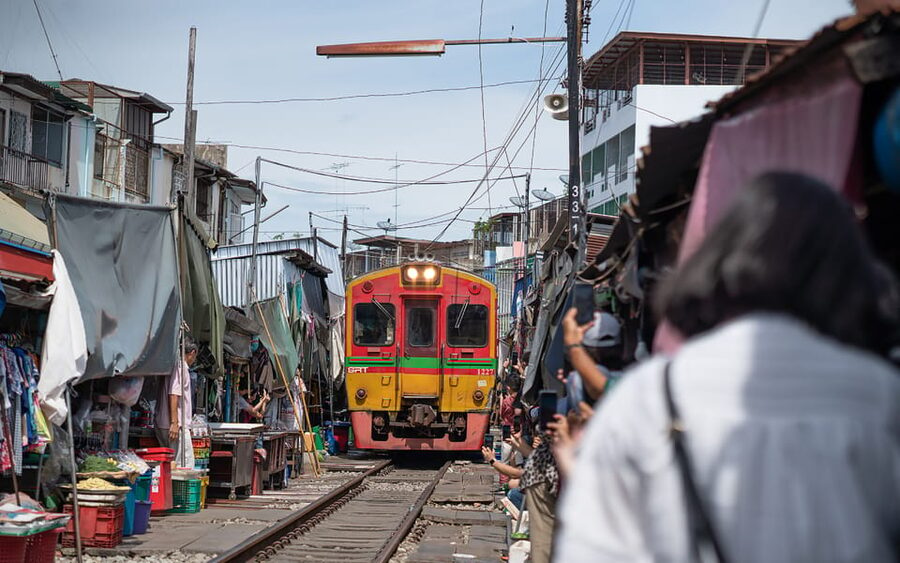
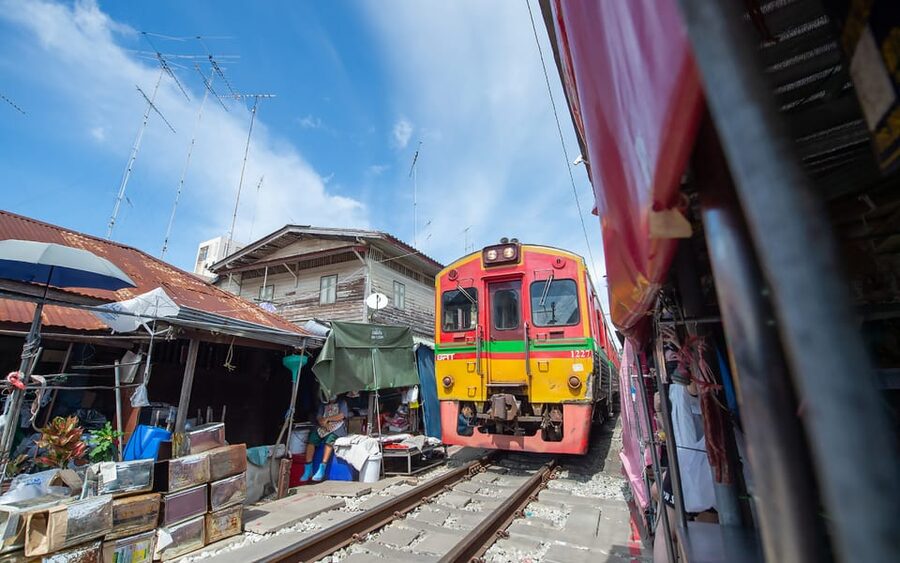
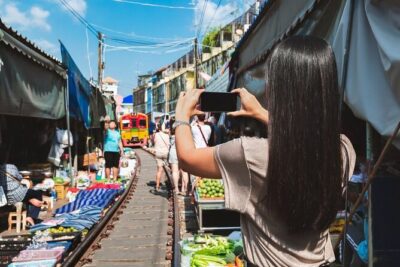
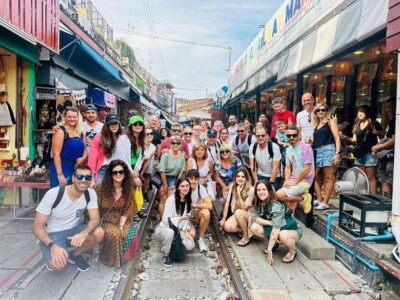
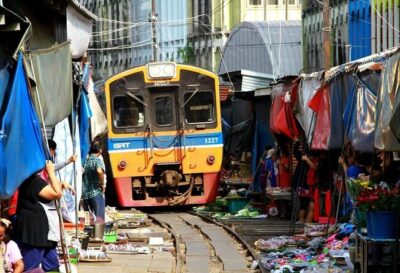
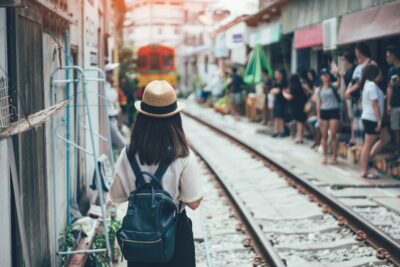
Maeklong Railway Market is one of those places where your brain says no way—until you see it. The market sits on an active railway line, so the “normal” rhythm is interrupted on cue. Vendors retract awnings and move goods out of the way when a train is coming.
What you’ll notice first is how practiced everyone looks. This isn’t chaos; it’s timing. Stalls fold back fast, people move with purpose, and the train passes right through the market corridor. Then, the stalls reset and selling resumes. It’s a street-level lesson in how everyday life and infrastructure share the same space.
Here’s how to make it enjoyable instead of stressful:
- Give yourself room to watch the train arrival from a spot where you won’t block others.
- Don’t try to keep filming right up until the last second. You’ll see the shift when everyone moves—go with it.
- Treat this like a performance that has safety rules. Keep your distance from track areas where you’re not clearly standing.
The best part is that the market isn’t only for watching. You can browse for produce and local goods while you’re there, and you’ll feel the pulse of vendors doing what they do every day.
The salt farm café stop and the banyan-root temple
Between the two big market experiences, the trip adds local texture. One common stop is at a Maeklong salt farm café. In at least some cases, you get a soft drink at that café, which is a nice reset when you’ve been traveling and walking in the heat.
Then there’s a temple stop tucked into a very recognizable setting: a temple area framed by banyan tree roots. The roots form a natural structure, and it’s one of those photo spots that also makes sense in person. It feels less like a planned tourist set and more like nature and worship sharing the same space.
Why I like these in-between stops: they prevent the day from becoming only “markets, markets, markets.” You still get Thai culture, but you also get a breather and a chance to see a different side of the region.
If you’re the type who wants constant narration, you may find the explanations vary by guide. Some guides provide more depth than others, and some keep it brief before leaving time for you to walk on your own. That’s still workable, but it’s good to know.
The long road in air-conditioning: how to handle the 10-hour schedule
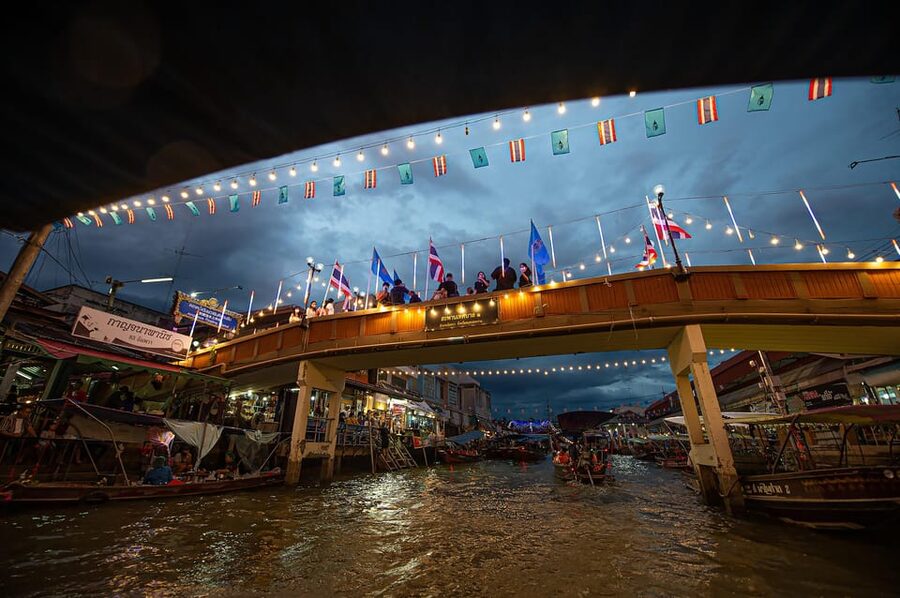
The day is built around roundtrip transportation by air-conditioned vehicle. That’s a big deal in Thailand’s heat, but it also means time passes differently. You’ll leave Bangkok around 11am on at least some departures and can return close to 9:30pm.
If you’re sensitive to long days, plan your energy like this:
- Eat and drink early. You’ll have a later market food moment, but you don’t want to wait until you’re hungry.
- Bring cash so you can pay for snacks, drinks, or meals as needed. Meals aren’t included.
- If you get bored in cars, bring something to do. The stops break up the drive, but there’s still plenty of seated time.
Also, group size can matter. This works as private or small group, so you may have more flexibility with pacing than a huge group tour. Still, a fixed schedule exists to make sure you hit both areas of the day.
Mind the train: other market-on-the-tracks trips

Amphawa Floating Market: long-tail boat views and canal life
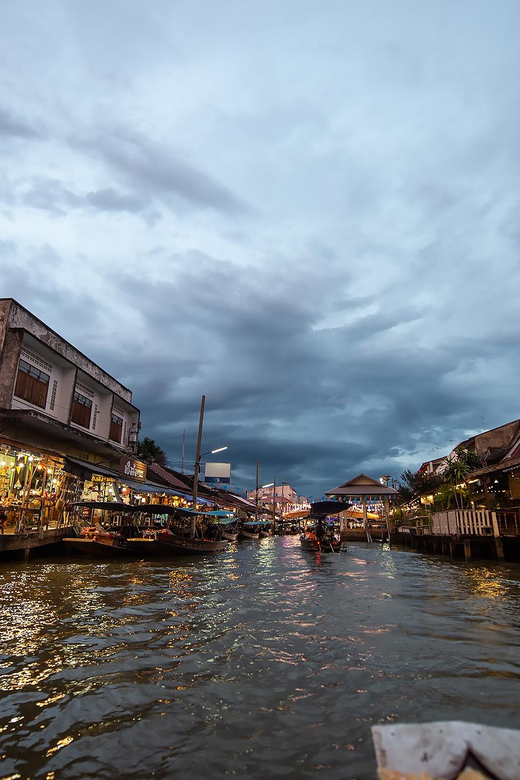
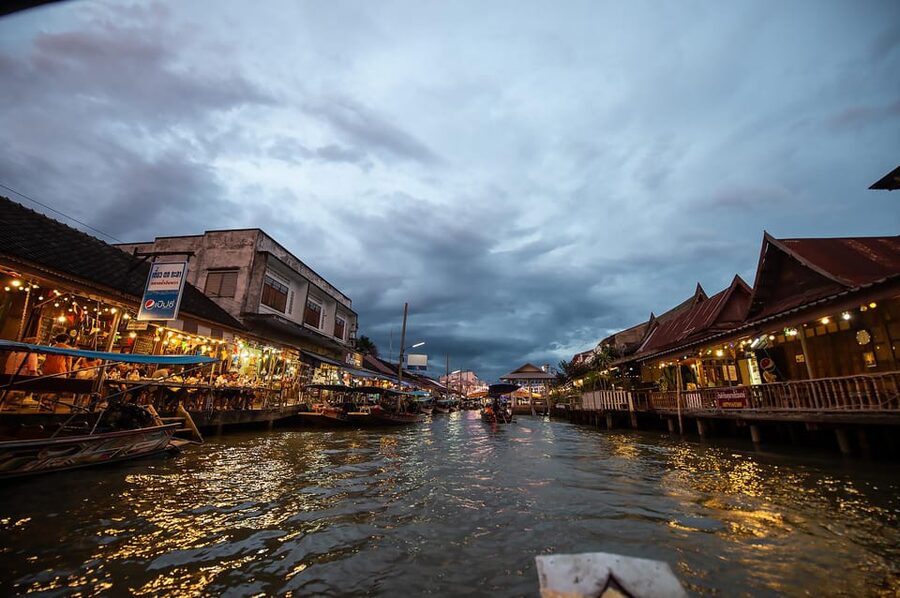
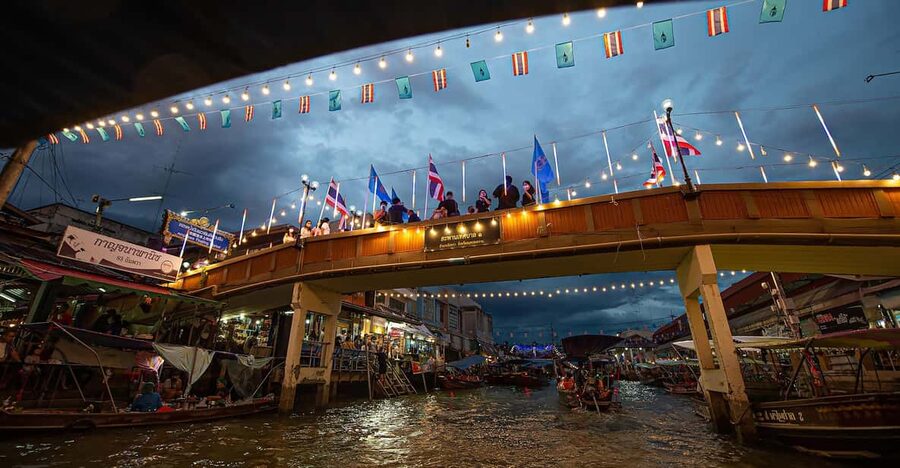
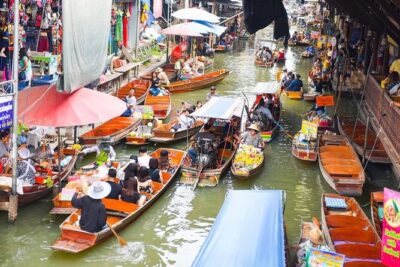
Amphawa Floating Market works better when you accept one thing: it’s not just a “market.” It’s canal life. The floating part happens along waterways, and the vibe is calmer than the intense rail spectacle at Maeklong.
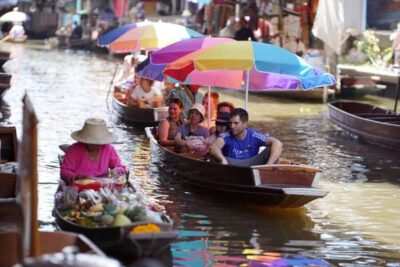
You get a boat ride through the floating market and local living village. On the water, you’ll see how people live near the canals, not just how they sell on the canal edge. Boats pass, vendors call out, and the scene feels like a moving marketplace rather than a static one.
When you’re on the boat, look for two things:
- How vendors set up near their boats and how quickly they switch between selling and navigating.
- The rhythm of the water traffic—there’s a flow to it, and you’ll stop feeling like you’re watching something awkward. It looks natural once you’re there.
When you step off, there’s time to explore on your own too. Amphawa is a great place to practice slow travel: pick one or two foods, buy one small craft, and don’t try to do everything at once.
Food and souvenirs: what to eat, what to buy, and what to skip
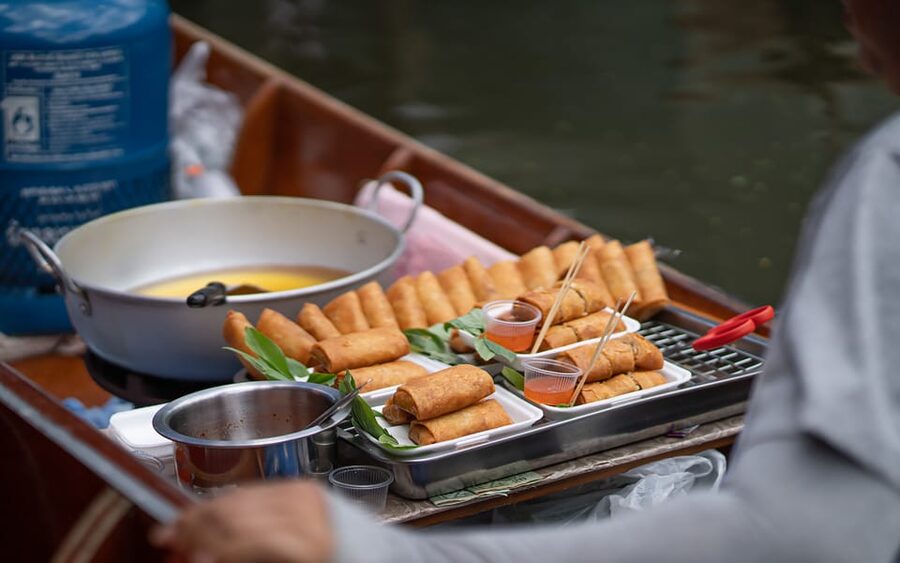
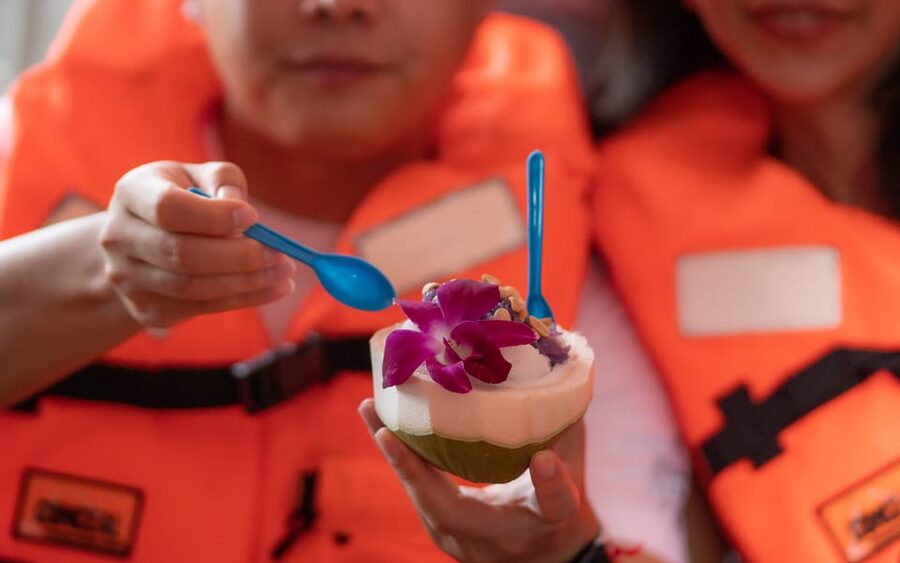
Food is where this day trip turns memorable. You can expect Thai street food and local delicacies, with seafood as a major theme at Amphawa. Curries and coconut-based desserts are common types of flavors you’ll see people ordering and eating.
A few practical notes so you don’t end up with a “passport of regret” snack strategy:
- Choose foods you can eat without a huge mess. It’s a long day and you’ll be moving between spots.
- If you buy something to take away, plan where you’ll store it until you’re done walking.
- For crafts and souvenirs, focus on small items. You’ll move in and out of boats and buses, and bulky purchases become annoying quickly.
Artisanal treasures are part of the promise here. In practice, that usually means you’ll find locally made goods rather than mass-produced souvenirs. The best purchases tend to be the ones that feel practical and light, like small crafts or gifts that fit in a bag.
Fireflies at night: the quiet payoff after the markets
Some departures include an evening segment with a long-tail boat ride to watch fireflies in the canals at night. That detail can be the reason people remember this trip long after the shopping bags are empty.
If you enjoy gentle, low-stimulation experiences—quiet water, soft lights, and a slower pace—this part is worth leaning into. Turn down the phone camera and watch with your eyes for a few minutes first. When you compare what you see with what the camera captures, you’ll understand why you should take it in live.
Even if fireflies aren’t the moment you care about most, the night setting changes the feel of the day. After hours of market energy, Amphawa’s canal calm becomes a breather instead of another busy stop.
Price and value: is $48 a fair deal?
At about $48 per person, this tour can be good value because several costs you’d otherwise pay separately are included:
- Roundtrip AC vehicle transportation
- An official licensed guide (Chinese/English)
- Water and refreshments
- Boat ride through the floating market area and local village
- Travel insurance provided by the operator
Meals are not included, so you should budget extra for lunch and any evening snacks. The day also runs long, so think of it as a guided “transport + access + planning” package, not a free market pass.
Where the value really lands is in the access. Maeklong’s setup and Amphawa’s canal navigation are easier and more meaningful with someone who can keep the day organized and point out what to look for. You also avoid the hassle of coordinating two separate regions on your own.
If you’re already comfortable DIY-ing day trips in Thailand and you hate schedules, you might decide the cost isn’t worth it. But if you want a one-day plan that hits two distinctive markets without the stress, this price point is often reasonable for what you get.
Who should book this trip, and who should rethink it
This experience fits best if you:
- Want a day with two major market styles in one shot: train-market action and canal-market calm
- Like local vendors, street food, and small crafts
- Are okay with a long day and prefer guided timing to figuring it out alone
It may not fit as well if you:
- Need lots of free, unscheduled time. Some guides keep explanations brief and then give you walking time, which can feel generic if you want deeper commentary.
- Get annoyed by long car rides. The 10-hour structure can feel like wasted time if you’re very fast-paced.
Guide quality can also shape your experience. You can encounter different personalities—Toto, Champ, Nok, and Apple are all examples of guides with noticeably positive feedback tied to friendliness and helpfulness. In other words: this is a tour where your guide matters.
Should you book the Bangkok Maeklong and Amphawa day trip?
If you want a clean, guided way to see Maeklong Railway Market and Amphawa Floating Market—plus a boat ride, local stops, and a chance for evening fireflies—then yes, this is the kind of tour I’d put on your short list.
Book it especially if you:
- Like markets but don’t want to plan transport between regions yourself
- Want included boat time rather than only walking docks
- Appreciate local food and small crafts more than check-the-box sightseeing
Skip it if:
- You’re easily worn out by long schedules
- You hate guided explanations and want complete independence
- You prefer meals to be included, since here you’ll pay for food on your own
If you do book, go in with the right mindset: this day is about specific moments—retracting stalls, moving boats, and the night lights—not about staying in one place.
FAQ
How long is the tour?
The duration is listed as 10 hours.
Where do I meet the guide?
Meet at Siam Paragon gate no. 1 (Siam BTS Station Exit 5). Arrive at least 15 to 20 minutes early.
What languages are the guides?
The guide is available in Chinese and English.
Is roundtrip transportation included?
Yes. Roundtrip transportation is included by air-conditioned vehicle.
Do I get a boat ride at Amphawa?
Yes. The tour includes a boat ride through the floating market and a local living village.
Are meals included?
No. Meals and beverages are not included, so you’ll need to pay for your own food.
What should I bring?
Bring comfortable clothes and cash.
Is hotel pickup available?
Pickup is optional. If included for your booking, wait in the hotel lobby 10 to 15 minutes before pickup time.
Can I cancel for a refund?
Yes. You can cancel up to 24 hours in advance for a full refund.
More Tour Reviews in Bangkok



The Market on the Tracks
More Floating Markets
Just In: Fresh Bangkok Reviews


Floating Markets, compared.
 ★ 4.5Damnoen Saduak Market and Maeklong Railway MarketFrom $2526,723 reviews
 ★ 4.5The Old Siam: Damnoen Saduak and Maeklong Railway MarketFrom $3210,992 reviews
 ★ 4.7Train Market & Floating Market with Boat RideFrom $259,547 reviews
 ★ 4.7From Bangkok: Ayutthaya & Ayothaya Floating Market Day TripFrom $486,084 reviews
 ★ 4.5Half-Day Railway Market and Floating Market Tour in ThailandFrom $323,924 reviews
 ★ 4.7Damnoen Saduak, Train Market & Mahanakhon Day TripFrom $232,162 reviews
 ★ 4.4From Bangkok: Damnoen Saduak Floating Market Guided TourFrom $1222,020 reviews
 ★ 4.5Damnoen Saduak Floating Market and Maeklong Railway Market TourFrom $441,588 reviews
Browse the lists this tour appears in