
Review · PHOTOGRAPHY SESSIONS
Bangkok Photography Masterclass – Private Photography Lesson
Bangkok is a camera magnet. This private Bangkok Photography Masterclass turns iconic streets into a practical shooting lesson, with a local instructor guiding your composition and photo choices on the move. I also like the day or night options, because Bangkok looks completely different after sunset and your practice should match the mood.
The best part is the flexibility: you’re not stuck with a rigid script, and you get personal attention built around your skill level. One thing to consider is timing risk: one recent booking was canceled close to the meeting time because the photographer fell ill, so if it’s your last-day plan, build in some backup.
In This Review
- Key things that make this masterclass work
- Why Bangkok Street Photos Feel Different With a Coach
- Private Lesson Value: 3 Hours of Personal Attention
- Day vs Night: Pick the Bangkok Mood You Want to Practice
- Chinatown and Erawan Shrine: Learning Street Patterns and Sacred Details
- Benjasiri Park: A Break for Framing and Focus
- Temple of Dawn (Wat Arun) and the Giant Swing: Use Landmarks Like Anchors
- Train Night Market Ratchada and Night Markets: Shooting Under Real-Life Lights
- So/ Spa Stop: A Photo Break That Helps You See What You Captured
- How the Instruction Usually Shows Up (Composition, Not Just Tips)
- Location Loop: A Smart Way to Cover More Than One Bangkok Side
- Meeting Point and Timing: Where to Start, and Why It Matters
- Price Check: Is $160 Worth It?
- Should You Book This Bangkok Photography Masterclass?
- FAQ
- How long is the Bangkok Photography Masterclass?
- Is the lesson private?
- What does the tour cost?
- Can I choose a daytime or nighttime session?
- Where does the tour take place?
- What are the listed stops during the experience?
- What is included in the price?
- Where do I meet the guide?
- Is there a mobile ticket?
- What is the cancellation policy?
Key things that make this masterclass work
- Private, skill-level coaching: your instructor adjusts the lesson so you’re not just taking pictures, you’re learning how to make them better.
- Chinatown + temples + night markets: you get variety in lighting and subjects, instead of only one style of scene.
- Day or night photo focus: pick what matches your interest, from daytime street detail to nighttime glow.
- Wat Arun and the Giant Swing area: these are strong composition anchors for both wide shots and tight details.
- Train Night Market Ratchada for evening practice: a concentrated photo setting when Bangkok’s lights come on.
- Free bottled water and a mobile ticket: small, useful touches that keep the lesson comfortable.
Why Bangkok Street Photos Feel Different With a Coach
Bangkok’s streets give you endless photo options, but that can also make you freeze. This masterclass is built to prevent that, using a local instructor to help you make choices fast—what to shoot, what to leave out, and how to frame it so the image actually says something.
I like that the lesson is about skills, not just sightseeing. You’re heading through neighborhoods like Koh Ratanakosin and Thonburi (plus Chinatown), which means you’ll practice photography across different textures: storefronts and crowds, shrine details, river-area landmarks, and nighttime spectacle.
The other reason this works is pace. Three hours is long enough to improve, but short enough that you can stay alert and not waste time. If you’ve been taking lots of photos but feel like your pictures don’t match what you saw, this format targets that gap.
More frames of the city to take home
- ️ Bangkok Private Instagram Tour: All-Inclusive
★ 5.0 · 289 reviews - Bangkok: Nemo Island Day Trip with Drone Photos and Lunch
★ 4.5 · 90 reviews - Photoshoot in Thai Costume
★ 4.8 · 65 reviews
Private Lesson Value: 3 Hours of Personal Attention
This is a private photography lesson, so the instruction can match you instead of asking you to keep up with a group. That matters in photography, because the “right” approach changes with your camera (phone or camera), your comfort level, and how you like to compose.
At $160 per person for about three hours, the value comes from what you’re really buying: feedback while you’re shooting. General tours show you where to go. A coach-led lesson helps you repeat the results—so your next day of independent exploring gets better too.
It’s also customizable. You can choose daytime or nighttime, and the route and focus can adapt to your group. That flexibility is a real advantage in Bangkok, where lighting, crowds, and even the mood of the street can change hour to hour.
Day vs Night: Pick the Bangkok Mood You Want to Practice
Bangkok at night is different in a way you can feel in your photos. Shadows are deeper, highlights are brighter, and neon-colored reflections start showing up more often. The night option is designed for that: the focus is on honing night photography skills and encouraging your own expression.
Daytime, on the other hand, gives you clarity—signs, temple textures, and faces become easier to read. If you want to work on clean framing, architectural details, and street storytelling without the pressure of low light, a daytime session makes sense.
What I find practical is this: pick the session that matches the kind of photos you want to take after the tour. If you’re planning to spend your evenings roaming anyway, learning night techniques here gives you a head start. If you prefer temple-and-market shots earlier in the day, daytime helps you learn composition without fighting darkness.
Chinatown and Erawan Shrine: Learning Street Patterns and Sacred Details
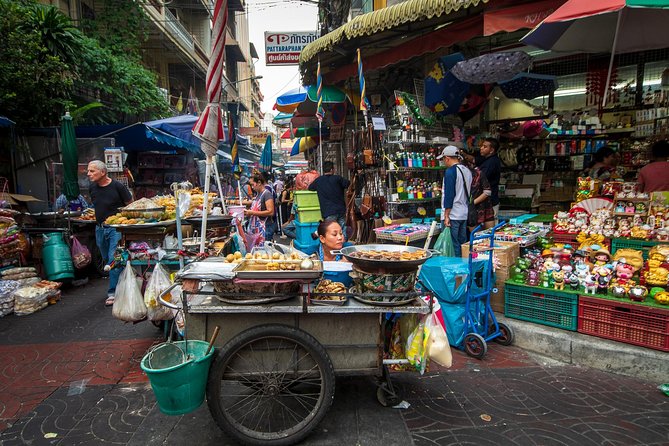
Your lesson often starts in Chinatown, a strong place to practice visual rhythm. You’ll be around dense streets where you can work on contrast: bright signage against darker alleys, busy scenes against small details, and candid people against more formal settings.
Chinatown is also where you can learn to avoid a common mistake: shooting only what’s loud. A coach helps you notice what to isolate—one face, one product, one gesture—so your photo doesn’t look like a random snapshot.
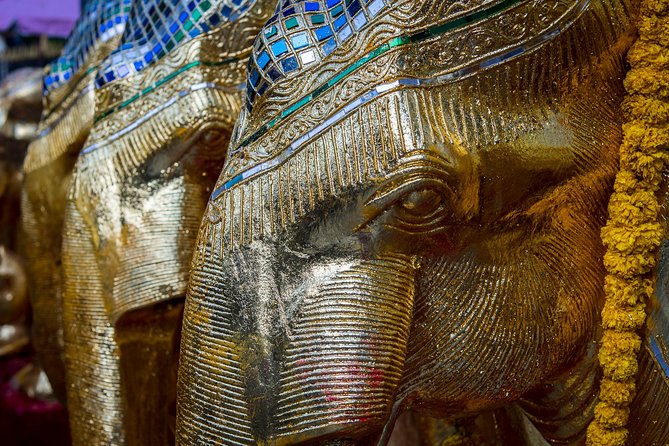
From there, the itinerary heads to the Erawan Shrine (also known as the Thao Mahaprom Shrine). Shrines are ideal for composition practice because they have repeated shapes and structured elements. You can work on framing offerings, finding symmetry, and separating foreground details from the background crowd.
A practical consideration: these places can be crowded, especially around key times. If you’re sensitive to noise or crowds, bring patience and plan to move with the group rather than forcing shots from the middle of the flow.
More private runs, just your group


Benjasiri Park: A Break for Framing and Focus
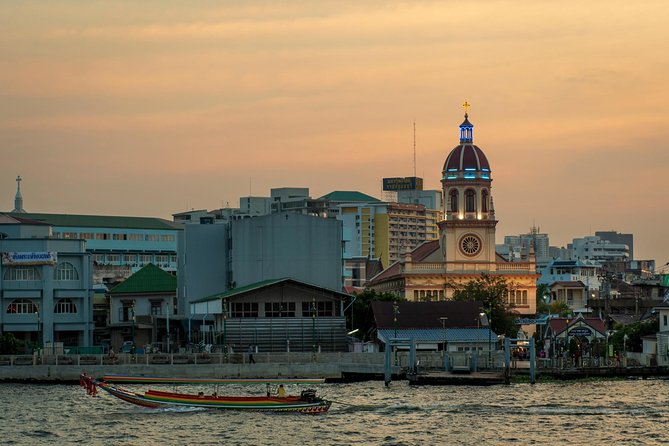
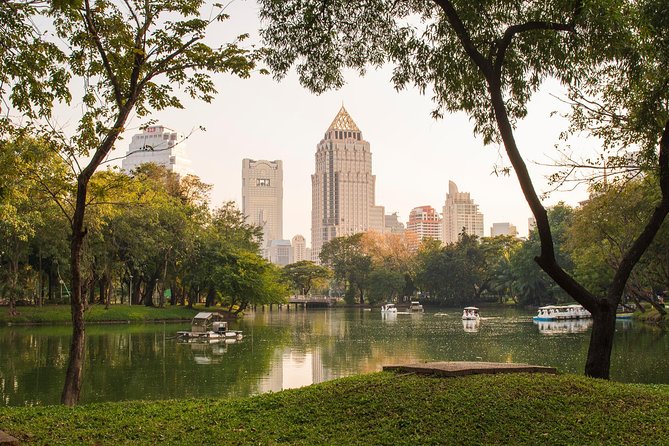
Benjasiri Park provides a different kind of scene than markets and temples. Parks can help you slow down and think—how do you frame a subject when the background isn’t chaotic?
This stop is useful for learning mid-distance composition: you can practice balancing subject and environment without the clutter of storefronts right behind your subject. It’s also a good place to work on your camera settings and shooting technique, because you can often find calmer sightlines to test ideas.
In a tour this short, I like having at least one “breather” stop. It keeps the lesson from turning into nonstop hustle and helps your brain reset so your next temple or street scene is less frantic.
Temple of Dawn (Wat Arun) and the Giant Swing: Use Landmarks Like Anchors
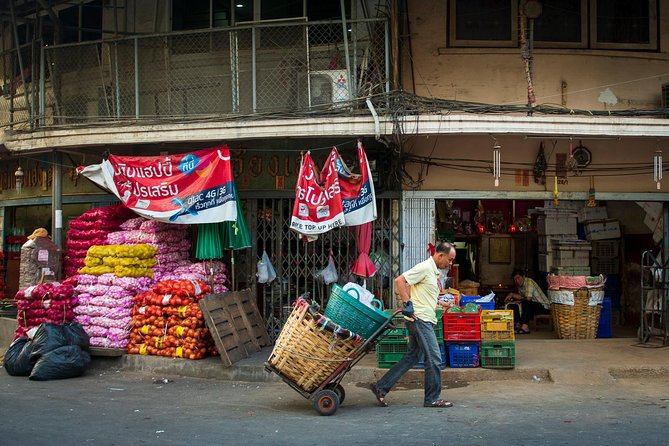
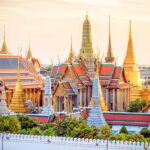
Wat Arun is one of Bangkok’s most recognizable landmarks, and it’s an excellent coaching environment for learning how to build a strong frame. Landmarks let you practice both wide shots and tighter compositions—without having to guess what to shoot.
The key is learning how to position the landmark inside the photo so it doesn’t dominate everything. A coach-style lesson is where you’ll start thinking in layers: foreground interest, subject placement, and background control.
The route also includes Sao Chingcha, the Giant Swing. This is another visual anchor for composition practice because the structure naturally creates strong lines and repeated patterns. If you want photos that feel composed rather than accidental, these classic shapes help you learn what “intentional framing” looks like.
A consideration here: temples and major landmarks can come with queues and crowding. If you’re hoping for clean, empty-looking photos, understand you’ll likely be working around people and movement. That’s part of the learning too—how to make an image work even when the street is alive.
Train Night Market Ratchada and Night Markets: Shooting Under Real-Life Lights
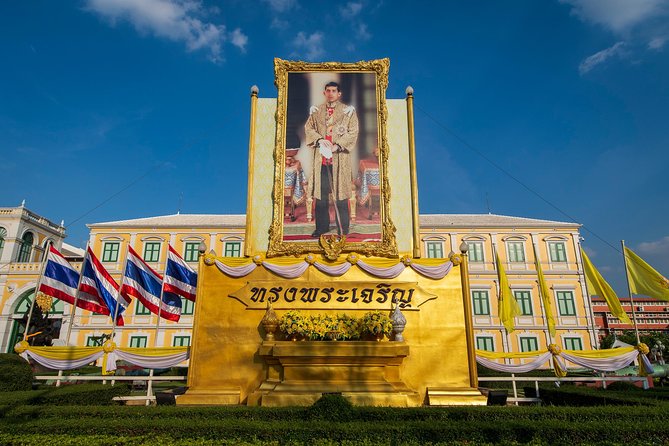
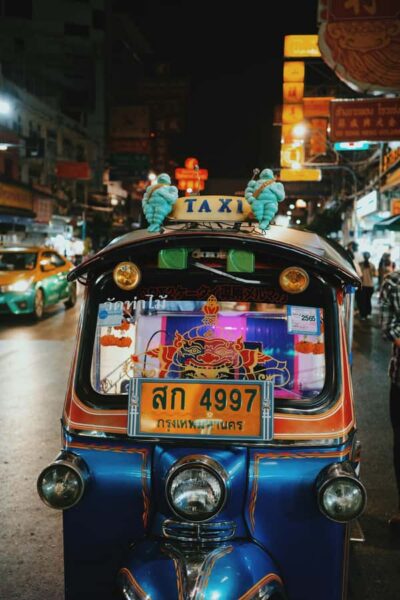
If you choose the nighttime style, the lesson circles around Chinatown and night market areas, with Train Night Market Ratchada on the itinerary. This is where you get a concentrated feed of subjects: food, stalls, signage, and people moving through light.
Night markets are great for learning two things at the same time:
- How to handle bright highlights from lights and screens
- How to frame motion without losing your subject
You’re not just passing by; the tour format is designed for practice. That means you can stop, try a setup, and adjust your approach based on what you see around you. The coaching angle is especially helpful here because night photography often comes down to small decisions made quickly.
What I’d watch for: night markets can be messy, in the best way. You’ll see plenty of clutter, and not every scene will photograph cleanly. That’s exactly why having an instructor matters—you learn how to choose angles that reduce distractions and still keep the energy.
So/ Spa Stop: A Photo Break That Helps You See What You Captured
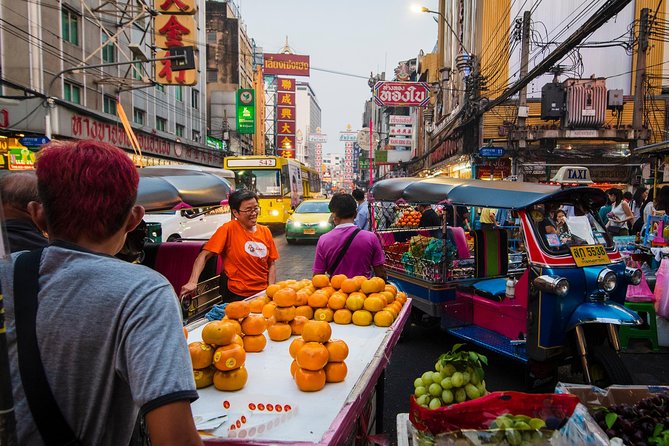
The itinerary includes So/ Spa as one of the stops. Even without knowing every detail of the setting, it makes sense as a moment in the route to shift gears. In a short three-hour lesson, that kind of reset can help you regroup and review what you’ve been learning.
You can use this time to compare daytime-looking subjects versus night lighting (depending on which option you chose), and to think about what worked in your earlier frames. In coaching lessons, that reflection part is often what turns a fun outing into real improvement.
How the Instruction Usually Shows Up (Composition, Not Just Tips)
One of the most praised parts in recent feedback is coaching that focuses on composition and practical improvement. If your guide is Paul, for example, the teaching style is described as enthusiastic and hands-on, including helping people find unexpected places and refining how they frame shots.
Here’s what you should look for from the lesson structure, even if your instructor teaches in their own style:
- You’ll get prompts on how to compose your shots in the moment
- You’ll practice in multiple neighborhoods so your skills transfer
- You’ll leave with clearer direction for what to try next
That last point is important. A great photography lesson doesn’t just hand you images. It gives you a way to think. After a masterclass like this, I’d expect you to spend the rest of your Bangkok days shooting with more intent, not just collecting photos.
Location Loop: A Smart Way to Cover More Than One Bangkok Side
This masterclass is set up to give you variety in a tight window: Chinatown, Erawan Shrine, Benjasiri Park, Wat Arun, the Giant Swing area, and Train Night Market Ratchada, plus the So/ Spa stop. That mix means you’re practicing across:
- street scenes with signage and crowds
- religious details with structured shapes
- parks for calmer framing
- iconic landmarks for strong geometry
- nightlife with heavy light contrast
The practical value is efficiency. You don’t have to plan multiple separate outings to cover these themes. You can learn how to shoot each one, then carry that learning forward when you wander on your own.
And yes, the route ends back at the meeting point, which makes planning the rest of your day easier.
Meeting Point and Timing: Where to Start, and Why It Matters
You meet at สถานีรถไฟหัวลำโพง (Rong Mueang), Pathum Wan, Bangkok 10330, Thailand. Since the experience ends back at the meeting point, you’re not stuck figuring out transportation afterward.
If you prefer easier logistics, this is a useful advantage. It also reduces stress during a fast-paced photography session—when you’re trying to concentrate, you don’t want your biggest problem to be figuring out where you are.
Duration is approximately three hours. That’s enough time to learn and shoot in a few very different contexts, but it’s still short. If you’re the type who likes to linger for one perfect shot, plan to treat this as a skills session where the instructor will help you decide quickly.
Price Check: Is $160 Worth It?
$160 per person for a private 3-hour photography lesson in Bangkok isn’t cheap, but it’s also not only paying for landmarks. You’re paying for local instruction plus a practical route that’s built around street-level practice.
This is where value shows up:
- You get private attention instead of generic photo stops
- The lesson can shift between day and night styles
- You cover multiple strong photo environments in one go
- Free bottled water helps keep the session comfortable
If you already know your way around a camera and just want scenic shots, you might get similar photos with self-guided exploring. But if you want your pictures to improve, and you want feedback while you’re shooting, this is the kind of experience that tends to pay off quickly—especially if you’re taking lots of photos but can’t tell why some look better than others.
Should You Book This Bangkok Photography Masterclass?
Book it if you want a focused photography lesson in real Bangkok locations, with a local instructor guiding how you frame and think while you shoot. It’s also a strong match if you’re interested in night photography and want structured practice around Chinatown and night markets.
Skip it or be cautious if your schedule is extremely tight. While free cancellation exists, the lesson depends on the instructor’s availability, and there’s at least one reported case of a last-minute cancellation due to illness. If you’re traveling with no backup day, consider booking earlier or pairing it with a flexible plan.
FAQ
How long is the Bangkok Photography Masterclass?
It’s approximately 3 hours.
Is the lesson private?
Yes. It’s a private tour, so only your group participates.
What does the tour cost?
The price is $160.00 per person.
Can I choose a daytime or nighttime session?
Yes. You can choose between daytime or nighttime tours.
Where does the tour take place?
It’s in Bangkok, Thailand, with stops that include Chinatown and major landmarks such as Wat Arun and the Giant Swing area.
What are the listed stops during the experience?
The itinerary includes Chinatown, Erawan Shrine (Thao Mahaprom Shrine), Benjasiri Park, Temple of Dawn (Wat Arun), Sao Chingcha (the Giant Swing), Train Night Market Ratchada, and So/ Spa.
What is included in the price?
Bottled water is included.
Where do I meet the guide?
The start location is สถานีรถไฟหัวลำโพง (Rong Mueang), Pathum Wan, Bangkok 10330, Thailand.
Is there a mobile ticket?
Yes, the tour includes a mobile ticket.
What is the cancellation policy?
You can cancel up to 24 hours in advance for a full refund, and changes less than 24 hours before start time aren’t accepted.
Just Your Party, Booked Private
More Tour Reviews in Bangkok


Better Frames of Bangkok

Just In: Fresh Bangkok Reviews
Photography Sessions, compared.
 ★ 4.3From Bangkok: Pattaya Island Trip with Drone PhotosFrom $63292 reviews
 ★ 4.5Nemo Island Day Trip with Drone Photos and LunchFrom $10990 reviews
 ★ 4.8Photoshoot in Thai CostumeFrom $14465 reviews
 ★ 3.6Bubble in the Forest Cafe Photography JourneyFrom $2135 reviews
 ★ 5.0Professional Thai Costume Photography at Wat Arun, BangkokFrom $8018 reviews
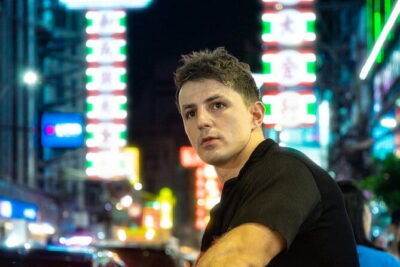 ★ 5.0Chinatown (Yaowarat Road) Neon PhotoshootFrom $12912 reviews
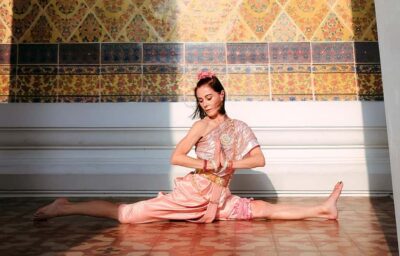 ★ 4.2Thai Costume Photoshoot at Wat ArunFrom $8010 reviews
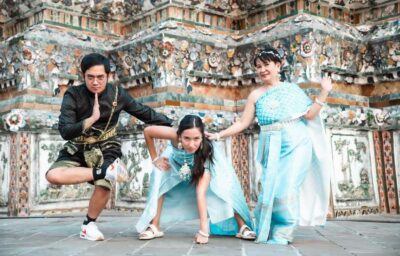 ★ 4.7Thai Costume Photographer at Wat Arun/Pho in BangkokFrom $809 reviews
Browse the lists this tour appears in