
Review · AUDIO TOURS
Bangkok’s Wireless Road: A Self-Guided Audio Tour
A quiet walk turns into a history lesson fast. This Wireless Road self-guided audio tour uses GPS timing so the stories arrive exactly when you’re passing the sights, starting at BTS Phloen Chit and looping by Lumphini Park. I like that the VoiceMap app works offline, so you can keep your phone in your pocket and just follow the route at your own pace.
Two things I really like: the guide, local historian Paul Jorgensen, ties everyday details to how Bangkok grew, and the walk is built around specific moments you can actually see, like embassy grounds, Hindu shrines, and the green pedestrian path linking major parks. One drawback to consider is that you’re responsible for your own navigation and phone setup, since a smartphone isn’t included and there are no ticketed museum stops to fall back on if you’re tired.
If you want a low-cost way to learn Bangkok beyond a checklist, this one-hour loop is a smart bet. It’s also open all day, so you’re not stuck planning around a single tour time slot.
In This Review
- Key highlights you’ll notice on Wireless Road
- Wireless Road in 60 minutes: how this GPS audio walk actually works
- Price and value: why $7.99 makes sense for this route
- Start at BTS Phloen Chit and loop back by Lumphini Park
- Shopping mall on old British Embassy grounds: how a single site tells bigger stories
- Nai Lert and the rain trees: Bangkok’s shade, explained
- The Green Mile: Lumpini to Benjakiti on foot
- Trimurti shrine: Hindu symbolism you can spot while walking
- Spirit houses, Thai flag, number nine, and other “ordinary” clues
- Easy logistics: how to plan this walk without overthinking it
- Who should book Wireless Road, and who might skip it
- Quick FAQ
- FAQ
- How long is the Bangkok Wireless Road audio tour?
- Where do I start and where does the tour end?
- Do I need an internet connection while walking?
- What’s the cost of the tour?
- Is this tour private?
- What happens if my plans change?
- Should you book this Wireless Road audio tour?
Key highlights you’ll notice on Wireless Road
- Timed GPS audio: the audio plays automatically at the right time and place as you walk.
- Offline-ready: audio, maps, and geodata are available without a data connection.
- Paul Jorgensen’s stories: Thai beliefs, symbolism, and local development show up in small, concrete details.
- Specific “see-it-then-hear-it” stops: British Embassy history, rain trees, the Green Mile, and a Trimurti shrine.
- A walk that feels local: embassies, color, spirit houses, and even convenience-store culture get explained.
- Simple loop route: start and end at BTS Phloen Chit, with Lumphini Park as the turnaround area.
Wireless Road in 60 minutes: how this GPS audio walk actually works
The whole point of this tour is that it’s self-guided without feeling random. Once you start the VoiceMap app at the beginning point, the audio cues are designed to trigger at the right time and location as you move along the route. That means you’re not constantly checking your screen, and you’re not stuck waiting for a live guide to catch up.
You also get lifetime access to the tour. That’s not just a nice perk. It means you can use it more than once if you want a refresher after you’ve learned a bit more about Bangkok on other days. The tour length is short—about 50 minutes to 1 hour—so it fits easily into a morning, a pre-dinner stroll, or a low-effort reset day when you want something meaningful without committing to a half-day plan.
The practical upside: you can control your pace. If you pause for photos, you don’t lose the story because you’re hearing the next part as you reach the next place. If you need to stop and regroup, you can. Bangkok is warm and sometimes crowded; this setup helps you travel with less stress.
More guided days, sorted
- From Bangkok: Ayutthaya Temples Guided Tour with Lunch
★ 4.7 · 10,535 reviews - Bangkok by Private Guide: Full Day Tour In and Around
★ 5.0 · 4,323 reviews - Bangkok: Grand Palace, Wat Pho, and Wat Arun Guided Tour
★ 4.8 · 3,632 reviews
Price and value: why $7.99 makes sense for this route
At $7.99 per person, this is priced like a thoughtful add-on rather than a major tour investment. The value comes from three places.
First, you get a locally grounded narrative, not generic “look left, look right” narration. Paul Jorgensen frames what you see in terms of Bangkok’s development, Thai beliefs, and symbolism. You end up with context for details you would otherwise shrug off, like the number nine, the Thai flag, and small everyday places.
Second, the format reduces costs in a hidden way: there are no museum tickets or paid entrance fees built into the route. So the tour price is basically the only cost. If you’re traveling on a tight budget, that matters.
Third, the offline feature is a real value in Bangkok. Mobile data can be inconsistent depending on where you are. Here, you’re downloading offline audio, maps, and geodata, so you’re not bargaining with connectivity while you’re trying to find a shrine or a walkway.
If you come in expecting a dramatic, bus-and-guide experience, you might feel underwhelmed. But if you want one-hour, high-impact learning tied to walking, this price is hard to beat.
Start at BTS Phloen Chit and loop back by Lumphini Park
The walk begins at Phloen Chit BTS Station and ends back at the same meeting point. That round-trip design is convenient. You’re not committing to a one-way transfer across the city. You can take BTS in, enjoy the area on foot, and then head wherever you want next without rethinking your route.
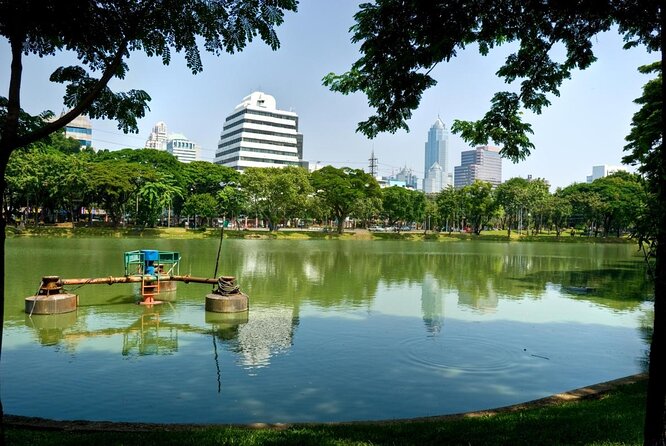
The tour is described as taking you from Phloen Chit down to Lumphini Park and back again, passing through Bangkok’s greener neighborhood. That detail matters because it shapes the mood. Wireless Road isn’t only glass towers and traffic noise. You’ll also encounter trees, embassy precincts, and smaller, calmer pockets where religious and civic life become visible.
As you go, you’ll pick up the idea that Bangkok is layered. The tour doesn’t treat the city like a single era. It highlights how development happens through shifting uses of land, and how older belief systems remain present even when the surroundings look modern.
A small caution: because it’s self-guided, bring a charged phone and get the VoiceMap app ready before you start. A short tour can still feel long if your audio isn’t loading or your map isn’t behaving.
Shopping mall on old British Embassy grounds: how a single site tells bigger stories
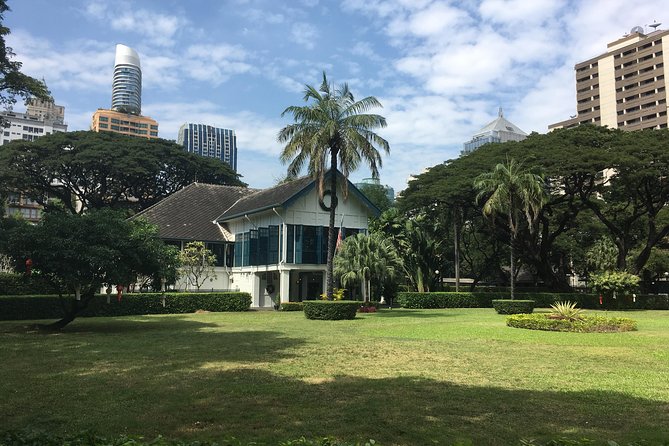
One of the stops is at a shopping mall that grew out of the grounds of the British Embassy. That kind of detail changes how you see cities. A mall can feel like nothing but consumption. But when you hear how a site’s role shifted over time—who used the land, how it shaped the neighborhood, and how that influence echoes—you start noticing the city’s history in its layouts.
I like tours like this because they teach you how to look. You stop treating the street as just a route. You start treating it as evidence.
This stop is also a good reminder that Bangkok’s development has been shaped by international presence and local power. In this area, embassies and their surroundings create a visible international layer. The audio story helps you connect that layer to what you see today.
If you’re the kind of traveler who normally skims over place names and only reads plaques, this is where audio format shines. You don’t have to find a sign to learn. You hear the story when your feet are already at the location.
Worth putting side by side before you book this Bangkok tour:




Nai Lert and the rain trees: Bangkok’s shade, explained
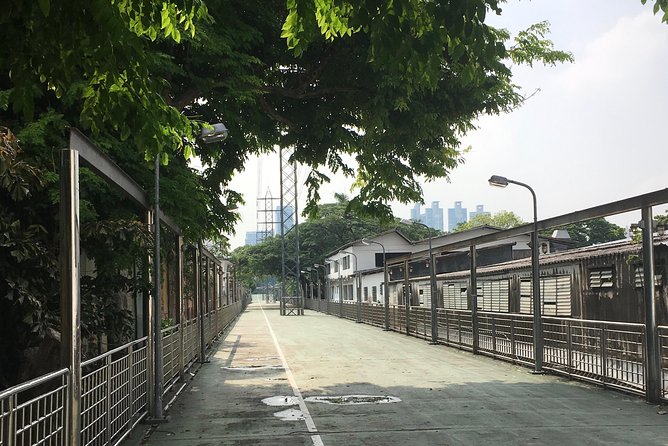
The tour calls out Nai Lert, credited with the rain trees that cover this neighborhood. That’s a clever choice for an audio walk. Trees are easy to overlook, especially when you’re focused on buildings and traffic. But once you learn the name and the reason behind them, you start seeing the shade as intentional urban work rather than just background.
Rain trees also connect you to everyday Bangkok life. Trees shape walkability and comfort. They influence where people gather, where you naturally slow down, and how the neighborhood feels. A tour that explains why a place has certain features teaches you to notice “why” instead of only “what.”
And because this is an audio story, you don’t need to stop at a textbook-like explanation panel. You’re walking under the canopy, listening, and making the connection in real time.
The Green Mile: Lumpini to Benjakiti on foot
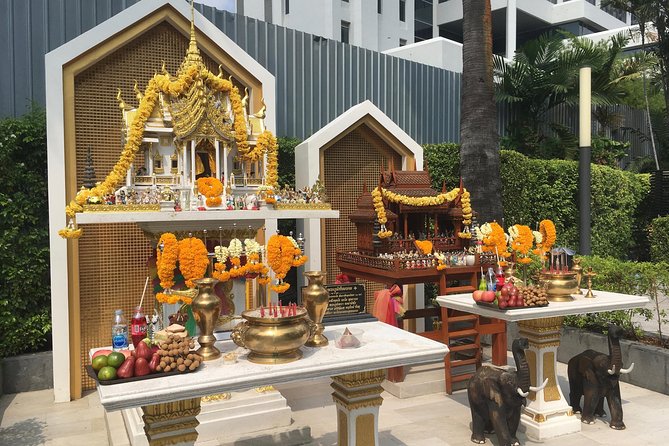
Another specific highlight is the so-called Green Mile special pedestrian pathway connecting Lumpini and Benjakiti parks. A named walkway is already a clue that Bangkok planners cared about pedestrian movement and green space as more than decoration.
This part of the tour is valuable for two reasons. First, it gets you walking between major parks without feeling like you’re crossing random streets. Second, it gives you a better sense of how Thai public space works—where people want to be, how corridors of greenery knit different areas together, and how a city uses design to invite foot traffic.
If you’ve spent your Bangkok days trapped in transport changes and short taxi hops, this section gives you a different kind of city view: an in-between space that locals use to move and rest.
For timing, just remember your route is flexible. If you want to linger in a shaded section of the walkway, you can. The tour is built to match your movement, not force you to keep pace like a group bus.
Trimurti shrine: Hindu symbolism you can spot while walking

The tour includes a shrine to the Hindu god Trimurti. That matters because Thailand is full of religious markers—shrines, spirit-house-like offerings, and temple references—yet many visitors walk past them without context.
Once you hear what Trimurti represents and why a shrine like this shows up in the neighborhood, your eyes start doing more work. You stop treating these elements like decorations. You understand them as part of how belief is expressed in everyday space.
This stop also fits the tour’s broader theme: Thai faith and practice aren’t hidden behind museum doors. They’re present in the street-level details, in the small acts and objects people leave behind, and in the way certain symbols recur across the city.
If you want to photograph freely, this is another good place to slow down. Just be respectful of the space and keep your movement calm so you’re not blocking anyone who’s visiting the shrine.
Spirit houses, Thai flag, number nine, and other “ordinary” clues

The audio tour promises a set of story stops that go beyond the big landmarks. You’ll hear about spirit houses and what they suggest about Thai beliefs. You’ll also get explanations tied to elements like Hindu gods, the Thai flag, the number nine, and the groups of motorcycle taxis and convenience stores you see along the way.
This is where the tour earns its keep. It turns the city’s small symbols into a guided lesson. Instead of reading a guidebook later and forgetting half of it, you’re learning as you encounter things in real life. That makes the information stick.
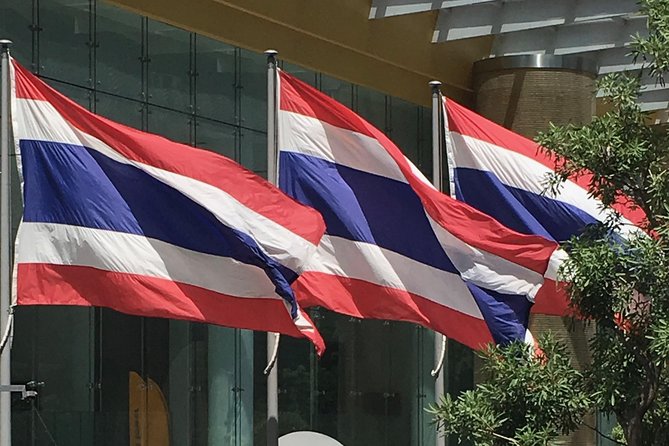
I’m especially a fan of the Thai-flag and number-nine angle because it’s the kind of knowledge that helps you interpret what you see without needing to be religious or an expert. Even if you only catch a few meanings, you’ll walk away with a better sense of how symbolism influences daily life.
And yes, the tour includes humor. You can feel it in how the stories connect the practical to the cultural, like why a familiar street feature might have a deeper story behind it than you expected.
Easy logistics: how to plan this walk without overthinking it
This is a private tour/activity, meaning it’s just your group participating. Since you’re using an audio guide rather than following a person, you’re not being pulled around with strangers in a tight cluster.
It’s also near public transportation, which is exactly what you want for a short urban walk. BTS is a simple entry point, and the loop ends where you started, so you don’t need to map out a complicated return.
The tour runs any time of day, with opening hours listed from 12:00 AM to 11:59 PM. That flexibility is handy if you want a quiet activity at the start of the day, or if your schedule changes because Bangkok traffic and heat can mess with plans.
What to bring:
- A charged smartphone (since it’s not included) and comfortable earphones for audio
- Enough water for your pace, especially if you’re walking in the warmer afternoon hours
- A willingness to stop for a minute when the story prompts you to notice something
One more practical note: the route includes outdoor walking and places of worship. Service animals are allowed, and the tour is marked as suitable for most travelers, but you should still wear footwear that handles city sidewalks comfortably.
If you’re the type who likes to do one cultural thing each day, this fits neatly. You’ll learn, walk, and then move on without feeling locked into a long itinerary.
Who should book Wireless Road, and who might skip it
This audio tour is a great fit if you:
- Want a short, structured walk with stories timed to real sights
- Like learning from local context, not just monument facts
- Prefer self-paced travel with offline maps and audio cues
- Enjoy noticing details like symbols, religion in public spaces, and how neighborhoods evolve
You might skip it if you:
- Want a live guide to answer questions on the spot
- Don’t want to rely on a phone for audio and navigation
- Prefer activities with paid entry points or museum time built in
If your travel style is hands-on and observational—stop, look, listen—this is a smart way to add depth to Bangkok without adding fatigue.
Quick FAQ
FAQ
How long is the Bangkok Wireless Road audio tour?
The tour lasts about 50 minutes to 1 hour.
Where do I start and where does the tour end?
It starts at Phloen Chit BTS Station (Thanon Phloen Chit) and ends back at the same meeting point.
Do I need an internet connection while walking?
No. The tour includes offline access to audio, maps, and geodata through the VoiceMap app.
What’s the cost of the tour?
It costs $7.99 per person.
Is this tour private?
Yes. It’s listed as a private tour/activity, with only your group participating.
What happens if my plans change?
The experience is non-refundable and cannot be changed for any reason.
Should you book this Wireless Road audio tour?
Book it if you want a low-cost way to understand Bangkok in a way that actually changes how you see the city while you’re still walking. The timed GPS audio, the offline setup, and the focus on specific details—British Embassy land, rain trees by Nai Lert, the Green Mile link between Lumphini and Benjakiti, and a Trimurti shrine—make this more than a casual stroll.
Skip it if you’re hoping for a hands-on guided tour with interactions, or if you don’t want to use your phone. For the right traveler, though, this is a sharp deal: one hour outside, one story thread after another, and a route that brings you back to your starting point without hassle.
Smoother With a Guide


More Tours in Bangkok




More Tour Reviews in Bangkok




Just In: Fresh Bangkok Reviews






Audio Tours, compared.
 ★ 4.0Audio guides for Bangkok, Ayutthaya & Chiang MaiFrom $938 reviews
 ★ 3.8Bangkok Grand Palace & Emerald Buddha Flexible Pass w/ AudioFrom $2935 reviews
 ★ 3.5Bangkok Self-Guided Audio TourFrom $94 reviews
 ★ 3.5Bangkok Grand Palace & Emerald Buddha Flexible Entry with AudioFrom $283 reviews
Browse the lists this tour appears in