
Review · SCOOTER RENTALS
Electric Scooter Tour of Bangkok
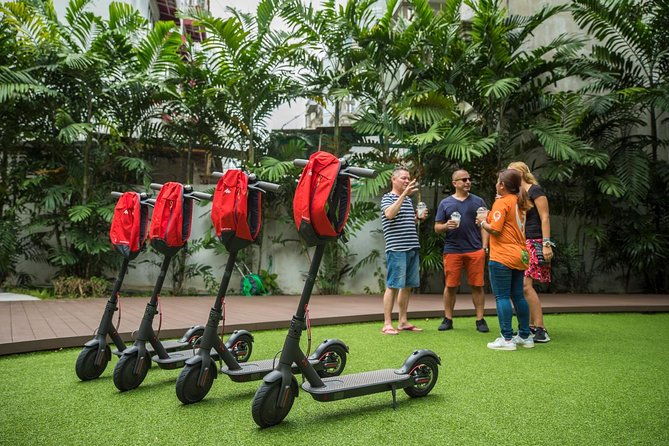
Bangkok looks fast from a bus. It’s different at scooter speed, with time to look around. This guided electric Xiaomi scooter tour is built for the “other Bangkok” feeling—starting near the river, threading through Chinatown laneways, then crossing to Thonburi for temple and park stops.
I like that it mixes big sights with everyday streets. You’ll ride from the Muslim community and the Old Customs House area, then work your way through Chinatown and the flower-and-vegetable market zone before you cool off with a ferry crossing.
One consideration: you need to fit the riding rules and timing. Minimum age is 14, height is 140 cm, maximum weight is 100 kg, there’s no hotel pickup/drop-off, and there’s no lunch—just snacks plus coffee or tea.
In This Review
- Key things that make this scooter tour worth your time
- Why an electric scooter is the best way to “read” Bangkok on the move
- Starting at Go Scoot Bangkok and getting your bearings fast
- Muslim Quarter to the Old Customs House: the riverfront story begins early
- Chinatown by scooter: laneways, street life, and market smells
- Cross the Chao Phraya by ferry: a scenic reset with real local rhythm
- Princess Mother Memorial Park: where gardens and exhibits slow you down
- Temples on the Thonburi side: Wat Kalayanamit, Wat Prayoon, and Wat Prayurawongsawat
- Go Scoot HQ wrap-up: photos, drinks, and quick Q&A time
- Value check: what $48.74 buys you in a 3-hour half-day
- Who should book—and who might want a different style of tour
- Should you book the Electric Scooter Tour of Bangkok?
- FAQ
- How long is the electric scooter tour?
- What does the tour cost?
- What’s included with the tour?
- What’s not included?
- Where do I meet the guide, and where does the tour end?
- Are there height, age, or weight requirements?
- What’s the cancellation policy?
Key things that make this scooter tour worth your time
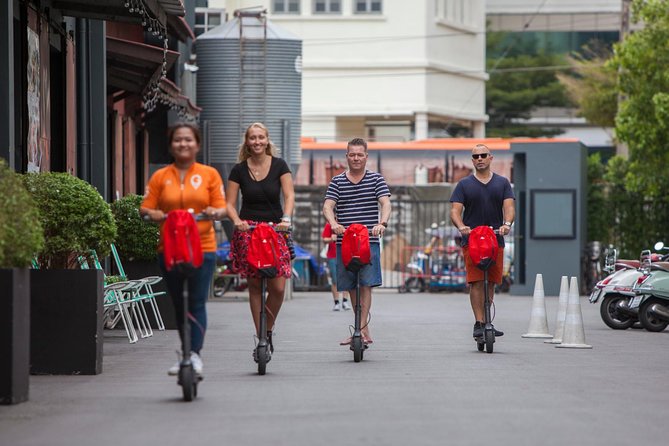
- Extra-small group feel (max 8 travelers, with some trips capped smaller) for questions, photo moments, and slower decision-making at intersections
- A guide who rides with you and takes souvenir photos you can share after the tour
- Both sides of the Chao Phraya, using a ferry hop for a real change of scenery
- Chinatown without the tourist conveyor belt, using side streets and woven lane layouts
- Thonburi stops that aren’t just temples, including Princess Mother Memorial Park gardens and exhibits
- Light refreshments, bottled water, and coffee or tea during a ~3-hour half-day
Why an electric scooter is the best way to “read” Bangkok on the move
Bangkok’s streets don’t work like a museum map. They work like a living system—shops, kitchens, prayers, and people spill into the lane, then pull back into the main road again. On a scooter, you can keep your momentum without losing your ability to notice details.
This tour is also built around ride breaks. You get light refreshments, snacks, and coffee or tea, which matters when you’re moving through markets and temple areas where you might otherwise cut corners on hydration. Plus, the pacing is described as relaxed, with time to ask questions as you ride.
Safety and comfort are part of the experience. In practice, guides are expected to get you ready before you head out, and you’ll be riding electric scooters that are described as manageable for beginners (not a white-knuckle roller coaster).
Worth putting side by side before you book this Bangkok tour:
- Bangkok: E-Scooter Night Tour with Local Street Food
★ 4.8 · 488 reviews - Bangkok: Bang Kachao E-Scooter Jungle Tour
★ 4.8 · 154 reviews - Bangkok: Riverside E-Scooter Adventure with StreetFood Snack
★ 4.9 · 133 reviews
Starting at Go Scoot Bangkok and getting your bearings fast
The meeting point is Go Scoot Bangkok, at 69/2-4 Soi Charoen Krung 44, Bang Rak. The tour ends back at the same place, so you’re not stuck trying to coordinate a second transport pickup later.
There’s no hotel pickup or drop-off. That’s common for city tours, but it changes how you plan your day. If you’re staying far out, give yourself buffer time to arrive, get fitted up, and do the scooter check.
Expect a real neighborhood start. One piece of feedback flags that the tour area is close to market streets, so you should be ready for smells and everyday street-life sights. That’s not a problem for most people—it’s actually part of the “real Bangkok” payoff.
Muslim Quarter to the Old Customs House: the riverfront story begins early
The first phase takes you into a Muslim community area and then toward the Old Customs House on the river. That’s a smart opening. It sets the theme quickly: Bangkok has always been a trading city, and the river is part of the city’s original engine.
From there, you’re not just seeing a landmark from across the road—you’re riding into the context around it: street textures, local patterns, and how people move through the area. It’s a good segment if you like the feeling of arriving somewhere that locals use every day rather than photographing a single building and moving on.
If you’re the type who likes to understand what you’re seeing, this is also where the guide’s explanations matter most. You’ll be in the “why this place exists” zone before the tour shifts into Chinatown intensity.
Chinatown by scooter: laneways, street life, and market smells
Next comes Chinatown. The route leans into the lane-and-alley layout—so instead of big blocks only, you’ll ride through the maze of woven streets that make Chinatown feel like its own small world inside Bangkok.
This is where scooter touring helps most. Walking Chinatown can be slow and stop-start. Driving a car can feel too fast and too enclosed. On a scooter, you can go at a steady pace while still catching food smells, shop details, and the constant choreography of street life.
Then you head toward the river-area markets for a flower and vegetable market stop. You’ll get that “cool air and stronger scents” feeling near the water, and the market setting is visual proof that Bangkok runs on more than temples and skyline views.
One practical tip: take it easy with expectations here. Markets can be busy, and streets can be tight. If you want calm photos, lean into the moments when the guide pauses the group rather than forcing shots while you’re moving.


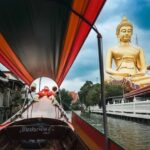
Cross the Chao Phraya by ferry: a scenic reset with real local rhythm
Crossing the river by ferry is one of the most satisfying parts of this half-day route. It’s not just transport—it’s a break in tempo. You get air, change of scenery, and that small jolt of realizing you’re switching sides of a major Bangkok geography.
On the Thonburi side, the tour doesn’t immediately rush you into “temple checklist mode.” Instead, it continues with park and temple visits that feel more like a guided walk through neighborhoods than a sightseeing sprint.
If you’re prone to tour fatigue, this ferry moment helps. Three hours goes quickly when every stop is on the clock. The ferry adds space to reset your eyes and your energy.
Princess Mother Memorial Park: where gardens and exhibits slow you down
After the ferry, you visit Princess Mother Memorial Park. The highlight here is the slower rhythm: flower gardens and exhibitions that you can enjoy at a leisurely pace.
This stop balances the earlier street intensity. Chinatown lanes and market areas push your senses. The park pushes your pace back—so you can look, read, and move without feeling like you have to snap every photo before the group rides on.
It’s also a nice contrast if you’re used to Bangkok being only skyscrapers and temples. The park helps you see a different kind of civic space—still local, still connected to the city’s culture, but designed for calm strolling.
Temples on the Thonburi side: Wat Kalayanamit, Wat Prayoon, and Wat Prayurawongsawat
The tour includes classic Thai temple visits that are meant to be easy to appreciate without needing a scholar’s background. You’ll see several names referenced on the route, including Wat Kalayanamit and Wat Prayurawongsawat Worawihan, plus Wat Prayoon and Wat Kalayanamitr depending on the tour flow.
The best way to enjoy these stops is to treat them as pauses, not targets. Watch how the guide frames what you’re looking at—often the difference between a good photo and a meaningful one is whether you understand what part of the temple matters (structure, setting, or local usage).
If you’re cautious about timing, listen for the group regroup signals. Temples are frequently active spaces, and it can be easy to wander too far if you’re absorbed in details.
Go Scoot HQ wrap-up: photos, drinks, and quick Q&A time
The tour ends back at Go Scoot Bangkok. This matters because you’re not trying to find your way out of a dense neighborhood after a moving itinerary.
You’ll have time to unwind and discuss what you saw with your group, plus soft drinks. Coffee and/or tea are included earlier, and bottled water plus snacks are part of the ride.
One standout perk: souvenir photos taken by the guide. That’s useful because it means you’re not juggling a phone every time you stop, and it helps you actually enjoy the scene instead of constantly switching roles between rider and photographer.
Also, two guide names show up with praise: Woody and Nai. That gives you a clue about what to look for—guides who keep things safe, explain the neighborhoods, and still allow for small detours when the moment fits.
Value check: what $48.74 buys you in a 3-hour half-day
At $48.74 per person for about 3 hours, you’re paying for three things that add up fast in Bangkok: a scooter, a guide, and built-in transport logic (including ferry time).
If you try to DIY this route, you’d still pay for transport, time lost to figuring out lane routes, and you’d miss the context that makes the stops click. With this format, you’re basically buying momentum plus a local lens.
The “small group” angle matters for value too. With a maximum of 8 travelers (and some trips described as smaller), the guide can slow down when needed and you’re less likely to feel like a bus passenger.
Included extras also help: bottled water, light refreshments, snacks, and coffee or tea aren’t glamorous, but they reduce the mental load. You won’t spend the last third of the tour hunting for food or standing in a line when you could be looking around.
Who should book—and who might want a different style of tour
This tour is a strong match for:
- People who want to see both sides of the Chao Phraya in one half-day
- Anyone who likes neighborhoods—Muslim community streets, Chinatown lanes, and market areas—more than only iconic monuments
- Solo travelers and couples who want a guide-led plan but still like freedom to ask questions
You might want a different plan if:
- You don’t meet the ride requirements (age 14+, height 140 cm, max weight 100 kg)
- You prefer hotel pickup/drop-off and don’t want to self-navigate to the meeting point
- You want a full meal included—this does not include lunch
One more practical note from a negative experience: there was a complaint that the scooter battery ran low after about an hour. That doesn’t mean it’s the norm, but it’s a reminder to ask the guide about how the ride is paced and to stick close to the group so the tour can stay on schedule.
Should you book the Electric Scooter Tour of Bangkok?
I’d book it if you want a half-day that feels like Bangkok is moving with you—Chinatown by scooter, a real river crossing by ferry, then Thonburi temples and a calmer garden pause. The small group size, the included snacks and drinks, and the guide-run photo perk make it feel efficient without feeling rushed.
If you’re deciding between this and a more traditional walking or bus tour, this one is better for street-level momentum and neighborhood texture. If you need very slow pacing, fewer crowded market areas, or a guaranteed full meal stop, you might prefer a different format.
Either way, show up ready to ride, ask questions early, and use the breaks to take a breath. Bangkok rewards that kind of attention.
FAQ
How long is the electric scooter tour?
It runs for about 3 hours.
What does the tour cost?
The price is $48.74 per person.
What’s included with the tour?
It includes an electric Xiaomi scooter, a local/professional guide, bottled water, light refreshments, snacks, coffee and/or tea, and souvenir photos taken by the guide.
What’s not included?
Lunch isn’t included, and there’s no hotel pickup or hotel drop-off.
Where do I meet the guide, and where does the tour end?
The tour starts at Go Scoot Bangkok, 69/2-4 Soi Charoen Krung 44, Khwaeng Bang Rak, Market, Krung Thep Maha Nakhon 10500, Thailand. It ends back at the meeting point.
Are there height, age, or weight requirements?
Yes. Minimum age is 14. Minimum height is 140 cm. Maximum weight is 100 kg.
What’s the cancellation policy?
Free cancellation is available. You can cancel up to 24 hours in advance for a full refund. If you cancel less than 24 hours before the start time, the amount paid is not refunded.
More Scooter Rentals in Bangkok

More Tours in Bangkok


More Tour Reviews in Bangkok

Just In: Fresh Bangkok Reviews


Scooter Rentals, compared.
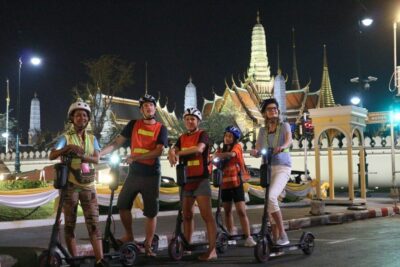 ★ 4.8E-Scooter Night Tour with Local Street FoodFrom $39488 reviews
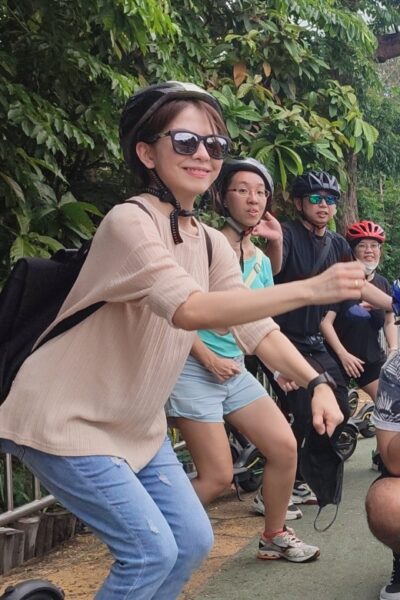 ★ 4.8Bang Kachao E-Scooter Jungle TourFrom $47154 reviews
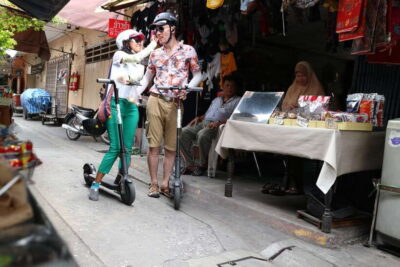 ★ 4.9Riverside E-Scooter Adventure with StreetFood SnackFrom $38133 reviews
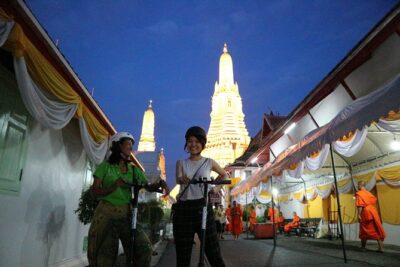 ★ 5.0Bangkok at Night by Electric ScooterFrom $4053 reviews
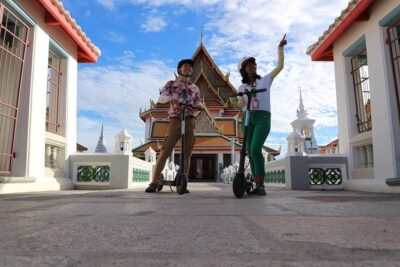 ★ 5.0Explore Bangkok by E-Scooter & Try Street FoodFrom $4340 reviews
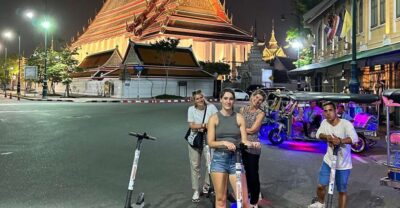 ★ 4.6Bangkok By Night by Electric Scooter &/or BikeFrom $3840 reviews
 ★ 4.7Old City Guided E-Scooter &/or Bike TourFrom $3229 reviews
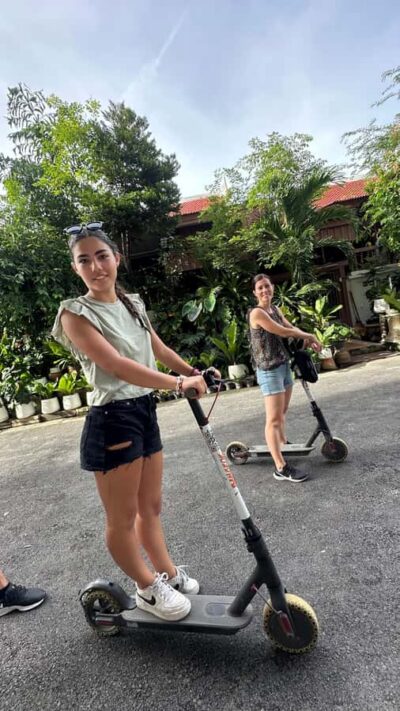 ★ 4.8City Highlights Electric Scooter TourFrom $3715 reviews
Browse the lists this tour appears in