
Bangkok by tuk-tuk is loud, colorful, and fast—exactly the way a 2-hour intro should feel. This ride gives you an efficient loop past big sights like the Grand Palace and Wat Pho, plus river-temple views of Wat Arun and a peek into Chinatown. You also get short stops for photos and a guide who ties it all together with plain, practical context.
What I like most is the pacing. You’re not stuck on a bus for hours—you hop off in manageable chunks, then ride on as traffic and heat do their thing. Second, I really love the hands-on touch: the included folding lotus flower activity adds a calm, memorable moment in the middle of the city’s chaos.
One drawback to plan for: the Grand Palace stop is only around 15 minutes, and admission isn’t included. If you want to linger or go deep, you’ll need to budget extra time and ticket cost on your own.
In This Review
- Key points before you go
- Why a typical tuk-tuk route makes sense in Bangkok’s traffic
- Price and value: what you’re really paying for
- Meeting point and timing: don’t let Bangkok win
- Stop-by-stop: what to expect and what to watch for
- Grand Palace: the short taste (and the ticket you’ll need)
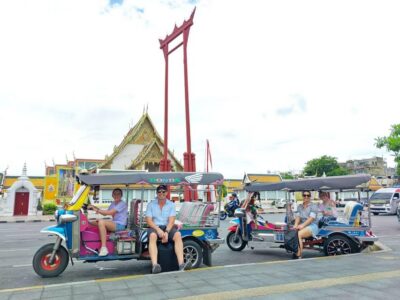
- Sao Chingcha (Giant Swing): a quick photo landmark with religious meaning
- Loha Prasat (Metal Castle): the “steep-roof” temple break
- Chinatown along Yaowarat Road: street life without a full-day food mission
- Pak Khlong Talat Flower Market: 24/7 color that makes sense at any hour
- Wat Arun (Temple of Dawn): a riverfront icon from the Thonburi side
- Wat Pho (WatPo Thai Traditional Massage School area): Buddha images and a classic temple complex
- Guides, safety, and the little things that change the day
- Who this tuk-tuk tour is best for
- Should you book this Bangkok tuk-tuk tour?
- FAQ
- How long is the tuk-tuk experience in Bangkok?
- What is included in the price?
- Is admission included for the Grand Palace?
- Are other temple stops free to enter?
- Where do I meet, and where does the tour end?
- How many people share each tuk-tuk?
- Does the tour run in bad weather?
Key points before you go
- A fast, well-rounded 2-hour loop through top Bangkok sights without wasting the day in transit
- Licensed English guide who explains what you’re seeing and keeps the group moving at a relaxed pace
- Photo-friendly stops for landmarks like Sao Chingcha (Giant Swing) and Wat Arun’s riverfront view
- Wat Pho + Wat Arun in the same overall outing, so you get both sides of the temple story
- Lotus flower folding included, a small activity that many people remember long after the rides
Why a typical tuk-tuk route makes sense in Bangkok’s traffic
Bangkok traffic is legendary, so the trick is not fighting the city all day. A short group tour with tuk-tuks turns that bottleneck into part of the experience. You’ll feel the motion, get street-level views, and still cover serious landmarks in just about 2 hours.
This tour also aims for “quick hits,” not “checklist stress.” The time you’re given includes travel between stops, so you can judge your day without guessing. And because it runs rain or shine, you’re not left playing weather roulette for a full afternoon.
One practical note: tuk-tuks here are shared, with a max of two passengers per tuk-tuk. That keeps it manageable, but it does mean you may sit closer than you’re used to—especially if your group isn’t the same size as the tuk-tuks.
Price and value: what you’re really paying for
At $28.70 per person, the value is in three areas: the guide, the ride, and the cluster of major sights. You’re getting a licensed English-speaking guide plus a typical tuk-tuk ride, a bottle of drinking water, and that folding lotus flower activity.
The route also includes several free entry stops, including Giant Swing (Sao Chingcha), Loha Prasat (the Metal Castle), Pak Khlong Talat (Flower Market), Wat Arun (Temple of Dawn), and Wat Pho. The one big exception is the Grand Palace, where the stop is built in but the admission ticket isn’t.
So think of this as an efficient “see the icons + learn what they mean” package. If you’re trying to stretch a short Bangkok stay, it can be a strong deal—just keep a little extra budget ready for the Grand Palace admission.
Meeting point and timing: don’t let Bangkok win
You start at Museum Siam (Phra Borom Maha Ratchawang area). You end at Yaowarat Road in Chinatown, which is a handy location if you want to keep eating and wandering after the tour.
Timing matters here. Tours wait a maximum of 10 minutes after the scheduled meeting time, then the guide starts. Bangkok is unpredictable, so if you’re coming by taxi or rideshare, give yourself cushion and aim to arrive early rather than “almost on time.”
Also, the end point means you’re not dragged back to the first location. From Yaowarat Road, you can use taxi or the MRT (Wat Mangkon station) to get back to your hotel.
Stop-by-stop: what to expect and what to watch for
Grand Palace: the short taste (and the ticket you’ll need)
The Grand Palace is the star name for a reason. It was built in 1782 by Rama I, the first king of the Chakri Dynasty, and it served as the home for Chakri kings. Even with just about 15 minutes, you’ll feel why this place anchors so many first-time Bangkok memories.
But here’s how to manage expectations: the stop is brief, and admission isn’t included. If you want to spend time inside at a slow pace, you’ll need to plan a separate visit. For this tour, treat it like an introduction—good for orientation, photos, and context.
Tip: If you’re going to the Grand Palace anyway, arrive ready to move quickly. Dress smart for temple rules, and don’t plan on reading every panel. Use your guide’s explanations to decide what you’d explore more later.
Sao Chingcha (Giant Swing): a quick photo landmark with religious meaning
Next up is Sao Chingcha, the Giant Swing. It’s a religious structure, and it was formerly used in an old Brahmin ceremony. That matters because the landmark isn’t just a photo stop; it has cultural weight.
The schedule keeps it to about 15 minutes, and it’s mostly about seeing the swing and getting your pictures while the guide gives the context. This is a stop that works even if you’re tired or your group is moving with mixed energy.
What to watch for: bring your camera mindset. This is the kind of spot where the best photos happen quickly before traffic and crowds shift.
Loha Prasat (Metal Castle): the “steep-roof” temple break
Then you head to Wat Ratchanatdaram Worawihan and Loha Prasat, often called the Metal Castle. The temple was built in 1846 under King Rama III. It’s described as being inspired by similar temples in India, which gives you an interesting layer beyond the obvious Thai temple look.
This is another free-entry stop and a short one (about 15 minutes). Because you’re not stuck there forever, you can appreciate the shape and details without turning it into a marathon.
Drawback consideration: if you prefer long temple exploration, this may feel like too brief of a visit. But as a “see it, understand it, keep moving” stop, it plays well.
Chinatown along Yaowarat Road: street life without a full-day food mission
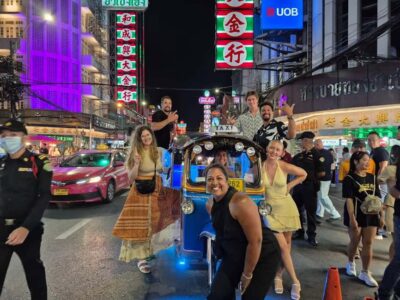
The tour spends around 20 minutes in Chinatown on Yaowarat Road. This is one of the largest Chinatowns in the world, and the experience is more about neighborhood atmosphere than formal sightseeing.
In practical terms, it’s a great break from temples. You’ll get a different Bangkok vibe—shops, movement, and the feeling that life continues long after the temples close.
What to watch for: Chinatown is active and can be intense. If you’re easily overwhelmed, stay near your guide, keep your bearings, and decide quickly if you want snacks. You’ll have more freedom after the tour since you end on Yaowarat Road.
Pak Khlong Talat Flower Market: 24/7 color that makes sense at any hour
Pak Khlong Talat is Thailand’s largest wholesale flower market. It’s open 24 hours a day, 7 days a week, so it’s built for early mornings, late nights, and everything between.
The name means market at the mouth of the canal, and that canal-rooted meaning helps explain why this market sits where it does in the city’s rhythms. You’ll spend around 30 minutes, which is plenty of time to walk, look up close, and let the sensory overload calm down into something fun.
This stop is often a highlight because it feels specific and local. Temples are famous, but this gives you a working-world Bangkok moment. And because it’s included and free, it’s good value.
Wat Arun (Temple of Dawn): a riverfront icon from the Thonburi side
Wat Arun, locally known as Wat Chaeng, sits on the Thonburi side of the Chao Phraya River. The tour keeps it to about 10 minutes, and it’s mainly about the stunning view across the water.
This is where you get the “postcard” Bangkok moment without needing a full extra outing. Even if you don’t go deep into temple interiors here, you’ll get the landmark’s silhouette and the best reason to remember the river.
Tip: For photos, think angles. You’ll likely have one chance to frame the view while the group is positioned. If you’re the type who misses shots because you’re reading descriptions, just let the guide talk and focus on timing your pictures.
Wat Pho (WatPo Thai Traditional Massage School area): Buddha images and a classic temple complex
Finally, you visit Wat Pho, which is also described as the Wat Po Thai Traditional Massage School area. Wat Pho is one of the oldest temples in Bangkok and one of the largest temple complexes in the city.
The standout detail in the description is that it has the largest collection of Buddha images in Thailand. That alone is a reason to care about this stop, even if your time is limited to about 15 minutes.
This is also a good “finish strong” temple. You’ll end with a sense of scale and tradition that helps the earlier stops click into place.
Consideration: because it’s a short stop, don’t expect to absorb everything. Instead, pick one area or one image group that catches your eye and let that be your focus.
Guides, safety, and the little things that change the day
The biggest pattern in the experience is how much the guide matters. Names that come up again and again include Anna, Enjoy, Pu, Bella, Ken, Annie, Paul, and Johann—and the praise is consistent: clear English, friendly attention, and a pace that doesn’t feel rushed even with packed stops.
I also pay attention to the driver factor in a city like this. Multiple people mention safe, professional driving, which is exactly what you want when you’re bouncing around on small streets. If you’re traveling with kids or you just don’t want chaos, a well-run tuk-tuk tour gives you street-level fun with guardrails.
Then there’s the folding lotus flower activity. It’s not a huge time commitment, but it adds a grounded moment when you might otherwise just be bouncing between photos. It’s also the kind of small souvenir you don’t have to carry in a bag forever.
Who this tuk-tuk tour is best for
This is a smart pick if:
- you have limited time and want a fast orientation to Bangkok’s top sights
- you want a mix of temples, market life, and Chinatown without planning transport
- you like a guide-led experience where context is part of the fun
- you’re traveling with kids who do best with short stops and movement
It’s less ideal if you’re the type who needs long, quiet temple time. The stops are short by design. You’ll likely leave wanting more—especially after the Grand Palace and the big temple complexes.
Should you book this Bangkok tuk-tuk tour?
Yes, if you want a high-energy, low-planning way to see major Bangkok highlights in just a couple hours. The combination of a licensed English guide, multiple iconic stops (with several free), and the included lotus-folding activity makes it good value for a first pass at the city.
I’d also book it early in your trip. That way, you learn what you care about and you can return to the places that deserve a deeper visit. Just come prepared for the Grand Palace admission not being included, and don’t plan on long lingering inside that stop—this is the intro, not the whole story.
FAQ
How long is the tuk-tuk experience in Bangkok?
It’s approximately 2 hours, including the travel time between stops.
What is included in the price?
You get a licensed English-speaking tour guide, a typical Thai tuk-tuk ride, 1 bottle of drinking water, and a folding lotus flower activity.
Is admission included for the Grand Palace?
No. The Grand Palace stop is listed with admission ticket not included.
Are other temple stops free to enter?
Several stops are listed as free, including Sao Chingcha (Giant Swing), Wat Ratchanatdaram & Loha Prasat (Metal Castle), Pak Khlong Talat (Flower Market), Temple of Dawn (Wat Arun), and Wat Pho.
Where do I meet, and where does the tour end?
You start at Museum Siam (Phra Borom Maha Ratchawang area) and end on Yaowarat Road in Chinatown.
How many people share each tuk-tuk?
Tuk-tuks are shared, with a maximum of two passengers per tuk-tuk.
Does the tour run in bad weather?
Yes, the tour operates rain or shine, and weather-related cancellations are not eligible for a refund.
Tuk Tuk Tours, compared.
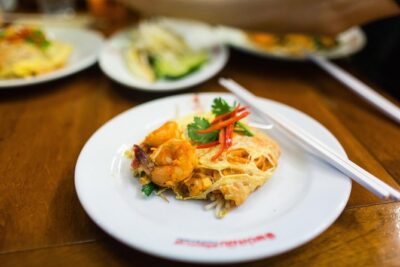 ★ 5.0Bangkok by Night: Temples, Markets and Food Tuk-Tuk TourFrom $793,752 reviews
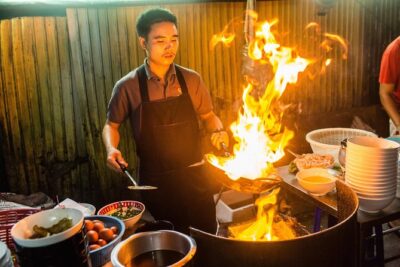 ★ 5.0Bangkok Midnight Food Tuk Tuk TourFrom $812,542 reviews
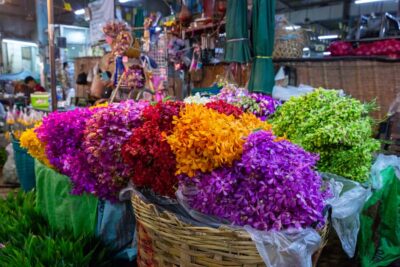 ★ 4.9Markets, Temples and Food Night Tour by Tuk TukFrom $772,371 reviews
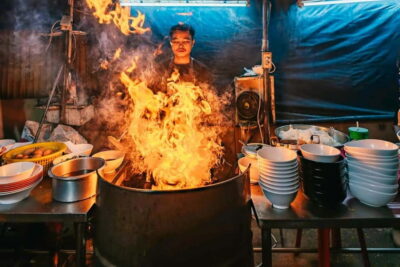 ★ 4.9Midnight Food Tour by Tuk-TukFrom $742,054 reviews
 ★ 4.4Michelin Guide Street Food Tour by Tuk TukFrom $201,274 reviews
 ★ 4.7Guided Tour in a Typical Thai Tuk-TukFrom $28830 reviews
 ★ 4.3Tuk Tuk Adventure Chinatown Michelin Food & TemplesFrom $18725 reviews
 ★ 4.6Evening Tour with Wat Arun, Wat Pho & Tuk Tuk RideFrom $41701 reviews
Browse the lists this tour appears in