
Review · TRAIN EXPERIENCES
Floating & Railway markets (multi-language)
First time you see a train roll up to a market, it surprises you fast. This tour pairs Damnoen Saduak Floating Market with a local train ride to the Maeklong Railway Market, so you get two totally different Thai flavors in one day. I especially like the private, language-matched guide and the practical flow: hotel pickup, boat time, then the train moment without you having to figure anything out on your own.
My second favorite part is the temple and local culture stops, including Phet Samut Worawihan Temple, plus side visits like a coconut farm and traditional salt-making. One drawback to keep in mind: it is not wheelchair or stroller friendly, and you’ll be on your feet and moving around at each stop.
In This Review
- Key things I’d circle before you go
- Damnoen Saduak Floating Market by private boat: what it feels like
- Maeklong Railway Market: timing the train moment without getting stressed
- Phet Samut Worawihan Temple: the meaningful Chinese shrine stop
- Coconut farm, salt-making, and the hands-on regional side of Thailand
- Thai cuisine break: what you pay for and why it’s worth it
- Price and logistics: is $138 per person good value here?
- Language matching and a private group: why it changes everything
- Practical tips that make the day smoother
- Who this floating-and-railway day trip is best for
- Should you book Floating & Railway markets?
- FAQ
- How long is the Floating & Railway markets experience?
- What is included in the price?
- Which languages are available for the live guide?
- Is meals included in the tour?
- Does the tour include hotel pickup and drop-off?
- Do I get a ride on the train to Mae Klong?
- What should I bring?
- Can I cancel for a full refund?
Key things I’d circle before you go
- Private hotel pickup by AC car from the BTS-accessible hotel zone (Surasak through Asoke area)
- Private motor-boat ride in Damnoen Saduak, not just a quick pass-by
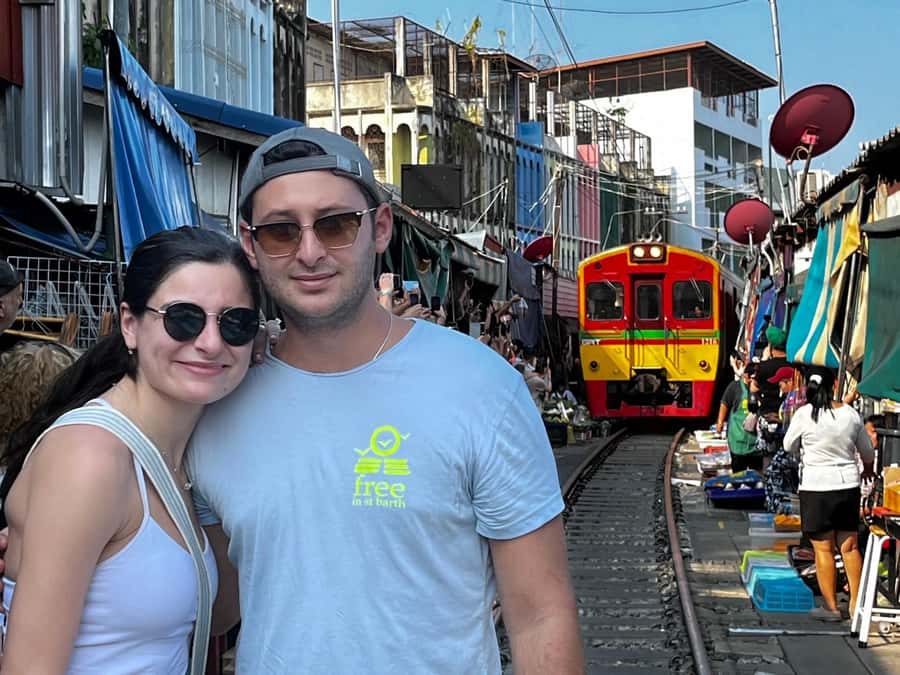
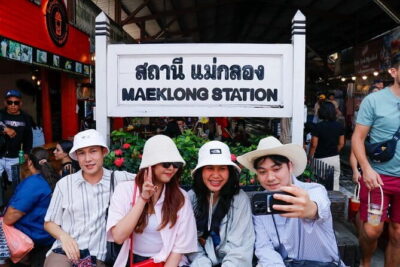
- Train ride to Mae Klong station and the famous vendor action as the train arrives
- Chinese shrine culture at Phet Samut Worawihan Temple, a meaningful stop beyond photos
- Coconut farm and salt-making so you see what makes the region tick
- Multilingual guide support in EN, ZH, ES, IT, FR, DE for smoother conversations
Damnoen Saduak Floating Market by private boat: what it feels like
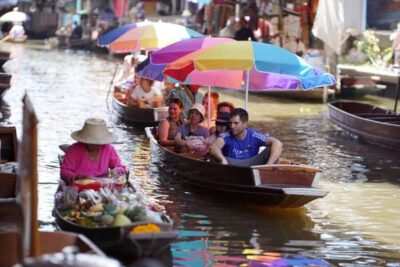
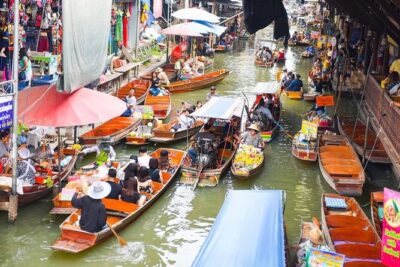
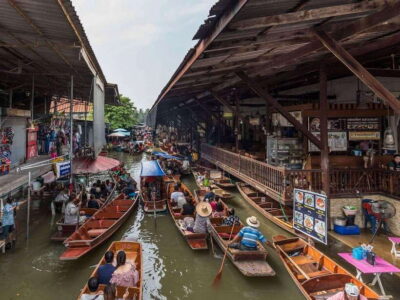
Damnoen Saduak is the kind of place where you can’t really understand it from pictures. The canals pull you in, the vendors shout offers from inches away, and everything happens on a tight water-world scale. Doing it by private motor boat changes the experience fast: you’re not packed into a crowded ride, and you can focus on what’s in front of you instead of playing “where is everybody” with a group.
You’ll be guided through the market area from the water, which is exactly the angle that makes sense here. From a distance, the floating stalls look like a neat postcard scene. Up close, you start noticing the small details—how people arrange goods on boards, how they call customers, and how quickly the whole rhythm of the canal moves when someone passes.
A practical note: if you come with a charged smartphone, you’ll have a much easier time capturing the sights without stressing about battery mid-day. And keep expectations realistic: it’s popular, and it can feel intense in the best way. You’ll get more enjoyment if you slow down, pick a few moments, and watch how the scene works rather than trying to see everything at once.
Still deciding? Line this one up against a few Bangkok favourites first.
- Bangkok: Damnoen Saduak Market and Maeklong Railway Market
★ 4.5 · 26,723 reviews - The Old Siam: Damnoen Saduak and Maeklong Railway Market
★ 4.5 · 10,992 reviews - From Bangkok: Ayutthaya Temples Guided Tour with Lunch
★ 4.7 · 10,535 reviews
Maeklong Railway Market: timing the train moment without getting stressed
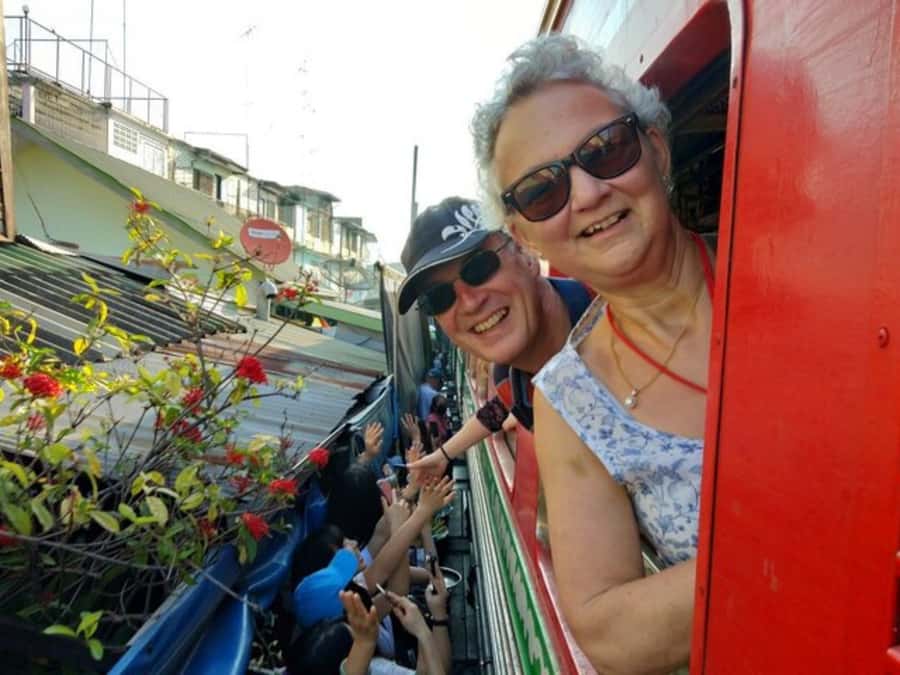
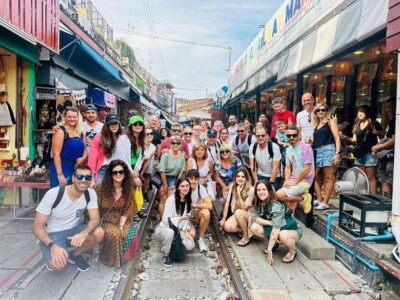
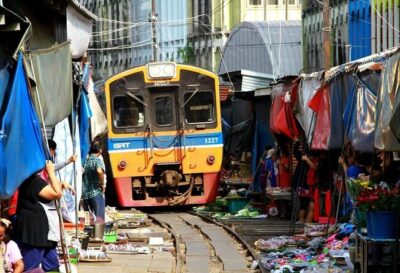
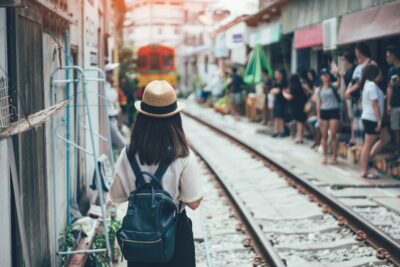
The Maeklong Railway Market moment is the reason many people book this trip, and it earns the hype. As the train approaches, vendors swiftly clear their goods, then the tracks become the center of attention again—fast, practiced, and slightly unreal if you’ve never seen it.
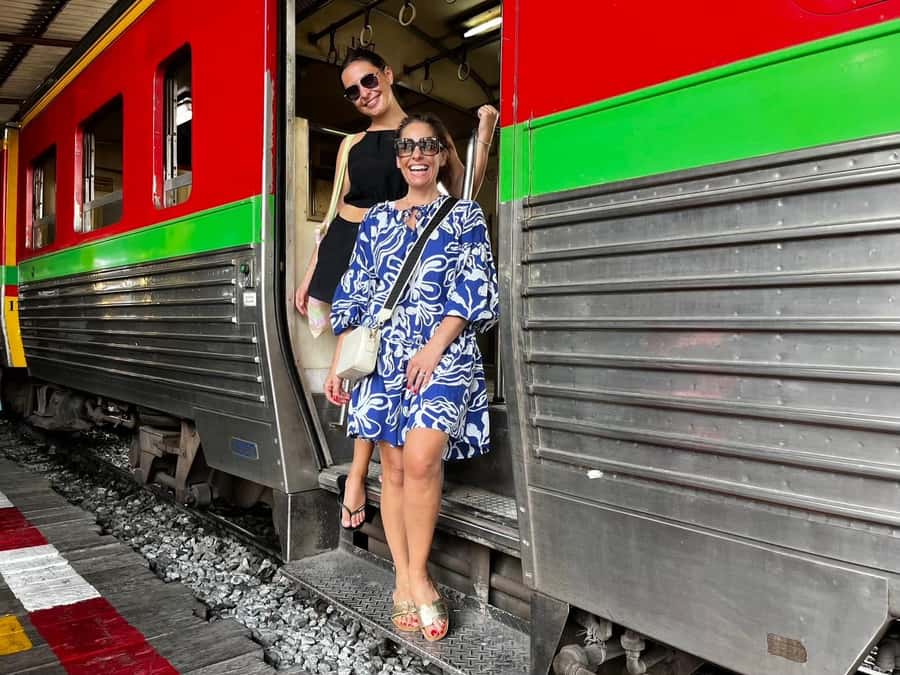
What I like about doing this on a guided local train ride is that it takes the guesswork out of timing. You don’t need to translate signage, work out where to stand, or worry about missing the connection. Your guide helps you be in the right place at the right time, then you can enjoy the spectacle instead of speed-running the logistics.
The Maeklong experience also teaches you something useful: markets aren’t just about shopping here. They’re about adapting to the infrastructure around them. That idea is why the train moment feels like more than a stunt. It’s a living system—people plan their work around the train schedule, and you’re witnessing that local problem-solving up close.
One consideration: this is a “watch closely” stop, but you’ll also want comfort. Wear shoes you trust, because you’ll likely be standing and shifting positions to see and photograph. If you’re expecting a quiet museum-style experience, temper that. This is kinetic street life, just in a narrow, rail-centered zone.
Phet Samut Worawihan Temple: the meaningful Chinese shrine stop

Most market days are heavy on photo-taking. This one adds a calmer, more cultural counterweight with Phet Samut Worawihan Temple, described as a cherished local Chinese shrine. That matters because it gives you context for the communities you’re seeing. Without a shrine stop, it’s easy to treat everything as scenery. With it, you start noticing that people’s beliefs and daily routines overlap with trade, food, and public life.
Even if you don’t read Thai or Chinese characters, you can still understand the vibe: shrines are social places. People pause, offer, and show respect, and you’ll feel that quiet rhythm shift from the chaos of the market canals and tracks.
I also like that the tour doesn’t stop at one cultural site. You’ll also visit landmarks such as Ban Laem Temple and Chulamanee Temple. That gives you a broader sense of regional religious life rather than a single isolated stop. Dress and behavior matter at places of worship, so keep your voice low, be mindful with photos, and follow your guide’s lead if they point out etiquette.
Coconut farm, salt-making, and the hands-on regional side of Thailand
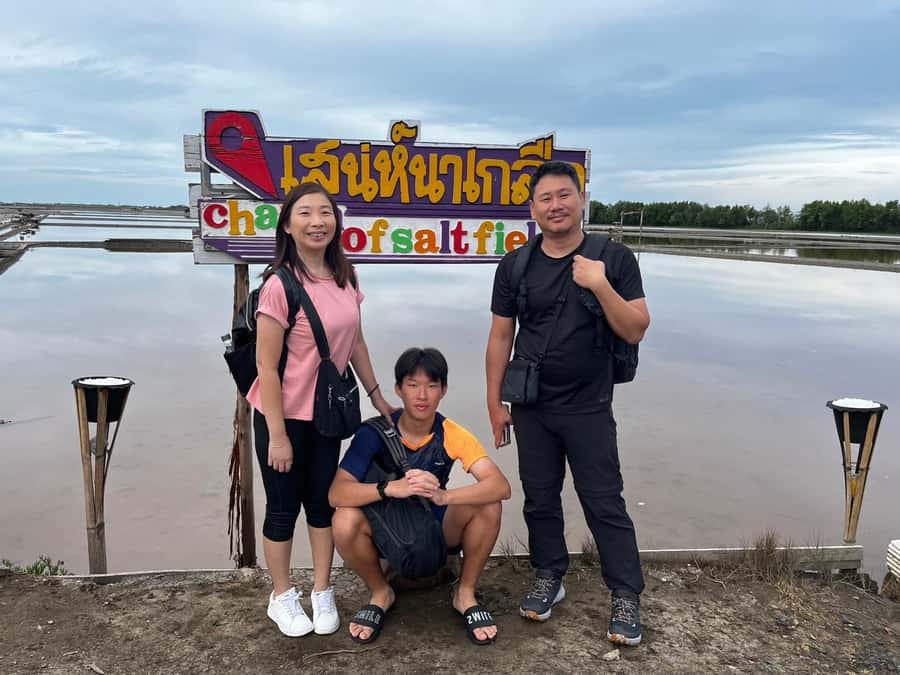
Here’s where the tour becomes more than a best-hits montage. The experience includes time at a locally-operated coconut farm and the chance to witness traditional salt-making. These stops don’t just add variety—they help you connect the dots between what you buy (or see) and how it’s made.
On a coconut farm visit, you can expect to see how coconuts fit into everyday production and local economies. It’s the kind of stop that gives you a clearer sense of why floating-market vendors sell certain goods and how supply chains work outside big cities.
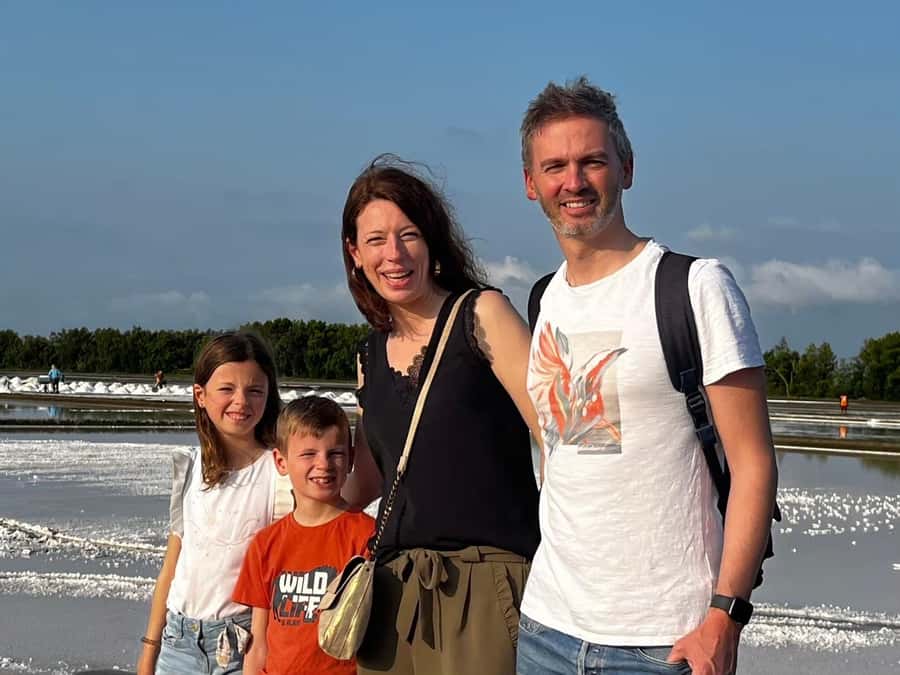
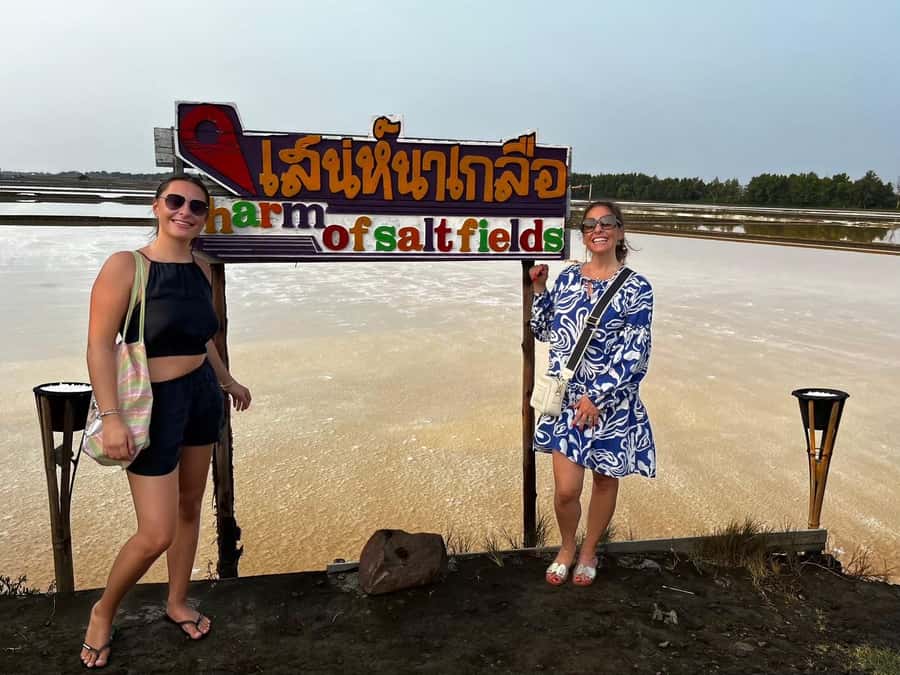
Salt-making is similar in value. Even if you’ve seen salt in supermarkets your whole life, watching the process is a different education. It turns “salt” into a real, physical craft. You’ll likely see steps that show how raw materials become usable product, and that kind of practical sight often sticks longer than another photo from a tourist spot.
The tour is also designed to match interests, at least in how your guide explains and selects what to emphasize. That’s why these side stops feel purposeful instead of random.



Thai cuisine break: what you pay for and why it’s worth it
The tour includes eating time at a handpicked restaurant, but meal costs aren’t included. That’s actually a good sign for value: it means you’re not locked into one fixed menu that might not fit your tastes or dietary limits. You pay for what you choose, and your guide helps steer you toward food that makes sense for the day’s route.
In a market-and-train schedule, food can be a make-or-break factor. Eating at the wrong time can turn the day into a rushed scramble. Eating at a planned restaurant helps you reset your energy so you can enjoy the rail segment without feeling hungry or cranky.
If you’re sensitive about spice or prefer milder flavors, tell your guide early. With a private, language-matched setup, you’ll usually get better results than pointing at a menu with tired hands.
Price and logistics: is $138 per person good value here?
At $138 per person for a 7-hour, private-format day trip, the real question isn’t just the sticker price—it’s what you’re getting for it. You’re paying for three things that usually cost money and time when you DIY:
First, you’re getting roundtrip hotel pickup and drop-off in a private AC vehicle. That’s not a small deal in Ratchaburi-area day trips, where the hard part is often transportation, not attraction tickets.
Second, you’re getting private language support. Your ticket includes a private licensed guide or interpreter fluent in your language (EN, ZH, ES, IT, FR, DE). That matters on days with fast transitions—floating market to train to temples—because you don’t just need directions. You need context, pacing, and reassurance you’re at the right place.
Third, you’re getting the practical big-ticket experiences bundled in: a private motor-boat ride in the floating market and the train ride sequence to the railway market. When you add those elements together, the price starts to feel more like a “buy the day’s structure” cost than just an entrance-fee stack.
Cost watch: meals cost extra, and there’s also an overtime fee of $19 per hour if the guide and driver go into overtime. You can’t control traffic, but you can reduce risk by planning for a relaxed day and not stacking other activities immediately after.
Language matching and a private group: why it changes everything
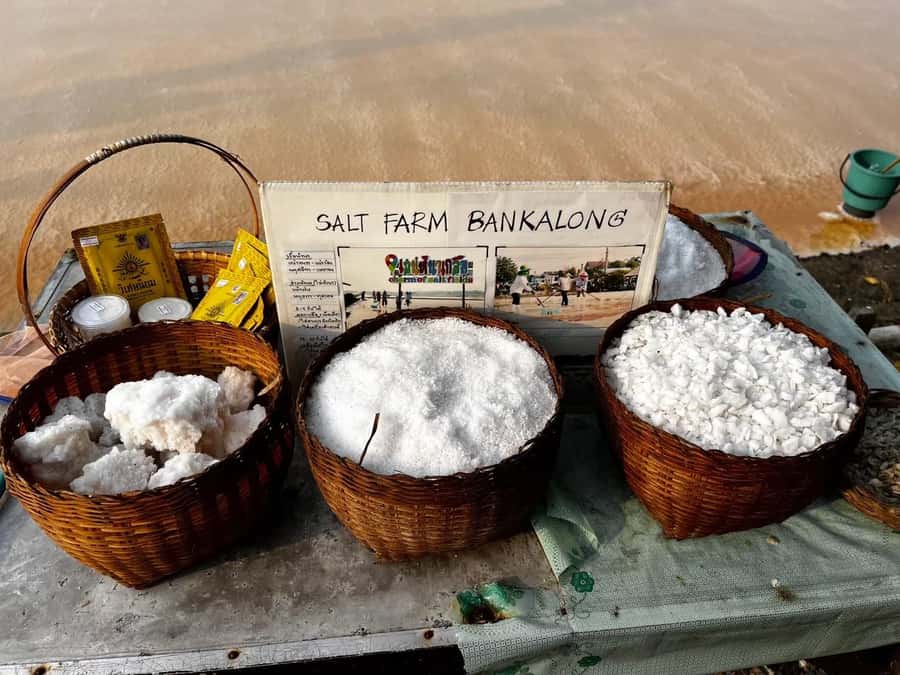
This is a private group experience, and the guide language is matched to your ticket’s choice. That’s helpful for two reasons.
One: you’ll actually understand what you’re seeing. Guides can explain the meaning behind stops like a Chinese shrine, and they can guide etiquette at temples. Even a few minutes of correct explanation can turn a “nice photo” moment into a real understanding moment.
Two: your guide can help with timing. Floating markets and railway markets reward attention, and the wrong timing can mean missing the best view or arriving when it’s already moving on. With a private setup, you’re not stuck following a slow group that’s detouring for snacks while you wait.
A small advantage you’ll notice: in multilingual settings, communication breaks less often. You can ask quick questions without feeling like you’re acting out your trip with gestures.
Practical tips that make the day smoother
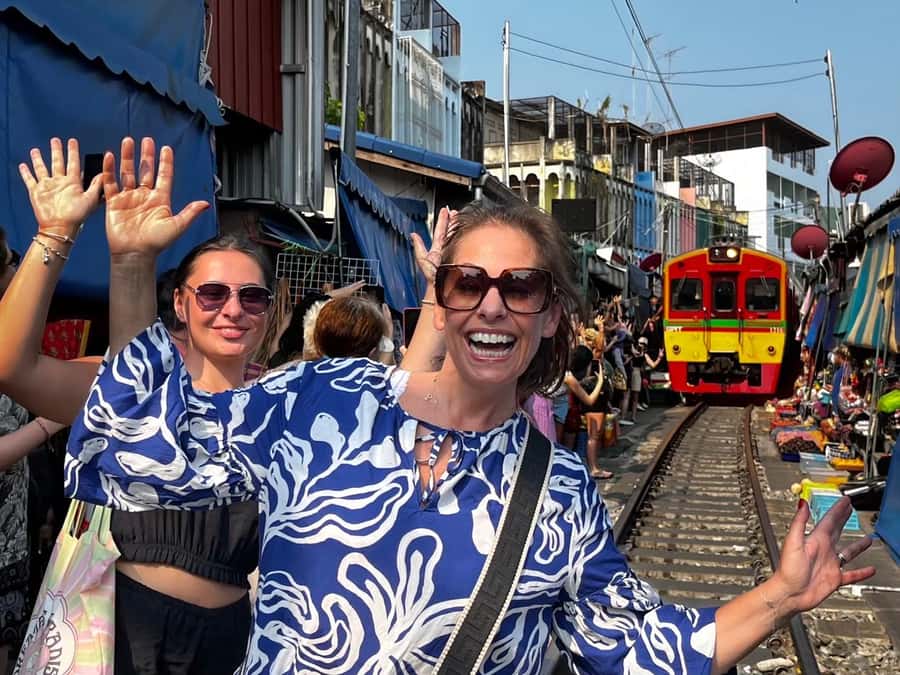
I’d pack like this: keep valuables minimal. The tour notes that valuables aren’t allowed, so plan on carrying only what you need. A charged smartphone is required, and it’s smart to bring a small water-resistant option if you’re worried about splashes during boat time.
Comfort matters more than style. Choose shoes that grip well for walking around market areas. Also, expect some uneven surfaces and quick movement between stops.
If you’re traveling with kids, note that infants can’t sit on laps and infant seats aren’t available. If you’re traveling with older family members, remember it’s not wheelchair accessible. In this kind of day—boat plus train area plus temple walking—mobility constraints can turn a fun day into stress.
And for timing: you’re out for about 7 hours, with starting times depending on availability. This is one of those trips where you should keep your schedule simple that day so you’re not late for pickup.
Who this floating-and-railway day trip is best for
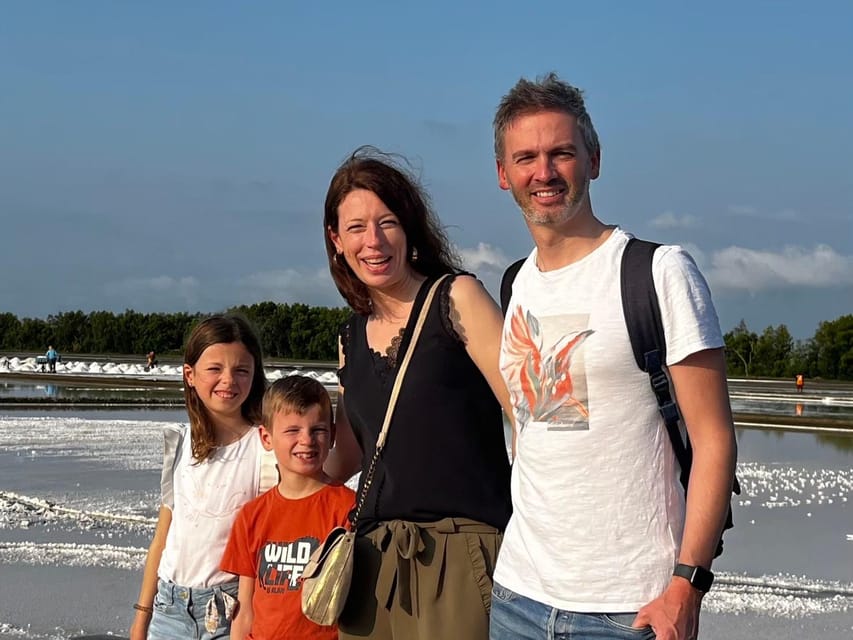
This tour is a strong fit if you want Thailand that feels local and specific, not just “big sights.” It’s especially good for people who like variety in one day: water markets plus rail-driven market life plus temple culture plus hands-on regional production stops.
It also works well for:
- Couples or friends who want a private pace and better explanations
- Travelers who care about being in the right place for the Maeklong train moment
- Anyone who likes markets but doesn’t want a day made only of shopping and crowds
- Multi-language groups, since the guide/interpreter matches EN, ZH, ES, IT, FR, or DE
It may be less ideal if you need step-free access or you’re counting on stroller travel, because the tour is not stroller accessible.
Should you book Floating & Railway markets?
I’d book it if you want a well-structured day where transportation, guiding, and the star moments are handled for you. The best value is in the combo: private boat at Damnoen Saduak, the train-driven spectacle at Maeklong Railway Market, and the added cultural weight of Phet Samut Worawihan Temple plus temple visits and production stops like coconut farming and salt-making.
Skip it only if you want a calm, low-movement day, or if you’re very sensitive to crowded market energy and standing/walking. If you can handle that, this one delivers a lot of “wow” without requiring you to be an expert in Thai logistics.
If you book, do two things: bring a charged smartphone and wear comfortable shoes. That alone turns the day from stressful into smooth.
FAQ
How long is the Floating & Railway markets experience?
The duration is 7 hours.
What is included in the price?
You get a private licensed guide or interpreter in your chosen language, private air-conditioned vehicle with hotel pickup and drop-off, a private motor-boat ride in the floating market, and travel accident insurance (max coverage 1,000,000 THB per person).
Which languages are available for the live guide?
The languages offered are German, English, Chinese, French, Italian, and Spanish.
Is meals included in the tour?
Meal costs are not included for yourself or your guide. You’ll eat at a handpicked restaurant during the day, but you pay for what you order.
Does the tour include hotel pickup and drop-off?
Yes. Pickup and drop-off are included for hotels near selected BTS skytrain stations in the Surasak (Sathon)-Siam-Phaya Thai-Sukhumvit area up to Asoke.
Do I get a ride on the train to Mae Klong?
Yes. The experience includes riding a local train bound for Mae Klong station.
What should I bring?
You should bring a charged smartphone.
Can I cancel for a full refund?
Yes. You can cancel up to 24 hours in advance for a full refund.
More Tour Reviews in Bangkok

Just In: Fresh Bangkok Reviews


Train Experiences, compared.
 ★ 4.5Damnoen Saduak Market and Maeklong Railway MarketFrom $2526,723 reviews
 ★ 4.5The Old Siam: Damnoen Saduak and Maeklong Railway MarketFrom $3210,992 reviews
 ★ 4.7Train Market & Floating Market with Boat RideFrom $259,547 reviews
 ★ 4.5Half-Day Railway Market and Floating Market Tour in ThailandFrom $323,924 reviews
 ★ 4.7Damnoen Saduak, Train Market & Mahanakhon Day TripFrom $232,162 reviews
 ★ 4.5Damnoen Saduak Floating Market and Maeklong Railway Market TourFrom $441,588 reviews
 ★ 5.0Day Trip to Bangkok Floating Market & Maeklong RailwayFrom $301,528 reviews
 ★ 4.6Railway and Floating Market Tour with Dragon TempleFrom $161,225 reviews
Browse the lists this tour appears in