Review · BANGKOK
The Lens: Once-a-Year Moment at Na Satta Park Light Festival
Dragon pagodas and a once-a-year light show.
This is a packed Ratchaburi day that mixes three classic Thai stops with one unforgettable night scene at Na Satta Park Light Festival. I especially like how Wat Samphran gives you both wide, dramatic angles and close-up texture shots of the famous dragon-wrapped pagoda. The ride itself feels like part of the story too, because you’re moving from markets to temples without losing the thread of the day’s visual theme: color, contrast, and timing.
One thing to consider: it’s a long, full-day run with a lot of road time. You’ll also be on the clock at the markets, so if you hate crowds or want unhurried browsing, plan to shoot smart and shop only when you spot something you truly want.
In This Review
- Key moments that make this day work
- Bangkok to Ratchaburi in one photo-focused day
- Wat Samphran: the dragon temple that’s built for your camera
- Damnoen Saduak floating market: color on the water, motion in your frame
- Mae Klong Railway Market: when the train changes everything
- The Buffalo Amphawa free time: a breather in between highlights
- Na Satta Park Light Festival: long exposures and temple replicas at night
- Transportation, timing, and why the schedule feels manageable
- Price and value: is $154 worth it?
- Who this tour suits best (and who should skip it)
- Should you book the Na Satta light festival day trip?
- FAQ
- Where do I meet the tour?
- How long is the tour?
- What time do we start?
- Is transportation included?
- What language is the guide?
- Which big stops are included?
- Are admission fees included for the light festival?
- Is lunch or dinner included?
- What should I bring?
- Is the tour safe and well organized?
Key moments that make this day work
- Wat Samphran Dragon Temple angles: red-pink pagoda + giant dragon spirals that look good in both wide shots and details
- Damnoen Saduak floating market reflections: boat life, produce colors, and the water giving you natural “frames”
- Mae Klong Railway Market timing: stalls react when the train comes, creating a photo moment built on seconds
- Na Satta Park at night: illuminated temple replicas and installations made for long-exposure photos
- Guides who manage the details: people like Yut, Naresh, and Boyd are repeatedly praised for photo help and cultural context
Bangkok to Ratchaburi in one photo-focused day
This trip is built for people who like to tell a story with photos, not just check boxes. You start in Bangkok at Hug Thai in CentralWorld, then settle into an air-conditioned van for the run toward Ratchaburi. The schedule is designed around a late-morning start so you’re not fighting the earliest crowds and sun.
What you get for the price (about $154 per person) is less about luxury and more about value-through-structure. You’re paying for transportation from Bangkok, a guide in English, admission for the evening lighting event, and a day plan that strings together four major “signature” scenes without you needing to hire drivers between stops. Lunch and dinner aren’t included, but the itinerary includes street-food time and a free break at The Buffalo Amphawa.
Still deciding? Line this one up against a few Bangkok favourites first.
- Bangkok: Damnoen Saduak Market and Maeklong Railway Market
★ 4.5 · 26,723 reviews - The Old Siam: Damnoen Saduak and Maeklong Railway Market
★ 4.5 · 10,992 reviews - From Bangkok: Ayutthaya Temples Guided Tour with Lunch
★ 4.7 · 10,535 reviews
Wat Samphran: the dragon temple that’s built for your camera
Wat Samphran is the kind of place where you instantly know what you want to shoot. The structure is surreal: a bright red-pink tower wrapped in a giant dragon spiraling up to the top. It’s dramatic from a distance, but it also rewards closer shots because the dragon’s surface and the temple’s edges create repeating patterns.
You get about an hour here, which sounds short until you use it right. I’d treat this stop as two photo missions: first, wide frames that show the pagoda and dragon together; second, tighter compositions that highlight texture and the dragon’s curve. If you travel with a phone camera, you can still get strong shots by backing up a bit and letting the dragon fill the vertical space.
Practical note: plan to move slowly but decisively. The dragon temple is visually busy, so it’s easy to take 200 nearly identical photos. A guide can help you pick cleaner angles faster, and several guides on this tour are praised for doing exactly that—taking many photos and videos for the group so you don’t have to choose between sightseeing and capturing everything.
Damnoen Saduak floating market: color on the water, motion in your frame
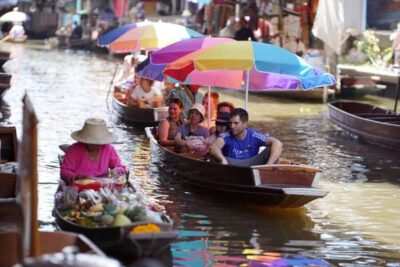
Damnoen Saduak is one of Thailand’s best-known floating markets, and that fame isn’t random. The best images come from reflections and the way boats, paddlers, and produce all sit on a moving surface. Expect colorful goods, river life, and plenty of “action” for street-style portraits and lifestyle shots.
You’ll have around an hour at the market. That’s enough to get a feel for the layout, grab reflection shots, and hunt for one or two standout scenes. Here’s my balancing advice: don’t try to photograph everything. Pick a lane—like reflections near the edges—or focus on people and hands at work. The boats and river motion help you, but only if you keep your camera pointed at what’s changing.
One practical heads-up from experience on similar markets: prices can be high here. If you’re shopping, compare quickly and only buy what you truly want. The tour also includes a street-food market stop later, so you don’t have to rely on floating-market snacks for your whole day.
Mae Klong Railway Market: when the train changes everything
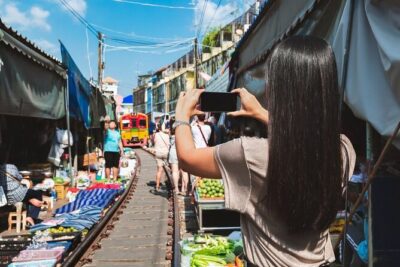
Mae Klong Railway Market is the stop people remember for a reason. It’s a market literally on the railway line, and when the train comes, the stalls adjust fast. That means your best photos depend on timing and composition, not luck.
You’ll get about an hour at the market, and you should use that time to watch how the space works before you go all-in on shooting. Practice your framing: where the train will appear, what foreground elements will help or block, and how you’ll protect your camera from quick movement around you. This is the kind of scene where you don’t want to be fumbling with settings.
A nice detail from the experience: the train passes close enough that you can interact with people on the train—think quick high-fives if the timing lines up. It’s exciting, but it’s also intense. If you’re sensitive to crowds or sudden changes, keep your safety distance and prioritize stable shots.

The Buffalo Amphawa free time: a breather in between highlights
After the railway and floating market hits, you get about an hour of free time at The Buffalo Amphawa. This is your chance to slow down after the visual sprint. Use it to refill water, step away from the busiest street areas, and reset before the evening light festival.
Because the stop is free time, you’ll want to decide your own goal quickly. You can look around at a more relaxed pace, snack if you didn’t earlier, or just take a moment to breathe. This break matters because Na Satta Park is where the day really goes night-mode, and you’ll want energy left for long-exposure photography.
Na Satta Park Light Festival: long exposures and temple replicas at night
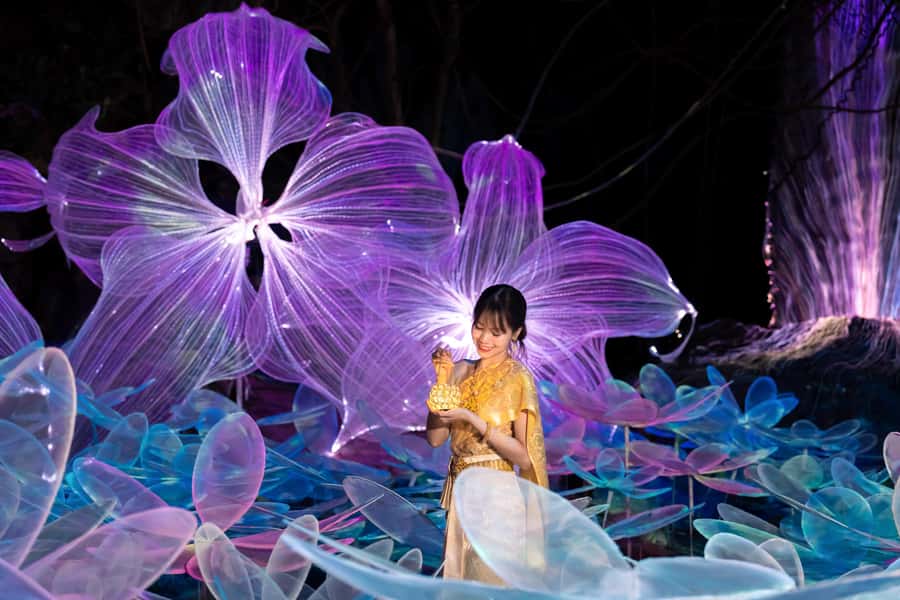
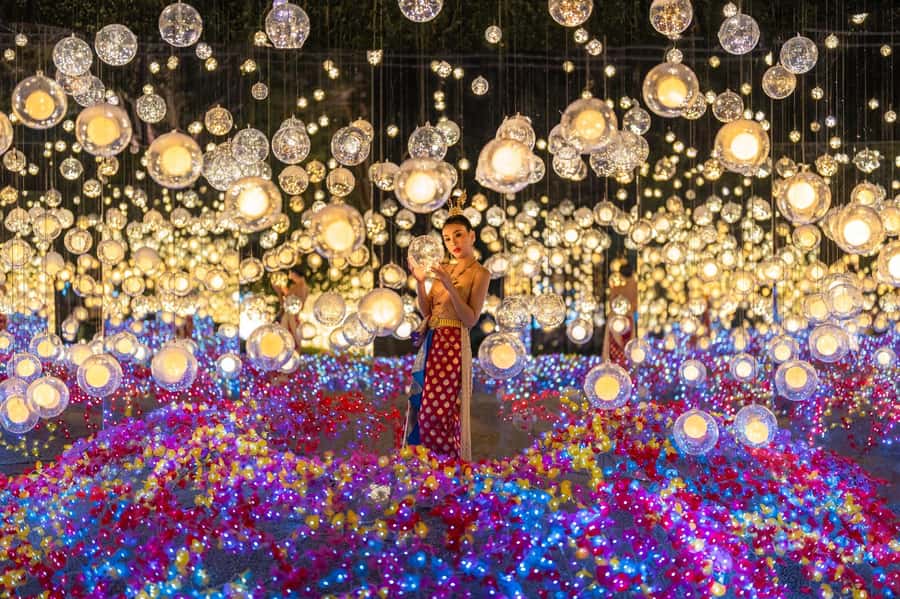
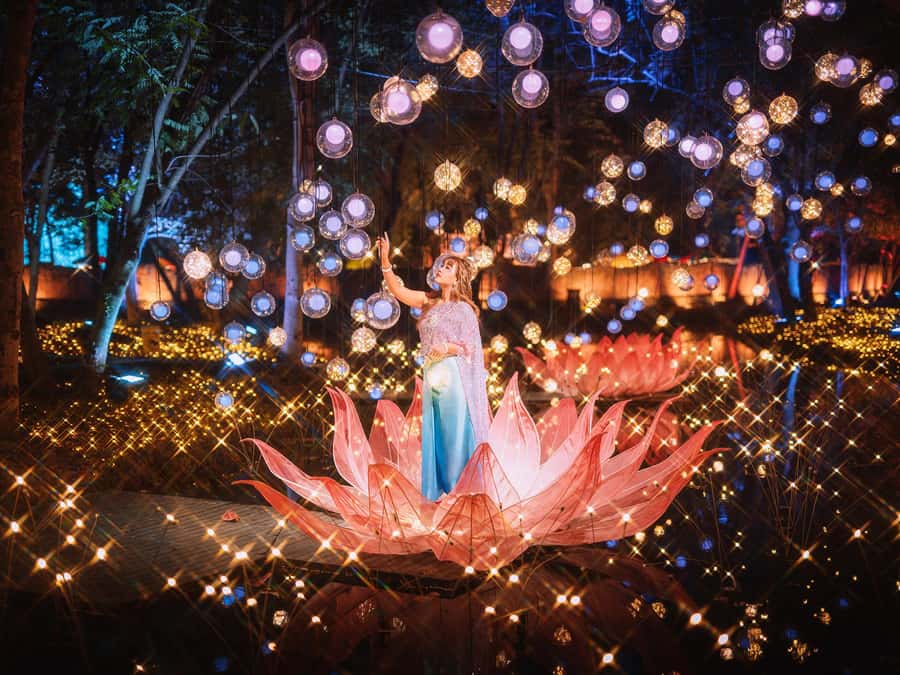
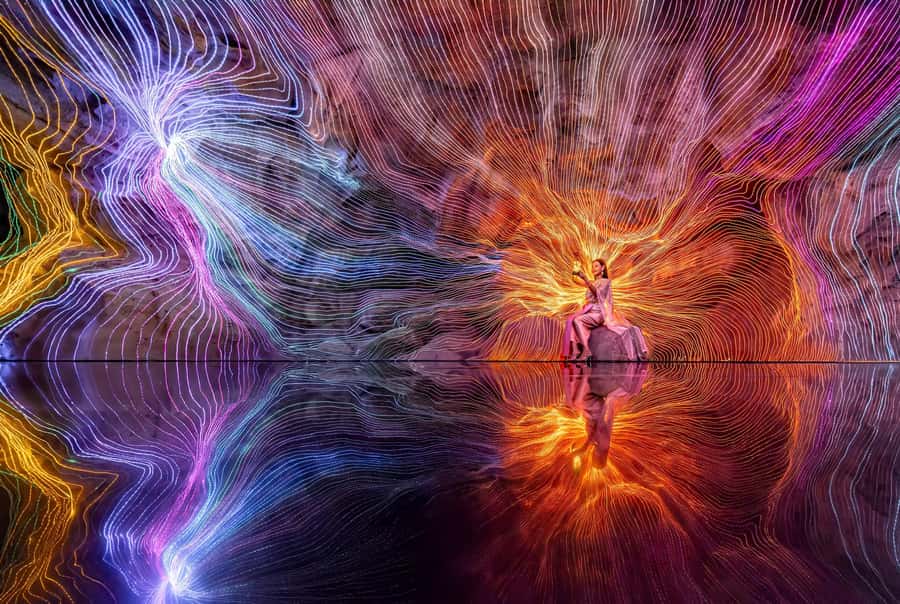
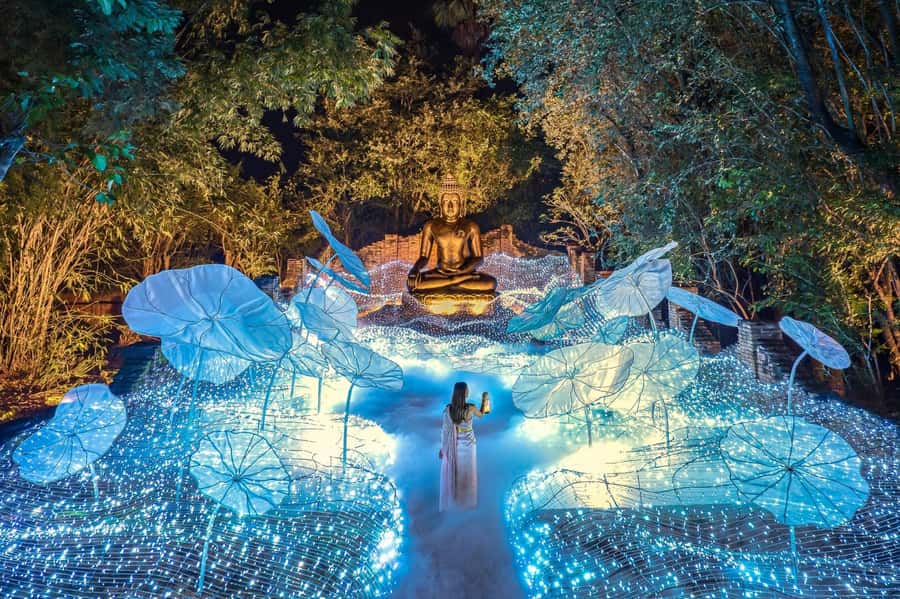
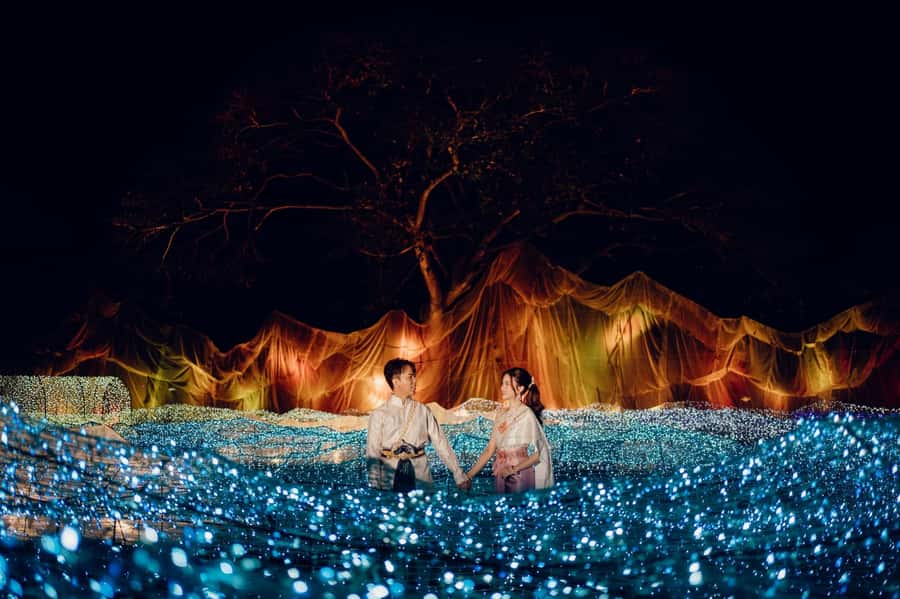
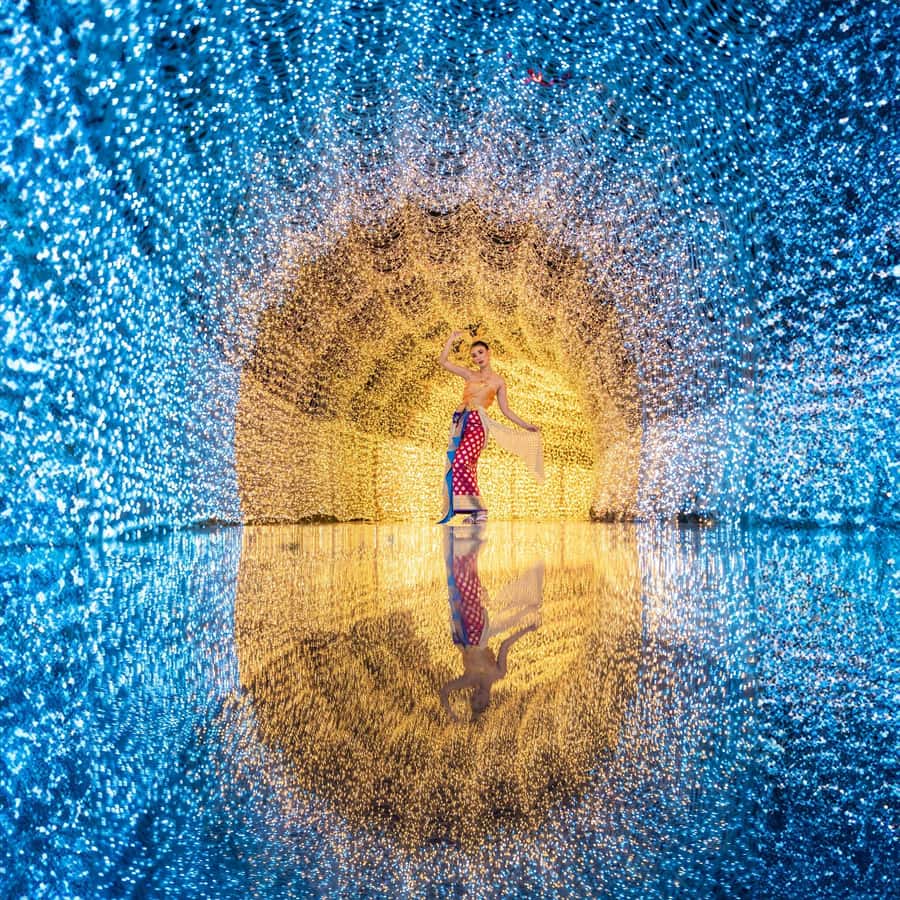
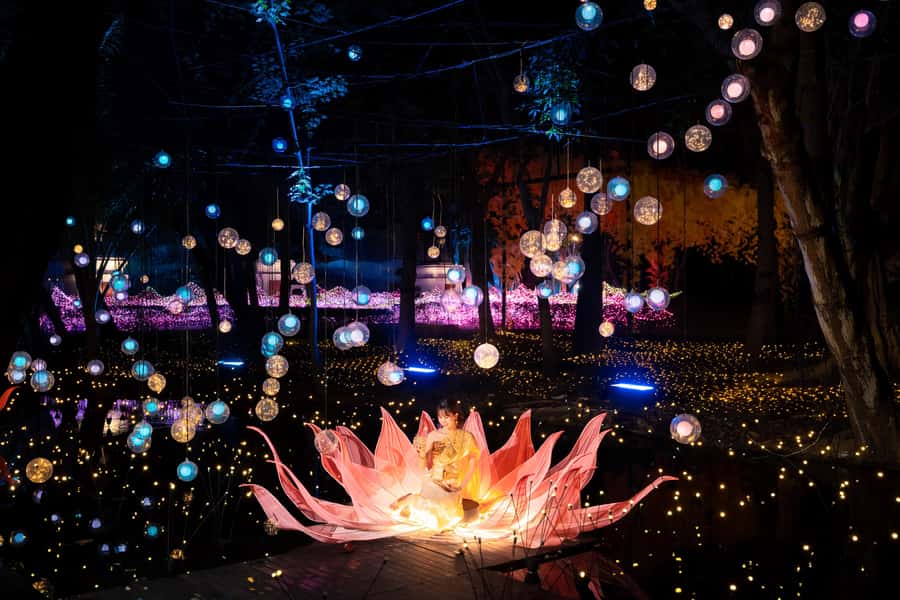
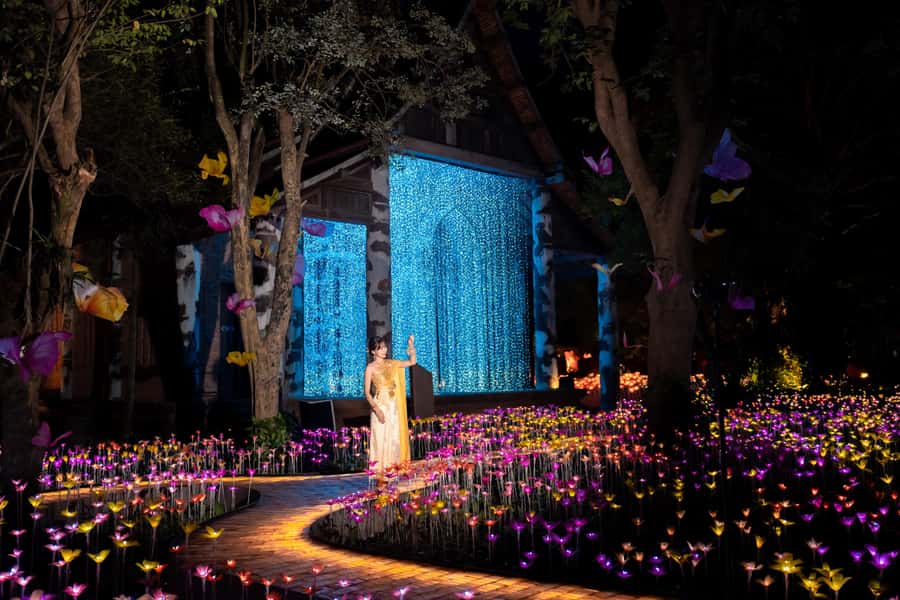
This is the reason the trip exists. As golden hour fades, Na Satta Park turns into a glowing wonderland—illuminated sculptures, temple replicas bathed in color, and installations that beg you to shoot with slow shutter speeds. The light festival is specifically timed for the shift from dusk into full night, which gives you two different looks: warm ambient light, then the cooler drama of the illuminated scenes.
You’ll have about 1.5 hours at the park. That’s enough time to do a proper photo pass if you come prepared and don’t spend the first 20 minutes just standing there staring. I suggest setting up a simple plan:
- Start with wide compositions to capture the scale of the park’s light installations.
- Then move into mid-range scenes for cleaner storytelling shots.
- Save any tripod-based long exposures for the moments where you have a stable subject and controlled background.
If you’re traveling with a guide like Yut or Boyd, you’ll likely get help choosing the best photo spots. Multiple guides are praised for going beyond basic explanations—sharing guidance on where to stand, helping with photos and videos, and keeping people comfortable while they wait for lighting to hit just right.
What matters most here is not just the photos. It’s the atmosphere: you’re walking through a scene that feels like a dream version of temple architecture and mythic design. Pictures help, but the real payoff is experiencing how the lights shape your sense of depth and movement when you’re actually there.
Transportation, timing, and why the schedule feels manageable
This is a 10-hour day, and yes, there’s a lot of driving. The good news is that the van rides are air-conditioned and paced to keep you moving without losing context. You spend about 100 minutes in the van toward the first big temple stop, then you keep the day moving through the markets, with another 100 minutes back to Bangkok.
The itinerary works because it groups similar “visual logic” moments. First you go temple surreal (Wat Samphran). Then you go water-and-people (Damnoen Saduak). Then you go train timing (Mae Klong). Then you go calmer water-town vibes (The Buffalo Amphawa). Then you go lighting, long exposure, and night color at Na Satta Park.
If you’re the type who likes to wander alone without asking questions, you’ll still benefit from the guide because the guide helps with photo positioning and cultural context so you’re not guessing what matters at each stop. Several people specifically mention the guide taking lots of photos and videos for the group, which is a big deal when the schedule is fast.
Price and value: is $154 worth it?
For $154 per person, you’re not just buying a ticket to a light festival. You’re paying for a full day’s logistics:
- round-trip transport from Bangkok in a comfortable vehicle
- an English-speaking local guide
- entry for the evening lighting event
- admission-related coverage for Na Satta Cultural Park
- planned activities at Wat Samphran and the markets
- insurance included
What’s not included is also clear: lunch and dinner aren’t part of the package, and alcohol is not included. You’ll need to budget for your own meals and drinks.
So is it worth it? If you’re staying in Bangkok and you want all of these scenes in one day without coordinating separate hires, then yes, this format tends to be a good value. The biggest cost is usually time and coordination, not just transport. This tour buys you time back—and helps you avoid spending hours figuring out routes and timing for market situations like Mae Klong.
Who this tour suits best (and who should skip it)
This trip is a great fit if:
- you care about photography and want structured photo opportunities at each stop
- you like cultural stops that look very different from each other (temple, river market, railway market, night festival)
- you’d rather have a guide manage the pace than you drive yourself between locations
It may not be for you if:
- you hate long days and lots of road time
- you want total freedom to linger at a single market for hours
- you’re traveling with very young kids or you fall outside the stated age limits
In general, this feels best for couples, friends, and solo travelers who enjoy a fast-but-not-rushed day plan—and for families who want major highlights without handling every logistical detail. One family shared that their day felt well-paced enough to keep kids engaged, with time to explore at each place rather than pure rushing.
Should you book the Na Satta light festival day trip?
I’d book it if Na Satta Park is on your must-see list and you also want the day to include the best-known stops nearby. The light festival portion is a genuine highlight, and the rest of the itinerary supports it instead of feeling like filler.
I’d hesitate if you’re mainly chasing quiet sightseeing. This is a day with crowds at the markets and a tight schedule at each major photo location. But if you like the energy—dragon temple drama, floating market reflections, railway train timing, then night lights—you’ll get a lot out of these 10 hours.
If you can, ask for a guide known for photo help like Yut. And when you pack, bring sunscreen, a sun hat, and your camera. At Na Satta Park, you’ll want to be ready for low-light shots, not scrambling for gear.
FAQ
Where do I meet the tour?
Meet at Hug Thai @ CentralWorld on the ground floor at the Hug Thai Gate, near the Centara Grand Hotel Entrance.
How long is the tour?
The duration is 10 hours.
What time do we start?
The tour uses a late-morning departure to avoid early wake-ups and crowds.
Is transportation included?
Yes. The tour includes transportation by comfortable air-conditioned vehicle from Bangkok.
What language is the guide?
The guide is available in English.
Which big stops are included?
Wat Samphran (Dragon Temple), Damnoen Saduak Floating Market, Mae Klong Railway Market, The Buffalo Amphawa free time, and Na Satta Park Light Festival.
Are admission fees included for the light festival?
Yes. The evening ticket for Na Satta Cultural Park is included.
Is lunch or dinner included?
No. Lunch and dinner are not included, and alcohol drinks are not included.
What should I bring?
Bring sunglasses, a sun hat, sunscreen, and a camera.
Is the tour safe and well organized?
The transport is highly rated, and the experience includes insurance. You’ll also be in touch beforehand to confirm your meeting point or hotel pick-up details.