Review · BANGKOK
4 Days Expedition From Bangkok to Angkor Wat
Bangkok to Angkor in four days sounds intense. It is, but this tour is built for you to see the big Angkor sites and a private Tonlé Sap cruise without spending your time wrestling buses and border desks. You get a licensed guide, tickets, and three nights in Siem Reap, plus pickup and drop-off from Bangkok, Pattaya, or Ko Chang.
What I like most is the focus on time-saving, door-to-door transfers and the fact that you’re not left guessing at what to look for in the temples. The itinerary hits Angkor Wat, Angkor Thom (with Bayon), Ta Prohm, plus Banteay Srei and several quieter temple stops that make the trip feel more complete. Many guests also highlight guides like Vithyea, Yuth, Sava, Chhay, and Phon Raks for clear English and strong storytelling.
One thing to consider: you’ll spend a lot of time on the move—early pickup, a long border day, and then two packed temple days. If you want slow mornings and lots of free time, this plan may feel like a sprint.
In This Review
- Key highlights worth planning for
- Crossing Poipet and getting to Siem Reap without the paperwork spiral
- Tonlé Sap Lake cruise with a floating village: the best change of pace
- Angkor Wat, Angkor Thom, Bayon, Ta Prohm: Day 2’s big-name hits
- Angkor Wat
- Angkor Thom + Bayon
- Ta Prohm
- Banteay Srei and the quieter temple circuit: Day 3’s “more than the headline”
- Banteay Srei
- Preah Khan
- Neak Pean, Ta Som, Eastern Mebon, Pre Rup
- Day 4: the temple days end, the transfer day begins
- Hotels, guides, and why the right person changes everything
- Price vs reality: what you’re paying for at $690 per person
- Who should book this private Bangkok-to-Angkor plan?
- Should you book? My practical decision checklist
- FAQ
- What’s the total duration of this Bangkok to Angkor Wat trip?
- Does the price include the Cambodia visa?
- Are temple entrance tickets included?
- What’s included for the first day after crossing the border?
- Where will I stay?
- How long are the temple visits on Day 2 and Day 3?
- What if I don’t want a private group?
- Is lunch or dinner included?
Key highlights worth planning for
- Private Tonlé Sap boat + floating village on a calmer afternoon schedule
- Angkor Wat, Bayon, Ta Prohm, Banteay Srei all included with guided context
- 3 nights in a 4-star hotel with breakfast, not just day trips
- Licensed guiding and temple tickets included, so you won’t budget temple-by-temple
- Border help at Poipet to reduce the usual paperwork stress
- Small private group (up to 15 people) with hotel pickup and drop-off
Crossing Poipet and getting to Siem Reap without the paperwork spiral
The adventure starts early. Pickup is around 6:30am from your hotel in Bangkok, Pattaya, or Ko Chang, then you head toward Poi Pet Border in Cambodia. Expect around a 7-hour travel block (the day’s timing can vary with border flow), and the tour explicitly notes that your Cambodia visa is not included.
This is the point where good organization actually matters. Reviews repeatedly mention the border feeling confusing or intimidating, especially if English support is limited around you. The tour’s value is that you’re guided through the process and not left trying to translate everything while crowds shuffle forward. Even when the border itself is chaotic, having a driver and someone coordinating steps helps you keep moving.
If you’re using an e-Visa, the tour guidance is specific: print your e-visa two copies. If you’re doing visa on arrival at Poipet, you’ll need one ordinal photo (the tour notes this requirement). If you hold an ASEAN passport, the tour says you get free visa for 30 days. If you hold an Indian passport, it advises printing your hotel booking and proof of your flight out of Thailand.
Practical tip: start this trip with your documents ready and organized in one folder. You don’t want to be the person digging through a backpack while everyone else is already queuing.
The long haul east to Angkor
- 2-Day Angkor Wat Tour from Bangkok
★ 4.5 · 206 reviews - Angkor Wat 3-Day Tour from Bangkok
★ 4.5 · 58 reviews - Angkor Wat 2-Day Tour from Bangkok
★ 5.0 · 8 reviews
Tonlé Sap Lake cruise with a floating village: the best change of pace
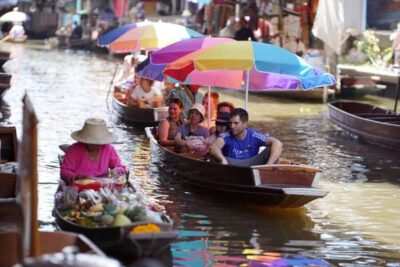
On Day 1, after the border and travel, you shift gears in the afternoon with a private boat tour on Tonlé Sap Lake, including the floating village. The schedule shows an afternoon slot (around 3:30pm) with return to your hotel at about 5:30pm.
This is a smart break from temple overload. Angkor is about stone and history, and Tonlé Sap is about daily life on the water—boats, homes on stilts, and an environment that makes you slow down. And because it’s private, you’re not squeezed into a cattle-cart rhythm with strangers. You can ask questions, pause for photos, and get the view without rushing.
The day ends with a standard pattern: your tour returns you to Siem Reap, and the evening is yours. Many guests use that time for Pub Street, restaurants, and the night market nearby, which is exactly when you’ll want flexibility. If you’d rather rest, you can. If you want a quick walk, you can.
Angkor Wat, Angkor Thom, Bayon, Ta Prohm: Day 2’s big-name hits
Day 2 is the core Angkor day. It’s laid out to move you through the major zones efficiently, with guided stops and temple entry included.
Angkor Wat
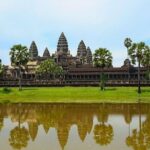
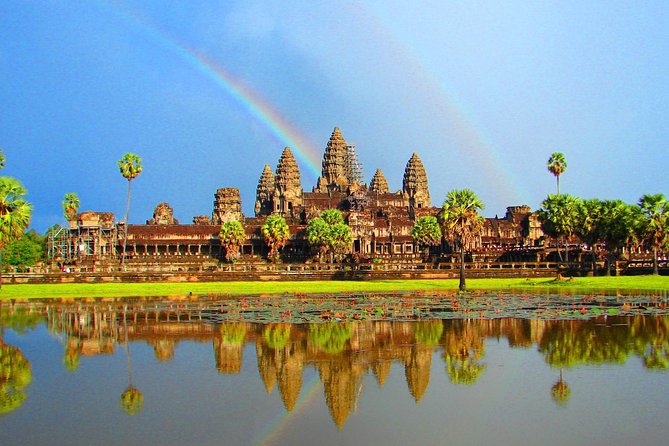
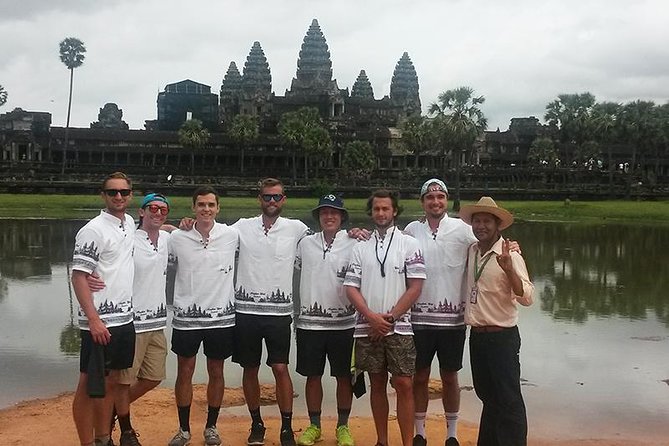
You start with Angkor Wat (about 2 hours). This is the site most people picture before they arrive: massive scale, heavy symmetry, and that feeling that the whole place was designed to make you walk slower. A guide really helps here because Angkor Wat is not just “pretty.” It’s built with meaning—layouts, directions, and iconography—and you’ll get far more from it with someone explaining what you’re seeing.
Worth putting side by side before you book this Bangkok tour:
Angkor Thom + Bayon
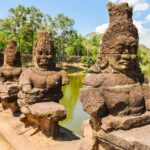
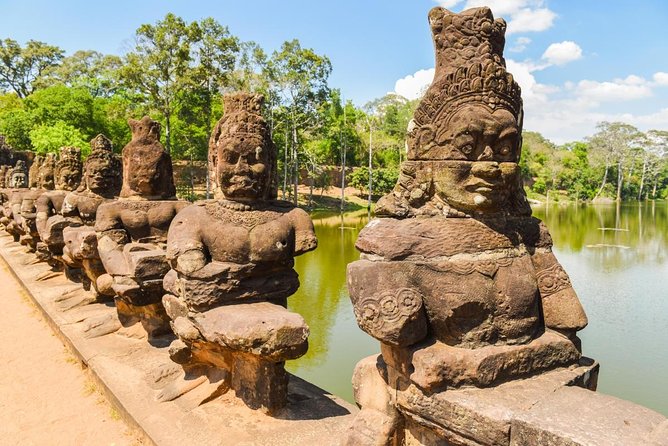
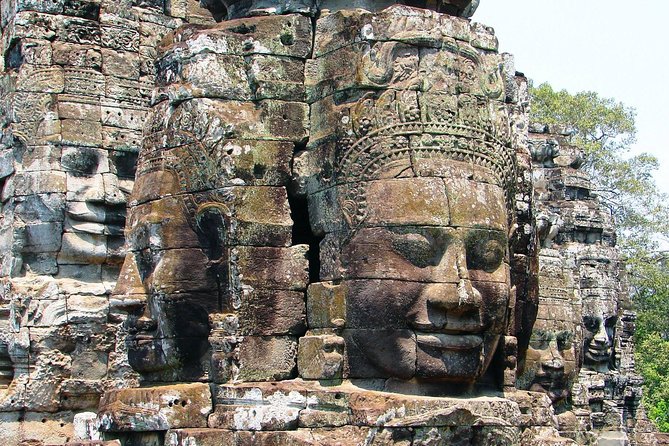
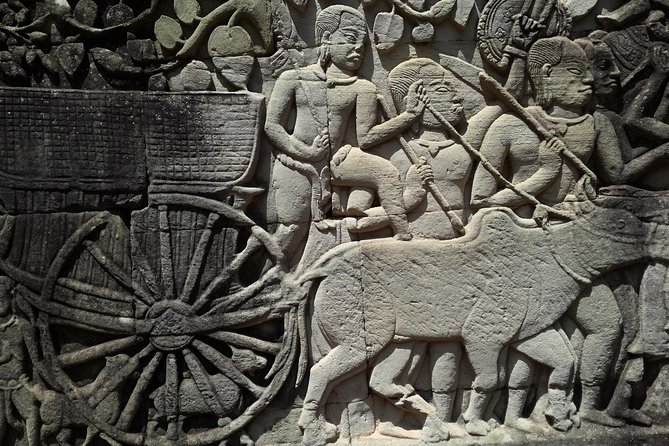
Next is Angkor Thom, the walled city area (the tour notes the walls and moat protecting the complex). Within it, you visit Bayon Temple (about 1 hour). Bayon is famous for faces carved into towers, and your guide can help you spot the details without you hunting for them alone.
The pacing here matters. If you’re doing Angkor on your own, it’s easy to bounce from spot to spot and miss the “why.” This route keeps you moving, but not randomly.
Ta Prohm
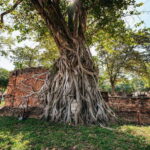
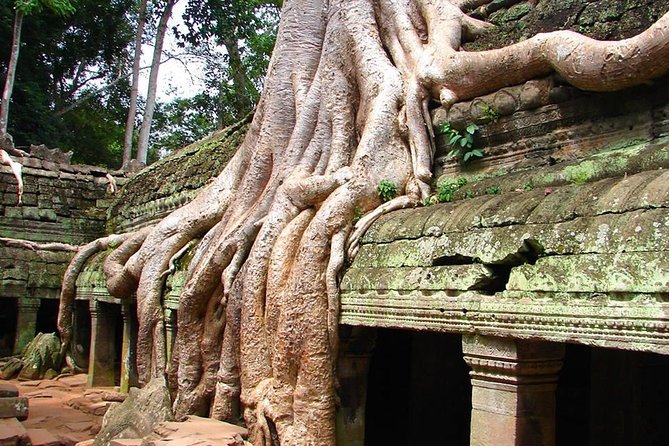
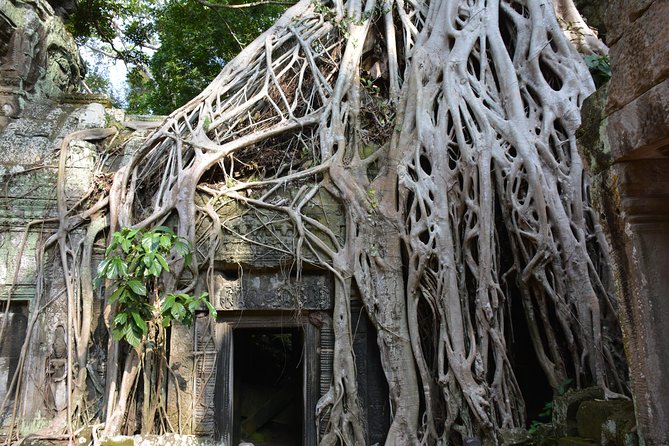
Finally, you go to Ta Prohm (about 1 hour). The tour description points out that Ta Prohm still has forest covering parts of the site and is known from Tomb Raider. It’s one of those temples where the chaos of roots and stone feels almost alive, but again, the guide adds context so it doesn’t become only a photo stop.
Possible drawback on Day 2: it’s a lot of heavyweight sites in one day. If you’re sensitive to heat or crowds, plan for breaks the way your guide suggests—water, shade, and short pauses. This is also a day where respectful dress matters. The tour notes that short dress isn’t allowed at temples, so bring something that covers appropriately.
Banteay Srei and the quieter temple circuit: Day 3’s “more than the headline”
Day 3 is where the trip feels like more than a checklist. You leave with several temples, each with its own mood, and the stop lengths range from 30 minutes to about 3 hours depending on the site.
Banteay Srei
The day opens with Banteay Srei (about 3 hours). This one is different. It’s described as a Shiva temple about 37km from Siem Reap, and the key selling point is the carving and the pink sandstone used to build it. This is the stop where you’ll likely notice finer details—ornamentation and stonework—because it’s not just “huge ruins.” It’s crafted.
Preah Khan
Next is Preah Khan (about 1 hour). The tour description calls it one of the biggest temples in the greater Angkor circuit, built around 1191. The note that it has beautiful and less crowned features suggests a temple you can take in at a slower pace.
Neak Pean, Ta Som, Eastern Mebon, Pre Rup
After that, you’ll move through a string of smaller, themed sites with shorter time blocks:
- Neak Pean (about 40 minutes), described as a small temple in the center of an ancient water bank, once functioning as a chanting hospital in the 12th century.
- Ta Som (about 30 minutes), described as peaceful, with a tree-covered tower on the eastern gate.
- Eastern Mebon (about 30 minutes), placed in the center of a baray (water bank), and tied to Shiva Ratree ceremonies.
- Pre Rup (about 1 hour), similar to Mebon but taller, described as a crematorium in the 10th century and a good viewpoint.
Day 3’s win is variety. You’ll go from ornate pink sandstone carving to temple layouts tied to water and religious ceremonies, then to a viewpoint where you can see the area from above. And since these are not always the first stops on a rushy day trip, they help the overall trip feel more balanced.
One small caution: because Day 3 is full, you’ll want to keep your energy. You won’t have a “throw your phone in a bag and just wander” kind of day; this is organized temple time, with short breaks between stops.
Day 4: the temple days end, the transfer day begins
Day 4 is simpler: after breakfast, you check out and transfer back to Thailand—Bangkok, Pattaya, or Ko Chang. The tour notes about 7 hours for this transfer block.
The key thing to understand is emotional pacing. You’ll feel like you just got into the rhythm of Angkor, then it’s time to pack and go. So if you like one last walk through Siem Reap, it’s not really built into the plan; you’ll want to use Day 1 evening for that kind of freedom.
Also, Day 4 shows “temple ticket free,” which makes sense: the trip is about seeing, not adding one more site on your departure day.
Hotels, guides, and why the right person changes everything
This package includes three nights in a 4-star hotel with daily breakfast. That’s a big deal for value because it removes the “what should I sleep in?” stress while you’re busy with temple logistics. Some guests specifically mention the Tara Angkor Hotel as a high-quality stay, including breakfast and a clean, comfortable room; one review also notes the hotel was near the Angkor National Museum area.
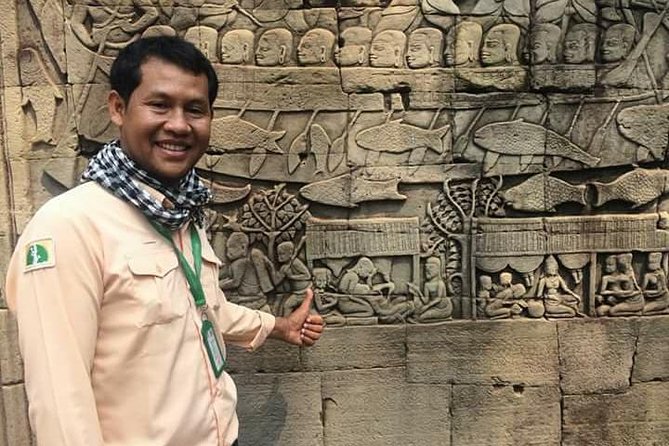
Now the real differentiator is the guide. The tour uses licensed tour guides, and the reviews you can learn from show a strong pattern: excellent English and practical explanations that help you understand what you’re looking at. Names that come up include Vithyea, Yuth, Sava, Chhay, and Phon Raks, plus the idea that the guide brings humor and context, not just dates and labels.
A guide can also make your day feel less exhausting. When you know what to look for—water symbolism, why a face is placed there, what that ruin pattern means—you walk differently. You’re not just moving through stone. You’re reading it.
You’ll also be traveling by air-conditioned private vehicle, with hotel pickup and drop-off. Drivers matter too. Reviews mention smooth transportation and prompt, courteous service. Even the people who found the border challenging still described the overall experience as well handled once you reached the Siem Reap side.
Optional local flavor: one guest mentions their guide taking them around a night market for Cambodian street food. That’s not a guarantee baked into the formal schedule, but it points to something you should expect from a good guide: they can help you use your evening time well.
Price vs reality: what you’re paying for at $690 per person
At $690 per person, this is positioned as a private cross-border package, not a budget backpacker approach. What makes it feel reasonable is that several expensive-per-day pieces are already included:
- 3 nights accommodation (4-star) + breakfast
- licensed guiding
- temple tickets
- private transfers by air-conditioned vehicle
- private Tonlé Sap cruise (with floating village)
Lunch and dinner are not included, and neither is your Cambodia visa. So you’ll still pay for meals on top. But you won’t have the constant add-ons that happen when you cobble Angkor together yourself—ticket lines, guide negotiation, and the time cost of figuring routes.
Is it “cheap”? No. But it’s also not just a hotel + driver with no support. Reviews praise the guides’ English and the way everything is arranged, including the sense that border assistance reduces your stress.
One real-world caution: if you’re paying for visa on arrival, plan for the possibility of extra steps or fees depending on the situation at the border. The tour notes visa options, photos, and e-visa printing, so your best defense is doing your paperwork carefully before you go.
Who should book this private Bangkok-to-Angkor plan?
This tour is a strong match if:
- you want a private Angkor experience with a licensed guide
- you prefer door-to-door transfers instead of figuring out cross-border transport on your own
- you want a mix of major temples and secondary sites (Banteay Srei plus Pre Rup and friends)
- you’re okay with a structured schedule and longer travel days
It may not be the best fit if:
- you want lots of free time each day (Day 2 and Day 3 are temple-heavy)
- you hate early starts and long-distance driving
- you’re trying to keep costs ultra-low and don’t want to budget for meals and visa
Also, keep in mind the trip is designed for a small private group (minimum 1 person, maximum 15 pax). That’s nice. It usually means better attention than large group tours.
Should you book? My practical decision checklist
If your goal is Angkor Wat done properly—with context, correct pacing, and a real break on the lake—this is worth serious consideration. You’re paying for organization: hotel included, tickets included, guiding included, and private lake time.
I’d book it if you can check these boxes:
- You have (or will prepare) the visa paperwork so border steps go smoothly
- You want a guided route that hits both the headline temples and the carved-stone highlights like Banteay Srei
- You’re comfortable with two packed days and then a departure day transfer
I’d think twice if you’re the kind of traveler who wants to wander slowly without a plan, because this itinerary is built around efficiency.
FAQ
What’s the total duration of this Bangkok to Angkor Wat trip?
The tour runs about 4 days, including cross-border travel, three nights in Siem Reap, guided temple time, and the transfer back.
Does the price include the Cambodia visa?
No. The tour notes that visa is not included. You can apply for an e-Visa online or do visa on arrival at Poi Pet.
Are temple entrance tickets included?
Yes. Temple tickets are included in the package.
What’s included for the first day after crossing the border?
After pickup and border entry, you visit the Tonlé Sap area with a private boat cruise that includes the floating village, then you return to your hotel in the evening.
Where will I stay?
You get three nights in a 4-star hotel in Siem Reap, with daily breakfast.
How long are the temple visits on Day 2 and Day 3?
Day 2 includes about 2 hours at Angkor Wat, about 2 minutes listed for the Angkor Thom complex (with Bayon), about 1 hour at Bayon, and about 1 hour at Ta Prohm. Day 3 ranges from about 3 hours at Banteay Srei down to shorter stops like 30 minutes and 40 minutes at the smaller temples.
What if I don’t want a private group?
This is a private tour/activity, so only your group participates, with a maximum group size of up to 15 people.
Is lunch or dinner included?
No. Lunch and dinner are not included; the tour includes breakfast at the hotel and covers guiding, transfers, and tickets.