
Review · SHOPPING TOURS
Bangkok:4Hour Flower Market and Little India Tour Mini Group
Bangkok’s flower market feels like theater. This 4-hour mini-group tour pairs the giant Pak Khlong Talat with the sights and faiths of Little India, guided by stories that make the neighborhood feel personal. I like that it is structured enough to keep you moving, but flexible enough to look, ask, and shop at the pace of a real market visit.
Two big wins stand out: you get an up-close look at Thailand’s flower-and-vegetable trade, and you also get the cultural context behind Little India’s curry houses, textile shops, and Sikh temple. The tour also gives you a feel for everyday Bangkok life, not just postcard views.
One catch to plan for: it’s a culture tour, not a food tour, so snacks are included but lunch is on your own. If you’re hoping for a full meal crawl, you may want to eat before or after.
In This Review
- Key highlights to look for in this tour
- First, you start at Sathorn Pier and glide by boat
- Pak Khlong Talat: Thailand’s biggest flower market up close
- Little India: curry-house flavor, textiles, and a Sikh temple
- Phahurat textile market: where shopping becomes a cultural skill
- Sampeng Market: the big bargain maze in Chinatown territory
- Chinatown wrap-up: getting free time with a local recommendation
- What $75 buys you (and when it’s a good deal)
- Timing, pacing, and what to bring for comfort
- Who this tour is best for (and who should skip it)
- Booking decision: should you take this tour?
- FAQ
- How long is the Bangkok 4Hour Flower Market and Little India Tour?
- Where do I meet the guide?
- How do you travel from the pier to the flower market?
- What markets and neighborhoods are included?
- Is this a food tour?
- What’s included in the price besides the guide?
- What is not included?
- What should I bring?
- Can I bring luggage or a large bag?
- Is the tour wheelchair accessible?
- What is the cancellation window?
Key highlights to look for in this tour
- Boat transfer on the Chao Phraya from Sathorn Pier toward Pak Khlong Talat
- Pak Khlong Talat flower market access with time to see how bouquets and trades work
- Little India + Sikh temple area to understand the area’s religious and ethnic mix
- Phahurat textile market for fabric and clothing browsing that feels hands-on
- Sampeng Market shopping street where you can compare lots of goods quickly
- Guide support in a mini group (you’ll get more attention than on a huge group tour)
First, you start at Sathorn Pier and glide by boat
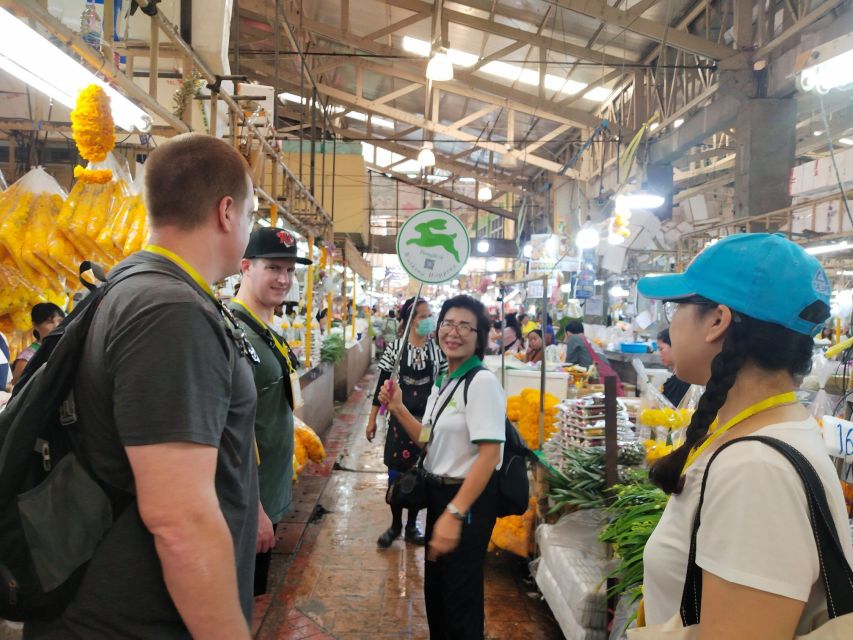
This tour begins at Sathorn Pier, near the Taksin BTS Station, which is convenient if you’re already using the Skytrain. After registration, you take a shuttle boat along the Chao Phraya River to Pak Khlong Talat. The ride matters more than it sounds. It positions you right at the market action instead of dropping you far away and forcing you to scramble in traffic.
The group stays small, and that helps. In markets, it’s the little moments—finding the right lane to walk, asking what something is used for, comparing prices—that make the experience feel smooth.
What to watch: the tour does not include hotel pickup or drop-off, and it does not work with luggage or large bags. Wear comfortable shoes and travel light, because market walking is real walking.
More markets and shophouse lanes
- Bangkok: Damnoen Saduak Market and Maeklong Railway Market
★ 4.5 · 26,723 reviews - The Old Siam: Damnoen Saduak and Maeklong Railway Market
★ 4.5 · 10,992 reviews - Bangkok: Train Market & Floating Market with Boat Ride
★ 4.7 · 9,547 reviews
Pak Khlong Talat: Thailand’s biggest flower market up close
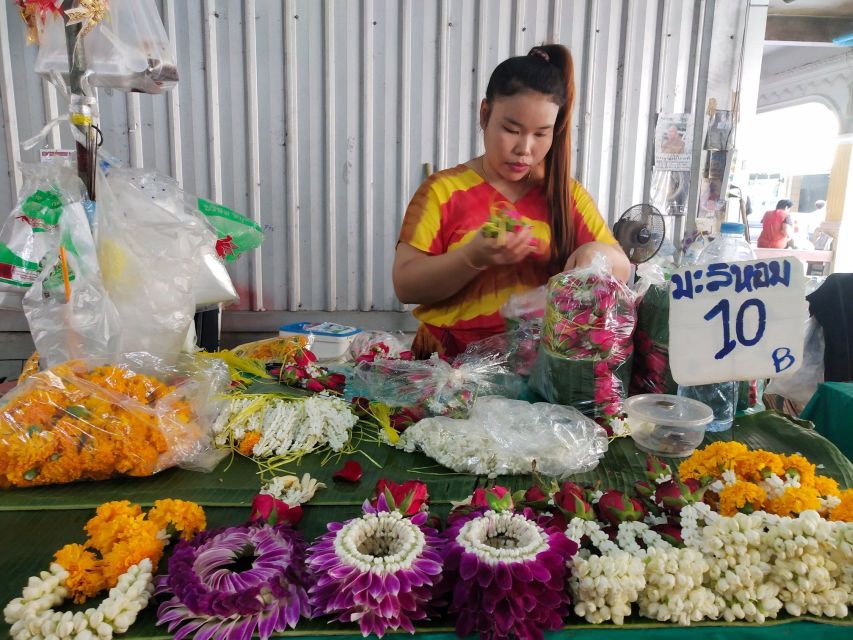
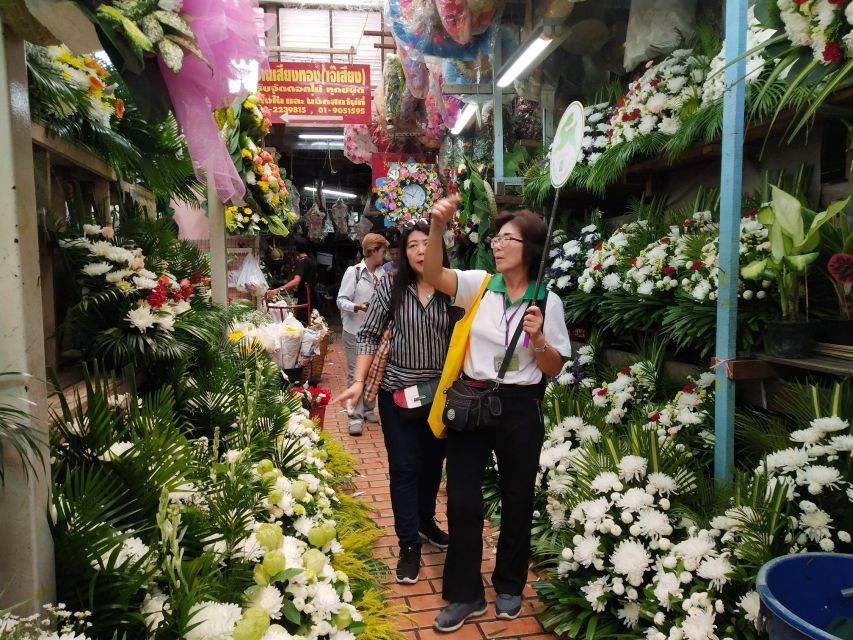
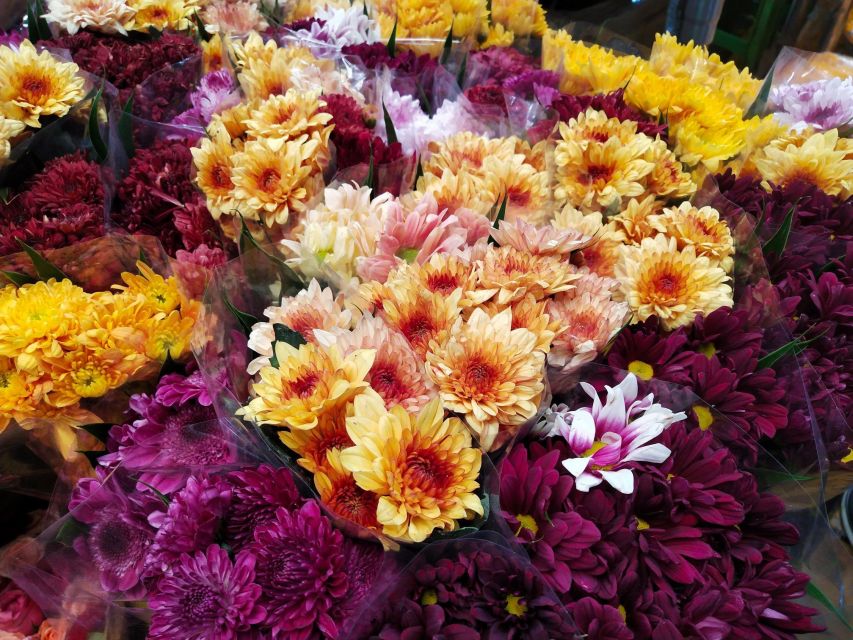
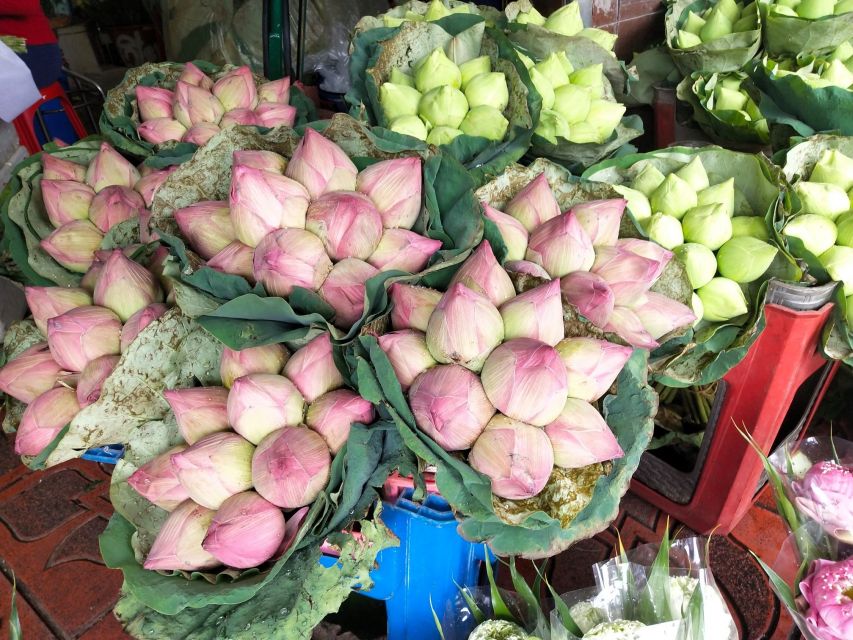
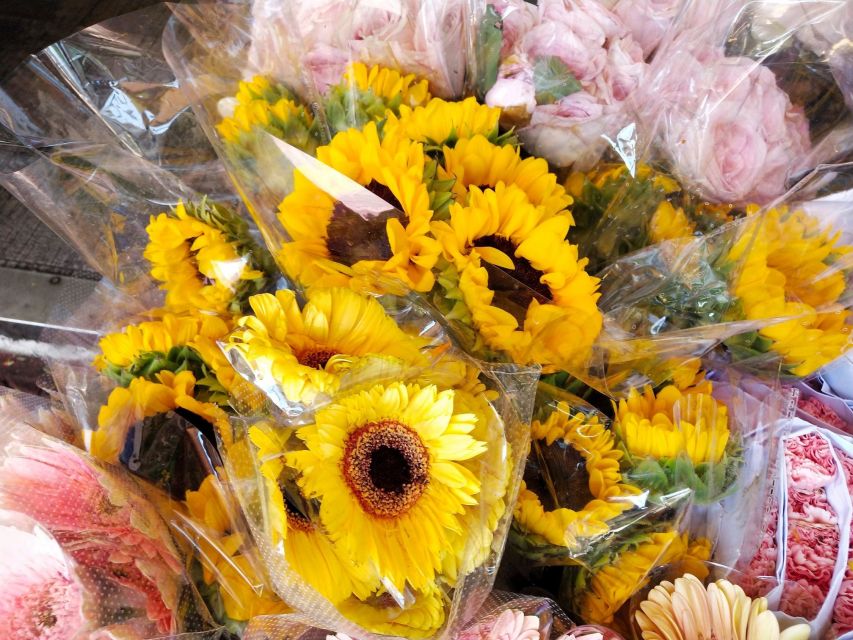
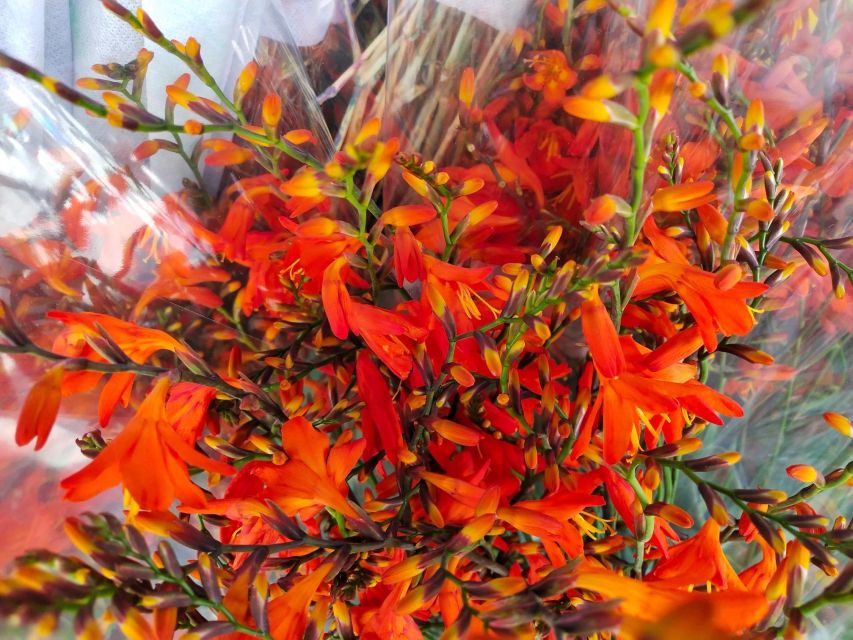
Pak Khlong Talat is described as the largest flower market in Bangkok, and the layout and energy reflect that scale. You’ll see a dense mix of bouquets, loose flowers, and market activity tied to daily demand—gifts, ceremonies, and everyday beauty. Even if you think you’ve seen flower markets before, this one is different because it feels like a working system.
This is also where the tour earns its keep as a guided experience. A guide can point out what you’re looking at: how flowers are grouped, what’s being prepared, and why certain colors and types show up in different contexts. One highlight from a guide-led group experience is that participants can get hands-on time for making floral decorations at the market. If you enjoy craft-style interaction, this is one of the reasons to book a guided version rather than wandering solo.
Price note: you are paying for more than access. You’re paying for translation of the place. Markets are easy to misread when you don’t know what matters—quality, freshness, purpose, and even timing.
Possible drawback: if you’re the type who wants to move at your own speed and take photos without conversation, you might find parts of Pak Khlong Talat workable on your own. The market is public and visually intense. The guide adds meaning, but it is still a busy shopping environment.
Little India: curry-house flavor, textiles, and a Sikh temple
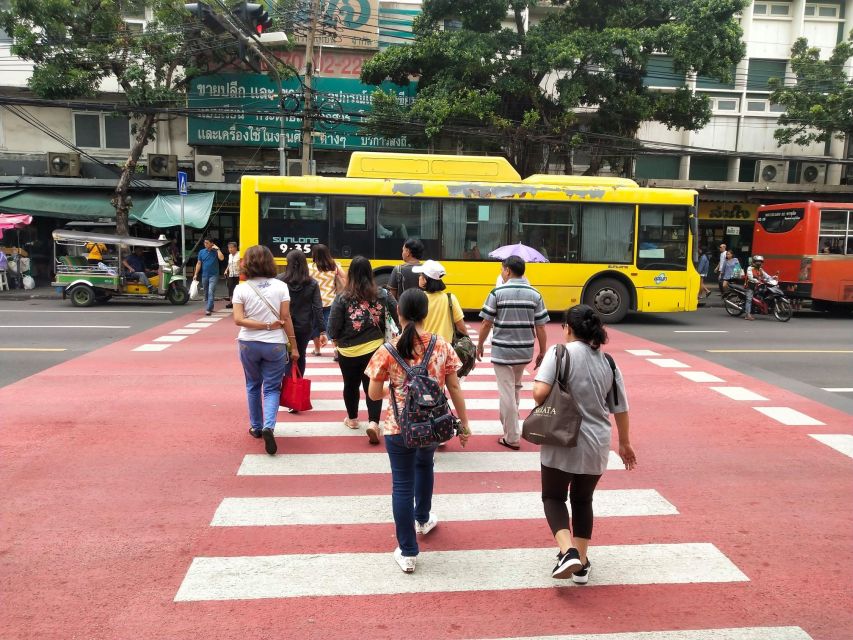
After the flower market, the tour shifts to Little India, where the mix of food and faith is the point. You’ll pass curry houses, textile shops, and a prominent Sikh temple. This isn’t only sightseeing. It’s a chance to notice how communities live side by side, with visible culture in storefronts and religious architecture.
Here’s what I’d watch for if you want the most value: pay attention to how the shops are arranged and what people are buying. In Little India, textiles and everyday goods often carry the same importance as the food does. You’re not just looking at posters or signs—you’re seeing how people shop, worship, and socialize.
A helpful detail: your guide doesn’t treat it like a drive-by. The pace allows you to browse, ask questions, and sample a few snacks along the way. One guided group experience described typical snacks through Little India plus Indian-leaning items and Thai omelet-style food, but the official framing stays cultural rather than a full food crawl.
Language note: the tour is listed in English, and at least one guide experience involved Sunee, who handled questions beyond basic English and even answered in German for a German-speaking group. If language flexibility matters to you, that’s a bonus.
Phahurat textile market: where shopping becomes a cultural skill
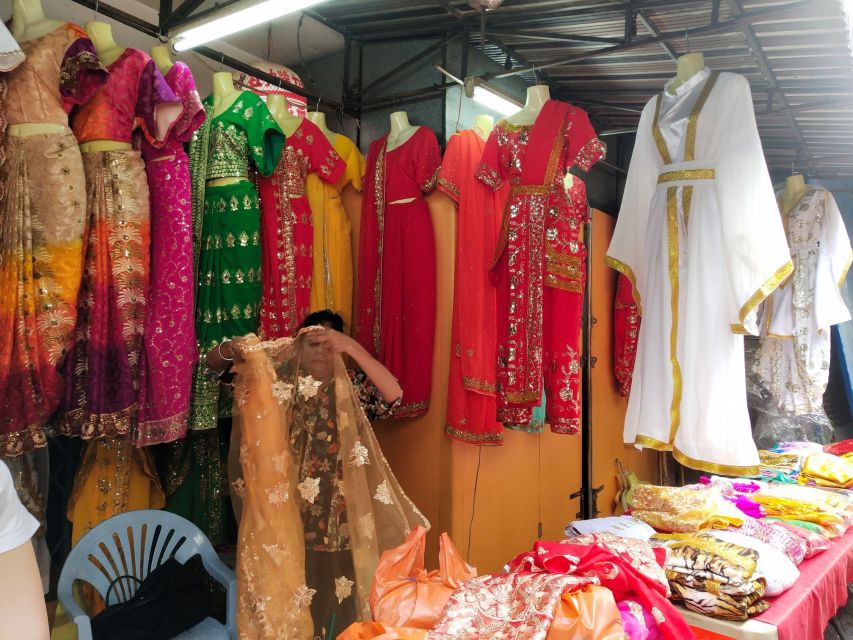
One of the highlights is a stop at Phahurat, described as Bangkok’s largest textile market. Textiles are one of those travel categories where a guided approach pays off. Fabrics can look similar until someone points out what to look for—weight, weave, and practical uses.
Even if you don’t plan to buy, Phahurat is an education in how markets work. You’ll see the speed of negotiation, how sellers talk about quality, and how shoppers compare options. This is a good zone for people who love hands-on shopping and want to practice bargaining politely without feeling lost.
What makes it valuable for your trip: it gives context for why Bangkok is famous for shopping. Markets like this are not just retail. They’re local supply chains and skill hubs.
What to watch: if shopping overwhelms you, set a simple goal before you enter. For example, decide whether you want a small fabric item, a gift-size purchase, or just photos and window shopping. Otherwise, textile choices multiply fast.
More market mornings in Bangkok

Sampeng Market: the big bargain maze in Chinatown territory
Next comes Sampeng Market, described as a huge market where many products are sold. Think gift shops, decorations, handicrafts, clothes, jewelry, stationery, shoes, and bags—all under one loud, overlapping canopy of choices.
This is where you’ll likely feel the market rhythm. Many products are described as low priced but still in good condition if you look closely. Bargaining and comparing matter here. The tour notes that some shops offer better deals if you buy more than three products, which is useful if you’re shopping for multiple gifts or want to bundle purchases.
I love this stop for travelers who want real Bangkok retail life. It’s not curated. It’s a working marketplace where browsing is part of the entertainment.
A consideration: if you hate crowded shopping streets or you feel uncomfortable negotiating, Sampeng can be stressful. The guide can help you navigate and make sense of what’s worth stopping for, but it’s still a dense market. Keep your eyes on what you came for.
Chinatown wrap-up: getting free time with a local recommendation
The tour ends at Chinatown, and the guide recommends where to explore for free time after the guided portion. That matters because Chinatown is enormous. Without a suggestion, you can easily wander in circles or head into areas that don’t match what you like.
You’ll finish back at the meeting point area (the tour ends back at Sathorn Pier). So you’re not stuck trying to figure out transport far from where you started.
Practical tip: if you want a calmer final hour, ask your guide for a specific lane to follow or a short loop. Markets are easier when you give yourself a “walkable route” instead of trying to see everything.
What $75 buys you (and when it’s a good deal)
The price is $75 per person for a 4-hour mini-group tour. You also get several items that add real value: all fees and taxes, a licensed professional guide, travel insurance, snack and drinking water, and a public boat ticket.
When this feels like a good deal:
- You want context. A guide turns a chaotic market into a learnable place.
- You value getting to Pak Khlong Talat by boat transfer, not by wrestling traffic.
- You want shopping help in areas like Phahurat and Sampeng, where the “what to look for” matters.
When it might not feel worth it:
- If you’re mainly after a long sit-down meal experience, remember the tour is a culture tour. Food is limited to snacks, and lunch is not included.
- If you already plan to explore these markets on your own with strong local help, you may feel the guide is less necessary. One guide-led experience did note you can explore the flower market without a guide, though you’ll miss the meaning and interaction.
My rule of thumb: if you like markets but want them to make sense fast, this price is reasonable for the structure and the boat transfer.
Timing, pacing, and what to bring for comfort
This is a 4-hour loop built around walking plus one boat ride. Markets mean uneven surfaces, frequent turns, and stop-and-go browsing. Bring comfortable shoes and keep your bag minimal. Large bags and luggage aren’t allowed, which is a big clue that this is meant to be mobile.
Also bring your passport or ID card for registration. You’ll meet at Sathorn Pier for check-in, and the tour then flows into the boat transfer and market visits.
For your phone: charge it. You’ll want photos of flowers, textiles, and street signs in Little India and Chinatown. But also remember: markets are busy. Give yourself time to look without always filming.
Who this tour is best for (and who should skip it)
This experience fits best if you:
- Enjoy markets and want more than shopping—something cultural and practical
- Like learning through stories, not just reading signs
- Want a structured mini-group day that still leaves space to browse
- Appreciate Bangkok’s mix of communities, including the visible presence of different religious traditions
Skip it if you:
- Expect a full food tour with a guaranteed meal included
- Need wheelchair access (this tour is not suitable for wheelchair users)
- Travel with large luggage or heavy bags
If you’re traveling with friends who like different things—flowers, textiles, bargains—this tour can satisfy all of them in one trip, because the itinerary shifts between different market styles.
Booking decision: should you take this tour?
I’d book this if you want a short Bangkok outing that connects the dots between river life, market trade, and neighborhood identity. The combination of a boat ride plus Pak Khlong Talat plus Little India’s cultural mix plus Phahurat and Sampeng gives you a well-rounded “markets of Bangkok” snapshot in just a few hours.
I’d think twice if food is your top priority. You’ll get snacks and water, but lunch costs extra, and the tone stays cultural rather than culinary. Also, if you’re truly independent and like wandering without guidance, the flower market and shopping streets can be explored on your own. The guide is the main value driver here.
FAQ
How long is the Bangkok 4Hour Flower Market and Little India Tour?
The tour is listed as a 4-hour experience.
Where do I meet the guide?
You meet at Sathorn Pier for registration. It is nearby Taksin BTS Station.
How do you travel from the pier to the flower market?
After registration you take a shuttle boat along the Chao Phraya River to Pak Khlong Talat. The public boat ticket is included.
What markets and neighborhoods are included?
You’ll visit Pak Khlong Talat (flower market), Little India, Phahurat (textile market), Sampeng Market, and finish in Chinatown with your guide’s recommendations for free time.
Is this a food tour?
No. It’s a culture tour, not a food tour. Snacks and drinking water are included, but the cost of lunch is not included.
What’s included in the price besides the guide?
Included are all fees and taxes, a professional licensed guide, public boat ticket, travel insurance, and snack and drinking water.
What is not included?
Hotel pickup and drop-off and food and drinks are not included.
What should I bring?
Bring a passport or ID card and wear comfortable shoes.
Can I bring luggage or a large bag?
No. Luggage or large bags are not allowed.
Is the tour wheelchair accessible?
No. The tour is not suitable for wheelchair users.
What is the cancellation window?
You can cancel up to 24 hours in advance for a full refund.
If you want, tell me your travel dates and whether you’re more into shopping or photography, and I’ll suggest how to structure your day around this 4-hour window.
Pack a Spare Bag


More Tours in Bangkok


More Tour Reviews in Bangkok

Just In: Fresh Bangkok Reviews

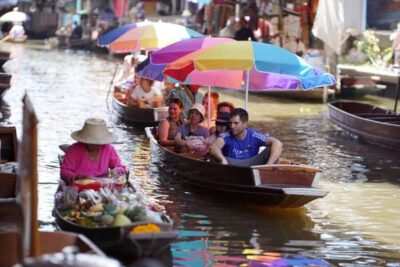
Shopping Tours, compared.
 ★ 4.5Damnoen Saduak Market and Maeklong Railway MarketFrom $2526,723 reviews
 ★ 4.5The Old Siam: Damnoen Saduak and Maeklong Railway MarketFrom $3210,992 reviews
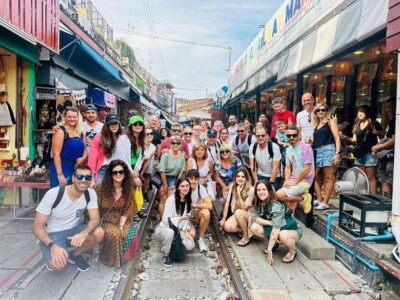 ★ 4.7Train Market & Floating Market with Boat RideFrom $259,547 reviews
 ★ 4.7From Bangkok: Ayutthaya & Ayothaya Floating Market Day TripFrom $486,084 reviews
 ★ 4.5City Highlights Temple and Market Walking TourFrom $423,990 reviews
 ★ 4.5Half-Day Railway Market and Floating Market Tour in ThailandFrom $323,924 reviews
 ★ 4.7Damnoen Saduak, Train Market & Mahanakhon Day TripFrom $232,162 reviews
 ★ 4.4From Bangkok: Damnoen Saduak Floating Market Guided TourFrom $1222,020 reviews
Browse the lists this tour appears in