
Review · THAI COOKING CLASSES
Bangkok: Hands-on Thai Cooking Class and Market Tour
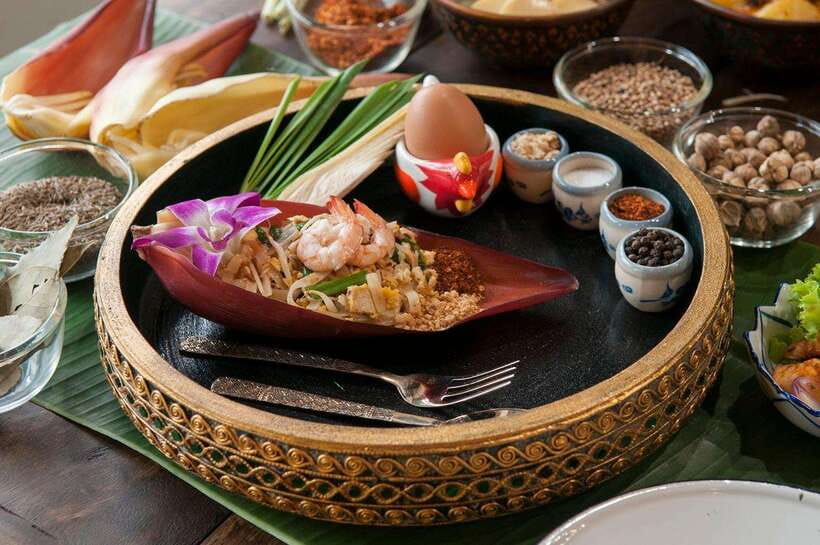
Thai cooking gets real fast. You’ll shop for ingredients and then cook four classic dishes, with a small team guiding you step by step. I especially like how the class is hands-on (you do the work, not just watch) and how you get specific help from instructors like Pitch and Jay, including friendly coaching if you’re new to Thai food. One thing to consider: the morning market stop is more of a quick ingredient-scouting walk than a giant full-day wander, so you’ll get less “extreme market chaos” than you might expect.
The day I’d pick first is the morning slot because you add fresh ingredient shopping to the cooking. I also like that the school builds in practical skills—like making curry paste from scratch and understanding coconut milk—so the food tastes right even when you cook later at home. The possible drawback is timing: you’re on your feet and moving, and you’ll need comfortable shoes (this is not a sit-still workshop).
In This Review
- Key Things That Make This Bangkok Class Worth It
- Thai Market to Wok: How This 210-Minute Class Delivers Real Skills
- Morning Market vs Afternoon Mango Carving: Choosing the Right Time Slot
- Morning class: market tour + cooking
- Afternoon/evening class: ingredient intro at the school + mango carving
- Getting There: BTS Asoke and Sukhumvit 4 Without Stress
- The Market Tour: What You’re Really Learning About Thai Ingredients
- At the School: Coconut Milk and Curry Paste From Scratch
- Curry paste and coconut milk
- A small-group setup that actually helps
- The Four Dishes You’ll Cook: Classic Thai Comfort With a Personal Twist
- Practical tip for taste during cooking
- Mango Sticky Rice and Mango Carving: The Fun Ending That Sticks
- Dietary Needs and the No-MSG Approach (Good to Know)
- Price and Included Value: What $45 Actually Buys You
- Who Should Book This (And Who Might Want to Skip It)
- Practical Tips Before You Go
- Should You Book This Bangkok Cooking Class?
- FAQ
- How many dishes will I cook?
- Is there mango carving?
- What’s the difference between the morning class and the afternoon/evening class?
- Where do I meet for each class time?
- Do they accommodate vegetarian, halal, kosher, or allergies?
- Is MSG used?
- How long is the class, and what does it cost?
Key Things That Make This Bangkok Class Worth It
- You cook four dishes plus a hot final dessert, so you leave full and confident.
- Market tour only in the morning; afternoons/evenings swap that for mango carving.
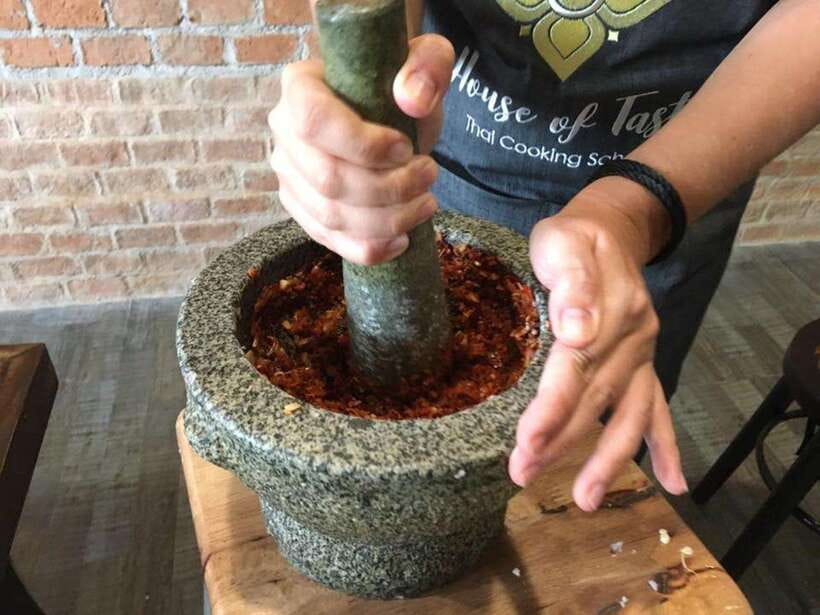
- Curry paste and coconut milk from scratch gives you real technique, not just recipes.
- Small-group attention from an English- and Thai-speaking instructor and helpers.
- No MSG is used, and dietary needs can be handled with advance notice.
Thai Market to Wok: How This 210-Minute Class Delivers Real Skills
Bangkok is loud, fast, and full of food. This experience is a tidy way to turn all that flavor into something you can actually reproduce. In about 210 minutes, you go from selecting ingredients to cooking a set of Thai dishes you make yourself, then eating them while they’re hot—right off the burners.
What makes this class feel like good value is that it’s not only about the meal. You’re learning how Thai cooks build flavor: how herbs smell when they’re fresh, how spices toast, how curry paste gets its body, and how coconut milk changes everything. When you have that mental map, it’s easier to recreate dishes later without guessing.
I also like the tone of the class. It’s confident and practical. You’re not being talked down to, and you’re not thrown into the deep end. It’s the kind of teaching style where the instructor checks in, corrects little mistakes, and keeps the pace moving.
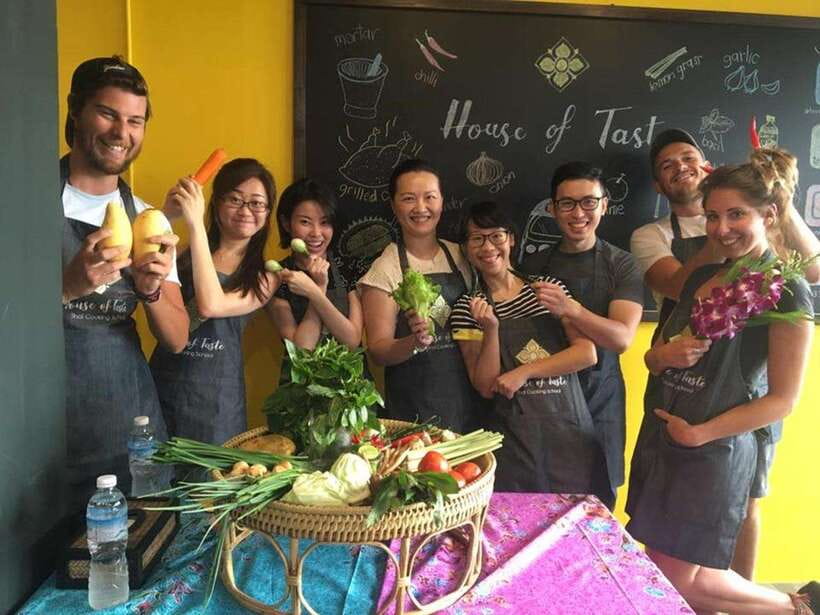
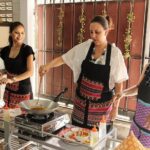
Aprons on for another Thai kitchen
- Bangkok: Hands-on Thai Cooking Class and Market Tour
★ 4.9 · 1,614 reviews - Bangkok: Tingly Thai Cooking School Half-Day Cooking Class
★ 4.9 · 1,191 reviews - Bangkok: Maliwan Thai Cooking Class with Market Tour
★ 4.9 · 1,133 reviews
Morning Market vs Afternoon Mango Carving: Choosing the Right Time Slot
Your main decision is simple: morning includes the market tour; afternoon/evening includes mango carving.
Morning class: market tour + cooking
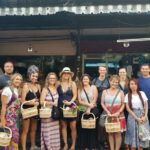
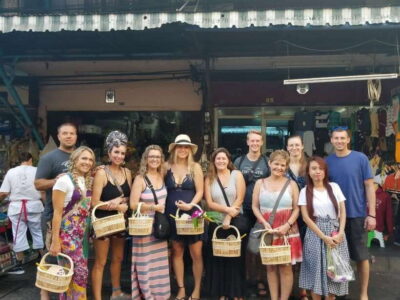
If you book the morning class (8:30AM), you meet at a transit-friendly spot near BTS Asoke Exit 3 and MRT Sukhumvit Exit 3. Then you head out to a nearby market with a guided walk where you browse ingredients before you cook. This is where you’ll get your bearings for Thai pantry basics—things like herbs, fresh aromatics, and the kinds of vegetables Thai kitchens treat as essential, not optional.
Afternoon/evening class: ingredient intro at the school + mango carving
For the afternoon and evening classes, the market part is replaced. Instead, you’ll do a mango carving session at the end. Ingredient orientation happens at House of Taste Thai Cooking School in Sukhumvit 4, so the experience starts more “school-based” and ends with a fun show-your-skills moment.
If you want the most food-for-the-senses experience, pick the morning. If you’re more focused on cooking technique and a memorable dessert skill, afternoon/evening is a great choice.
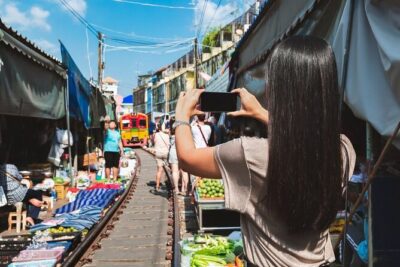
More markets and shophouse lanes





Getting There: BTS Asoke and Sukhumvit 4 Without Stress
This class is set up for travelers who don’t want complicated directions.
- Morning meeting point: street floor at BTS Asoke Exit 3 and MRT Sukhumvit Exit 3.
- Afternoon/evening meeting point: at the school in Sukhumvit 4.
Comfort matters here. You’ll be walking and standing during the ingredient part and moving between cooking stations. Wear comfortable shoes even if you’re dressed up for the day. Thailand food classes are always faster on your feet than you expect.
The Market Tour: What You’re Really Learning About Thai Ingredients
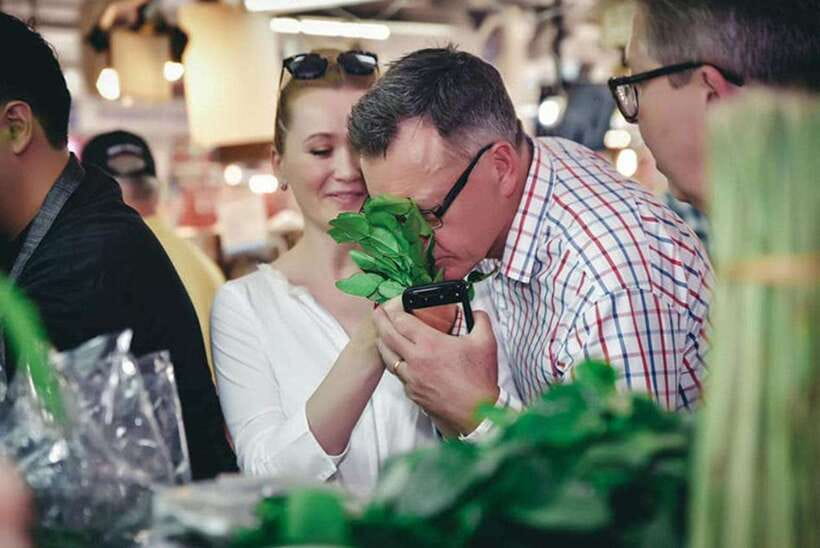
In the morning slot, the market walk is there for one reason: to stop you from treating Thai cooking like a mystery box. Seeing the ingredients in person helps you understand what’s fresh, what’s fragrant, and what actually matters for texture.
You’ll be introduced to vegetables, rice, herbs, and spices, and you’ll also learn why certain items are used in specific dishes. This matters most for Thai curries and soups, where balance is the whole game: sour + spicy + salty + sweet.
A quick heads-up: the market is not described as a massive multi-block expedition. It’s more of a guided ingredient scouting trip, which is totally useful—but you might not get the sprawling wet-market vibe if that’s what you’re chasing.
At the School: Coconut Milk and Curry Paste From Scratch
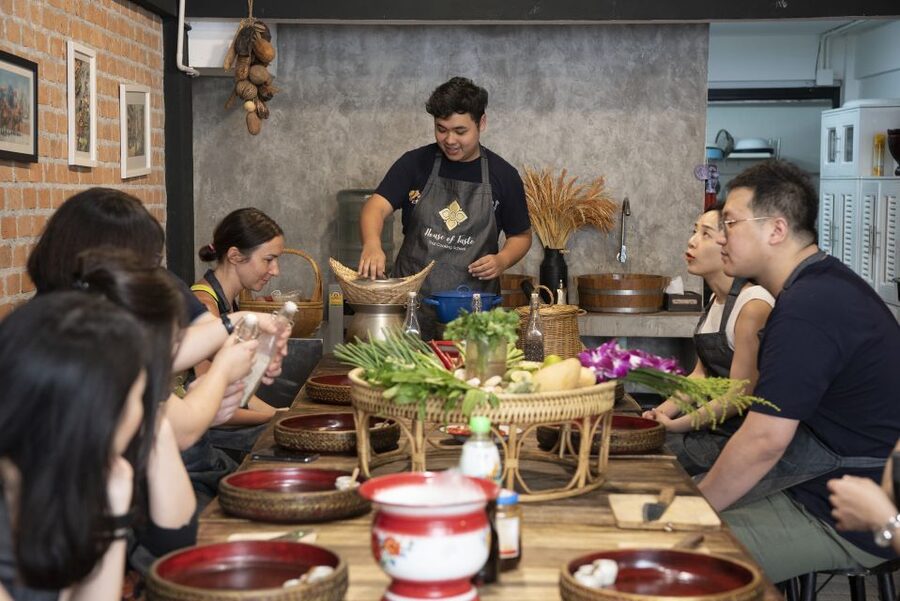
When class moves into cooking mode, this is where it gets genuinely satisfying. You’ll learn core techniques instead of only assembling pre-made parts.
Curry paste and coconut milk
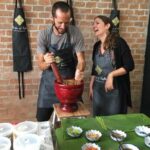
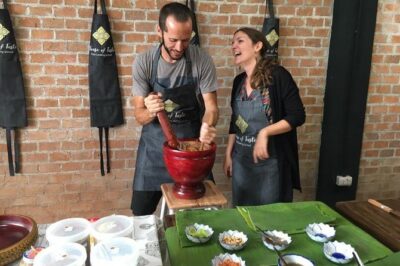
Thai curry paste isn’t just a seasoning blend. In this class you’ll make it from scratch, and you’ll learn the preparation process that builds the paste’s flavor. You’ll also get hands-on with coconut milk preparation, which helps you understand why some curries taste creamy and mellow while others land sharper and punchier.
That technique-first approach is what makes the recipes feel usable later. You can follow a list at home, but it’s the understanding that helps you adjust when your ingredients differ from what you got in Bangkok.
A small-group setup that actually helps
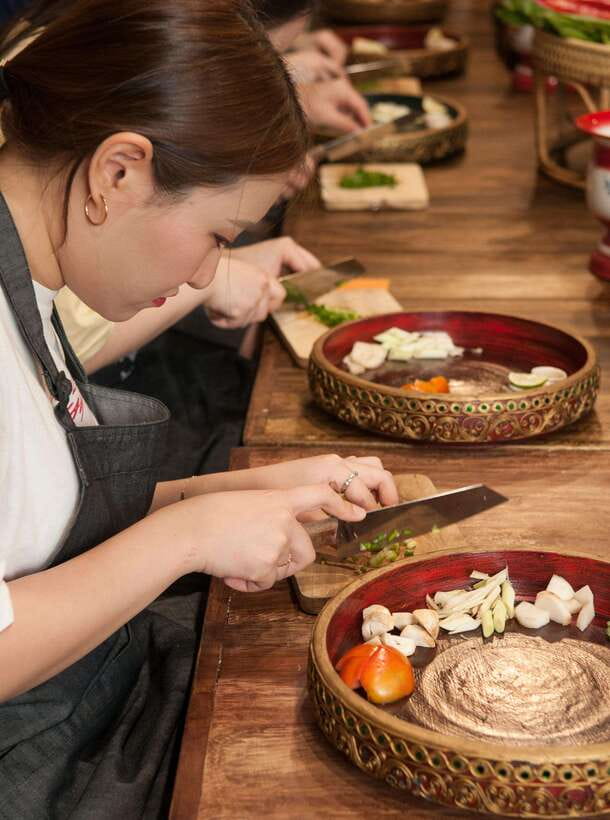
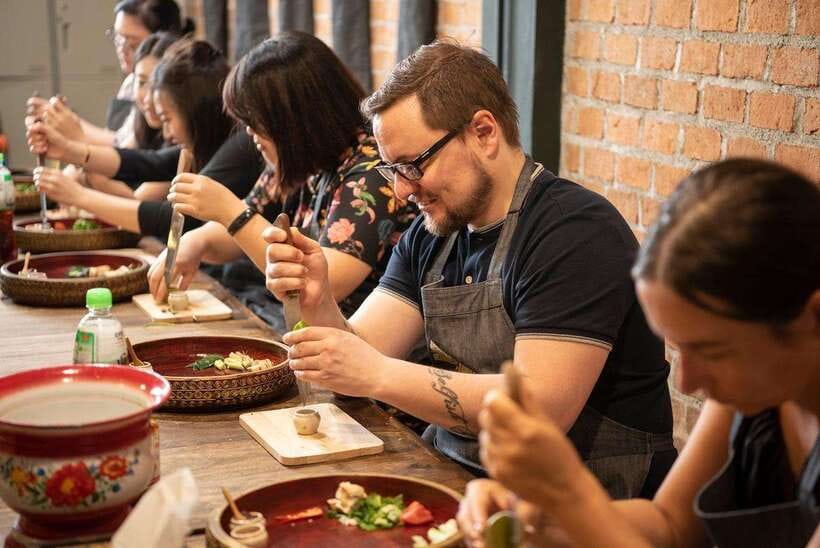
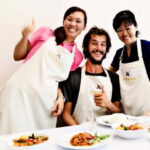
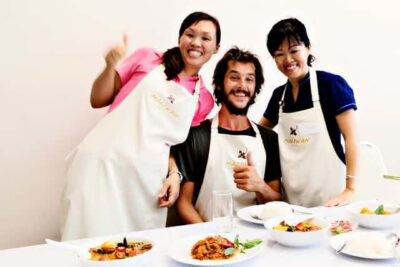
Another big win is attention. You’re in a hands-on environment with a professional instructor and helpers. People often mention clear explanations and patience, and you’ll feel that during the “do it now” stages: chopping, pounding, stirring, and tasting as you go.
If you’re a first-time cook, this is a good comfort level. If you’re experienced, you’ll still appreciate the structure and the focus on authentic steps.
The Four Dishes You’ll Cook: Classic Thai Comfort With a Personal Twist
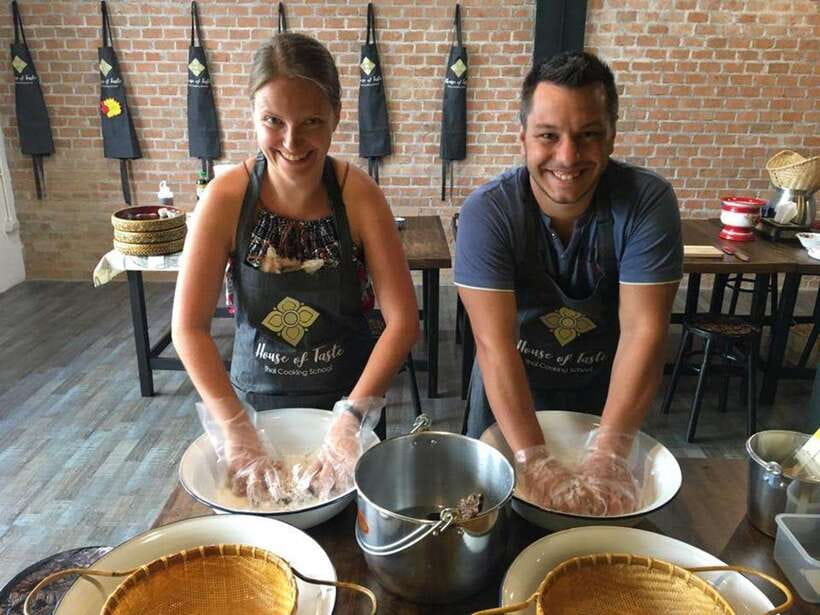
You cook four dishes (including the mango dessert), and the exact set depends on the day of your class. In every schedule, Mango Sticky Rice is included as the sweet finish.
Here are the dish combinations by day:
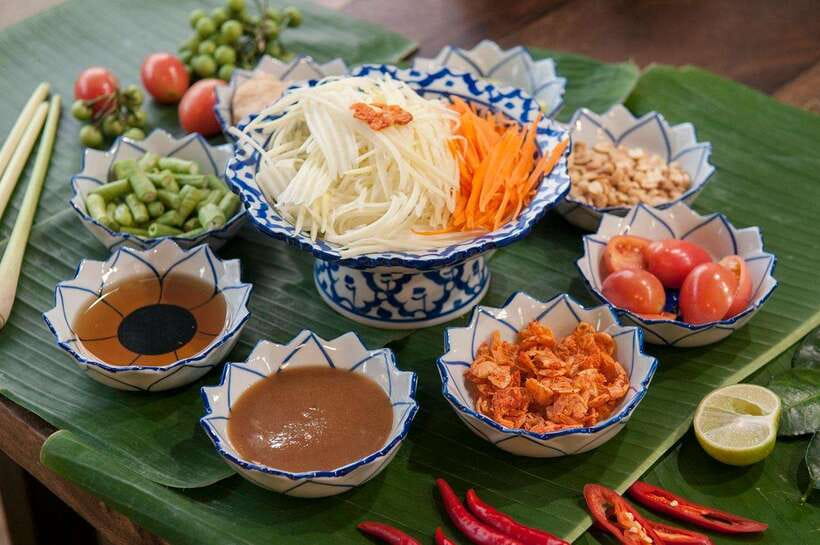
- Monday: Thai Papaya Salad (Som Tum), Pad Thai, Green Curry with Chicken, Mango Sticky Rice
- Tuesday: Tom Kha Gai (Spicy Coconut Soup with Chicken), Pad Krapow Gai (Thai Basil Chicken), Red Curry with Chicken, Mango Sticky Rice
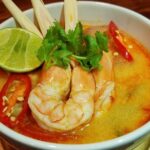
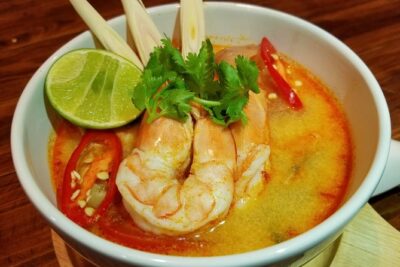
- Wednesday: Tom Yum Goong (Hot and Sour Soup with Shrimp), Pad See Ew (Flat Rice Noodles with Chicken), Green Curry with Chicken, Mango Sticky Rice
- Thursday: Larb Gai (Spicy Minced Chicken Salad), Pad Thai, Panang Curry with Chicken, Mango Sticky Rice
- Friday: Som Tum, Pad Krapow Gai, Red Curry with Chicken, Mango Sticky Rice
- Saturday: Tom Kha Gai, Pad Thai, Green Curry with Chicken, Mango Sticky Rice
- Sunday: Tom Yum Goong, Pad See Ew, Panang Curry with Chicken, Mango Sticky Rice
Even if you’re not a super-serious foodie, this mix is smart. You get:
- one fresh-sour salad (Som Tum or Larb),
- one noodle dish (Pad Thai or Pad See Ew),
- one curry direction (Green, Red, or Panang),
- one soup flavor profile (Tom Yum or Tom Kha),
- and then the sticky sweet landing (Mango Sticky Rice).
Practical tip for taste during cooking
Don’t be shy about tasting. Thai food is built on balance. As you cook, you’ll notice that small changes in paste, coconut milk, fish sauce (or substitutes), and acidity shift the final dish a lot. That’s part of the learning.
Mango Sticky Rice and Mango Carving: The Fun Ending That Sticks
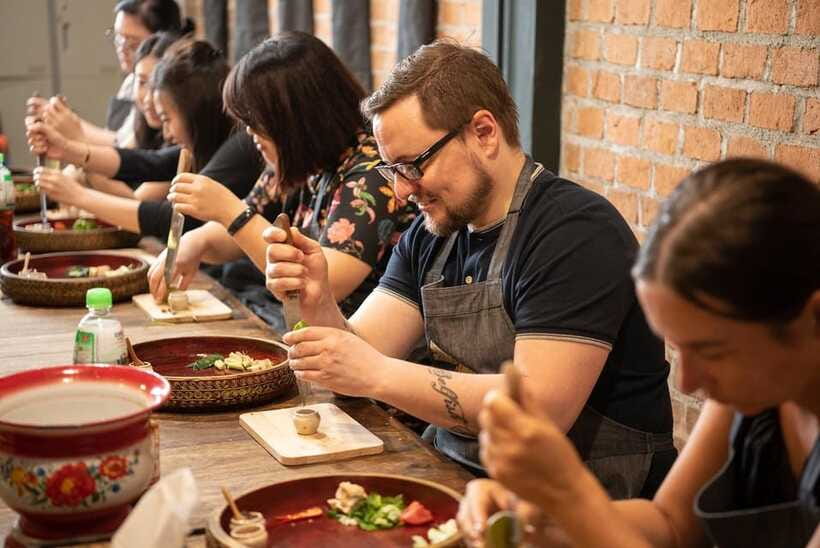
Thai desserts can feel simple until you try making them. Mango Sticky Rice is included in every day’s menu, which means you’ll finish with a familiar flavor you can trust. You’ll also practice a key part of the sweetness and coconut pairing that makes it taste like Thailand rather than like a generic rice pudding.
If you do the afternoon or evening class, the finale includes mango carving. This part isn’t just for pictures. It slows you down and makes you pay attention to how to handle a fruit cleanly and confidently. It’s a different kind of skill from cooking, and it helps the whole experience feel more complete.
Dietary Needs and the No-MSG Approach (Good to Know)
This class explicitly says it can provide substitutions for:
- vegetarian,
- halal,
- kosher,
- and allergy needs,
as long as you notify them in advance. That’s important in Thailand, where soy-based options and meat substitutes can be hit-or-miss if you don’t plan.
Also, no MSG is used. That doesn’t make the food bland. It just means you’re tasting the real ingredient flavors and seasoning balance without that shortcut.
Price and Included Value: What $45 Actually Buys You
At about $45 per person, the price feels fair because you’re not only paying for cooking instructions. You’re getting a packaged experience with real inputs:
- cooking class and instructor,
- 4-course meal (the dishes you cook),
- water,
- all ingredients and equipment,
- personal locker,
- recipes sent via email,
- plus either the morning market tour or the mango carving session depending on your time slot.
If you’ve paid for cooking classes elsewhere, you know some are more lecture than workshop. This one leans hard into the hands-on format: you make the food, you eat it while it’s fresh, and you take the recipes home.
Who Should Book This (And Who Might Want to Skip It)
This is a great fit if:
- you want to learn Thai cooking techniques you can repeat,
- you like hands-on classes where you taste as you go,
- you’re staying in central Bangkok and want an easy meeting point,
- you want a mix of salads, noodles, curry, soup, and dessert.
It might be less perfect if:
- you’re chasing a huge, wandering wet market experience (the morning walk is guided and focused),
- you hate standing/walking (you’re moving for the ingredient and cooking portions),
- you want only lecture-style learning (this is skill practice, not a slideshow).
Still, the overall structure makes it work for most people. Even those who don’t cook often end up feeling proud because you see your own dishes land on the table.
Practical Tips Before You Go
Here’s how to get the most out of your class day:
- Come with an empty stomach. The food portion is substantial, and you’ll want to taste everything properly.
- Bring comfortable shoes. The market walk and kitchen flow both require standing and movement.
- If you have allergies or dietary rules, tell the team in advance so substitutions are ready.
- Plan to take notes only lightly during cooking. The recipes you receive afterward are meant to help you recreate the dishes, and the tasting during class is the real “learning moment.”
- If you choose afternoon/evening, expect mango carving to be part of your finale, not the market.
Should You Book This Bangkok Cooking Class?
I think you should book this if you want a straightforward path to authentic Thai flavor. The combination of hands-on cooking, technique focus (especially curry paste and coconut milk), and a full meal you eat hot makes it more than a fun activity—it’s a practical souvenir you can cook again.
Pick the morning if you love ingredient shopping and want context before you cook. Choose afternoon/evening if you’d rather end with the playful mango carving and keep the experience more centered around the school.
If you’re on a tight schedule, this is one of the easiest “food learning” bets in Bangkok because the meeting points are near major transit and the timing is compact.
FAQ
How many dishes will I cook?
You’ll cook four dishes in the class, and Mango Sticky Rice is included as part of that set.
Is there mango carving?
Yes. Mango carving is included in the afternoon and evening classes, and the morning class instead includes a market tour.
What’s the difference between the morning class and the afternoon/evening class?
The morning class includes a market tour, starting from the BTS Asoke Exit 3 and MRT Sukhumvit Exit 3 meeting points. The afternoon/evening classes do not include the market tour; they include mango carving and begin at the school in Sukhumvit 4.
Where do I meet for each class time?
Morning: meet at the street floor of BTS Asoke Exit 3 and MRT Sukhumvit Exit 3.
Afternoon/evening: meet at the school in Sukhumvit 4.
Do they accommodate vegetarian, halal, kosher, or allergies?
Yes. The class can provide substitute ingredients for vegetarian, halal, kosher, and allergy requirements if you notify them in advance.
Is MSG used?
No. The class states that no MSG is used.
How long is the class, and what does it cost?
The duration is 210 minutes, and the price is $45 per person. Alcoholic drinks are not included, though water is provided.
More Tours in Bangkok


More Tour Reviews in Bangkok

Cook It Yourself: Thai Classes

Just In: Fresh Bangkok Reviews



Thai Cooking Classes, compared.
 ★ 4.9Tingly Thai Cooking School Half-Day Cooking ClassFrom $411,191 reviews
 ★ 4.9Maliwan Thai Cooking Class with Market TourFrom $401,133 reviews
 ★ 5.0Hands on Thai Cooking Class and Market TourFrom $45660 reviews
 ★ 5.0Tingly Thai Cooking Class with Morning Market TourFrom $42589 reviews
 ★ 5.0Hands-on Thai Cooking Class & Market Tour in SukhumvitFrom $45571 reviews
 ★ 5.0Pink Chili – Thai Cooking Class and Market Tour in BangkokFrom $38416 reviews
 ★ 5.0Authentic Thai Cooking with the Largest market visit &TukTuk rideFrom $44350 reviews
 ★ 5.0Tingly Thai Cooking School Evening ClassFrom $40335 reviews
Browse the lists this tour appears in