
Review · KANCHANABURI & RIVER KWAI
Bridge on the River Kwai and Thailand-Burma Railway Tour
The Bridge over the Kwai hits hard. This full-day tour links WWII remembrance with real-world views: the Thailand–Burma Railway story, then a long-tail boat ride down the river toward the famous bridge.
I especially like the pacing. You start at the Kanchanaburi War Cemetery, then move to the JEATH War Museum, and only afterward do the sights and rides. I also love that the day mixes solemn stops with hands-on “you can see it” moments, including cruising under the bridge and getting time nearby to explore.
One thing to consider: it’s a long day starting early (around 6:30am) and you’ll be on vehicles most of the morning and afternoon. If you’re sensitive to comfort during road travel, plan for that.
In This Review
- Key things to know before you go
- A hard-hitting story day trip from Bangkok
- Getting to Kanchanaburi: countryside coach time you can actually enjoy
- Kanchanaburi War Cemetery: the emotional anchor
- JEATH War Museum: photos, paintings, and a format that divides opinions
- Long-tail boat to the Kwai: cruise under the bridge and time for photos
- River Kwai Bridge: seeing the structure after the cemetery
- Death Railway train ride and the museum/research center stop
- Train seat upgrades (worth considering if you care about comfort)
- Lunch and what you’ll pay extra for
- Price and value: how $108 fits a long, structured day
- Comfort tips for a 9 to 10 hour day
- Who should book this tour, and who should pause?
- Should you book this tour?
- FAQ
- What time does the tour start?
- How long is the trip?
- Do I get hotel pickup and drop-off?
- What stops are included?
- Is lunch included, and are drinks included?
- Do you cruise under the River Kwai Bridge?
- Can I pay to guarantee a train seat?
- Is the tour physically demanding?
- What if I need to cancel?
Key things to know before you go
Cemetery-first start keeps the emotional tone steady before any scenic riding
JEATH War Museum is short but intense and can feel basic to some people
Long-tail speedboat includes a cruise under the bridge plus time to look around
Death Railway train ride runs through the jungle region and adds context
Optional train-seat upgrades cost extra (about 200 baht or 300 baht)
A full lunch is included but drinks are not
A hard-hitting story day trip from Bangkok
This is one of those Bangkok day trips that doesn’t feel like a quick “see and go.” You’re traveling far enough that the day becomes its own world: rural countryside in the morning, then a focused run of WWII remembrance sites, boat time on the Kwai, and a train ride tied directly to the Death Railway story.
What makes the experience stand out is the order. Starting with the war cemetery sets the tone. Then you move to the JEATH War Museum, where you’re looking at historical photos and paintings tied to construction and the prison-labor reality. Only after that do you get the boat and the bridge views—still powerful, just more cinematic.
And yes, you can enjoy it even if you’re not a WWII specialist. The guide stories, the “how it was built” explanations, and the very physical geography (river bends, jungle terrain, track constraints) make the history easier to grasp.
Out to the River Kwai, more Kanchanaburi trips
- From Bangkok: Erawan Park & Kanchanaburi Small-Group Tour
★ 4.5 · 1,582 reviews - From Bangkok: Death Railway & Hellfire Pass Tour with Lunch
★ 4.6 · 931 reviews - From Bangkok: Historical Day Tour to River Kwai
★ 4.6 · 868 reviews
Getting to Kanchanaburi: countryside coach time you can actually enjoy
You’ll leave Bangkok early, with a 6:30am start time, and you’ll use an air-conditioned vehicle. Pickup is available from selected Bangkok hotels, and drop-off returns you to the city afterward.
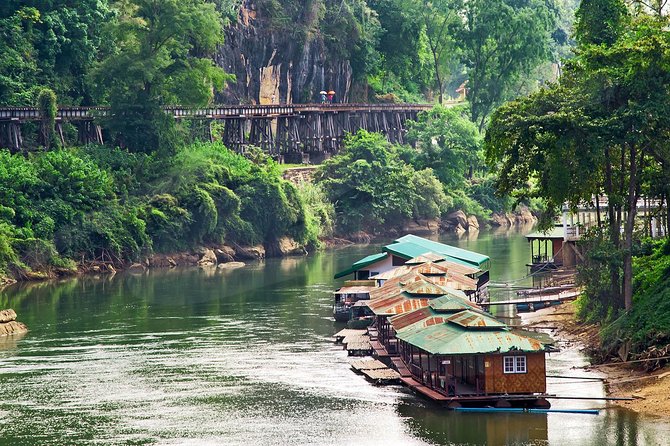
The road trip matters more than you’d think. Kanchanaburi is about 80 miles (130 km) west of Bangkok, and the drive goes through agricultural scenery—sugarcane, rice paddies, and pineapple plantations. If you like watching how people actually live outside the city, this is a nice contrast to the temples and malls most people picture when they think “Bangkok.”
Logistically, you’re on a schedule that moves you between stops efficiently. The tour also caps group size at a maximum of 99 people, so it’s big-tour organized, but not a cattle-car situation.
Kanchanaburi War Cemetery: the emotional anchor
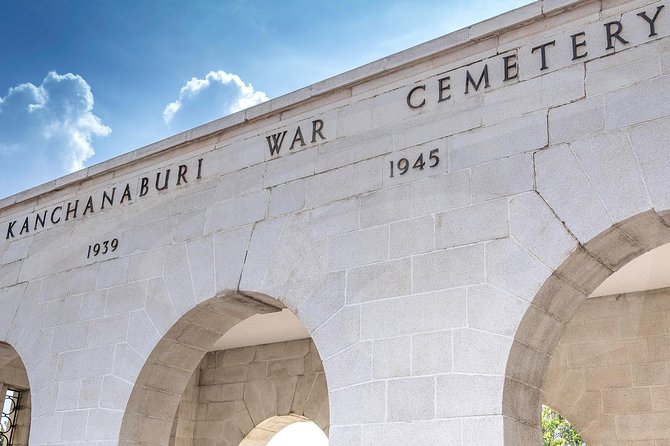
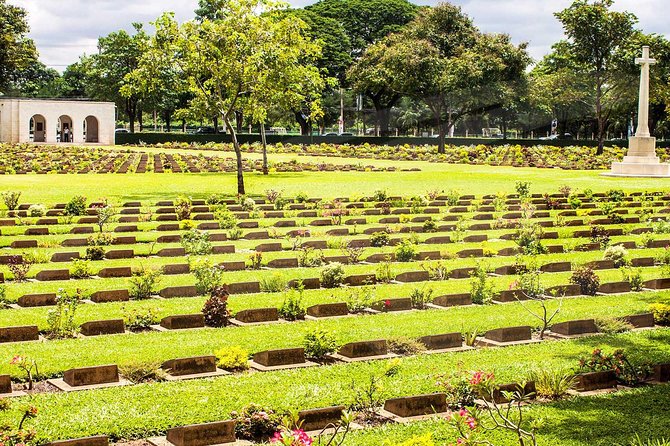
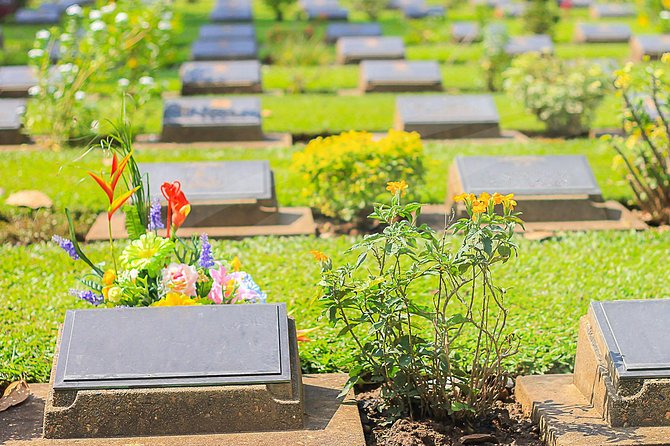
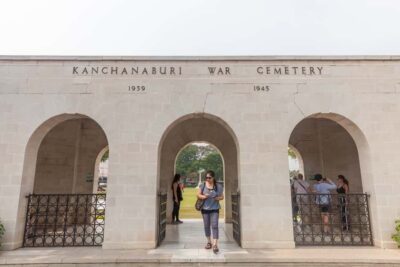
The day starts at the Kanchanaburi War Cemetery, described as the main prisoner of war cemetery for victims of Japanese imprisonment connected to the Burma Railway project during WWII.
This stop is short on the clock (about 30 minutes), but it doesn’t feel short in impact. The cemetery is the kind of place where you slow down without trying. You’re surrounded by names and the sense of scale becomes real: this wasn’t a footnote; it was a massive, deadly undertaking.
Practical tip: pace yourself. Take in the cemetery first, but also leave yourself a moment to look around and notice how the landscape sits around the graves. That contrast—quiet fields and a tragic purpose—stays with you.
JEATH War Museum: photos, paintings, and a format that divides opinions
Next is the JEATH War Museum, with a time on site of about 20 minutes. The museum focuses on how the Death Railway was constructed and the prisoner of war reality during World War II, using historical images and interpretive displays.
Here’s the honest balance: some people come away thinking it’s moving and well explained. Others feel the museum is basic and wish it offered more depth. In practice, it helps to treat this stop as a short interpretive bridge—an emotional connector—before you move into the physical experiences of river and rail.
If you tend to get impatient with small museums, still go. You’re not only looking at items; you’re getting the story shaped to match what you’ll see next—how the bridge and tracks relate to the terrain and the labor conditions.


Long-tail boat to the Kwai: cruise under the bridge and time for photos
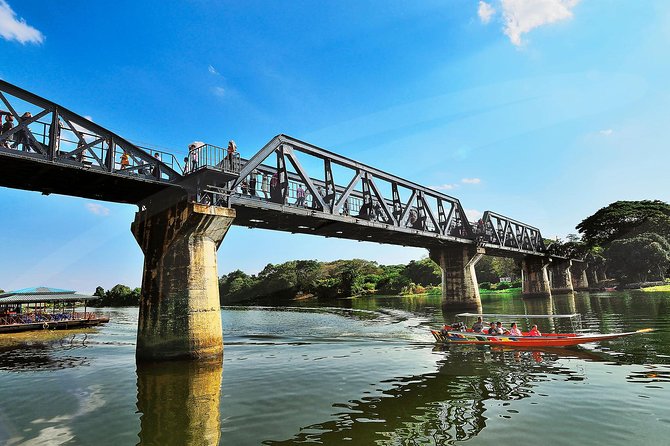
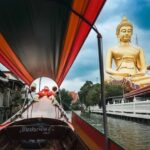
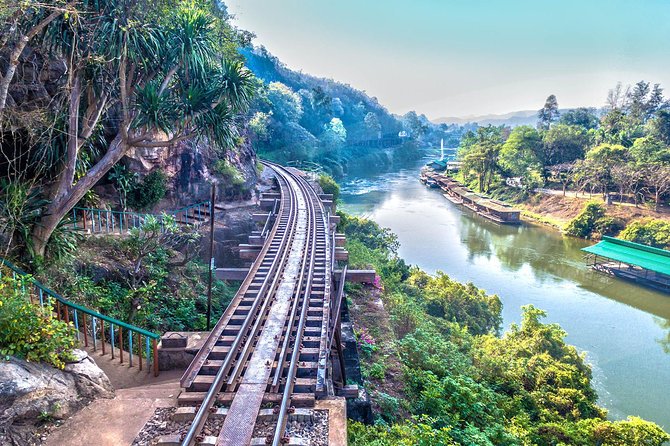
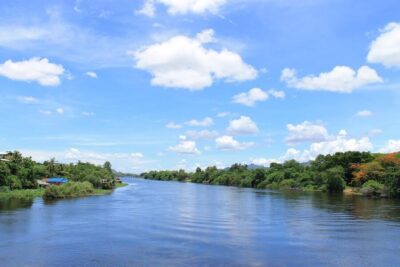
After the museum, you head toward the river for the long-tail speedboat ride. The experience is about 20 minutes, and you’ll cruise under the River Kwai Bridge.
This is the part many people talk about with a mix of fun and seriousness. The boat is exciting—fast enough to feel lively, close enough to understand how the bridge sits over the water. And because it’s a long-tail craft, it has that slightly wild, old-school travel feel you don’t get on modern ferries.
You also get time to explore the bridge area on your own afterward. That’s important. It lets you look at angles that aren’t possible from the boat and take photos without feeling rushed by a stop-and-go group pace.
Photo tip: bring something for dust and sun. You’ll be outside near the river and on open-air or semi-open transport. Even if the ride itself is short, the waiting and photo time adds up.
River Kwai Bridge: seeing the structure after the cemetery
The bridge is the headline, but it lands better after the morning stops. Standing near it, you’re not just seeing a landmark. You’re placing it in your head alongside what you learned about forced labor, imprisonment, and why this railway line mattered.
In other words, the bridge becomes more than scenery. It turns into evidence of geography meeting human suffering.
When you’re near the bridge, take a few minutes to slow down and watch how people move around the area. That ordinary tourist flow can feel jarring. If that happens, don’t panic; use it as a moment to refocus on why you’re there.
Death Railway train ride and the museum/research center stop
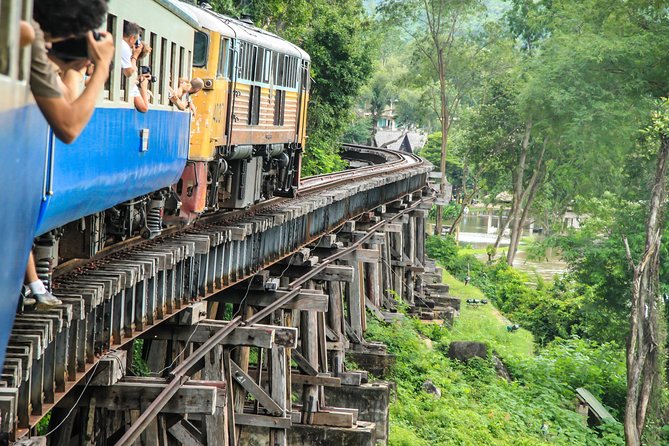
The next major piece is the train experience connected to the Thailand–Burma Railway, sometimes called the Death Railway.
You’ll also stop at the Death Railway Museum and Research Centre, where you’ll hop on a train that helps you see the jungle region and understand the railway route’s challenges. The time at this stage is about 1 hour 30 minutes, and it’s one of the longest blocks of the entire day.
This part is where “history as an idea” becomes “history as a physical system.” You can feel why curves and difficult terrain matter. The ride gives context for why laying track in this region was not a simple construction job.
Train seat upgrades (worth considering if you care about comfort)
There’s an optional upgrade for the train:
- About 200 baht: guarantees your seat, plus a cold towel and drinking water
- About 300 baht: guarantees your seat, plus tea or coffee, drinking water, cold towel, and a certificate
If you’re someone who hates standing or squeezing, the guaranteed-seat option is the easiest way to protect your energy for the rest of the day.
Also, some trains can be crowded depending on how the seats are handled. If you want to relax and watch the scenery without stressing, pay the extra.
Lunch and what you’ll pay extra for
Lunch is included, and at least some people highlight that the meal is genuinely good. The tour also includes admission fees and a local guide, plus the boat and train rides.
Be aware: beverages are not included. That means you’ll likely want to budget for water (and maybe something else to get you through the long day).
A practical mindset: treat the lunch as part of your energy plan, not just a break. Eat steadily, hydrate, and don’t save all your water for later when you’re tired and outside for bridge photos.
Price and value: how $108 fits a long, structured day
At about $108.17 per person, this isn’t a cheap outing. But it’s not just “transport to a site.” You’re paying for the full structure of a day trip: Bangkok-to-Kanchanaburi coach travel, hotel pickup and drop-off (selected hotels), an air-conditioned vehicle, a guide, cemetery and museum admissions, a long-tail boat ride, a train ride along the Death Railway, plus lunch.
In plain terms, you’re buying time and coordination. If you tried to DIY this, you’d spend hours figuring out schedules and connections, and you’d likely miss the smooth flow between the emotionally serious sites and the physical bridge/rail experiences.
Where the value question shows up is in the museum stop. If you walk in expecting an award-level museum, you might feel underwhelmed. If you treat it as a quick, guided context-setting stop, the overall package value improves fast.
Comfort tips for a 9 to 10 hour day
This tour runs about 9 to 10 hours, and it starts early. You’ll sit on vehicles, spend time at outdoor sites, and then do boat and train segments.
Here’s how I’d prepare:
- Use early mornings wisely: bring a light layer; mornings can feel cooler than the afternoon
- Expect dust and sun near the river: plan for something to cover up if you’re sensitive
- Wear shoes you can trust: you’ll be standing and walking short distances at multiple stops
- Consider the guaranteed-seat train option: it protects your comfort during the longer rail ride
- Pack patience: the whole day is designed to hit multiple sites without lingering too long at any single point
You’ll also have restroom facilities available. Still, for a schedule like this, it’s smart to go when you can rather than waiting until you really need to.
Who should book this tour, and who should pause?
I think this tour suits you best if you want a structured day trip that connects:
- remembrance sites (cemetery and museum)
- the bridge and river geography
- a train ride that ties into the Death Railway story
You’ll likely enjoy it if you like history but also enjoy seeing places in the real world, not just reading about them. The guide role is a big part of that. People call out guides for clear explanations and for helping with timing, photo moments, and keeping the day organized. Names that have come up include Betty, Luck, Tiny, Peter, Jenny, and Suki.
Consider pausing if:
- you’re extremely museum-picky and hate short stops
- you need long, quiet time at one site (this day is built for multiple locations)
- you get uncomfortable on long road trips
Should you book this tour?
Yes—if you want one day in Kanchanaburi that covers the key Death Railway and Bridge over the River Kwai story beats, with transport, admissions, and rides handled for you.
Book it especially if you’ll appreciate the emotional arc: cemetery first, then museum context, then the river and bridge, then the train experience that makes the route feel real. If you’re the kind of person who can handle a short museum stop in order to get to the meaningful parts, this is a strong use of a travel day from Bangkok.
FAQ
What time does the tour start?
The start time is 6:30am.
How long is the trip?
It runs about 9 to 10 hours.
Do I get hotel pickup and drop-off?
Yes. Pickup and drop-off are included from selected Bangkok hotels.
What stops are included?
The main stops are Kanchanaburi War Cemetery, JEATH War Museum, the River Kwai boat/bridge area, and the Death Railway Museum and Research Centre.
Is lunch included, and are drinks included?
Lunch is included. Beverages are not included.
Do you cruise under the River Kwai Bridge?
Yes. The long-tail boat ride includes a cruise under the River Kwai Bridge.
Can I pay to guarantee a train seat?
Yes. There are optional train upgrades (about 200 baht for a guaranteed seat with cold towel and drinking water, or about 300 baht for a guaranteed seat with tea or coffee, drinking water, cold towel, and a certificate).
Is the tour physically demanding?
The tour calls for travelers to have a moderate physical fitness level.
What if I need to cancel?
You can cancel for a full refund if you cancel at least 24 hours before the experience start time.
More Tours in Bangkok


More Tour Reviews in Bangkok

Out to the River Kwai

Just In: Fresh Bangkok Reviews


Kanchanaburi & River Kwai, compared.
 ★ 4.5From Bangkok: Erawan Park & Kanchanaburi Small-Group TourFrom $591,582 reviews
 ★ 4.6From Bangkok: Death Railway & Hellfire Pass Tour with LunchFrom $82931 reviews
 ★ 4.6From Bangkok: Historical Day Tour to River KwaiFrom $51868 reviews
 ★ 4.8From Bangkok: Elephant Sanctuary and Kanchanaburi TourFrom $79826 reviews
 ★ 4.9Elephant Sanctuary & Erawan Waterfall TourFrom $181820 reviews
 ★ 4.5Erawan Waterfalls and Bridge Over River Kwai Tour from BangkokFrom $56372 reviews
 ★ 4.5Bridge on the River Kwai and Thailand-Burma Railway Guided TourFrom $94353 reviews
 ★ 5.0Erawan Waterfall and Elephant Care: Private Tour to KanchanaburFrom $227339 reviews
Browse the lists this tour appears in