
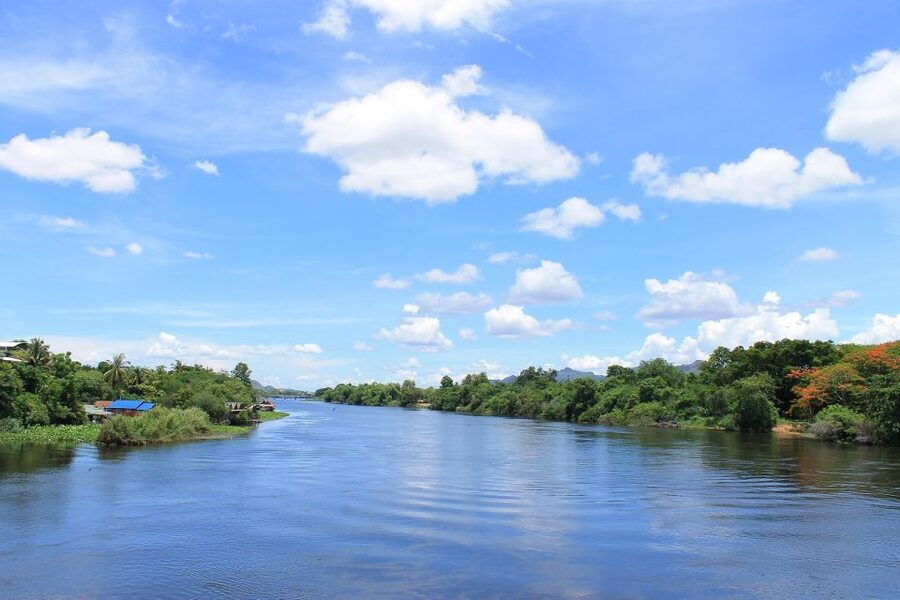
Review · KANCHANABURI & RIVER KWAI
From Bangkok: Historical Day Tour to River Kwai
A dark railway day trip, worth your time. This tour hits the WWII record straight on with the War Cemetery and interactive Thailand-Burma Railway Centre, then you ride a section of the Death Railway and see the River Kwai bridge. I like how the day stays structured, with guides such as Luke, Jokey, and Henry guiding you stop by stop. One possible drawback: it’s a long day with early pickup and traffic risk, and the included train fare doesn’t guarantee a seat.
You’ll also get a real logistics win for a day that long: air-conditioned van transport, lunch included, and enough time at each main site to actually look and not just shuffle. Still, check your expectations on pace—if you’re extra sensitive to museum time being tighter or you want extra minutes at the cemetery or bridge, plan on making peace with the schedule.
In This Review
- Key tour takeaways
- From Bangkok to Kanchanaburi: the day’s pace and why it matters
- The War Cemetery: first stop for context and respect
- Thailand-Burma Railway Centre: turning WWII into a story you can follow
- River Kwai bridge: famous, but not the whole point
- The Death Railway train ride: original track and real countryside views
- Krasae cave and the trackside moment after the train
- Lunch: included, and actually worth paying attention to
- The guide and driver: where quality shows up fast
- Small-group feel and how it changes your day
- Price and value: what you get for about $51
- Who should book this tour (and who might not)
- Practical tips to make the day easier
- Should you book From Bangkok: Historical Day Tour to River Kwai?
- FAQ
- FAQ
- How long is the tour from Bangkok to Kanchanaburi?
- How far is Kanchanaburi from Bangkok?
- Where do I meet if I don’t choose hotel pickup?
- What time are pickups if I want them?
- What’s included in the price?
- Do I get an assigned seat on the train?
- Is lunch included, and where is it served?
- Will the tour be in English?
- Can I cancel for a refund?
Key tour takeaways
- WWII memorial first, so you understand what you’re looking at before the train and bridge moments hit
- Interactive railway centre turns dates and names into something you can follow
- Train ride along the original Death Railway track, with views of rural Thailand
- River Kwai bridge time for photos and context, not a drive-by
- Small groups are common, and that usually means better questions and less crowd noise
- Lunch included at the disembarkation area, plus frequent comfort stops on the road
From Bangkok to Kanchanaburi: the day’s pace and why it matters
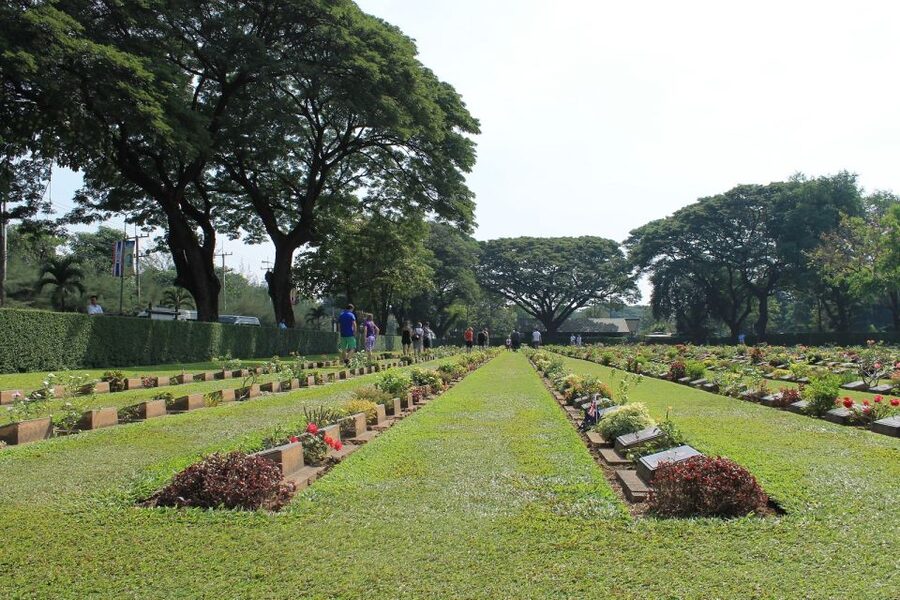
This is built for a full 10-hour day, but in real life you’re also signing up for a major transfer. The one-way drive is about 3 hours, so your day has a built-in rhythm: early start, long road time, then concentrated history and sights.
The practical upside is that the tour tries to reduce stress. You’re in an air-conditioned van, and the schedule is designed around getting you to Kanchanaburi early enough to enjoy the first stops without feeling like you’re sprinting. In the busier parts of Bangkok, pickups can slide a bit due to traffic, so I’d keep your phone charged and accept that Bangkok can be unpredictable.
If you choose hotel pickup, early mornings start around 6:00 AM for many areas, with the Silom zone listed at 6:15 AM. If you’re not doing pickup, you’ll meet at the BMP Bigcountry meeting point at River City Bangkok (23 Charoen Krung Soi 24, Talad Noi, Sampantawong, Bangkok 10100). Either way, you’ll be leaving before most of the city is fully awake.
Out to the River Kwai, more Kanchanaburi trips
- From Bangkok: Erawan Park & Kanchanaburi Small-Group Tour
★ 4.5 · 1,582 reviews - From Bangkok: Death Railway & Hellfire Pass Tour with Lunch
★ 4.6 · 931 reviews - From Bangkok: Historical Day Tour to River Kwai
★ 4.6 · 868 reviews
The War Cemetery: first stop for context and respect
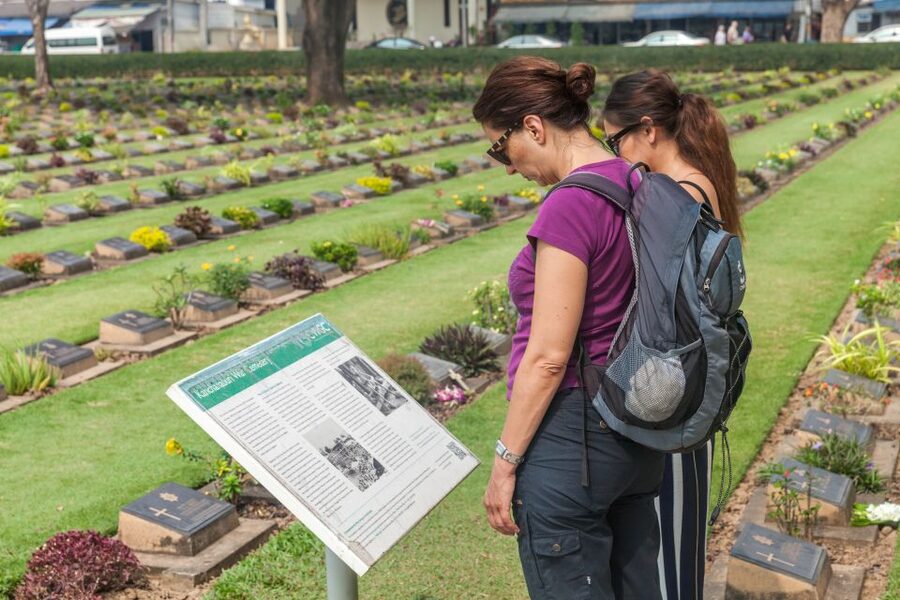
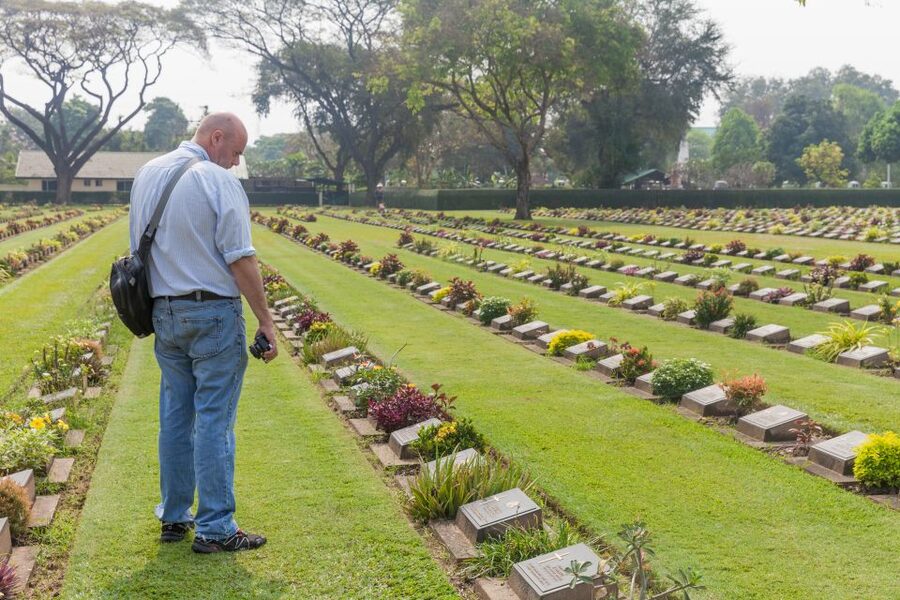
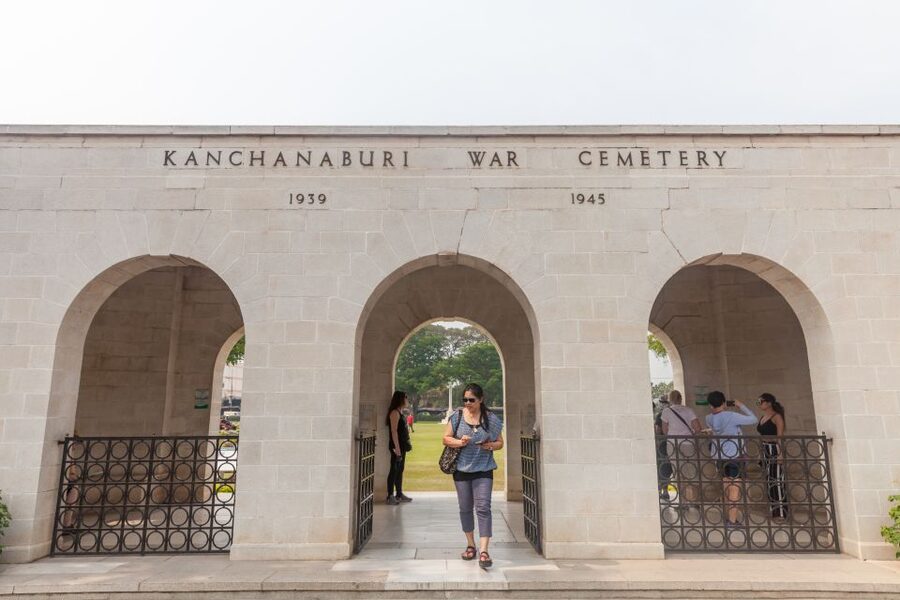
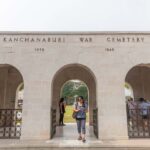
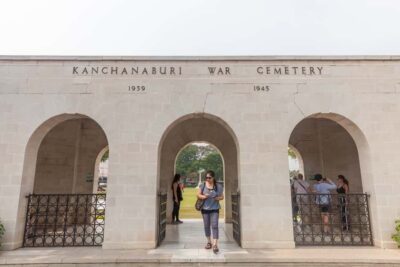
Most day tours race to the famous bridge. This one starts somewhere harder, and that’s a big reason it works. You begin at the well-kept War Cemetery, where the graves of an estimated 9,000 Allied soldiers are tended. This isn’t a quick “look and go” moment in concept. It’s the background that makes the later train ride and bridge feel less like movie trivia.
What I like here is the order. You learn what the railway meant, then you walk into the physical place where people died building it. It adds weight to your day. If you’re the type who likes a respectful pace, you’ll likely appreciate that the cemetery visit is treated as more than a photo stop.
That said, there’s a time constraint like any day trip. Some people wished they had a bit longer at the cemetery, so if you know you’ll want slow reading of every marker, come prepared to be patient when the group needs to move on.
Thailand-Burma Railway Centre: turning WWII into a story you can follow
After the cemetery, you head to the Thailand-Burma Railway Centre in Kanchanaburi. This is described as an interactive museum, research, and information center focused on the Thailand-Burma Railway, often called the Death Railway.
Here’s what you’re really paying for: context. The museum doesn’t just list events. It recreates parts of the past with pictures and artifacts, so you can understand the scale of forced labor and the grim purpose behind the project. If you’re used to WWII history that stays abstract, this is the kind of site that helps it become human and specific.
It’s also a good place to ask questions. Several guides named in the tour experience—like Luke and Jokey—are praised for explaining the sites clearly and answering follow-ups. Even if you’re not a history fanatic, you’ll usually get enough background to connect the dots before you board the train.
Timing-wise, you’ll have a set amount of time here. Some people felt it could be stretched a little, while others said an hour was enough to get the main message. If you want maximum reading time, plan to skim strategically: focus on the story panels and key artifacts first, then go back if you have extra minutes.
River Kwai bridge: famous, but not the whole point
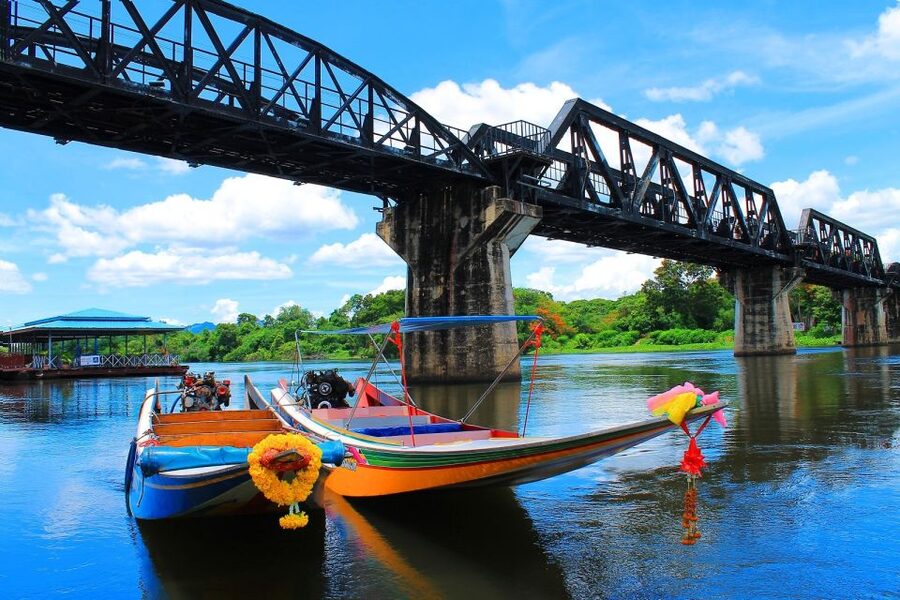
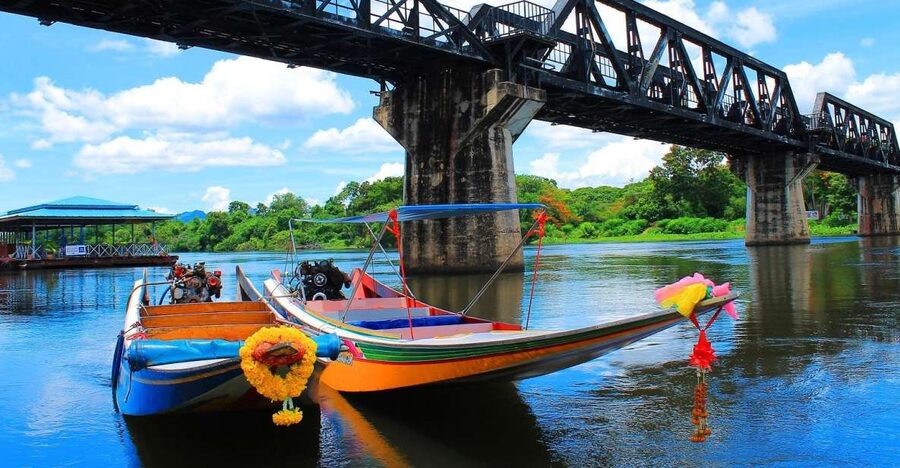
The River Kwai bridge is the star name, but this tour treats it as one chapter of a bigger story. You’ll drive to see the bridge and get time to explore and take photos.
What makes this visit meaningful is the day’s setup. You’ve already been to the cemetery, and you’ve already learned what the railway was built for. So when the bridge becomes the focus, it doesn’t feel like a stop on a checklist. It feels like a physical reminder of what happened in order to create it.
You’ll also see the area in a way that includes photos and some time on site, not just a quick look from the road. A few comments pointed out that they wanted a bit more time at the bridge, so if that’s your top priority, keep your expectations flexible. The schedule needs to fit in the train ride and lunch.
Deeper into old Bangkok

The Death Railway train ride: original track and real countryside views
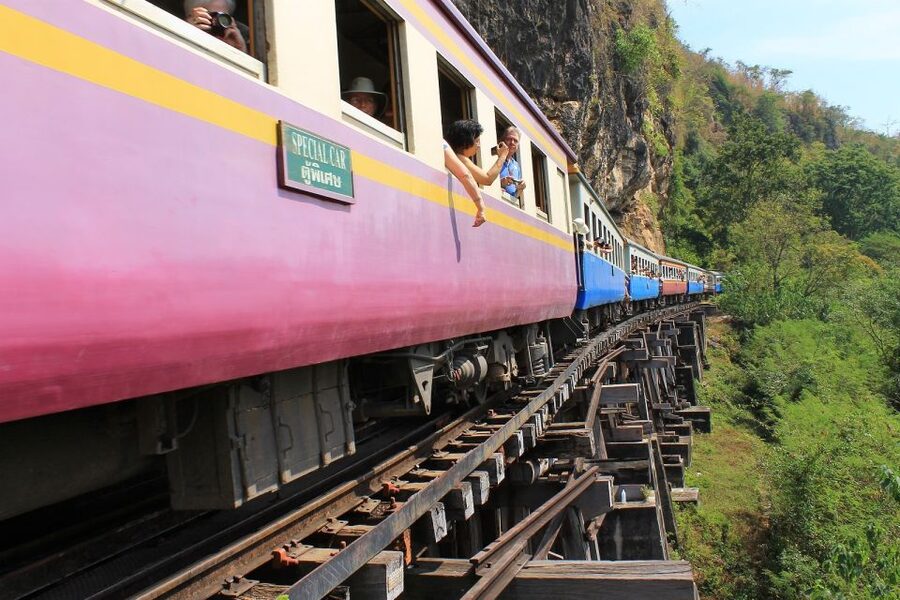
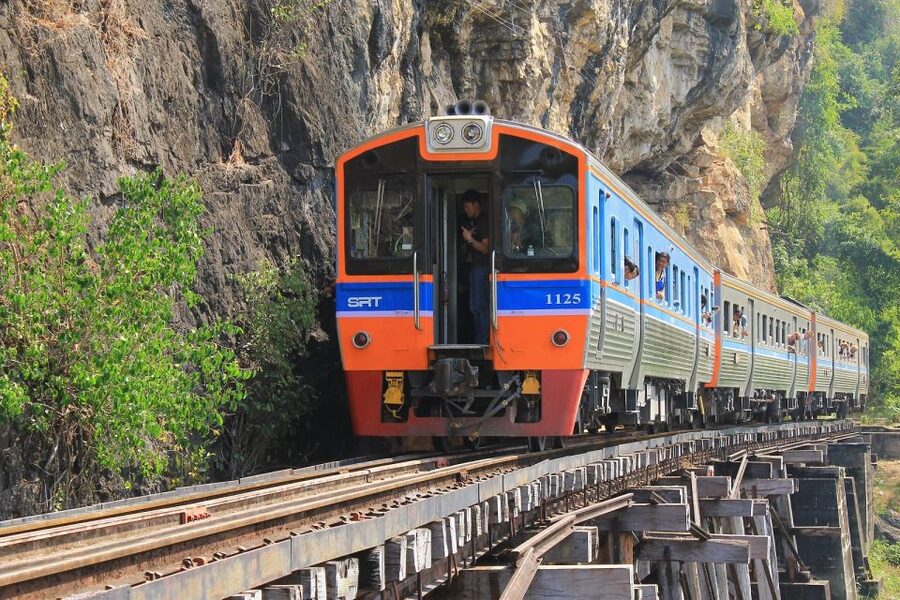
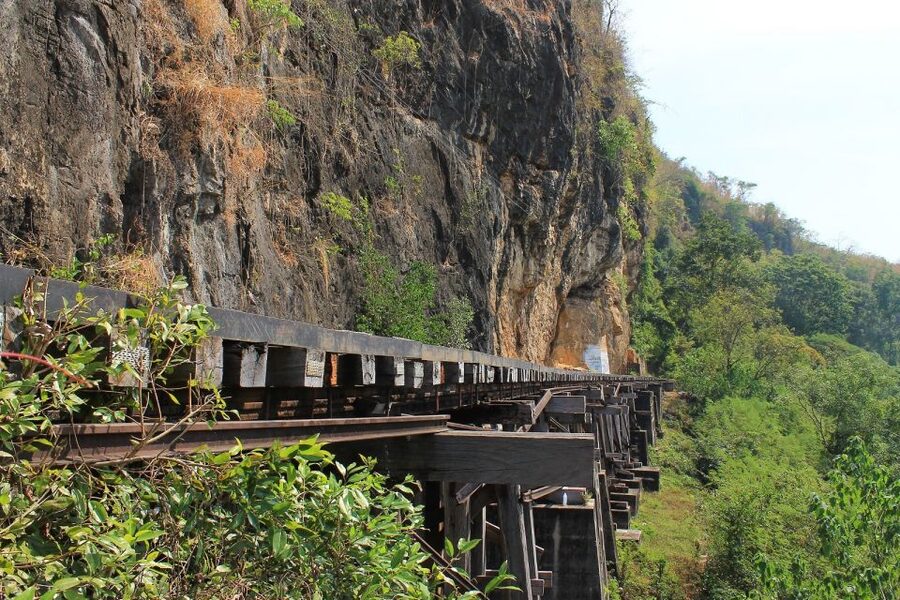
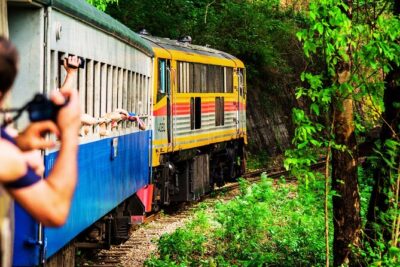
This is the part most people remember for the rest of the trip. You’ll ride along a stretch of the notorious Death Railway track, and you’ll do it as a train ride, not as a bus tour imitation.
A key detail: the package includes a basic train fee (THB 100), but it does not guarantee an assigned seat. If you want to avoid uncertainty, you can pay an extra THB 200 per person for an assigned seat. Some guests specifically thanked the guide for securing seats, and that’s a good sign that seat choice can matter to your experience.
On the route, you’ll likely get views of rural Thailand as you pass through the countryside. That combination is unusual for a WWII-focused day trip: heavy history plus a living landscape around it. It helps you grasp the distance and isolation involved in the railway’s construction.
The train ride is also long enough to feel like a true segment of the journey. Some people said it ran longer than expected (in a good way). If you prefer short and fast tours, this might feel like a lot. But if you enjoy the rhythm of “travel as part of the story,” it clicks.
Krasae cave and the trackside moment after the train
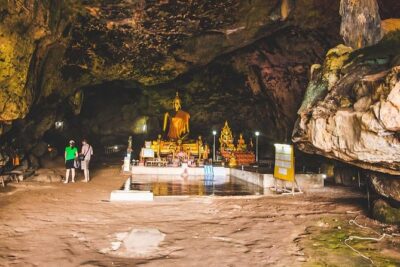
After the train, you disembark and head toward the next viewpoints. Based on the tour experience, this portion can include walking along the tracks and then visiting the Krasae cave bridge area and a cave with a Buddha statue.
This is where the day shifts from museum-focused explanation into sensory details: walking, uneven ground, and the physical presence of the track and surrounding structures. One practical tip that came up is that the cave area can get muddy or uneven, so wear sensible shoes and don’t try to do it in flip-flops.
You also get lunch around this stage of the day. Since the timing is connected to when the group finishes the train segment, this tour avoids the classic problem of arriving hungry and bored. Lunch is at the disembarkation station area as part of the flow.
Lunch: included, and actually worth paying attention to
Lunch is included, and that matters more than you might think on a day that starts early. People praised the lunch as tasty and satisfying, with one person noting that there were options for a non-meat eater.
What I’d recommend: treat lunch as part of the day’s recovery. You’ll be out in heat at least part of the time, especially during the road travel and walk portions. If you tend to get sluggish in hot weather, plan on taking your time and hydrating.
The tour experience also mentions water being offered and support from the driver during the day, including comfort stops.
The guide and driver: where quality shows up fast
For this kind of tour, the guide can make or break it. The best value comes from translation plus context: explaining why each site matters and helping you understand what you’re seeing without turning the day into a lecture.
The names that show up repeatedly—Luke, Jokey, Henry, William, Woody, Ong, Bobo—signal that the tour often assigns solid communicators. The most praised traits are simple and practical: clear stop-by-stop explanations, patience, good timing, and a sense of humor that keeps the day from becoming too heavy to function.
The driver also plays a big role. Several comments mention smooth, safe driving and professional handling of a long route. That’s not glamorous, but it affects your comfort over hours of road time. If you’re the type who gets travel-worn easily, safe driving matters more than you’d expect.
Small-group feel and how it changes your day
This is marketed as a small-group experience, and the difference shows up in pacing. When groups are smaller, you get easier conversation, more room to ask questions, and less chaos at photo stops.
Some experiences described the group as very small at the time of travel, almost like a private feel through parts of the day. Even when it’s not private, small-group tours usually mean you’re not fighting the crowd line at every stop.
It also helps with timing. A few people mentioned avoiding Bangkok traffic rush and getting to key places efficiently, which can translate into more meaningful time on site instead of more time parked somewhere.
Price and value: what you get for about $51
At $51 per person for a 10-hour day, this tour looks competitive when you factor in what’s included. You get:
- an English-speaking guide
- entrance fees
- lunch
- air-conditioned transport from Bangkok
- the included basic train fee (THB 100) on the Death Railway track
Then there’s the optional upgrade for assigned train seats (THB 200). If you really care about comfort and certainty, the upgrade is worth considering. The included fee doesn’t guarantee a seat, and on an experience like this, that small uncertainty can turn into annoyance if you end up standing.
The biggest “value” factor isn’t just the math. It’s the structure: cemetery first for context, then the interactive museum, then the bridge and train ride. That order is what helps the story land.
Who should book this tour (and who might not)
This is a strong match for you if:
- you want a WWII-focused day without assembling a plan from scratch
- you like guided explanation tied to real places
- you’ll enjoy a train ride as part of the experience, not just a transfer
It’s not ideal if:
- you want minimal driving and lots of free roaming
- you hate early mornings and long days
- you’re extremely sensitive to schedule compression at memorial sites
Also, be honest with yourself about heat and walking. There’s at least some walking and a cave portion in the program, with uneven ground mentioned in the experience.
Practical tips to make the day easier
- Wear shoes that handle uneven surfaces. The cave area can be rough underfoot.
- Bring sun protection and a small way to stay hydrated. The tour experience includes water, but you’ll still feel the heat.
- If train seating matters to you, consider paying for an assigned seat upfront.
- Expect a long day in total time, even though it’s listed at 10 hours. Bangkok traffic can stretch it.
- If you’re a slow reader, focus on key museum sections first so you don’t run out of time.
Should you book From Bangkok: Historical Day Tour to River Kwai?
Yes, if you want the Death Railway story in the right order and you prefer having a guide handle the pacing, transport, and interpretation. This tour is one of those rare day trips where the “famous” sights matter, but the deeper meaning is built in from the start.
Skip it only if you can’t handle long travel days, early pickups, and a schedule that’s designed to fit multiple stops with limited time at each. If that sounds like you, you might prefer a slower, multi-day approach.
FAQ
FAQ
How long is the tour from Bangkok to Kanchanaburi?
The tour duration is listed as 10 hours.
How far is Kanchanaburi from Bangkok?
The commute is approximately 3 hours one way.
Where do I meet if I don’t choose hotel pickup?
You meet at the BMP Bigcountry meeting point located at River City Bangkok: 23 Charoen Krung Soi 24, Talad Noi, Sampantawong, Bangkok 10100, Thailand.
What time are pickups if I want them?
Pickup times vary by area. Many pickups are around 6:00 AM, with the Silom area listed at 6:15 AM.
What’s included in the price?
Lunch, entrance fees, an English-speaking guide, transportation to Kanchanaburi by air-conditioned van, and a basic train fee (THB 100) on the Death Railway track are included.
Do I get an assigned seat on the train?
Not automatically. The basic train fee included does not guarantee a seat. You can pay THB 200 per person for an assigned seat.
Is lunch included, and where is it served?
Yes, lunch is included and is served at the disembarkation station after the train segment.
Will the tour be in English?
Yes. The live tour guide is listed as English-speaking (and Thai as well).
Can I cancel for a refund?
Yes. Free cancellation is offered up to 24 hours in advance for a full refund.
More Tours in Bangkok


More Tour Reviews in Bangkok




Out to the River Kwai
Just In: Fresh Bangkok Reviews

Kanchanaburi & River Kwai, compared.
 ★ 4.5From Bangkok: Erawan Park & Kanchanaburi Small-Group TourFrom $591,582 reviews
 ★ 4.6From Bangkok: Death Railway & Hellfire Pass Tour with LunchFrom $82931 reviews
 ★ 4.8From Bangkok: Elephant Sanctuary and Kanchanaburi TourFrom $79826 reviews
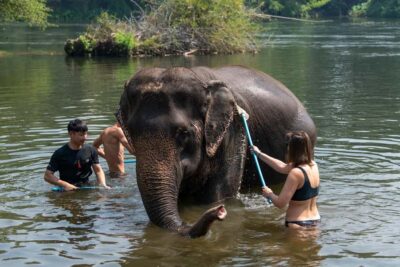 ★ 4.9Elephant Sanctuary & Erawan Waterfall TourFrom $181820 reviews
 ★ 4.5Bridge on the River Kwai and Thailand-Burma Railway TourFrom $108658 reviews
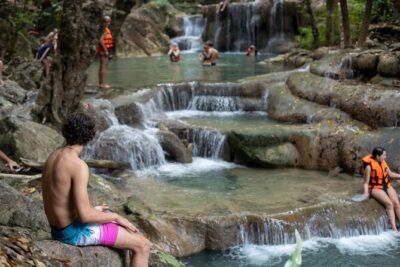 ★ 4.5Erawan Waterfalls and Bridge Over River Kwai Tour from BangkokFrom $56372 reviews
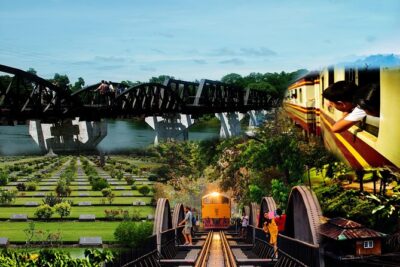 ★ 4.5Bridge on the River Kwai and Thailand-Burma Railway Guided TourFrom $94353 reviews
 ★ 5.0Erawan Waterfall and Elephant Care: Private Tour to KanchanaburFrom $227339 reviews
Browse the lists this tour appears in