
Review · BANGKOK BIKE TOURS
Electric Bike Tour
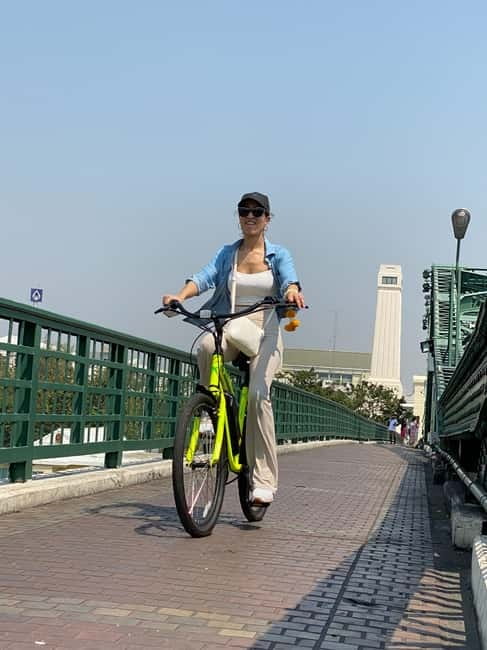
Pedal off-plan in Bangkok and it feels real. On a Go Scoot Bangkok electric bike outing, I love gliding through two-century-old lanes away from traffic, then rolling into temples where you even get to feed turtles. One drawback to flag up front: the promised tour photos don’t always arrive the way they should, like Lisa said after Nat took pictures.
This is the kind of tour where the guide makes the day. Nat, Tony, Tae, Woody, and Black all show up in past groups, and the pattern is the same: clear safety direction at the start, smart stop choices, and lots of time to ask questions when the road gets interesting. With a maximum of 6 people and a relaxed pace, you’re not trapped in a queue.
In This Review
- Key moments worth circling
- Electric bike Bangkok: why this 4-hour format works
- Finding the meeting spot and getting started right
- Bang Rak: Muslim community streets and the Old Customs House start
- Talat Noi and Chinatown: woven streets, real food energy, and culture stops
- Pak Khlong Talat photo stop: when markets become motion
- Santa Cruz Church break: a calm pocket with good photo angles
- The river ferry and Wat Kanyalanamitr: cooler air plus temple payoff
- Thonburi side: Portuguese desserts, Wat Prayoon turtles, and scenic riding
- Safety, pace, and why a max of 6 people changes everything
- What’s included with the $46 price (and what you should plan for)
- Who this tour suits best (and the people it won’t)
- A practical packing checklist for the day
- Should you book Go Scoot Bangkok’s electric bike tour?
Key moments worth circling
A 10-minute safety briefing in Bang Rak before you hit the tighter streets
Off-road alley riding through older lanes that you won’t spot on the usual routes
Chinatown + Talat Noi storytelling (not just photo stops)
Ferry time for cool air and a switch from street noise to river views
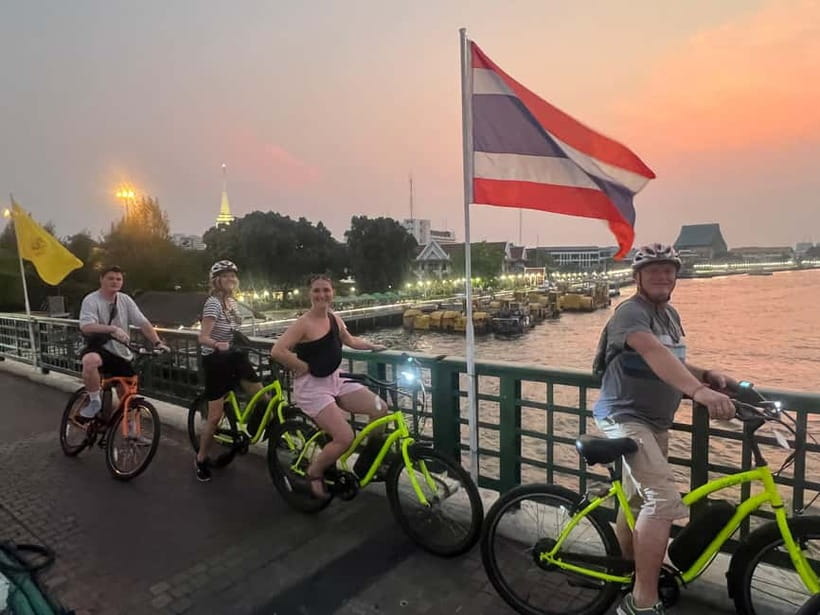
Portuguese desserts and Wat Prayoon turtle feeding for a surprise in the middle of temple tourism
Electric bike Bangkok: why this 4-hour format works
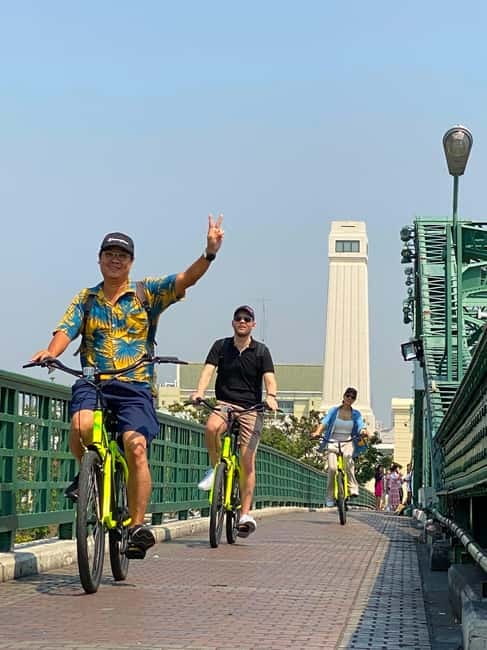
Bangkok can be a lot on foot. Heat, scooters, narrow sidewalks, and the constant feeling that you’re always late for the next landmark. The electric bike format fixes most of that without turning the day into a boring highlight-bus.
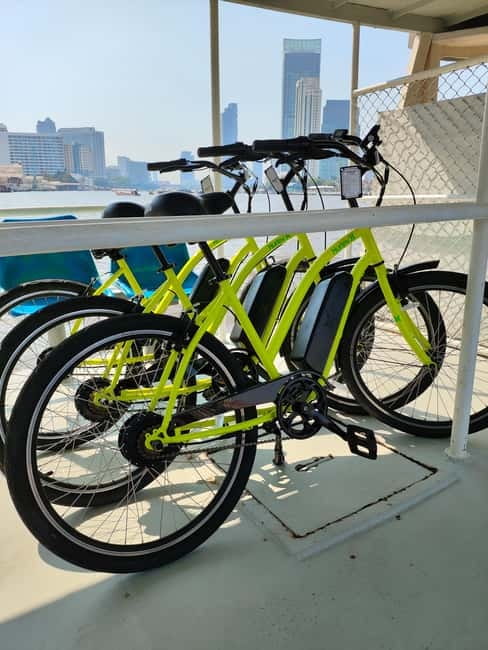
You’ll start by getting the bike under control with a short safety briefing in Bang Rak. Then you’re off into neighborhoods where the street patterns matter—woven lanes, older customs, and everyday life. The e-bike is “easy to use” in the plain sense: you’re not fighting gears or stamina. Your job is mostly to watch the road, follow the guide, and enjoy the constant change of scenery.
At 4 hours, the tour hits a strong mix: culture neighborhoods (Muslim community and Chinatown areas), markets, major temple visits, and a river crossing. It also keeps the effort level friendly for people who want movement but not a full-day workout. One thing I’d watch: the planned time is 4 hours, but at least one rider felt it ran closer to 6 depending on pacing and stops—so I’d mentally pack flexibility.
Bangkok by pedal, a couple more routes
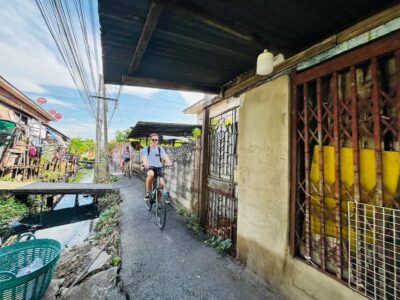
- Bangkok: Temples, Canals & Local Life Bike Tour
★ 4.9 · 3,511 reviews - Experience Real Bangkok by Bike
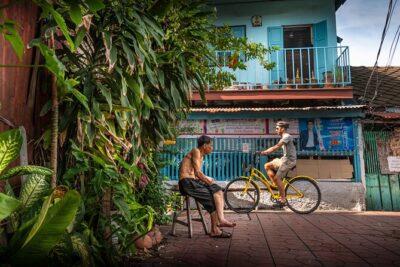
★ 5.0 · 2,439 reviews - Bangkok: Bike and Canal Boat Tour with Lunch
★ 4.9 · 1,350 reviews
Finding the meeting spot and getting started right
Meet at the Electric Bike Tours Bangkok office, located in the middle of a fresh market. It’s set up so you can walk in, grab cold water, and get comfortable before the briefing.
That small detail matters. Starting in a market means you’re surrounded by real food and real noise from minute one, but you don’t have to handle it on your own. You’ll have the guide, the bikes, and a clear plan for where you’re going next.
You should also go in dressed for “bike life” in Thailand. Rules are explicit: no high-heeled shoes and no sleeveless shirts. Alcohol and drugs are also not allowed. If you’re the kind of person who packs for comfort, you’ll be happy here—just don’t show up in clothes meant for a dinner reservation.
Bang Rak: Muslim community streets and the Old Customs House start
The tour kicks off in Bang Rak, right with a safety briefing (about 10 minutes). This is where the guide sets expectations: how to ride, when to slow down, and how the group moves through tighter sections.
Then you shift into the Muslim community area, where the tour’s big selling point becomes obvious: you’re not stuck on the main roads. You move through lanes and alleys that feel older than the traffic around them, including two-century-old streets. This is the part that tends to stick with people, because you see daily rhythm rather than staged tourist theater.
A key first landmark is the Old Customs House on the river. The point isn’t just the building itself. It’s the idea of Bangkok as a trading gateway—this was where ancient travelers would have entered and where goods started their routes inland. You’re right at the river from the beginning, so the day has a “there’s history under my wheels” feeling without turning into a museum lecture.
Talat Noi and Chinatown: woven streets, real food energy, and culture stops
After Bang Rak, you spend time in Talat Noi and then continue into Chinatown. Expect guided sightseeing that’s built around understanding neighborhoods, not just ticking boxes.
In Talat Noi, the route focuses on the smaller street geometry—the woven lanes where people actually move. Chinatown follows with about an hour for you to experience the area with a guide directing the story. This is where your guide’s personality matters most. Past riders highlighted how guides like Nat and Tony kept things both informative and fun, with enough freedom for questions.
A practical tip: Chinatown and Talat Noi are visually intense. If you try to photograph everything, you’ll miss the explanations that connect the sights. I’d choose a few “anchor moments” to shoot (a temple façade, a market doorway, a street scene), then let the guide do the rest.
More of Bangkok by bike


Pak Khlong Talat photo stop: when markets become motion
You’ll hit Pak Khlong Talat as a dedicated photo stop with guided context (around 30 minutes). This is the kind of place that looks static, but it’s really moving—flowers, produce, and constant setup and sorting.
Even if you only take a short pause, you get something useful from a guided stop here: you know what you’re looking at and why it matters in the broader market system. It also breaks up the ride so your brain can switch from “ride and steer” to “watch and absorb.”
If you’re heat-sensitive, this is a good moment to rehydrate. Your tour includes drinking water, but markets can drain you faster than you expect.
Santa Cruz Church break: a calm pocket with good photo angles
Next comes Santa Cruz Church, where you get a break time plus photo stop and guided sightseeing (about 30 minutes).
This portion of the day works well because it’s a reset. After market and lane riding, the church area gives you space to pause, look, and breathe. It’s also a useful contrast point: it reminds you Bangkok isn’t a single-story city. There are layers of communities and architecture, and the tour keeps showing you that without making it feel like homework.
Use this stop to regroup before the river section. If you’ve been moving steadily, your body will appreciate the break. If you’re prone to lightheadedness in the heat, this is when you should slow down and sip water.
The river ferry and Wat Kanyalanamitr: cooler air plus temple payoff
After the Chinatown and market sections, you head toward the river. You’ll feel the shift immediately—cooler air, different smells, and a break from the densest street sections.
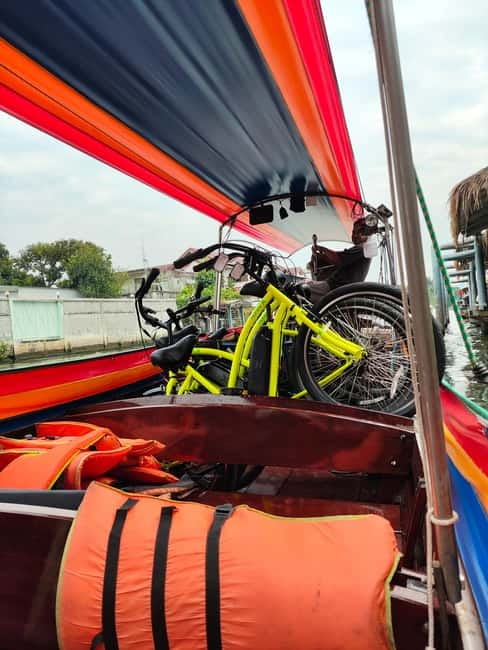
The route then crosses by ferry to Wat Kanyalanamitr, one of Bangkok’s beautiful temple stops. This is where the bike tour pays you back for navigating. A ferry ride turns the day into something more than a cycle loop; it gives you a view-based rhythm and a sense of “we’re changing sides of the city.”
Temple stops are the best part of this tour for many people, not because they’re dressed up with performance, but because you’re guided through Thai temple culture with activities and surprises. The day’s temple component is not just walking past buildings. You’re supposed to participate in the culture in the way you’re able—within the flow of the visit and with your guide translating what matters.
Thonburi side: Portuguese desserts, Wat Prayoon turtles, and scenic riding
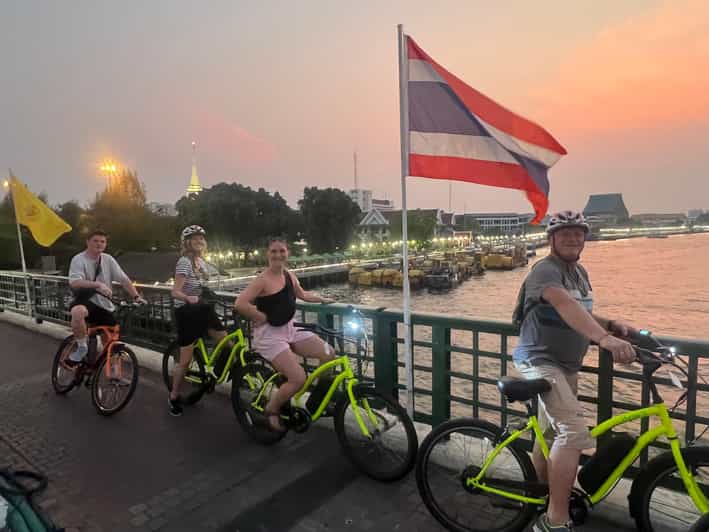
Now the tour leans into Thonburi, the historic river side area. You spend time here with scenic riding, viewpoints, and short guided stops.
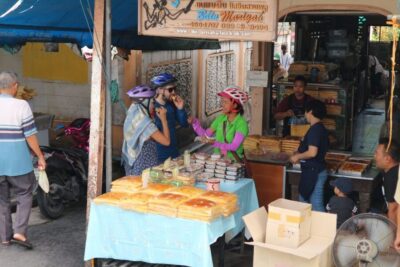
One standout is the Portuguese community dessert stop, where desserts are still made the same way they were over 200 years ago. This isn’t just a snack stop. It’s a living reminder of how Bangkok absorbed outsiders and turned influences into local tradition. It’s the kind of cultural twist that breaks up temple-and-market repetition.
Then you get one of the most memorable practical temple moments: Wat Prayoon, where you can feed turtles. If you’ve never done it, it’s exactly the kind of experience that makes a temple visit feel different. It’s hands-on, it’s visual, and it’s memorable in a way that photos can struggle to capture unless you’re there in the moment.
On the ride back toward the end of the day, you also get scenic views as you travel. This matters because it gives your eyes a final chance to understand the river-city geography instead of just seeing isolated spots.
Safety, pace, and why a max of 6 people changes everything
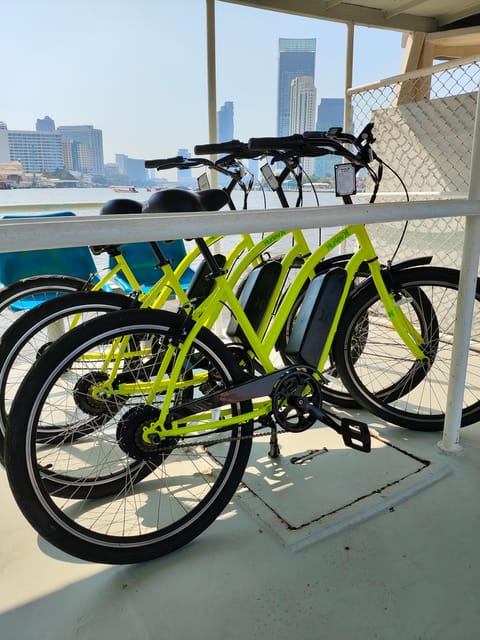
This tour is built for small groups—maximum 6 participants. That’s not a luxury detail; it changes how safe and relaxed the day feels.
With fewer riders, your guide can watch everyone’s speed and spacing. You get through the busier sections without feeling like you’re being dragged by the loudest person in the group. Past riders also noted that even on more crowded stretches, guides kept the ride controlled while still keeping things fun.
The electric bikes help, too. Still, there’s a first-time learning curve for anyone switching from walking or using normal bikes. One rider explicitly said bikes took a little getting used to, but the guide stayed patient and ensured safety on twists and turns. That’s the big promise to check in your head: if you can follow simple instructions and maintain attention, you’ll do fine.
If you want an extra safety mindset: treat this as a guided ride, not a personal sightseeing mission. Keep your eyes up, follow the group, and don’t stop suddenly without signaling. It sounds basic, but it makes a real difference in dense street moments.
What’s included with the $46 price (and what you should plan for)
At $46 per person, you’re paying for more than a guide. The price includes:
- E-bike
- Fantastic guide
- Drinking water and a snack
- Soft drinks
- Insurance
- Ferry tickets
- About 4 hours of guided fun under the sun
That’s the value logic: transport, insurance, and the ferry are built in. Many tours in Bangkok charge separately for the things that actually cost money once you’re on the ground.
You might still want to plan extra supplies for comfort. One rider (Tania) said to pack extra water and snacks if needed, noting the snack was on the earlier side and not much followed later. Even if that’s not your experience, heat and riding can make you hungry faster than expected.
Also note the tour wraps back at Go Tours HQ area, where you can unwind and discuss the day with your group. Soft drinks are included, and you can purchase a refreshing beer if you want. Keep that in mind if you’re someone who likes an end-of-tour ritual.
Who this tour suits best (and the people it won’t)
This electric bike tour is a strong match if you want Bangkok culture with real local texture: old alleys, market energy, and temple experiences that include an activity beyond just looking.
It’s also a good fit for older adults and mixed experience levels. One rider described the day as stress-free even in their 60s, and praised the attentiveness and safety focus. If you want to move at a steady pace without being forced into marathon walking, the e-bike approach makes sense.
But there are clear limits:
- Not suitable if you’re under 5 ft 2 in (160 cm)
- Not suitable if you’re over 309 lbs (140 kg)
- Baby carriers are not available, and there’s a specific note that min height is required
- Rules require covered-shoulder clothing (no sleeveless shirts)
If you’re traveling with someone who doesn’t meet height needs, this is one of those tours you’d skip.
A practical packing checklist for the day
I’d pack for “Thailand heat + city riding,” not for a museum day.
Bring:
- Comfortable closed-toe shoes (especially since high heels are not allowed)
- A light layer for sun protection that still follows the no-sleeveless rule
- Sunglasses and sunscreen
- Your best water habit (you’ll get water, but markets and riding can still surprise you)
Skip:
- Anything that restricts your movement
- Alcohol and drugs (not allowed)
- Anything you rely on for a baby carrier (none are provided)
And mentally plan: there are breaks and included refreshments, but the markets can make you want more than just the snack.
Should you book Go Scoot Bangkok’s electric bike tour?
Book it if you want a Bangkok day that feels like you’re being guided through neighborhoods, not just transported between highlights. The mix of alley riding, Chinatown and Talat Noi texture, ferry time, and temple stops (including turtle feeding) makes this a smart use of a half day.
Skip or rethink it if you can’t meet the height/weight limits, you need a baby carrier, or you’re strict about receiving tour photos afterward. That photo delivery can be inconsistent, and if photos are a top priority for you, I’d treat that as uncertain.
If you’re flexible, follow instructions, and want your Bangkok experience to go off the main roads, this one’s a solid choice for the money.
More Tours in Bangkok

More Tour Reviews in Bangkok

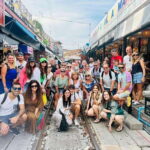

Two Wheels Through Bangkok
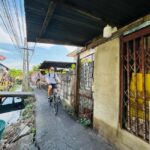
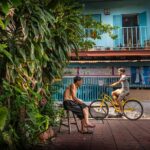
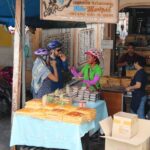
Just In: Fresh Bangkok Reviews


Bangkok Bike Tours, compared.
 ★ 4.9Temples, Canals & Local Life Bike TourFrom $243,511 reviews
 ★ 5.0Experience Real Bangkok by BikeFrom $652,439 reviews
 ★ 4.9Bike and Canal Boat Tour with LunchFrom $471,350 reviews
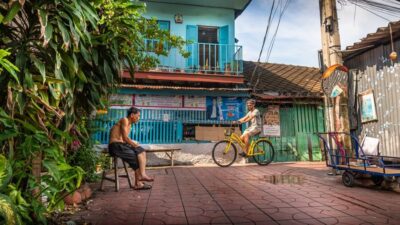 ★ 4.8Bangkok Classical Bicycle TourFrom $401,278 reviews
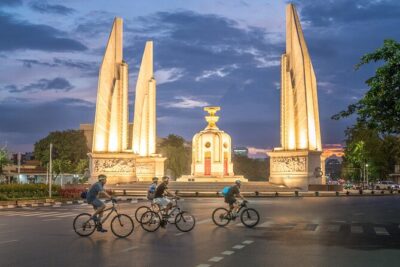 ★ 4.8Night Bike Tour with Temples & Flower Market VisitFrom $35751 reviews
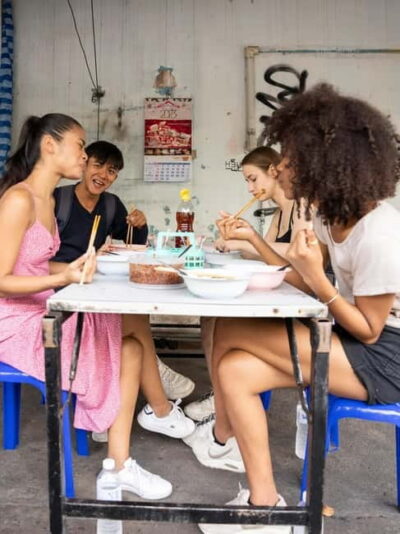 ★ 4.9Must-Try Hidden Bike & Food ExperienceFrom $59613 reviews
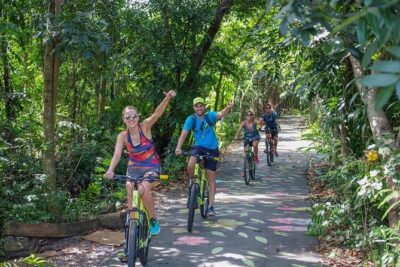 ★ 5.0Bangkok Jungle Bike Tour – Hotel-pickup & LunchFrom $81489 reviews
 ★ 4.8E-Scooter Night Tour with Local Street FoodFrom $39488 reviews
Browse the lists this tour appears in