
Review · SCOOTER RENTALS
Electric Scooter Tour of Bangkok
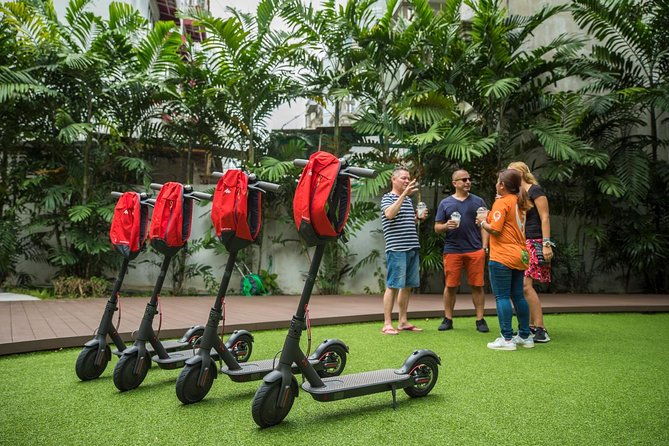
Bangkok by scooter beats the usual bus tour. You’ll ride with a small group of up to three and follow a guide who keeps you moving through local districts instead of staying stuck in the main roads. I especially like the built-in scooter practice at the start (so you’re not thrown onto traffic right away) and the way the route mixes wats, markets, and alley-life in a short half day. One thing to consider: part of your time is spent getting comfortable on the scooter and keeping safe, so you’ll likely cover fewer stops than you’d expect from a pure sightseeing walking tour.
This is also one of those experiences where the details matter. You’ll need temple attire and you’ll be under a simple weight limit, so plan what you wear and how you pack. Also, from past experiences with this kind of small-group format, the guide’s communication style can shape how much you enjoy the ride—so if you care a lot about explanations, don’t hesitate to ask questions early and often.
In This Review
- Key things I’d zero in on before you book
- Why an electric scooter tour feels more local than you expect
- Morning vs afternoon: picking the half-day that fits your energy
- Start at Bang Rak: scooter practice and a quick confidence boost
- Grand Postal Building and Haroon Mosque: history you can feel on the street
- Talad Noi wall art and the Chinatown maze: riding through Bangkok’s food-and-shop energy
- Wat Chakrawatrachawat and crocodiles: a temple stop with an odd-but-real reason
- Pak Khlong Flower Talat and the ferry: the Bangkok river, up close
- Baan Kudichin Museum: Portuguese Bangkok and the cookie connection
- Lhong 1919 and the Rama 9 park stop: when time allows
- Price and what you really get for $36.58
- What could disappoint: scooter time and guide communication style
- Temple attire, weight limits, and rider comfort: your practical checklist
- When you should (and shouldn’t) book this scooter tour
- FAQ
- How long is the Electric Scooter Tour of Bangkok?
- What is the group size for this tour?
- Can I choose between a morning and an afternoon tour?
- What’s included in the tour price?
- Do I need temple-appropriate clothing?
- Is there an age or height requirement?
- What are the rider limits for weight?
- Where do I meet, and does the tour end there?
Key things I’d zero in on before you book
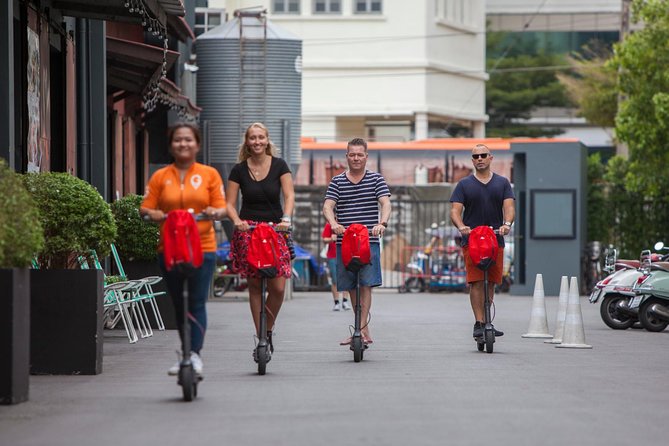
- Max 3 riders means you’re not lost in a crowd, and the guide can actually watch how you ride
- Scooter practice at Bang Rak helps you feel steady before the city gets more interesting
- Ferry crossing + temple combo (flower market to Wat Kalayanamit) gives you a real sense of the river
- Market-and-temple stops in a tight loop cuts the “where do we go next?” stress
- Portuguese settlement stop (Baan Kudichin) adds a surprising Bangkok layer beyond Thai temples
- Time-savers included: helmet, water, snacks, coffee or tea, and insurance are built in
Why an electric scooter tour feels more local than you expect
Bangkok is fast, noisy, and constantly changing. A scooter tour gives you a practical way to move through that energy without getting stuck at every traffic light like a bus passenger. In about 3 hours, you get the rhythm of the neighborhoods—side streets, storefronts, temple courtyards you’d likely miss on a quick walk, and the smell of markets as you pass.
And the “small” part matters. A group capped at three means fewer stops that turn into crowd-wrangling. It also makes it easier for the guide to set a pace that feels safe but still fun—especially when you’re switching between busier streets and quieter alley lanes.
The tour is also designed around variety. You’re not only doing big-ticket sights. You’re getting a mix: a cultural building (the old post office now turned cultural center), community landmarks like a historic mosque, street-art and heritage walls, and multiple wats. That mix is great if you want a “first taste” of Bangkok that doesn’t require planning your whole day.
Worth putting side by side before you book this Bangkok tour:
- Bangkok: E-Scooter Night Tour with Local Street Food
★ 4.8 · 488 reviews - Bangkok: Bang Kachao E-Scooter Jungle Tour
★ 4.8 · 154 reviews - Bangkok: Riverside E-Scooter Adventure with StreetFood Snack
★ 4.9 · 133 reviews
Morning vs afternoon: picking the half-day that fits your energy
You can choose a morning or afternoon departure, which is a big deal in Bangkok. The heat and light shift the whole mood of the day. If you’re the type who likes cooler starts and slower mornings, pick the morning option so you can enjoy the markets and temples without feeling cooked.
If you want more “night-leaning” atmosphere in the area around markets, the afternoon can work well. Even if you don’t see late-night scenes, you’ll be riding through districts where activity naturally picks up later. Either way, the half-day format means you can still do other things the rest of your day—great for pairing with a canal boat, a dinner cruise, or a museum visit.
My practical advice: choose the time that makes your outfit and footwear decisions easiest. You’re going to temples and you’ll want to ride comfortably. If you show up in the wrong shoes or not-ready clothes, it will slow you down.
Start at Bang Rak: scooter practice and a quick confidence boost
The tour begins in Bang Rak, Bangkok’s Old Town district, right at the Bang Rak market area. Before you go far, you’ll practice riding the electric scooter until the guide feels you’re safe to roll. That’s not a minor detail. It’s the difference between a calm, guided experience and a stressful one where you spend the whole ride clenching your hands.
If you’ve never ridden a scooter, this training phase is your friend. If you have ridden before, it still helps because the guide can calibrate the pace and explain how to handle turns and stops around the local flow of traffic.
You’ll also get your first real taste of Bang Rak right away. Starting at street level is smart here. It’s easier to understand the city when you see where people shop, eat, and wait for services. You’re not starting on some faraway landmark with none of the neighborhood context.
Grand Postal Building and Haroon Mosque: history you can feel on the street
After the initial practice, the route swings to the Grand Postal Building. It used to be the functioning post office; now it’s a cultural center with multiple community functions. This is a nice palate cleanser between riding areas. You’ll get a break from constant motion and see a building that looks like Bangkok’s identity—busy, useful, and repurposed over time.
From there, you head to Haroon Mosque, one of Thailand’s earliest mosques located in the old town area. This stop is short, but it’s meaningful. A lot of Bangkok tours only skim temples. Here you’ll also see a religious site that reflects the city’s mixed communities. And yes, the local roti reputation comes up in the ride, so you may find yourself craving street food on the spot.
Quick tip: these stops are brief, so ask your guide questions while you’re there. If you care about what you’re seeing—architecture, community life, or what to notice—this is your chance.

Talad Noi wall art and the Chinatown maze: riding through Bangkok’s food-and-shop energy
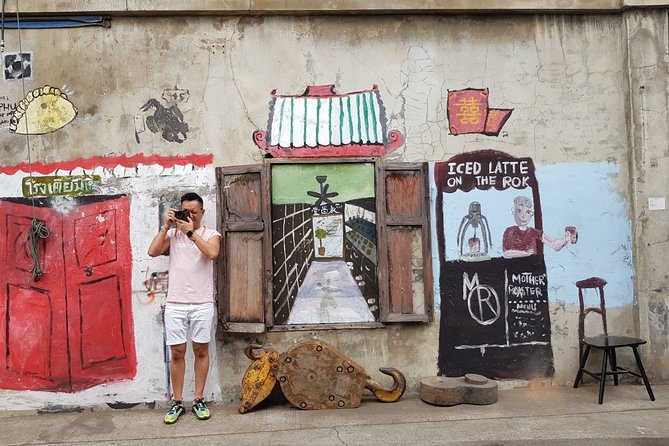
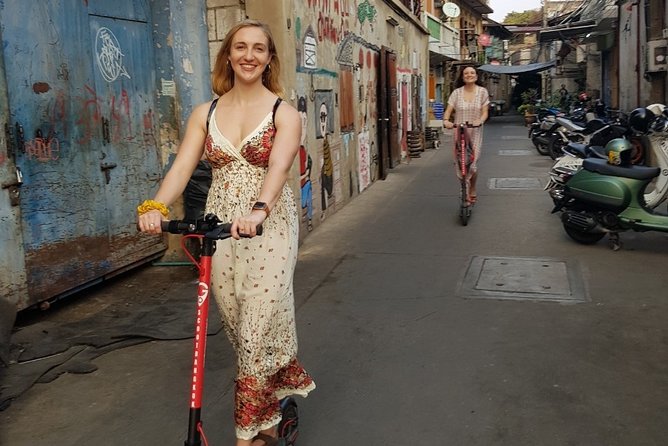
Talad Noi is where Bangkok gets artsy and old-school at the same time. The route passes wall art and street-level heritage nearby, including references to one of the first churches and Thailand’s first bank—Siam Commercial Bank. Even if you only get a moment, you’re getting the point: Bangkok’s “old” districts are still actively used and continuously changing.
Then comes the big one: Chinatown. The tour treats it like a big maze of connected areas. You won’t be sitting through a long formal stop every few minutes, but you’ll ride through enough of the area to understand why people call it a maze. For foodies and shoppers, that’s exactly what you want. The point isn’t a checklist. It’s the feeling of getting lost on purpose in a place built for commerce.
Here’s how to get the most out of it without slowing the group down: keep your phone ready for quick photos, but don’t plan on buying heavy items mid-ride. Think snacks, small gifts, and things you can carry easily. If you want to do deep shopping, save that for after the tour when you can wander without traffic decisions.
Wat Chakrawatrachawat and crocodiles: a temple stop with an odd-but-real reason
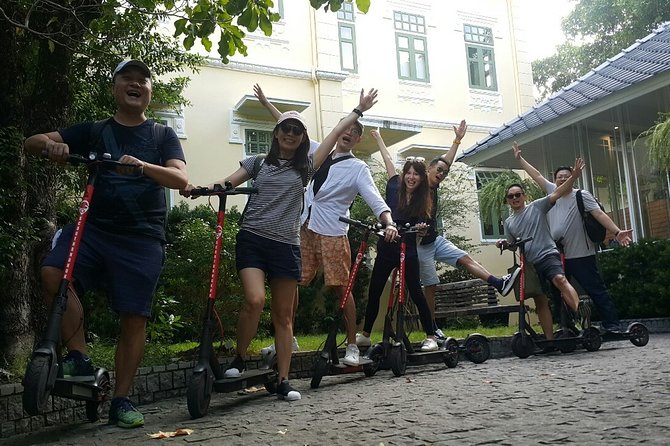
One of the most distinctive stops is Wat Chakrawatrachawat Woramahawihan. The temple dates back to the 1800s and is known for crocodiles. The story you’ll hear is practical rather than spooky: crocodiles were kept to prevent traders along the river from capturing and killing them in earlier days.
You’ll probably get a short look, but it’s the kind of stop that makes you remember the tour. It’s not just another ornate building. It has a specific reason for why animals are part of the story, tied to how river trade worked.
If you’re sensitive about animal-related sites, take a careful look before you get too close. You can still enjoy the architecture and the setting without lingering where you’re uncomfortable. A good guide will keep the group moving at an appropriate pace.
Pak Khlong Flower Talat and the ferry: the Bangkok river, up close
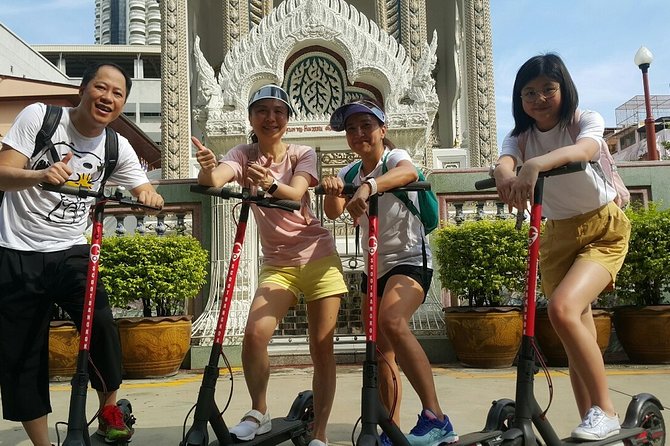
Pak Khlong Flower Talat is a major wholesale flower, spice, and vegetable market. It’s open 24 hours, though the most active selling streets around flowers tend to start up in the evenings. On this tour you’ll stop long enough to see what makes it important and to stroll among the sights and smells.
Then you cross the river by ferry, which is the real “aha” moment for many people. Riding through Bangkok is one thing. Crossing the river by ferry gives you a different angle—literally and emotionally. You’re not just moving through traffic. You’re transitioning between worlds.
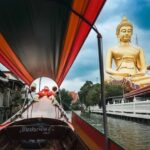
When you land, the tour takes you to Wat Kalayanamit Woramahawihan. Here you’ll see one of the biggest sitting Buddha statues in Thailand and a large bell. This is the kind of temple stop where the scale is hard to appreciate from a photo, so try to look from a couple of angles, even in the limited time you have.
Practical advice: bring something for the breeze. Ferry rides and temple grounds can feel cooler and warmer in quick swings, depending on the day.
Baan Kudichin Museum: Portuguese Bangkok and the cookie connection
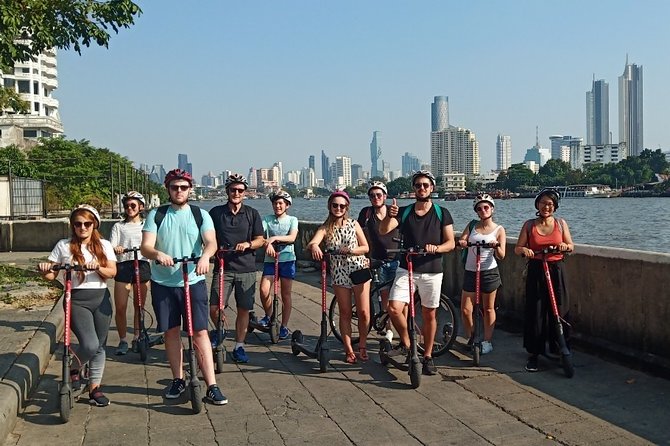
One stop that adds real surprise is Baan Kudichin Museum. This is associated with a Portuguese settlement area, and the site connects to a long-running culinary tradition. The tour highlights that the area still has coffee shops and bakery, including cookies baked in the style introduced over 200 years ago.
This is a smart inclusion because it breaks the usual “temples-only” pattern. You’re seeing how Bangkok’s communities have blended over centuries, not just how Thais build their wats. It also gives you something you can actually use after the tour—where to get a coffee or a sweet treat when you’re in the neighborhood again.
If you’re choosing what to buy on the day, this is probably the safest place to pick up something edible. You won’t have to carry it through chaotic shopping zones right after.
Lhong 1919 and the Rama 9 park stop: when time allows
Near the end, you may have time for Lhong 1919, a complex that’s tied to Chinese immigrants and now functions with restaurants and shops. It also has murals that can feel almost forgotten in the middle of the city’s speed—worth a glance if you like details and visual stories.
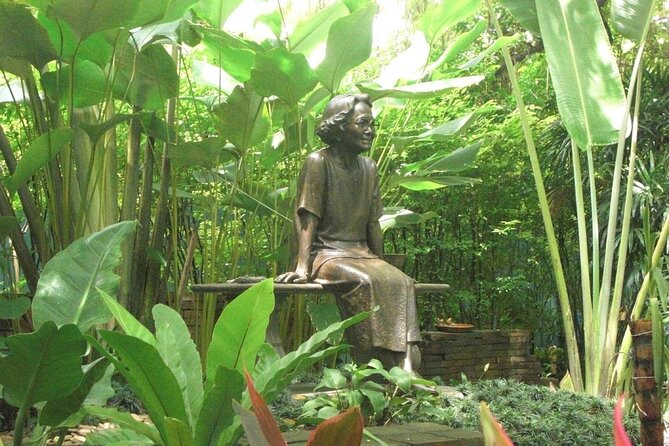
If the schedule allows, the tour may also stop at a park dedicated to the mother of King Rama 9. It’s a good example of how this route isn’t only about famous landmarks. It’s also about local spaces people actually use and recognize.
This is the part of the day where you should be flexible. The tour is only about 3 hours, and stops can shift based on timing and how the ride is going. If you want the last stop to feel meaningful, ask the guide what they’re able to include that day.
Price and what you really get for $36.58
At $36.58 per person for about 3 hours, this tour sits in the budget-friendly zone for guided Bangkok experiences. But the value isn’t only the cost. It’s that the tour bundles several expenses and discomforts you’d otherwise handle yourself.
Included perks you’ll appreciate:
- bottled water and snacks
- coffee and/or tea
- helmet use
- insurance
- a professional guide plus a local guide
- entry tickets listed as free for each stop in the route
That’s why the price makes sense for many people: you’re paying for guidance, transport (the scooter), and the little extras that keep you from spending cash on top of your tour. You can show up with less planning.
One more value point: the tour’s format reduces decision fatigue. You don’t have to figure out which ferry to take, which alleys are worth it, or how to sequence temples and markets. You follow the route and you get a coherent half-day.
What could disappoint: scooter time and guide communication style
From my read of how this experience tends to run, the most common friction point is expectations about how much time you spend sightseeing versus practicing and traveling. If you want a nonstop ride for maximum “views per minute,” you may feel that the scooter learning and safety pacing eat into your sightseeing time.
Also, guide communication matters. In one case, a guide reportedly didn’t provide much information and the rider felt left without enough context about street art and stops. In contrast, another guide named Nic was described as knowledgeable and adaptable, with plenty of commentary and a route that felt easy and fun.
So here’s my practical approach: treat the tour like a conversation, not a lecture. Ask questions at each stop. If your guide is quiet, try a simple prompt like what to look for first. Small adjustments can change your whole experience.
Temple attire, weight limits, and rider comfort: your practical checklist
Before you go, check the rules so you don’t lose time at the meeting point. The tour has a minimum age of 12 years or 140 cm height, and a weight limit of 120 kg. Temple attire is required, which means you should plan clothing that covers appropriately for temple visits.
You’ll also be given helmet use. Bring a helmet-friendly hairstyle (or nothing fancy), and consider whether you’ll feel comfortable in the time you spend standing around temples and markets.
One more comfort note: alcohol is not included, though you can purchase it separately. That’s good if you’re planning to stay clear-headed. If you prefer a drinky day, factor in that you’ll have to handle that independently.
Finally, this tour is listed as near public transportation and allows service animals. That matters if you’re mixing this with other plans around Bangkok instead of doing everything from one hotel base.
When you should (and shouldn’t) book this scooter tour
You should book if:
- you want a guided way to see multiple Bangkok neighborhoods in a half day
- you like markets and temples, not just one category of sight
- you’re comfortable riding a scooter or you’re willing to learn the basics first
- you value a small group where you can ask questions
You might skip it if:
- you’re expecting nonstop temple time with minimal riding or minimal stops
- you want long, sit-down explanations at every location
- you’re worried about time spent on scooter practice and safety pacing
If you’re a first-timer in Bangkok, this can be a smart orientation day. It gives you enough texture—street-level sights, ferry crossing, and a few standout temples—that you can build the rest of your itinerary afterward.
FAQ
How long is the Electric Scooter Tour of Bangkok?
It runs for about 3 hours.
What is the group size for this tour?
The tour has a maximum group size of 3 travelers, for a more intimate experience.
Can I choose between a morning and an afternoon tour?
Yes. You can choose a morning or afternoon departure to fit your schedule.
What’s included in the tour price?
The included items are bottled water, snacks, coffee and/or tea, a professional guide and local guide, helmet use, and insurance, plus taxes and fees. Listed stop entry tickets are also free.
Do I need temple-appropriate clothing?
Yes. The dress code is temple attire.
Is there an age or height requirement?
The minimum age is 12 years or 140 cm height.
What are the rider limits for weight?
The weight limit is not over 120 KG.
Where do I meet, and does the tour end there?
You start at Thai Cooking School, 69, 2 Soi Charoen Krung 44, Khwaeng Bang Rak, Khet Bang Rak, Bangkok 10500. The activity ends back at the meeting point.
If you want, tell me what day you’re traveling and whether you’re riding for the first time—I can help you decide if morning or afternoon fits your pace better and what to wear for the temple stops.
More Scooter Rentals in Bangkok

More Tours in Bangkok


More Tour Reviews in Bangkok

Just In: Fresh Bangkok Reviews


Scooter Rentals, compared.
 ★ 4.8E-Scooter Night Tour with Local Street FoodFrom $39488 reviews
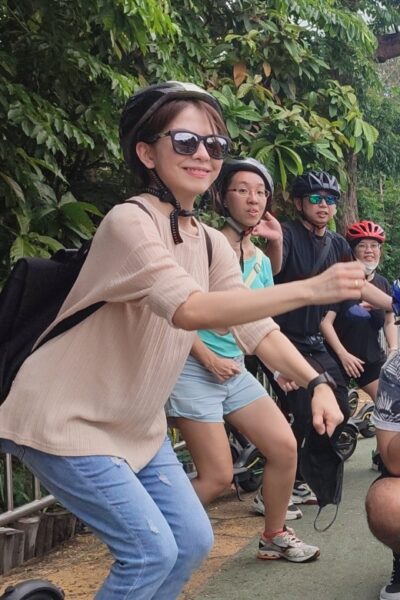 ★ 4.8Bang Kachao E-Scooter Jungle TourFrom $47154 reviews
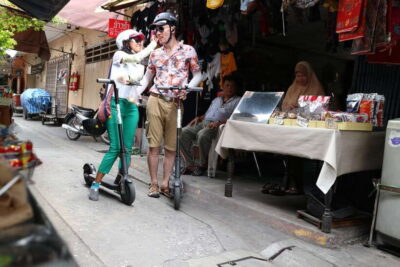 ★ 4.9Riverside E-Scooter Adventure with StreetFood SnackFrom $38133 reviews
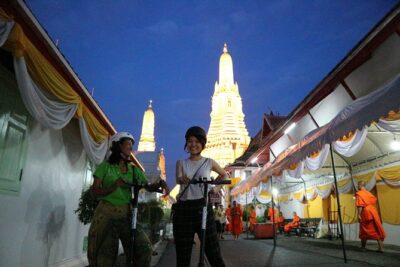 ★ 5.0Bangkok at Night by Electric ScooterFrom $4053 reviews
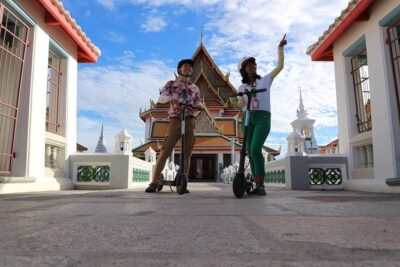 ★ 5.0Explore Bangkok by E-Scooter & Try Street FoodFrom $4340 reviews
 ★ 4.6Bangkok By Night by Electric Scooter &/or BikeFrom $3840 reviews
 ★ 4.7Old City Guided E-Scooter &/or Bike TourFrom $3229 reviews
 ★ 5.0Electric Scooter Tour of BangkokFrom $4821 reviews
Browse the lists this tour appears in