
Review · KANCHANABURI & RIVER KWAI
3-Day River Kwai, Floating Market and Erawan Waterfalls
Life here is all about water and memory.
This 3-day River Kwai adventure mixes Thailand’s floating-market chaos with the sobering stories of the Death Railway, then rewards you with real time outdoors at Erawan Falls. I love the private pickup and drop-off from Bangkok with a dedicated driver and English-speaking guide, and I also love that you actually hike and swim at Erawan, not just look from afar. One thing to consider: this isn’t a sit-back-and-ride itinerary—expect walking, humid conditions, and some tougher climbs as you go higher at the falls.
If you pick the right accommodation option, the stay is part of the show.
Sleeping at River Kwai Jungle Rafts (a floatel-style setup) means bamboo riverside housing, no electricity, and night lighting by oil lamps—simple, atmospheric, and very different from a standard hotel. Still, the second night’s room sizes and comfort can vary depending on the category you choose, so it pays to double-check what premium really means for your booking.
In This Review
- 5 things you should know before you go
- River Kwai, Floating Market, and Erawan Falls: The real vibe of this 3 days
- Morning in Damnoen Saduak: long-tail boat, boat noodles, and serious bargaining
- Hellfire Pass Memorial: where the Death Railway story becomes human
- River Kwai Jungle Rafts Floatel: sleep on the river without electricity
- Erawan Waterfalls: 7 levels, real walking, and the best swim you earn
- A flexible afternoon in Kanchanaburi (and how to use it well)
- The River Kwai Bridge and Don-Rak Cemetery on Day 3
- Price and value: is $622 per person actually a good deal?
- What to pack (so Erawan doesn’t turn into misery)
- Who this tour fits best
- Should you book this 3-day River Kwai and Erawan combo?
- FAQ
- What’s included in the tour price?
- How do pickup and drop-off from Bangkok work?
- Is there swimming at Erawan Falls?
- Are the paddle boat and Death Railway train ride included?
- What kind of accommodation is on the River Kwai?
- What meals are included across the 3 days?
- Is this tour wheelchair accessible?
5 things you should know before you go
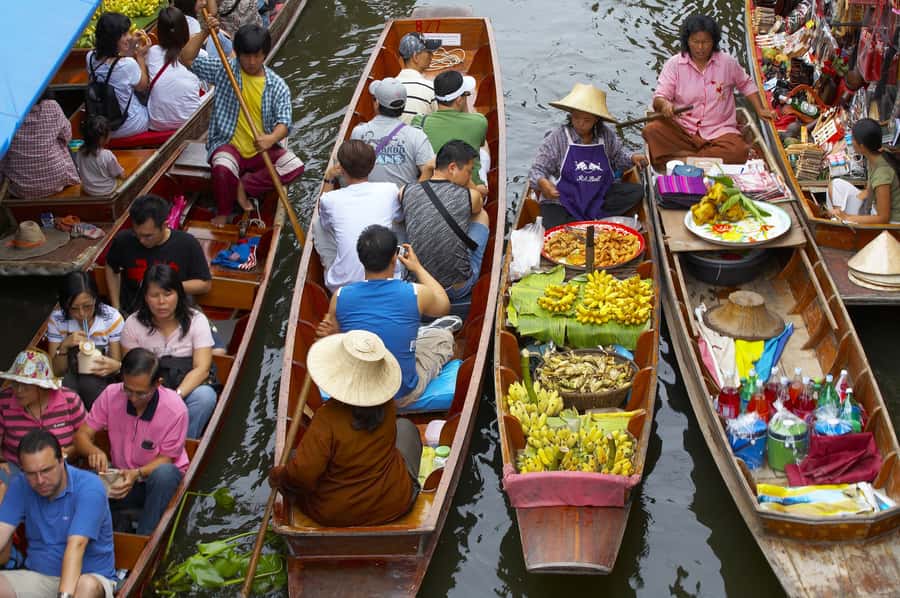
- Damnoen Saduak by long-tail boat: You swap your minivan for a long-tail ride once you’re close, then glide into the market’s green, watery world.
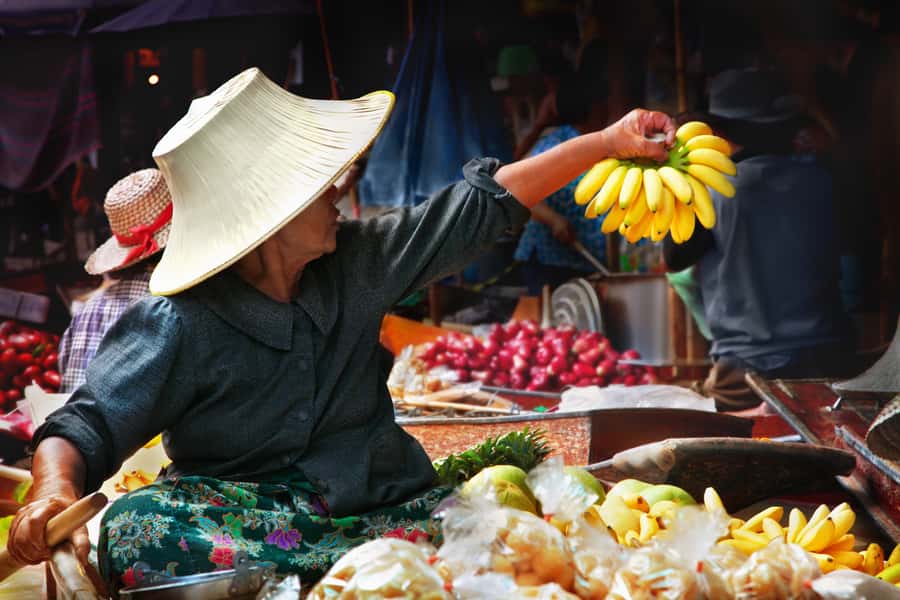
- Boat noodles are part of the morning show: It’s normal to see meals being prepared on boats while vendors call out and prices get negotiated.
- Hellfire Pass and the Death Railway context: You’ll walk the memorial area and connect the route to what prisoners and civilian laborers endured.
- River Kwai Floatel sleep, no electricity: Expect oil lamps at night and plenty of quiet time listening to birds and river sounds.
- Erawan Falls is a hike to earn the swim: There are 7 levels, and the upper parts get more demanding—aim for at least level 5.
River Kwai, Floating Market, and Erawan Falls: The real vibe of this 3 days
This is a smart itinerary if you want variety without hopping constantly. You get Thailand’s waterside market culture, plus a heavy World War II stop that puts names and suffering behind the word railway. Then the trip pivots hard into nature, where Erawan Falls becomes your physical payoff.
You’ll also notice the pace is built around “moments,” not just checkboxes. The floating market gives you sensory overload in the morning. The Hellfire Pass area slows you down and asks you to pay attention. The River Kwai stay turns the river into your hotel view. And Erawan gives you that classic Thailand experience: hike, cool off, and repeat.
The biggest reason I’d consider this tour a good value is that it’s private and door-to-door from Bangkok. Many Kanchanaburi trips look good on paper but turn into shared logistics nightmares. Here, you’re set up for fewer hassles and more control over your day.
More mornings among the paddle boats
- Bangkok: Damnoen Saduak Market and Maeklong Railway Market
★ 4.5 · 26,723 reviews - The Old Siam: Damnoen Saduak and Maeklong Railway Market
★ 4.5 · 10,992 reviews - Half-Day Railway Market and Floating Market Tour in Thailand
★ 4.5 · 3,924 reviews
Morning in Damnoen Saduak: long-tail boat, boat noodles, and serious bargaining
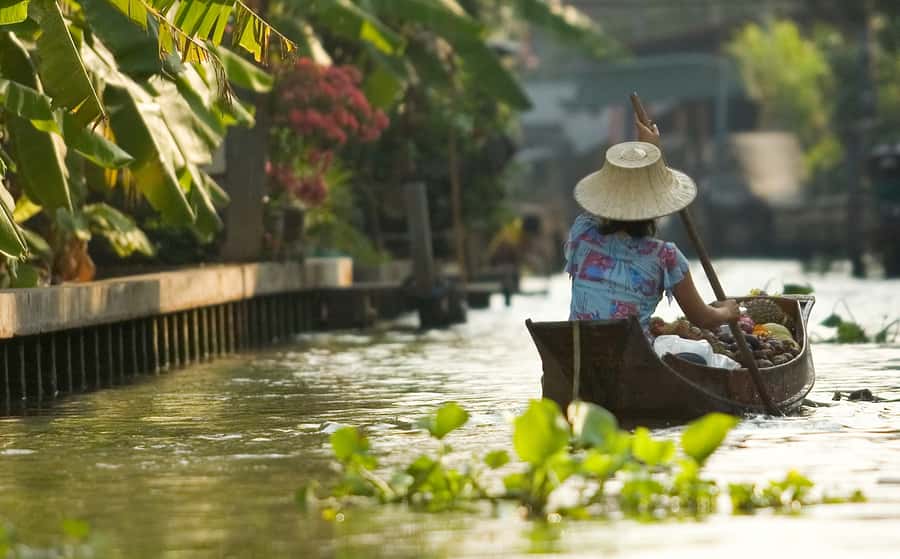
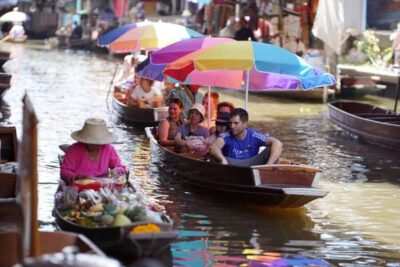
You leave Bangkok early and head toward Damnoen Saduak. Once you’re close, you change from the minivan into a long-tail boat. That switch matters because it changes the whole feel: you’re not just looking at a market—you’re moving through it.
When you reach the floating market area, the contrast is immediate. One moment you’re in ordinary traffic and road life; the next you’re gliding through a green, water-based maze where people sell everything from produce to cooked food. It’s also the kind of place where you’ll see noodles prepared on boats. That’s not a “tourist show,” it’s how vendors work here.
Practical tip: go with the expectation that negotiation is part of the rhythm. If you treat it like a normal market, you’ll be fine. If you expect fixed pricing and effortless shopping, you may feel annoyed. Either way, you can keep it simple—browse, snack, and enjoy the motion.
After the market, you head toward Kanchanaburi and take lunch at a local restaurant. This is a good break in the middle of the day, especially since you’ll be walking and standing earlier.
Hellfire Pass Memorial: where the Death Railway story becomes human
After lunch, you visit the Hellfire Pass Memorial. This stop is where the itinerary stops being “things to see” and starts being “why it matters.”
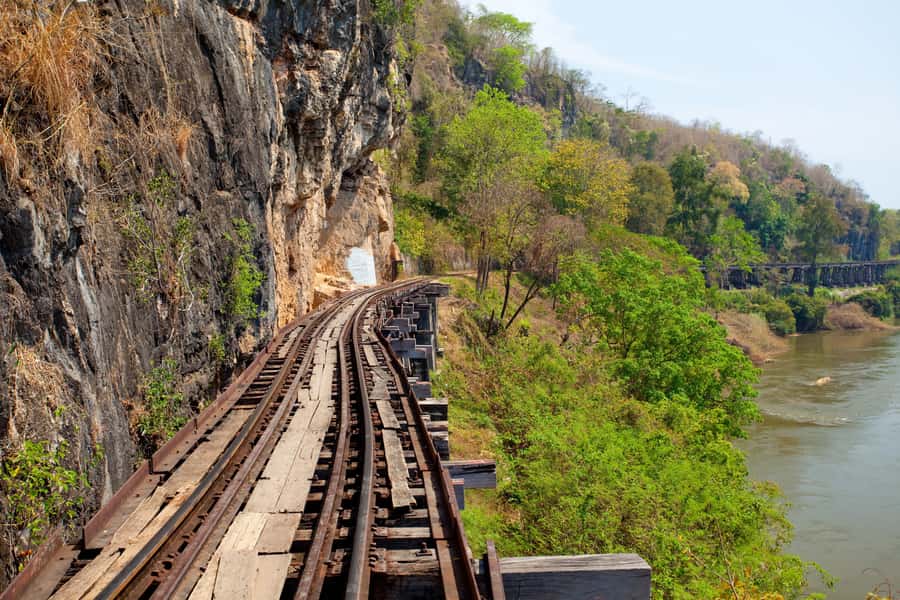
During World War II, the Japanese planned a railroad at record speed to support troops moving toward Burma. Working conditions were brutal for civilian laborers, prisoners of war, and forced workers. In the end, roughly 100,000 workers and about 15,000 prisoners of war died from disease, malnutrition, and exhaustion—so people also call it the Death Railway.
Hellfire Pass is tied to that history, and the memorial visit is designed to connect the memorial ground to what happened during construction. You’ll leave with a much clearer picture of how hard this route was—not just the idea of a railway, but the reality behind the stones and cuts.
If you’re the type who gets uncomfortable with heavy history, this may not be your favorite portion. But it also turns a normal “Kanchanaburi day trip” into something more meaningful.
River Kwai Jungle Rafts Floatel: sleep on the river without electricity
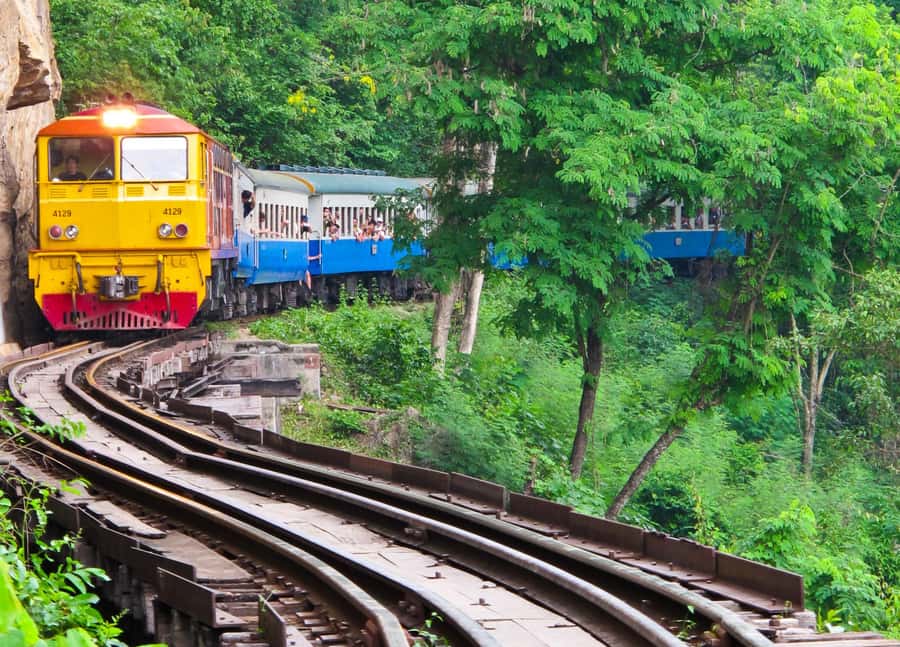
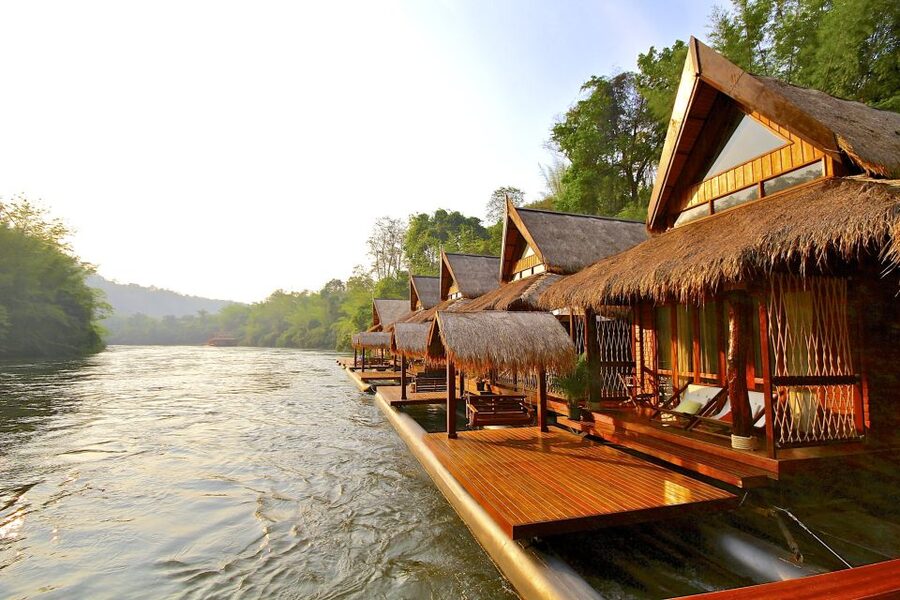
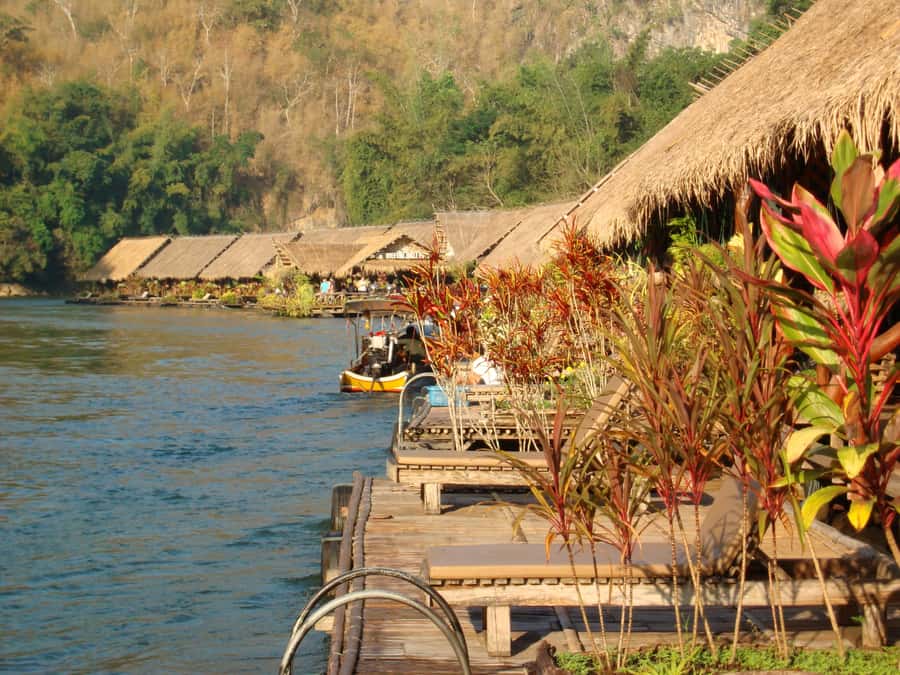
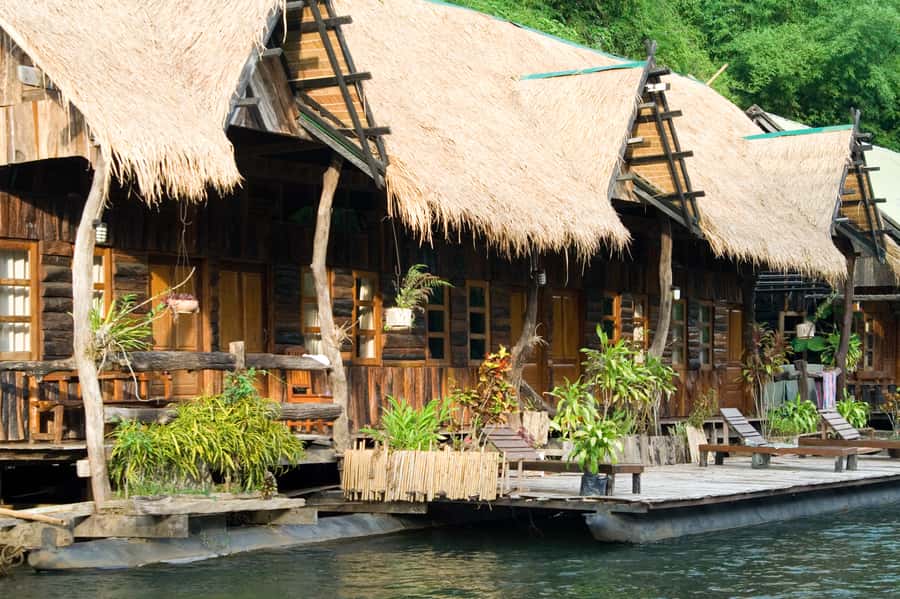
In the afternoon, you head by long-tail boat to a unique place to sleep: River Kwai Jungle Rafts, often described as a floatel. The setup is bamboo houses built on rafts, right on the River Kwai.
The standout feature is that there’s no electricity. Instead of bright hotel lighting, the property is illuminated at night with oil lamps. It sounds basic on paper, but it’s exactly the point. You’ll likely spend more time outside your room than you would in a modern hotel, because the river is the main character.
Once you settle in, you can do the “easy vacation” things: take a dip in the river or lie in your hammock and listen to birds and water. It’s not a forced activity schedule. It’s just a chance to slow down after days of roads, market movement, and history stops.
One consideration: your experience here can depend on which accommodation option you choose. One account notes that the float-house stay can be spectacular, while the second-night hotel room was small in comparison to what they expected for a higher category. So if you care about comfort and space, spend a minute confirming the details for night two.
Out to the River Kwai, more Kanchanaburi trips

Erawan Waterfalls: 7 levels, real walking, and the best swim you earn
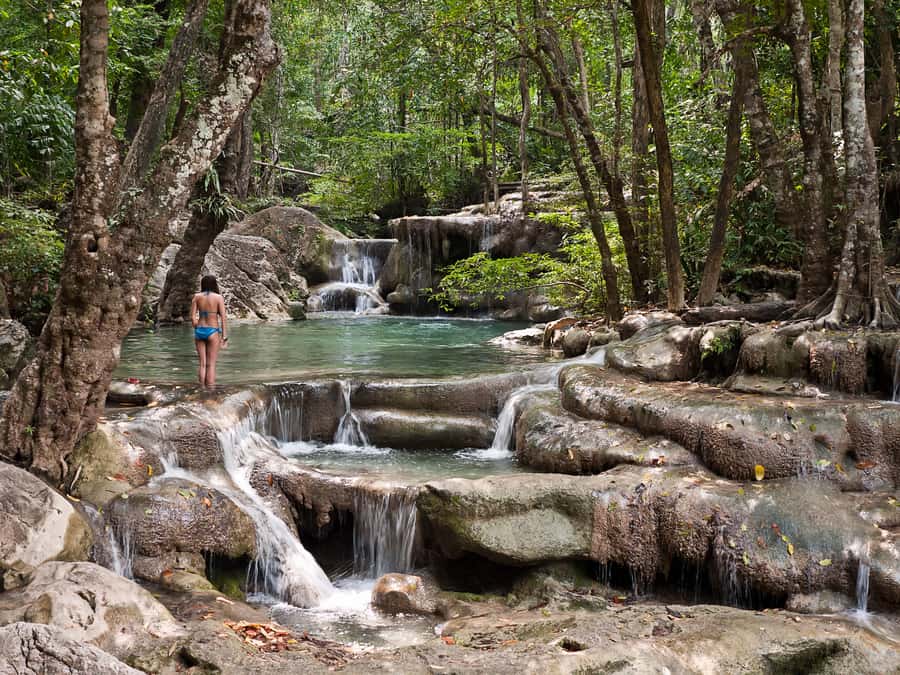
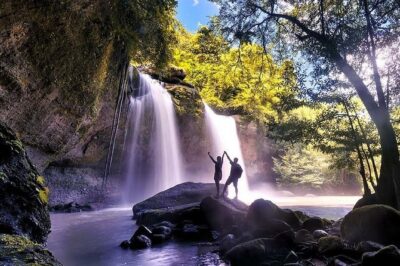
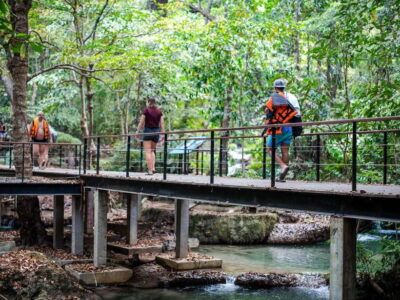
Day 2 is all about Erawan Falls. This waterfall system covers about 1,500 meters down through 7 plateaus. The lower sections are one thing; the upper sections are harder, and the trail steepens as you go.
A big plus here is timing: you go after breakfast, when conditions are usually better for hiking and before the day gets too hot. You’ll have some time to reach higher levels. If you want a practical goal that balances effort and reward, focus on plateau 5. That’s the level that tends to feel like the sweet spot—far enough to feel like you worked for it, but not so high that you’ll feel defeated.
And yes—bring swimwear. The water is clear enough for an actual cooling off. This is why the hike is worth it. You’re not just climbing to view a waterfall; you’re walking through a place that invites you to get wet and reset.
After your waterfall time, you’ll have lunch and then transfer back to your accommodation in Kanchanaburi. Your afternoon is at leisure, and if you like a break that doesn’t involve more walking, a spa treatment at the hotel is one option listed in the plan.
A flexible afternoon in Kanchanaburi (and how to use it well)
By Day 2, you’ve already done a lot: market energy, a heavy memorial, a distinctive river stay, then waterfall hiking. The afternoon in Kanchanaburi being free is a wise design, because you can recover on your own schedule.
If you want easy wins:
- Use the time to shower, change into dry clothes, and let your feet cool down.
- If your hotel has a spa, consider it—after Erawan, it can feel like an essential service, not a luxury.
- If you’re up for a gentle stroll, you can keep it light and enjoy the town atmosphere without turning the day into another workout.
This is also where your accommodation choice matters. If your room is on the smaller side, don’t treat the afternoon as a full “hang in the room” period. Use it more like a recharge window.
The River Kwai Bridge and Don-Rak Cemetery on Day 3
On Day 3, the day starts with breakfast and a final reflection before you head back toward Bangkok. The plan includes two key World War II sites.
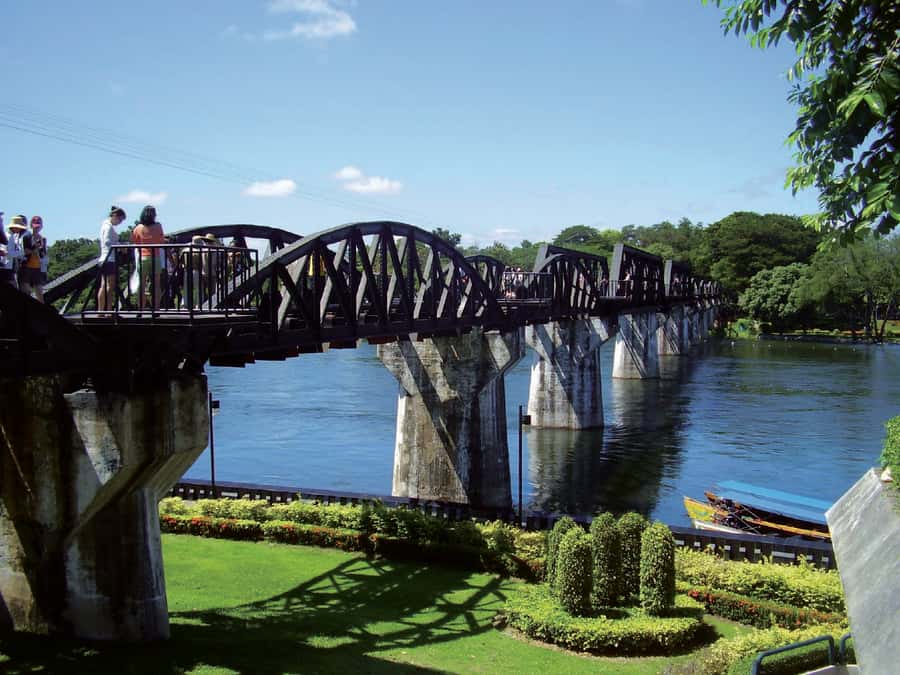
First, you visit the Bridge on the River Kwai, the one over which trains still run. Seeing it in use (not just as a movie set) changes the way it lands in your mind. It’s not only a symbol; it’s part of a living transportation system now.
Then you go to Don-Rak honor cemetery, where nearly 7,000 prisoners of war are buried, mostly Australian, British, Dutch, and Indian. That mix of nationalities matters. It makes the tragedy feel broader than a single storyline and reminds you that the Death Railway was a multinational nightmare for the people forced into it.
After these stops, you return to Bangkok. This makes the trip feel complete: Thailand’s natural beauty and daily life, plus a grounded reminder of what those rail lines cost human beings.
Price and value: is $622 per person actually a good deal?
At $622 per person for 3 days, this tour isn’t cheap—but it’s not just a “driver with a car” price either.
Here’s what you’re paying for in practical terms:
- Private air-conditioned transport with a driver and English-speaking guide
- Entrance fees handled for your included stops
- Two overnights with one being the standout River Kwai Jungle Rafts floatel experience
- Meals: lunch on Day 1, lunch on Day 2, dinner on Day 1, and breakfast on Days 2 and 3
- Bottled water during the trip
- Accident insurance
The floating market experience also includes long-tail boating components, which are often the little “logistics add-ons” that add up on cheaper options. You also aren’t doing the heavy lifting yourself—pickup and drop-off from Bangkok are built in, and you can bring suitcases in the private vehicle.
The main value risk is accommodation variability. The floatel night can be a highlight, but the second-night hotel category can feel less generous if you expected more space or comfort. If you’re booking at the premium end, I’d treat it as worth double-checking room size expectations so you’re not disappointed.
Also note what’s not included: paddle boat at the floating market, a train ride on the Death Railway, drinks, and dinner on Day 2. That’s normal, but it’s worth budgeting for.
What to pack (so Erawan doesn’t turn into misery)
This trip clearly expects outdoors and water. Don’t under-pack.
Bring:
- Swimwear
- Towel
- Sunglasses and a sun hat
- Waterproof shoes (or shoes that can handle slippery paths)
- Sunglasses and a hat really do help under sun and humidity
If you skip waterproof shoes, you can still go, but you’ll spend more time worrying about footing. Erawan’s levels involve hiking through varying terrain, and your feet will thank you for grip and water tolerance.
Who this tour fits best
This is a good match if you:
- Want a private, organized 3-day route from Bangkok without rental car stress
- Like your travel with a mix of nature and meaning (waterfalls plus memorial sites)
- Prefer a guided experience in English with someone coordinating timing and entrances
- Enjoy the idea of a memorable accommodation, not just another bed
It may not fit if you:
- Need wheelchair accessibility, since the tour isn’t suitable for wheelchair users
- Hate walking and climbing, because Erawan’s upper levels get more demanding
One more note: the tour is designed around clear structure—so if you love spontaneous wandering with no plan, you might feel the schedule a bit. If you like “guided flow” with breathing room at the end of Day 2, you’ll probably enjoy it.
Should you book this 3-day River Kwai and Erawan combo?
If your goal is to see central Thailand’s water-world—from Damnoen Saduak to the River Kwai—and you also want a memorable nature day at Erawan, I think this is a strong choice. The private transport, included meals, and the floatel-style River Kwai stay push it into “worth doing once” territory, especially if you’re tired of overcrowded day trips.
Book it if you’re okay with walking, heat, and a heavy history component at Hellfire Pass and the cemeteries. I’d hesitate only if you’re highly sensitive to room-size differences on the second night or if you expect a completely easy day at Erawan.
If you want, tell me your accommodation option (or what category you’re considering for the floatel and the second night), and I’ll help you sanity-check whether it matches the kind of comfort you want.
FAQ
What’s included in the tour price?
The tour includes private air-conditioned transport with a driver, an English-speaking guide, entrance fees, overnights as described, long-tail boat rides (shared to your accommodation and at the floating market), breakfast on Days 2 and 3, lunch on Days 1 and 2, dinner on Day 1, bottled water, and accident insurance.
How do pickup and drop-off from Bangkok work?
Your guide meets you at your hotel lobby in Bangkok for pickup on the first day, and you’ll be dropped back in Bangkok on the last day. You’re asked to provide your accommodation details for pickup and drop-off.
Is there swimming at Erawan Falls?
Yes. You should bring swimwear and a towel because it’s great for cooling off in the clear water after the climb.
Are the paddle boat and Death Railway train ride included?
No. The paddle boat at the floating market and the train ride on the Death Railway are listed as not included.
What kind of accommodation is on the River Kwai?
You’ll stay at River Kwai Jungle Rafts (floatel-style). It’s made of rafts with bamboo houses and there is no electricity; nights are illuminated with oil lamps.
What meals are included across the 3 days?
Lunch is included on Day 1 and Day 2, dinner is included on Day 1, and breakfast is included on Days 2 and 3. Dinner on Day 2 is not included.
Is this tour wheelchair accessible?
No. The tour is not suitable for wheelchair users.
More Tour Reviews in Bangkok




Out to the River Kwai
More Floating Markets


Just In: Fresh Bangkok Reviews

Kanchanaburi & River Kwai, compared.
 ★ 4.5From Bangkok: Erawan Park & Kanchanaburi Small-Group TourFrom $591,582 reviews
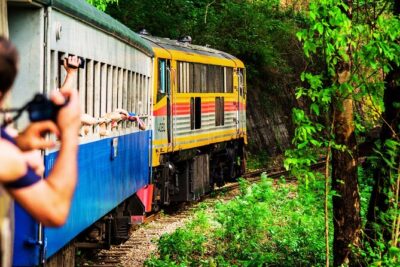 ★ 4.6From Bangkok: Death Railway & Hellfire Pass Tour with LunchFrom $82931 reviews
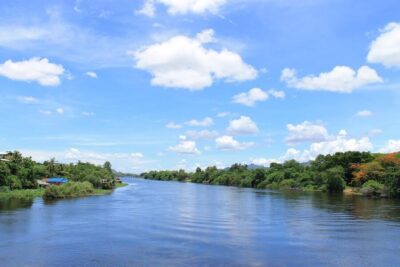 ★ 4.6From Bangkok: Historical Day Tour to River KwaiFrom $51868 reviews
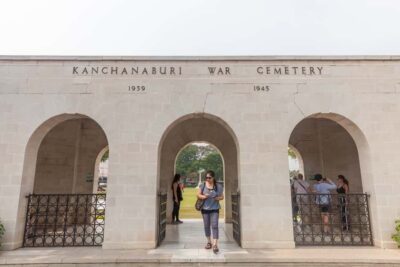 ★ 4.8From Bangkok: Elephant Sanctuary and Kanchanaburi TourFrom $79826 reviews
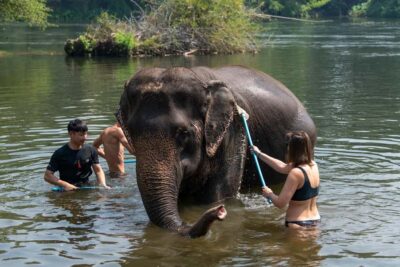 ★ 4.9Elephant Sanctuary & Erawan Waterfall TourFrom $181820 reviews
 ★ 4.5Bridge on the River Kwai and Thailand-Burma Railway TourFrom $108658 reviews
 ★ 4.5Erawan Waterfalls and Bridge Over River Kwai Tour from BangkokFrom $56372 reviews
 ★ 4.5Bridge on the River Kwai and Thailand-Burma Railway Guided TourFrom $94353 reviews
Browse the lists this tour appears in