
Review · KANCHANABURI & RIVER KWAI
Bangkok: River Kwai Day Tour with Jeath War Museum & DeathRailway
Death Railway history comes with real movement. On this Bangkok-to-Kanchanaburi day trip, I love the River Kwai Bridge walk and the Death Railway train ride, because they turn WWII details into something you can see with your own eyes. One thing to keep in mind: the day starts early (pickup at 6:00am), and a long route means timing can shift if traffic gets slow.
You also get a guided route that keeps the theme clear: Allied POW labor, the bridge, the railway, and the sites where the consequences are still visible. My favorite part is how the stops work like chapters, with a museum section that sets the stage, then real-world memorials that make the story feel serious and grounded.
A possible drawback is that museum presentation can vary, and English can be hard to follow at moments depending on the guide. If you are sensitive to rushed transitions, plan to stay flexible and let your guide set the pace.
In This Review
- Key highlights at a glance
- River Kwai and the Death Railway: why this day trip feels different
- The 6:00am pickup and the long-day logistics reality
- JEATH War Museum: replica POW quarters and reconstructed bamboo huts
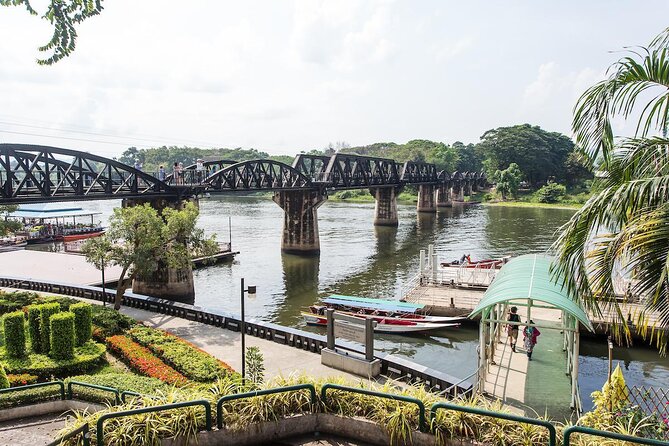
- Walking the River Kwai Bridge: history you can pace across
- Death Railway Museum and Research Centre: what the Burma Railway name means
- Tham Kra Sae Bridge and the Kanchanaburi War Cemetery: where the story lands
- The train ride along the Death Railway: your most memorable moment
- Buffet lunch at Wang Po station: food when your brain needs a reset
- Guide and group size: what changes when it is max 15 people
- Price and value: why $83.68 can make sense for this specific route
- Who this tour fits best (and who should choose another option)
- Should you book this Bangkok to River Kwai day tour?
- FAQ
- How long is the tour?
- What time does the pickup start?
- Is hotel pickup and round-trip transportation included?
- What stops are included during the day?
- Is lunch included?
- Is a guide provided, and do they speak English?
- What is the maximum group size?
- What happens if weather is bad?
Key highlights at a glance
- Early 6:00am pickup from central Bangkok to maximize daylight in Kanchanaburi
- JEATH War Museum’s WWII POW camp replica plus reconstructed bamboo huts
- Walk on the River Kwai Bridge with ticket included
- Death Railway Museum and Research Centre focused on the Burma Railway story
- Kanchanaburi War Cemetery (Don-Rak) visit tied to Allied POW deaths
- Train ride along the Death Railway plus a buffet lunch at Wang Po station
River Kwai and the Death Railway: why this day trip feels different
This is one of those tours where the schedule matters. You are not bouncing around random sights. Instead, you move through a linked story: the bridge, the POW camp replica at JEATH, the railway theme at the Death Railway museum, then the cemetery and train section that bring it all into sharp focus.
I like that the route gives you both context and consequence. The museum helps you understand what you are about to see. The memorial sites then slow you down, because they are not built for fun photo ops. If your goal is a clear, guided overview of Kanchanaburi’s WWII landmarks, this format works.
You are also getting real convenience bundled in: English-speaking guide, air-conditioned vehicle, round-trip transfers, and lunch. For a day trip that leaves Bangkok early and returns later, that kind of structure is value.
Out to the River Kwai, more Kanchanaburi trips
- From Bangkok: Erawan Park & Kanchanaburi Small-Group Tour
★ 4.5 · 1,582 reviews - From Bangkok: Death Railway & Hellfire Pass Tour with Lunch
★ 4.6 · 931 reviews - From Bangkok: Historical Day Tour to River Kwai
★ 4.6 · 868 reviews
The 6:00am pickup and the long-day logistics reality
Pickup starts at 6:00am from the central Bangkok meeting point area (near Central Bangrak). That early start is what makes the rest of the itinerary possible, but it also means you will feel the day as a whole. Expect a full day, about 13 hours total.
Here’s the practical part: you are traveling from Bangkok to Kanchanaburi and back, and the itinerary depends on road conditions. One review noted that the day’s timing shifted, ending up shorter on a specific day, while another comment pointed to feeling a bit rushed during parts of the route due to traffic. So plan for the possibility that you might get less free time than you imagine, even if the tour is well organized.
What helps you enjoy it:
- Have water ready before pickup.
- Wear comfortable shoes for a walk on the bridge.
- Keep your expectations flexible about minute-by-minute timing.
JEATH War Museum: replica POW quarters and reconstructed bamboo huts
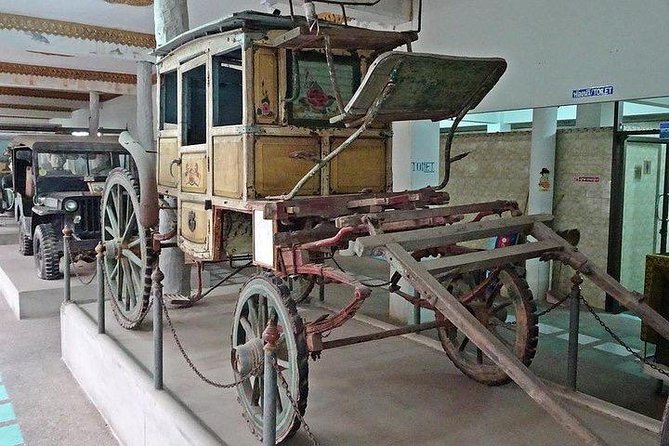
The tour starts with JEATH War Museum, and the way it is set up makes it more than a quick stop. The museum is divided into sections that recreate the quarters used by Allied POWs and also show reconstructed bamboo huts tied to the camp environment.
This matters because the Death Railway story is hard to picture. A museum replica gives you something concrete to anchor to. Before you reach the bridge and cemetery, you get a guided framing that helps the memorial sites land with more meaning.
Two practical cautions:
- The museum environment can feel like it needs a bit more maintenance in some areas. That doesn’t ruin the visit, but it can affect how comfortable you are spending time indoors.
- If you are relying heavily on the guide’s spoken English, pay attention at the start. One review flagged that English can be difficult to understand, so it helps to watch body language and listen for key dates and place names.
If you are the type who likes to understand what you are seeing before you see it, JEATH is a smart first stop.
Walking the River Kwai Bridge: history you can pace across
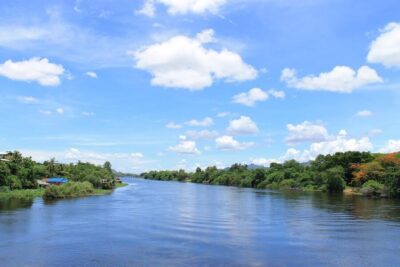
Next comes the River Kwai Bridge. This stop is built around a simple but powerful activity: walking along the bridge over the River Kwai. Ticket is included, so you are not juggling extra costs or figuring out entry details mid-trip.
Why this stop works:
- It forces you to slow down and take the scale seriously.
- You experience the crossing as a physical space, not just a photo.
- You can look at the river and imagine the bridge as part of the railway system tied to wartime labor.
One practical note: you will have about an hour here. That is usually enough time to walk, take photos, and absorb the guide’s explanation without turning it into a marathon. Still, it is not a long linger. If you want extra time on the bridge itself, this tour style might feel a little tight.
More halls worth the ticket

Death Railway Museum and Research Centre: what the Burma Railway name means
After JEATH, you move to the Death Railway Museum and Research Centre. This stop focuses on the Burma Railway, also known by several names, including the Siam–Burma Railway and Thai–Burma Railway.
The big detail to know is distance: the railway stretched 415 kilometers between Ban Pong (Thailand) and Thanbyuzayat (Burma). That number helps your brain understand why this wasn’t just one bridge or one camp. It was a huge, forced-work project.
One thing I appreciate about this museum stop is that it sits in the itinerary right before additional rail-related landmarks. It helps you connect the dots: the bridge you walked, the POW context you saw in JEATH, and the railway system you are about to revisit.
Tham Kra Sae Bridge and the Kanchanaburi War Cemetery: where the story lands
You then visit Tham Kra Sae Bridge. Admission is free here, and the bridge is commonly associated with the Death Railway theme. It’s another reminder that the railway wasn’t only tracks in a distant place—it had structures that prisoners built, and those structures became targets.
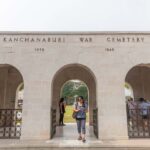
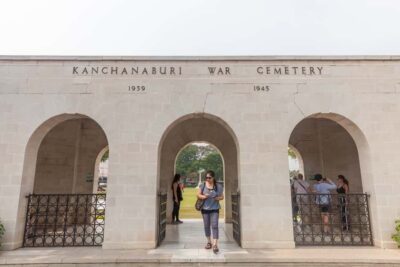
From there, you go to Kanchanaburi War Cemetery (also known locally as Don-Rak War Cemetery). This is a free stop and a major one. The cemetery is described as the main POW cemetery for victims of Japanese imprisonment connected to building the Burma Railway. The site includes around 9,000 Allied soldiers who lost their lives while working on the bridge and the Death Railway.
This part is not about speeding through. It is where the tour’s emotion catches up with the facts. I recommend keeping your phone camera off for the first few minutes. Stand, read what you can, and let the guide’s explanation do its job.
A small reality check: with a full-day schedule, you may feel a bit “time-managed” at times. If that happens, it’s still worth staying respectful and present during the cemetery portion, because that visit is the heart of the route.
The train ride along the Death Railway: your most memorable moment
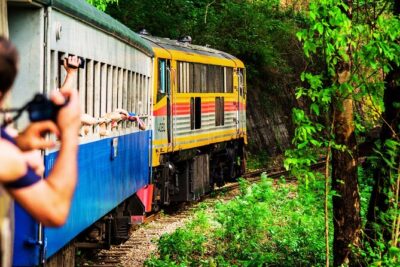
The itinerary’s centerpiece for many people is the thrilling train ride along a section of the Death Railway. Even if you come for the history, this rail segment tends to stick in your memory because it is motion, not just standing still.
Practically, you are traveling through a part of the same broader system tied to the wartime railway effort, and the effect is surprisingly vivid. You will often find that a train ride does more than show scenery. It gives you a sense of how the railway corridor functions as a corridor of movement—then your guide ties it back to the human cost.
To get the most out of it:
- Keep your window view in mind, but don’t ignore the guide’s narration.
- Bring a light layer if you run cool on the ride.
- If you get a lot of photos, be sure you also take time to actually watch and listen.
Buffet lunch at Wang Po station: food when your brain needs a reset
There is a buffet lunch served at Wang Po station, which is near the Burmese border. Lunch is included, so you’re not trying to hunt for food in between sites, and that matters on a long day.
I treat a midday meal on a memorial-focused tour as a reset button. It also keeps the schedule from turning into a scavenger hunt. The buffet format is practical for groups because everyone can eat at roughly the same time without delays.
If you are planning to photograph a lot, eat without rushing too much. You’ll likely want your energy for the final stretches of the tour.
Guide and group size: what changes when it is max 15 people
This tour has a maximum group size of 15 travelers, which is comfortably small for a full-day route. That size often means less waiting and more chance for the guide to keep track of questions and pacing.
You also get an English-speaking guide, and the quality can really affect the experience. Two guide names popped up in feedback: Rach was praised for excellent guidance and timing, while Oom was praised for knowledgeable, entertaining explanations and the use of audio visuals.
What you should take from that:
- If you like learning with structure, this tour’s guided format is a strong fit.
- If you struggle with spoken English, it helps to choose moments to focus on the guide right when the group gathers at each stop.
Also, the air-conditioned vehicle is not a luxury detail here. It’s a comfort factor that makes the long drive more tolerable.
Price and value: why $83.68 can make sense for this specific route
At $83.68 per person, the price feels fair when you map it to what’s included. You are paying for more than a seat on a bus:
- Round-trip transfers
- An English-speaking guide
- Lunch (buffet)
- Air-conditioned vehicle
- Ticketed entry for multiple museums/attractions (JEATH War Museum, River Kwai Bridge, Death Railway Museum)
- Free admission for Tham Kra Sae Bridge and Kanchanaburi War Cemetery
- Mobile ticket and group discounts are part of the setup
In other words, you’re not just buying transportation. You’re buying an organized route with guided context and built-in entry costs. For a day that starts early and runs long, that saves time and decision fatigue.
One more value signal: the tour is SHA Plus certified, meaning it follows approved COVID-19 health and prevention protocols, with vaccinated staff expectations. That won’t be the deciding factor for everyone, but it’s part of the overall comfort layer.
Who this tour fits best (and who should choose another option)
This is a strong match if you:
- Want a guided WWII overview in Kanchanaburi with a logical path
- Like train experiences and want a rail segment tied to the historical theme
- Appreciate memorial sites and museums, not just postcard stops
It might be less ideal if you:
- Need lots of free time at each location (the itinerary is structured, with around an hour at key stops)
- Have a hard time with spoken English in group settings
- Get uncomfortable with heavy subject matter, since the cemetery portion is emotionally serious
Should you book this Bangkok to River Kwai day tour?
If you want one full day that hits the key WWII landmarks—JEATH War Museum, River Kwai Bridge, the Death Railway museums and bridges, the Kanchanaburi War Cemetery, plus the train ride—this is an efficient, well-structured choice.
Book it if your priority is guided context and convenience. Don’t book it if you prefer independent pacing and lots of downtime, because a 6:00am start and a 13-hour day mean you are following a plan.
My final advice: treat the early wake-up as part of the deal. The payoff is a clear route with built-in admissions, lunch, and a rail experience that makes the whole theme feel more real than reading about it.
FAQ
How long is the tour?
The tour runs for approximately 13 hours.
What time does the pickup start?
Pickup starts at 6:00am from selected hotels in Bangkok.
Is hotel pickup and round-trip transportation included?
Yes. Round-trip transfers are included, using an air-conditioned vehicle.
What stops are included during the day?
You’ll visit the JEATH War Museum, the River Kwai Bridge, the Death Railway Museum and Research Centre, Tham Kra Sae Bridge, and the Kanchanaburi War Cemetery. The day also includes a train ride along the Death Railway and lunch at Wang Po station.
Is lunch included?
Yes. A buffet lunch is included at Wang Po station.
Is a guide provided, and do they speak English?
Yes. The tour includes an English-speaking guide.
What is the maximum group size?
The tour has a maximum of 15 travelers.
What happens if weather is bad?
The experience requires good weather. If it’s canceled due to poor weather, you’ll be offered a different date or a full refund.
More Tours in Bangkok


More Tour Reviews in Bangkok




Out to the River Kwai

Just In: Fresh Bangkok Reviews



Kanchanaburi & River Kwai, compared.
 ★ 4.5From Bangkok: Erawan Park & Kanchanaburi Small-Group TourFrom $591,582 reviews
 ★ 4.6From Bangkok: Death Railway & Hellfire Pass Tour with LunchFrom $82931 reviews
 ★ 4.6From Bangkok: Historical Day Tour to River KwaiFrom $51868 reviews
 ★ 4.8From Bangkok: Elephant Sanctuary and Kanchanaburi TourFrom $79826 reviews
 ★ 4.9Elephant Sanctuary & Erawan Waterfall TourFrom $181820 reviews
 ★ 4.5Bridge on the River Kwai and Thailand-Burma Railway TourFrom $108658 reviews
 ★ 4.5Erawan Waterfalls and Bridge Over River Kwai Tour from BangkokFrom $56372 reviews
 ★ 4.5Bridge on the River Kwai and Thailand-Burma Railway Guided TourFrom $94353 reviews
Browse the lists this tour appears in