
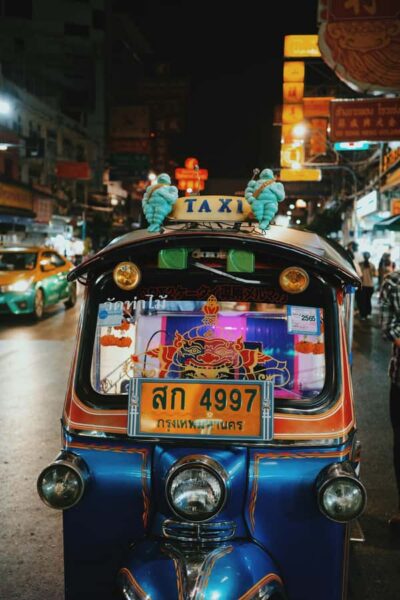
Bangkok looks one way from a taxi. It feels totally different when you hop into a tuk-tuk and later drift by water in a longtail boat. This is a 6-hour mix of temples, markets, and river life, stitched together with local food and merit-making.
Two things I really like: the chance to try local snacks and seasoning fruit at a real market, and the smooth shift from busy streets to the calmer river side of Thonburi. A clear consideration: expect walking and lots of moving around, so comfortable shoes matter.
If you’re planning around your energy level, this tour is best for people who can handle temples, short walks, and heat. It’s not a great fit if you have back problems or if you’re pregnant.
In This Review
- Key highlights worth planning for
- Why this tuk-tuk + river route makes Bangkok easier
- Meet-up at MRT Itsaraphap and how to start smoothly
- Wat Khun Chan: reclining Buddha views and Phra Rahu merit-making
- Wat Paknam Phasi Charoen: the biggest Buddha and museum time in Thonburi
- Wat Klang Fresh Market and seasoning fruit tasting that you can actually plan around
- Khlong Bang Luang: floating-market heritage and artist-house atmosphere
- Longtail boat ride: the calm break in a fast city
- Flower market and Chinatown lunch: food-forward Bangkok you can eat
- Song Wat Road photo time and the day’s final temple stop
- Price and value: what $32 actually covers
- Who this tour is for, and who should skip it
- Tips that will make your day better
- Should you book this Bangkok tuk-tuk and water cultural tour?
- FAQ
- What is the duration of the tour?
- Where do I meet the guide and driver?
- How big is the group?
- What’s included in the price?
- What should I bring?
- Are there any items that are not allowed?
- Is food included?
- Is longtail boat riding part of the tour?
- Where does the tour end?
Key highlights worth planning for
- Temple stops that go beyond selfies, including Wat Paknam Phasi Charoen’s biggest Buddha view
- Market time with seasoning fruit tasting, so you’re not just looking, you’re sampling
- Thonburi water life via a longtail boat ride and klong (canal) scenery
- Merit-making and offerings, which gives you a more meaningful temple visit
- Small group feel (limited to 10, and some operations cap at 8) for easier pacing
- Food-focused end of the day with Chinatown street food and lunch options
Why this tuk-tuk + river route makes Bangkok easier
Bangkok can be a lot. Traffic, crowds, and constant choices can wear you down fast. What I like about this tour is that it moves you through the city in two very local ways: by street with a tuk-tuk, and by water with a longtail boat. You get variety without needing to figure out every turn.
It also helps that the day is built around specific themes. You’ll start with markets and temples in Bangkok, then spend time in Thonburi where the city’s water connections feel more obvious. The result is a route that’s both fun and practical: you’re not bouncing randomly, and you’re not stuck in one kind of scenery all day.
One more reason it works: the tour covers more ground than you’d likely manage alone in a single day. You still get stops that feel intentional, not just checkboxes.
Buzz the backstreets, more tuk tuk runs
- Bangkok by Night: Temples, Markets and Food Tuk-Tuk Tour
★ 5.0 · 3,752 reviews - Bangkok Midnight Food Tuk Tuk Tour
★ 5.0 · 2,542 reviews - Bangkok: Markets, Temples and Food Night Tour by Tuk Tuk
★ 4.9 · 2,371 reviews
Meet-up at MRT Itsaraphap and how to start smoothly
You meet at MRT Blue Line, Itsaraphap station, EXIT 2 (Soi 23). The tour asks you to arrive about 15 minutes early, and I agree with that. Bangkok’s meeting points can be confusing if you show up late, especially with tuk-tuks involved.
From there, it starts simple: a short tuk-tuk hop (around 15 minutes) to get you rolling. This matters because it sets the pace for the rest of the day. You’re not waiting around, and you’re not doing long travel gaps between the first few sights.
Practical note: keep your shoes comfortable. The itinerary includes walking segments between temple areas and markets, and heat makes every extra step feel longer.
Wat Khun Chan: reclining Buddha views and Phra Rahu merit-making
Wat Khun Chan is one of those places where the details make the temple visit more interesting. You’ll see the reclining Buddha image, and you’ll also encounter Phra Rahu, a popular temple connection point for people coming to make offerings.
This stop is scheduled for about an hour, which is the right length. Long enough to look around, notice the temple layout, and participate in the idea of merit-making if you want. It’s also a good transition after your first market glimpse, because you go from tasting local flavors to understanding local religious practice.
What makes this part feel real is the focus on what people do there: offering and making merit. Even if you’re not sure of the steps, having an English-speaking guide helps you understand what you’re seeing and why it matters to locals.
If you’re worried about temple etiquette, don’t be. In the tour feedback, guides like Yui have handled practical help such as temple-appropriate clothing, plus extras like umbrellas and fans. That kind of support makes the visit smoother.
Wat Paknam Phasi Charoen: the biggest Buddha and museum time in Thonburi
Next you head to Wat Paknam Phasi Charoen, in Thonburi. This is described as one of the oldest temples since the Ayutthaya period, and you’ll get a highlight moment with the biggest Buddha image, plus access to a museum area.
Expect this stop to feel more than just a statue photo. The museum time adds context and gives you a slower way to experience the space. If you prefer something that’s not only about visuals but also about meaning, this is a good place for it.
The tour structure also keeps this temple from feeling rushed. It’s about an hour on site, and the driving segments around it are short, so you’re not spending the day trapped in a vehicle.
One consideration: like many temples, it can be a bit of a workout. Even if the distances aren’t huge, you’ll be on your feet in heat. If you have back issues, the tour notes it isn’t suitable.
Deeper into old Bangkok
Wat Klang Fresh Market and seasoning fruit tasting that you can actually plan around
Before the Thonburi temples, you stop at a local market at Wat Klang Fresh Market. This is a key part of the experience, because it changes your day from sightseeing into something more sensory.
You’ll get seasoning fruit tasting. That might sound small, but it’s exactly the kind of stop that helps Bangkok stick in your memory. You’re trying street-level flavors and snacks that reflect local tastes, not just tourist food.
I like this kind of market stop for a simple reason: it’s interactive. You’re not only looking at stalls. You’re learning by tasting. And since the tour includes Indigenous snacks and seasoning fruit, you don’t have to guess what to buy on your own.
Khlong Bang Luang: floating-market heritage and artist-house atmosphere
Then you head to Khlong Bang Luang, described as a floating market area with heritage houses and artist houses. Even if you don’t know the details of the neighborhood yet, the vibe is easy to read. You’re moving through a canal-connected area where people’s livelihoods feel tied to water.
This stop is about an hour on the schedule, which gives you time to wander without feeling trapped. It’s also a good buffer before the longtail boat ride, because it builds anticipation. You start to see what kind of canal life you’ll be floating through soon.
If you’re photographing, this is a solid moment to slow down and look at textures: homes, paths, and water edges. Just remember: this is still a living area, so be respectful and keep your distance where needed.
Longtail boat ride: the calm break in a fast city
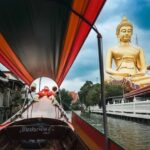
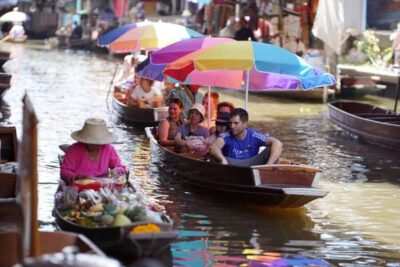
After the market and canal-area walking, you take a longtail boat ride (around 30 minutes). This is one of those Bangkok experiences that feels like a reset button.
On foot and by tuk-tuk, Bangkok can be loud and fast. On water, the city shifts. You get a different sense of scale, and you stop thinking about traffic for a while.
The tour includes a drinking-water option and insurance, which matters here because you’re active and outdoors. It’s also easier to relax because the boat ride is built into the plan, rather than something you’d need to figure out last-minute.
Keep an eye on sun and rain. The tour notes umbrellas and fans have been provided by guides in practice, and that kind of help makes a real difference on a hot river day.
Flower market and Chinatown lunch: food-forward Bangkok you can eat
Later, you visit a flower market and then head toward Chinatown. This is where the day turns into food and atmosphere.
The tour includes Chinatown street food lunch, and the plan is designed so you’re ready to eat when you arrive. If you’ve spent the morning in temples and markets, lunch feels earned—not just another stop.
Chinatown is also where you can really notice how Bangkok changes by neighborhood. You go from religious spaces and canal scenery into dense streets and food energy. Even if you’re not a hardcore street-food person, the lunch portion gives you a safer way to try a few things with guidance.
After the tour finishes, you can continue with your own choices. The tour notes you can eat more in Chinatown or go for a drink at a hidden bar on Nana China Road.
One practical caution: extra drinks aren’t included. If you plan to keep going after the tour, keep a small budget for that.
Song Wat Road photo time and the day’s final temple stop
The final stretch includes a trend-generation photo shoot spot on Song Wat Road for about 30 minutes. This is the more modern counterpoint to the temple and water parts of the day.
Then the tour ends at Wat Mangkon. It’s a fitting finale because it brings you back to the temple thread after a day of moving through markets, canals, and food streets.
If your day is timing-sensitive, this ending structure is helpful. You’re not ending randomly in the middle of a nightlife zone. You end at a named temple area, which tends to be easier to orient yourself from.
Price and value: what $32 actually covers
At $32 per person for a 6-hour day, this is priced like a true tour deal rather than an all-you-can-sightsee add-on. You’re not just paying for a guide. You’re also getting:
- tuk-tuk transportation between multiple stops
- a longtail boat ride
- entrance fees for the temple/museum parts
- drinking water
- insurance
- snacks and seasoning fruit tasting
That combination is what makes the value feel real. In Bangkok, transportation and entry fees add up fast if you do it yourself. Here, the day is packaged so you spend your time seeing and tasting, not calculating logistics.
The small group size (limited to 10, and a max of 8 is noted) also adds value. It keeps the pace manageable at temples and markets, which is where big groups usually become a headache.
Who this tour is for, and who should skip it
This is a strong fit if you want:
- a structured way to see Bangkok and Thonburi in one day
- temples plus water life, not just one type of activity
- market snacks and street-food lunch
- a smaller group pace with an English-speaking guide like Yui or Yuri
It’s less ideal if:
- you have back problems (the tour notes it isn’t suitable)
- you’re pregnant (also noted as not suitable)
- you hate walking in heat, since the route includes walking between stops
If you’re traveling with kids, the feedback includes families with children around primary-school age and it worked well. The tuk-tuk and boat elements tend to keep younger travelers engaged.
Tips that will make your day better
These are the practical things I’d follow based on how the tour is set up and what guides tend to handle:
- Wear comfortable shoes from the start. You’ll be on your feet across multiple stops.
- Bring light clothing you can manage around temples. If you’re unsure, the guide may provide temple-appropriate clothing support.
- Plan to eat. The day includes snacks/fruit and Chinatown lunch, but you’ll want to arrive hungry.
- Save extra money for drinks. Extra drinks aren’t included.
- Don’t try to stack more plans immediately afterward. You’ll end the tour near Wat Mangkon, but you’ll likely still want a calm transition.
Should you book this Bangkok tuk-tuk and water cultural tour?
I’d book it if you want an efficient, locally flavored Bangkok day where the transportation choices actually matter: tuk-tuk for streets, longtail boat for water life. The mix of market tasting, temple merit-making, and Chinatown lunch creates variety that feels satisfying, not scattered.
I’d skip it if you’re looking for a slow, low-walking cultural day or if you need accessibility accommodations for back issues or pregnancy. This tour is active, and it moves.
If your goal is a single-day “Bangkok feels like Bangkok” experience—temples, canals, and food—this one is a smart pick.
FAQ
What is the duration of the tour?
The tour lasts 6 hours.
Where do I meet the guide and driver?
Meet at MRT Itsaraphap station, EXIT 2 (Soi 23). You should arrive about 15 minutes early.
How big is the group?
The tour is a small group limited to 10 participants, and the maximum group size is also noted as 8 participants.
What’s included in the price?
Included are an English-speaking tour guide, a professional tuk-tuk driver, indigenous snack and seasoning fruit, entrance fee tickets, drinking water, longtail boat riding, and insurance (tips are optional for the guide).
What should I bring?
Wear comfortable shoes, since the itinerary includes walking.
Are there any items that are not allowed?
The tour states alcohol and drugs are not allowed.
Is food included?
Yes. You’ll have indigenous snacks and seasoning fruit, and you’ll also have lunch in Chinatown.
Is longtail boat riding part of the tour?
Yes. The itinerary includes a longtail boat ride.
Where does the tour end?
The tour ends at Wat Mangkon.
More Tours in Bangkok
More Tour Reviews in Bangkok


Around the City by Tuk Tuk
Just In: Fresh Bangkok Reviews
Tuk Tuk Tours, compared.
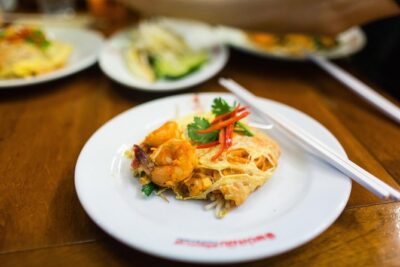 ★ 5.0Bangkok by Night: Temples, Markets and Food Tuk-Tuk TourFrom $793,752 reviews
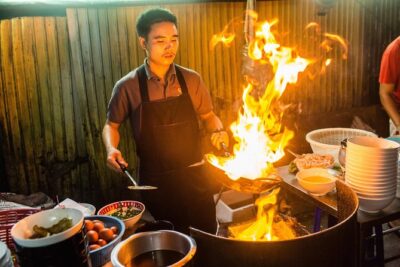 ★ 5.0Bangkok Midnight Food Tuk Tuk TourFrom $812,542 reviews
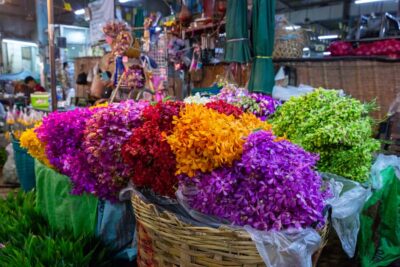 ★ 4.9Markets, Temples and Food Night Tour by Tuk TukFrom $772,371 reviews
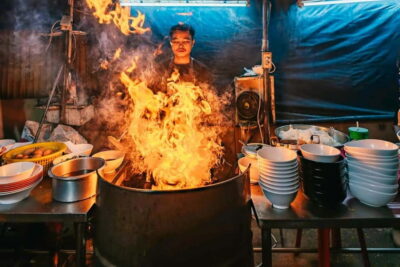 ★ 4.9Midnight Food Tour by Tuk-TukFrom $742,054 reviews
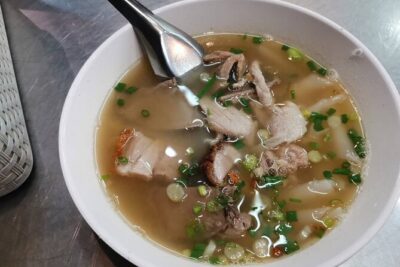 ★ 4.4Michelin Guide Street Food Tour by Tuk TukFrom $201,274 reviews
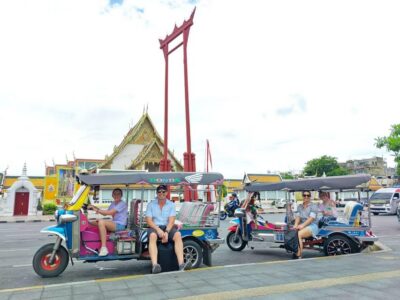 ★ 4.7Guided Tour in a Typical Thai Tuk-TukFrom $28830 reviews
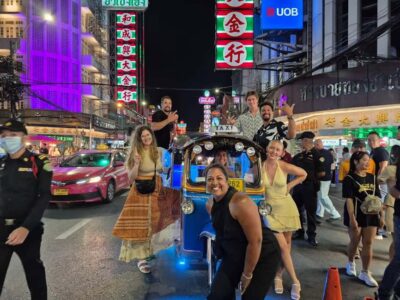 ★ 4.3Tuk Tuk Adventure Chinatown Michelin Food & TemplesFrom $18725 reviews
Browse the lists this tour appears in