
Review · KANCHANABURI & RIVER KWAI
From Bangkok: Death Railway & Hellfire Pass Tour with Lunch
One place, hard to forget, starts the day.
This Death Railway tour from Bangkok is a long pull (about 12 hours) but it’s built to make the story make sense: Hellfire Pass memorial walks, museum time, the River Kwai bridge area, a POW cemetery stop, and an included train ride with lunch. You also get air-conditioned pickup from select Bangkok hotel areas, plus an English-speaking guide so you’re not just staring at plaques and hoping for context.
I like two things most. First, the Hellfire Pass visit hits with site-specific context: you walk the memorial trail after the interpretive materials, so the ground you’re standing on isn’t abstract. Second, the day doesn’t end with a photo stop; it includes both the museum/research center and the Kanchanaburi War Cemetery, which turns the history into something personal and real.
The main drawback is simple: it’s a packed schedule for a heavy subject. With roughly an hour at the major stops, if you’re the type who reads slowly or wants extra museum time, you may feel rushed. Also, be alert to order; if you start at the cemetery without the earlier framing, the timeline can feel harder to connect.
In This Review
- Key takeaways before you go
- From Bangkok at 7:00 am: the day trip setup and what’s included
- Hellfire Pass Memorial Walking Trail: why this stop hits hardest
- Nam Tok, River Kwai area, and the bridge station: seeing a landmark with context
- Death Railway Museum and Research Centre: turning place names into a timeline
- Kanchanaburi War Cemetery: a solemn finish with real weight
- Lunch and the included train ride: a needed breather
- Price and timing: is $82 a good deal for what you get?
- Who this tour suits best (and who should rethink it)
- Hellfire Pass closures: Wat Tham Suea as the backup plan
- Should you book this Death Railway tour from Bangkok?
- FAQ
- What time does the tour start?
- How long is the Death Railway & Hellfire Pass tour?
- How much does the tour cost?
- What’s included in the price?
- Is lunch included?
- Is there a train ride included?
- Do I get pickup and drop-off from Bangkok hotels?
- What’s the group size limit?
- What happens if Hellfire Pass is closed on certain dates?
- Can I cancel for a full refund?
Key takeaways before you go
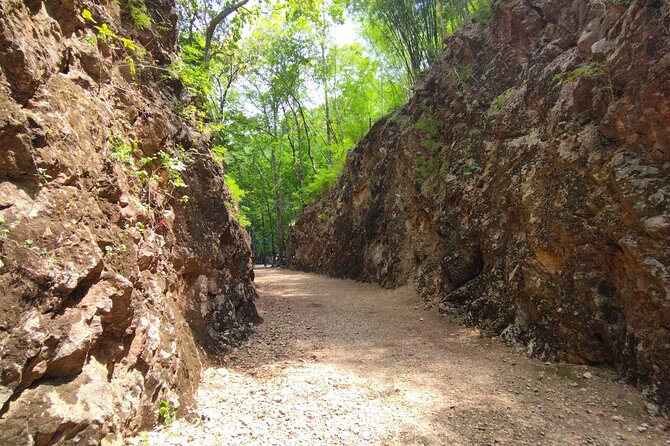
- Hellfire Pass is the emotional center: interpretive exhibits first, then a walking memorial trail tied to the railway’s most difficult terrain.
- You get the full arc of the day: bridge area, Death Railway Museum and research center, then the Kanchanaburi War Cemetery.
- Lunch and a train ride are built in: a welcome break in the middle of a serious itinerary.
- Small group size (max 15) keeps the day from turning into a stampede.
- Start early at 7:00 am so you’re not fighting Bangkok traffic all morning.
- If Hellfire Pass is closed, you’ll go to Wat Tham Suea in Kanchanaburi on the listed dates.
From Bangkok at 7:00 am: the day trip setup and what’s included
This is an all-day outing, starting around 7:00 am, with drop-off back to your area afterward. Pickup is available for hotels in and around Chatuchak, Lard Pao, Bang Kane, Don Muang, Suvarnabhumi, and more nearby locations, and the van is air-conditioned—important in Thailand when you’re spending hours on the road.
The price is $82 per person, and I think the value is in how much is bundled: English-speaking guide, lunch, travel insurance, all fees and taxes, and a train ticket included. In other words, you’re not trying to coordinate transport, admissions, and timing on your own after a long drive out of Bangkok.
One small logistics note: in some cases, the guide may not accompany you all the way back to your exact hotel. When that happens, the driver will still get you safely dropped off. That’s normal for long days, but I’d confirm your drop-off point in the morning so you’re not surprised when you transfer to the driver.
Group size is capped at 15 travelers, which helps. It’s big enough that you’ll hear other people’s questions, but small enough that you’re not just being hustled from one doorway to the next.
Out to the River Kwai, more Kanchanaburi trips
- From Bangkok: Erawan Park & Kanchanaburi Small-Group Tour
★ 4.5 · 1,582 reviews - From Bangkok: Death Railway & Hellfire Pass Tour with Lunch
★ 4.6 · 931 reviews - From Bangkok: Historical Day Tour to River Kwai
★ 4.6 · 868 reviews
Hellfire Pass Memorial Walking Trail: why this stop hits hardest
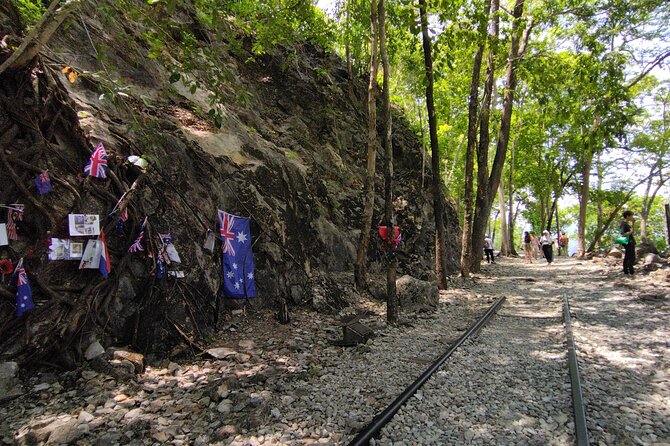
Hellfire Pass is the reason many people pick this tour, and I get it. This is not a quick “look and move on” type of site. The Hellfire Pass Interpretive Centre and Memorial Walking Trail is built around giving you context first, then asking you to experience the place on foot.
In practical terms, you’ll have about one hour at the interpretive center and trail area. That time matters: it gives you a chance to read the exhibits and then step into the memorial route while the details are still fresh. One of the biggest strengths here is that the story isn’t only explained—it’s tied to the terrain, which makes the suffering feel less like a distant headline.
The mood also changes as you walk. Reviews and site character both point to the same thing: the atmosphere at Hellfire Pass feels present in a way that plain reading can’t do. If you’re sensitive to WWII stories, plan to take your time and don’t rush the quiet parts.
If you’re a history-nerd (or just someone who wants the timeline to click), here’s my simple tip: listen closely to the guide’s framing and try to keep the chronology in your head as you move from room to trail. Getting the timeline right makes the rest of the day easier to follow.
Nam Tok, River Kwai area, and the bridge station: seeing a landmark with context
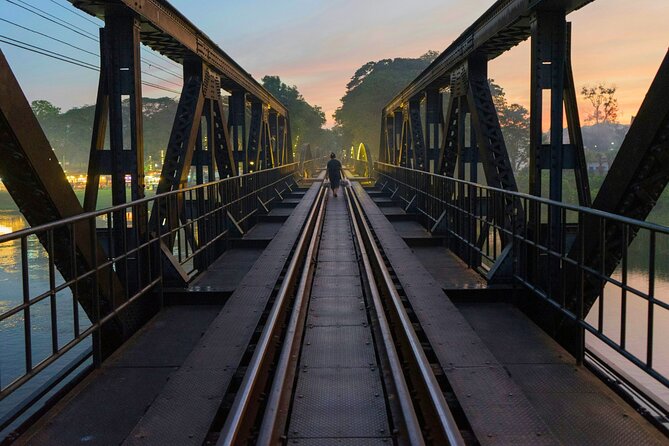
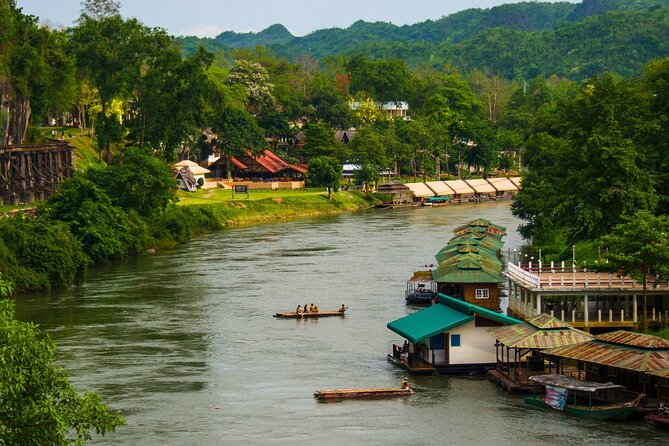
After the early Hellfire Pass portion, the day moves through the Kanchanaburi region with natural breaks built in. You’ll spend about 1 hour 40 minutes in the Nam Tok area, which is where the tour connects the memorial sites with what people usually associate with the Death Railway.
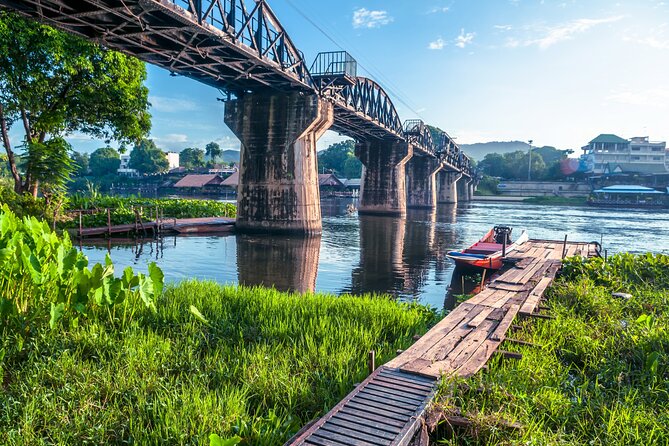
Next comes the River Kwai Bridge Station area, with about 30 minutes there. The entry is free, which is nice, but the bigger value is how the stop fits into the overall story. The bridge has become a famous image, yet on a tour like this it’s not just a postcard. The guide helps you understand why the bridge mattered and what conditions surrounded the railway’s construction.
This is also where I’d manage expectations. The bridge stop is short. You’ll likely have time to look around and take photos, but don’t treat it like a full museum visit. If you want deeper reading time, you’ll get more of that at the museum/research center and during the cemetery stop later.
Wear shoes you don’t mind walking in. Even on a “short” stop, you’ll be moving around enough to make comfy footwear feel like a smart investment rather than a luxury.
Death Railway Museum and Research Centre: turning place names into a timeline
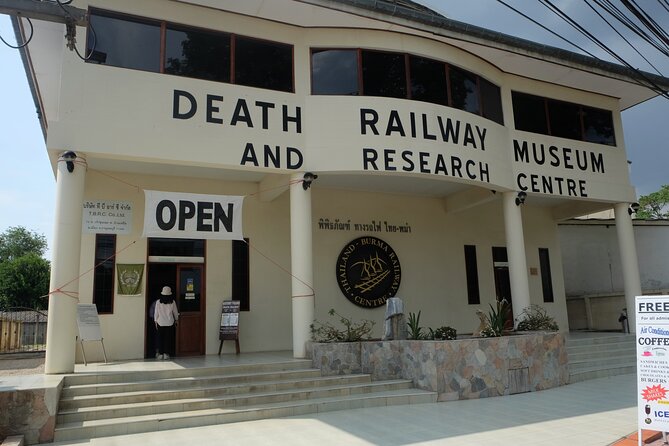
Then you get one of the most practical parts of the day for your own understanding: the Death Railway Museum and Research Centre. You’ll have about one hour here, with admission included.
This is where you’ll usually get the clearer explanation of how the railway was built, who was involved, and how the human cost escalates in different phases. It’s also a good spot to connect what you saw at Hellfire Pass to what you’re hearing about the wider railway system. When the story lines up, the day feels less like disconnected stops and more like one message delivered in stages.
There’s also a good chance you’ll notice how the museum is more about interpretation than just display cases. That helps you make sense of why deaths increased during certain periods, and it gives you a framework so you’re not trying to decode everything from contextless signage.
One caution: because time is limited, don’t plan on reading every label. Instead, pick two or three areas that interest you and spend most of your attention there. If you try to do it all, you’ll end up skimming and feeling like you missed the point.
Worth putting side by side before you book this Bangkok tour:


Kanchanaburi War Cemetery: a solemn finish with real weight
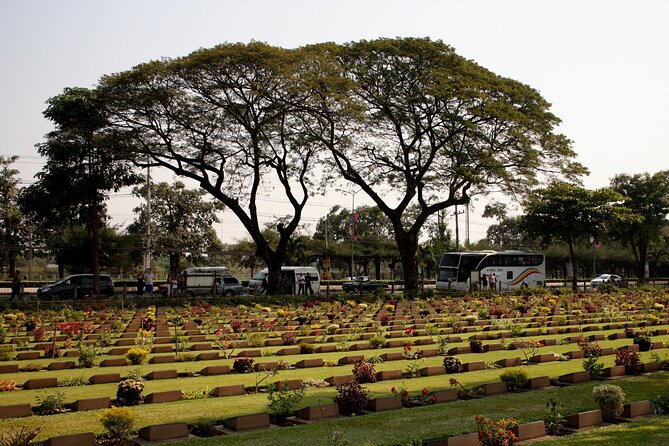
The day’s mood turns even more serious at the Kanchanaburi War Cemetery. You’ll have about one hour here, and entry is free.
This stop is where the story becomes names, graves, and loss on a scale that’s hard to process. I find cemeteries like this work best when you let them slow you down a bit. You don’t need to “perform” sadness. Just take in the setting, read what you can, and let the guide’s explanations do some of the heavy lifting.
It can also be useful to know this: the order of stops changes your ability to understand the timeline. If your day starts with the cemetery before you’ve absorbed the earlier context, the impact may still be strong—but the “why” can feel harder to hold. My advice is to focus on listening at the first interpretive site, then use the cemetery as the moment when everything lands.
Even if you’re not a WWII history buff, the cemetery tends to hit people right between the eyes. It’s intense and humbling, and it’s okay if you feel overwhelmed. That’s part of what this place exists to communicate.
Lunch and the included train ride: a needed breather
Some day trips like this forget that humans need breaks. This one includes lunch, and it also includes a train ticket, which is a big part of why the day doesn’t feel like only one long viewing session.
Your lunch is part of the itinerary, and it’s often described as tasty. After the heavier memorial moments, lunch gives you a chance to reset your body—water, food, and a few minutes to breathe.
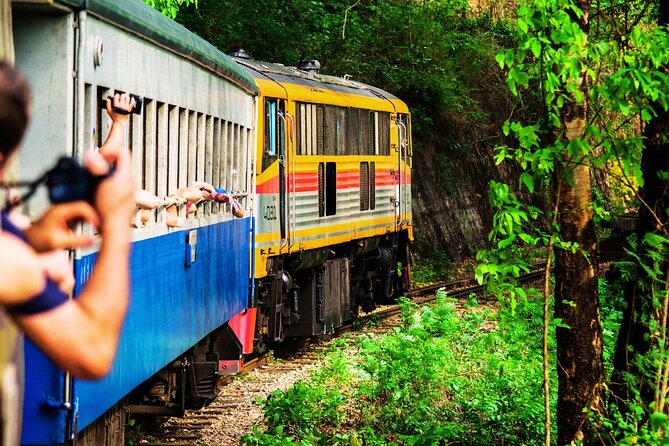
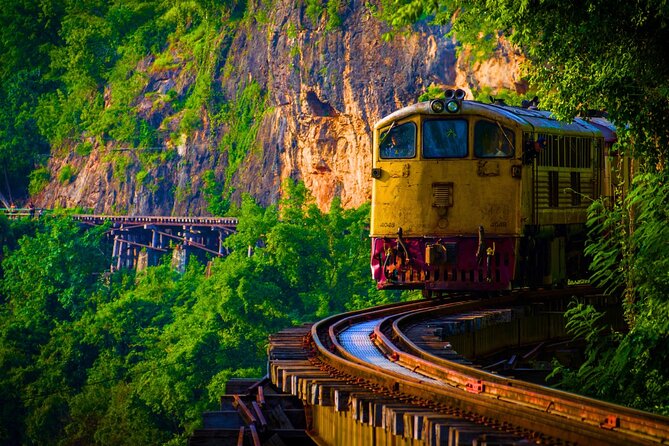
Then there’s the train ride. One of the most common surprises is that the included train segment can feel genuinely fun compared to everything around it. The point isn’t to make light of the history. It’s more like a rhythm change: you’re still in the region tied to the railway, but the ride gives you movement, scenery, and an easier mental pace.
If you’re sitting for long stretches, bring a layer. Morning air-conditioning and cool van air can swing fast once you’re out and back.
Price and timing: is $82 a good deal for what you get?
For $82, you’re paying for more than admissions. You’re paying for transport out of Bangkok, guide interpretation, lunch, travel insurance, and the train ticket. When you try to piece that together yourself, it adds up quickly—especially with a day that runs around 12 hours and starts at 7:00 am.
The main timing question is pacing. There’s limited time at each major stop, including about one hour at both the Hellfire Pass interpretive/trail portion (as scheduled) and the Death Railway museum, plus about one hour at the cemetery. That can feel tight if you want to linger.
Here’s what I recommend to get the best day out of it:
- Arrive hungry for context, not just for photos.
- Focus on one or two key sections inside each museum rather than trying to read everything.
- If you tend to go slow, ask the guide at the start which parts are most important so you don’t lose the thread.
If you’re the kind of person who wants a leisurely pace at memorial sites, you may still enjoy this trip—but you’ll need to accept that it’s designed for a complete circuit in one day.
Who this tour suits best (and who should rethink it)
This tour is ideal if you want a guided, structured Death Railway day without the hassle of planning transport and sequencing sites across Kanchanaburi. It’s also a good match if you appreciate having an English-speaking guide help translate what you’re seeing into something coherent.
It may not be the best fit if you:
- hate long travel days and are easily fatigued by early starts, or
- want lots of museum reading time with zero time pressure, or
- prefer completely flexible pacing with no schedule.
If you love walking, Hellfire Pass is the standout. If you prefer more “look, then talk” history stops, the museum/research center and cemetery will still satisfy you.
And if you’re worried about the guide quality, take comfort in the fact that people often specifically call out smooth coordination and a guide-led flow (one guide named Alex was mentioned in connection with keeping the day running well, along with the driver).
Hellfire Pass closures: Wat Tham Suea as the backup plan
Hellfire Pass isn’t open every day. The tour notes closures on December 5, 24, 25, 26, 27, and 31, 2025, plus January 1, 2026. On those dates, the alternative activity in Kanchanaburi is Wat Tham Suea (Tiger Cave Temple).
If you’re traveling during that window, don’t assume your itinerary is identical. This backup plan is clearly spelled out, so at least you’ll know the switch ahead of time.
Should you book this Death Railway tour from Bangkok?
Yes, I’d book it if you want a high-value, structured day that combines the defining memorial walk at Hellfire Pass with the bridge area, museum learning time, and a cemetery visit that lands with real gravity. For many people, the emotional impact is the point, and the schedule helps you hit the major sites in one shot without getting lost in logistics.
I’d rethink it if you strongly prefer slow museum pacing, hate early starts, or get overloaded by heavy WWII topics. If that’s you, you might be happier planning a shorter, more flexible Kanchanaburi day—or at minimum, go into this one knowing the schedule is tight.
If you do book, go in with the right mindset: wear comfortable shoes, bring water, and treat Hellfire Pass as the main event rather than just another stop. With that approach, the whole day makes sense—and you’ll leave with far more than a few photos.
FAQ
What time does the tour start?
The tour starts at 7:00 am.
How long is the Death Railway & Hellfire Pass tour?
The duration is listed as 12 hours (approx.).
How much does the tour cost?
It costs $82.00 per person.
What’s included in the price?
The tour includes an air-conditioned vehicle, lunch, an English speaking tour guide, travel insurance, all fees and taxes, and a train ticket.
Is lunch included?
Yes. Lunch is included.
Is there a train ride included?
Yes. A train ticket is included.
Do I get pickup and drop-off from Bangkok hotels?
Yes, pickup and drop-off are available for hotels in areas including Chatuchak, Lard Pao, Bang Kane, Don Muang, Suvarnabhumi, and other nearby locations.
What’s the group size limit?
The tour has a maximum group size of 15 travelers.
What happens if Hellfire Pass is closed on certain dates?
On the listed closure dates (including Dec 5, 24–27, 31, 2025 and Jan 1, 2026), the alternative attraction is Wat Tham Suea (Tiger Cave Temple) in Kanchanaburi.
Can I cancel for a full refund?
Yes. You can cancel for a full refund if you cancel at least 24 hours before the experience’s start time. Free cancellation is allowed with that timing rule.
More Tours in Bangkok


More Tour Reviews in Bangkok




Out to the River Kwai



Just In: Fresh Bangkok Reviews



Kanchanaburi & River Kwai, compared.
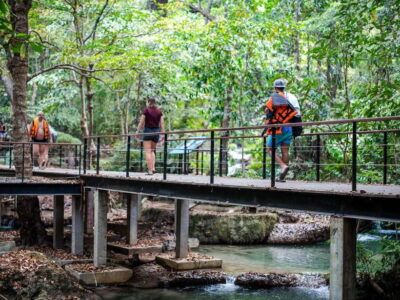 ★ 4.5From Bangkok: Erawan Park & Kanchanaburi Small-Group TourFrom $591,582 reviews
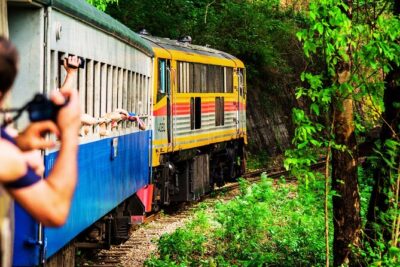 ★ 4.6From Bangkok: Death Railway & Hellfire Pass Tour with LunchFrom $82931 reviews
 ★ 4.6From Bangkok: Historical Day Tour to River KwaiFrom $51868 reviews
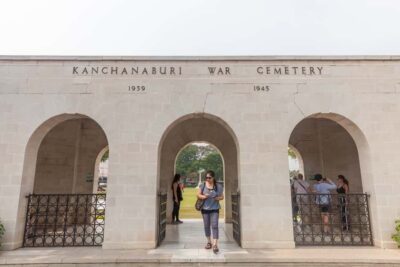 ★ 4.8From Bangkok: Elephant Sanctuary and Kanchanaburi TourFrom $79826 reviews
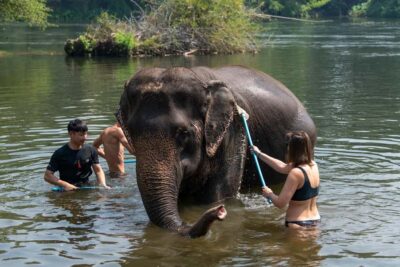 ★ 4.9Elephant Sanctuary & Erawan Waterfall TourFrom $181820 reviews
 ★ 4.5Bridge on the River Kwai and Thailand-Burma Railway TourFrom $108658 reviews
 ★ 4.5Erawan Waterfalls and Bridge Over River Kwai Tour from BangkokFrom $56372 reviews
 ★ 4.5Bridge on the River Kwai and Thailand-Burma Railway Guided TourFrom $94353 reviews
Browse the lists this tour appears in