
Review · KANCHANABURI & RIVER KWAI
Mystical Waterfall and River Kwai Tour (Private & All-Inclusive)
Waterfalls and war stories in one day-long loop. This private tour mixes the calm magic of Erawan Falls with the sobering setting of the Death Railway around Kanchanaburi—plus a river cruise that breaks up the long drive.
I love that it’s truly all-inclusive: lunch, bottled water, and entrance fees are handled, so you can spend your energy on the actual sights (and not the ticket math).
The standout for me is how the JEATH War Museum and related Death Railway sites give you context, not just photo stops. A guide like Oil (who’s praised for clear, focused explanations) can help you connect the dots between the POW accounts and the landmarks you’re standing next to.
The main thing to consider is the physical side: you’ll be hiking at Erawan Falls and you’re signing up for an 11–13 hour day, so bring a realistic pace and comfy shoes.
In This Review
- Key things I’d plan around
- A day trip that pairs waterfalls with the Death Railway sites
- Private pickup, comfort, and mobile tickets that reduce friction
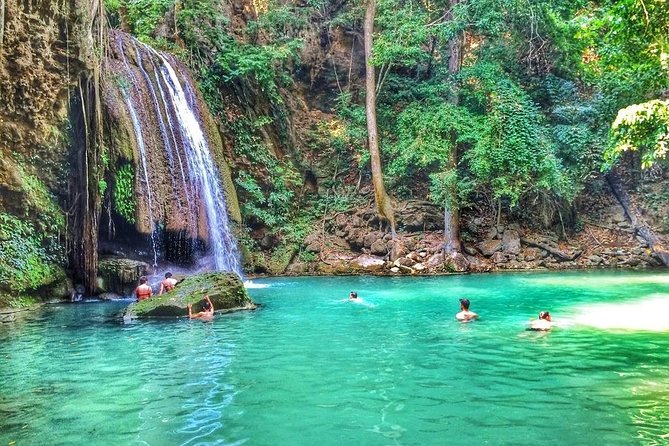
- Erawan Falls hike: seven tiers and the feel of a real park day
- JEATH War Museum and the sites that connect you to the Death Railway
- Bridge over the River Kwai and the calmer side of the water
- Beyond the big two: national parks, dams, and smaller-but-meaningful stops
- What’s included (and why it matters on an 11–13 hour day)
- Price check: is $198 a fair value for a private full-day?
- The practical side: timing, walking, and what to bring
- Who should book this tour, and who should skip it
- Should you book the Mystical Waterfall and River Kwai Tour?
- FAQ
- How long is the Mystical Waterfall and River Kwai Tour?
- What’s included in the tour price?
- Is pickup included?
- Is this a private tour?
- What kind of fitness level do I need?
- What happens if the weather is bad?
Key things I’d plan around
- Erawan Falls, seven tiers: you’ll spend real time on the trail where the water changes from tier to tier
- Death Railway learning stops: JEATH War Museum plus key sites tied to the Thailand–Burma rail line
- Bridge over the River Kwai + river boat time: you get the famous landmark and the slower, scenic angle too
- Private air-conditioned vehicle: easier timing and less stress than group shuttles
- Lunch and bottled water included: fewer decisions during a long travel day
A day trip that pairs waterfalls with the Death Railway sites
If you only do one long excursion from Bangkok, make it one that has two moods: nature time, then history time. That’s exactly how this tour is built. You start in Erawan National Park—where the water is the star—and then you shift to Kanchanaburi, where the River Kwai region connects to World War II through the Thailand–Burma railways.
I like this pacing because it keeps the day from feeling like a checklist. Erawan Falls gives you a reset: shade, mist, the sound of water, and a trail that rewards a steady walk. Then the wartime sites ground the story, so you’re not just seeing scenery—you’re understanding why this part of Thailand matters.
One practical note: with an 11–13 hour window, you’re not going to “cover everything.” You’re going to cover the most meaningful pieces without pretending you’ll see every corner of the region.
Out to the River Kwai, more Kanchanaburi trips
- From Bangkok: Erawan Park & Kanchanaburi Small-Group Tour
★ 4.5 · 1,582 reviews - From Bangkok: Death Railway & Hellfire Pass Tour with Lunch
★ 4.6 · 931 reviews - From Bangkok: Historical Day Tour to River Kwai
★ 4.6 · 868 reviews
Private pickup, comfort, and mobile tickets that reduce friction
The tour includes pickup, and it runs in a private air-conditioned vehicle. That matters more than it sounds. On a day like this, road time adds up fast, and being stuck in cramped shared transport can turn the trip tense before you even reach the falls.
For you, private means:
- you can settle in early and keep your day on track
- your guide can adjust pacing based on the group’s energy (especially around the hiking portion)
- you don’t waste time herding people at multiple pick-up points
You’ll also use a mobile ticket. That’s a small detail, but on the ground it saves the hassle of printed confirmations and last-minute searching.
Also pay attention to the guidance on fitness level: the tour is aimed at travelers with a moderate physical fitness level. If you’re unsure, think about whether you can comfortably walk a trail and take a few changes in terrain at a waterfall site.
Erawan Falls hike: seven tiers and the feel of a real park day
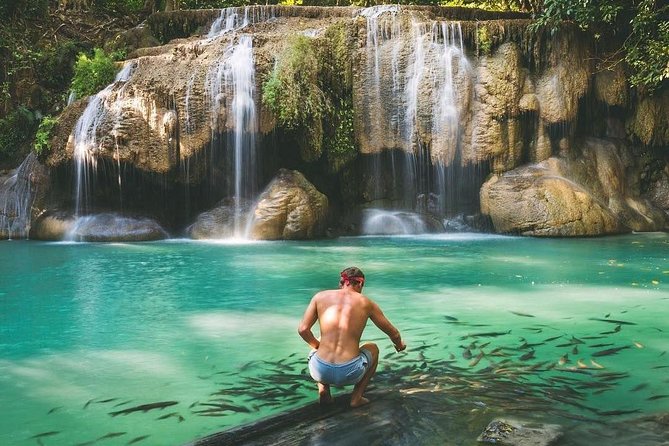
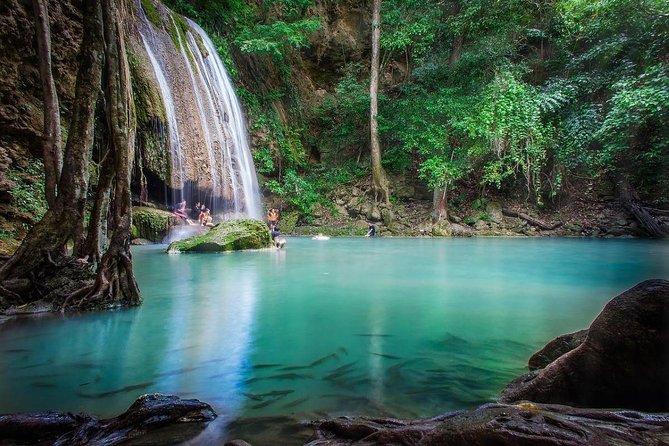
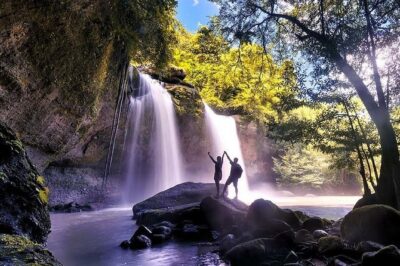
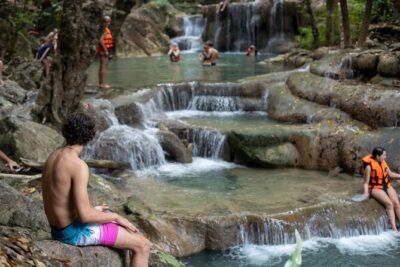
Erawan Falls is the main event, and the tour gives it a real block of time—about 3 hours. The falls are seven-tiered, and they’re named for the Erawan, the three-headed white elephant from Hindu mythology. Even if you’re not steeped in mythology, you’ll feel the logic: each tier is its own mini-scene.
Here’s what you should expect when you arrive:
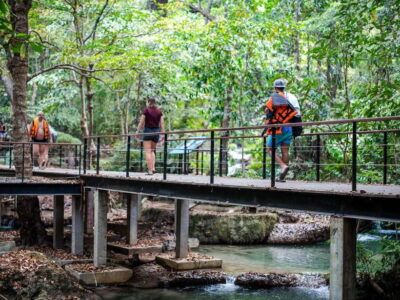
- You’ll be moving on a trail that goes between viewpoints.
- Some sections can feel slippery if it’s wet or humid.
- The best “photo moment” usually isn’t one single stop; it’s the progression as the water drops to the next level.
The good news is that the hike doesn’t have to be a sprint. If you pace yourself and pause at the tiers, you’ll get both: the water’s soundscape and the physical payoff of reaching a higher viewpoint.
Possible drawback: the day is long. If you treat the falls hike like a casual stroll and then rush everything else later, you may feel it. I’d rather you plan to spend your effort wisely here—because Erawan Falls is the part where your body notices the reward most.
JEATH War Museum and the sites that connect you to the Death Railway
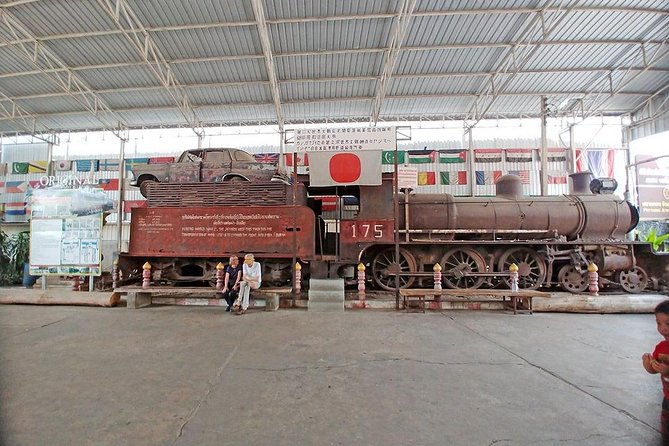
After Erawan Falls, the mood shifts. The JEATH War Museum focuses on Thailand’s wartime history and the Death Railway. It highlights that the rail line was built from 1942 to 1943 by Allied POWs under Japanese direction, as part of the Thai–Burma railways.
This is the kind of stop where a good guide can change how you experience it. Standing in front of displays is one thing; understanding how the forced labor and POW experience shaped the railway—and why the landscape around Kanchanaburi holds those memories—is another.
In the areas beyond JEATH, you’ll also connect to other key Death Railway sites:
- The Thailand–Burma Railway Centre, a privately funded research and museum center in Kanchanaburi
- Hellfire Pass, a 500-meter stretch where POWs dug by hand to create the route for the railway, with heavy loss of life noted in the account
Those names matter because they point to different angles of the same story. Museums help you understand the why and how. Hellfire Pass brings you closer to the physical reality of the work: the scale, the effort, and the brutality of the conditions.
One more thing I appreciate: this tour doesn’t skip the bridge landmark that people associate with popular culture. It pairs it with the deeper context, so you’re not stuck with movie-only understanding.
More private runs, just your group



Bridge over the River Kwai and the calmer side of the water
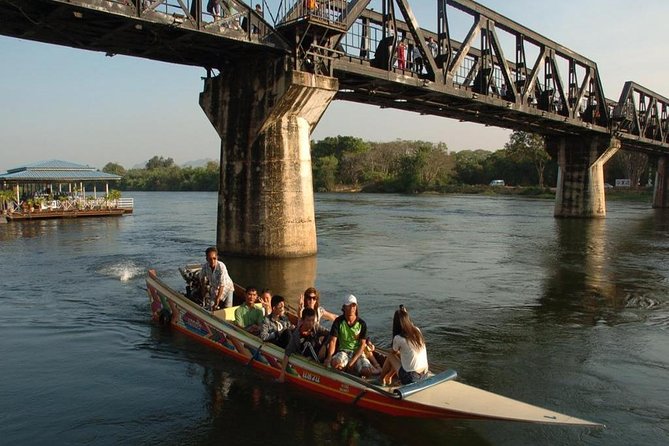
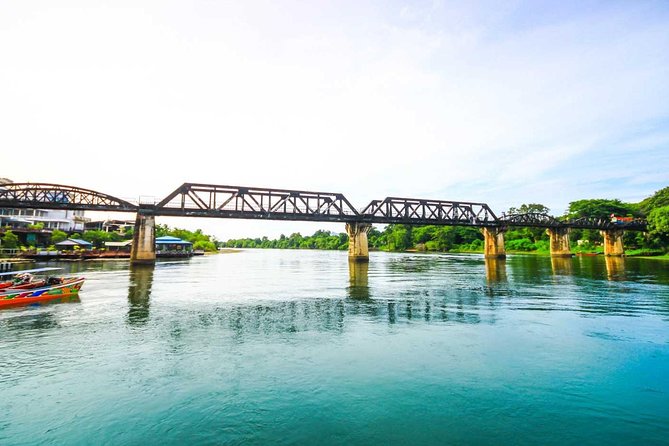
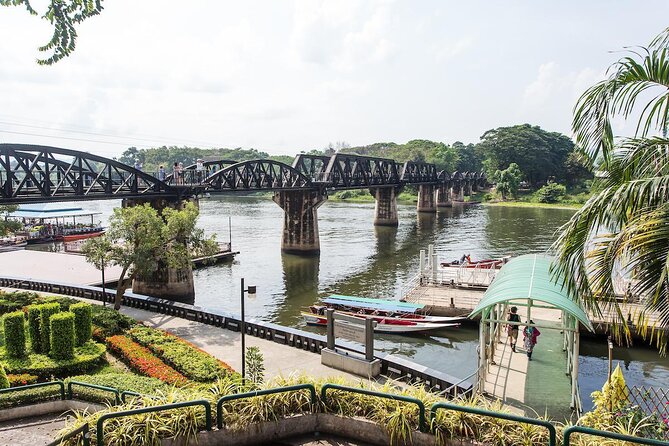
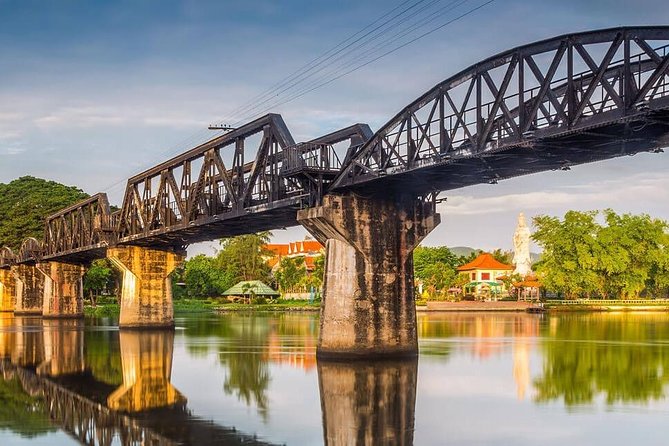
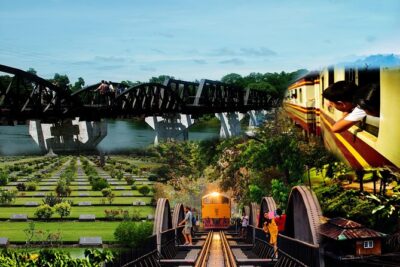
Then you head to the River Khwae Bridge, commonly known as the Bridge on the River Kwai. Even if you’ve seen images before, it lands differently after the museum stops. The bridge stops being a symbol from a film and becomes an engineered marker of wartime construction.
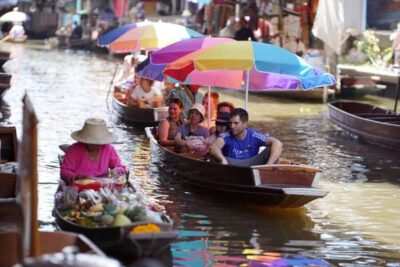
The tour pairs that moment with time on the river too. It includes a long-tail boat ride on the River Kwai. That boat section is a smart reset. You’ve spent hours learning and walking through heavy themes; being on the water gives you a quieter kind of perspective.
You’ll also spend time at the River Kwai area itself (listed around 1 hour with the River Kwai stop). The Khwae Yai River is also called the Si Sawat, and the name of the area helps you understand you’re not just visiting a single “point.” You’re in a river system shaped by geography and human history.
If you’re sensitive to long days, the boat ride is also a practical win. Sitting on a boat lets you rest your legs without stopping the day’s flow.
Beyond the big two: national parks, dams, and smaller-but-meaningful stops
The day doesn’t only run on Erawan Falls and the main war landmarks. It’s rounded out with additional places that add texture to the Kanchanaburi region—nature, geology, and more context around the area.
A few of the stops mentioned include:
- Khuean Srinagarindra National Park (centered on the Srinagarind Reservoir)
- Mueang Sing Historical Park, which protects remains of Khmer temples from the 13th and 14th centuries
- The Thailand–Burma Railway Centre (again, worth repeating because it connects the research/history angle)
- The Neolithic period museum on the banks of the Kwai Noi River, with artifacts from far earlier human history
- Srinagarind Dam and a stop described as cave and waterfall
I’m mentioning these because they explain why the tour feels like a “region day,” not just a trip between two famous points. You get to see how different time periods sit on the same geography: ancient artifacts here, wartime construction there, and forested national park areas in between.
What to watch for: some of these stops may be shorter than the headline attractions. You’ll likely enjoy them most if you go in with curiosity rather than expecting each one to feel like a full stand-alone visit.
What’s included (and why it matters on an 11–13 hour day)
The tour is all-inclusive in the practical sense: it includes lunch, bottled water, and all entrance fees. That’s a big deal for value on a full-day day trip, because Kanchanaburi costs can stack up—tickets, transport add-ons, small purchases during long travel hours.
Here’s the simple way to think about it:
- Lunch and bottled water prevent the classic “tour math problem” where you end up skipping food or buying overpriced snacks to keep going.
- Entrance fees being handled means less time waiting or scrambling for cash/cards at gates.
You should still plan for personal expenses that aren’t listed (like souvenirs). But for the core experience, you’re not stuck paying surprises during the day.
Price check: is $198 a fair value for a private full-day?
At $198 per person for a private, 11–13 hour experience, you’re paying for more than sightseeing. You’re paying for time, comfort, and someone local to guide the meaning behind the places.
This is where the private format becomes part of the value:
- A private air-conditioned vehicle reduces fatigue on a long route out of Bangkok.
- A focused itinerary means you’re more likely to spend time where the story matters (Erawan Falls first, then the Death Railway sites with context).
- Lunch, bottled water, and entrance fees included cuts your day-to-day spending friction.
If you’re traveling with friends or family and want to keep your own pace—especially with hiking and museum time—this price can feel reasonable compared to the cost of piecing it together yourself (vehicle rental, fuel, parking, tickets, and a guide for the history pieces).
If you’re traveling solo on a tight budget, the private nature might feel like a premium. But if your goal is a smooth, guided day without stress, it’s a solid choice.
The practical side: timing, walking, and what to bring
This is a long day, and your energy will be spent in two modes: movement and indoor learning.
- Movement mode: Erawan Falls hiking for about 3 hours
- Learning mode: JEATH War Museum and the Death Railway-related museums/sites
- Transit mode: long road time from Bangkok and between stops
So pack like it’s a humid park day:
- comfortable shoes with grip
- something light for walking
- a plan for sun and rain (the park can be unpredictable)
One more reality check: the tour notes it needs good weather. If weather is poor, the experience may be canceled and you’ll be offered a different date or a full refund. So if you’re booking close to your departure day, keep some flexibility.
Who should book this tour, and who should skip it
This tour is best for you if:
- you want a private day trip with less chaos and better pacing
- you care about understanding the Death Railway beyond a photo
- you enjoy a meaningful walk at a waterfall site
- you want lunch and entrance fees handled
You may want to choose something else if:
- you’re not comfortable with moderate walking and a full-day time commitment
- you have zero flexibility for weather changes
Also consider this: if you’re mainly focused on pure relaxation, the mix of history sites (especially WWII-related stops) may feel heavy. But if you’re okay with that emotional shift, the day can be deeply rewarding.
Should you book the Mystical Waterfall and River Kwai Tour?
I’d book it if your Bangkok trip includes one day where you want both sides of Thailand’s story: the soothing power of Erawan Falls and the hard truths around the Death Railway. The private vehicle, included lunch and bottled water, and entrance fees make it a low-friction way to do a big route in one go.
I’d hesitate only if you’re very sensitive to long days or you’re not up for a moderate hike. And check your calendar—because the day depends on good weather.
If you do book, I suggest you go in with two goals: one for the waterfall (slow down and enjoy the tiers), and one for the history (let your guide’s explanations connect the museum displays to the places you’re standing in). If your guide is Oil, take advantage of the chance to ask questions—her explanations are noted for being both friendly and focused.
FAQ
How long is the Mystical Waterfall and River Kwai Tour?
The tour lasts about 11 to 13 hours.
What’s included in the tour price?
Lunch, bottled water, and all entrance fees are included.
Is pickup included?
Yes, pickup is offered.
Is this a private tour?
Yes. It’s a private tour/activity, so only your group will participate.
What kind of fitness level do I need?
The tour recommends a moderate physical fitness level because you’ll do a hike at Erawan Falls.
What happens if the weather is bad?
This experience requires good weather. If it’s canceled due to poor weather, you’ll be offered a different date or a full refund.
More Tours in Bangkok

More Tour Reviews in Bangkok




Out to the River Kwai

Just In: Fresh Bangkok Reviews


Kanchanaburi & River Kwai, compared.
 ★ 4.5From Bangkok: Erawan Park & Kanchanaburi Small-Group TourFrom $591,582 reviews
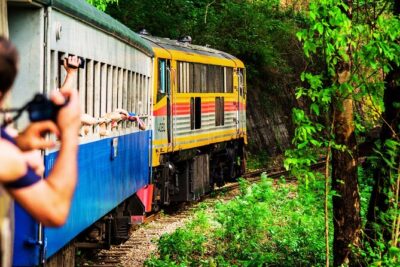 ★ 4.6From Bangkok: Death Railway & Hellfire Pass Tour with LunchFrom $82931 reviews
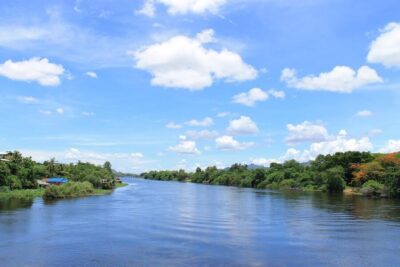 ★ 4.6From Bangkok: Historical Day Tour to River KwaiFrom $51868 reviews
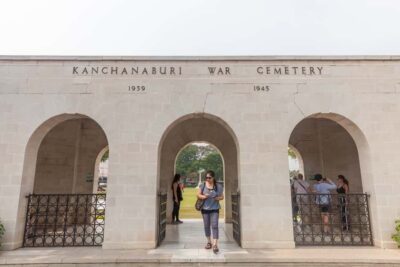 ★ 4.8From Bangkok: Elephant Sanctuary and Kanchanaburi TourFrom $79826 reviews
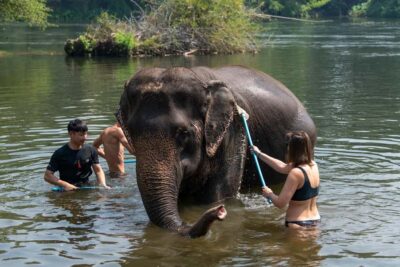 ★ 4.9Elephant Sanctuary & Erawan Waterfall TourFrom $181820 reviews
 ★ 4.5Bridge on the River Kwai and Thailand-Burma Railway TourFrom $108658 reviews
 ★ 4.5Erawan Waterfalls and Bridge Over River Kwai Tour from BangkokFrom $56372 reviews
 ★ 4.5Bridge on the River Kwai and Thailand-Burma Railway Guided TourFrom $94353 reviews
Browse the lists this tour appears in