
Review · KANCHANABURI & RIVER KWAI
Private 2 Day Tour to Erawan Waterfall and Highlights of Kanchanaburi
Two days, two worlds: water, war, and train markets. I love the pairing of Erawan Waterfall with the Kanchanaburi WWII memorial stops, and I also like how the private guiding feels human and unhurried when you’re with someone like Time. Just note the early starts and the fact that a couple of the market stops are listed as having admission not included, so you’ll want a little flexibility in your budget.
This is a good fit if you want a smooth Bangkok-to-Kanchanaburi route without the stress of piece-by-piece planning. You’ll get an English-speaking guide, hotel pickup and drop-off in Bangkok, and accident insurance. There’s also an option to include one night’s hotel with breakfast in Kanchanaburi if you want the logistics handled.
On Day 1 you cover the classic market-and-river beats (railway market, long-tail boat canals, then WWII sites), and Day 2 is mostly nature and temple time, with an included Thai set lunch. The pace is designed so you’re not sprinting from stop to stop—but it is still two full days, with walking and time outdoors.
In This Review
- Key highlights worth caring about
- A two-day route that actually makes sense from Bangkok
- Mae Klong Railway Market: the train moment plus simple local snacks
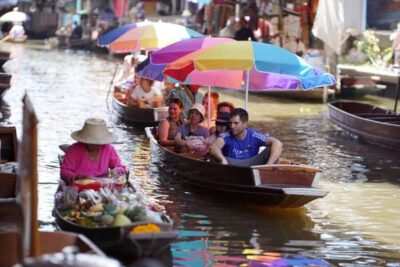
- Damnoen Saduak by long-tail boat: canals first, shopping second
- Kanchanaburi WWII memorial stops: somber pacing that still fits the tour
- Tham Kra Sae Bridge and the local train moment
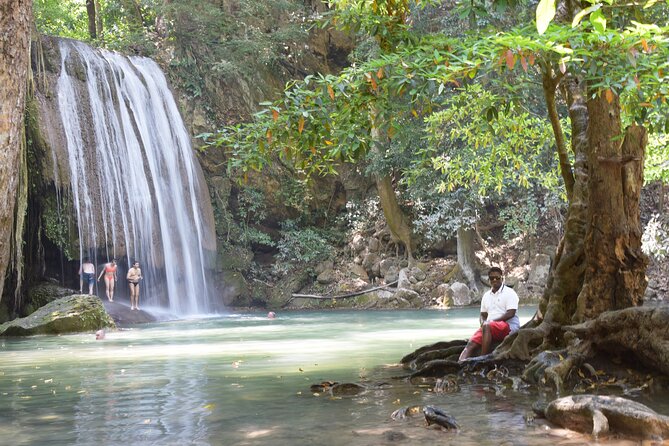
- Erawan Waterfall on Day 2: your two-hour nature reset
- Wat Tham Sua (Tiger Cave Temple) plus the included Thai lunch
- Logistics and pace: private, but not complicated
- Price and value: what $517.58 per person is really buying
- Who should book this tour, and who might prefer a different style
- Should you book it? My practical take
- FAQ
- What time does pickup start in Bangkok?
- Is this a private tour?
- How long is the tour?
- Are admission tickets included?
- Is a hotel included in Kanchanaburi?
- Does the tour include insurance, and do I need to tip?
Key highlights worth caring about
- Private, English-speaking guide attention that keeps the day flowing without rushing your stops
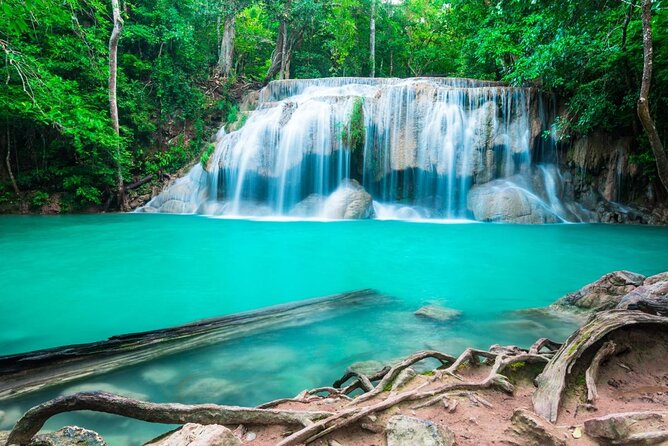
- Erawan Waterfall time (admission included) plus a real chance to walk at your own pace
- Mae Klong Railway Market where the train passing the market is the main show
- Damnoen Saduak by long-tail boat for the canals first, then shopping on your own terms
- WWII memorial stops at Kanchanaburi War Cemetery and the Bridge over the River Kwai area
- Wat Tham Sua (Tiger Cave Temple) with an included Thai set lunch nearby
A two-day route that actually makes sense from Bangkok
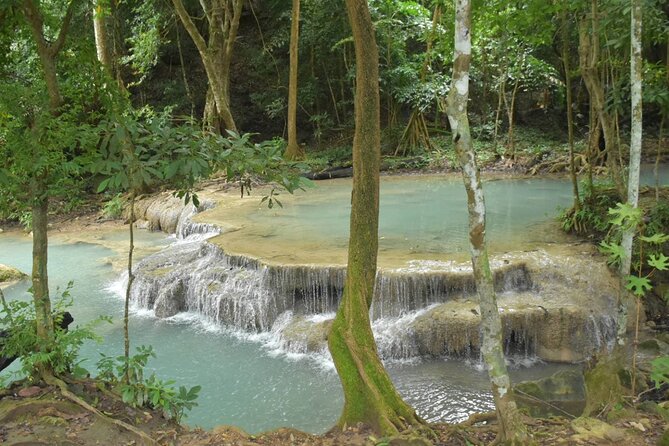
The big appeal here is that the tour stitches together very different experiences in one efficient loop. You start in Bangkok early, then head into Kanchanaburi where you’ll see war-era landmarks tied to the Thai-Burma Railway story. After that, the next day shifts hard into scenery—Erawan Waterfall is the main event, with temple time to round things out.
Because it’s private, you’re not stuck behind tour groups moving in a pack. That matters at places like the railway market and the floating market, where crowds can be chaos if you’re trying to watch the details. It also matters for the temple day, where you may want a slower pace for photos and a quick rest break before the walk continues.
One practical note: the itinerary clearly schedules a night in between. If you choose the option, your accommodation for one night with breakfast is included; if you choose to book your own hotel, you’ll handle lodging in Kanchanaburi separately. Either way, you’re setting yourself up for a proper two-day rhythm rather than a long day-trip marathon.
The big Bangkok hits in one go
- Bangkok: City Highlights Temple and Market Walking Tour
★ 4.5 · 3,990 reviews - Lopburi Monkey Temple & Ayutthaya Old City Tour From Bangkok
★ 5.0 · 719 reviews - Bangkok Highlights: Ethical Elephant Care and Buffet Lunch
★ 4.8 · 713 reviews
Mae Klong Railway Market: the train moment plus simple local snacks
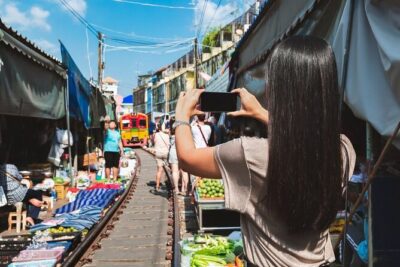
Mae Klong Railway Market (also known as Hoop Rom Market) is one of those places where timing is everything. You’ll be picked up in Bangkok around 6:30–7:00 a.m., then driven to the market for about 30 minutes.
What you’re really here for is watching the train come through the active market tracks. It’s not a staged performance; it’s part of daily life, which is exactly why it grabs your attention. You’ll also have time to taste simple local desserts or fruits and browse what’s for sale right there by the tracks.
The small drawback: the schedule lists admission ticket not included for this stop. That usually means the main experience is covered, but any small add-ons (or anything you choose to buy) won’t be in your pocket. Think of this as a “watch the trains, then graze” stop. If you arrive hungry, you’ll handle the snacks easily; if you’re expecting a lot of formal entry fees, plan for a bit of variability.
Tip: keep your phone ready and your footing stable. The area can be lively, and you’ll want to move with care while you wait for the train.
Damnoen Saduak by long-tail boat: canals first, shopping second
After the railway market, you’ll head to Damnoen Saduak. The tour takes you from the pier onto a private long-tail boat for a canal tour (about 30 minutes), then you’ll get around 1.5 hours to shop and walk around the floating market area.
This order is smart. You see the canals—where the boats actually fit into daily waterway life—before you try to process the more crowded market scene. That makes it easier to understand what you’re seeing. You can also grab snacks like boat noodles if that’s your style, and buy small items if you want souvenirs that feel tied to the place instead of mass-produced.
Here again, the itinerary lists admission ticket not included for this floating market stop. So treat it as an experience where your real costs are whatever you choose to eat or buy. It’s also a good idea to bring a light layer and expect water-heat mix: you’ll be outdoors, and the sun can make the morning feel longer than it is.
If you’re traveling with someone who prefers “see it, then move on,” this stop hits a nice balance: enough time for the canal view and a real walk, not a full-day commitment.
Kanchanaburi WWII memorial stops: somber pacing that still fits the tour
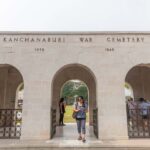
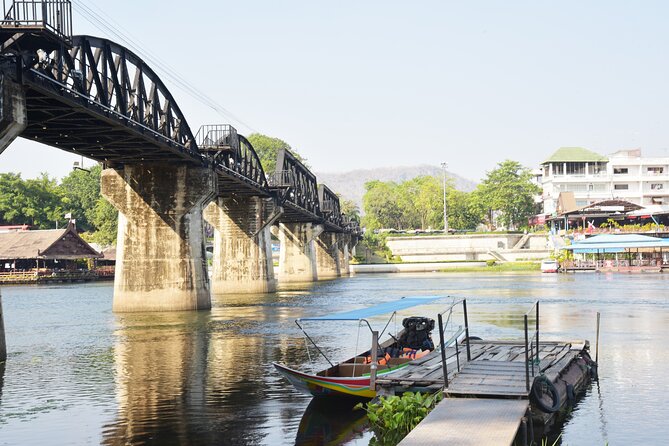
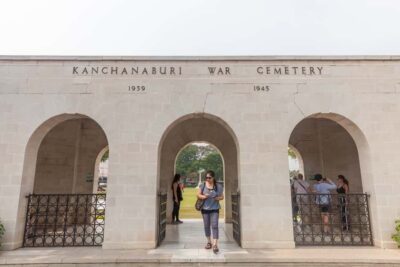
Day 1’s back half shifts into WWII-era sites, and the pacing matters. You’ll visit Kanchanaburi War Cemetery (about 15 minutes) and then spend time at the Bridge over the River Kwai area (about 20 minutes).
These aren’t quick photo stops in spirit. A cemetery like this deserves quiet attention. Even with limited time, you’ll have the chance to read and absorb what’s there rather than just glance and rush.
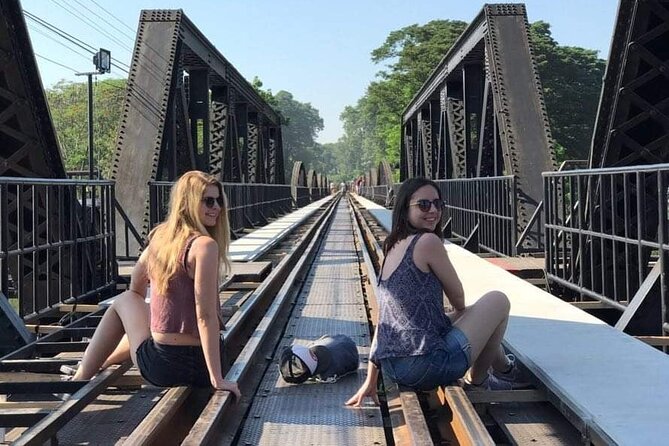
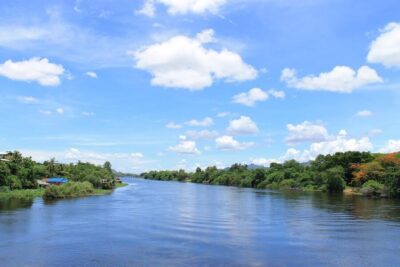
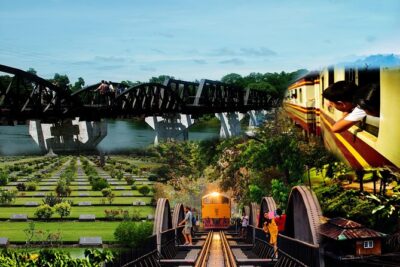
Then you’ll see the bridge itself, connected to the former Thai-Burma Railway. The steel bridge is described as part of the old railway system, tied to prisoner of war construction during World War II. It’s the kind of place where the visuals hit harder when you know the basic context, and having an English-speaking guide helps you place what you’re looking at without turning it into a textbook lecture.
Possible consideration: you’ll likely feel the emotional weight of these stops. That can slow you down, which is why having a private guide who can keep the schedule moving—but not bulldozing your attention—is a real plus.
Out to the River Kwai, more Kanchanaburi trips
Tham Kra Sae Bridge and the local train moment
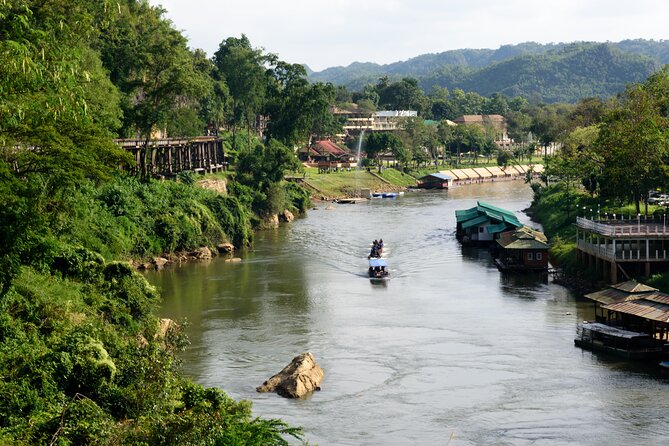
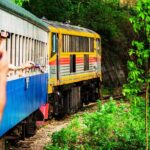
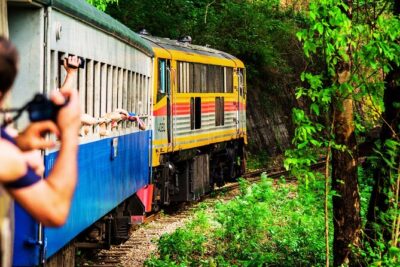
Next is Tham Kra Sae (Krasae Cave), where the tour includes about 50 minutes and an on-board local train segment. The idea here is neat: you’re not only walking and looking, you’re getting a small transportation experience tied to the same railway story.
The day’s design works because this stop “resets” the body a little after the cemetery and bridge. You’re still in the WWII landscape context, but you get a different way of seeing it—moving along, rather than standing still.
This is also one of those spots where having your guide matters. If you want to understand what you’re seeing while you ride, a guide can translate the scene into something meaningful instead of just motion.
If you’re sensitive to crowds, this local train piece can be a calmer break than the market portions earlier in the day, though it will still be a shared public setting.
Erawan Waterfall on Day 2: your two-hour nature reset
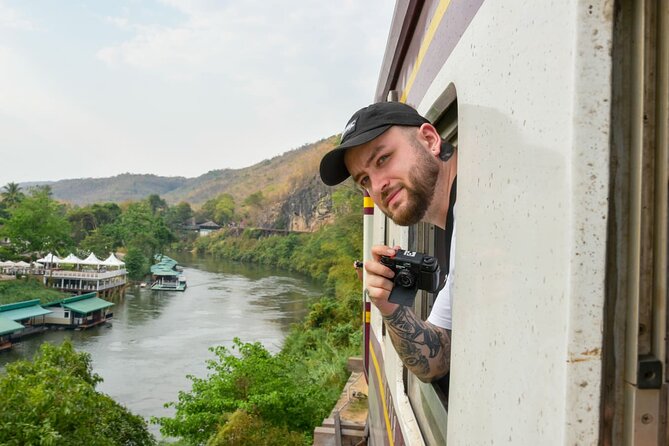
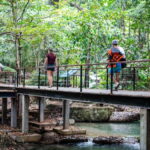
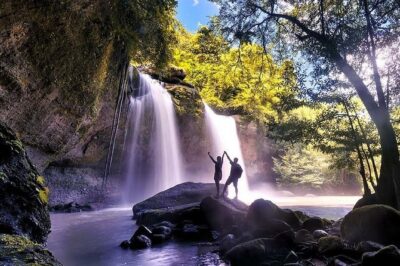
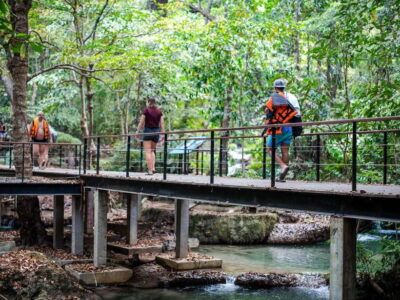
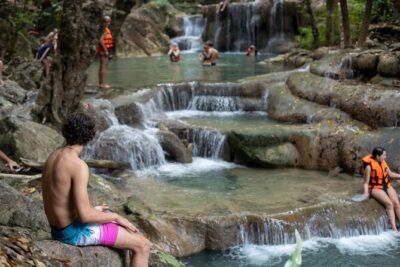
Day 2 begins with pickup from your Kanchanaburi hotel, then transfer to Erawan Waterfall in Erawan National Park. You’ll have about 2 hours and admission included.
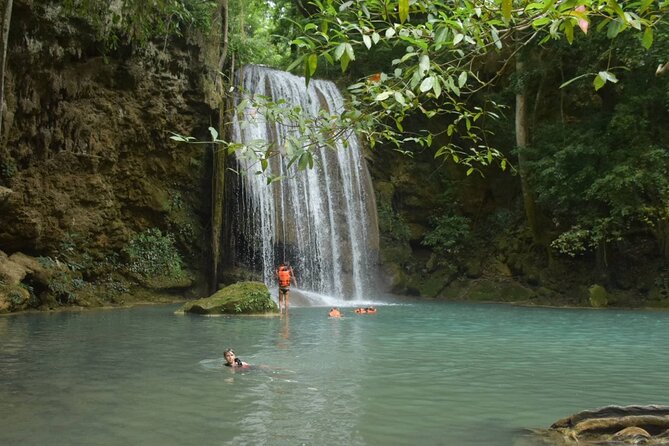
Erawan is the main attraction of the trip for a reason. This is where the tour turns from historic stops into natural scenery. You’ll be able to walk toward the waterfall, take photos, and relax. There’s also an optional trek mentioned in the schedule, so you can choose how much effort you want to spend.
The key thing to plan for is that “2 hours” can feel different depending on your pace and your interest in viewpoints. If you’re the kind of traveler who likes to pause and watch the water and take photos, you’ll still fit in plenty. If you’re more energetic and want the longer trek option, you’ll need to manage energy so you don’t end up rushed at the end.
Practical tip: wear shoes you trust on uneven ground and bring a small dry bag if you’re carrying a camera. It’s a waterfall day—water and humidity are part of the deal.
Wat Tham Sua (Tiger Cave Temple) plus the included Thai lunch
After Erawan, you’ll head to Wat Tham Sua (Tiger Cave Temple). You’ll spend about 1 hour exploring, and the schedule notes admission included.
This temple stop is popular because it includes a famous sitting Buddha image that you can view from the site. The tour’s format gives you time to wander, take in the views, and then settle down for lunch.
That lunch is included: a Thai set lunch at a local restaurant around the temple. I like this kind of inclusion because it removes the “Where do we eat now?” problem when your day is already structured. You don’t have to gamble on a random place, and you get a simple meal timed to keep you moving.
If you’re sensitive to stairs or steep paths, consider your comfort level at temples. The itinerary gives time, but the terrain is still part of the experience.
Logistics and pace: private, but not complicated
The tour is private, so it’s only your group—no mixing with strangers. You’ll also have an English-speaking guide following the itinerary, which helps with both interpretation and timing.
Pickup and drop-off are in Bangkok for Day 1. Day 2 pickup is from your hotel in Kanchanaburi, which is why the overnight matters. If you’re choosing the included hotel option, you’re getting 1 night with breakfast—a smart way to keep travel day friction low.
The itinerary also includes private transportation across the route. That’s part of the value for a multi-stop tour: you’re paying for time saved, comfort maintained, and someone else handling the route.
One more value detail: accident insurance is included. It’s not a guarantee against discomfort, but it’s a useful safety net for an active two-day outing.
And yes, you’ll want to budget for the usual extras not covered: tipping and gratuities aren’t included, and any personal expenses aren’t included. Also, remember those market stops list admission not included, so any small extras are on you.
Price and value: what $517.58 per person is really buying
At $517.58 per person, this is not a budget day-trip. But you’re also not just paying for entry tickets. You’re buying a package of:
- private hotel pickup and drop-off in Bangkok
- multi-day private transportation
- an English-speaking guide throughout
- included admissions where the schedule says they’re included (Erawan and Wat Tham Sua)
- at least one included Thai lunch
- an overnight option (if you select it) with breakfast
A big part of the value is the “connector” work—turning Bangkok, Kanchanaburi, markets, and waterfall time into one coherent plan. If you tried to do it yourself, you’d spend a lot of time on transfers, timing, and figuring out how to combine history sites with nature without wasting half a day.
Also, note the experience price is booked far ahead on average (227 days). High advance demand often signals that people trust the logistics and guide quality. In the reviews linked to this tour, the guide Time is repeatedly praised for care and a fun presence, and drivers named O and Pong are also recognized—those are the kinds of small signals that matter when you’re sitting in a car for long stretches.
Is it worth it? If you want less stress, stronger context at WWII sites, and a well-run two-day flow, it likely feels fair.
Who should book this tour, and who might prefer a different style
This tour is ideal if you want:
- a private plan that blends markets, nature, and WWII-era landmarks
- guided interpretation so you’re not guessing what each site means
- a structured Day 1 and a nature-focused Day 2
- included lunch on Day 2
- the option to include hotel in Kanchanaburi
You might think twice if you hate early mornings or you want zero walking. There’s outdoor time at the markets and waterfall day. Also, if your budget is tight, you’ll want to account for things that are not clearly included at every stop (like admissions listed as not included for the markets, plus snacks, drinks, and tips).
Should you book it? My practical take
I’d recommend booking this if you like a balanced itinerary where the guide helps you connect the dots—train markets in the morning, then meaningful WWII landmarks, then a proper nature reset at Erawan. The private nature of the tour is the deciding factor. When your guide is attentive—like Time is described—and the pace feels comfortable rather than rushed, the whole experience lands better.
If you’re the type who only wants one “big thing,” like purely nature or purely history, you might feel like the itinerary is doing a lot. But if you’re happy with a mix, this is a strong way to cover a lot of ground without improvising your way through it.
FAQ
What time does pickup start in Bangkok?
The meeting start time is listed as 6:30 a.m., and the itinerary also references a 7:00 a.m. pickup for Day 1.
Is this a private tour?
Yes. It’s private, and only your group participates.
How long is the tour?
It runs for about 2 days.
Are admission tickets included?
Erawan Waterfall and Wat Tham Sua are listed as having admission included. The itinerary lists Mae Klong Railway Market and Damnoen Saduak Floating Market as Admission Ticket Not Included, so you may need to cover certain admission-related items depending on what you choose on site.
Is a hotel included in Kanchanaburi?
There is an option to include accommodation for 1 night with breakfast. If you choose to book your own hotel, the accommodation fees in Kanchanaburi are not included.
Does the tour include insurance, and do I need to tip?
Accident insurance is included. Tipping and gratuities for the guide and driver are not included.
More Tour Reviews in Bangkok



Out to the River Kwai
All of Bangkok in One Day


Just In: Fresh Bangkok Reviews

Kanchanaburi & River Kwai, compared.
 ★ 4.5From Bangkok: Erawan Park & Kanchanaburi Small-Group TourFrom $591,582 reviews
 ★ 4.6From Bangkok: Death Railway & Hellfire Pass Tour with LunchFrom $82931 reviews
 ★ 4.6From Bangkok: Historical Day Tour to River KwaiFrom $51868 reviews
 ★ 4.8From Bangkok: Elephant Sanctuary and Kanchanaburi TourFrom $79826 reviews
 ★ 4.9Elephant Sanctuary & Erawan Waterfall TourFrom $181820 reviews
 ★ 4.5Bridge on the River Kwai and Thailand-Burma Railway TourFrom $108658 reviews
 ★ 4.5Erawan Waterfalls and Bridge Over River Kwai Tour from BangkokFrom $56372 reviews
 ★ 4.5Bridge on the River Kwai and Thailand-Burma Railway Guided TourFrom $94353 reviews
Browse the lists this tour appears in