
Review · BANGKOK FOOD & STREET EATS
Thai Bus Food Tour Experience in Bangkok
If you want Bangkok to hit you all at once, this is a fun way in. A Thai Bus Food Tour turns a classic sightseeing loop into a 90-minute Thai food experience on a luxury double-decker dining bus, cruising around historic Rattanakosin Island with big, panoramic windows.
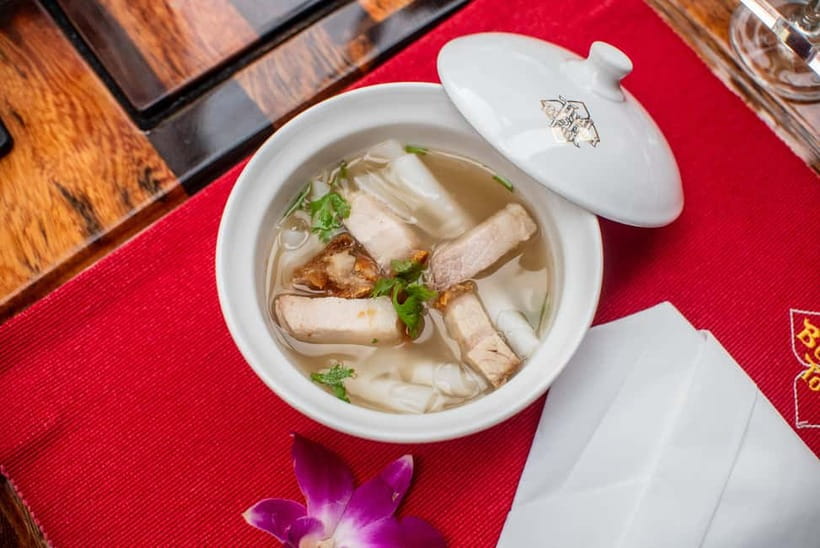
I really like two parts of the idea: the combo of panoramic city views while you eat, and the fact that the menu is built around Michelin-recognized Thai cuisine rather than generic tour food. The service setup also feels more “done for you” than DIY, with a full-course meal and a welcome drink.
One thing to consider: the route includes the old-city core and Chinatown-area driving, and depending on traffic, you may feel some repetition in the motion. Also, at $47 per person, make sure your expectations match what’s included for your chosen time slot (lunch, afternoon tea, dinner, or night).
In This Review
- Key things I’d mark on your mental map
- Riding Rattanakosin Island: what the 90 minutes actually feels like
- The meal part: Michelin-recognized Thai menus served on a sightseeing bus
- The route rundown: 20+ landmarks you see from the bus windows
- Hua Lamphong Railway Station area
- Wat Traimit
- Chinatown Gate and Chinatown
- Maen Sri Waterworks
- Wat Saket Temple
- Loha Prasat
- Democracy Monument
- Wat Bawon Niwet
- Phra Sumen Fort
- National Museum and Sanam Luang
- Grand Palace Bangkok and Wat Phra Kaew
- Wat Pho
- Wat Arun across the river (often in the glow)
- Ministry of Defence
- Wat Suthat and the Giant Swing
- Wat Mangkon Kamalawat
- Back to the meeting point
- Onboard comfort: WiFi, USB charging, and the small things that save your day
- Choosing lunch vs afternoon tea vs dinner vs night tour
- Value check: is $47 per person worth it?
- Who this tour suits best (and who should rethink it)
- Should you book the Thai Bus Food Tour?
- FAQ
- How long is the Thai Bus Food Tour in Bangkok?
- How much does it cost?
- What food options are available during the tour?
- Are vegetarian or halal menus available?
- Is there an onboard restroom and WiFi?
- Where does the tour start, and do they include hotel pickup?
- What’s the age suitability for kids?
Key things I’d mark on your mental map
- Panoramic double-decker windows so you can actually see the monuments while eating
- Full-course meal (with a welcome drink and beverages) built into the sightseeing time
- Four menu options: lunch, afternoon tea, dinner, or night, each tied to Michelin-recognized selections
- Big landmark count as you pass 20+ sights around Rattanakosin Island
- Practical onboard extras like a restroom, WiFi, and USB charging
- Dietary options like vegetarian and halal menus depending on what you select
Riding Rattanakosin Island: what the 90 minutes actually feels like
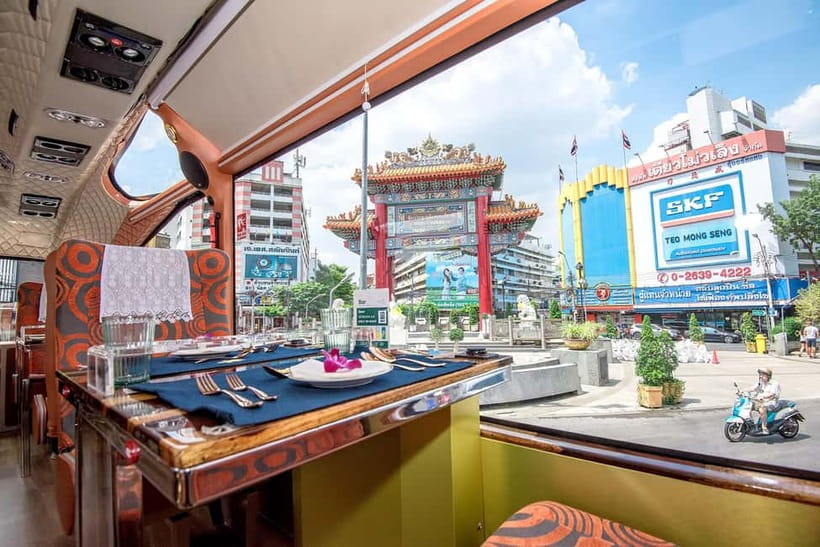
This tour is designed for people who don’t want to choose between eating well and seeing the city. You get both, but with a specific trade-off: you’re watching Bangkok from a moving, panoramic viewpoint, not hopping out to linger at each site.
That’s why the timing matters. At 90 minutes, the bus gives you a fast “recognition tour” of Bangkok’s historic skyline—palaces, temples, forts, memorials, and river views—so you can decide what’s worth a longer stop later.
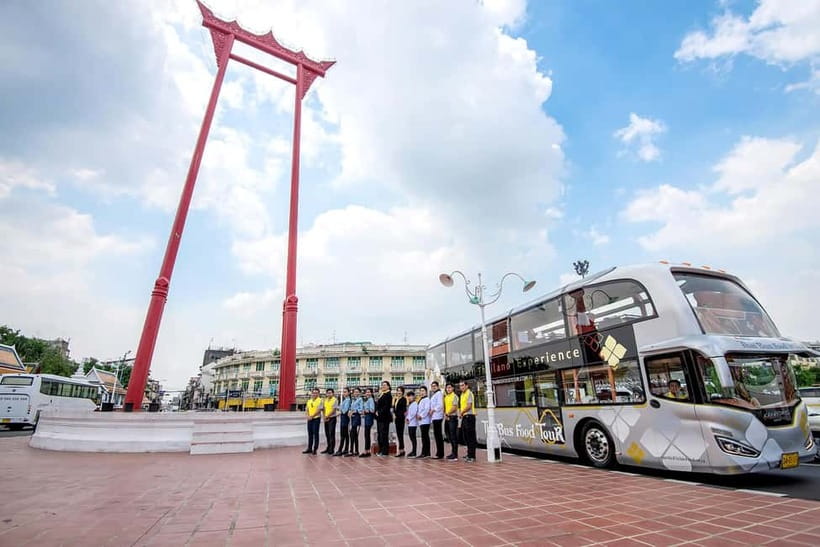
The bus itself is a key part of the experience. It’s a double-decker sightseeing bus, and the whole point is visibility: you’re up high enough to see over streets and rooftops, and you’re protected from the worst of the sun and drizzle. There’s also an onboard restroom, which sounds small until you’re stuck in Bangkok traffic and realize how much you appreciate having it.
Still hungry? More woks, stalls and night-market plates
- Bangkok: Backstreets Food Tour with 15+ Tastings
★ 4.9 · 2,880 reviews - Bangkok: Midnight Food Tour by Tuk-Tuk
★ 4.9 · 2,054 reviews - Bangkok Backstreets Food Tour with 15+ Tastings
★ 5.0 · 1,926 reviews
The meal part: Michelin-recognized Thai menus served on a sightseeing bus
Let’s talk about what you’re eating and why it matters. This is not a snack tour. Most options include a welcome drink and a full sequence—appetizers, main courses, dessert, and beverages.
The important detail for planning is that the menu is tied to your selected service time:
- Lunch
- Afternoon tea
- Dinner
- Night tour
So the food and the vibe are matched to the time of day, not just thrown in. You’ll also want to know menus rotate seasonally and may change based on ingredient availability, which is common in Thai kitchens. Translation: don’t build your day around one exact dish you saw online—arrive open, because you’ll still be eating Michelin-recognized Thai cuisine.
If you’re traveling with dietary needs, you’re not stuck. Vegetarian and halal options are available depending on the selected option, and there are kids’ menus too. The key is to confirm the right menu during booking so the kitchen preps for your group.
Also, you’ll have professional service onboard. That matters because you’re mixing dining with sightseeing. You’re not juggling directions while trying to eat; you can focus on the moment and let the crew handle the flow.
The route rundown: 20+ landmarks you see from the bus windows
You’ll start at the Thai Bus Food Tour meeting point, then roll through central Bangkok’s classic sights on historic Rattanakosin Island. Here’s what each stop is like in real life—what to look for, and what’s worth remembering.
Hua Lamphong Railway Station area
You pass Hua Lamphong Railway Station, and it’s a strong “Bangkok intro” landmark. Even from the road, it gives you that big-city backbone feeling before the tour shifts into temples and old streets.
More plates and glasses worth the trip
Wat Traimit
This stop is a reminder that Bangkok’s skyline is layered. You’ll see the temple presence early, and it helps you orient fast when later stops stack up into the Grand Palace zone.
Chinatown Gate and Chinatown
You’ll pass the Chinatown Gate and then through Chinatown. This is one of the most visually loud parts of the route—signs, shopfronts, food vibes, and dense city energy.
A consideration: because Chinatown is a major traffic knot, the bus may feel like it’s repositioning or looping depending on conditions. If you dislike repeat driving, keep that in mind.
Maen Sri Waterworks
This is less famous than the palaces, which is exactly why it can be interesting. It’s a reminder that Bangkok isn’t only temples and tourism postcards; it also has infrastructure landmarks that shaped city life.
Wat Saket Temple
Wat Saket is a strong silhouette when you catch it between streets. From the bus, it’s more about identifying the landmark than getting a close-up photo, but that’s still useful if you plan to return later.
Loha Prasat
Loha Prasat (the “Metal Castle”) is easy to spot because the structure looks distinctive against the skyline. From the bus, focus on the shape and vertical lines—then remember it later when you’re sorting temple architecture styles.
Democracy Monument
You pass Democracy Monument, a central civic anchor. It gives you a contrast: temple complexity versus political-era geometry. It’s also a helpful orientation point as the tour heads toward the palace and temple core.
Wat Bawon Niwet
Another stop that’s more “architecture and atmosphere” than a quick selfie stop. You’ll get a sense of the neighborhood texture around religious landmarks without being stuck in the crowds on foot.
Phra Sumen Fort
Phra Sumen Fort adds military history to the visual mix. Again, you won’t be stepping inside, but you’ll get that sense of city walls and strategic positioning that Bangkok’s riverside core once relied on.
National Museum and Sanam Luang
You pass the National Museum and then Sanam Luang, which feels like an open-sky pause between more tightly packed sights. From the bus, it helps break up the density of the tour and gives your eyes a rest.
Grand Palace Bangkok and Wat Phra Kaew
These are the big hitters. You’ll pass the Grand Palace and Wat Phra Kaew and it’s hard not to feel the scale even from the road.
The value here is recognition. Seeing the cluster from the bus makes it easier to understand where you might want to spend a few hours on a separate day if you love detail—buildings, courtyards, and ornate temple design.
A practical note: because you’re viewing from windows, you might not catch every angle perfectly. That’s normal. This tour’s job is to introduce you so you know what to chase on foot later.
Wat Pho
Wat Pho comes next. This area is famous for its size and temple complex. From the bus, you can pick up the general layout and the “presence” of the site, which is still useful even if you’re not stopping.
Wat Arun across the river (often in the glow)
You’ll pass Wat Arun, and this is one of the most atmospheric sights on this kind of route. Depending on your time slot—especially a dinner or night option—you may see the riverside temple in evening light, with illuminated views across the water.
Even when it’s not fully nighttime glow, Wat Arun reads clearly because of its distinctive shape.
Ministry of Defence
Passing the Ministry of Defence is one of those quiet Bangkok moments. It’s not scenic in the romantic sense, but it’s a reminder that the royal-religious zone sits inside a real working capital—government offices included.
Wat Suthat and the Giant Swing
Wat Suthat and the Giant Swing area is one of the most memorable skyline anchors of the tour. Even from the bus, the Giant Swing’s scale makes it easy to picture when you’re out in the street later.
Wat Mangkon Kamalawat
You’ll also pass Wat Mangkon Kamalawat, another notable temple stop that rounds out the religious landscape you’re seeing around the old-city core.
Back to the meeting point
At the end, you roll back to the Thai Bus Food Tour location. You should finish feeling like you learned the city’s “main shapes,” not like you covered every detail.
Onboard comfort: WiFi, USB charging, and the small things that save your day
The tour includes an onboard restroom, USB charging ports, and WiFi. That’s a surprisingly big deal on a short, timeboxed outing because it helps you avoid the classic Bangkok problem: you start the afternoon fine, then something small becomes a hassle.
WiFi also helps if you’re navigating afterward, checking opening hours, or quickly mapping where you want to go next. USB charging keeps your phone alive, which matters when you’re using maps to line up return visits to the Grand Palace, Wat Pho, or Wat Arun.
The professional guide plus crew combo is another practical win. You get explanations while you ride, and the food timing doesn’t feel like it’s happening randomly during sightseeing.
Choosing lunch vs afternoon tea vs dinner vs night tour
The four options change the mood more than you might expect.
- Lunch tends to feel like a first-day orientation. You get the sights in daylight and the meal helps you reset your energy before you continue exploring.
- Afternoon tea can be a comfortable middle ground if you want something lighter in spirit but still full-course Thai flavors.
- Dinner shifts the city feel as the streets cool down. You’ll still see the central sights, but the light changes your perception.
- Night tour is where Wat Arun’s illuminated river atmosphere becomes more relevant. If you like night views and you want Bangkok to look more dramatic, this is the slot that fits best.
If you hate slow mornings, lunch might be ideal. If you want photos with softer lighting, dinner or night usually wins.
Value check: is $47 per person worth it?
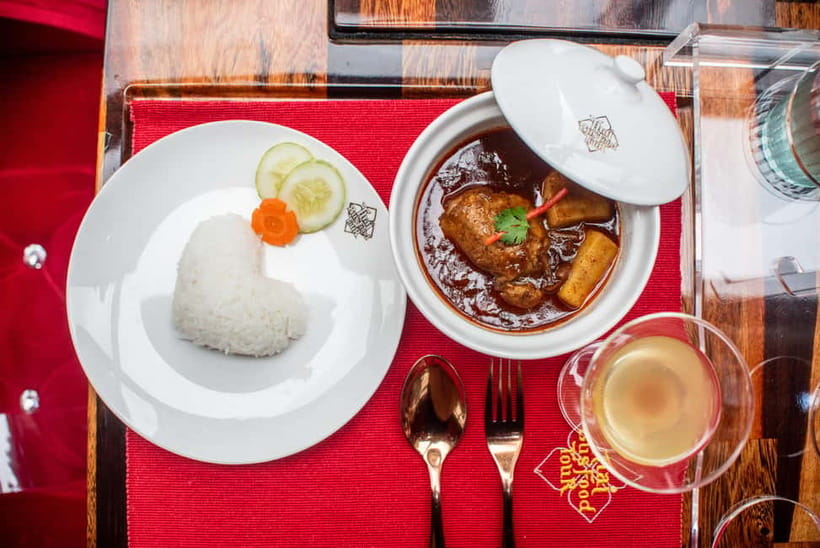
At $47 per person for 90 minutes, you’re paying for a bundled experience: sightseeing on a double-decker bus plus a full-course Michelin-recognized Thai menu, with drinks and service onboard.
What makes the value argument stronger is that you’re not just buying food or just buying a ride. You’re buying:
- a curated route through a high-density landmark area,
- professional guidance while you’re in motion,
- and onboard convenience (restroom, WiFi, charging).
Where value can wobble is if you want long, in-depth time at each monument. This tour doesn’t replace guided temple exploration on foot. Think of it as the fastest way to get oriented, then deepen what you love later.
One more value tip: because the tour price is shown as per person, I’d double-check the booking details at checkout to make sure it matches your group setup and menu selection. It’s a quick sanity check that can prevent disappointment.
Who this tour suits best (and who should rethink it)
This works well for:
- first-time visitors who want a hit of Bangkok landmarks plus a proper meal,
- people who prefer the comfort of staying seated while still seeing a lot,
- travelers who like the structure of a guided experience but still want freedom afterward.
It may not be perfect if:
- you want to get off the bus often and spend lots of time inside attractions,
- you’re extremely sensitive to repeat-route feeling in a traffic-heavy zone like Chinatown,
- you’re expecting food to feel like a full fine-dining restaurant experience from start to finish. The meal is meant to be excellent and service-focused, but the setting is still a moving bus.
Should you book the Thai Bus Food Tour?
I’d book it if you want an efficient, well-fed introduction to Bangkok’s old-city landmarks, with panoramic views and Michelin-recognized Thai food built into the schedule. The onboard extras and the guided commentary make it feel more “planned” than a random half-day.
Hold off (or compare options) if your top priority is extreme flexibility to linger at sites, or if you’re worried about route repetition in Chinatown-area driving. In those cases, you might prefer a temple-focused day plan and pay separately for meals you pick yourself.
If you do book, choose the time slot that matches your mood—lunch for orientation, dinner or night for atmosphere—and make your dietary needs clear so you get the menu that fits your group.
FAQ
How long is the Thai Bus Food Tour in Bangkok?
The tour lasts 90 minutes.
How much does it cost?
The price is listed as $47 per person.
What food options are available during the tour?
You can choose from lunch, afternoon tea, dinner, or night tour options, each with its exclusive Michelin-recognized menu.
Are vegetarian or halal menus available?
Yes. Vegetarian and halal menus are available depending on the selected option.
Is there an onboard restroom and WiFi?
Yes. There is an onboard restroom, plus WiFi and USB charging ports.
Where does the tour start, and do they include hotel pickup?
The tour starts at the Thai Bus Food Tour meeting point, and hotel pickup and drop-off are not included.
What’s the age suitability for kids?
Children under 3 years are not suitable. Children aged 3–8 are charged at the kids’ menu rate, and children aged 9+ are charged the same rate as adults.
More Tours in Bangkok

More Tour Reviews in Bangkok


Eat Bangkok: More Street Food

Just In: Fresh Bangkok Reviews

Bangkok Food & Street Eats, compared.
 ★ 4.9Backstreets Food Tour with 15+ TastingsFrom $622,880 reviews
 ★ 4.9Midnight Food Tour by Tuk-TukFrom $742,054 reviews
★ 5.0Bangkok Backstreets Food Tour with 15+ TastingsFrom $591,926 reviews
★ 4.9Midnight Food Tour by Tuk-TukFrom $742,054 reviews
★ 5.0Bangkok Backstreets Food Tour with 15+ TastingsFrom $591,926 reviews
 ★ 4.4Michelin Guide Street Food Tour by Tuk TukFrom $201,274 reviews
 ★ 5.0Old Siam Bangkok Food Tour with 15+ TastingsFrom $59867 reviews
 ★ 4.9Bangkok Authentic Tasting Thai-Chinatown Walking Food TourFrom $43852 reviews
 ★ 4.3Tuk Tuk Adventure Chinatown Michelin Food & TemplesFrom $18725 reviews
 ★ 5.0Bangkok Tuk-Tuk Tour by Night with Chinatown Street Food MealFrom $40635 reviews
Browse the lists this tour appears in