
Review · KANCHANABURI & RIVER KWAI
The Erawan Museum: A Cultural Treasure in Bangkok
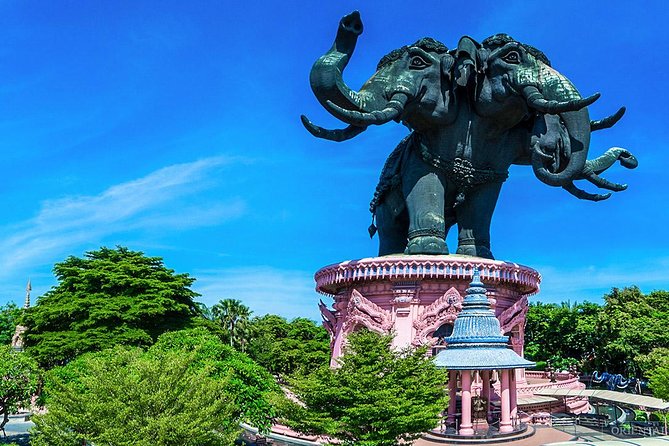
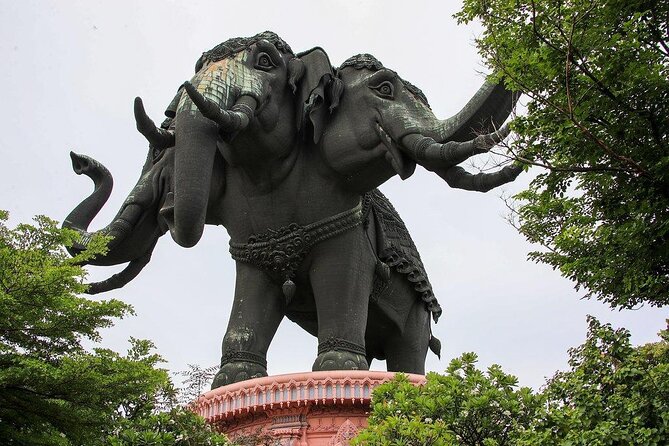
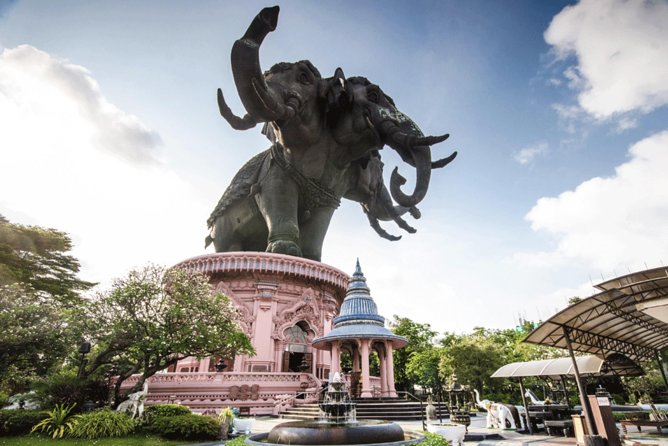
A three-headed elephant stops you in your tracks. The Erawan Museum turns Thai myth and Buddhist symbolism into one massive, photo-dominating structure with a towering elephant on top and serious craftsmanship inside.
I like how the visit is practical and paced. You get a three-level layout that maps the underworld, earth, and heaven, plus an audio guide designed for a short, focused visit. One thing to plan for: the museum can feel crowded at peak times, and that can make photos tricky.
In This Review
- Key points before you go
- Why the Erawan Museum feels like Thai myth in concrete
- The three levels: underworld, earth, heaven
- The elephant-scale design and the staircase you’ll notice
- Gardens and the calm you get around the museum
- Audio guide pacing: how to keep it to about 30 minutes
- Included extras: entry plus audio guide and ritual items
- Price and value: what $16.21 buys you
- Getting there the easy way: BTS plus a short walk
- When to go: opening hours and timing your visit
- Photo tips and crowd reality
- Who this fits best (and who might not love it)
- Should you book this Erawan Museum ticket?
- FAQ
- FAQ
- How long should I plan to spend at the Erawan Museum?
- Where is the Erawan Museum located?
- What is the price per person?
- What time is the museum open?
- Is the ticket mobile?
- What does the ticket include?
- Which audio guide languages are available?
- Do I need to arrange transportation to the museum?
- Is the museum near public transportation?
- Can I change or cancel after booking?
Key points before you go
- BTS to Chang Erawan Station, then a 5–10 minute walk to save you from Bangkok traffic
- Three-headed elephant statue you’ll need to see in person to understand the scale
- Three floors (underworld, earth, heaven) with art and religious relics
- Gardens with model elephants that make the grounds feel calmer than the city
- Audio guide helps you stay on track (about 30 minutes is suggested)
- You get flowers, incense sticks, and lotus for water floating as part of the experience
Why the Erawan Museum feels like Thai myth in concrete
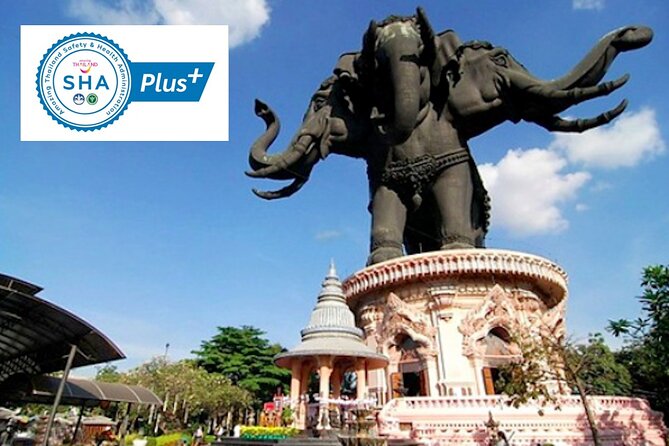
The Erawan Museum isn’t trying to be subtle. It’s built like a giant statement piece, capped by a three-headed elephant statue that dominates the whole look of the place. If you’ve seen photos before, you’ll still be surprised—one reviewer nailed it: a picture won’t show the sheer size. When you arrive, it hits you from multiple angles, and the “this is bigger than I expected” factor is real.
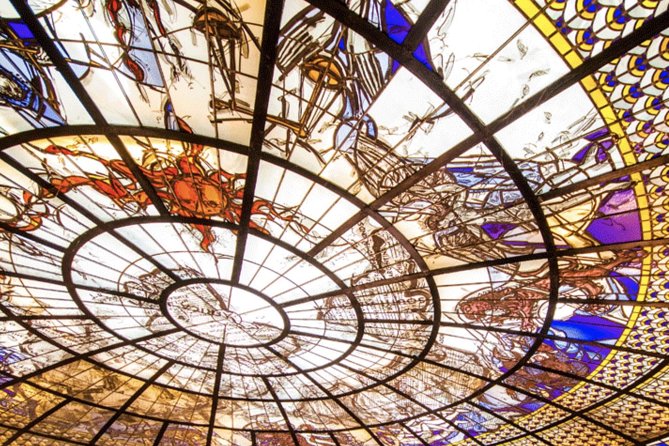
Inside, the museum continues that same logic: it’s not just artifacts behind glass. The building itself is part of the storytelling, with intricate decoration and a clear sense of religious and cultural symbolism. That matters, because it changes the experience from I’m passing through a building to I’m walking through a visual explanation.
And you don’t have to block out half a day. Even with an audio guide, it’s easy to keep it to a short visit—roughly 30 minutes is suggested.
Out to the River Kwai, more Kanchanaburi trips
- From Bangkok: Erawan Park & Kanchanaburi Small-Group Tour
★ 4.5 · 1,582 reviews - From Bangkok: Death Railway & Hellfire Pass Tour with Lunch
★ 4.6 · 931 reviews - From Bangkok: Historical Day Tour to River Kwai
★ 4.6 · 868 reviews
The three levels: underworld, earth, heaven
The biggest “wow” factor isn’t only the elephant. It’s the way the museum organizes meaning. The interior is laid out in three levels that represent:
- the underworld
- earth
- heaven
That structure gives you a natural route. You’re not wandering aimlessly; you’re moving through a framework. Each level is decorated with intricate artwork and includes religious relics and revered Buddhist statues.
What makes this especially useful for visitors is that the museum gives you a shortcut to understanding. Without needing deep background knowledge, you can treat it like a guided reading experience—walk, look, listen, then move on. The audio guide in multiple languages supports that.
If you’re the type who likes museums but gets bored when you’re “staring at objects,” this layout helps you feel like you’re following a story.
The elephant-scale design and the staircase you’ll notice

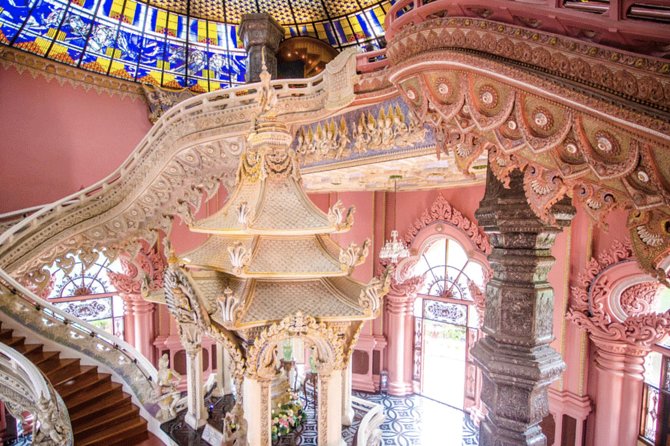
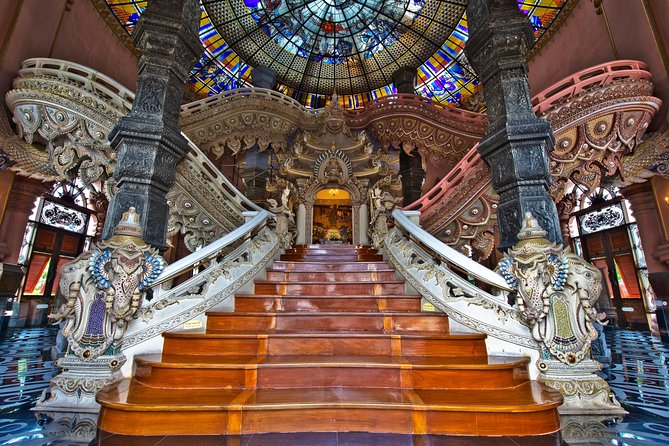
One of the most praised parts is the building’s design, especially the staircase. It’s not just functional. The staircase becomes an attraction in its own right—something you pause for, then come back to, because it looks great and it also helps you move between levels.
This is one of those spots where the museum design does two jobs:
- It helps you navigate.
- It turns movement into a viewing moment.
If you like architecture and photo composition, this is where you’ll get your best “I came here for this” energy. Even if you keep your visit short, you’ll still hit the key visual moments: elephant top, main interior grandeur, and the climb where the museum’s scale becomes obvious.
Gardens and the calm you get around the museum
Outside the main structure, the museum grounds are part of the appeal. The setting includes lush surrounding gardens and model elephants, so you’re not trapped indoors in Bangkok heat.
This works well in two ways:
- It gives you a breathing space after you’ve absorbed the religious symbolism inside.
- It adds variety to the photos. You’re not only shooting architecture; you’re shooting mini-elephant scenes and ornamental details around the grounds.
If you’re visiting at a time when the museum interior feels busy, stepping into the gardens can help you reset your eyes and your pace. You’ll also find the overall atmosphere a bit less frantic than a typical city stop.
More halls worth the ticket



Audio guide pacing: how to keep it to about 30 minutes
Here’s where the experience becomes very visitor-friendly. An audio guide is available in multiple languages, including English, Chinese, Russian, Thai, and Korean. The recommended time spent here is around 30 minutes with the guide.
On a practical level, that means you can do this even on a busy day:
- You won’t feel forced to stay for hours.
- You can keep your visit aligned with your energy level and daylight schedule.
If you want more time, you can stay longer, but you’ll get the core experience quickly—elephant exterior, major interior symbolism, and enough of the decor to feel you understood the “what this place is trying to do.”
Included extras: entry plus audio guide and ritual items
This ticket includes what you actually need on arrival:
- Entry ticket to the Erawan Museum (foreigners only)
- Audio guide device service (listed for English and Chinese)
- Flower, incense sticks, and lotus for floating in water
That last part is worth noting. You’re given the items for a water-floating moment, which adds a participatory element instead of pure sightseeing. It’s also a nice way to slow down and take part in the site’s spirit, even if you’re not following every detail like a local would.
If you’re thinking, “I just want the main attraction,” you still get that. If you’re thinking, “I want the full experience,” these included items help you do that without hunting for extras at the last second.
Price and value: what $16.21 buys you
The price shown is $16.21 per person, and it’s commonly booked about 19 days in advance on average.
Is it worth it? In most cases, yes—mainly because you’re not only paying for entry. You’re getting:
- the museum admission you need (foreigners only)
- an audio guide device service
- the ritual materials (flowers, incense sticks, lotus)
One useful detail from the operator’s own comparison: the ticket is described as 40% cheaper than gate prices, which is a meaningful difference if you would have paid on-site anyway. So you’re paying to remove friction: less time figuring out options, and a smoother experience from the start.
If your goal is purely “see one big elephant statue and leave,” you may feel the museum could be shorter than you want. But if you like architecture plus symbolism, this price lands in the sensible middle.
Getting there the easy way: BTS plus a short walk
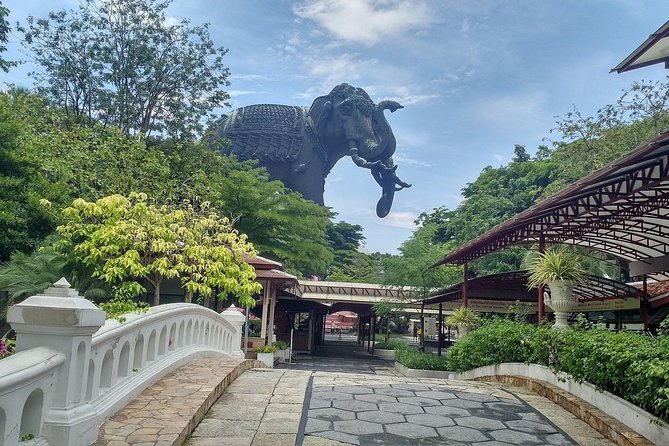
Even though the museum sits in Samut Prakan Province, it’s not hard to reach. The simplest approach is to use the BTS.
- Take the BTS Skytrain to Chang Erawan Station
- Then walk about 5–10 minutes from there
This matters because traffic in Bangkok can slow you down fast—especially if you’re pairing the visit with other stops. Using the train also keeps your schedule steadier. The museum is also described as near public transportation, which is exactly what you want for a low-stress day.
When to go: opening hours and timing your visit
The museum is open daily from 9:00 AM to 7:00 PM.
If you’re trying to build a visit into your day, think about light and crowd levels. The interior and staircase are visually interesting across the day, but your comfort can depend on how busy it feels. One review pointed out that staying late works well since it’s open until 19:00, and that an afternoon/evening window can feel like a good slot for seeing something beautiful.
Duration-wise, your time can vary a lot—from a short stop of about 30 minutes to longer roaming (the listed range goes from 30 minutes to up to 10 hours). In practice, if you use the audio guide as intended, you’ll likely feel done in roughly half an hour to under an hour, depending on how often you stop for photos.
Photo tips and crowd reality
The museum is popular, and you may see tour groups. One caution from feedback: when big bus groups show up, taking clear photos can be difficult. If photos matter a lot to you, do this smart:
- arrive with patience, not expectations of empty aisles
- prioritize the exterior elephant moment early or later, when you can find less-blocked angles
- give yourself a few minutes to reposition before you snap your “I’m here” shots
Crowds don’t ruin the experience. They just affect how quickly you move and how often you can frame clean pictures.
Who this fits best (and who might not love it)
I think the Erawan Museum is a strong fit for:
- people who like architecture with a story
- visitors who want religious art and symbolism explained through an audio guide
- anyone who wants a half-hour-to-one-hour cultural stop near Bangkok
It may not be ideal if:
- you dislike any crowd at all and plan your day like a museum librarian
- you only want “outdoor Bangkok sights” and aren’t interested in interior religious art
- you expect a traditional museum layout with lots of quiet galleries (this is more like a designed experience with strong visual moments)
Should you book this Erawan Museum ticket?
If you want a short, memorable cultural stop that’s easy to reach by BTS and you’re interested in Thai Buddhist art presented in a dramatic building, I’d book it. For the price, the included audio guide plus the ritual items make it more than just entry.
I’d skip or reconsider if you only have a tight schedule and you hate crowds so much that even mild bus-group pressure would stress you out. But if you can handle a bit of bustle and you enjoy looking closely, this is one of those places you’ll remember long after you’ve left the grounds.
FAQ
FAQ
How long should I plan to spend at the Erawan Museum?
The suggested time spent here is about 30 minutes when using the audio guide.
Where is the Erawan Museum located?
It’s in Samut Prakan Province, near Bangkok.
What is the price per person?
The price is $16.21 per person.
What time is the museum open?
The museum is open every day from 9:00 AM to 7:00 PM.
Is the ticket mobile?
Yes, the experience uses a mobile ticket.
What does the ticket include?
It includes the entry ticket (foreigners only), audio guide device service, and flower, incense sticks, and lotus for floating in water.
Which audio guide languages are available?
The audio guide is available in English, Chinese, Russian, Thai, and Korean.
Do I need to arrange transportation to the museum?
No transportation is included. You’ll need to get there on your own.
Is the museum near public transportation?
Yes. It’s near public transportation, and you can reach it via BTS Skytrain to Chang Erawan Station followed by a short walk.
Can I change or cancel after booking?
This experience is non-refundable and cannot be changed for any reason.
Indoors Done Well: Bangkok Museums

More Tour Reviews in Bangkok





Out to the River Kwai






Just In: Fresh Bangkok Reviews




Kanchanaburi & River Kwai, compared.
 ★ 4.5From Bangkok: Erawan Park & Kanchanaburi Small-Group TourFrom $591,582 reviews
 ★ 4.6From Bangkok: Death Railway & Hellfire Pass Tour with LunchFrom $82931 reviews
 ★ 4.6From Bangkok: Historical Day Tour to River KwaiFrom $51868 reviews
 ★ 4.8From Bangkok: Elephant Sanctuary and Kanchanaburi TourFrom $79826 reviews
 ★ 4.9Elephant Sanctuary & Erawan Waterfall TourFrom $181820 reviews
 ★ 4.5Bridge on the River Kwai and Thailand-Burma Railway TourFrom $108658 reviews
 ★ 4.5Erawan Waterfalls and Bridge Over River Kwai Tour from BangkokFrom $56372 reviews
 ★ 4.5Bridge on the River Kwai and Thailand-Burma Railway Guided TourFrom $94353 reviews
Browse the lists this tour appears in