
Review · BANGKOK FOOD & STREET EATS
Bangkok: Chinatown Food Tour with Michelin Food Stalls
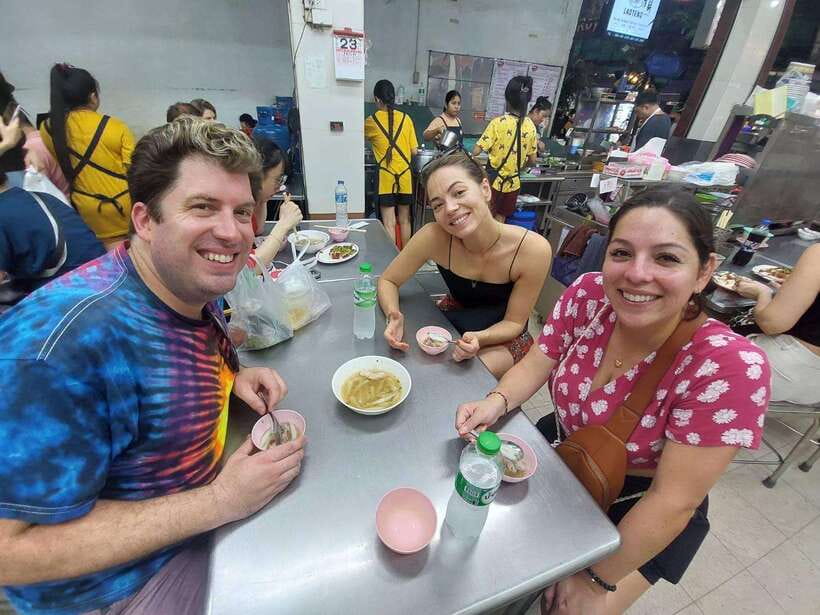
Chinatown smells like dinner and stories. In just 3 hours, you walk the Yaowarat streets with a guide and hit 10+ tastings plus a stop at a Michelin-recognised stall. It’s a focused way to experience Bangkok’s Thai-Chinese food culture without guessing where to go.
I especially like the structure: you don’t just eat, you also get the why behind the flavors, including the influence of Chinese immigrants on what Bangkok serves today. I also like the small group size (max 8), which keeps the evening from feeling like a race through a crowd.
One thing to consider: you eat a lot and you’ll walk a moderate distance, so it’s not the best choice if you’re not up for street-level crowds. Also, it’s not suitable for vegans or vegetarians, and wheelchair users won’t be able to join.
In This Review
- Key things I’d prioritize before you book
- Yaowarat at night: why this 3-hour walk is such a good format
- Start at Wat Mangkon Kamalawat (Wat Leng Noei Yi): food comes with context
- Your 10+ tastings of Thai-Chinese street food: what you’ll actually eat
- The Michelin-recognised stall stop: the point isn’t fancy, it’s proof
- How guides shape the experience: names like Peak, Eve, Na, Sunday, and K
- The walking route and timing: from Wat Leng Noei Yi to Chinatown Gate
- Sweet ending with Chinese desserts and tea
- Price and value: why $36 feels fair for what you get
- Who this tour is for, and who should skip it
- Quick practical tips so your evening stays fun
- Should you book this Bangkok Chinatown Michelin Food Tour?
- FAQ
- What is the duration of the Bangkok Chinatown Food Tour
- How many tastings should I expect
- Where does the tour start and end
- Is the guide English-speaking
- Does the tour include a Michelin-recognised food stall
- Can dietary restrictions be accommodated
- What should I bring or wear
Key things I’d prioritize before you book
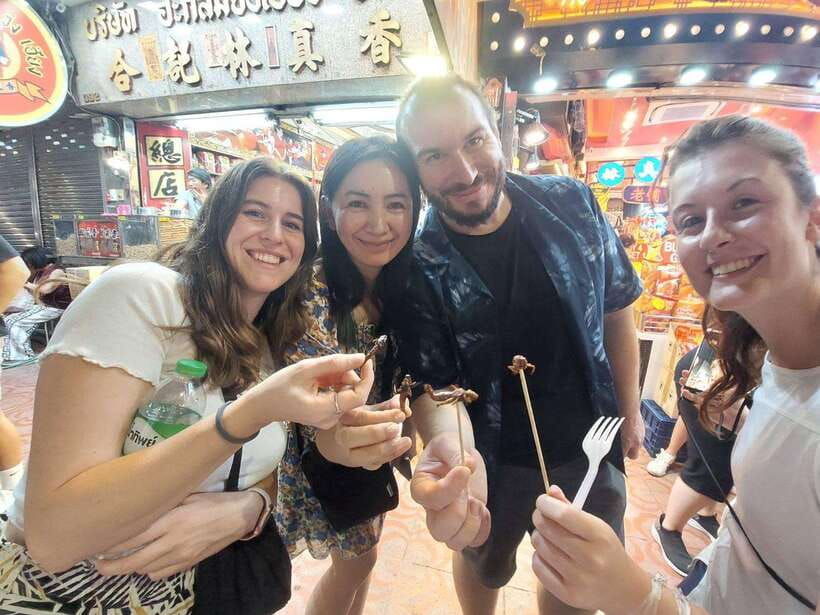
- 10+ tastings in 3 hours so you leave full, not just curious.
- A Michelin-recognised stall that still feels like real street food, not a formal sit-down meal.
- Small group up to 8 for easier pacing and better attention from your guide.
- Wat Mangkon Kamalawat (Wat Leng Noei Yi) to Chinatown Gate for a clean, logical route.
- English-speaking guides who explain dishes and keep you together in busy alleys.
- Dietary notes handled with advance notice, but vegans and vegetarians can’t be accommodated.
Yaowarat at night: why this 3-hour walk is such a good format
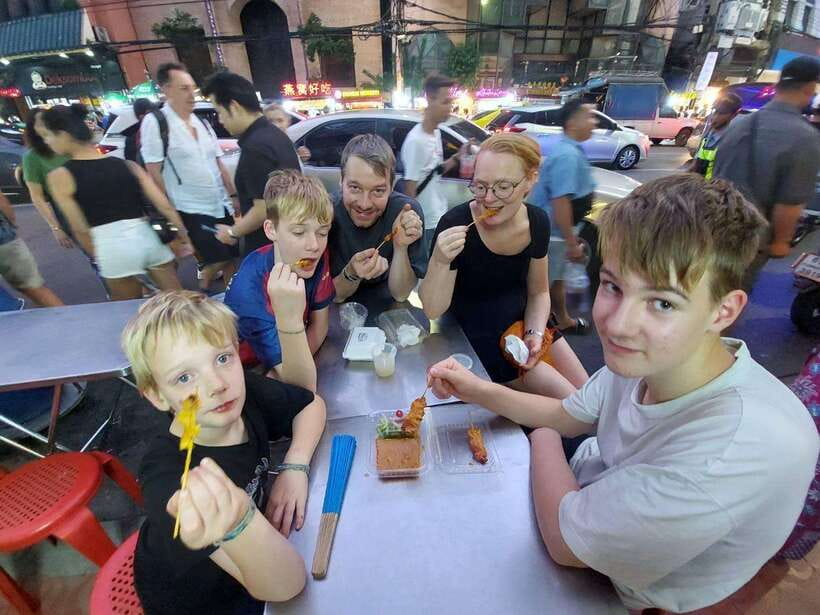
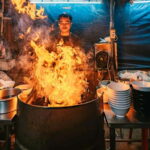
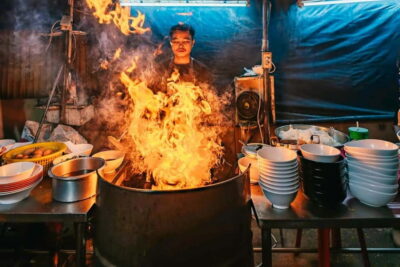
Yaowarat is one of Bangkok’s most intense food zones, and nighttime makes it even more alive. You get the best part of the chaos—neon signs, sizzling pans, people eating as they walk—while still having a plan that prevents you from wasting time wandering.
This tour runs for about 3 hours, which hits a sweet spot. Long enough to try many dishes, short enough that you’re not stuck in the evening for half a day. And with a small group of up to 8, you can actually hear the guide’s explanations instead of shouting over the crowd.
Practical note: you should expect moderate walking. I’d wear comfortable shoes and keep your camera ready, because you’ll be taking photos in tight spaces and near busy storefronts. Bottled water is included, which helps when the food heat starts building up.
Still hungry? More woks, stalls and night-market plates
- Bangkok: Backstreets Food Tour with 15+ Tastings
★ 4.9 · 2,880 reviews - Bangkok: Midnight Food Tour by Tuk-Tuk
★ 4.9 · 2,054 reviews - Bangkok Backstreets Food Tour with 15+ Tastings
★ 5.0 · 1,926 reviews
Start at Wat Mangkon Kamalawat (Wat Leng Noei Yi): food comes with context
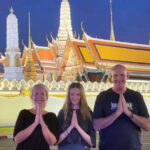
You meet at Wat Mangkon Kamalawat, also known as Wat Leng Noei Yi. That matters because Chinatown food isn’t only about flavors—it’s tied to community life and migration history. A good guide uses the temple as a starting point so the route isn’t just “follow me, eat now.”
Once you’re in Chinatown proper, the tour focus becomes Thai-Chinese street food. You’ll hear how Chinese immigrant influence shaped local ingredients, cooking styles, and the kinds of dishes Bangkok locals expect to find at night. For me, that context is part of the value: you taste the result and understand why it exists.
You’ll also see how history shows up in everyday details—how stalls operate, how menus sound, and why certain flavor profiles keep reappearing across different vendors. It’s the kind of storytelling that makes the food feel less random and more connected.
Your 10+ tastings of Thai-Chinese street food: what you’ll actually eat
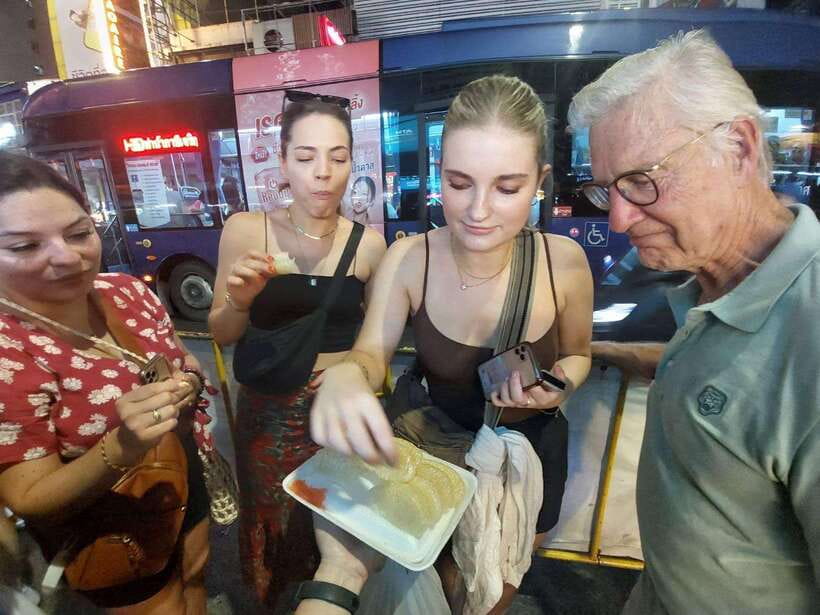
The heart of this experience is the tasting count. You’ll try over 10 dishes across multiple stops, and the range is the point. Instead of repeating one theme, you get a mix of crispy, smoky, steamed, and stir-fried bites.
Expect types of foods like:
- crispy spring rolls
- barbecued meats
- freshly steamed dumplings
- stir-fried dishes
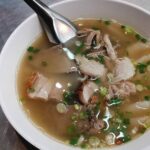
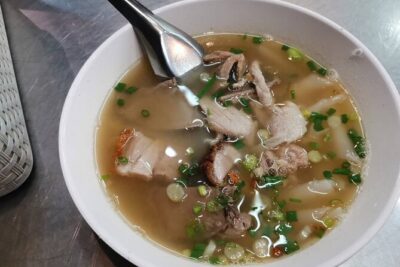
- fragrant noodle soups
- spicy seafood options
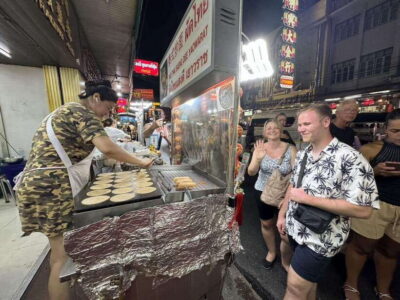
- Chinese-style desserts like fresh buns and local pancakes
- a drink from a classic Chinatown tea stall
The pacing is also designed so you don’t get stuck with just one “heavy” item per stop. Many tastings are small enough that you can keep moving, but large enough that you’ll feel satisfied—not just sampled.
One drawback to factor in: you should arrive properly hungry. This tour is built for eating, and several guides are praised for making sure nobody leaves unsatisfied. If you show up after a big dinner, the later sweet stop might feel like a chore instead of a reward.
The Michelin-recognised stall stop: the point isn’t fancy, it’s proof
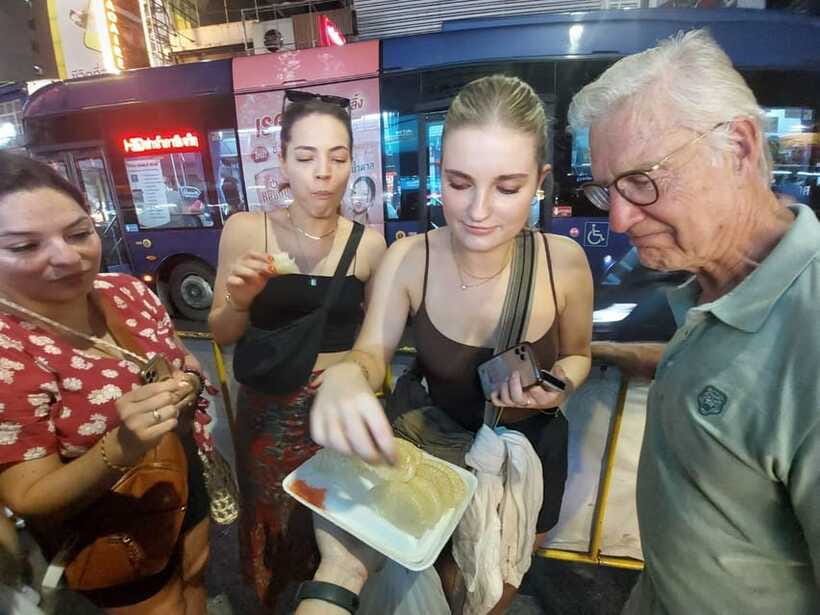
A lot of Chinatown food tours promise big names. This one includes a stop at a Michelin-recognised food stall, and that choice changes how you experience the neighborhood.
Here’s why it matters. In Yaowarat, you can easily miss the best vendor because the best choice often isn’t the most obvious sign or the busiest line at first glance. Your guide gets you to a standout stall, so you get one “stamp of quality” moment without turning the evening into a formal meal.
At the same time, the stop is still part of the street-food environment. You’re not leaving the neighborhood vibe for a restaurant setting. You’re checking out a high-performing vendor inside the same chaotic food ecosystem, which makes the contrast feel natural.
From a value perspective, this Michelin-recognised element helps justify the price: you’re paying for routing and selection, not just food you could order randomly off a menu.
Deeper into Yaowarat after dark
How guides shape the experience: names like Peak, Eve, Na, Sunday, and K
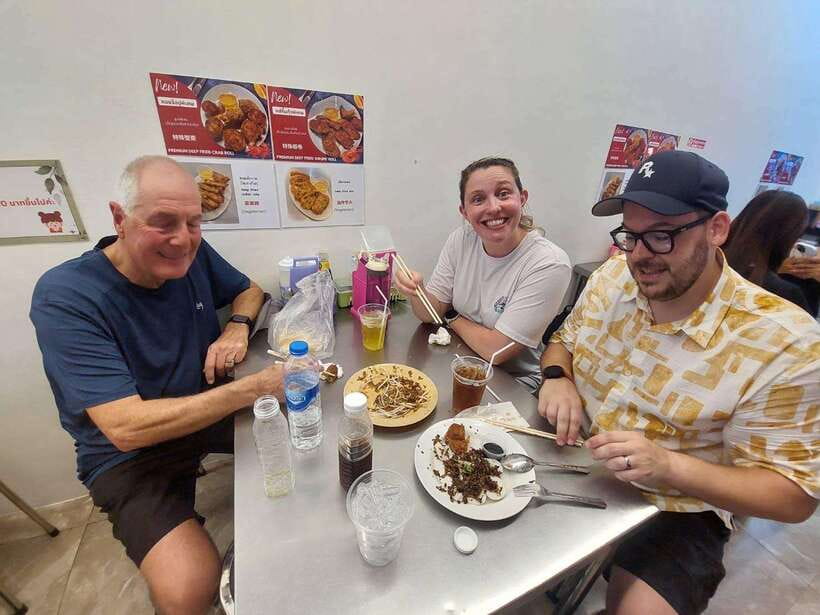
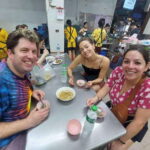
This is the part that most strongly drives satisfaction. The guides aren’t just walking you to tables. They manage crowds, explain dishes, and keep you moving at a human pace.
I’ve seen recurring praise for guides like Peak, Eve, Na, Sunday, and K. Common themes show up in the way they run the tour:
- keeping the group together during busy traffic of people and scooters
- explaining what you’re eating and why it tastes the way it does
- maintaining a relaxed pace so you can actually taste, not just sample-and-run
- checking in so nobody gets left behind
Some guides also tailor choices based on what you want or need. For example, there are mentions of help with gluten-free considerations, and of guides being attentive if someone can’t eat everything. That’s important in a food tour, because the difference between “fun but stressful” and “fun and smooth” often comes down to how well the guide handles your needs.
In one instance, a guide was noted for going above and beyond with practical help organizing transportation after the tour. That’s not something you should assume will happen every time, but it reflects a pattern: these guides tend to treat your evening as something they manage, not something they finish.
The walking route and timing: from Wat Leng Noei Yi to Chinatown Gate
Your route has a clear arc. You start at Wat Mangkon Kamalawat (Wat Leng Noei Yi), move through Chinatown for the tastings, and finish at the Chinatown Gate.
That matters because you’re not trying to piece it together after. You get a destination at the end that’s easy to recognize, which is useful if you want to continue wandering for photos or a final drink.
Timing-wise, the tour is built around evening energy. You’re eating during the hours when stalls are most active and the streets feel most alive. And because the total time is limited, you get a sense of momentum. The tour doesn’t get bogged down at one stall, and you’re not stuck waiting endlessly for the group.
Sweet ending with Chinese desserts and tea
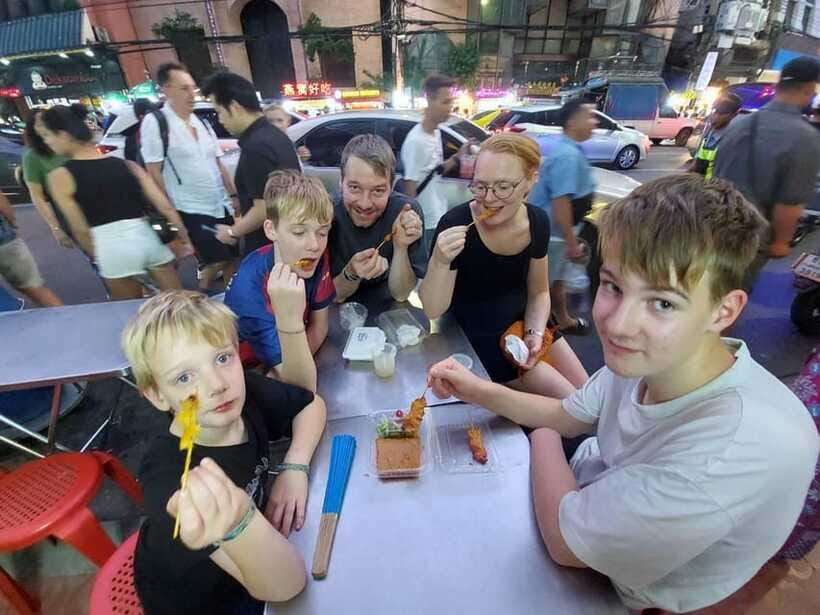
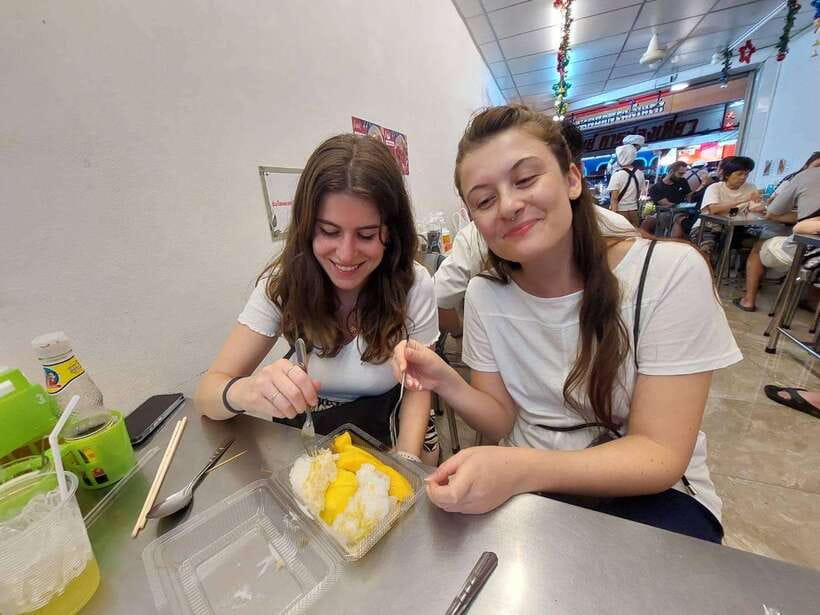
The finale is a smart move: after savory street food, you get traditional Chinese desserts and snacks. You might try fresh buns or local-style pancakes, plus a refreshing drink from a Chinatown tea stall.
This sweet finish works for two reasons. First, it helps reset your palate after spicy and smoky flavors. Second, it adds variety so you leave with a broader picture of Thai-Chinese street food, not only one style of cooking.
If you’re the type who only wants to “taste the main stuff,” don’t skip this section. It’s often where the tour shows range—texture, sweetness, and tea pairing in one last stop.
Price and value: why $36 feels fair for what you get
At $36 per person for about 3 hours, this is priced like a value-focused food tour. The money goes into selection and coordination: you’re not just buying dishes, you’re paying for someone to identify the right stalls, keep the group together, and explain what you’re eating.
You also get:
- 10+ food tastings
- an English-speaking guide
- small group size (max 8)
- bottled water included
- an evening route that ends at Chinatown Gate
If you tried to do this alone, you’d likely spend time researching stalls, then lose time navigating crowded streets and figuring out which vendors are worth your money. Here, your guide does the heavy lifting.
One more value angle: the Michelin-recognised stop gives you a high-confidence “quality moment” inside a street-food program. For many people, that single stop makes the whole evening feel like more than the sum of its parts.
Who this tour is for, and who should skip it
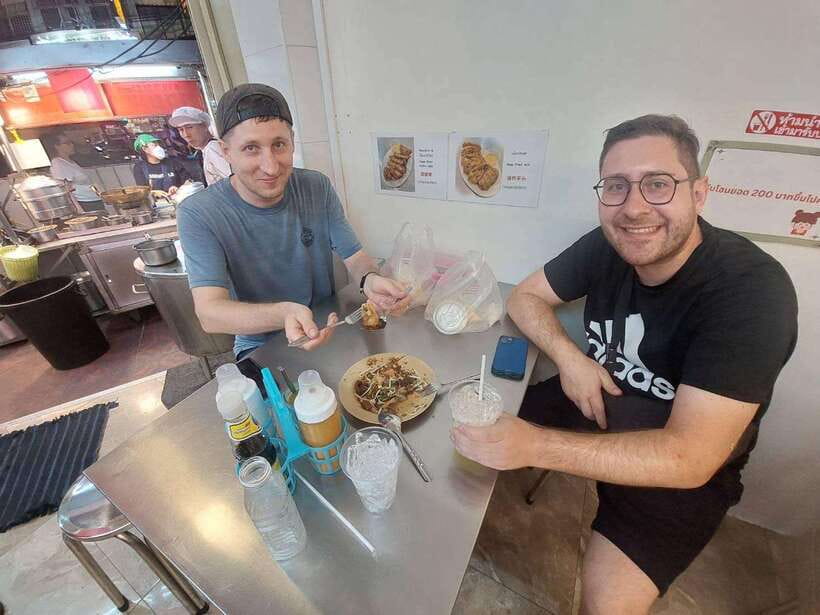
This tour is a great fit if you:
- are doing Chinatown for the first time and want an efficient introduction
- like Thai-Chinese flavors and want variety across savory and sweet
- enjoy walking tours with a guide who explains what you’re tasting
- want a small-group experience instead of a big bus vibe
It’s not suitable for vegans or vegetarians, and it’s not designed for wheelchair users. It also isn’t meant for children under 10.
Dietary restrictions can be accommodated with advance notice, which is good to know. Still, if your needs are strict (especially vegan or vegetarian), you’ll want to consider another food plan that matches your options clearly.
Quick practical tips so your evening stays fun
A few details make a real difference in Chinatown:
- Wear comfortable walking shoes, because you’ll be on your feet for the full 3 hours.
- Bring your camera, but also be ready for crowded photo moments where you may need patience.
- If you’re sensitive to shared food-hand contact, consider bringing a small pack of hand wipes. One practical note from a past participant was that sanitizer or wipes weren’t available, and it’s an easy fix.
- If you have dietary restrictions, mention them ahead of time so the guide can steer you to appropriate choices.
And my biggest tip: don’t over-plan food before you go. This tour is built to make you eat enough that you’ll feel full at the end.
Should you book this Bangkok Chinatown Michelin Food Tour?
If you want an easy, high-value evening plan in Yaowarat, I’d book it. The strongest selling points are the small group pace, the large 10+ tastings, and the inclusion of a Michelin-recognised stall that adds confidence without killing the street-food vibe.
Skip it if you’re expecting a calm, sit-down meal experience, or if vegan/vegetarian needs are central for your trip. Also, if you’re not comfortable with walking and crowds, the setup may feel like too much.
For most first-timers, couples, and solo visitors who want a guided food route with real local energy, this tour is a smart way to spend a few hours—and come away with plenty of food memories.
FAQ
What is the duration of the Bangkok Chinatown Food Tour
The tour lasts 3 hours.
How many tastings should I expect
You’ll have 10+ food tastings during the tour.
Where does the tour start and end
It starts at Wat Mangkon Kamalawat (Wat Leng Noei Yi) and finishes at the Chinatown Gate.
Is the guide English-speaking
Yes, the tour includes an English-speaking guide.
Does the tour include a Michelin-recognised food stall
Yes, there’s a stop at a Michelin-recognised food stall as part of the tastings.
Can dietary restrictions be accommodated
Dietary restrictions can be accommodated with advance notice, but the tour is not suitable for vegans or vegetarians.
What should I bring or wear
Wear comfortable shoes and bring a camera. Bottled water is included, and the walking distance is moderate.
More Tour Reviews in Bangkok



Deeper Into Yaowarat
Eat Bangkok: More Street Food
Just In: Fresh Bangkok Reviews


Bangkok Food & Street Eats, compared.
 ★ 4.9Backstreets Food Tour with 15+ TastingsFrom $622,880 reviews
 ★ 4.9Midnight Food Tour by Tuk-TukFrom $742,054 reviews
★ 5.0Bangkok Backstreets Food Tour with 15+ TastingsFrom $591,926 reviews
★ 4.9Midnight Food Tour by Tuk-TukFrom $742,054 reviews
★ 5.0Bangkok Backstreets Food Tour with 15+ TastingsFrom $591,926 reviews
 ★ 4.4Michelin Guide Street Food Tour by Tuk TukFrom $201,274 reviews
 ★ 5.0Old Siam Bangkok Food Tour with 15+ TastingsFrom $59867 reviews
 ★ 4.9Bangkok Authentic Tasting Thai-Chinatown Walking Food TourFrom $43852 reviews
 ★ 4.3Tuk Tuk Adventure Chinatown Michelin Food & TemplesFrom $18725 reviews
 ★ 5.0Bangkok Tuk-Tuk Tour by Night with Chinatown Street Food MealFrom $40635 reviews
Browse the lists this tour appears in