
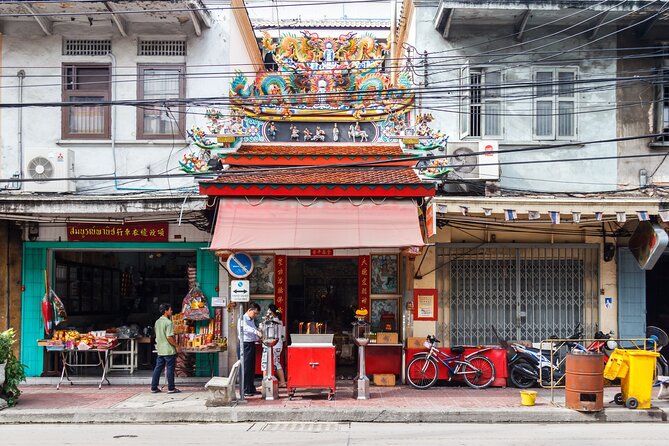
Review · CHINATOWN TOURS
Bangkok Chinatown: Self-Guided Mystery Puzzle Quest
Chinatown turns into a game board when your phone starts giving directions. This self-guided mystery puzzle quest takes you street-to-street through Bangkok’s Chinese heritage, with the story unlocking as you solve each challenge. You’ll follow exact steps on screen to move between stops, starting from Rong Muang and finishing near Charoen Krung.
I like the no-guide setup: no one needs to herd you, and it’s designed for at-your-own-pace exploring. I also like that it’s offline-capable, so you’re not stuck hunting for signal while you’re looking around.
One thing to consider: the route relies on the app’s directions, and if the location pins feel off on your map, it can turn into an exhausting scavenger hunt instead of a fun one.
In This Review
- Key things you should know before you start
- Entering Bangkok Chinatown by phone, not by guide
- The practical route: how the 1.5-hour plan usually plays out
- Stop 1: Kan Kee Nam Tao Thong and the puzzle behind Chinese herbal drinks
- Stop 2: Wat Traimit and Bangkok’s 5.5-ton Golden Buddha
- Stop 3: Eiah-Sae coffee shop and the clue behind a noisy old place
- Stop 4: Wat Lokanukroh near Sampeng Market—small temple, big vibe
- Stop 5: Leng Buai Ia Shrine, the oldest Chinese shrine in Thailand
- Stop 6: Wat Leng Noei Yi—Mahayana Buddhism and dragon-decorated details
- Starting and ending: where you’ll begin, where you’ll finish
- The app experience: exact directions on screen, offline mode, and pause/resume freedom
- Price and value: what $6.99 gets you in the real Chinatown
- Who should book this quest (and who should skip it)
- Should you book Bangkok Chinatown: Self-Guided Mystery Puzzle Quest?
- FAQ
- How much does Bangkok Chinatown: Self-Guided Mystery Puzzle Quest cost?
- How long does the quest take?
- Do I need a human guide?
- Can I start at any time?
- What if I need a break?
- Do I need internet connection?
- Where do I start?
- Where does it end?
- Can one person buy for a group?
- Are service animals allowed?
- Is free cancellation available?
Key things you should know before you start
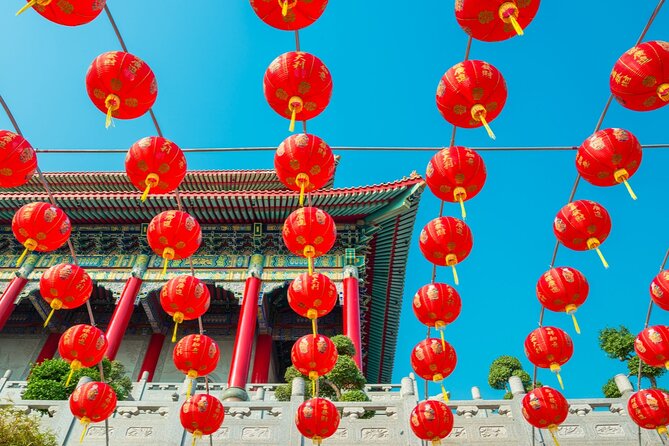
- App-led, self-guided play: each puzzle points you to the next spot with on-screen directions
- Offline play: you don’t need internet while exploring
- Flexible timing: start any hour and pause/resume when you want
- Six Chinatown stops: from Chinese herbal drinks to Wat Traimit’s Golden Buddha
- Works great in groups: one person can buy for everyone, each plays on their own smartphone
- Expect to look closely: solving requires scanning what’s around you, not just walking
Entering Bangkok Chinatown by phone, not by guide
This is an outdoor escape-game style experience, built for people who like their city exploring a little more structured. You won’t meet a human guide. Instead, you open the Questo app, follow the step-by-step directions, and answer challenges that are tied to each location’s story.
That design has two big upsides for your day. First, you control your pace. If you want to take 20 minutes at a temple stop, you can. If you’re hungry and want to grab food sooner, you can. Second, you’re not stuck in a crowd shuffle, because there’s no group briefing and no constant human coordination.
The experience is also positioned as a low-contact activity. You only need your phone, and you can play safely without passing through a big tour pack line by line. It’s simple, but it’s not boring: the app is doing the “guiding,” while you do the walking and noticing.
Deeper into Yaowarat after dark
- Bangkok Authentic Tasting Thai-Chinatown Walking Food Tour
★ 4.9 · 852 reviews - Bangkok: Tuk Tuk Adventure Chinatown Michelin Food & Temples
★ 4.3 · 725 reviews - Bangkok Tuk-Tuk Tour by Night with Chinatown Street Food Meal
★ 5.0 · 635 reviews
The practical route: how the 1.5-hour plan usually plays out
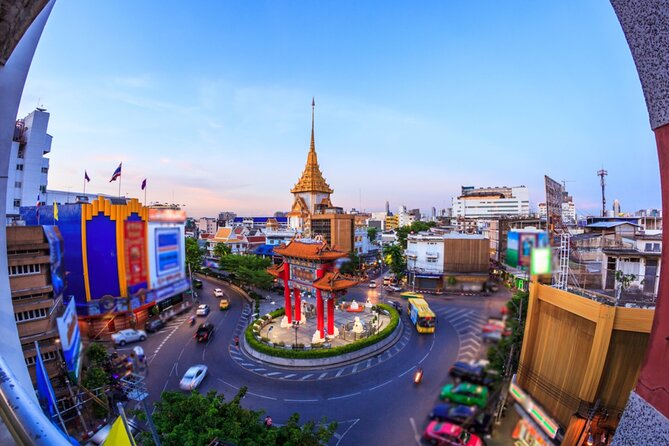
The listed duration is about 1 hour 30 minutes. In the real world, that time can stretch or tighten depending on how quickly you solve clues and how long you pause for photos, snacks, or prayer moments.
What helps is the format. Each location has its own mini-challenge. When you solve it, you get the story for that place, and then the app reveals the next step. So you’re not just touring temples and shops—you’re collecting context piece by piece.
Also note the timing flexibility. It’s available 24/7, and you can start at any hour. That matters in Bangkok, where you might want to avoid the hottest stretch of the day or catch nighttime vibes in the Chinatown lanes.
Stop 1: Kan Kee Nam Tao Thong and the puzzle behind Chinese herbal drinks
Your journey begins in Bangkok Chinatown with Kan Kee Nam Tao Thong, described as a 100-year-old shop famous for Chinese herbal drinks. This is one of those places where the storefront feels like it belongs to a much older rhythm of the neighborhood.
The challenge here is built around observation. You’ll have to look around and find the answer that lets you advance. The payoff is the story tied to the business and the tradition behind it. That’s a nice way to start, because it gets you paying attention immediately—signs, labels, and what people actually do in front of the shop.
Why this stop works: Chinatown isn’t just temples. It’s also everyday habits, like what’s served as a remedy, a refresher, or a comfort drink. This clue-based approach nudges you into noticing the living side of the area, not only its famous landmarks.
Practical note: if you’re the type who likes to photograph first and solve later, this is still doable. Just know the app expects you to keep your eyes open, not just your camera ready.
Stop 2: Wat Traimit and Bangkok’s 5.5-ton Golden Buddha
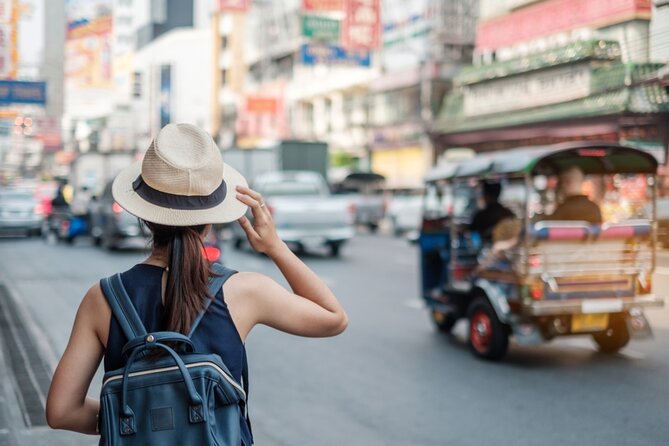
Next up is Wat Traimit, the Temple of the Golden Buddha. This is the headline stop, and the numbers alone make it worth your attention: the temple houses a 5.5-ton seated Buddha statue, dating back to the 13th century. The gold sculpture is nearly 5 meters tall.
Wat Traimit is located about 450 meters west of Hualampong Railway Station, which makes it easier to orient yourself once you’re in the area. But the quest keeps you from turning it into a quick photo stop. You’ll again need to look around to find the answer for the challenge, which moves you forward while you learn the story behind what you’re seeing.
Why this stop feels different in a puzzle format
A normal temple visit can become a checklist: arrive, look up, take photo, move on. Here, the app gives you a reason to slow down and examine details. You get forced attention on the kind of visual cues that people usually miss when they’re just passing through.
Small consideration
Because the challenge is tied to looking around, you’ll do better if you’re comfortable stepping aside to read, scan, and answer. If you prefer a quiet, uninterrupted temple walk with zero interaction, a puzzle might feel a little like work.
More guided days, sorted


Stop 3: Eiah-Sae coffee shop and the clue behind a noisy old place
After the big temple moment, you shift to something more human-scale: Eiah-Sae coffee shop. It’s described as almost a century old, passed down through generations, and still known for a homey, noisy atmosphere.
This stop continues the quest rhythm: look around for the clue that unlocks the story, then proceed onward. A coffee shop challenge might sound odd, but that’s exactly the point. Chinatown travel often over-focuses on temples and shrines. This pushes you into a living neighborhood institution—somewhere you’d be tempted to wander into even if you weren’t on a mission.
What to expect
You’ll likely find yourself slowing down in a different way here. You’re not searching for architecture or a specific statue. You’re looking for details tied to the shop’s identity—another kind of Chinatown knowledge, the daily kind.
Also, the overall quest is designed to include local food and drink stops. At the least, you should treat this area as a good opportunity to buy something small and keep your energy up for the next stretch.
Stop 4: Wat Lokanukroh near Sampeng Market—small temple, big vibe
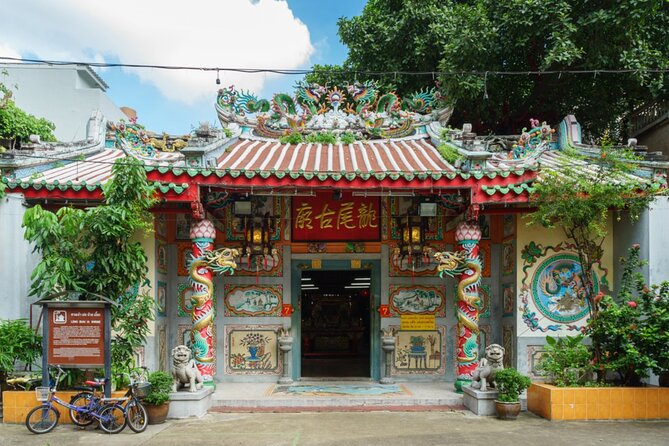
Then you’ll reach Wat Lokanukroh, described as one of the smallest temples in Bangkok. No monks live here, but many people come to pray and offer ceremonies, even in the middle of Sampeng Market.
That contrast—tiny temple space inside active market life—feels very Bangkok. It’s not a quiet museum stop. It’s part of the flow. The puzzle at this stop again asks you to look around to find the answer that lets you move to the next location.
Why this is a smart inclusion
Market-area temples can be easy to overlook if you treat Chinatown like a photo circuit. In a puzzle quest, you stop for long enough to actually understand why the place matters. That’s the quiet value: you get a more lived-in sense of religious practice, not just architecture.
A practical thought
If you’re playing during peak market hours, keep an eye on your phone and your footing. You’ll likely be navigating busy foot traffic while you hunt for clues.
Stop 5: Leng Buai Ia Shrine, the oldest Chinese shrine in Thailand
One of the most historically specific stops is Leng Buai Ia Shrine, described as an ancient Tae Chew shrine and the oldest Chinese shrine in Thailand. The shrine dates back to 1658, built during the Central Ayutthaya period. The idea here is that Chinese businessmen used the shrine as a place of refuge and prayer for prosperity.
The app’s challenge again pushes you to look around. Once solved, you get the story behind the shrine’s role in the community—and its traditional Chinese architectural style.
Why this matters for your understanding
This stop gives you a different layer of context. You’re not just seeing religious objects. You’re learning how a shrine functioned as an emotional and practical support system for people whose lives depended on trade, business, and travel.
If you like “how did people live?” history, this is the kind of stop that makes the day stick in your head.
Stop 6: Wat Leng Noei Yi—Mahayana Buddhism and dragon-decorated details
Your final temple stop connects the quest back to Bangkok’s broader Buddhist story. The location is described as opened as Wat Leng Noei Yi in the 1870s, serving as an introduction of Mahayana Buddhism in Bangkok. Later, King Chulalongkorn renamed it to its present title.
The description also highlights the artwork: animal, floral, and Chinese dragon motifs. The ordination hall houses a gold-colored Buddha.
Here too, you’ll solve the challenge by looking around to find the answer, and that triggers the story unlock for the place.
What I like about ending here
The quest builds from everyday commerce (herbal drinks, coffee shop) into major spiritual sites, and then it closes on a temple with clear visual identity—dragon motifs and the gold-colored Buddha. It’s a strong finish because you can step back and recognize what you’ve learned: Chinatown’s religious life didn’t arrive as a single moment. It came in waves, adapted, and took root.
Starting and ending: where you’ll begin, where you’ll finish
Your start point is listed at Rong Muang, Pathum Wan, Bangkok 10330, Thailand. The app guides you step by step to the meeting area by routing you to a wedding store using the Questo app instructions. The experience is designed to be easy to launch: follow what’s on your screen.
Your end location is listed at 586 ถ. เจริญกรุง, Khwaeng Pom Prap, Khet Pom Prap Sattru Phai, Krung Thep Maha Nakhon 10100, Thailand.
This matters because it’s not a full loop back to your starting point. If you plan your transportation carefully, you’ll save time once you finish.
The app experience: exact directions on screen, offline mode, and pause/resume freedom
Here’s the practical toolkit that makes or breaks these games.
You get exact directions on screen that tell you how to move to the next place. You’ll also get a mobile ticket, meaning you’ll likely need your phone ready and charged.
The biggest practical win is that it’s designed to work offline while you explore. You don’t need internet connection during the walking and searching portion. That’s a big deal in Bangkok, where your connectivity can vary block to block.
Then there’s flexibility. You can start at any hour, take breaks, and resume later. That can be a lifesaver if your timing gets thrown off by heat, crowds near markets, or just the pull of a snack stop.
One caution from real-life experience style
There’s been at least one complaint about confusing instructions and locations that weren’t matching what people saw on Google Maps. That doesn’t mean you’ll have that problem. But it does mean you should stay patient. Give yourself extra time, and be ready to re-check the app’s step instructions rather than trusting every map pin.
Price and value: what $6.99 gets you in the real Chinatown
At $6.99 per person, this is priced like a low-cost activity. The value comes from what you’re getting for that price: a structured Chinatown route, story-driven stops, and an outdoor puzzle format that runs about 1 hour 30 minutes.
You’re not paying for a guide’s labor or for a private minibus. You’re paying for the app logic: the clue prompts, the step-by-step direction system, and the ability to play without human contact.
So when does it feel like a bargain?
- If you like independent walking and you enjoy solving small puzzles
- If you want a plan that mixes food/shops and temples instead of doing one type all day
- If you’re okay using your smartphone as your navigator
When might it feel less worth it?
If you hate apps, dislike “hunt for the answer” moments, or get frustrated when digital directions don’t match your map view. In that case, the experience can turn into more work than fun.
Who should book this quest (and who should skip it)
I’d point this toward two types of travelers.
First, travelers who want to experience Chinatown without joining a guided group. The self-guided format plus offline mode makes it feel controlled, even though you’re outdoors.
Second, people who love context. You’re learning why each place matters—like the Golden Buddha’s scale and timeframe, the herbal drink tradition, and the specific role of the Leng Buai Ia Shrine for business prosperity.
I’d be more cautious if you:
- Prefer a classic temple tour with no phone prompts
- Want a strictly accurate, map-based route with zero guessing
- Get easily worn down by confusing on-screen directions
Should you book Bangkok Chinatown: Self-Guided Mystery Puzzle Quest?
If you want a low-cost, phone-led way to explore Chinatown with built-in story stops, this is a solid pick. The strongest ingredients are the offline-friendly play, the no-guide format, and the way the route mixes big moments (Wat Traimit’s Golden Buddha) with everyday institutions (like Eiah-Sae coffee).
I’d book it if you’re comfortable using the app and giving yourself a bit of extra time in case a pin looks off. I’d skip it if you mainly want a guided, effortless day or if you strongly dislike puzzle-style searching.
Overall, it’s a fun way to turn “walking around” into something you can actually remember—one clue, one stop, one story at a time.
FAQ
How much does Bangkok Chinatown: Self-Guided Mystery Puzzle Quest cost?
It costs $6.99 per person.
How long does the quest take?
The duration is listed as about 1 hour 30 minutes.
Do I need a human guide?
No. There is no physical tour guide. You follow the app and play on your own.
Can I start at any time?
Yes. The experience is available 24/7, and you can start at any hour.
What if I need a break?
You can take a break at any time and resume later.
Do I need internet connection?
No. The experience is designed to be playable offline while you explore.
Where do I start?
You start at Rong Muang, Pathum Wan, Bangkok 10330, Thailand. The app guides you step by step to the location by directing you to a wedding store.
Where does it end?
It ends at 586 ถ. เจริญกรุง, Khwaeng Pom Prap Sattru Phai, Krung Thep Maha Nakhon 10100.
Can one person buy for a group?
Yes. If you are part of a group, one person can purchase access for everyone by selecting the total number of people, and all group members can play on their smartphones.
Are service animals allowed?
Yes, service animals are allowed, and most travelers can participate.
Is free cancellation available?
Yes. You can cancel for a full refund up to 24 hours in advance of the experience’s start time.
Smoother With a Guide
More Tour Reviews in Bangkok




Deeper Into Yaowarat




Just In: Fresh Bangkok Reviews


Chinatown Tours, compared.
 ★ 4.9Bangkok Authentic Tasting Thai-Chinatown Walking Food TourFrom $43852 reviews
 ★ 4.3Tuk Tuk Adventure Chinatown Michelin Food & TemplesFrom $18725 reviews
 ★ 5.0Bangkok Tuk-Tuk Tour by Night with Chinatown Street Food MealFrom $40635 reviews
 ★ 5.0Bangkok by Night Food Tour with 10+ Tastings in ChinatownFrom $46545 reviews
 ★ 4.6Bangkok Tuk-Tuk by Night with Chinatown Street Food MealFrom $40263 reviews
 ★ 4.8Chinatown Food Tour with Michelin Food StallsFrom $36226 reviews
 ★ 5.0Bangkok Night Michelin Foodie Tour in Chinatown with 15+ tastingsFrom $56189 reviews
 ★ 5.0Night Street Food Tour of Bangkok’s ChinatownFrom $58173 reviews
Browse the lists this tour appears in