
Review · BANGKOK FOOD & STREET EATS
Night Street Food Tour of Bangkok’s Chinatown
Bangkok’s best street food shows up at night. This Chinatown tour is built around 12 tastings and a licensed local food expert, so you get real Thai-Chinese flavors without guessing. I like that the pace is structured enough to eat a lot, yet still leave time to see sights like Wat Tri Mitr, the Temple of the Golden Buddha. One thing to weigh carefully: this isn’t a fit if you need a seafood-free, vegetarian, or halal option.
The meeting point is tied to public transit, with pickup and drop-off at the Hua Lamphong MRT station. That makes it easier than hunting for a hotel lobby when the streets are busy after dark. And the food choices hit classic categories you can’t easily “DIY” your first night in Yaowarat—dim sum, peppery pork soup, seafood with a spicy Thai-style sauce, and even bitter tea.
If you’re good with night walking and you don’t have strict dietary limits, this is a strong value. Paying $58.70 for a 3-hour Chinatown dinner plan is usually only fair if you actually eat like the tour intends—and here, you will.
In This Review
- Key things to know before you go
- Price and what makes it worth $58.70
- Meeting at Hua Lamphong: quick, transit-friendly logistics
- How the night walk actually feels in Chinatown
- Your 12 tastings: what you’ll eat and what to expect
- Classic noodle start: tomato soup with fish balls
- Dim sum break: a few small bites
- Chinese herb drink: bitter, medicinal, and part of the culture
- Seafood tasting with Thai sauce energy
- Peppery soup with crispy pork
- Thai ice cream flavor: a cool-down moment
- Black sesame dumpling in ginger soup
- Bitter tea: the health-leaning finish
- The full picture: 12 locations, not just 7 dishes
- Chinatown landmarks: Wat Tri Mitr and the meaning of the walk
- Guides who keep you moving (and help when you get lost)
- Street-food reality check: seafood limits, portion size, and pacing
- What you’re really getting beyond the food
- Should you book this Chinatown night street food tour?
- FAQ
- What time does the tour start, and how long is it?
- Where do I meet the group?
- Is hotel pickup included?
- How many food tastings are included?
- Is bottled water included?
- Is the tour suitable for seafood-free diets?
- Are there vegetarian or halal options?
- Is this tour small group or private?
- Is the tour refundable or changeable?
Key things to know before you go
- 12 tastings designed as a full dinner instead of random samples
- Hua Lamphong MRT meet-up keeps logistics simple after dark
- Thai-Chinese classics plus stories (Chinatown’s late-18th-century roots come up)
- Wat Tri Mitr stop adds cultural context beyond eating
- Seafood and non-veg limits apply (no vegetarian or halal option)
- Guides named Nudi, Alice, and G show up in feedback for history and practical help
Price and what makes it worth $58.70
At $58.70 per person for about 3 hours, the price only feels fair if the food portion is meaningful. This tour is set up as a night meal: you get food tastings at 12 locations, plus bottled water. In practical terms, you’re paying for three things at once: (1) a guided route through Yaowarat, (2) access to stalls you might miss, and (3) enough variety to taste a full spectrum of Chinatown flavors.
If you’re the kind of traveler who likes one big night plan instead of hopping restaurants all evening, this is a good match. Chinatown can be intense for a first-timer. A guide does two jobs: picks what’s likely to be tasty and safe to eat, and also keeps you moving at the right speed between stalls.
Still hungry? More woks, stalls and night-market plates
- Bangkok: Backstreets Food Tour with 15+ Tastings
★ 4.9 · 2,880 reviews - Bangkok: Midnight Food Tour by Tuk-Tuk
★ 4.9 · 2,054 reviews - Bangkok Backstreets Food Tour with 15+ Tastings
★ 5.0 · 1,926 reviews
Meeting at Hua Lamphong: quick, transit-friendly logistics
The tour starts at 6:00 pm near Hua Lamphong. The listed meeting point is the Bangkok Centre Hotel area, but the key part for planning is this: hotel pickup isn’t included. You’ll meet at the MRT-linked spot, then return there at the end.
Why that matters: if you’re used to tours grabbing you at your hotel, you’ll want to set expectations early. Also, meeting at the MRT makes sense in Bangkok’s traffic reality. Once the streets get crowded, walking with a group beats trying to reposition yourself every time your phone loses signal.
The format is a small-group walking tour, and it’s described as private for your group only. That usually means fewer people to manage at each stall, and it can make it easier to ask questions as you go.
How the night walk actually feels in Chinatown
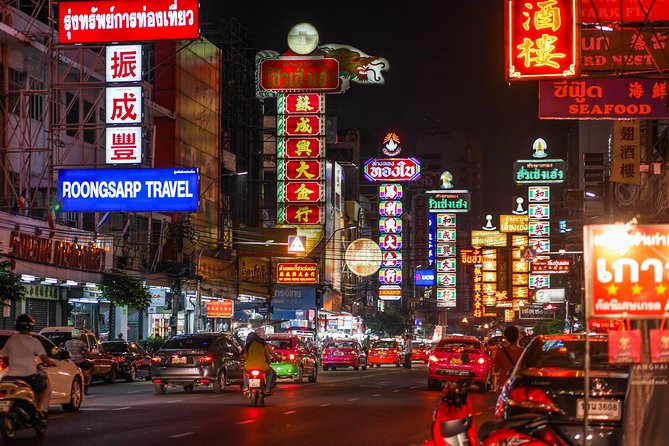
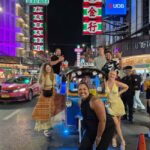
You’ll enter Chinatown with a local food expert and get oriented as you walk. Chinatown in Bangkok was shaped by Chinese merchants in the late 18th century, and the guide uses that background to explain why the food tastes the way it does—Thai flavors mixed with Chinese technique.
Expect to be on foot for the full experience. You’re eating across multiple street counters, so the pace is “eat, walk, repeat,” not a slow museum-style stroll. If you’re carrying a small bag, keep it simple: water is included, but you’ll still want your basics ready for the walk.
Your 12 tastings: what you’ll eat and what to expect
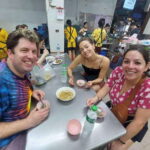
The best way to think about this tour is as a guided sampling menu. The tastings are spread across street stalls, with some items grouped by the type of dish.
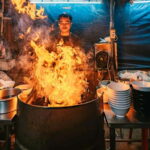
Deeper into Yaowarat after dark
Classic noodle start: tomato soup with fish balls
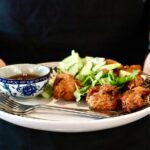
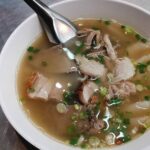
One early stop is at Pa’jin cockle texas yaowarat, where you’ll have noodles in tomato soup with fish balls. This is a smart opener: it’s warm, filling, and it sets you up for the spicier stuff later. Also, tomato-based soups are a great baseline flavor if you’re not sure what to order in Yaowarat.
Dim sum break: a few small bites
Next you’ll hit dim sum—a few dishes rather than one big plate. This is where you learn what Chinatown dim sum in Bangkok tastes like compared with what you’ve had elsewhere. The portion style matters here: you’ll have time to move on, not get locked into one slow meal.
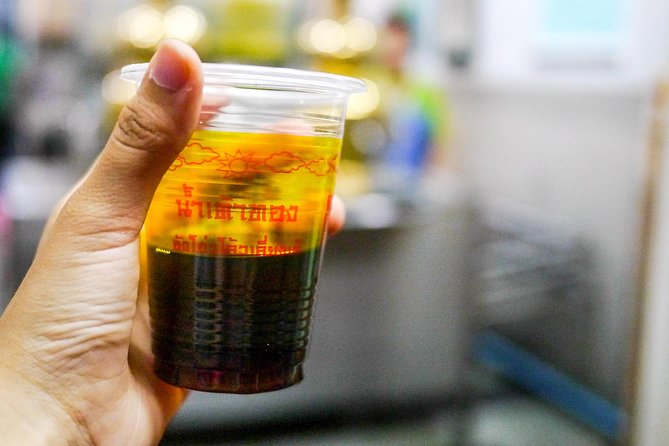
Chinese herb drink: bitter, medicinal, and part of the culture
You’ll taste a Chinese herb drink for a short stop. This is one of those items that tells you a lot about local food logic. Even if it’s not your favorite flavor, it’s useful context for why certain drinks like bitter tea are part of Chinatown’s nighttime routine.
Seafood tasting with Thai sauce energy
There’s a seafood stop that’s described as seafood prepared with a Thai killer sauce. Translation: don’t expect plain. This is the point in the tour where your “Chinatown imagination” should kick in—sweet, salty, sour, spicy, all possible in one bite.
Peppery soup with crispy pork
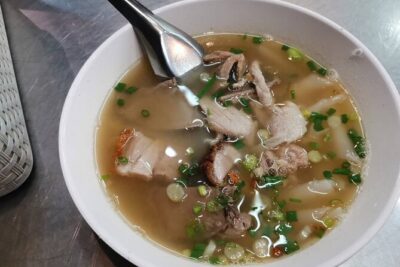
Another Pa’jin cockle texas yaowarat tasting is noodles in peppery soup with crispy pork. This sounds heavy, but the guide route and the walking keep it manageable. The peppery soup is usually the kind of dish you remember later, because it hits both comfort and kick.
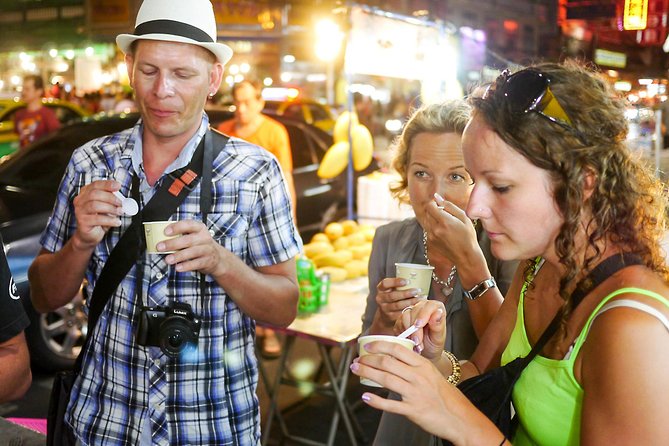
Thai ice cream flavor: a cool-down moment
You’ll also have a Thai ice cream flavor. It’s a small stop, but it works well after peppery or spicy foods. Treat it as a reset for your palate, not just dessert.
Black sesame dumpling in ginger soup
A final cozy-sweet-ish tasting is black sesame dumpling in ginger soup. Ginger gives warmth and lift, while sesame brings a thick, nutty comfort. If you tend to like desserts at the end of meals, this usually lands well.
Bitter tea: the health-leaning finish
Chinatown street food tours often include bitter tea, and this one does too. It’s described as something many locals drink for healthful properties. Whether it tastes like your kind of tea or not, it’s a meaningful part of the local food story.
The full picture: 12 locations, not just 7 dishes
Even with the standout items named above, the tour is planned around 12 tastings at 12 locations. That means the menu is designed to keep variety high while staying realistic in a 3-hour window.
Chinatown landmarks: Wat Tri Mitr and the meaning of the walk
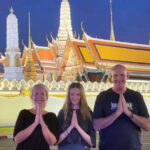
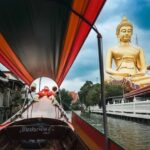
This tour isn’t only food. Along the way, you’ll stop at Wat Tri Mitr, also known as the Temple of the Golden Buddha. Even a short stop like this changes the tone of the night. You go from eating at street level to seeing how the neighborhood expresses faith and heritage.
It’s also a smart pause for your senses. Street food nights can blur together. A landmark break helps you process what you’re tasting and why Chinatown has the reputation it does.
Guides who keep you moving (and help when you get lost)
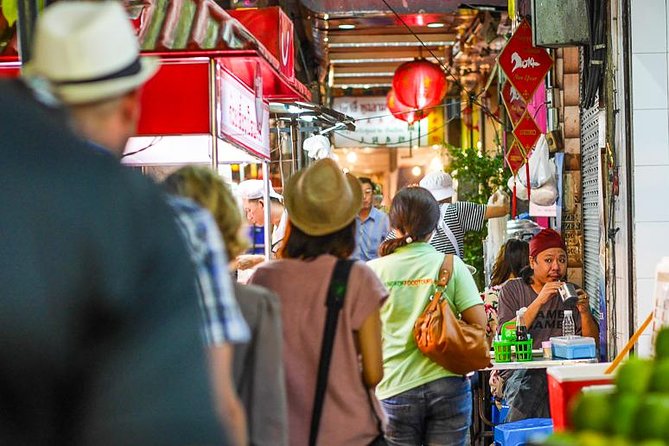
A big reason people rate this tour highly is the guide. The names Nudi and Alice show up in feedback as guides who combine food with cultural context. Another name that comes up is G, praised for history and for navigating the busy streets.
Here’s what that means for you in real life: you’re not just getting a list of dishes. You’re learning what to notice while you walk. And when you’re leaving an area like Yaowarat at night, practical help matters—like how to use transit or apps to get back without stress.
If you like asking questions, bring them. The format gives you opportunities as you’re standing at the next stall, not sitting through a lecture.
Street-food reality check: seafood limits, portion size, and pacing
This is where you need to be honest with yourself.
First: it isn’t suitable if you can’t have seafood. There’s a dedicated seafood stop and seafood is part of the tour’s described menu. Second: there’s no vegetarian and no halal option. If you fall into either category, you’ll want to skip this one and look for a tour that explicitly supports your dietary needs.
Second: this is built to make you very full. The tastings are described as enough for a hearty dinner. That’s great if you want one major food event. But if you’re planning a second meal afterward, you’ll likely end up disappointed (or just snack instead).
Third: you’ll be walking at night. Comfortable shoes help. Bangkok at 6:00 pm can feel hot and crowded, and you’ll be outside most of the time.
What you’re really getting beyond the food
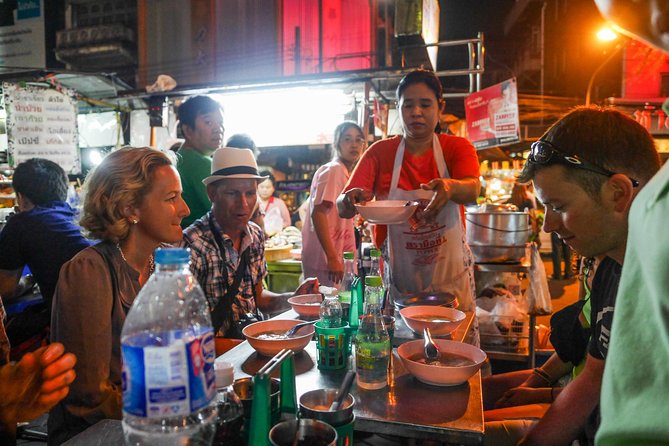
Food is the headline, but the hidden value is the way the guide connects dishes to place. Chinatown isn’t random. It’s a neighborhood shaped by migration, commerce, and centuries of Thai-Chinese mixing. When a guide explains that late-18th-century origin, the flavors start to make more sense.
You’ll also get a feel for Yaowarat as a living neighborhood rather than a photo stop. That matters if you want Bangkok to feel personal, not like a checklist.
Should you book this Chinatown night street food tour?
Book it if:
- You want a single, organized plan for dinner in Chinatown
- You enjoy street food variety and are curious about Thai-Chinese dishes
- You don’t have dietary limits related to seafood, vegetarian, or halal
- You like learning through walking and food, not through a formal lecture
Skip it if:
- You need vegetarian/halal accommodations
- You can’t eat seafood
- You prefer self-guided dining where you control every stop and pacing
If you fit the first set, this is one of the better ways to do Yaowarat on your first trip. You’ll eat well, learn a lot for the time spent, and still have a clear end point back at the MRT.
FAQ
What time does the tour start, and how long is it?
It starts at 6:00 pm and runs for about 3 hours.
Where do I meet the group?
You meet near Bangkok Centre Hotel on Thanon Rama IV, close to Hua Lamphong MRT station.
Is hotel pickup included?
No. Hotel pickup and drop-off aren’t included. The tour includes pickup and drop-off at Hua Lamphong MRT station.
How many food tastings are included?
You’ll enjoy tastings at 12 locations, with enough food for a hearty dinner.
Is bottled water included?
Yes. Bottled water is included.
Is the tour suitable for seafood-free diets?
No. The tour is not suitable for people who cannot have seafood.
Are there vegetarian or halal options?
No. There are no vegetarian and halal options.
Is this tour small group or private?
It’s a small-group walking tour, and it’s also described as private for your group only.
Is the tour refundable or changeable?
No. The experience is non-refundable and cannot be changed for any reason.
More Tour Reviews in Bangkok


Deeper Into Yaowarat
Eat Bangkok: More Street Food
Just In: Fresh Bangkok Reviews


Bangkok Food & Street Eats, compared.
 ★ 4.9Backstreets Food Tour with 15+ TastingsFrom $622,880 reviews
 ★ 4.9Midnight Food Tour by Tuk-TukFrom $742,054 reviews
★ 5.0Bangkok Backstreets Food Tour with 15+ TastingsFrom $591,926 reviews
★ 4.9Midnight Food Tour by Tuk-TukFrom $742,054 reviews
★ 5.0Bangkok Backstreets Food Tour with 15+ TastingsFrom $591,926 reviews
 ★ 4.4Michelin Guide Street Food Tour by Tuk TukFrom $201,274 reviews
 ★ 5.0Old Siam Bangkok Food Tour with 15+ TastingsFrom $59867 reviews
 ★ 4.9Bangkok Authentic Tasting Thai-Chinatown Walking Food TourFrom $43852 reviews
 ★ 4.3Tuk Tuk Adventure Chinatown Michelin Food & TemplesFrom $18725 reviews
 ★ 5.0Bangkok Tuk-Tuk Tour by Night with Chinatown Street Food MealFrom $40635 reviews
Browse the lists this tour appears in