
Review · BANGKOK FOOD & STREET EATS
Bangkok: Chinatown Street Food Tour with 8+ Local Dishes
Food walks in Bangkok always teach you something. This one threads through Hua Lamphong and Chinatown with a small group and a guide who knows where the good stuff is, not just the places with menus. I especially like the mix of proper Thai comfort food and Thai-Chinese favorites—plus the setup of 8+ tastings across 6 venues, so you’re eating your way through the area instead of hunting for snacks. The only real drawback to plan around is the 3-hour walk, which means you’ll want to show up ready for lots of street time.
If you’re picturing a sit-down dinner, this isn’t it. You’ll be on your feet, bouncing from stalls and small eateries to keep tasting steadily, and weather can change fast. Bring an umbrella and wear shoes you trust—because you’ll cover more ground than you think.
In This Review
- Key points before you go
- Hua Lamphong to Chinatown: Thai-Chinese Food You Can Taste
- Meeting at Hua Lamphong MRT: How to Find Your Group Fast
- What You’ll Eat: 8+ Tastings Across 6 Venues
- Spicy basil chicken over jasmine rice
- Spicy grilled pork with sticky rice (and local beer)
- Dim sum stop for the Thai-Chinese side
- Asian desserts while you stroll
- The secret dish
- The remaining tastings between stops
- Why a Passionate Guide Changes Everything
- Pace, Portions, and the Walking Reality
- Is it OK for kids?
- Who it’s not a good fit for
- Price and Value: Is $73 a Good Deal in Bangkok?
- How to Prepare So You Enjoy Every Stop
- Should You Book This Bangkok Chinatown Street Food Tour?
- FAQ
- How long is the Bangkok Chinatown street food tour?
- Where do I meet the tour guide?
- How many tastings are included?
- What food will I try during the tour?
- Is transportation included in the price?
- Is this tour suitable for children?
- Can the tour accommodate dietary needs?
Key points before you go
- Hua Lamphong to Chinatown route: you get a Thai-Chinese flavor story, not just random bites
- 8+ tastings at 6 venues: you’ll leave full, with multiple dishes and drinks
- Guide-led vendor access: you’re guided into places you might skip if you were walking solo
- Real street-food classics: spicy basil chicken, spicy grilled pork, dim sum, and desserts
- Small group (max 10): easier pacing, quicker questions, less crowd energy
Hua Lamphong to Chinatown: Thai-Chinese Food You Can Taste
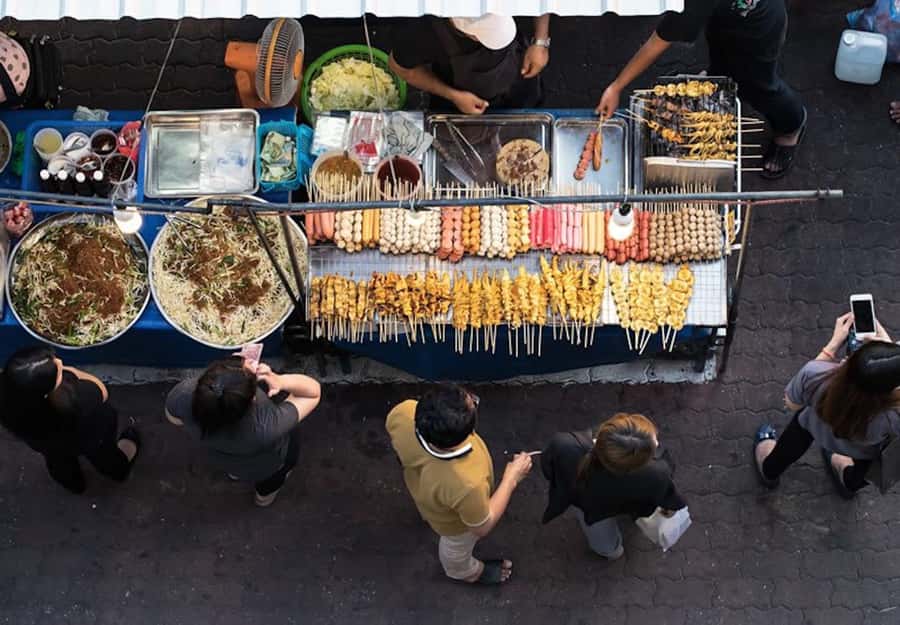
This tour focuses on two neighborhoods that help explain why Bangkok food tastes the way it does. Hua Lamphong became an important arrival and settlement area for Chinese immigrants, and Chinatown grew around that community. Today, that history shows up on your plate as a Thai-Chinese mix: familiar Thai flavors, but with the occasional Chinese twist.
The best part is that you’re not just reading about it—you’re sampling it. You start with a Thai classic built around jasmine rice and a bold, fragrant chili-basil style (spicy basil chicken over jasmine rice). Then the itinerary shifts toward the Chinese-influenced side of Chinatown, where the sweets and dumpling world make more sense.
You’ll also feel the rhythm of the streets as you walk—sounds, smells, and constant movement. Bangkok street food is often intimidating if you’re alone, but a guide turns the chaos into a plan.
Still hungry? More woks, stalls and night-market plates
- Bangkok: Backstreets Food Tour with 15+ Tastings
★ 4.9 · 2,880 reviews - Bangkok: Midnight Food Tour by Tuk-Tuk
★ 4.9 · 2,054 reviews - Bangkok Backstreets Food Tour with 15+ Tastings
★ 5.0 · 1,926 reviews
Meeting at Hua Lamphong MRT: How to Find Your Group Fast
The meeting point is outside Hua Lamphong MRT Station, exit 3, on Rong Muang Road. Your guide will be holding an orange umbrella, so you can spot them even if the street is noisy and crowded.
This matters because the start sets the pace. You don’t want to arrive late and scramble, especially since the tour is a long walking loop. Also note there’s no transportation included, so you’ll likely rely on the MRT or whatever gets you to that exact corner.
If you’re staying somewhere central, I’d plan to arrive a bit early, take a breath, and then meet the group calmly. It’s a small-group experience, and getting off to a smooth start helps you focus on food, not logistics.
What You’ll Eat: 8+ Tastings Across 6 Venues
You get 6 tasting stops and 8+ tastings, which is a meaningful difference. With street food, “a snack” can turn out tiny. Here, the structure is clearly meant to keep portions substantial across the walk.
Here’s the flavor path you can expect:
Spicy basil chicken over jasmine rice
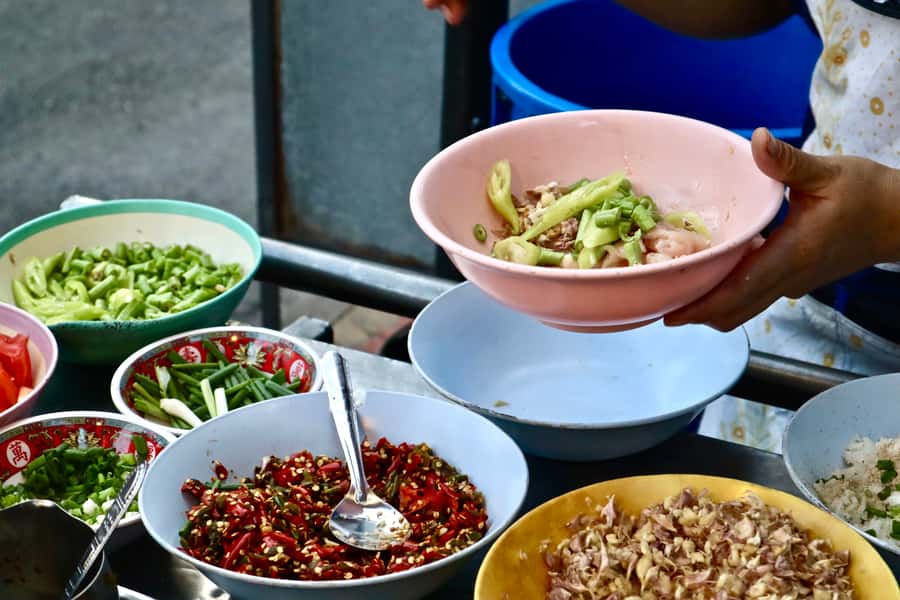
One of your first tastings is spicy basil chicken served over jasmine rice. This is a good early choice because it sets the benchmark for the tour’s style: bold Thai seasoning, basil fragrance, and heat that feels intentional, not random.
If you’re someone who thinks Thai food is just spicy, this stop is your reminder that Thai spice often comes with aroma and balance. You’ll taste how “street-style” can still be clean and focused when the kitchen knows what it’s doing.
Deeper into Yaowarat after dark
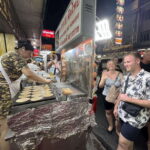
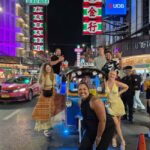
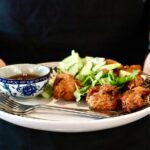

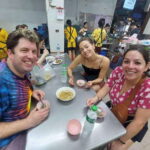
Spicy grilled pork with sticky rice (and local beer)
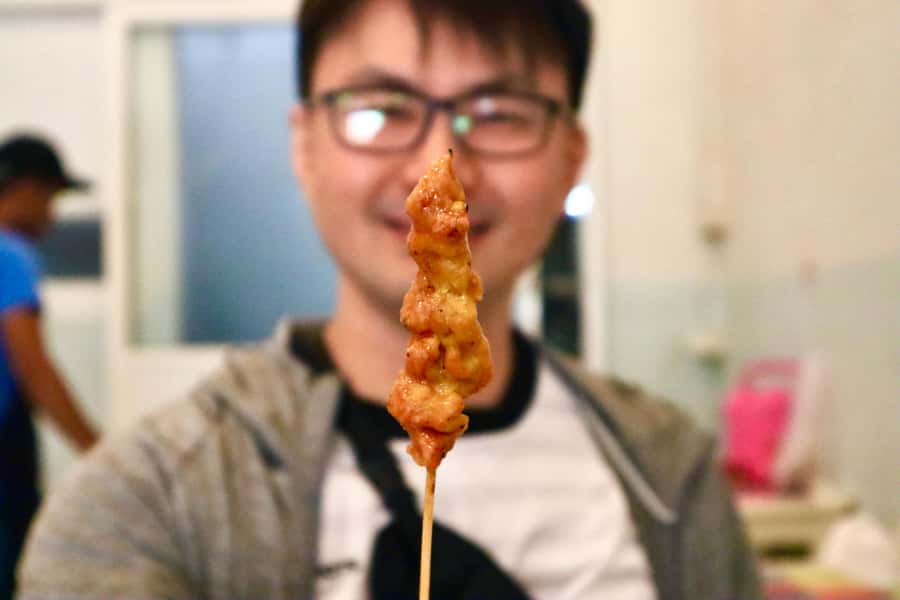
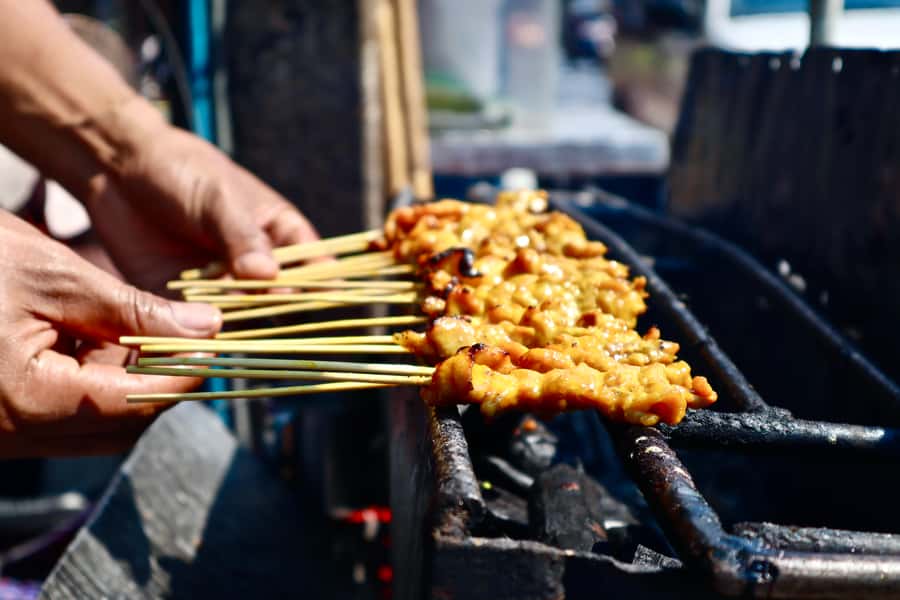
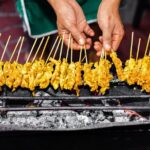
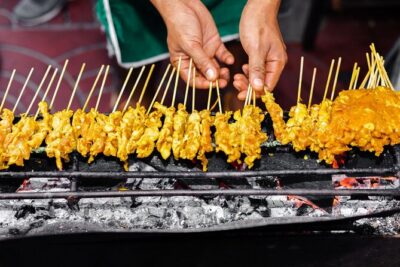
Next up: spicy grilled pork with seasoning, typically best eaten with sticky rice, plus a refreshing local beer. This is the classic Bangkok street-food combo—grilled intensity, a sweet-savory base in the meat, and the sticky rice that soaks up whatever’s left on the plate.
Two practical notes:
- The sticky rice changes everything. It’s not optional if you want the full flavor.
- The beer is part of the tasting experience, but non-alcoholic drinks are available for children, so the group isn’t stuck waiting around for alcohol.
Dim sum stop for the Thai-Chinese side
Then you’ll pause at a restaurant for dim sum. Even if you’ve had dumplings before, this stop is useful because it shows how Chinatown food works as a system, not a random snack. Dim sum is a way of eating that fits Bangkok’s mix of fast, communal, and comfort-based meals.
This is also where the tour’s neighborhood shift becomes clearer. You’re moving from Thai street flavors toward the Chinese-influenced rhythm that feels right in Chinatown.
Asian desserts while you stroll
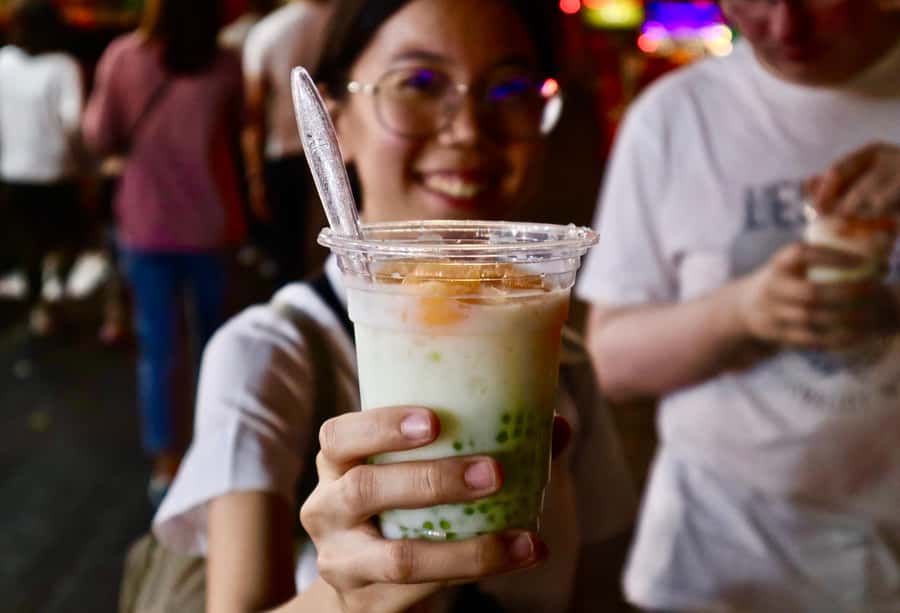
In Chinatown, you’ll taste Asian desserts as you walk the streets. That timing matters. Dessert at the end of a walking tour is where you understand why the meal felt balanced—your palate shifts from savory heat to something sweet and calming.
Dessert also gives you a break from constant spice and grilling. If you’ve got a sweet tooth, this is a real highlight.
The secret dish
There’s also a Secret Dish, included as part of the tour. I like having that mystery element because it prevents the whole experience from becoming a predictable checklist. You’ll get at least one extra surprise tasting that adds variety beyond the named dishes.
The remaining tastings between stops
You’ll have additional tastings during the 6 venues, beyond the specific dishes listed above. The exact items aren’t always spelled out in advance, so I treat this tour as a planned food crawl where the guide’s job is to keep the bites varied and filling.
A good rule for any street food tour: don’t show up stuffed from breakfast. The tastings add up, and you’ll want room for the sweet portion near the end.
Why a Passionate Guide Changes Everything
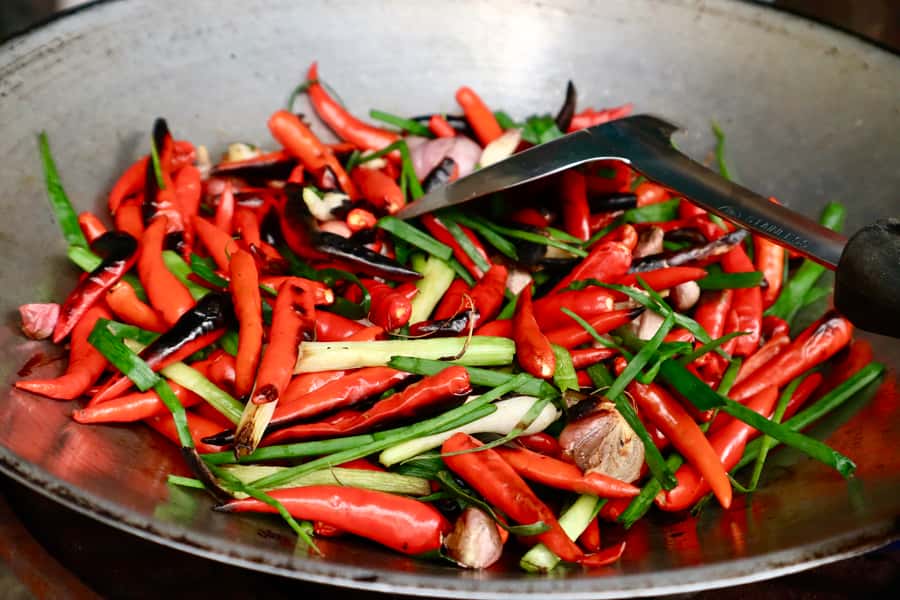
Street food in Chinatown is the kind of place where a local’s familiarity makes a real difference. This tour is led by an experienced guide who brings history and culture into the stops, not just a list of dishes.
One of the biggest advantages is how the guide relates to the vendors. The tour experience tends to feel smooth at each stop—like you’re expected, and you’re served properly without awkward guesswork. That’s not just “nice.” It affects taste and timing. When food is moving steadily and you’re guided into the right moments, you don’t miss the best bite.
And the guide adds context as you go. You learn what’s Thai, what’s Chinese influence, and why certain dishes show up where they do. It turns your walking route into a food map you can remember later.
I also like that the tour keeps group size small (maximum of 10 people). When a group is too big, it slows down at every stall. Here, the pacing stays manageable so you can actually talk, ask questions, and taste without waiting forever.
Pace, Portions, and the Walking Reality
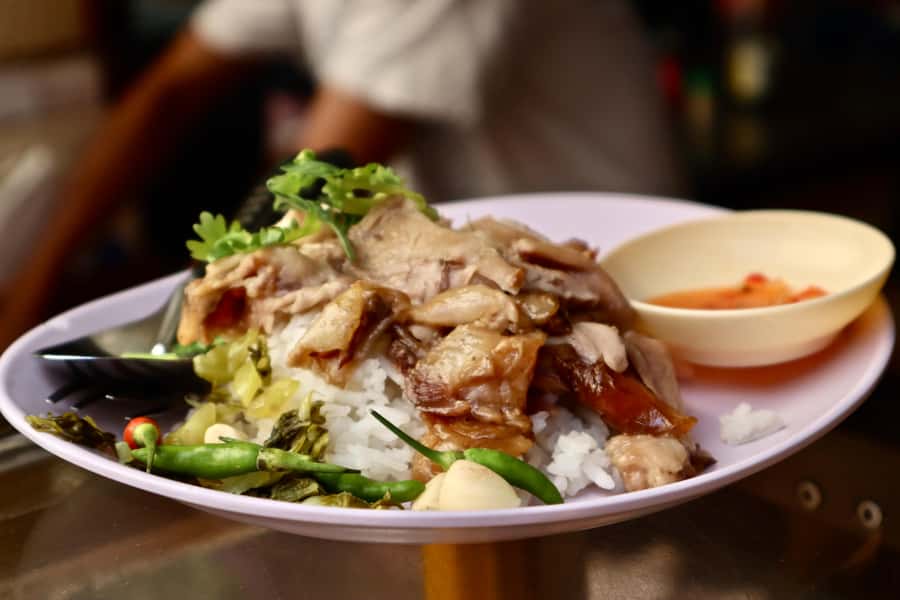
This is a 3-hour walking tour, and that’s a key part of the deal. You’re covering enough ground that comfortable shoes are not optional. If you’re planning to wear dressy footwear, save it for a different day.
Weather matters too. Bangkok can swing from hot to rainy without much warning, and the tour asks you to bring an umbrella. Even if it’s sunny when you start, I’d treat rain as possible—because standing around while you’re soaked doesn’t make food taste better.
Is it OK for kids?
Kids are welcome, but it’s still a long walk. If you’re bringing children, plan for a steady pace and know that the tour is built around tasting stops rather than sit-down breaks. Non-alcoholic drinks are available for children, which helps keep everyone included in the tasting flow.
Also, children aged 2 years or under are free. That can be a meaningful cost saver for families, as long as your child is comfortable with walking.
Who it’s not a good fit for
This tour is not suitable for people with mobility impairments and not suitable for wheelchair users. If walking long distances or standing for long stretches is a challenge, you’ll be happier with a different style of tour.
Price and Value: Is $73 a Good Deal in Bangkok?
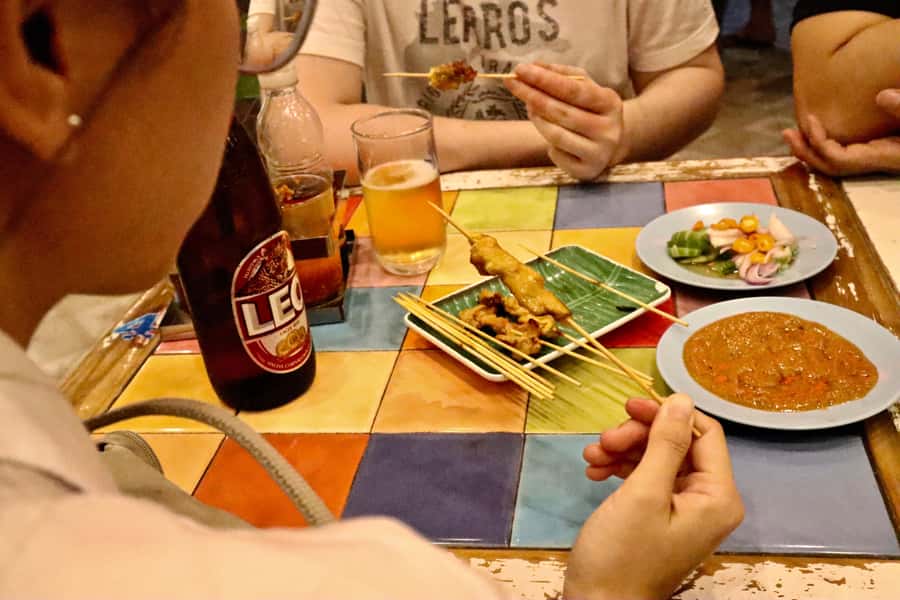
At $73 per person, this tour isn’t a bargain-snack tour. It’s positioned as a guided food experience with multiple tastings, multiple venues, and a small group.
So what are you really paying for?
- 8+ tastings plus drinks: you’re not just paying for a guide’s time.
- 6 venue stops: the variety is part of the value.
- Local guidance: you’re more likely to get served well and avoid the guesswork that comes with street food.
That said, one review noted that the price-performance ratio doesn’t quite fit Thailand. I get that concern. Street food in Bangkok can be cheap if you walk in on your own. The difference here is you’re buying a guided path through the busy sections of Chinatown and Hua Lamphong—plus the added cultural context and vendor access.
My practical take: if you want to eat a lot, try Thai-Chinese classics, and feel confident you’re hitting the right places, this can feel fair. If you already know Chinatown well or prefer to roam freely, you might feel the guide fee.
How to Prepare So You Enjoy Every Stop
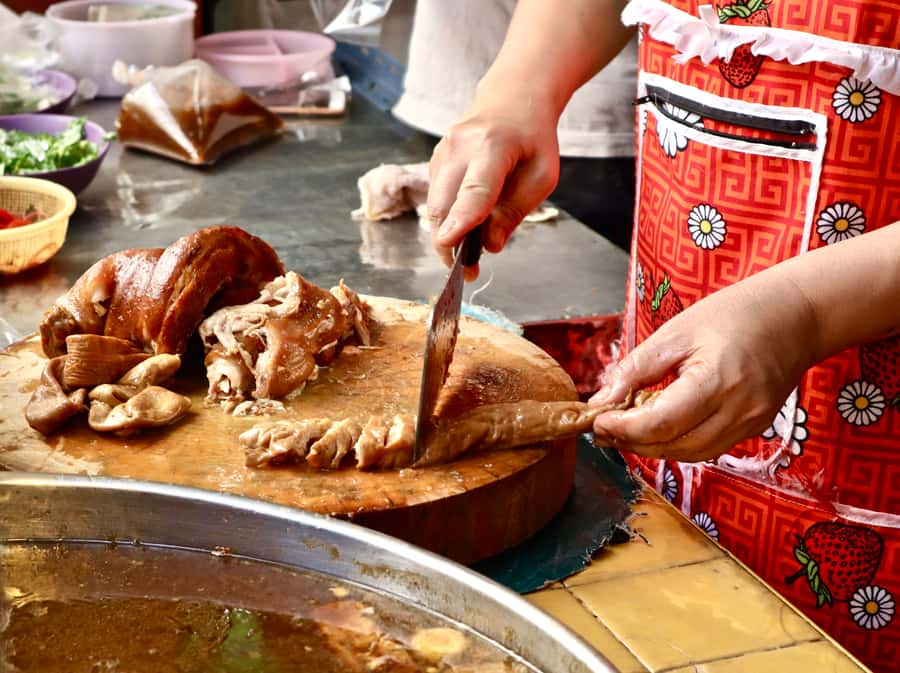
A few small choices make this tour much more enjoyable.
Come hungry. You’re getting multiple tastings over about three hours, and the goal is to keep you fed without overwhelming you. If you start with a huge meal, the last stops—especially dessert—can feel like homework.
Bring that umbrella. It’s explicitly requested because weather is unpredictable. Being prepared means you stay in the mood for tasting.
Think about spice tolerance. Several items are described as spicy (like spicy basil chicken and spicy grilled pork). If you’re sensitive to heat, tell your guide so you can pace yourself.
Wear practical shoes. This is a walking tour with a long street-food route. You’ll enjoy it more if your feet aren’t bargaining with you by hour two.
Should You Book This Bangkok Chinatown Street Food Tour?
I’d book it if you want a guided, food-first route through Hua Lamphong and Chinatown, with enough tastings to satisfy a real appetite. This tour is also a strong pick if you like structure—six venues, a steady sequence of flavors, and a guide who brings the Thai-Chinese story to life while you eat.
I’d skip it (or consider something else) if you need low-walking activities, have mobility limits, or simply want the cheapest possible way to snack around on your own. At $73, you’re paying for access, variety, and guided context, not just food.
If you like the idea of tasting spicy basil chicken, spicy grilled pork with sticky rice, dim sum, Asian desserts, and a Secret Dish—while walking through the neighborhoods that shaped Bangkok’s food identity—this is a smart way to spend a few hours.
FAQ
How long is the Bangkok Chinatown street food tour?
It’s a 3-hour tour with a long walking route through the Hua Lamphong and Chinatown areas.
Where do I meet the tour guide?
You meet outside Hua Lamphong MRT Station exit 3, on Rong Muang Road. The guide will be standing there holding an orange umbrella.
How many tastings are included?
The tour includes 8+ tastings during the experience, with 6 tasting stops across different venues.
What food will I try during the tour?
You’ll try items like spicy basil chicken served over jasmine rice, spicy grilled pork with seasoning (often eaten with sticky rice and with local beer), dim sum, Asian desserts, and a Secret Dish.
Is transportation included in the price?
No. Transportation is not included, so you’ll need to get yourself to the meeting point.
Is this tour suitable for children?
Children are welcome, but it involves a long walk and lasts 3 hours. Children aged 2 years or under are free, and non-alcoholic drinks are available for children.
Can the tour accommodate dietary needs?
If you have dietary needs, contact the supplier via email prior to booking to ask if they can accommodate you.
More Tour Reviews in Bangkok



Deeper Into Yaowarat
Eat Bangkok: More Street Food
Just In: Fresh Bangkok Reviews


Bangkok Food & Street Eats, compared.
 ★ 4.9Backstreets Food Tour with 15+ TastingsFrom $622,880 reviews
 ★ 4.9Midnight Food Tour by Tuk-TukFrom $742,054 reviews
★ 5.0Bangkok Backstreets Food Tour with 15+ TastingsFrom $591,926 reviews
★ 4.9Midnight Food Tour by Tuk-TukFrom $742,054 reviews
★ 5.0Bangkok Backstreets Food Tour with 15+ TastingsFrom $591,926 reviews
 ★ 4.4Michelin Guide Street Food Tour by Tuk TukFrom $201,274 reviews
 ★ 5.0Old Siam Bangkok Food Tour with 15+ TastingsFrom $59867 reviews
 ★ 4.9Bangkok Authentic Tasting Thai-Chinatown Walking Food TourFrom $43852 reviews
 ★ 4.3Tuk Tuk Adventure Chinatown Michelin Food & TemplesFrom $18725 reviews
 ★ 5.0Bangkok Tuk-Tuk Tour by Night with Chinatown Street Food MealFrom $40635 reviews
Browse the lists this tour appears in