
Review · GRAND PALACE & TEMPLE TOURS
Bangkok: Wat Pho and Wat Arun Guided Walking Tour
Wat Pho and Wat Arun in one walk is the kind of Bangkok shortcut I like. You get the big moments fast: the 46-meter reclining Buddha at Wat Pho and the riverfront white chedi at Wat Arun, plus a guide who helps you read what you’re looking at. I especially love the pace for first-timers, and the included coconut water break that keeps you moving without turning the day into a slog.
One thing to plan for: the temple dress code is strict. Shoulders, underarms, back, and knees need coverage, so pack a sarong, scarf, or light layer to avoid getting stuck outside the doorway.
In This Review
- Key things I’d bet on before you go
- A 3-Hour Temple Walk That Fits Real Schedules
- Starting at Tha Tian Pier: Set Your Bearings Along the River
- Wat Pho: 46-Meter Reclining Buddha and Colorful Mosaic Shrines
- Wat Arun’s White Chedi: Getting the Best Views by the Chao Phraya
- What the Guide Adds When You Want More Than Postcards
- Dress Code, Heat, and Walking Comfort: Your Prep List
- Tickets and Cost: Why $17 Can Still Be a Smart Deal
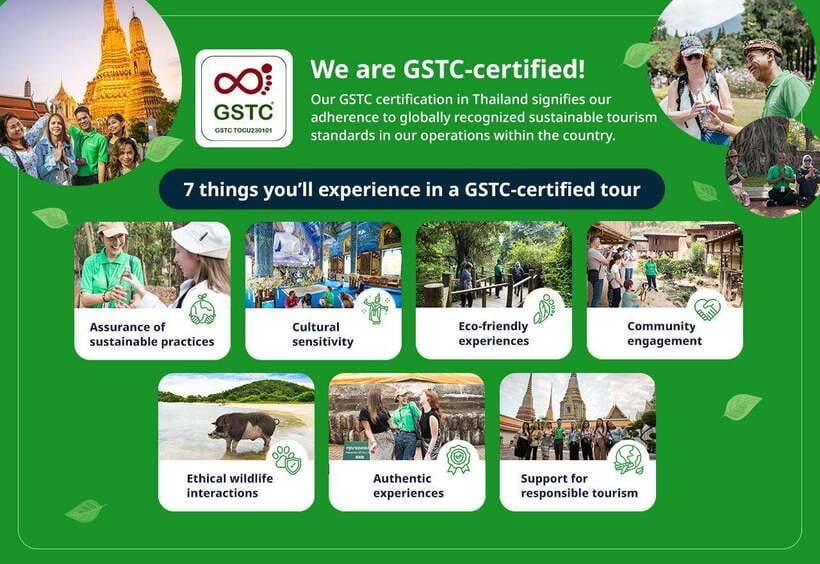
- Responsible Touring: GSTC-Certified Low-Impact Touches
- When You Should Book (and When You Should Skip)
- FAQ
- FAQ
- How long is the Bangkok Wat Pho and Wat Arun guided walking tour?
- Where do I meet the guide?
- Are temple entry tickets included?
- What’s included in the tour price?
- What languages are the guides?
- What should I wear or bring for the temples?
- Is the tour good for everyone?
- Is carbon offsetting and a low-impact approach part of this tour?
Key things I’d bet on before you go
- Tha Tian Pier is the smart starting point, right on the river zone where these temples feel natural, not random.
- Wat Pho is a full visual education, from the reclining Buddha to mosaic shrine details you’ll miss alone.
- Wat Arun’s mosaics are the main event, especially as you circle the chedi and look for the best angles by the river.
- You’ll hear the story behind the symbols, not just postcard descriptions from guides like Nancy, Tee, or Surina.
- Included coconut water and water help when Bangkok heat hits.
- A GSTC-certified, low-impact approach adds a practical conscience to the sightseeing.
A 3-Hour Temple Walk That Fits Real Schedules
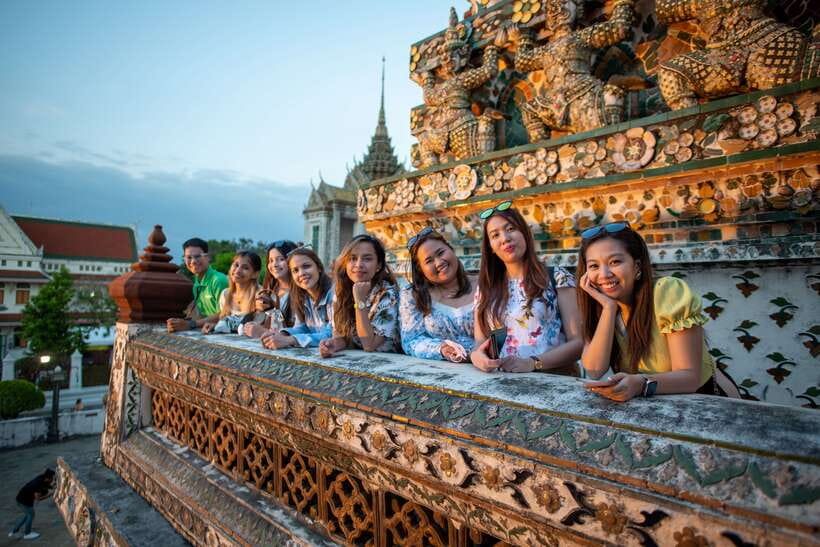
This is a focused guided walking tour built for people who don’t want a half-day gone. Three hours is enough to see the headline sights at Wat Pho and Wat Arun without rushing your photos to death, which is my usual problem with temple tours.
The real value is that the guide helps you understand the layout and the “why” of what you’re seeing. Temples can feel like a lot of gold and stone if you don’t have context. With a guide, you’ll move through faster with better stops, not just more walking.
More gilded rooftops: other temple runs across the old city
- From Bangkok: Ayutthaya Temples Guided Tour with Lunch
★ 4.7 · 10,535 reviews - Bangkok: City Highlights Temple and Market Walking Tour
★ 4.5 · 3,990 reviews - Bangkok by Night: Temples, Markets and Food Tuk-Tuk Tour
★ 5.0 · 3,752 reviews
Starting at Tha Tian Pier: Set Your Bearings Along the River
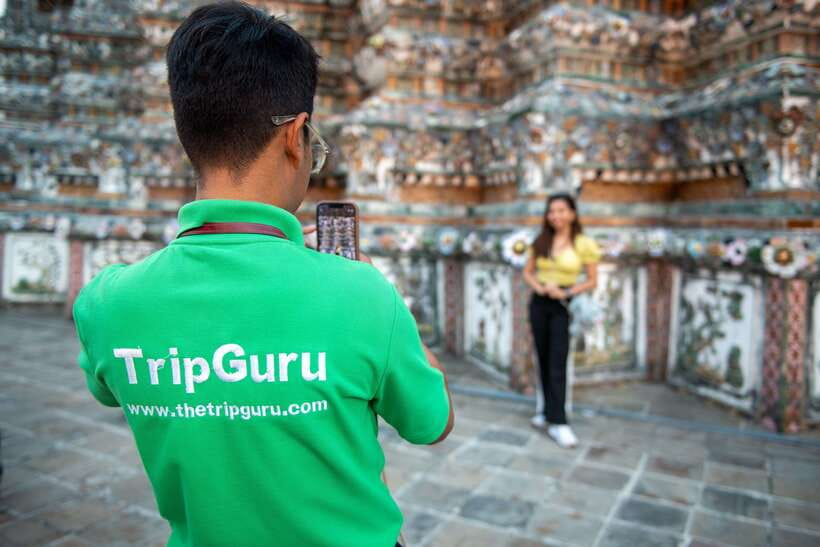
You meet at Tha Tian Pier (ท่าเรือท่าเตียน). Your guide will be holding a TripGuru sign, and you’ll want to show up about 10 minutes early so you’re not scrambling in the riverside crowd.
This start matters because it puts you in the right mental zone. Bangkok’s temple sites here feel connected to the Chao Phraya River and the rhythms of the city around it. You’re not bouncing across town feeling disoriented—you’re beginning in the same geography that makes Wat Arun so iconic.
One practical tip: if you’re coming from farther away, avoid sitting in traffic if you can. A guide-supplied tip from past participants is to use the MRT instead of driving when possible, since getting stuck in Bangkok traffic can ruin your timing.
Wat Pho: 46-Meter Reclining Buddha and Colorful Mosaic Shrines
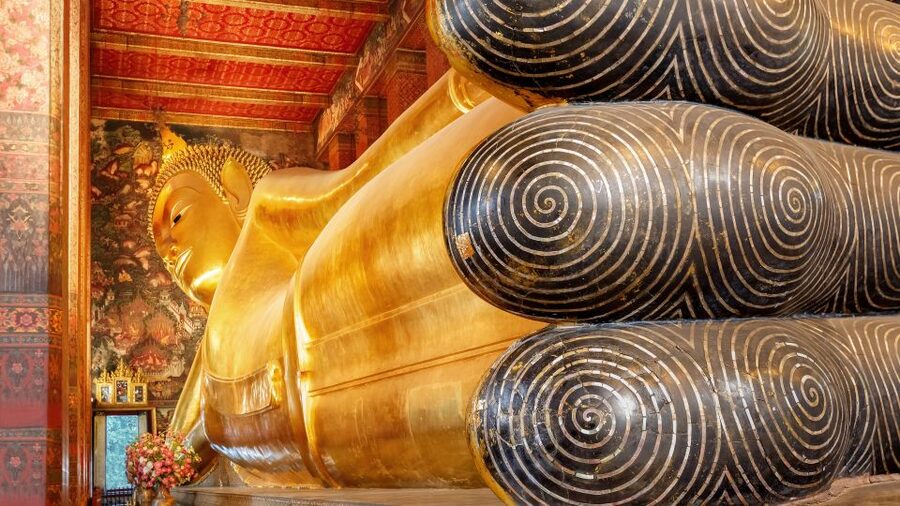
Wat Pho is where you get the “wait, that’s how big it is?” moment. The highlight is the 46-meter long reclining Buddha, one of those sights that looks impressive in photos but becomes real only when you’re standing near it.
About what the guide typically helps you notice here:
- The reclining figure isn’t just a Buddha-shaped statue. You learn what the pose and setting are communicating.
- The temple grounds have smaller details, including colorful mosaic shrines, that reward slow glances even if you’re on a schedule.
- You’re not only looking forward. The guide’s route helps you understand how the temple spaces connect, so you don’t feel lost when you step away to explore.
What you’ll feel at Wat Pho is a mix of scale and texture. The complex looks busy from a distance, but inside it’s orderly. A guide can also make the visit smoother when you’re trying to figure out where to go next, especially if you’re trying to photograph without blocking people.
A small but useful comfort detail: between the two temples, you’ll get a coconut water break (included). And from past experiences shared about this tour, you may also get a small bottle of water when you arrive for the first temple. Either way, plan to hydrate because you’re walking and temples mean standing.
Wat Arun’s White Chedi: Getting the Best Views by the Chao Phraya
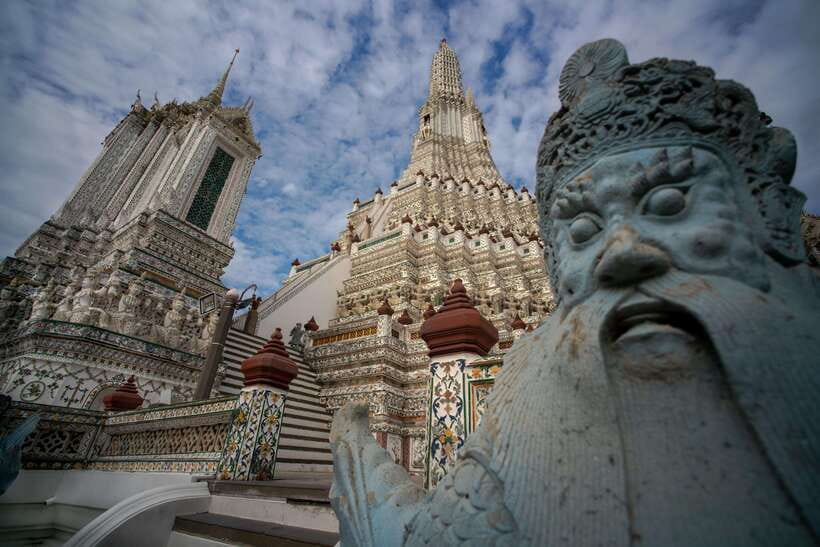
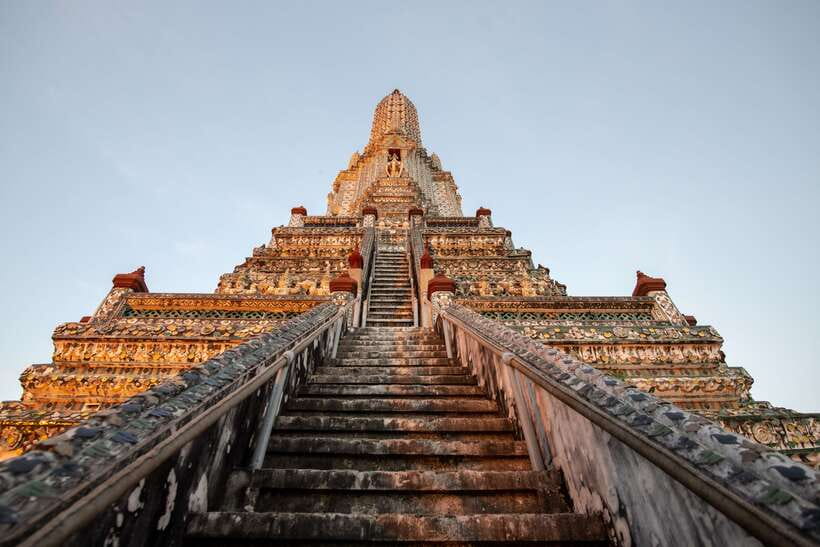
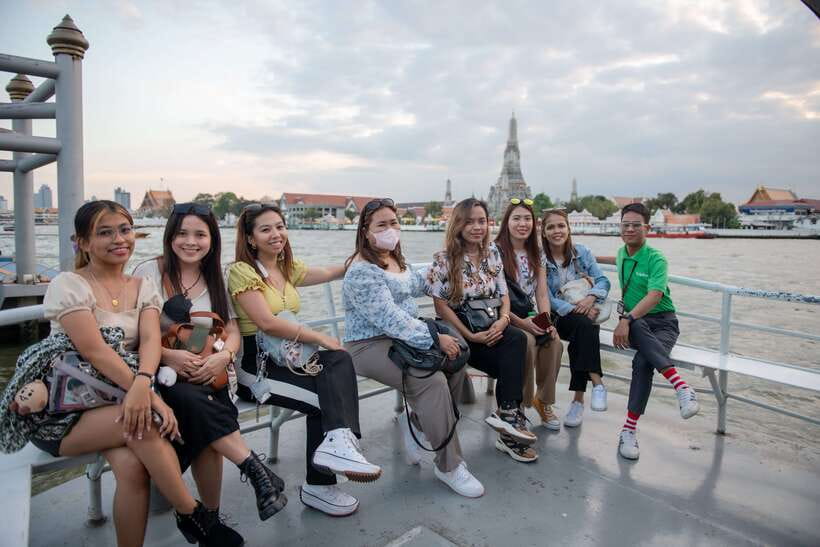
Then you move to Wat Arun, about a 300-year old temple famous for its enormous white chedi. The chedi is inlaid with thousands of colorful mosaic pieces, and this is one of those Bangkok sights that hits different from multiple angles.
The setting helps: Wat Arun sits right on the banks of the Chao Phraya River, so it’s not just architecture—it’s a landmark you can understand in the context of the city. You’ll likely spend time walking around the grounds, looking for views where the mosaic work and the chedi shape look most dramatic.
Why a guide helps here:
- Wat Arun is “photogenic,” but you can still waste time walking in circles the wrong way.
- Guides tend to point out what to focus on near the chedi and how to time your photo angles so you don’t end up with everyone else’s exact same shot.
- If you’re curious about Buddhism basics, some guides bring a simple, respectful explanation of how prayer and temple etiquette fit the space. Names that have come up include Jack and Bond, who are known for mixing practical temple guidance with clear explanations.
Wat Arun’s look is also deceptive. From one side, it seems flat and crisp. From another, the details pop. A guided route is the easiest way to make sure you see more than just the “front.”
Bangkok at walking pace, more routes



What the Guide Adds When You Want More Than Postcards
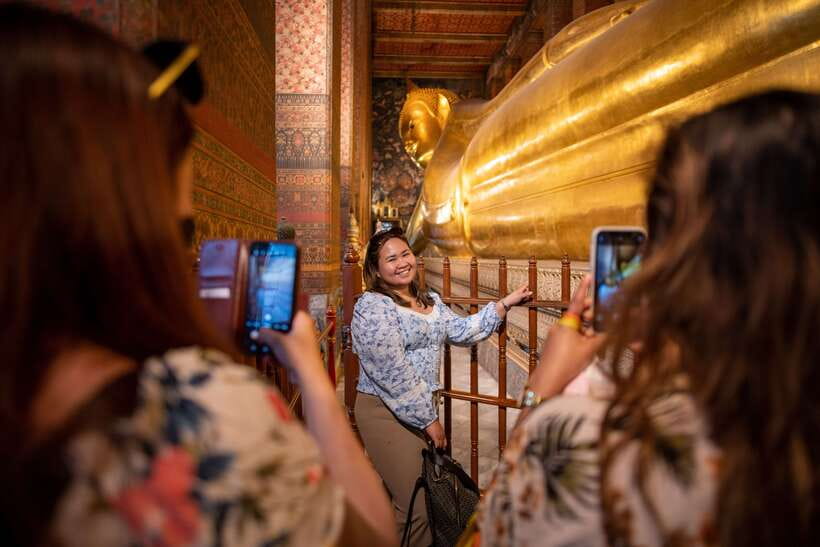
A big part of this tour’s strength is the people leading it. The guide isn’t there to recite a script; they’re there to help you make sense of a place that can look overwhelming.
From past participants’ descriptions, guides often do three things well:
- They explain temple elements in plain language. People mention guides like Nancy, Tee, and Surina for turning temple architecture into something you can actually understand.
- They keep the group moving without turning it into a speed march. Guides like Angie and Jack are described as giving enough time to explore on your own once you know where to look.
- They help with photos. Several guides are noted for taking group pictures and helping people get in front of the best views without chaos.
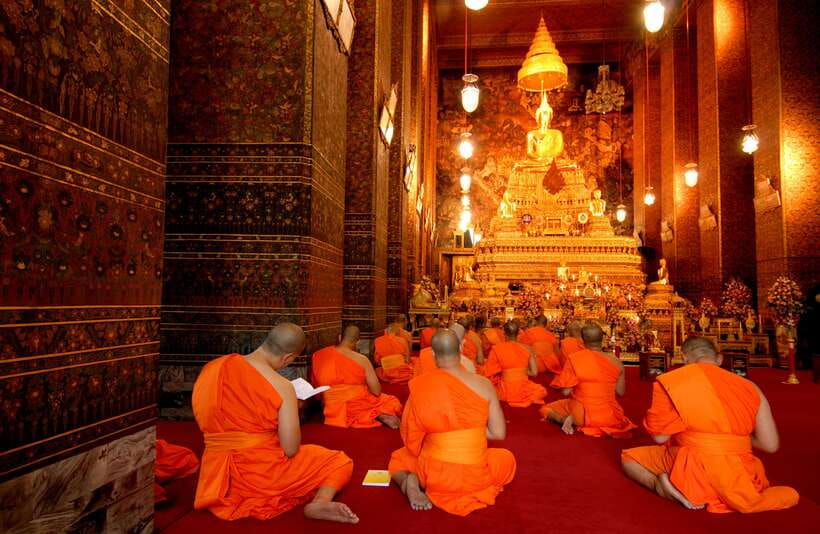
You’ll also pick up small etiquette tips that can save you awkward moments. For example, knowing how to move around sacred areas, how to pause for photos without getting in the way, and what to expect when you enter temple zones. This is the stuff that doesn’t show up on a brochure but makes the experience smoother.
Dress Code, Heat, and Walking Comfort: Your Prep List
Temples are strict, and this tour is no exception. Clothes revealing shoulders, underarms, back, and knees are not allowed in some sites on the tour. That means you should pack a sarong, scarf, or light sweater and be ready to cover up fast.
Also bring:
- Comfortable shoes (you’ll be walking and standing)
- Sunglasses and sunscreen
- Hat
- Insect repellent
- Camera
- Cash (because entry tickets aren’t included)
Bangkok’s heat can feel personal, so plan for sweat. Even with breaks and included drinks, you’ll be outdoors near the river. It helps if you pace yourself and hydrate before you feel thirsty. One participant described a guide checking in when someone was close to passing out from heat, which is a good sign that guides pay attention to safety, not just the route.
One more practical caution: this tour is not suitable for pregnant women, people with mobility impairments, or anyone with heart problems or high blood pressure. That’s mainly about walking, standing, and temple stairs/uneven surfaces you’ll encounter.
Tickets and Cost: Why $17 Can Still Be a Smart Deal
The listed tour price is $17 per person, and the structure makes it feel reasonable because the guide effort and time are included. What’s not included is the temple entry cost:
- Wat Pho: 300 Thai Baht
- Wat Arun: 200 Thai Baht
So your real total depends on those tickets, plus any drinks or food you buy beyond the coconut water that’s included. Still, for three hours covering two major temples with an on-the-ground guide, it often comes out as good value—especially if you’d otherwise spend time figuring things out yourself.
Here’s how I’d judge the value for you:
- If you like understanding what you’re seeing, the guide component is where your money turns into real enjoyment.
- If you mostly want photos only, you might consider skipping a guide. But with temples, a little context can massively improve your experience and save time.
- If you’re heat-sensitive, the included drink and the efficient route can offset the discomfort that often makes DIY temple days less pleasant.
Responsible Touring: GSTC-Certified Low-Impact Touches
This tour includes a low-impact approach. You’ll get water in glass bottles, and the tour also includes carbon emissions offset credits. It’s not just a feel-good detail; it changes how the day runs.
Why that matters in real terms:
- Fewer single-use plastic items
- A tour operator who’s thinking about standards and measurable impact
- A reminder that temple tourism should be respectful and responsible, even when it’s fun and photo-heavy
If you care about how your tourism affects places you visit, this is a small but concrete way to align your trip with that mindset. And since you’re seeing major sites that bring big crowds, choosing a guide-run, structured experience can also reduce the chaos of people wandering without any plan.
When You Should Book (and When You Should Skip)
You should book this tour if:
- You want a tight 3-hour plan that covers two of Bangkok’s top temples without turning into a half-day endurance test.
- You like walking with a guide who explains what you’re looking at, not just pointing at things.
- You’d benefit from help with photo timing and temple navigation—especially at Wat Arun, where angles and movement matter.
You might skip it if:
- You’re not up for walking/standing and uneven temple grounds (and if any health or mobility limitations apply).
- You already know the temple basics and you’re comfortable exploring on your own.
- The strict dress code would be a hassle for you right now. If you forget a scarf/sarong, you could lose time at the door.
FAQ
FAQ
How long is the Bangkok Wat Pho and Wat Arun guided walking tour?
It’s 3 hours total.
Where do I meet the guide?
Meet at Tha Tian Pier (ท่าเรือท่าเตียน). The guide will be holding a TripGuru sign.
Are temple entry tickets included?
No. You pay on-site: Wat Pho 300 Thai Baht and Wat Arun 200 Thai Baht.
What’s included in the tour price?
Included items are the guide, the walking tour, coconut water, and carbon emissions offset credits.
What languages are the guides?
The live guide is offered in Chinese and English.
What should I wear or bring for the temples?
Bring comfortable shoes and plan for the strict dress code. You should cover shoulders/underarms/back and keep knees covered, so pack a sarong, scarf, or sweater. Also bring sunscreen, sunglasses, a hat, insect repellent, camera, and cash.
Is the tour good for everyone?
It’s not suitable for pregnant women, people with mobility impairments, people with heart problems, or people with high blood pressure.
Is carbon offsetting and a low-impact approach part of this tour?
Yes. The tour highlights low-impact steps such as water in glass bottles and carbon emissions offset credits, and it’s described as GSTC-certified.
—
If you want the fastest, most readable way to see Wat Pho and Wat Arun in one go, this tour is a solid pick. Bring the right clothing, wear good shoes, and let the guide do the heavy lifting on what you’re seeing.
More Tours in Bangkok



More Tour Reviews in Bangkok




More of Bangkok Temples
Just In: Fresh Bangkok Reviews

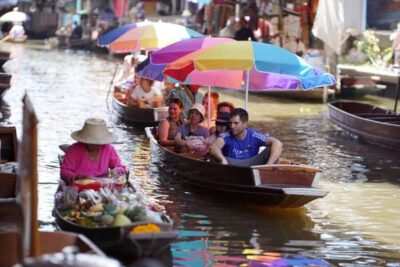
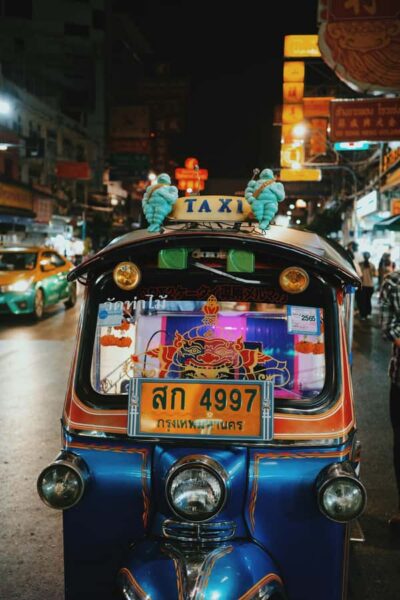
Grand Palace & Temple Tours, compared.
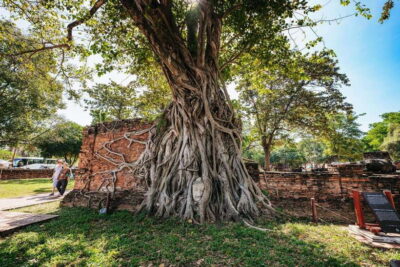 ★ 4.7From Bangkok: Ayutthaya Temples Guided Tour with LunchFrom $2810,535 reviews
 ★ 4.5City Highlights Temple and Market Walking TourFrom $423,990 reviews
 ★ 5.0Bangkok by Night: Temples, Markets and Food Tuk-Tuk TourFrom $793,752 reviews
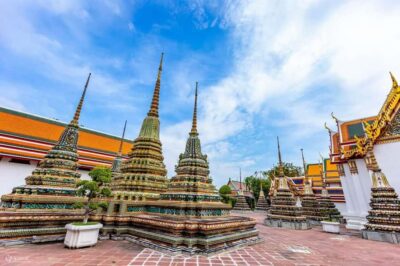 ★ 4.8Grand Palace, Wat Pho, and Wat Arun Guided TourFrom $243,632 reviews
 ★ 4.9Temples, Canals & Local Life Bike TourFrom $243,511 reviews
 ★ 4.4Grand Palace and Wat Phra Kaew Guided Walking TourFrom $172,417 reviews
 ★ 4.9Markets, Temples and Food Night Tour by Tuk TukFrom $772,371 reviews
 ★ 4.3Grand Palace, Wat Pho, Wat Arun Sacred & Local TourFrom $182,256 reviews
Browse the lists this tour appears in