
Review · BANGKOK FOOD & STREET EATS
Chinatown Street Food Night Tour by Tuk Tuk in Bangkok
Street food tastes better after dark. This Bangkok Chinatown street food night tour mixes a traditional tuk-tuk ride with an English-speaking guide’s food recommendations, plus night visits like the Giant Swing and Pak Khlong Talat. I like that the evening is built around simple, real local flavors instead of a rushed checklist.
I also love the way the tour turns into a moving “see and taste” loop: tuk-tuk to get around fast, then short walks where you can actually notice how vendors work. Food tastings are part of the plan, and the guide can steer you toward options that make sense for your tastes.
One thing to consider: you’ll be in busy night streets and you may end up with spicy, fragrant bites that are more snack-sized than a full sit-down meal. If you’re very sensitive to strong flavors or crowds, go in ready to adjust with your guide.
In This Review
- Key points before you go
- Bangkok Chinatown Street Food at 5pm: A Night-First Tour
- Price and what $72.92 buys you (and why it’s fair)
- Your route: Yaowarat Road, Giant Swing, Pak Khlong Talat, and Wat Rachanaddaram
- Yaowarat Road street food: how the tasting part really helps
- The Giant Swing at night (Sao Chingcha): a dramatic cultural stop
- Pak Khlong Talat at night: the 24-hour flower market moment
- Wat Rachanaddaram and the Grand Palace exterior photo window
- Tuk-tuk rides: why the transport is part of the experience
- Guides (Vivi, Dada) and the food-culture focus
- Who this tour is best for (and who should skip it)
- Small practical pointers that make the night smoother
- Should you book this Chinatown street food night tour?
- FAQ
- What time does the Chinatown Street Food Night Tour start?
- Does the tour include pickup?
- What’s included in the price?
- Is tip included?
- Will the guide speak English?
- Can the tour accommodate dietary needs or allergies?
- Is this tour for adults and children only?
- How big is the group?
- Where does the tour end?
- How flexible is the cancellation policy?
Key points before you go
- Tuk-tuk transport with hotel-area pickup from Sukhumvit Road, Silom, and Pratunam (plus meeting at Tha Maharaj)
- English-speaking guide focused on local food culture, not just names of places
- Yaowarat Road street food tastings alongside real Chinatown nighttime energy
- Giant Swing and Wat Rachanaddaram at night for photo-worthy temple-lit views
- Pak Khlong Talat flower market with a 24-hour feel and strong sensory payoff
- Max group size of 20 keeps the night from feeling like a cattle run
Bangkok Chinatown Street Food at 5pm: A Night-First Tour
This tour starts at 5:00 pm, which is a sweet spot in Bangkok. The sun is gone (so temples and landmarks look dramatic), and Chinatown is awake enough that you’ll get that late-day-to-night shift where food smells take over the street.
You’re not stuck waiting until everything is dark. The schedule is designed to move you through Chinatown while stalls are active and lighting is good for photos at the big sights. The overall timing is about 4 hours, so it feels like a focused evening rather than a whole-night commitment.
Still hungry? More woks, stalls and night-market plates
- Bangkok: Backstreets Food Tour with 15+ Tastings
★ 4.9 · 2,880 reviews - Bangkok: Midnight Food Tour by Tuk-Tuk
★ 4.9 · 2,054 reviews - Bangkok Backstreets Food Tour with 15+ Tastings
★ 5.0 · 1,926 reviews
Price and what $72.92 buys you (and why it’s fair)
At $72.92 per person, you’re paying for more than food. You’re also getting tuktuk transfers from the listed Bangkok areas, an English-speaking guide, sample food tasting, bottled water, and travel insurance. For a short, night-only outing, that package is often where the value comes from—transport and guiding cost money even when the route looks “simple” on paper.
Also, this isn’t a basic walking tour where you mainly show up to buy your own bites. The tasting is included, and the guide can help you choose what to try so you don’t waste time guessing. If you’re the type who wants to eat well in a place like Yaowarat without feeling lost, the price starts to make sense.
Your route: Yaowarat Road, Giant Swing, Pak Khlong Talat, and Wat Rachanaddaram
The evening runs as a tight loop with stops that all make sense at night. Here’s how the order works in practice.
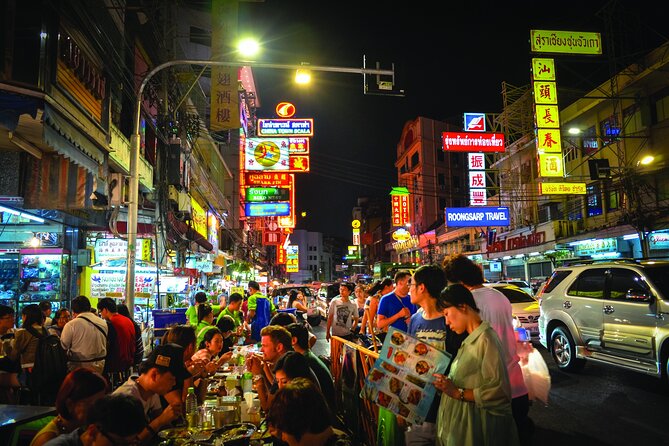
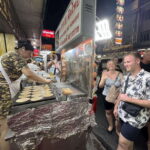
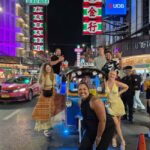
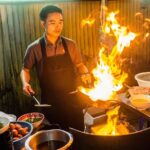
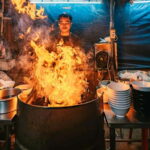
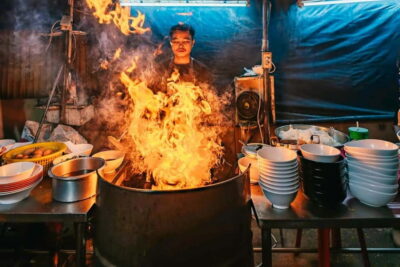
First, you head to Chinatown’s Yaowarat Road (starting from the Tha Maharaj meeting area). This is your food-and-people-watching segment, the part where Bangkok feels loud in the best way: scooters, voices, smoke from woks, and plates moving fast.
Then the tour shifts from street-level food to major landmarks lit up after dark. You’ll visit The Giant Swing (Sao Chingcha) and Wat Rachanaddaram. Between those, you stop at Pak Khlong Talat, Bangkok’s large 24-hour flower market, where the colors and scents do the talking.
Finally, you ride back to the meeting point area, keeping the night convenient rather than ending somewhere you have to figure out on your own.
Yaowarat Road street food: how the tasting part really helps
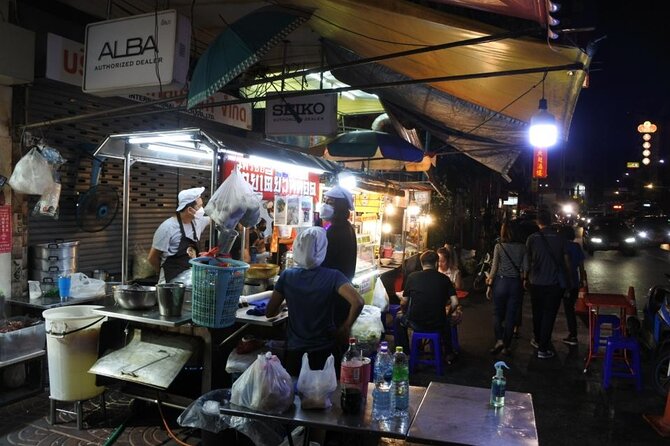
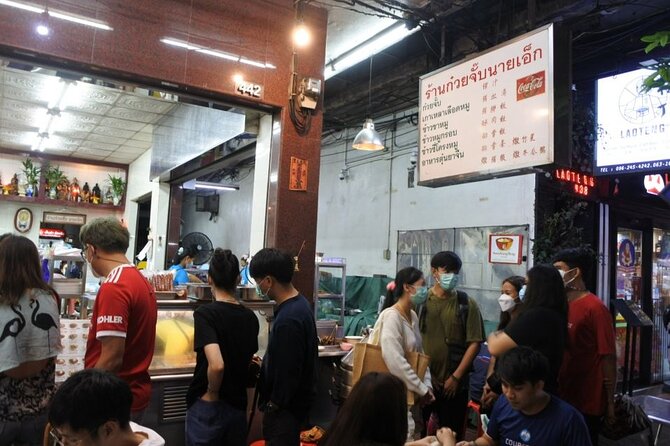
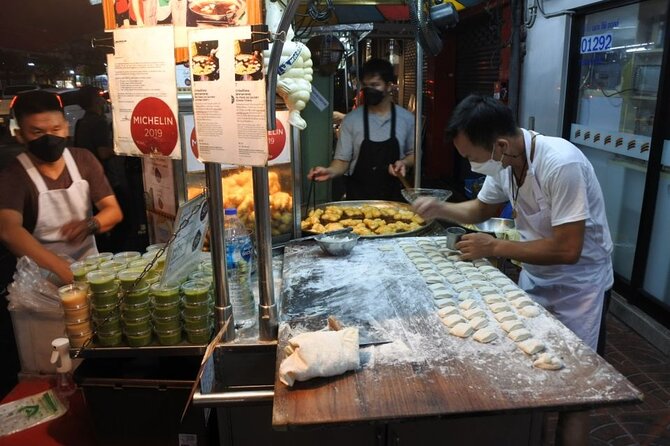
Yaowarat Road is the heart of Chinatown nightlife, and this tour uses it in the right way: not as a blur of “try everything,” but as a guided selection moment.
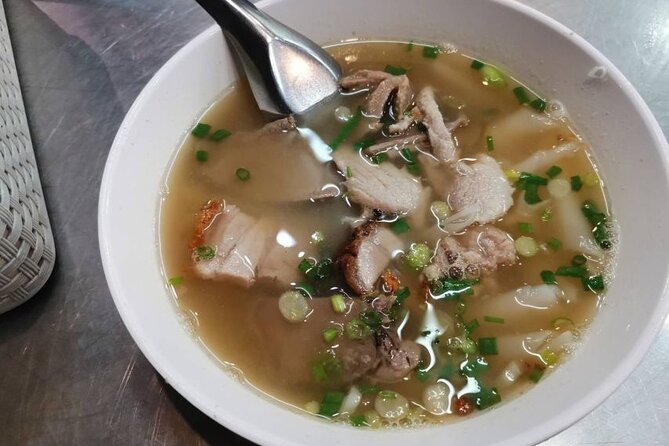
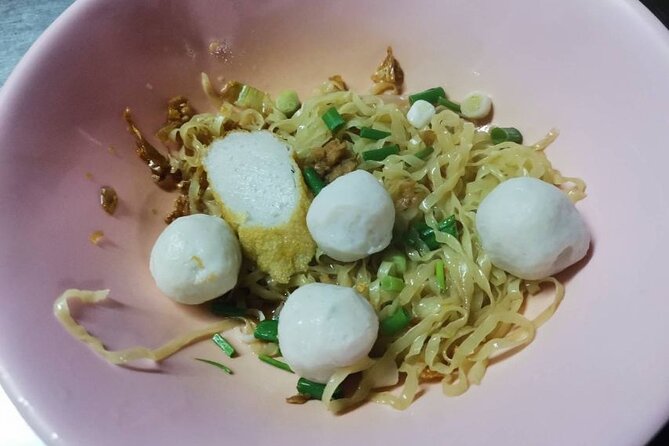
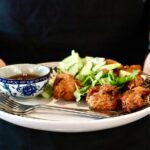
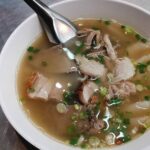
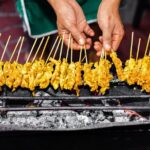
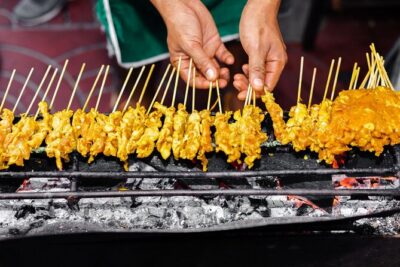
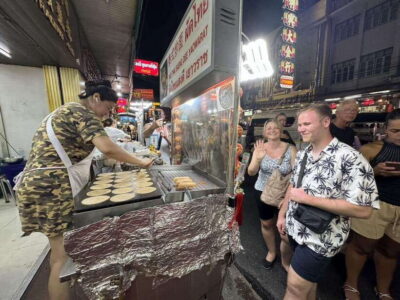
You can expect a guided walk through active stalls where you’ll see familiar street staples—things like skewers and noodle-style dishes. The key value is that you’re not only there to look. You’re there to sample.
When you’re in Thailand and your language isn’t Thai, you often lose time to ordering confusion. An English-speaking guide helps you get past that. The result is you spend more of your evening actually eating and less time stuck in line trying to translate exactly what’s in the dish.
One bonus from the guide dynamic: notes from past groups highlight that guides can explain how local food culture works, not just what to eat. So you’re tasting with context, which makes the flavors more memorable.
Deeper into Yaowarat after dark
The Giant Swing at night (Sao Chingcha): a dramatic cultural stop
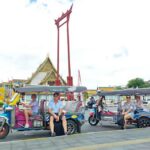
After Chinatown food, the tour takes you to The Giant Swing (Sao Chingcha)—a standout religious monument in Bangkok. At night, it changes character. The structure looks sharper against the dark, and the lighting helps you see details that can get lost in daylight crowds.
Practical tip for this kind of stop: don’t treat it like a quick photo-only break. Even a short, guided moment helps you understand what you’re looking at—so the photos come with meaning, not just a nice background.
The tour’s timing also matters here. You’re not squeezing this into midday heat. You’re seeing it when the atmosphere is calmer and the setting is already geared for evening viewing.
Pak Khlong Talat at night: the 24-hour flower market moment
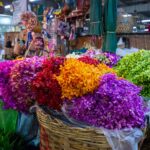
Then comes Pak Khlong Talat, Bangkok’s largest 24-hour flower market. This is one of those stops that’s worth even if you’re not a “flowers” person. The market isn’t just pretty; it’s functional. You see how Bangkok supplies its temples, homes, and celebrations—right as the city keeps moving.
At night, the sensory payoff is immediate. You get bright color, strong fragrance, and a sense of constant work going on around you. If you’ve only seen flower markets in the morning, this is a different Bangkok mood.
Why it’s a smart mid-tour stop: it gives your brain a break from the heavy street-food smoke and keeps your attention fresh. Then you can pivot back to temples with a clearer head and better photos.
Wat Rachanaddaram and the Grand Palace exterior photo window
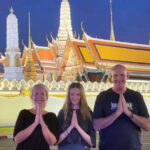
Next up is Wat Rachanaddaram, glowing at night. Temples look better after dark because the lighting tends to show shapes and textures that daytime photos can flatten.
This part of the tour is also where you get that “night Bangkok” feeling that’s hard to reproduce alone. You’re guided through a sequence where the lighting is part of the experience, and you can take photos without worrying about how to get from one spot to the next.
You’ll also have a photo moment tied to the Grand Palace’s illuminated exterior. You won’t be trying to cover the whole palace complex here (and you shouldn’t expect a long inside visit based on the tour’s structure). But the exterior view works well at night because the bright lines and walls read clearly.
If you care about photos, this is the segment to slow down. Take a few shots from different angles. Night lighting changes fast, and you’ll want options.
Tuk-tuk rides: why the transport is part of the experience
This tour doesn’t treat transportation as a necessary evil. The tuk-tuk ride is part of the fun, and it also changes what you see.
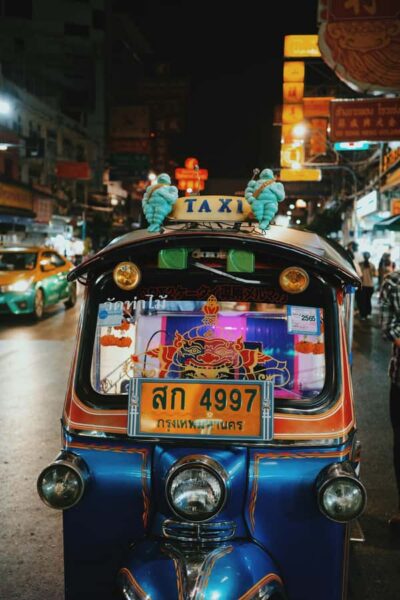
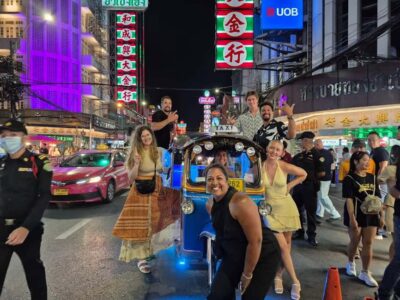
In a tuk-tuk, streets feel closer. You notice storefront signs, crowds shifting, and how quickly the city moves at night. You also get across short distances without spending your evening stuck in traffic and waiting for transit.
From the vibe described in guide feedback, the rides can feel lively—like you’re zipping through the streets instead of watching them from the curb. That matters because Chinatown at night can be intense. Tuk-tuk transport helps you keep your energy for the stops that count.
Guides (Vivi, Dada) and the food-culture focus
What makes this tour work best is the English-speaking guide. Past experiences attached to this tour name guides like Vivi and Dada, and the consistent theme is that the guide brings the food conversation to life—how local choices get made and how the street-food scene fits into daily life.
You should expect the guide to be more than a driver and a timer. The tour is set up so you can ask questions, get recommendations, and adjust what you eat to your comfort level.
And yes—there’s flexibility. The tour states it caters to dietary requirements, food allergies, and intolerances. In a street-food setting, that’s not trivial. It means you should talk to the guide when you get the chance. If you have allergies or strong restrictions, treat this like a priority conversation, not a last-minute detail.
Who this tour is best for (and who should skip it)
I think this tour is ideal if you want:
- a short, well-paced Chinatown night plan
- guided street food tastings (not solo guesswork)
- illuminated cultural stops like Sao Chingcha and night temples
- a tuk-tuk ride that keeps the evening fun
You might skip it if:
- you hate crowds or you’re prone to overwhelm in busy night markets
- you want a full dinner-sized meal (this is tastings plus sightseeing)
- you strongly dislike spicy or aromatic foods and don’t want to communicate adjustments
Small practical pointers that make the night smoother
A few smart habits help this kind of tour run well.
- Wear comfortable shoes. You’re strolling through street stalls and moving between stops.
- Be ready for strong smells and heat changes. Chinatown and markets are sensory heavy, especially at night.
- If you have allergies or intolerances, speak up early. The tour claims dietary needs can be catered for, so use that.
- Bring a camera/phone that handles low light. The temples and exterior palace view are lit up for a reason.
Also note that the tour includes bottled water, which helps on an evening where you’re eating and walking.
Should you book this Chinatown street food night tour?
If you want Bangkok Chinatown in one efficient, guided evening—street food tastings plus night landmarks—this is a strong pick. The value isn’t just the places; it’s the way the guide helps you order and understand what you’re eating, so the food feels intentional instead of random.
I’d book it especially if you’ll be staying around areas like Sukhumvit Road, Silom, or Pratunam, since pickup is offered from there. Even if you’re not in those exact zones, the meeting point at Tha Maharaj is a straightforward anchor.
Skip it only if you’re looking for a long, slow, sit-down food experience or you know you can’t handle crowded night streets. Otherwise, it’s a fun, photo-friendly way to eat and see Bangkok after dark.
FAQ
What time does the Chinatown Street Food Night Tour start?
It starts at 5:00 pm and runs for about 4 hours.
Does the tour include pickup?
Yes, pickup is offered from Sukhumvit Road, Silom, and Pratunam. The start meeting point is Tha Maharaj Phra Borom Maha Ratchawang, Phra Nakhon, Bangkok 10200, Thailand.
What’s included in the price?
The tour price includes a tuktuk transfer, sample food tasting, bottled drinking water, an English-speaking guide, and travel insurance.
Is tip included?
No. Tip and personal expenses are not included.
Will the guide speak English?
Yes, the tour includes an English-speaking guide.
Can the tour accommodate dietary needs or allergies?
Yes. The tour states it caters to dietary requirements, food allergies, and intolerances.
Is this tour for adults and children only?
Children and adults are charged the same rate, and the tour description includes both.
How big is the group?
The tour can accommodate up to 20 participants, and it requires a minimum of 2 participants to operate.
Where does the tour end?
It ends back at the meeting point.
How flexible is the cancellation policy?
You can cancel for a full refund up to 24 hours before the experience’s start time.
Around the City by Tuk Tuk
Deeper Into Yaowarat
Eat Bangkok: More Street Food
Just In: Fresh Bangkok Reviews


Bangkok Food & Street Eats, compared.
 ★ 4.9Backstreets Food Tour with 15+ TastingsFrom $622,880 reviews
 ★ 4.9Midnight Food Tour by Tuk-TukFrom $742,054 reviews
★ 5.0Bangkok Backstreets Food Tour with 15+ TastingsFrom $591,926 reviews
★ 4.9Midnight Food Tour by Tuk-TukFrom $742,054 reviews
★ 5.0Bangkok Backstreets Food Tour with 15+ TastingsFrom $591,926 reviews
 ★ 4.4Michelin Guide Street Food Tour by Tuk TukFrom $201,274 reviews
 ★ 5.0Old Siam Bangkok Food Tour with 15+ TastingsFrom $59867 reviews
 ★ 4.9Bangkok Authentic Tasting Thai-Chinatown Walking Food TourFrom $43852 reviews
 ★ 4.3Tuk Tuk Adventure Chinatown Michelin Food & TemplesFrom $18725 reviews
 ★ 5.0Bangkok Tuk-Tuk Tour by Night with Chinatown Street Food MealFrom $40635 reviews
Browse the lists this tour appears in