
Review · THAI COOKING CLASSES
Backstreet Bangkok Exploring the Cradle of Thai Cooking
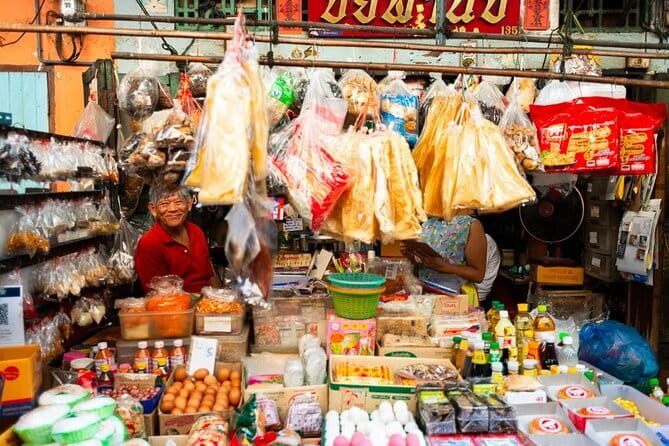
Bangkok’s cooking roots start in alleyways. This 5-hour Backstreet Bangkok walk threads Thai cooking origins through temples, historic areas, and markets where locals really eat. It’s the kind of food tour that treats street snacks like part of the city’s story, not just a checklist.
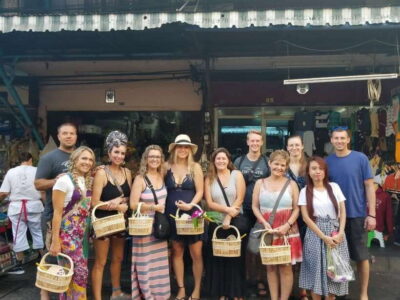
Two things I really like: the tour keeps it small (max 7 people), and you’re not sent out hungry. You get a licensed guide, bottled water, snacks, dinner, plus alcoholic beverages included—so you can focus on tasting and asking questions instead of calculating what to buy next.
One thing to consider: there’s no private transportation. You’ll be relying on public transit and walking, which means comfortable shoes matter and your appetite needs to be awake early.
In This Review
- Key highlights you’ll care about
- Price and what $125 buys you in Bangkok
- Where the tour starts: Sam Yot MRT and an easy return
- The route that links cooking to history
- Wat Ratchaburana: temple architecture you can actually understand
- Rattanakosin Island: classic landmarks, practical context
- Phahurat Market (Little India): textiles, jewelry, and food stops
- Sampeng Market: Chinatown’s narrow lanes and old-school variety
- More than markets: factories, restaurants, and a mall stop
- What’s included: dinner, snacks, water, and drinks
- How the guide shapes the whole experience
- Timing, walking pace, and what to wear
- Who this tour is best for
- Should you book Backstreet Bangkok: Exploring the Cradle of Thai Cooking?
- FAQ
- How long is the Backstreet Bangkok tour?
- How much does it cost?
- What time does the tour start, and where does it meet?
- How big is the group?
- What’s included in the price?
- Is there private transportation included?
- Can I cancel for a full refund?
Key highlights you’ll care about
- Max 7 people means you get time to ask questions and you’re not stuck “in the back.”
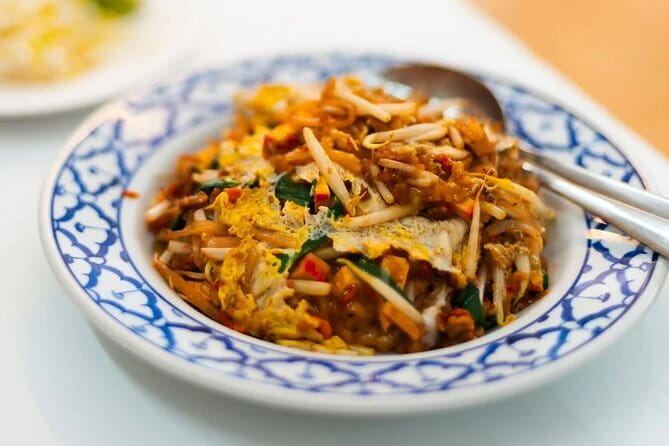
- Dinner + snacks + water + alcoholic beverages are included, so your money goes to the guide and the food, not extra add-ons.
- Thai and Indian influences side by side, especially around Phahurat Market (Little India) and the Chinatown supply lanes of Sampeng.
- Historic stops are part of the taste story, not random sightseeing detours.
- Mobile ticket and a start point near MRT (Sam Yot) make it easier than tours that begin in the middle of nowhere.
- Great guide track record, with names like Anna and Lek showing up in standout experiences for their care, pacing, and food-first enthusiasm.
Price and what $125 buys you in Bangkok
At $125 per person for about 5 hours, this is priced like a guided experience where the “product” is more than food. You’re paying for a guide who can connect flavors to place—then back it up by feeding you along the way.
The value math is pretty clear: you get dinner, snacks, bottled water, and alcoholic beverages included. If you’ve ever done Bangkok street-food days where you end up running between stops with an empty stomach and a shopping list, this format is the opposite. You’ll still choose what you eat, but you won’t be left solving logistics while you’re hungry.
It also helps that the tour is licensed. In a markets-and-stalls setup, that matters because a good guide knows where to go, how to move through crowds, and how to order so you’re not stuck translating at every counter.
Aprons on for another Thai kitchen
- Bangkok: Hands-on Thai Cooking Class and Market Tour
★ 4.9 · 1,614 reviews - Bangkok: Tingly Thai Cooking School Half-Day Cooking Class
★ 4.9 · 1,191 reviews - Bangkok: Maliwan Thai Cooking Class with Market Tour
★ 4.9 · 1,133 reviews
Where the tour starts: Sam Yot MRT and an easy return
The tour begins at Sam Yot MRT station (Exit 3111). The route is set up so you start near public transit, and the tour ends back at the meeting point, which is a nice pressure release when you’re done eating and you just want to get home.
Why this matters: Bangkok is big, and a lot of tours require a longer transfer than you expect. Starting near MRT keeps your time flexible and lowers the stress factor—especially on a day when you’ll be walking between neighborhoods.
You also get a mobile ticket, which is simple for last-minute confirmation and reduces paper-fuss. Confirmation is sent at booking, and you’ll want to keep an eye on your email so you don’t show up guessing.
The route that links cooking to history
This is marketed as backstreet Bangkok, but it’s really a route that connects food to cultural roots. You move through areas close to Wang Burapha and then toward the older core of Bangkok, hitting both food districts and historic landmarks that help explain why certain flavors and cooking styles ended up where they did.
You’ll spend time around:
- Old religious architecture (like Wat Ratchaburana Ratchaworawihan)
- The historic island zone (Rattanakosin Island and major nearby temples)
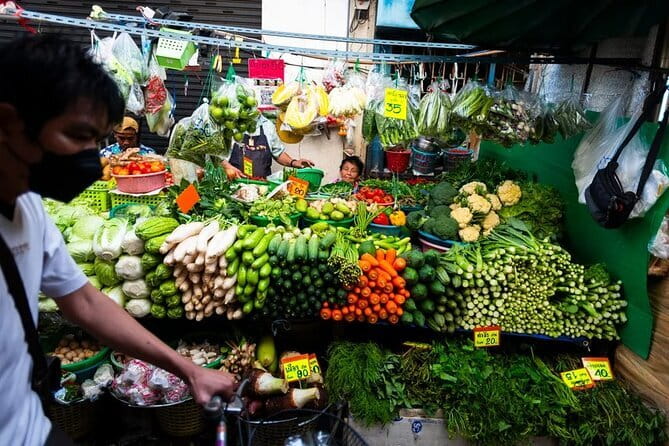
- Market districts that reflect immigration and trade (Phahurat Market and Sampeng Market)
- Plus other stops described more generally as market stalls, restaurants, factories, and a mall
That mix is the whole point. Food isn’t just taste here. It’s trade, community, and daily routine—still visible in the way neighborhoods are shaped and where people queue for meals.
Wat Ratchaburana: temple architecture you can actually understand
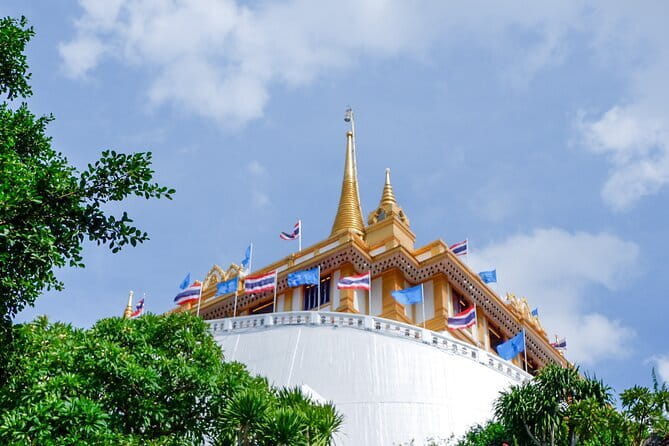
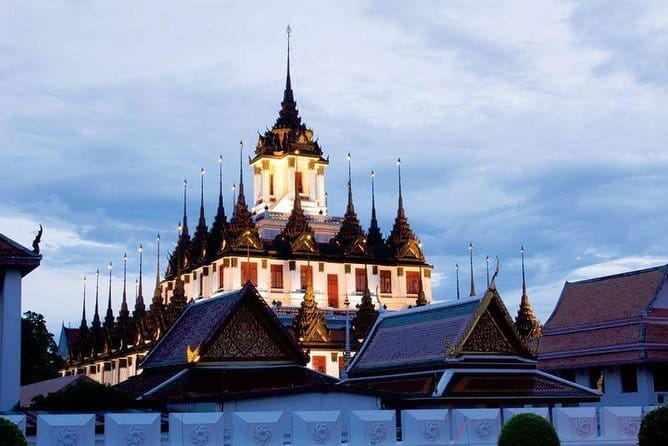
The tour opens with Wat Ratchaburana Ratchaworawihan, an ancient temple built in the 15th century. It’s known for impressive architecture and historical significance, and the best part is that you’re not just looking at it—you’re learning how to read it.
A temple stop can be a snooze in some food tours. Not this one. The guide’s role is to help you connect what you see to the idea of Thai cooking as culture: how communities formed around religious and civic life, and how food habits tend to follow social patterns.
The good news: the listed admission for this stop is free. So this isn’t one more paid entry you didn’t plan for—it’s a time-boxed context stop that can make the rest of the tastings feel less random.
More time at the wok
Rattanakosin Island: classic landmarks, practical context
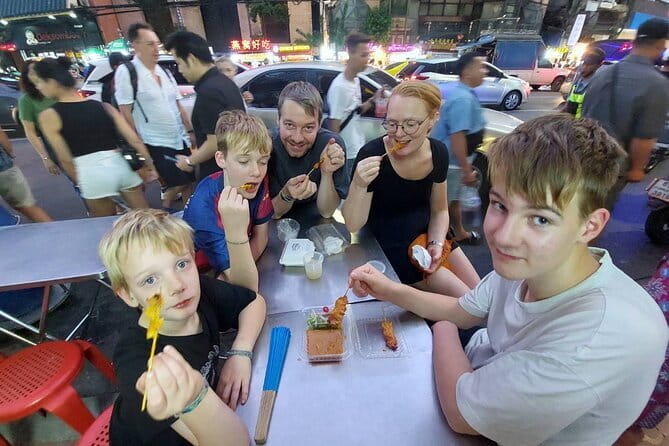
Next you head toward Rattanakosin Island, the historic area tied to some of Bangkok’s best-known sights. You’ll pass through the orbit of major landmarks such as the Grand Palace, Wat Phra Kaew (Temple of the Emerald Buddha), and Wat Pho.
Even if you’ve seen photos of these places, a food-focused guide changes the way you experience them. You start noticing how the old core of Bangkok helped shape what people ate, where ingredients flowed, and how neighborhoods developed around markets and services.
The listing also indicates free admission for the stop itself. That’s helpful for budgeting, and it keeps the tour feeling like it’s built for your time—not nickeling-and-diming your day.
Phahurat Market (Little India): textiles, jewelry, and food stops
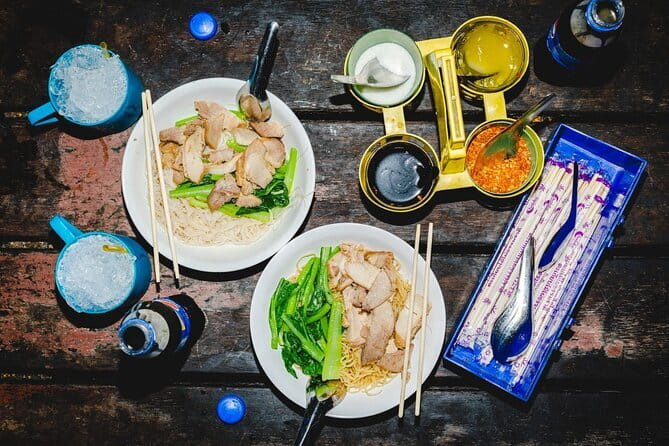
Then you shift into Phahurat Market, often called Little India. It’s another area near the old core, and the appeal goes beyond shopping. The market gives you a visible lens on cultural contact through trade—plus you get food tasting as part of the experience.
You can expect lots of stalls tied to textiles and jewelry, but the tour is about eating too. This is a key part of the “cradle of Thai cooking” idea: Thai cuisine has always been shaped by outside influences, and market districts are where those influences show up first.
Another practical win: the stop is listed with free admission. So you’re paying for the guide and tastings, not an extra entry ticket.
Sampeng Market: Chinatown’s narrow lanes and old-school variety
From there you move into Sampeng Market, a narrow alleyway portion of Chinatown known for an eclectic range of goods—from textiles to electronics. It also has deep historical significance, which is exactly the kind of setting that makes a food tour feel grounded.
Why Sampeng fits a food-and-history tour: alley economies run on supply chains. You see the practical side of how ingredient sourcing, household goods, and daily meals intertwine. It’s not just a walk to “see cool stuff.” It helps explain how food culture is maintained year after year.
The stop is listed as free for admission. And because the tour keeps moving (not long detours), you get the feel of Chinatown without turning your day into a marathon you regret.
More than markets: factories, restaurants, and a mall stop
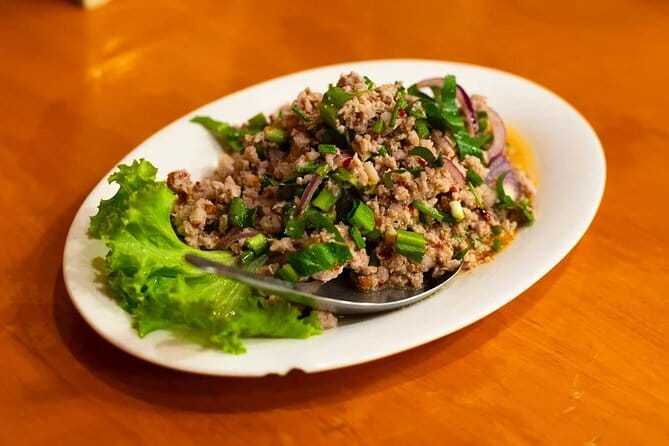
The tour overview says you’ll visit a market, food stalls, restaurants, factories, and even a mall. The point isn’t to force you through every random stop in Bangkok. It’s to show you how food culture moves—from production and processing to service counters and what people buy when they’re hungry right now.
Factories are especially useful if you want to understand Thai cooking beyond what arrives on a plate. Even if you only see the process from the outside, it can add a layer of appreciation when you later try something that depends on preparation work you never see at restaurants.
The mall stop can also be practical. It’s a reminder that in a city this old and this modern, people still eat everywhere—from street stalls to air-conditioned spaces. Your guide helps you keep the connection clear.
What’s included: dinner, snacks, water, and drinks
This is where the tour earns its comfort rating. You don’t just get “a few bites.” The inclusions are set up for a full meal arc: snacks, dinner, and bottled water.
Alcoholic beverages are also included. That can be great if you want to try local drinks with food. Just remember you’re still walking, so treat it like a dinner pairing, not an all-day party.
If you’re the type who worries about food tours leaving you with one sad sampling plate, this one is built to prevent that. The structure gives you a steady flow of tastings, plus the guide handles the ordering decisions so you can focus on what you like and what you want to ask about.
How the guide shapes the whole experience
In Bangkok, the difference between a good food tour and a frustrating one is almost always the guide. Here, the guide is licensed, and the experience is designed around their ability to connect places to flavor.
People connected to this tour—like Anna, Lek, and Annie—are praised for being enthusiastic, attentive, and willing to keep you eating in a sensible way. One thing I’m glad you can count on is pacing. When food tours overload you, it turns into survival eating. When pacing is right, you stay curious and you remember what you tried.
You’ll also want a guide who doesn’t just point at food. A strong approach means explaining why a dish fits that neighborhood and how it ties into Thai cooking roots. That’s how markets stop feeling like chaos and start feeling like a map you can navigate.
Timing, walking pace, and what to wear
The tour runs for about 5 hours. It’s long enough to cover multiple areas and eat properly, but not so long you feel dead by the final stop. Still, it’s walking through markets and temple zones, so wear shoes you’d trust for a normal Bangkok day—not brand-new sneakers with ambition but no support.
Also plan your day around this. If you schedule something right before, you may end up rushing meals. After, give yourself breathing room. You’ll likely want a sit-down moment with water and a slower pace.
Who this tour is best for
This tour is a strong fit if you:
- Want a Bangkok food tour that teaches while you eat
- Like walking routes that combine markets and meaningful landmarks
- Prefer a small group over a crowded scramble
- Enjoy trying unfamiliar dishes with guidance and ordering help
- Appreciate cultural context, not just taste
It’s also ideal if you’ve been to Bangkok before and want new neighborhoods. The route hits areas that many tourists miss, and the emphasis on food origins makes even familiar sights feel different.
Who might pause first: if you hate walking, or if relying on public transit is a hassle for you, this won’t feel effortless. There’s no private transportation included.
Should you book Backstreet Bangkok: Exploring the Cradle of Thai Cooking?
I’d book it if you want a guided day that feeds you well and teaches you why Bangkok’s food culture is the way it is. The best part is the mix: temples and historic landmarks on one side, market districts and street-food style tasting on the other—plus dinner that keeps the experience comfortable.
If you’re on a strict budget, you might question the $125 price. But when dinner, snacks, bottled water, and alcoholic beverages are included, that cost is less of a pile of add-ons and more of a single guided package. You’re buying the guide’s knowledge, the itinerary flow, and the meals.
If you’re the kind of traveler who likes control, you might still enjoy it—but you’ll have less freedom to freestyle the day. This is a structured food-and-history walk. Personally, I think that’s the appeal.
FAQ
How long is the Backstreet Bangkok tour?
It lasts about 5 hours.
How much does it cost?
The price is $125.00 per person.
What time does the tour start, and where does it meet?
It starts at 9:00 am at Sam Yot MRT station (Exit 3111). The tour ends back at the meeting point.
How big is the group?
The tour has a maximum of 7 travelers.
What’s included in the price?
A licensed guide, bottled water, snacks, dinner, and alcoholic beverages are included.
Is there private transportation included?
No, private transportation is not included. It’s listed as near public transportation.
Can I cancel for a full refund?
Yes, you can cancel up to 24 hours in advance of the experience for a full refund.
Learn Another Thai Dish
More Tour Reviews in Bangkok



Cook It Yourself: Thai Classes
Just In: Fresh Bangkok Reviews

Thai Cooking Classes, compared.
 ★ 4.9Hands-on Thai Cooking Class and Market TourFrom $451,614 reviews
 ★ 4.9Tingly Thai Cooking School Half-Day Cooking ClassFrom $411,191 reviews
 ★ 4.9Maliwan Thai Cooking Class with Market TourFrom $401,133 reviews
 ★ 5.0Hands on Thai Cooking Class and Market TourFrom $45660 reviews
 ★ 5.0Tingly Thai Cooking Class with Morning Market TourFrom $42589 reviews
 ★ 5.0Hands-on Thai Cooking Class & Market Tour in SukhumvitFrom $45571 reviews
 ★ 5.0Pink Chili – Thai Cooking Class and Market Tour in BangkokFrom $38416 reviews
 ★ 5.0Authentic Thai Cooking with the Largest market visit &TukTuk rideFrom $44350 reviews
Browse the lists this tour appears in