
Review · THAI COOKING CLASSES
Bangkok: Cooking Class with Market Visit & Tuk Tuk Ride
Bangkok can be loud. This class makes it tasty and practical. You start with a major fresh market walk, ride a tuk-tuk to the cooking school in Sukhumvit, then cook a small set of classic dishes you can copy back home.
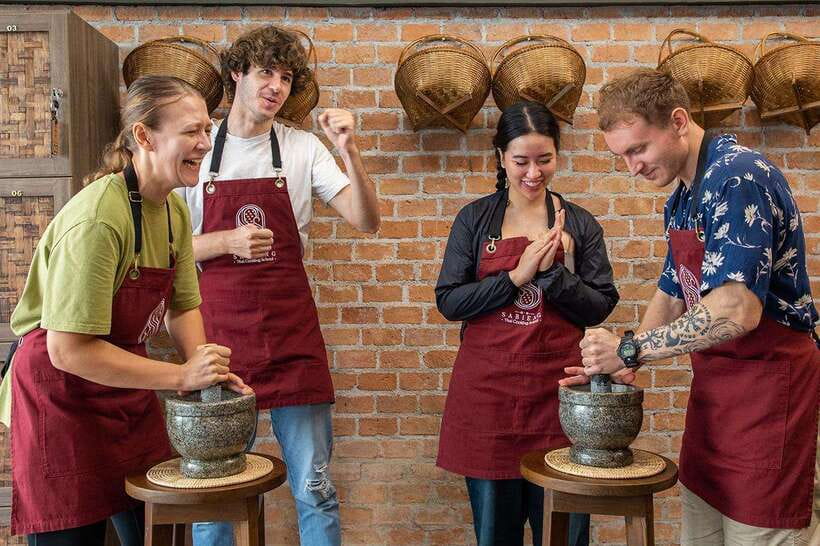
I love that the class keeps things hands-on: you cook four dishes at professional stations, including learning curry paste from scratch. I also like the small group size, so you’re not stuck watching from the sidelines.
One thing to consider: compared with a full-on “every step from zero” cooking show, you may find some ingredients already prepped, so your time is heavier on cooking and assembling than on doing everything raw.
In This Review
- Key highlights you should care about
- The Market-to-Kitchen Format That Actually Helps You Cook Thai at Home
- Price and Timing: Is $48 Worth 3.5 Hours in Sukhumvit?
- Meeting Point at Queen Sirikit MRT Exit 1 (And Don’t Confuse It)
- The Biggest Market Stop: What You Learn Before You Pick Up a Knife
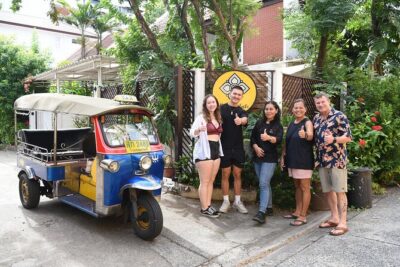
- Tuk-Tuk Ride Back to the Cooking School: Short, Fun, Mostly Practical
- Inside Sabieng: Small Groups, Air-Conditioned Comfort, Real Stations
- Four Classic Dishes: Curry Paste, Wok Work, and a Finished Meal
- Dietary Options: Vegetarian, Halal, Kosher, Allergies (With Real Constraints)
- Learning Style: What You’ll Get From the Market Walk and Kitchen Coaching
- Who This Bangkok Cooking Class Is Best For
- Should You Book This Bangkok Market + Cooking Class?
- FAQ
- What is the duration of the class?
- Where do I meet for the tour?
- How many dishes will I cook?
- What languages are available during instruction?
- Can the class accommodate dietary restrictions or allergies?
- Are all ingredients and equipment included?
- What’s included besides cooking?
- What dietary details apply to kosher requests?
- Is it wheelchair friendly?
Key highlights you should care about
- Big market visit before you cook, so you understand what to buy and why
- Tuk-tuk ride straight to the cooking school area
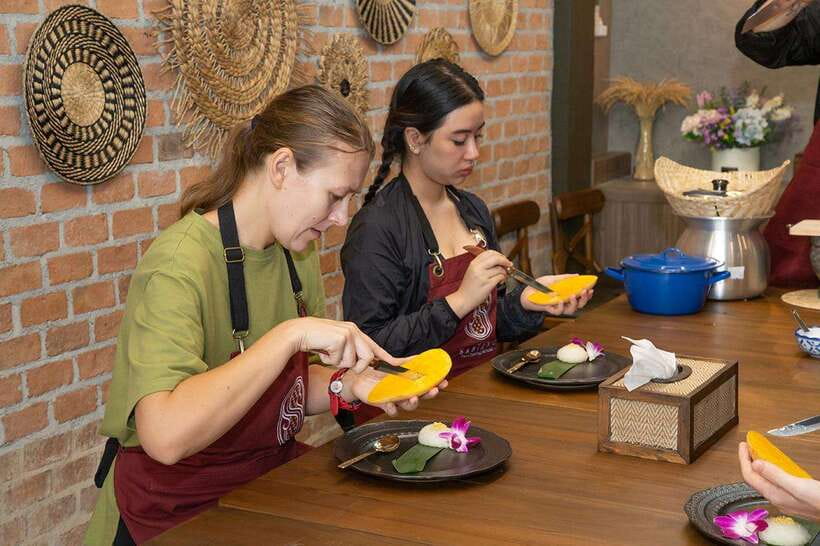
- Four dishes, one meal: you make appetizer, mains, and dessert
- Curry paste from scratch plus Thai cooking techniques you can repeat
- Small group (8–12, capped around 10) for more instructor attention
- Dietary flexibility for regular, vegetarian, Halal, kosher (with conditions), and allergies
The Market-to-Kitchen Format That Actually Helps You Cook Thai at Home
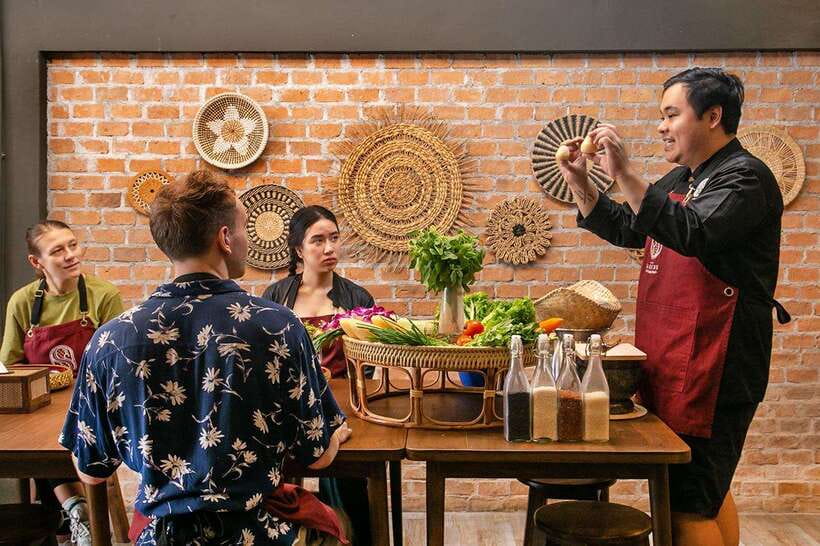
This is the kind of Bangkok cooking class that makes sense fast. Instead of only learning recipes on a timer, you see ingredients in the real place you’d shop for them. The flow is simple: market first, then cook, then sit down as a group and eat.
That structure matters because Thai cooking is all about balance—sweet, salty, sour, heat, and fragrance. When you can point to what you chose at the market, your cooking becomes less guesswork later.
Also, the class is built for comfort and control. You’re in an air-conditioned facility with professional-grade cooking stations, which is a big deal in Bangkok’s heat.
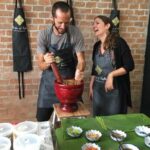
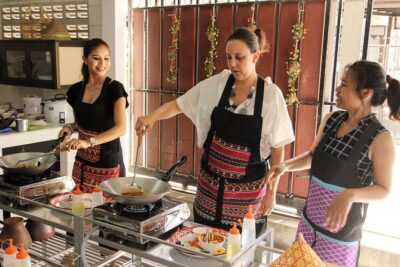
Aprons on for another Thai kitchen
- Bangkok: Hands-on Thai Cooking Class and Market Tour
★ 4.9 · 1,614 reviews - Bangkok: Tingly Thai Cooking School Half-Day Cooking Class
★ 4.9 · 1,191 reviews - Bangkok: Maliwan Thai Cooking Class with Market Tour
★ 4.9 · 1,133 reviews
Price and Timing: Is $48 Worth 3.5 Hours in Sukhumvit?
At about $48 per person for 210 minutes, you’re paying for three things at once:
- guided market time with ingredient knowledge,
- transport via tuk-tuk to the school,
- a four-dish cooking session plus everything supplied.
This isn’t a quick demo. You cook enough to get a full meal out of it, and you leave with digital recipes (so you’re not trying to remember measurements from scratch).
If you’re the type who wants a real “skills + meal” experience, the price lands pretty fair. If you’re chasing lots of free time to wander markets alone or you want a super extended multi-course cooking marathon, this format might feel tighter than you’d like. Still, for most visitors, the payoff is strong: you get a clear Thai lunch you can reproduce.
Meeting Point at Queen Sirikit MRT Exit 1 (And Don’t Confuse It)
Logistics can make or break a class like this. Your meeting point is the MRT station named Queen Sirikit National Convention Centre, Exit 1, outside at street level.
Important detail: it’s not the actual convention center building with the same name. Get the MRT exit right, and you’ll save stress.
If you arrive late (more than 10 minutes), you’re told to go directly to the cooking school. If you’re late by about an hour, it’s marked as a no-show and not refundable or reschedulable. So if you’re hopping off another tour, give yourself buffer time.
The Biggest Market Stop: What You Learn Before You Pick Up a Knife
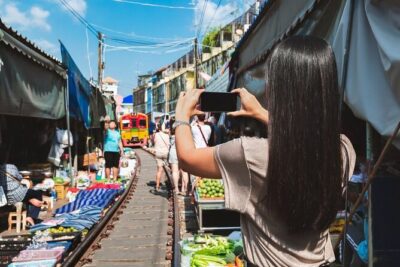
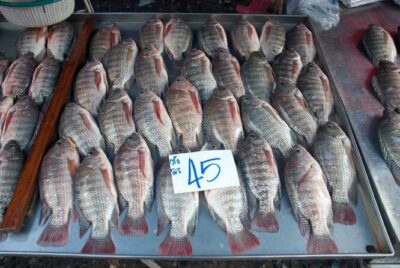
Your class begins with a walk to Bangkok’s largest fresh market. This is where the learning becomes practical. You get to see common Thai ingredients up close, and you learn how to choose them for flavor, not just for looks.
A key point: you’ll typically be following the guide through stalls and food sections, not doing a lot of bargaining or deep stall-to-stall negotiations. You’re there to build ingredient understanding, then turn it into cooking.
Here’s how I’d use this market time:
- Ask what ingredients are the “base” for the dishes you’ll make (Thai food often starts with a paste, broth, or sauce foundation).
- Pay attention to how fresh produce is selected. The difference between okay and great Thai flavor is often the ingredient quality.
You should also know that not every part of the market experience will feel equal. Expect lots of walking and explanations, plus a focus on what matters for your cooking session.
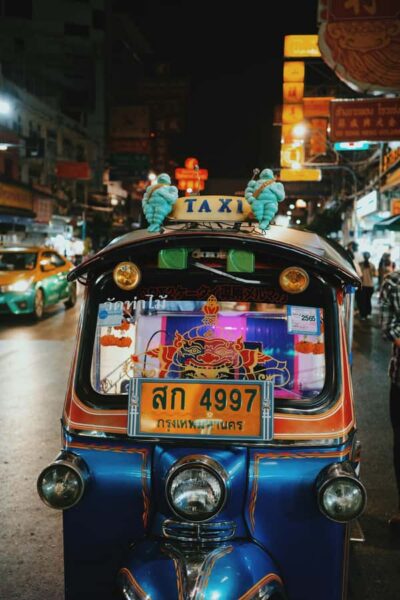
Buzz the backstreets, more tuk tuk runs

Tuk-Tuk Ride Back to the Cooking School: Short, Fun, Mostly Practical

After the market, you’ll ride a tuk-tuk back to Sabieng Thai Cooking in the Sukhumvit 22 area.
This part is fun in a very Bangkok way. It’s also fairly short, and your route may include traffic—so it’s not the kind of “scenic tour” ride you’d take for sightseeing alone. Think of it as a transit moment that adds local flavor to the day.
If you mainly want content and cooking time, the tuk-tuk won’t be the headline. It still helps the whole experience feel like a real day in the city rather than a taxi-to-class-and-out routine.
Inside Sabieng: Small Groups, Air-Conditioned Comfort, Real Stations
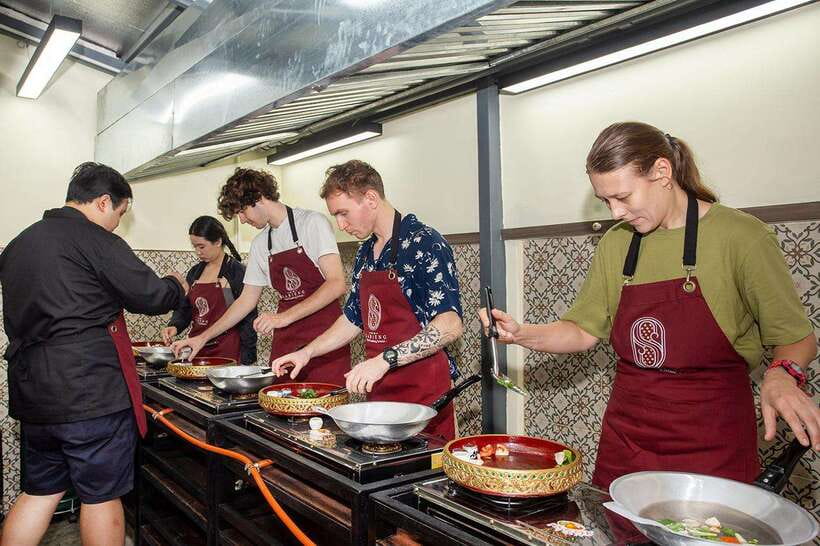
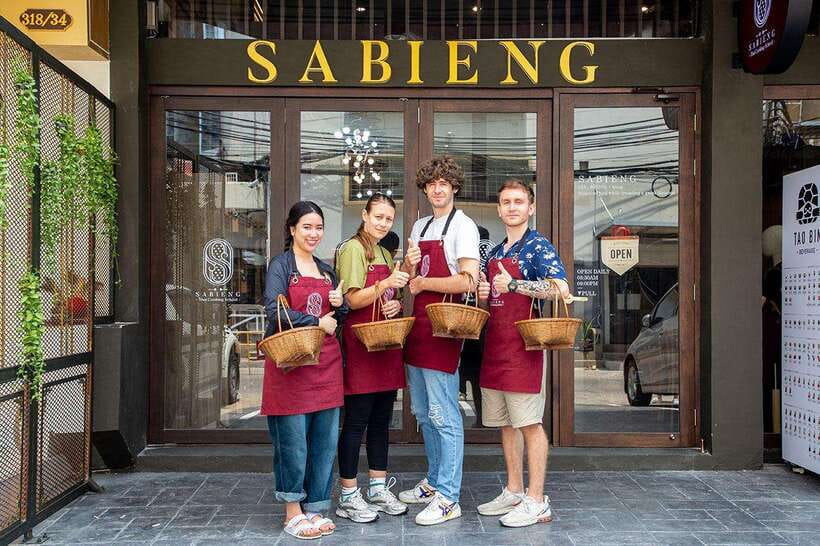
Once you’re at the school, you’re in a clean, modern space with air-conditioning and professional cooking setups. This is one of the big advantages versus older-style kitchens—heat and cramped counters can ruin the learning pace.
Group size is kept small (8–12, limited to 10), which helps with:
- getting answers while you’re cooking,
- adjusting questions about taste and spice,
- staying engaged rather than waiting your turn for everything.
Your instructors are certified and experienced, with more than a decade of professional experience. The headline instructor credential is a MasterChef Thailand Season 3 finalist, which signals a real teaching background, not just TV skills.
Language support is also a smart touch. The class is primarily English, with translation available in 中文, ไทย, and 한국어 if needed.
Four Classic Dishes: Curry Paste, Wok Work, and a Finished Meal
You’ll cook four classic Thai dishes during the session. Curry paste is part of the experience, including learning how to make curry paste from scratch.
Beyond that, expect a mix of:
- cutting and prep,
- wok cooking,
- assembling and finishing flavors.
In a perfect world, you’d do every step from raw ingredients to final dish with zero shortcuts. This class is more “guided cooking practice” than “fully raw-to-finished factory assembly.” You might find some ingredients already prepared in advance, so your role is more about cooking, seasoning, and assembling than starting everything from scratch.
You’ll also get the chance to control spice. The class lets you choose your preferred heat level, which is handy if you’re spice-curious but not spice-obsessed.
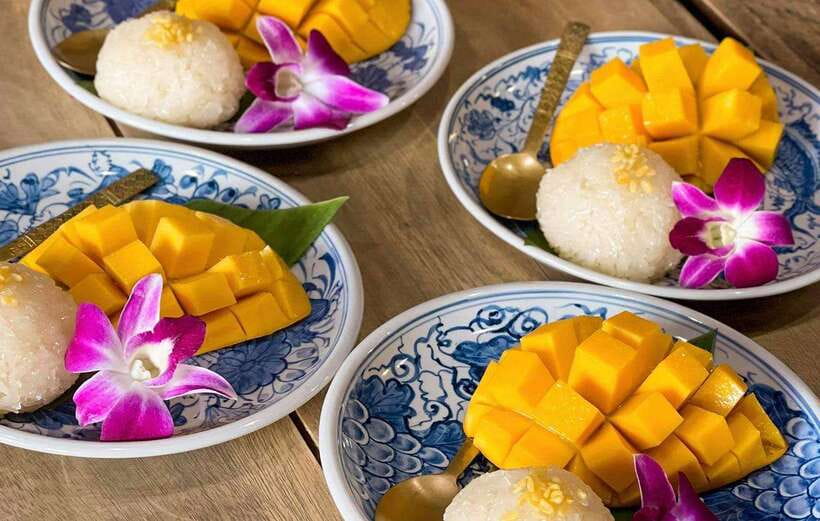
And yes, you should come hungry. The class is designed so you cook and then eat what you make, with the meal structured as an appetizer, two mains, and a dessert. That’s the best kind of souvenir: you taste it, then you remember it.
Dietary Options: Vegetarian, Halal, Kosher, Allergies (With Real Constraints)
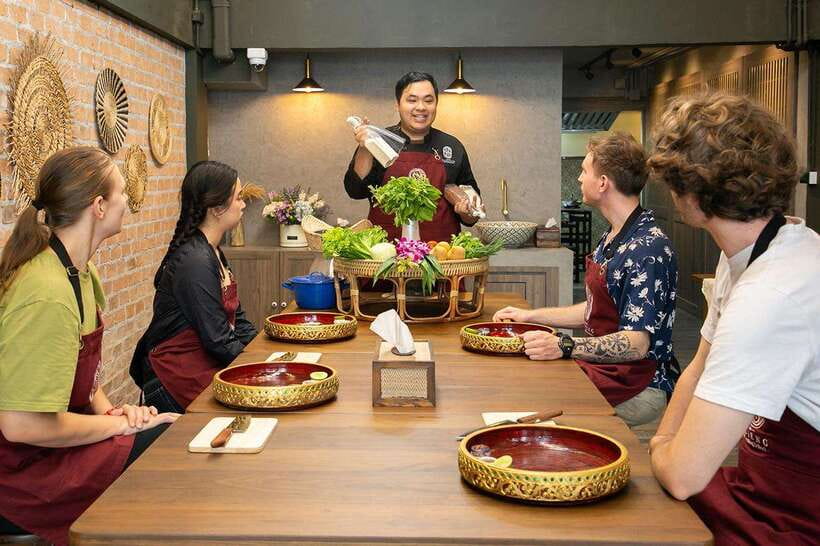
This is one of the more thoughtful parts of the experience. You can choose among:
- regular,
- vegetarian,
- food allergy accommodations (notify at least 24 hours in advance),
- Halal,
- kosher.
Kosher comes with a caution. Kosher ingredients may require an extra cost, and kosher equipment can also cost extra. If new kosher equipment is needed, it’s an extra charge and you keep it. If you need kosher, plan early so the kitchen has what it needs.
For allergies, the rule is clear: notify 24 hours in advance. If that timing isn’t possible, you should ask before booking so the school can confirm what they can safely accommodate.
If you have dietary restrictions, this class is often a good fit because it’s designed to handle different needs rather than forcing you to “pick around” dishes.
Learning Style: What You’ll Get From the Market Walk and Kitchen Coaching
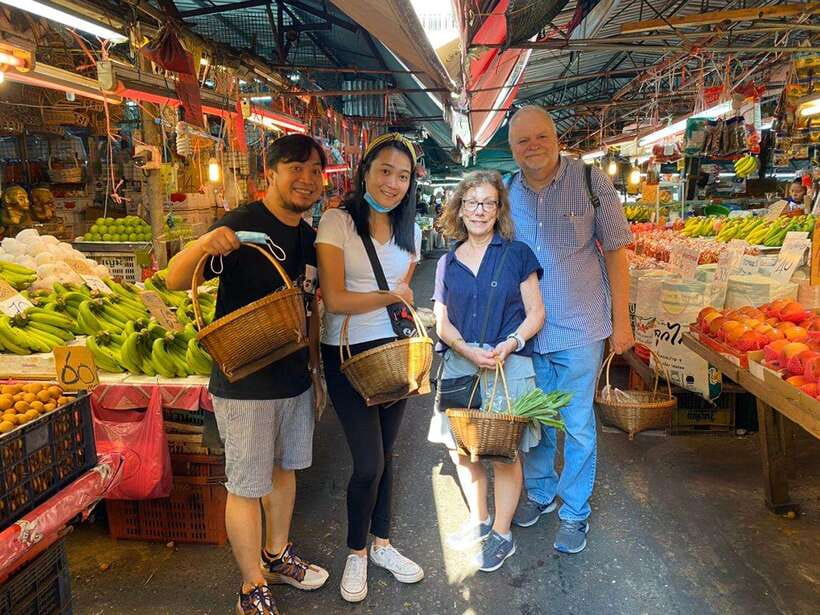
From the way the class is structured, you’ll likely feel two “waves” of help:
- market context so you understand ingredient purpose,
- kitchen coaching so you learn technique and taste adjustments.
The market walk is built for ingredient selection guidance. It may not feel like one-on-one vendor conversations, and your interaction with the chef may be limited depending on how the instructor rotates among stations. That’s normal for small group cooking classes.
In practice, the biggest learning comes from tasting and adjusting. Thai cooking is flexible. If your curry tastes too sharp, you adjust; if it’s missing sweetness or fragrance, you adjust. That’s the skill you’ll actually use later when you cook at home without the same ingredients on hand.
Who This Bangkok Cooking Class Is Best For
This tour fits best if you want:
- a clear Bangkok food lesson without needing to research every ingredient first,
- a full Thai meal you cook and eat,
- a small-group environment with instructor support,
- the market-and-cooking combo that makes recipes more than paper instructions.
You’ll likely enjoy it even if you’re a beginner. The recipes are guided, and the station setup helps you follow along.
This might be less ideal if you’re looking for:
- a long, slow “chef’s table” style dining experience with lots of restaurant service,
- a cooking class where you do nearly every step from start to finish without any prior prep.
Also note a practical limitation: it is not suitable for people with mobility impairments or wheelchair users, and it doesn’t work for babies under 1 year. If you have health issues like cold sensitivity or altitude sickness concerns, you may want to think twice since the class involves active walking and full-time participation.
Should You Book This Bangkok Market + Cooking Class?
My take: yes, if you want a useful Thai cooking lesson tied to real Bangkok ingredients. The market visit gives you context, and the cooking session gives you a meal you can recreate. For $48 and about 3.5 hours, the value is solid because you’re paying for both shopping knowledge and cooking practice, not just a seat and a show.
Book it especially if you:
- love street food but want to understand what’s behind the flavors,
- want spice control and dietary flexibility,
- prefer small group instruction over big group chaos.
Skip it if your main goal is an extended sightseeing day or you want maximum interaction and zero pre-prepped ingredients. The upside of this class is structure and taste; the tradeoff is that it won’t feel like a totally raw, step-by-step grind.
FAQ
What is the duration of the class?
The experience runs about 210 minutes (3.5 hours).
Where do I meet for the tour?
Meet at the MRT underground station called Queen Sirikit National Convention Centre at Exit 1, outside the underground exit at street level. Do not meet at the convention center building.
How many dishes will I cook?
You’ll cook four Thai dishes.
What languages are available during instruction?
English is the main language, with translation available in 中文, ไทย, and 한국어.
Can the class accommodate dietary restrictions or allergies?
Yes. You can choose regular, food allergy, vegetarian, Halal, and kosher options. Food allergies require you to notify the provider at least 24 hours in advance.
Are all ingredients and equipment included?
Yes. All ingredients and equipment are included, along with unlimited drinking water, welcome fruits, and digital recipes.
What’s included besides cooking?
You get a market visit and a tuk-tuk ride as part of the experience.
What dietary details apply to kosher requests?
Kosher ingredients may have an extra cost. Kosher equipment may require an additional charge, and if new kosher equipment is needed, you keep it.
Is it wheelchair friendly?
No. It is not suitable for wheelchair users or people with mobility impairments.
More Tour Reviews in Bangkok






Around the City by Tuk Tuk
Cook It Yourself: Thai Classes

Just In: Fresh Bangkok Reviews




Thai Cooking Classes, compared.
 ★ 4.9Hands-on Thai Cooking Class and Market TourFrom $451,614 reviews
 ★ 4.9Tingly Thai Cooking School Half-Day Cooking ClassFrom $411,191 reviews
 ★ 4.9Maliwan Thai Cooking Class with Market TourFrom $401,133 reviews
 ★ 5.0Hands on Thai Cooking Class and Market TourFrom $45660 reviews
 ★ 5.0Tingly Thai Cooking Class with Morning Market TourFrom $42589 reviews
 ★ 5.0Hands-on Thai Cooking Class & Market Tour in SukhumvitFrom $45571 reviews
 ★ 5.0Pink Chili – Thai Cooking Class and Market Tour in BangkokFrom $38416 reviews
 ★ 5.0Authentic Thai Cooking with the Largest market visit &TukTuk rideFrom $44350 reviews
Browse the lists this tour appears in