
Review · THAI COOKING CLASSES
Bangkok: Favourite Thai Flavors Cooking Class by Smart Cook
A Thai cooking class should make you hungry fast. At Smart Cook in Bangkok, you’ll learn three favorites in a small group, plus get ingredient know-how from a Thai home-style setting. It’s practical Thai food, not a demo you watch from the back row.
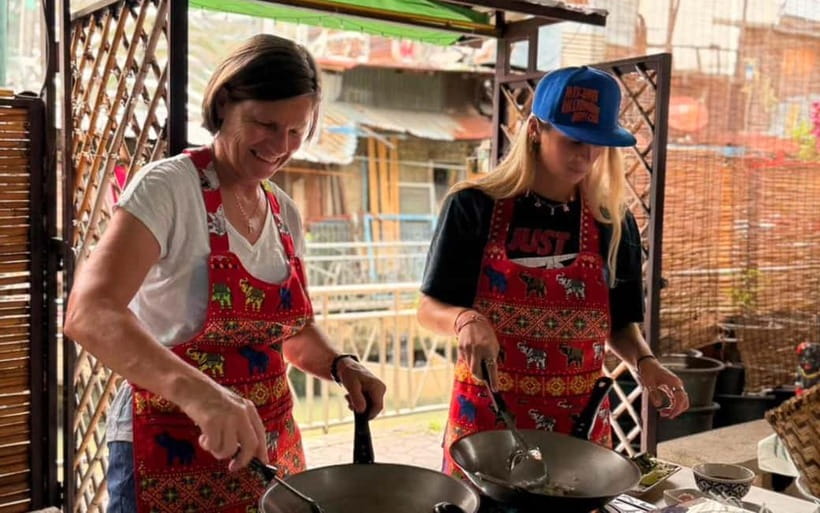
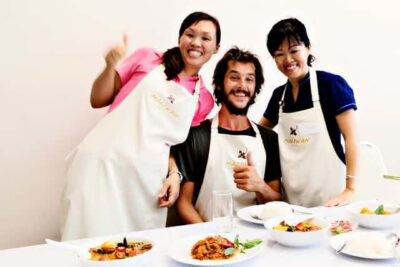
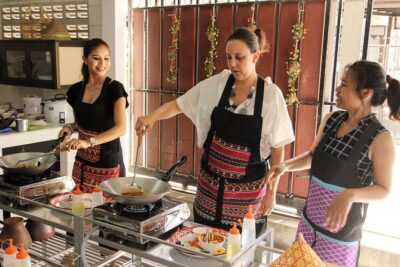
I especially like the hands-on format with clear step-by-step guidance from instructors such as Snow White and Poppy. I also like that you don’t just cook blindly—you get help with how Thai cooks think about ingredients, flavors, and even culinary etiquette, which makes the recipes easier to repeat later.
One possible drawback: the meeting point is a house, and at least a couple of people said it can be tricky to spot the first time. If you hate arriving late or don’t like asking for directions, plan buffer time and bring a map screenshot.
In This Review
- Key highlights I think you’ll care about
- What You Cook in 150 Minutes
- A Teak-Wood House Kitchen: What the Experience Feels Like
- Thai Ingredient Know-How From a Family Home Visit
- Pad Thai the Practical Way: Techniques You Can Actually Reuse
- Chicken in Coconut Milk: Getting the Balance Right
- Sweet Sticky Rice With Mango: The Dessert That Teaches Patience
- The Online PDF Recipe Book (Why It’s More Than a Souvenir)
- Price and Value: Is $32 Really Fair?
- Logistics That Can Trip You Up (And How to Plan Around Them)
- Who Should Book This Cooking Class (and Who Might Skip It)
- Should You Book Smart Cook Bangkok?
- FAQ
- How long is the cooking class?
- What dishes do you learn to cook?
- Who teaches the class and what language is used?
- How many people are in the class?
- What is included in the price?
- What is not included?
- Where do we meet for the class?
- What should I bring?
- Is the class suitable for wheelchair users?
- Are there age or alcohol restrictions?
Key highlights I think you’ll care about
- Small group size (up to 8) so you get real attention at the stove.
- Three classic dishes: Pad Thai, chicken in coconut milk, and sweet sticky rice with mango.
- Thai family home ingredient lesson so you learn what to buy and why.
- English instruction with friendly local chefs like Snow White and Poppy mentioned often.
- Online PDF recipe book so you can cook at home without guessing.
What You Cook in 150 Minutes
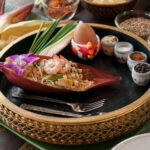
This class is built around three Thai crowd-pleasers, and the timing is designed to get you from chopping to plating while everything is still hot. You’ll cook: Pad Thai, chicken in coconut milk, and sweet sticky rice with mango. The goal isn’t perfection like a competition—it’s confidence you can use again at home.
In real terms, this kind of “3 dishes in 150 minutes” format works well if you:
- want variety (savory, saucy, and dessert)
- prefer doing the work yourself
- like learning the flavor logic behind Thai cooking, not just copying a recipe
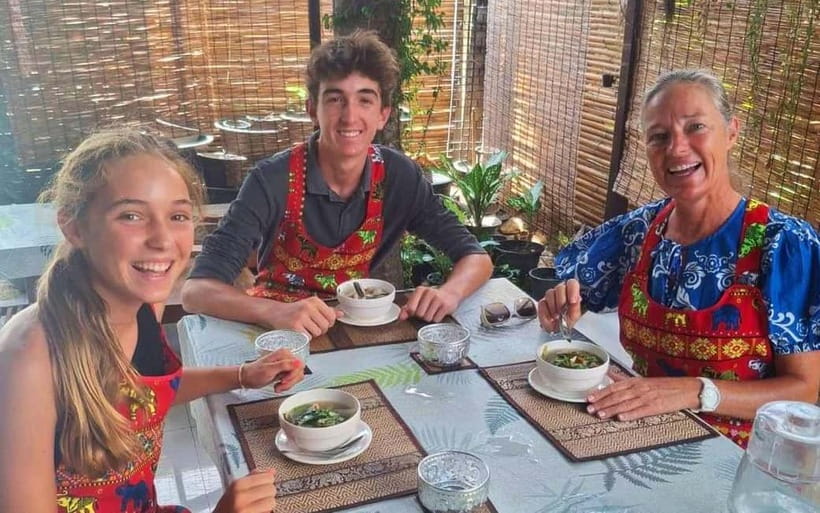
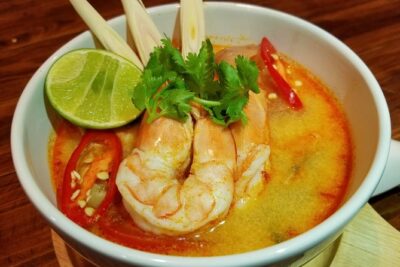
A few participants also mention a coconut soup in their session, so you might find an extra course depending on the day. I’d treat the three listed recipes as the sure thing.
Aprons on for another Thai kitchen
- Bangkok: Hands-on Thai Cooking Class and Market Tour
★ 4.9 · 1,614 reviews - Bangkok: Tingly Thai Cooking School Half-Day Cooking Class
★ 4.9 · 1,191 reviews - Bangkok: Maliwan Thai Cooking Class with Market Tour
★ 4.9 · 1,133 reviews
A Teak-Wood House Kitchen: What the Experience Feels Like
Your lesson starts at the school’s meeting home, described as a two-story old Thai-style teak wood house. That matters because it doesn’t feel like a sterile classroom or a staged restaurant kitchen. You’re in a real home-style environment, and many reviews describe a calm, organized pace and a space that feels more private than you’d expect.
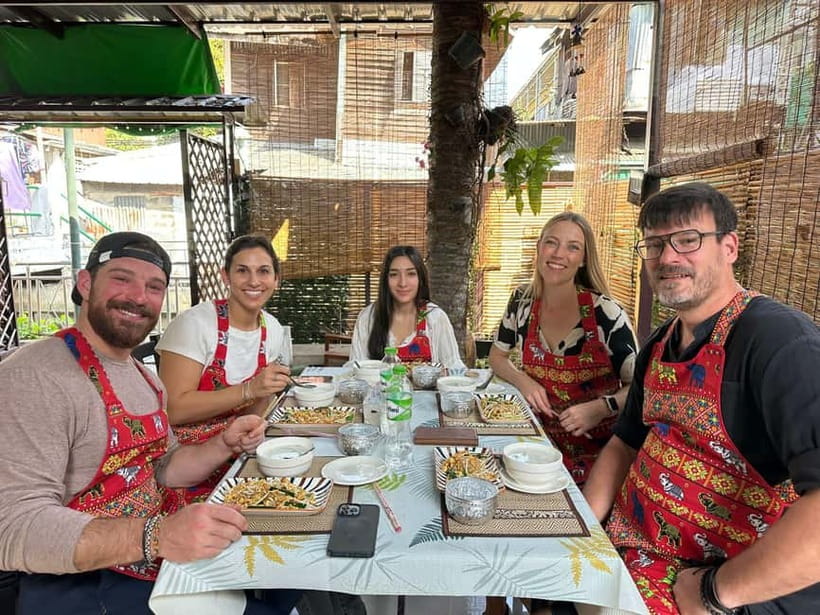
You also get a small-group advantage. With a maximum of 8 participants, you’re not waiting for a turn to stir, taste, or ask a question. That’s a big deal in cooking classes—speed isn’t the goal, accuracy is. And in Thai cooking, accuracy usually means balance: salty, sweet, sour, and heat working together.
What to bring is simple: comfortable clothes and a camera. Since you’ll be doing prep and cooking, dress for a hands-on afternoon rather than for photos.
Thai Ingredient Know-How From a Family Home Visit
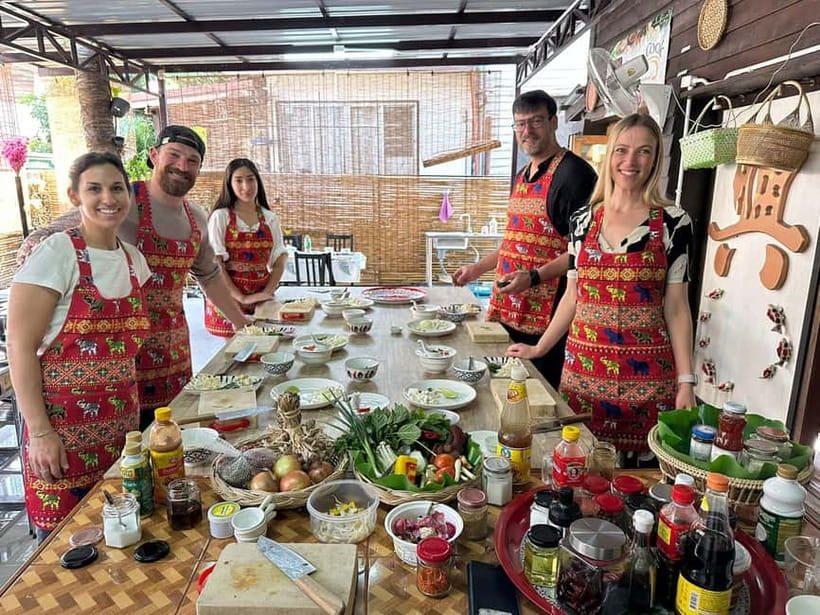
One of the most useful parts isn’t the stove at all—it’s the ingredient lesson tied to a Thai family home visit. This is where you learn how Thai cooks think about selecting ingredients, including how certain spices, herbs, and pantry staples are chosen to get the right taste.
Why this is valuable: most people can follow a recipe, but it’s the ingredient choices that make the flavor travel. If you know what to look for—aroma, freshness, texture, or whether an ingredient is meant for sweetness vs. seasoning—you’re much more likely to succeed when you’re back in your own kitchen.
This ingredient focus also comes through in the way instructors teach. Many reviews mention tips for ingredients you can find outside Thailand, plus guidance on Thai seasonings and cooking etiquette. Even if you skip the etiquette part later, the ingredient guidance is what pays off.
Pad Thai the Practical Way: Techniques You Can Actually Reuse
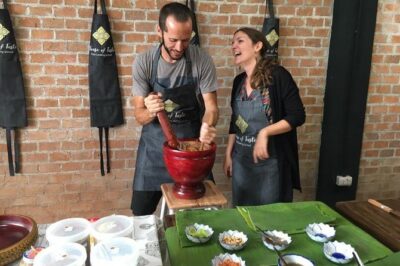
Pad Thai is often treated like a single recipe—until you cook it. Here, you learn the method behind the taste. The class is hands-on, so you’re doing things like prepping components and working through the steps with your instructor guiding how to adjust along the way.
What I like about this approach: Pad Thai depends on timing and balance more than most people realize. Noodles can go from perfect to sticky fast. Sauces need correct intensity. And the toppings matter because they add texture after the stir-fry.
You can expect:
- step-by-step instruction in how the dish comes together
- guidance that helps you understand what to watch for (not just what to do)
- a final result you can compare against your own judgment
If you’ve ever tried to make Pad Thai at home and ended up with something that tasted flat, this kind of guided process usually helps because you learn what makes Thai Pad Thai taste Thai—mainly the sauce balance and the noodle handling.
More time at the wok
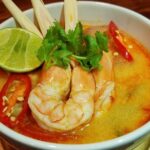
Chicken in Coconut Milk: Getting the Balance Right
Chicken in coconut milk is comfort food in Thai style: creamy, aromatic, and loaded with flavor depth without feeling heavy. The class gives you the fundamentals of how Thai cooks use coconut milk with seasonings to create a rounded taste.
In your session, you’ll be actively cooking, which means you’ll see how:
- aroma from spices and aromatics builds quickly
- coconut milk affects sweetness and body
- seasoning decisions change the final taste
This is also a good dish if you’re not a confident cook. Reviews highlight that instructors break things down into manageable steps, and that the process feels friendly even if you’re kitchen-challenged. You get support when something is off, instead of hoping your instincts fix it.
One small note: coconut-milk dishes are sensitive to heat. You’ll likely learn how to control the cooking pace so it stays silky rather than muddy. That’s the kind of thing you can’t get from a written recipe alone.
Sweet Sticky Rice With Mango: The Dessert That Teaches Patience
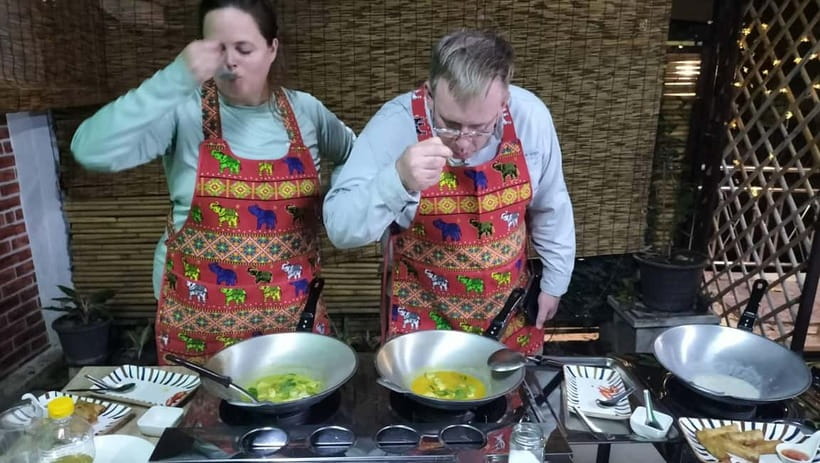
Thai mango sticky rice is simple on paper and a little demanding in real life—texture and timing matter. In this class, you learn how to make sweet sticky rice with mango with the kind of guidance that helps you avoid the two most common problems: rice that’s undercooked or texture that doesn’t match the sauce.
Here’s what you’ll get from doing it hands-on:
- a clearer understanding of what “sticky” means in Thai cooking
- how the sweetness and coconut flavor work together
- confidence serving a dessert that looks as good as it tastes
And it’s a great choice for visitors because it gives you a memorable Thailand moment at the end of the class, not just a second savory course. If you like finishing strong, you’ll probably leave thinking about dessert flavors all afternoon.
The Online PDF Recipe Book (Why It’s More Than a Souvenir)
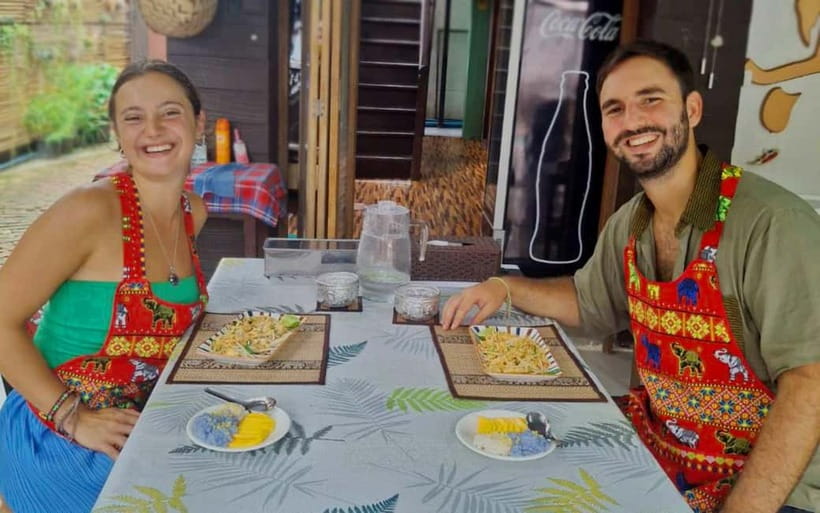
The included recipe book is online, in PDF format. That matters for two reasons.
First, it’s practical. You can scroll on your phone while cooking later, instead of dealing with messy paper. Second, it gives you a way to rebuild the recipes accurately after the trip, when you’re no longer tasting your dish beside the instructor.
Many reviews say the PDF is straightforward and useful, which tells me it’s meant for real home cooking—not just a keepsake.
One tip: take a few photos during class (especially the final plated look and key steps). Then compare those photos to the PDF later. It’s an easy way to spot where you might need to adjust texture or sauce thickness.
Price and Value: Is $32 Really Fair?
At $32 per person for 150 minutes, this class is good value if you want hands-on instruction plus a take-home cooking result. You’re not paying just for the food—you’re paying for:
- an instructor who teaches process (not just presentation)
- all ingredients
- a small-group ratio that makes questions possible
- a digital recipe book
- tea, coffee, and drinking water
Also, consider what you get for the time. Cooking classes that feel like demos cost less, but they don’t teach you much. This one’s structured around making three dishes yourself, which usually means you leave with skills you can reuse.
The “$32” also feels especially reasonable given it’s taught by professional Thai cooks and the group is capped at 8. That combination (skill + small group) is where the value tends to hide.
Logistics That Can Trip You Up (And How to Plan Around Them)
Two things can affect your experience even when the cooking part is perfect.
1) Finding the meeting house
Multiple reviews point out the location can be hard to spot at first. This is not a dealbreaker, but it does mean you should arrive early and use a map screenshot or ask politely if you’re unsure.
2) No alcohol on-site
The class notes that alcohol and drugs aren’t allowed, and beer or other beverages aren’t included. If you want a relaxed, drink-and-chat kind of afternoon, this is more about cooking than partying.
Other practical notes:
- the class is English-instructed
- it’s not suitable for wheelchair users
- bring a camera if you want to document the dishes and steps
Who Should Book This Cooking Class (and Who Might Skip It)
You’ll probably love this class if you:
- want a hands-on intro to Thai cooking rather than a food tasting
- like structured guidance (clear steps, friendly instructors)
- want a dessert skill, not only savory dishes
- enjoy learning how to choose ingredients, not just following a recipe
You might consider skipping if you:
- hate asking for directions and can’t handle a house-based meeting spot
- expect a full-day market tour (this one is focused on cooking and ingredient selection, not a long sightseeing itinerary)
- need wheelchair accessibility (it’s not suitable as listed)
If you’re traveling solo, you’re still in a small group, so it can be a good way to meet others without big crowds. A few reviews also mention families bringing kids and having the instructor include them where possible, but you’ll want to check details with the school if that matters for you.
Should You Book Smart Cook Bangkok?
Yes—if your goal is to leave with more than memories. This is the kind of class that helps you repeat Thai flavors at home because you cook the dishes yourself and learn ingredient thinking along the way.
Book it if:
- you’re excited about Pad Thai, chicken in coconut milk, and mango sticky rice
- you value small-group instruction with chefs like Snow White and Poppy
- you want a PDF recipe book you’ll actually use
Maybe hold off if:
- you strongly dislike navigating to a house meeting point without clear signage
- you need alcohol included (it isn’t)
- accessibility is a requirement (wheelchair users aren’t listed as suitable)
If you like food that tastes right because you learned the method, Smart Cook is a solid afternoon plan in Bangkok.
FAQ
How long is the cooking class?
The class lasts 150 minutes.
What dishes do you learn to cook?
You learn to cook Pad Thai, chicken in coconut milk, and sweet sticky rice with mango.
Who teaches the class and what language is used?
The instructor is English-speaking, and the cooking instruction is led by a Thai cooking instructor/chef.
How many people are in the class?
It’s a small group limited to 8 participants.
What is included in the price?
The class includes hands-on cooking, a friendly professional Thai cooking instructor, all ingredients, an online PDF recipe book, and tea, coffee, and drinking water.
What is not included?
Beer or other beverages are not included.
Where do we meet for the class?
You meet at the school’s house, described as a two-story old Thai-style teak wood home.
What should I bring?
Bring a camera and wear comfortable clothes.
Is the class suitable for wheelchair users?
No, it is not suitable for wheelchair users.
Are there age or alcohol restrictions?
Alcohol and drugs are not allowed during the experience.
Learn Another Thai Dish

More Tour Reviews in Bangkok






Cook It Yourself: Thai Classes
Just In: Fresh Bangkok Reviews






Thai Cooking Classes, compared.
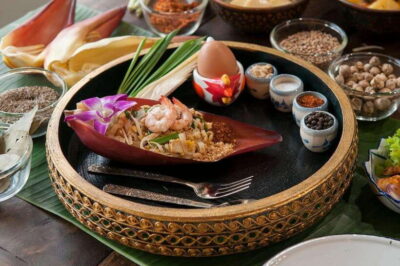 ★ 4.9Hands-on Thai Cooking Class and Market TourFrom $451,614 reviews
 ★ 4.9Tingly Thai Cooking School Half-Day Cooking ClassFrom $411,191 reviews
 ★ 4.9Maliwan Thai Cooking Class with Market TourFrom $401,133 reviews
 ★ 5.0Hands on Thai Cooking Class and Market TourFrom $45660 reviews
 ★ 5.0Tingly Thai Cooking Class with Morning Market TourFrom $42589 reviews
 ★ 5.0Hands-on Thai Cooking Class & Market Tour in SukhumvitFrom $45571 reviews
 ★ 5.0Pink Chili – Thai Cooking Class and Market Tour in BangkokFrom $38416 reviews
 ★ 5.0Authentic Thai Cooking with the Largest market visit &TukTuk rideFrom $44350 reviews
Browse the lists this tour appears in