
Review · HISTORICAL TOURS
Bangkok Heritage & Street Art Private Walking Tour
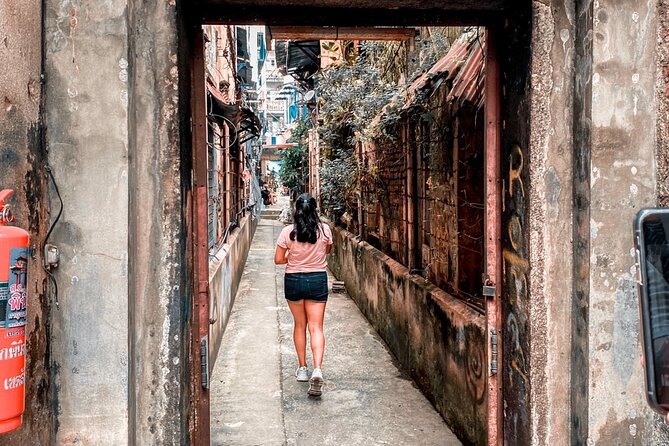
Bangkok hides in plain sight. This private walk through Charoen Krung and Talat Noi shows a side of the city you miss when you only chase big sights, mixing heritage buildings, churches, temples, and street art in one smooth route.
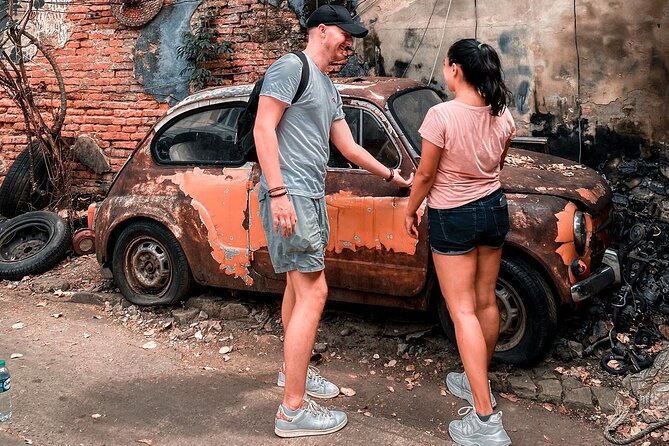
I especially like the food-and-history pairing: a stop at Prachak Roasted Duck (famous since 1909) makes the tour feel real, not just sightseeing. I also like the multicultural mix of stops, from Wat Suan Phlu to Roman Catholic landmarks, so you get Bangkok’s religious and architectural layers in a way that makes sense as you walk. And yes, you’ll hunt for street art along quiet backstreets, where old shophouses and newer creativity share the same walls.
One thing to plan for: the tour ends in Talat Noi and doesn’t include the transfer back to your hotel. Also, with a 4+ hour walking route, it’s not the best fit if you need help with mobility.
In This Review
- Key things to know before you go
- Charoen Krung and Talat Noi: why this route feels different
- Timing, pickup, and how the 4 hours 20 minutes actually works
- Prachak Roasted Duck: the meal stop that sets the tone
- Wat Suan Phlu: a quiet temple moment off the main traffic
- Assumption Cathedral: French-era Catholic history on Charoen Krung Road
- East Asiatic Building and Bang Rak: riverfront trade made visible
- Holy Rosary Church (Kalawar Church): Gothic Revival along the river
- Talat Noi: time, streets, and the Rong Kuak Shrine
- The street art part: how you’ll find it without chasing it
- Price and what $83.17 buys you in real terms
- Who this tour is best for
- Practical tips to make your day smoother
- Should you book this Bangkok Heritage & Street Art Private Walking Tour?
- FAQ
- FAQ
- How long is the Bangkok Heritage & Street Art Private Walking Tour?
- What time does the tour start?
- Is pickup included?
- Do I get street art as part of the experience?
- What food do you stop for?
- Does the tour include drinking water and snacks?
- Where does the tour end?
- Does the tour run if it rains?
Key things to know before you go
- Private, guided pace: English-speaking guide with pickup offered, plus snacks and water.
- Roasted duck at a classic: Prachak has served hungry locals since 1909.
- Multifaith landmarks on one route: Wat Suan Phlu, Assumption Cathedral, and Holy Rosary Church.
- Riverfront-era architecture: East Asiatic Company Building on Charoen Krung Road.
- Talat Noi in depth: a long neighborhood walk paired with the Rong Kuak Shrine.
- Street art between the old buildings: color and murals appear where you’d least expect them.
Charoen Krung and Talat Noi: why this route feels different
If Bangkok were a movie, most first-timers only see the trailer. This tour takes you into the older working neighborhoods where the city’s history still shows up in brickwork, signage, and street rhythms.
You’ll walk through Charoen Krung, a road that once mattered for diplomats and traders, then faded in the eyes of many visitors. Today, you’ll see the aftermath and the comeback: riverside warehouses and grand old buildings side by side with modern life. Then you shift into Talat Noi, a long-established part of Chinatown where Chinese-Thai families have lived for generations.
What I like about this approach is that it doesn’t treat Bangkok as one “type” of place. You get religious landmarks (temple and churches), commercial heritage, and everyday streets together. That mix makes the street art feel less random too, because you’re seeing the city’s past and present collide in the same block.
Bangkok at walking pace, more routes
- Bangkok: City Highlights Temple and Market Walking Tour
★ 4.5 · 3,990 reviews - Bangkok: Grand Palace and Wat Phra Kaew Guided Walking Tour
★ 4.4 · 2,417 reviews - Bangkok: Wat Pho and Wat Arun Guided Walking Tour
★ 4.6 · 1,720 reviews
Timing, pickup, and how the 4 hours 20 minutes actually works
The tour starts at 9:00 am and runs about 4 hours 20 minutes. It’s a private tour, so only your group participates, which usually means fewer slowdowns from big-group logistics and more flexibility if you want time to look closer at details.
Pickup is offered, and the tour includes drinking water, snacks, and a small meal. There’s also a mobile ticket, which makes day-of entry smoother at the spots where it matters.
The big practical thing: you should expect meaningful walking. It’s designed as a true neighborhood walk, not a drive-by tour, so comfortable shoes matter. And since it ends in Talat Noi (no hotel transfer back included), plan your afternoon route from there.
Weather is typically manageable. The tour runs rain or shine, and if it pours, you’ll seek shelter and continue when conditions improve. In Thailand’s rainy season, I’d bring a poncho or light rain jacket so you don’t spend the rest of the day drying out.
Prachak Roasted Duck: the meal stop that sets the tone
You start with a stop that feels like Bangkok culture, not a “tourist snack.” At Prachak (Roasted Duck), you’ll enjoy a tasty bite at one of the city’s legendary eateries, serving hungry locals since 1909.
This restaurant is known for its roasted duck, and the value here is twofold. First, you’re eating early, so you’re not hunting for food later while your energy dips. Second, the flavor and local routine help ground the rest of the tour. You’re not just learning history from signs; you’re sharing a lived-in moment.
If you have dietary needs, this is also the sort of meal stop where a good guide makes a difference. The tour format includes a small meal and snacks, and the guidance you get is part of why this experience works well for different eating preferences.
Wat Suan Phlu: a quiet temple moment off the main traffic
Next up is Wat Suan Phlu, tucked into a quiet alley off Charoen Krung Road. Instead of facing traffic right away, you get a small pocket of calm, which helps reset your senses after the food stop.
This temple has historical roots in the late Ayutthaya era. It was built on what once were betel-nut gardens, and that detail matters because it connects Bangkok’s religious architecture to older land use. You’re seeing how the city’s landscape changed over time, from cultivated gardens to a dense urban corridor.
A short visit like this is ideal if you want atmosphere without turning the day into temple marathons. The drawback: because the time at each landmark is brief, you’ll want to move deliberately and look for the small stuff—doorways, layout, and the feeling of the space—rather than expecting a long sit-down.
More private runs, just your group



Assumption Cathedral: French-era Catholic history on Charoen Krung Road
Bangkok’s multicultural history shows up strongly along Charoen Krung Road, and Assumption Cathedral is one of the clearest examples. It’s Bangkok’s principal Roman Catholic cathedral, located near Oriental Pier in the historic Bang Rak district.
The timeline here is specific: the cathedral was built between 1809 and 1821 under French missionaries. That’s the kind of date detail that turns a church from an attractive building into a real historical waypoint. You start to connect European presence in the region to the physical city you can still stand in today.
Practical note: since the stop is around 10 minutes, treat it like a focused photo-and-orientation moment. If you enjoy architecture and want to read the details slowly, arrive with that mindset so you don’t feel rushed.
East Asiatic Building and Bang Rak: riverfront trade made visible
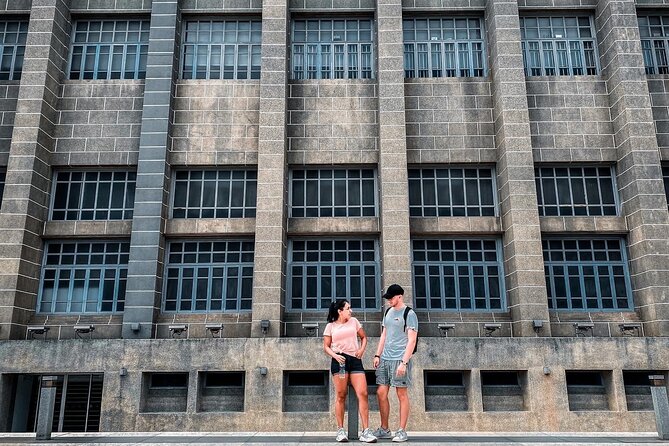
Then comes a shift from religious landmarks to architecture tied to trade and industry. The East Asiatic Company Building is one of the riverfront standouts near the historic Mandarin Oriental Hotel area on Charoen Krung Road.
It was built in 1901 in an elegant Italian Renaissance style. Even if you’re not an architecture person, the value is that this building anchors a story: how international commerce shaped Bangkok’s built environment. You start to see why Charoen Krung matters beyond being an old road—this was a corridor where global business left physical traces.
You’ll also get time for Bang Rak itself, a district that has transformed a lot over time. The tour’s angle is helpful: it frames Bang Rak as a former hub that became more overlooked, then began to re-emerge in more recent years. That gives you context for why some blocks feel preserved while others feel reinvented.
The time here is relatively short, so the payoff is interpretive. Don’t expect this part to feel like a museum. Instead, use it to build a mental map of how Bangkok’s European-era trade and local life overlapped.
Holy Rosary Church (Kalawar Church): Gothic Revival along the river
Back on the Chao Phraya River side, you’ll stop at Holy Rosary Church, locally known as Kalawar Church. It’s described as one of the oldest Catholic churches in Bangkok and a striking example of Gothic Revival architecture.
This is one of those stops where you can learn a lot just by looking up. Gothic Revival style tends to communicate height and drama, and in a city where you might expect only one dominant architectural language, it’s a strong contrast. The location also helps: you get a sense of how these churches relate to the river corridor and the older communities around it.
Again, the visit time is brief, so this works best if you like quick, high-impact viewpoints. If you want deep interior access, you’d need a longer visit elsewhere—but for a walking tour, this keeps the pace moving.
Talat Noi: time, streets, and the Rong Kuak Shrine
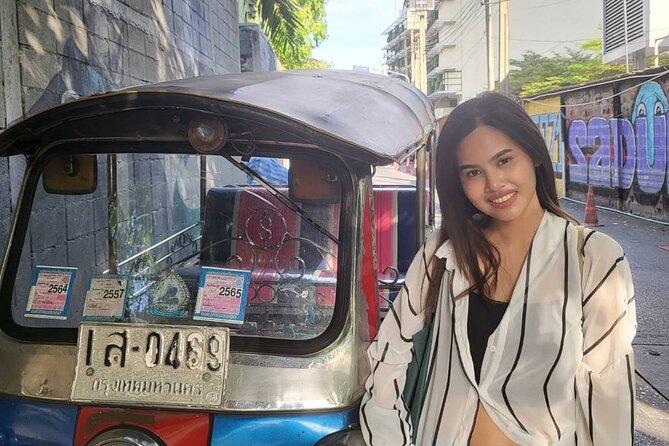
After the earlier heritage stops, the tour gives you real neighborhood time in Talat Noi. You’ll spend about 1 hour 30 minutes here, and that longer block is one of the reasons the tour feels more like Bangkok living than a checklist.
Talat Noi means small market, and it’s part of Chinatown. It’s also described as one of Bangkok’s oldest communities, with Chinese-Thai families who have been there for generations. This is where you see why the city’s multicultural identity isn’t just in museums. It shows up in streets, habits, and the way places are used day to day.
During this portion, you’ll also visit Rong Kuak Shrine (also known as the Chao Hon Wong Kung Shrine). This one is described as a hidden cultural marker of Hakka-Chinese heritage. It was established during the early Rattanakosin era and enshrines the deity Hon Wong Kung.
What I like about ending with a shrine is that it rounds out the day. Earlier you saw major religious architecture tied to major communities. Here, you’re seeing a more local, community-centered tradition tied to a specific Chinese heritage group. The tour format makes it easy to connect the dots without turning it into a lecture.
The street art part: how you’ll find it without chasing it
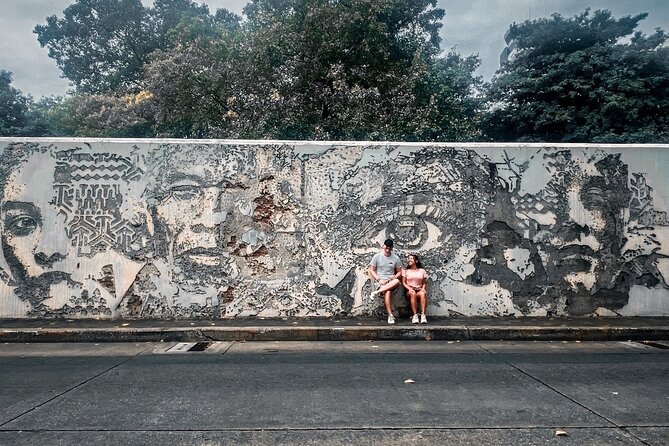
The whole idea of the tour is that you’re not just watching the city; you’re learning to spot how Bangkok’s past and present share space. Street art shows up in the narrative because it’s a living expression of place, not an add-on.
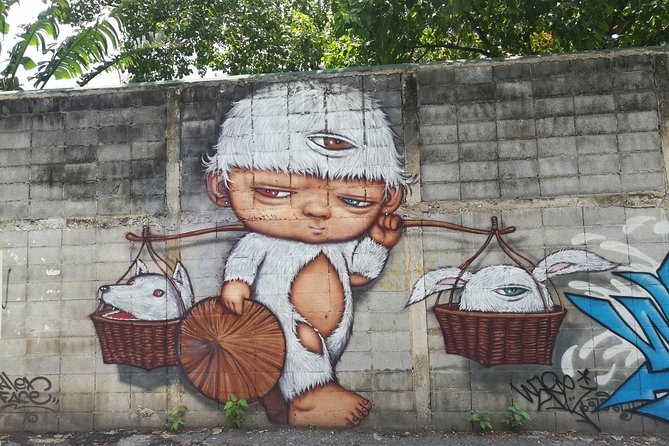
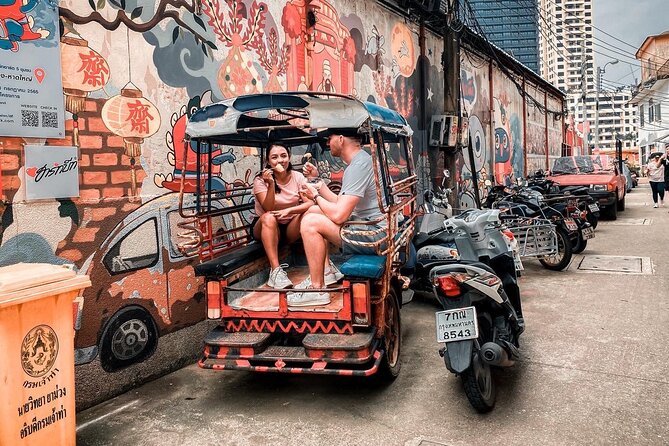
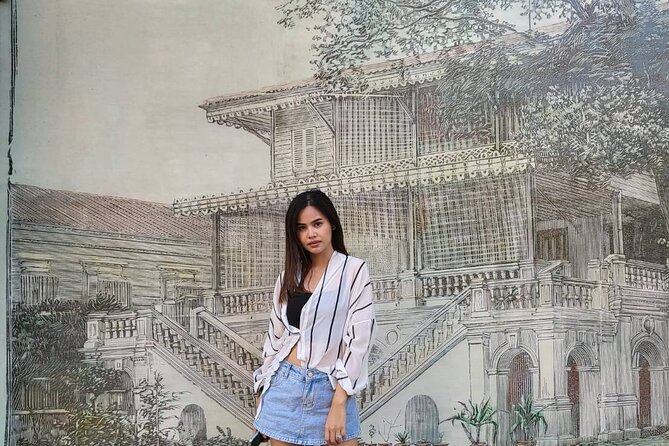
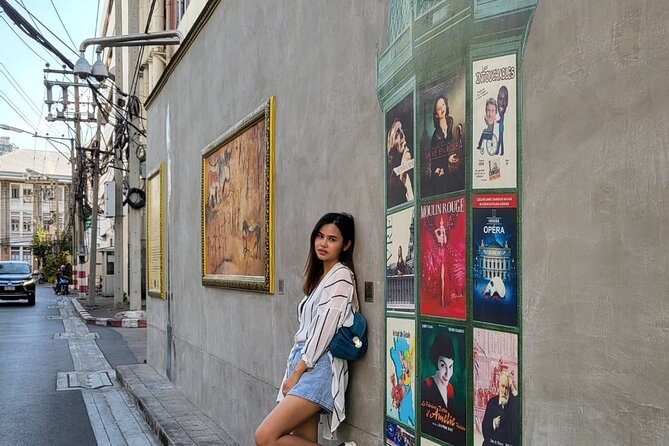
You’ll walk along quiet backstreets lined with historic shophouses, riverside warehouses, and grand old buildings, and you’ll be shown where to look for street art. The practical value is that street art can be hit-or-miss if you wander without guidance. Here, the route is built to increase your odds of catching it in context.
Look for how the art interacts with the surroundings: a mural in front of older facades feels different than the same art on a blank wall. The tour’s pace helps you notice those contrasts rather than rushing past them.
Price and what $83.17 buys you in real terms
At $83.17 per person, this isn’t a bargain tour, but it’s also not priced like a luxury private driver day. The value comes from what’s included: hotel pickup, an English-speaking guide, a small meal, plus snacks and drinking water.
For a private experience, that’s meaningful. A guide who can link heritage sites with street art and cultural context is part of the service you’re paying for, and the stops aren’t just generic landmarks—they’re tied to specific districts and architectural styles. If you’ve ever done half-day tours that feel like fast photo stops, this pricing makes more sense because the day has structure and interpretation.
What’s not included is also important: gratuities for the guide are optional, and the tour ends in Talat Noi without a transfer back to your hotel. Factor that into your afternoon plans so you don’t feel stuck.
Who this tour is best for
This works well if you like Bangkok for its layers: food, neighborhoods, and architecture that reflects multiple cultures. You’ll likely enjoy it most if you want to get out of the main tourist flow and spend time in Charoen Krung and Talat Noi rather than only around the biggest monuments.
It’s also a strong fit if you care about street art as part of city life rather than just a photo trend. The route makes street art feel connected to the rest of the day.
If you don’t like walking for hours, or if you need mobility accommodations, this is not recommended based on the tour’s walking format.
Practical tips to make your day smoother
- Wear comfortable shoes. You’ll be on your feet for several hours.
- Bring a poncho or light raincoat. The tour runs in rain, and tropical showers can be quick but heavy.
- Have a plan for the last mile: since the tour ends in Talat Noi, decide how you’ll get back to your hotel or next stop.
- If you have dietary restrictions, communicate them ahead of time so your guide can align the meal stop and options with your needs.
One more small mindset tip: at each landmark, spend about a minute orienting yourself, then look for one detail to remember—like a date, architectural style, or local name. That turns quick stops into lasting learning.
Should you book this Bangkok Heritage & Street Art Private Walking Tour?
If you want Bangkok with fewer crowds and more character, I think this is an easy yes. The combination of heritage buildings, multicultural religious sites, a classic roasted duck meal, and street art in real neighborhood streets is exactly the kind of half-day that makes a city feel personal.
Book it if you’re the type who enjoys walking through districts and learning how different eras shaped the blocks you’re standing on. Skip it only if you need a low-walking plan or you’d prefer your day to end back at your hotel.
FAQ
FAQ
How long is the Bangkok Heritage & Street Art Private Walking Tour?
It’s about 4 hours 20 minutes.
What time does the tour start?
The start time is 9:00 am.
Is pickup included?
Yes, hotel pickup is included, and pickup is offered.
Do I get street art as part of the experience?
Yes. The tour route includes street art stops along the walk through quiet backstreets.
What food do you stop for?
You’ll enjoy a small meal at Prachak Roasted Duck, a restaurant known for roasted duck and serving locals since 1909.
Does the tour include drinking water and snacks?
Yes. Drinking water and snacks are included.
Where does the tour end?
The tour ends in Talat Noi, and there isn’t a transfer back to your hotel included.
Does the tour run if it rains?
It operates rain or shine. If it rains heavily, the plan is to seek shelter and continue when weather improves.
Bangkok on Foot: More Walks


More Tours in Bangkok

More Tour Reviews in Bangkok


Just In: Fresh Bangkok Reviews


Historical Tours, compared.
 ★ 4.6From Bangkok: Ayutthaya Historical Park Guided Day TripFrom $283,020 reviews
 ★ 4.5UNESCO’s Ayutthaya Historical Park: Full-Day Tour from BangkokFrom $281,559 reviews
 ★ 4.6From Bangkok: Historical Day Tour to River KwaiFrom $51868 reviews
 ★ 5.0Historical City of Ayutthaya – Unesco Full Day Tour From BangkokFrom $41847 reviews
 ★ 5.0Private Excursion to Floating Market and Ayutthaya World HeritageFrom $184515 reviews
 ★ 4.5From Bangkok: Ayutthaya Heritage Tour with Sunset Boat RideFrom $32490 reviews
 ★ 5.0Private Excursion to Ayutthaya, UNESCO World Heritage site with Boat TourFrom $159460 reviews
 ★ 4.5River Kwai Day Tour from Bangkok – History, Scenery & CultureFrom $97206 reviews
Browse the lists this tour appears in