
Bangkok has a secret walking pace. This tour strings together temple culture, old-city canals, and food-and-market streets, so you get a real sense of how Bangkok works. I especially like the built-in Vox City app for extra self-guided walking, and the fact that the ticket gives you time flexibility across two days. One thing to consider: entry fees and transit aren’t included, so a few stops can cost extra and you’ll need to plan how you’ll get between neighborhoods.
You’ll also get guided context in a way that’s practical, not just historical trivia. In the feedback I saw, guides like Andy were friendly and knew exactly where to take you, which matters when streets are crowded and temples have lots of side paths. The main drawback for some people is that the route can include an adult entertainment area, which may feel uncomfortable depending on your travel style.
In This Review
- Key highlights worth your time
- What You’re Getting for $24 in Bangkok
- How the 2-Day Ticket Actually Helps (Without Rushing You)
- Old Bangkok Temples, Canals, and the Fort Story
- Quick tip for this segment
- Wat Pho and the Big-Name Temple Moments
- A note on worship etiquette
- Markets and Neighborhood Color: Phahurat, Sampheng, Pak Khlong Talat
- Watch-outs in market areas
- Chinatown Gate, Chinese Temples, and the Temple/Commerce Blend
- Royal-Era Learning: Museum of Siam and King Prajadhipok Museum
- Giant Swing, Wat Sa Ket, and the Old-to-New Architectural Feel
- What you should carry
- Hindu Shrine Details and the City’s Luck Myth
- Medicine History: The Berlin Pharmaceutical Museum
- Adult Entertainment Area and Comfortable Choice
- Food Stop: Kuai Chap Soup and Taco-Style Dishes
- Wat Racha Burana and the Ayutthaya Note
- Practical Planning Tips That Make This Tour Work
- Should You Book This Walking Tour?
- FAQ
- How much does the Bangkok Historic Siam and Cultural Gems walking tour cost?
- How long is the tour?
- Is the ticket valid for more than one day?
- What’s included in the price?
- What’s not included?
- Do I need a mobile ticket?
- How big is the group?
- Is free cancellation available?
Key highlights worth your time
- Two walking tours with a flexible ticket so you can spread it across your stay
- Vox City app included with 7 self-guided walks to keep momentum after the guided part
- Audio commentary in 5 languages for clearer context at each stop
- Old Bangkok + Chinese and Indian neighborhoods packed into one cultural sampler
- Major temple hits like Wat Pho and Wat Traimit with their signature sights
- Small-group feel with a max of 99 travelers
What You’re Getting for $24 in Bangkok
For $24, you’re paying for guided orientation plus a smart add-on: a Vox City app with 7 self-guided walking tours and audio in 5 languages. That’s a good value in Bangkok, where it’s easy to wander past something important without understanding it.
The walking-tour duration is listed as about 1 to 2 hours, and that’s exactly what makes this work. You’re not stuck doing a marathon trek through the entire city in one go. Instead, you can treat it like a “best first moves” pass: start with the guided route, then use the app to keep exploring nearby streets at your own speed.
Two more value points matter:
- You get a mobile ticket, which keeps everything simple once you’re on the ground.
- Your ticket is valid for 3 days from first use, so if you miss a day or want a slower start, you’re not penalized.
Just remember the limits: transportation and attraction entry are not included, and food/drinks aren’t covered either. If you’re budgeting, assume some temples or museums may require paid entry.
Bangkok at walking pace, more routes
- Bangkok: City Highlights Temple and Market Walking Tour
★ 4.5 · 3,990 reviews - Bangkok: Grand Palace and Wat Phra Kaew Guided Walking Tour
★ 4.4 · 2,417 reviews - Bangkok: Wat Pho and Wat Arun Guided Walking Tour
★ 4.6 · 1,720 reviews
How the 2-Day Ticket Actually Helps (Without Rushing You)
This is marketed as an epic experience with a flexible 2-day ticket, but the practical detail is the 3-day validity window from first use. In real life, that means you can:
- Do the guided walking portion on Day 1,
- Then take your time with the included self-guided walks during Day 1–3,
- Or switch plans if Bangkok weather, traffic, or your energy level changes.
Also, walking in Bangkok is rarely “just walking.” You’ll move through narrow lanes, canal-side areas, and market blocks that can feel packed at certain times. Spreading it out across two days is a kindness to yourself.
Old Bangkok Temples, Canals, and the Fort Story
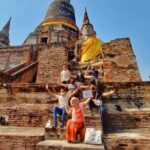
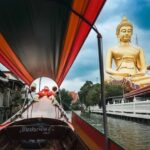
If you want the feeling of historic Bangkok, this tour’s early stops aim you in the right direction. You start with Old Bangkok’s Buddhist temples, including one with an ornate marble exterior and a gold Buddha—the kind of visual cue that instantly tells you you’re in the “real Bangkok” layer of the city.
Then you hit the Pi Kun Bridge, a pedestrian overpass crossing Khlong Khu Mueang Doem, also known as Khlong Lot (tube canal). Even if you’re not into engineering, canal culture is Bangkok culture. This is where you see how the old city structure shaped daily life and why certain neighborhoods developed the way they did.
Next comes Fort Mahakan, an 18th-century structure that’s among the oldest buildings in Bangkok. Forts can sound dry, but here it helps you understand Bangkok’s defensive and political past without needing a lecture. The key is that the fort anchors the rest of the walking—suddenly the city’s layout feels intentional.
You also get Rommaninat Park, paired with an important reminder of what “punishment” looked like in the past. The park includes the old Bangkok prison area, now a museum to trace the history of Thailand’s prison system. It’s not a light stop, but it’s one of the more grounded, human-history moments on the route.
Quick tip for this segment
Dress for temples, expect crowds near major sites, and plan water breaks. You’ll be close to religious landmarks and market areas, so sun and heat can build quickly even during “short” walks.
Deeper into old Bangkok

Wat Pho and the Big-Name Temple Moments
At some point, the tour focuses you on the kinds of temples people travel across the planet to see—and it doesn’t skimp.
Wat Pho is one of Thailand’s largest and most important temples, and the tour highlights the sheer scale: more than 1,000 Buddha images and statues, plus the most famous feature, the Reclining Buddha (Phra Buddha Saiya). This is a stop you should treat like a slow browse, not a checklist. Even if you’re not a temple expert, you’ll feel the atmosphere shift as you move through the complex.
The route also includes Wat Traimit Withayaram Worawihan, known for hosting the largest golden Buddha statue made of solid gold—described here as weighing 5.5 tonnes and standing about 3 meters tall. That kind of scale changes how you look at the whole site. When you know what you’re looking at, you spend less time wondering and more time observing.
And there’s Wat Ratchanatdaram, listed among UNESCO World Heritage Sites, with 37 bronze golden spires and several pavilions nearby (including the Royal Reception Pavilion and three minor pavilions). Even if you only get partway around, the spires give you a visual “map” of the site.
A note on worship etiquette
These are active sacred places. Keep your shoulders and legs covered where needed, be respectful with photos, and be prepared for requests from staff or temple attendants.
Markets and Neighborhood Color: Phahurat, Sampheng, Pak Khlong Talat
One reason I like this tour concept is that it doesn’t treat Bangkok as temples only. It uses markets to show how Bangkok feeds itself—socially and literally.
- Phahurat Market, often called Bangkok’s Little India, puts you in the middle of Indian life in the area.
- Sampheng, in Chinatown, is described as a historic neighborhood and market—great for people-watching and browsing.
- Pak Khlong Talat is a major flower market that’s open 24/7 and most famous for flowers sourced across Thailand, with fruits and vegetables also sold there.
These stops work together. Markets show you what people carry, what people wear, what people smell, and what people argue about. It’s not just shopping. It’s how Bangkok communicates daily culture.
Watch-outs in market areas
Markets can be busy, and some lanes are narrow. Keep your phone secure and slow down when you stop to look at goods. If you’re sensitive to crowds, start early in the day if your schedule allows.
Chinatown Gate, Chinese Temples, and the Temple/Commerce Blend
Bangkok’s Chinatown doesn’t feel like a separate “world”—it feels integrated. The tour includes the Chinatown Gate, described as a large red Chinese gate functioning as a roundabout and marking the center of the city’s Chinatown, with plaques containing information about the Chinese community’s history.
Then you go to Wat Mangkon Kamalawat, listed as the largest and most important Chinese temple in Bangkok, established in 1871 (originally named Wat Leng Noei Yi). This pairing—gate plus temple—helps you see how cultural identity moves from street signs into everyday spiritual life.
There’s also a monastery stop described as integrating Thai and European culture and being treated as a masterpiece of art in Buddhist monasteries. That kind of cross-cultural design is one of the reasons Bangkok keeps surprising people.
Royal-Era Learning: Museum of Siam and King Prajadhipok Museum
If you like your history grounded and readable, these museum stops help.
The tour includes the Museum of Siam, described as the country’s first national discovery museum, established in the mid-2000s. A discovery museum style tends to be hands-on and approachable, which is useful when you want historical context without sitting through long lectures.
Then there’s the King Prajadhipok Museum, housed in an early 1900s neoclassical mansion. It focuses on King Prajadipok (Rama VII) and the era when Thailand transitioned from outright monarchy to constitutional monarchy in 1932. This is a good complement to temple stops because it shifts you from sacred space to political change—two sides of how power and identity form in a city.
Giant Swing, Wat Sa Ket, and the Old-to-New Architectural Feel
This tour includes a few “wow-factor” structures that help you understand Bangkok’s architectural mix.
You’ll learn about the Giant Swing, a massive religious structure in front of Wat Suthat, noted here as one of the oldest and most impressive Buddhist temples in Bangkok. Even if you only get a quick look, the swing signals ceremony at scale.
You’ll also go up to Wat Sa Ket on top of a 75-meter (246 ft) artificial hill. The walk up is part of the experience here, and the tour notes the interior features vibrant colored walls and detailed paintings, plus a series of miniature sculptures. You also get the golden bell-shaped description, which is useful because it gives you a mental image before you arrive.
What you should carry
For hill/step days, wear shoes with grip and bring water. If you’re short on time, consider doing Wat Sa Ket earlier so you’re not climbing in peak heat.
Hindu Shrine Details and the City’s Luck Myth
Bangkok is full of religious layers, and the tour includes the Erawan Hindu shrine in central Bangkok. It’s described as the best-known of Hindu shrines in the area, built in 1956 to ward off bad luck from a hotel that was built nearby.
This is a classic Bangkok story: religion isn’t only about belief. It’s about risk management, community ritual, and everyday coping with uncertainty—especially in fast-changing commercial areas.
If you like learning how people interpret luck and misfortune, this is an easy stop to appreciate.
Medicine History: The Berlin Pharmaceutical Museum
One of the more surprising inclusions is the Berlin Pharmaceutical Museum, which pays tribute to Western-style medicine introduced to Bangkok in the 1700s. It also commemorates Dr. Chai Chaiyanuwat, located in the exact building where he practiced medicine.
This is a great reminder that Bangkok’s history isn’t just emperors and temples. It includes trade, technology, and what happens when new ideas enter a city and get localized.
Adult Entertainment Area and Comfortable Choice
The tour includes an entertainment complex described as a red-light district in the Khlong Toei District, and it even describes itself as a world’s largest adult playground.
I’m flagging this not to get dramatic, but so you can decide early if it matches your comfort level. If you’re traveling with family or you prefer avoiding adult entertainment zones, ask your guide what the schedule looks like and whether there’s a way to adjust which segments you do.
Food Stop: Kuai Chap Soup and Taco-Style Dishes
Food isn’t included, but the tour suggests a specific place: Kuai Chap Uan Photchana, described as a Michelin-rated street food restaurant. The tour notes their main claim to fame: kuai chap soup and taco-style dishes, with vegetarian options available.
Even if you don’t eat everything, it’s useful to have at least one local anchor. Street food in Chinatown and nearby areas can be intimidating if you don’t know what to order, so having a named starting point helps.
Wat Racha Burana and the Ayutthaya Note
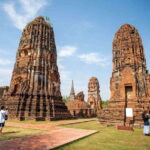
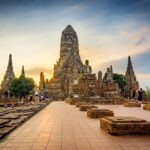
One of the stops listed is Wat Racha Burana, described as a restored ruin of a monastery located on the city island in the Historical Park of Ayutthaya.
Because this is a walking-tour format and the duration is short, you should treat this as a curated cultural stop included in the experience’s theme rather than assuming you’ll physically cover huge distances in one afternoon. If Ayutthaya isn’t already on your schedule, use the Vox City app self-guided tours to keep the story going close by.
Practical Planning Tips That Make This Tour Work
Here’s how to get the most out of a route like this without turning it into a sweaty endurance test.
- Use the 3-day window to spread out temple-heavy parts. You’ll see more when you’re not rushing.
- Expect some paid entry at attractions, since entry isn’t included in the price.
- Plan your transit yourself. Transportation isn’t included, so build time buffers between neighborhoods.
- Take the app seriously. The Vox City app’s self-guided walks give you a way to keep moving even when you skip a segment.
Group size is capped at 99 travelers—not a private tour, but generally manageable for meeting points and getting information. Mobile tickets also help keep lines shorter and confusion lower.
Should You Book This Walking Tour?
You’ll likely love booking Historic Siam and Cultural Gems if you want:
- A guided first pass through Bangkok’s temples, canals, and market neighborhoods,
- A flexible plan across two days (with ticket validity for 3 days from first use),
- The added value of the Vox City app with multiple self-guided walks and audio in 5 languages.
Skip it or adjust your expectations if:
- You want everything included (this one does not include transportation or entry fees),
- You don’t want any exposure to an adult entertainment area,
- You prefer one neighborhood only rather than a citywide mix.
If you like walking with context—religion, street life, and a few “how did they build this?” moments—this is a strong way to start.
FAQ
How much does the Bangkok Historic Siam and Cultural Gems walking tour cost?
It costs $24.00 per person.
How long is the tour?
The guided walking tours are listed as about 1 to 2 hours.
Is the ticket valid for more than one day?
Yes. The ticket is valid for 3 days from first use if you can’t do the tours on the same day.
What’s included in the price?
Included are the Historic Siam walking tour and the Bangkok Cultural Gems walking tour, plus the Voxcity app with 7 self-guided walking tours and audio commentary in 5 languages.
What’s not included?
Transportation, entry to attractions, and food and drinks are not included.
Do I need a mobile ticket?
Yes. The tour uses a mobile ticket.
How big is the group?
The experience has a maximum of 99 travelers.
Is free cancellation available?
Yes. There is free cancellation, and you can cancel up to 24 hours in advance for a full refund.
Bangkok on Foot: More Walks



More Tours in Bangkok



More Tour Reviews in Bangkok



Just In: Fresh Bangkok Reviews

Historical Tours, compared.
 ★ 4.6From Bangkok: Ayutthaya Historical Park Guided Day TripFrom $283,020 reviews
 ★ 4.5UNESCO’s Ayutthaya Historical Park: Full-Day Tour from BangkokFrom $281,559 reviews
 ★ 4.6From Bangkok: Historical Day Tour to River KwaiFrom $51868 reviews
 ★ 5.0Historical City of Ayutthaya – Unesco Full Day Tour From BangkokFrom $41847 reviews
 ★ 5.0Private Excursion to Floating Market and Ayutthaya World HeritageFrom $184515 reviews
 ★ 4.5From Bangkok: Ayutthaya Heritage Tour with Sunset Boat RideFrom $32490 reviews
 ★ 5.0Private Excursion to Ayutthaya, UNESCO World Heritage site with Boat TourFrom $159460 reviews
 ★ 4.5River Kwai Day Tour from Bangkok – History, Scenery & CultureFrom $97206 reviews
Browse the lists this tour appears in