
Bangkok’s Thai cooking starts with a market stroll. Mango Cooking School pairs an instructor-led market visit near BTS On Nut with a hands-on 3-hour class where you cook classic dishes using fresh ingredients. I especially like the spotless, air-conditioned facility (with air purifiers and kid-friendly tools), and I also love how the instructors keep things friendly and step-by-step—names like Serene, PUI, and MC show up again and again in the vibe. One thing to consider: the rules are strict—if you’re not registered, you can’t just hang around and watch.
You’ll walk about 5–10 minutes from BTS Skytrain On Nut (across from BIG-C On Nut Market) to a clean cooking studio that makes Thai cooking feel doable. The class language is English, and the format is built so you’re cooking (not just watching). The only “trade-off” is that parents aren’t allowed to observe or assist during the program, so if you’re coming with little ones, plan around that.
If you want an experience that feels local, practical, and actually leaves you with recipes you can repeat later, this is a strong bet—especially at the $27 price point for a full session with ingredients, tools, and food included.
In This Review
- Key points I’d focus on
- Why Mango Cooking School Works So Well in Bangkok
- Market Walk at BTS On Nut: Your First Ingredient Lesson
- Inside the Kitchen Studio: Clean, Airy, and Kid-Friendly
- The 3-Hour Menu: What You Cook (and Why It Matters)
- How the Class Flows: From Market to Chop Bowl to Eating Room
- Recipes on QR and a Special Gift: Taking Bangkok Home
- Price and Value: Is $27 Fair for What You Get?
- Who Should Book This Class (and Who Should Skip It)
- Practical Tips for a Smoother, Better Class
- Should You Book Mango Cooking School in Bangkok?
- FAQ
- How long is the Thai cooking class at Mango Cooking School?
- Is there a market tour included?
- Where do I meet the class?
- What dishes will I cook?
- Are recipes provided after the class?
- What’s included in the price?
- What’s not included?
- Is the class taught in English?
- Is it suitable for children?
- What should I bring, and what is not allowed?
Key points I’d focus on
- BTS On Nut location: just a short walk from Skytrain, plus it’s near the BIG-C On Nut Market area.
- Market tour is included: available for both morning and afternoon classes, and it’s part of the learning, not extra sightseeing.
- You cook multiple dishes: you’ll prepare about six items, including iconic Thai flavors like Som Tum and Pad Thai.
- New, clean facility with A/C: air conditioning on every floor, air purifiers, and well-organized workstations.
- Family-friendly tools: kid-sized cooking tools are provided, and the program has clear rules for children.
- QR recipes + a special gift: you take the method home, not just the photos.
Why Mango Cooking School Works So Well in Bangkok
Bangkok is amazing, but it can also overwhelm your senses fast. Mango Cooking School gives you a controlled way to experience that chaos—smells, herbs, spices, and technique—without needing to be an expert before you start. You’re not just tasting Thai food. You’re learning how Thai cooks build flavor through balance: sweet, salty, sour, and spicy.
I like that the experience is structured for learning. The market walk gives you context for what you’re about to use in the kitchen. Then the cooking happens in a clean, modern space with air conditioning on every floor. That matters in Bangkok. You want to focus on slicing, mixing, and adjusting—not sweating through prep.
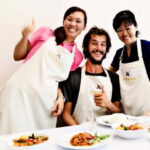
There’s also a social side. From the reviews, the instructors (including Serene, PUI, and MC) tend to keep energy up and make class feel relaxed. If you’re coming solo, you’re cooking alongside other people at your station. If you’re coming as a pair or family, it tends to feel welcoming without turning into a chaotic crowd.
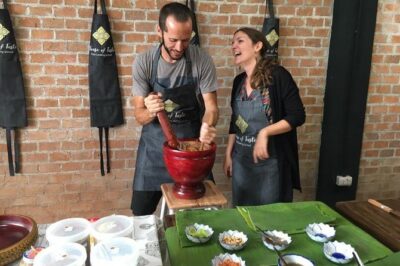
Aprons on for another Thai kitchen
- Bangkok: Hands-on Thai Cooking Class and Market Tour
★ 4.9 · 1,614 reviews - Bangkok: Tingly Thai Cooking School Half-Day Cooking Class
★ 4.9 · 1,191 reviews - Bangkok: Maliwan Thai Cooking Class with Market Tour
★ 4.9 · 1,133 reviews
Market Walk at BTS On Nut: Your First Ingredient Lesson
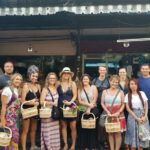
The market portion is available for both morning and afternoon classes, so you can pick the timing that fits your Bangkok rhythm. The meeting point is convenient: take a 5–10 minute walk from BTS Skytrain On Nut, then go across from BIG-C (On Nut) Market. In other words, you’re not crossing half the city to find the class.
During the walk, your instructor introduces key ingredients behind Thai cooking. You’ll see herbs, seasonings, and spices up close, and you’ll learn what they do in real dishes—not just what they are called. This is one of those small experiences that changes how you cook later. When you understand why Thai cooks use certain combinations, it becomes easier to replicate flavors at home.
I also appreciate that this isn’t framed as optional sightseeing. It’s part of the learning flow. A lot of cooking classes in busy cities skip that context. Here, you’re expected to connect what you buy (or identify) with what you cook afterward.
One practical consideration: the market walk and then cooking can be a lot of standing and moving for small kids. The studio is air-conditioned, but comfortable shoes help on both the walk and the prep time.
Inside the Kitchen Studio: Clean, Airy, and Kid-Friendly
The facility is described as new and extremely clean, and that shows in how you’ll feel when you arrive. It’s air-conditioned on every floor, and air purifiers are provided. That combination is a big deal if you’ve ever taken a cooking class in a cramped room with poor ventilation.
Workstations also seem designed for real cooking. Ingredients are there, equipment is there, and you’re not constantly sent back and forth for supplies. In the reviews, people mention things like organized stations and very clean appliances, plus the sense that the class runs smoothly.
For families, Mango Cooking School adds kid-friendly details. Cooking tools are provided that are easier for children to handle. That means kids aren’t just watching while adults chop. They can participate in the process in a way that feels safer and more age-appropriate.
Do note the boundaries: individuals who haven’t registered aren’t allowed to observe or wait during the class. And parents aren’t allowed to observe or assist during the program. So if you’re traveling with kids, it helps to understand this is a drop-in-to-cooking setup, not a sit-and-watch show.
The 3-Hour Menu: What You Cook (and Why It Matters)
The menu can change depending on availability, but you can expect a mix of Thai staples and dessert learning. In the class, you’ll make around six dishes, guided step-by-step.
Here’s the style of menu you can look for:
- Coconut milk work for Mango Sticky Rice
You’ll learn how to make coconut cream and coconut milk for mango sticky rice. This is huge. Many people can’t replicate that dessert at home because they only think about the mango and rice, not the coconut component.
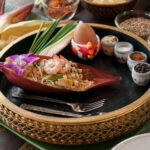
- Appetizer: Som Tum (green papaya salad)
Som Tum is where Thai cooking gets very real, very fast. You’ll practice texture and balance—crunch, tang, and seasoning.
- Main course: Pad Thai
Pad Thai is a classic for a reason. It teaches stir-fry basics and how Thai cooks manage sweetness and saltiness without turning it into dessert.
- Main course: Tom Yum Goong
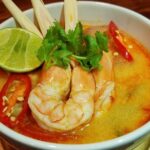
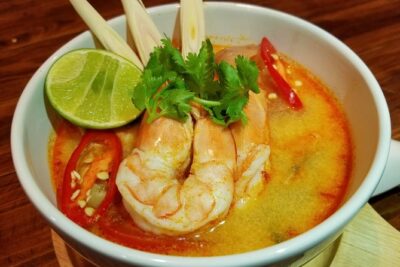
This is the tangy and spicy shrimp soup. It trains you on the Thai sour-spicy profile—how the flavors hit quickly and then linger.
- Stir-fried Morning Glory
Morning glory with garlic and chili helps you understand fast cooking and how to keep vegetables crisp while still building flavor.
- Dessert: Mango Sticky Rice + an extra dessert tasting
You’ll learn the classic pairing of sweet mango with glutinous rice, finished with rich coconut sauce. You may also get the chance to taste a traditional Thai dessert selected by the chef.
- Thai milk tea
You’ll also get dessert-style learning beyond what most people expect, including Thai milk tea.
A small but useful takeaway: you’re not only making savory dishes. Thai desserts and milk tea are built into the class so you leave knowing how Thai cooks think about sweet flavors too.
If you’re sensitive to spice, you’ll likely be able to adjust. One participant specifically noted accommodation for spice levels. Still, don’t assume every dish will be identical in heat for everyone—use your judgment and tell your instructor if you need it milder.
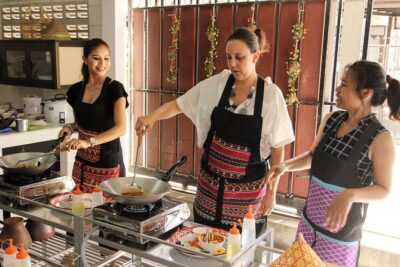
More time at the wok
How the Class Flows: From Market to Chop Bowl to Eating Room
The class runs for 3 hours, and the rhythm is designed to keep hunger from taking over. The market portion happens early enough that the ingredients feel fresh in your mind, then you move into hands-on prep.
A typical flow looks like this:
- Market walk with your instructor and ingredient explanations
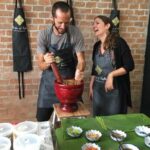
- Kitchen prep: chopping, mixing, and assembling based on the dishes you’ll cook
- Cooking at your station with guidance
- Eating what you make in an eating area
One review specifically mentioned that you cook and then eat relatively soon, rather than waiting until the end with all dishes finished at once. That setup helps the whole thing feel like you’re moving forward, not sitting on food suspense.
Also, the class is designed for real participation. You’re not only tasting. You’re doing the steps—so you’ll remember which texture you’re aiming for, and what it means when Thai cooks say something should be balanced.
Finally, you’ll finish with a dessert component and Thai milk tea. That last part tends to feel like a reward because you’ve already built the skills for both savory and sweet.
Recipes on QR and a Special Gift: Taking Bangkok Home
You’ll receive QR recipes (video), which is one of the best parts of paying for a cooking class. Written recipes are useful, but video format is where you’ll actually learn technique—how ingredients get treated, the timing, and what the dish should look like mid-way through.
You’ll also get a special gift at the end. In reviews, people mention a souvenir, and it fits the idea that you’re leaving with a small take-home reminder, not just full bellies.
If you cook at home at all, QR recipes raise the value. It’s the difference between tasting Thai food once and being able to recreate flavors weeks later when you’re craving Bangkok.
Price and Value: Is $27 Fair for What You Get?
At $27 per person for 3 hours, this is priced for a wide range of budgets. The best value angle here isn’t just the cost. It’s what you’re getting inside the ticket price: cooking equipment, ingredients, a full meal built around multiple dishes, and recipes you can use later.
You can also think of the market walk as part of the value. It turns the class into a two-layer experience: ingredient learning plus cooking practice. That usually costs more when done separately.
And because it’s set up near BTS On Nut, you save time and hassle on getting there. No hotel pickup is included, so you’ll handle the last-mile on your own—but the location is close to Skytrain, which usually keeps the real cost down.
One more practical value point: the facility includes air conditioning across floors and air purifiers. You’re paying for a space where you can focus. In Bangkok heat and humidity, that’s not a small detail.
Who Should Book This Class (and Who Should Skip It)
Mango Cooking School is a great fit if you want a hands-on way to understand Thai cooking without needing to be confident in the kitchen. It’s also a smart choice for first-timers because the class structure is step-by-step and English instruction is available.
If you’re visiting with family, it’s family-friendly in a real way. Reviews mention a 9-year-old participant having fun, plus families with multiple kids enjoying the class. Cooking tools are kid-friendly, and the studio is organized enough to handle different ages.
But please match your expectations to the rules:
- Children under 5 can’t attend.
- Children 5–11 must be accompanied by a guardian who also makes a reservation.
- Parents are not allowed to observe or assist during the program.
- If you’re booking children, plan around the reservation rules (like needing only one adult when two children aged 5+ are booked).
If you’re an adult who wants a lot of passive watching, this isn’t that type of class. The rules don’t allow unregistered observers, and the program is built around participation.
If you’re traveling with pets, pets aren’t allowed. And smoking isn’t allowed.
Practical Tips for a Smoother, Better Class
A few small choices can make the whole session easier:
- Wear comfortable shoes. You’ll walk from BTS and move around during prep.
- Bring a camera if you want photos of dishes and ingredients.
- Plan to eat soon after cooking. The class structure is designed to keep you from waiting too long.
- If you prefer less spice, let your instructor know. One review specifically mentioned they can accommodate different spice levels.
Also, keep in mind you should arrive on time for the market-kitchen flow. Since you’re not just dropping in for a demo, missing early steps can knock you off the learning rhythm.
If you’re going with kids, set expectations before you arrive: they’ll be cooking, and you won’t be hovering to assist or observe.
Should You Book Mango Cooking School in Bangkok?
Yes, you should consider booking if you want a Thai cooking experience that feels both practical and genuinely local. It’s a strong choice for value: a 3-hour class near BTS On Nut, multiple dishes you cook and eat, plus QR video recipes and a small gift.
Book it especially if:
- You like the idea of learning ingredients at a local market before cooking.
- You want a clean, air-conditioned studio in Bangkok’s heat.
- You’re traveling with family and want kid-friendly tools (with clear rules).
Skip it if:
- You’re looking for an observer-friendly experience where adults can watch without participating.
- You’re traveling with a child under 5.
- You need hotel pickup, since it isn’t included.
If your goal is to leave Bangkok with repeatable cooking skills and flavors you recognize, Mango Cooking School hits the sweet spot.
FAQ
How long is the Thai cooking class at Mango Cooking School?
The class lasts about 3 hours.
Is there a market tour included?
Yes. A Thai local market tour is available for both morning and afternoon classes.
Where do I meet the class?
Take a 5–10 minute walk from BTS Skytrain On Nut. The meeting point is across from BIG-C (On Nut) Market.
What dishes will I cook?
You’ll cook classic Thai dishes such as Som Tum, Pad Thai, Tom Yum Goong, and stir-fried morning glory. You’ll also make mango sticky rice and prepare coconut milk for it. The menu can change depending on availability.
Are recipes provided after the class?
Yes. You’ll receive QR recipes in video format.
What’s included in the price?
Included are a five-course meal, cooking equipment, ingredients, QR recipes (video), and a special gift.
What’s not included?
Hotel pickup and drop-off are not included, along with any other expenses not mentioned.
Is the class taught in English?
Yes. The instructor speaks English.
Is it suitable for children?
Children under 5 can’t attend. Children aged 5–11 must be accompanied by a guardian who also makes a reservation. Parents are not allowed to observe or assist during the program.
What should I bring, and what is not allowed?
Bring comfortable shoes and a camera. Pets and smoking are not allowed.
Learn Another Thai Dish

More Tour Reviews in Bangkok






Cook It Yourself: Thai Classes
Just In: Fresh Bangkok Reviews






Thai Cooking Classes, compared.
 ★ 4.9Hands-on Thai Cooking Class and Market TourFrom $451,614 reviews
 ★ 4.9Tingly Thai Cooking School Half-Day Cooking ClassFrom $411,191 reviews
 ★ 4.9Maliwan Thai Cooking Class with Market TourFrom $401,133 reviews
 ★ 5.0Hands on Thai Cooking Class and Market TourFrom $45660 reviews
 ★ 5.0Tingly Thai Cooking Class with Morning Market TourFrom $42589 reviews
 ★ 5.0Hands-on Thai Cooking Class & Market Tour in SukhumvitFrom $45571 reviews
 ★ 5.0Pink Chili – Thai Cooking Class and Market Tour in BangkokFrom $38416 reviews
 ★ 5.0Authentic Thai Cooking with the Largest market visit &TukTuk rideFrom $44350 reviews
Browse the lists this tour appears in