
Review · THAI COOKING CLASSES
Bangkok: Thai Cooking Class and Onnuch Market Tour
Thai food starts at the market. This half-day Bangkok experience pairs an ingredient hunt at Onnuch Market with a hands-on cooking class at Pink Chili Thai Cooking School. I like that you cook four classic dishes with an English-speaking teacher, not just watch from the sidelines. I also like that the market part helps you understand what makes Thai flavors work, from herbs to spices. The main catch is timing: arrive early, because if you’re late you’ll likely miss the market tour.
The class format is fast but focused: you gather supplies, come back to cook, and then eat what you made. With a small group limited to 8 participants, you can ask questions without feeling lost in the crowd. Still, at 4 hours total, it’s not the kind of experience where you can go slow or expect lots of free time to browse beyond the market visit.
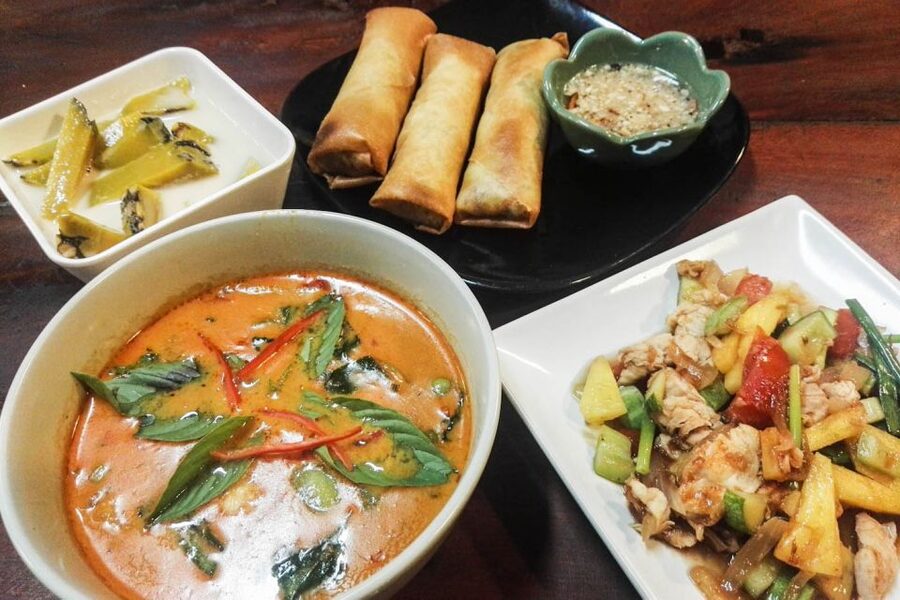
You’ll cook Pad Thai, papaya salad, Thai curry, and sweet mango sticky rice. The menu changes daily, so you’re not locked into one fixed set forever. You’ll also get unlimited tea, coffee, and water, plus WiFi at the school, which is a nice bonus when you’re taking breaks between steps.
In This Review
- Key highlights you’ll care about
- Pink Chili Thai Cooking School sets the tone
- Onnuch Market: how to pick Thai ingredients like a local
- Back to the school: cooking four dishes without losing your mind
- What you’ll cook: Pad Thai, papaya salad, Thai curry, and mango sticky rice
- Pad Thai: noodles, balance, and the sauce factor
- Papaya salad: freshness plus the sour-salty-spicy equation
- Thai curry: fragrance from spices and herbs
- Mango sticky rice: a sweet finish that actually makes sense
- Eating together: tasting your cooking right away
- Why the small group (8 max) matters more than you think
- Price and value: what $43 buys you in Bangkok
- Who this tour is best for (and who should skip it)
- Quick practical tips before you go
- Should you book this Bangkok Thai cooking class and Onnuch Market tour?
- FAQ
- Where do we meet for this Bangkok experience?
- What time does the class start?
- How long is the experience?
- How many people are in the group?
- What dishes will I cook?
- Is the class taught in English?
- What’s included, and are alcoholic drinks included?
Key highlights you’ll care about
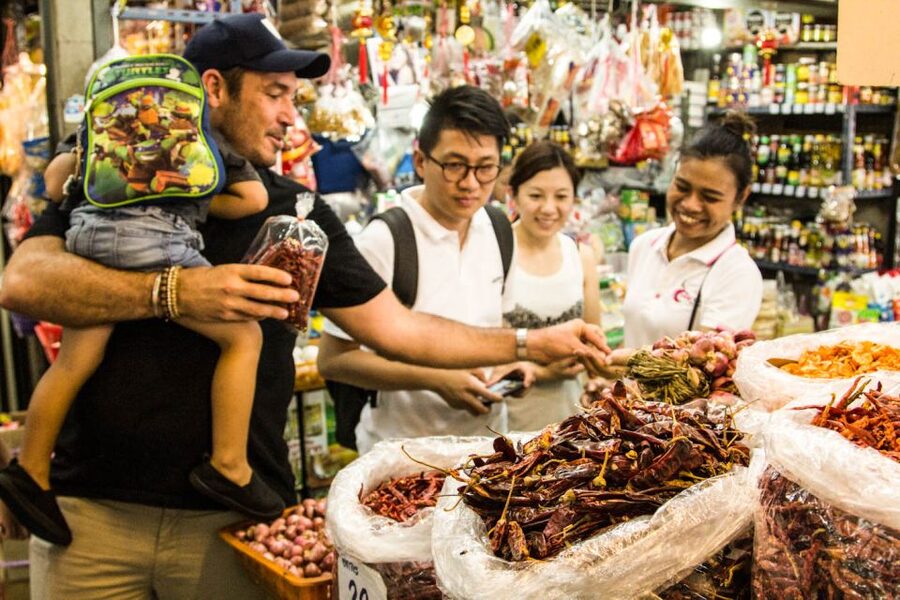
- Market-to-pan ingredient guidance: learn what to choose before you cook
- Four dishes in one session: Pad Thai, papaya salad, Thai curry, and mango sticky rice
- Small group size: up to 8 people, easier to get help
- English instruction: you can follow techniques and explanations clearly
- Unlimited tea, coffee, and water: keeps the half-day comfortable
Pink Chili Thai Cooking School sets the tone
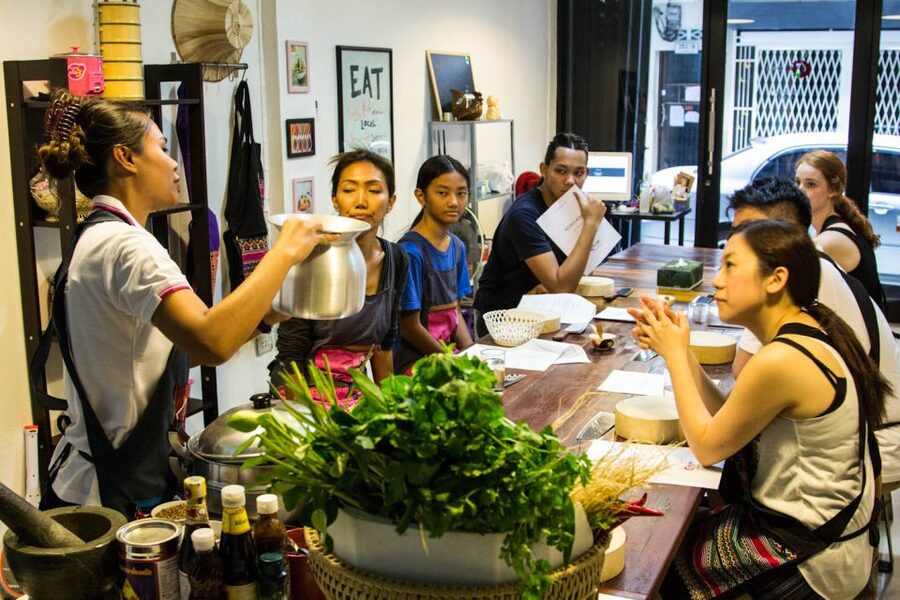
Your morning or afternoon starts at Pink Chili Thai Cooking School in Bangkok. You meet your cooking teacher there, then head out together for the market. This matters more than it sounds. When the teacher is with you from the start, you’re not just learning recipes. You’re learning why certain ingredients are used and how they affect the final taste.
I like the way the schedule is built around momentum. You meet, you shop, you cook, you eat. That keeps the experience from turning into a long lecture. You’re also not stuck waiting around while others catch up, since the group is small and the session is designed to move.
One practical thing: there are two start times. The morning class meets at 8:45am, and the afternoon class meets at 1:45pm. Since the market visit happens after meeting and before cooking begins, being late can cut out the most important part of the whole experience. If you hate rushing, plan to arrive a little early so you don’t feel stressed.
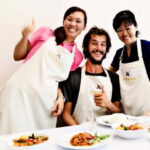
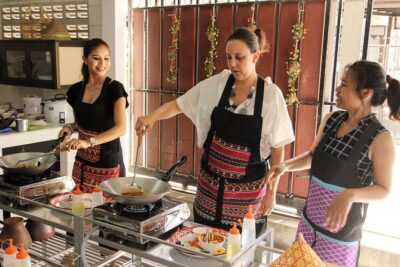
Aprons on for another Thai kitchen
- Bangkok: Hands-on Thai Cooking Class and Market Tour
★ 4.9 · 1,614 reviews - Bangkok: Tingly Thai Cooking School Half-Day Cooking Class
★ 4.9 · 1,191 reviews - Bangkok: Maliwan Thai Cooking Class with Market Tour
★ 4.9 · 1,133 reviews
Onnuch Market: how to pick Thai ingredients like a local
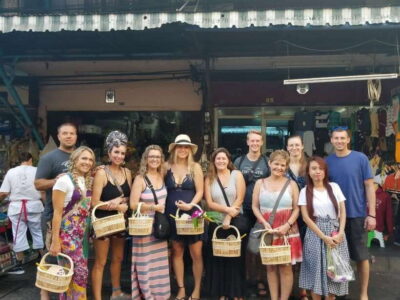
The Onnuch Market portion is the real education. Instead of treating ingredients like a shopping list, you learn how to select them in the moment—what looks freshest, what seems ripe, and how to choose items that will hold up in cooking.
You’ll stroll through the market with your teacher and gather what you need for the dishes. This walk isn’t just sightseeing. It’s structured around flavors. Your teacher guides you through the vegetables, spices, and herbs you’ll use later, so by the time you return to the cooking school, the ingredients aren’t mysterious. You know what they are and why they matter.
Here’s what I think you get from this step: you start to understand Thai cooking as a balance of tastes. The market helps you learn that balance early. For example, papaya salad relies on crisp, fresh components and the right mix of sour, salty, and spicy elements. Curry depends on aromatic herbs and spices that release fragrance when heated. Even desserts like mango sticky rice have ingredient choices that affect sweetness and texture.
Also, the market atmosphere is part of the value. You’ll see a busy food world in action and practice the skill of looking closely at produce and pantry items. If you’ve ever bought Thai ingredients at a store and felt like something was missing at home, the market portion is where that gap starts to close.
Back to the school: cooking four dishes without losing your mind
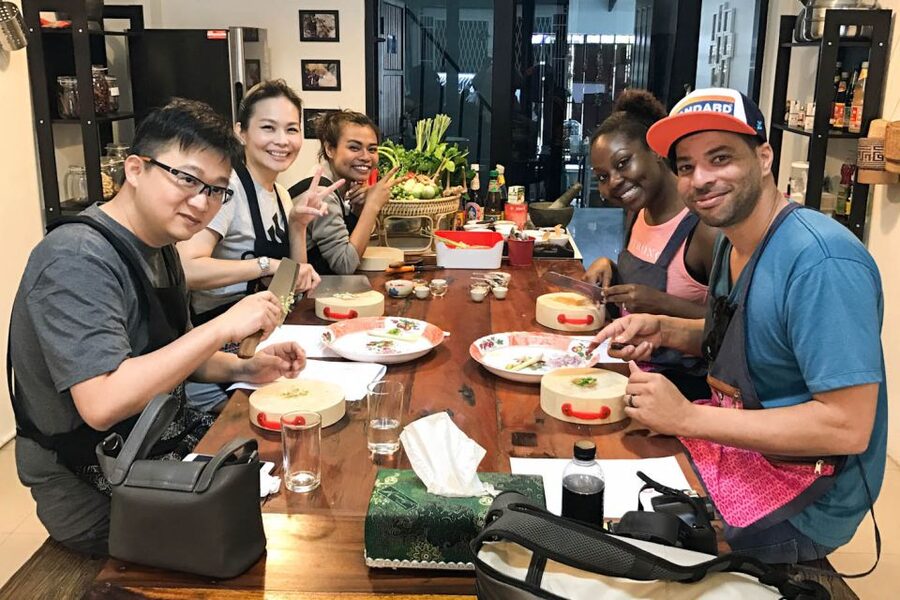
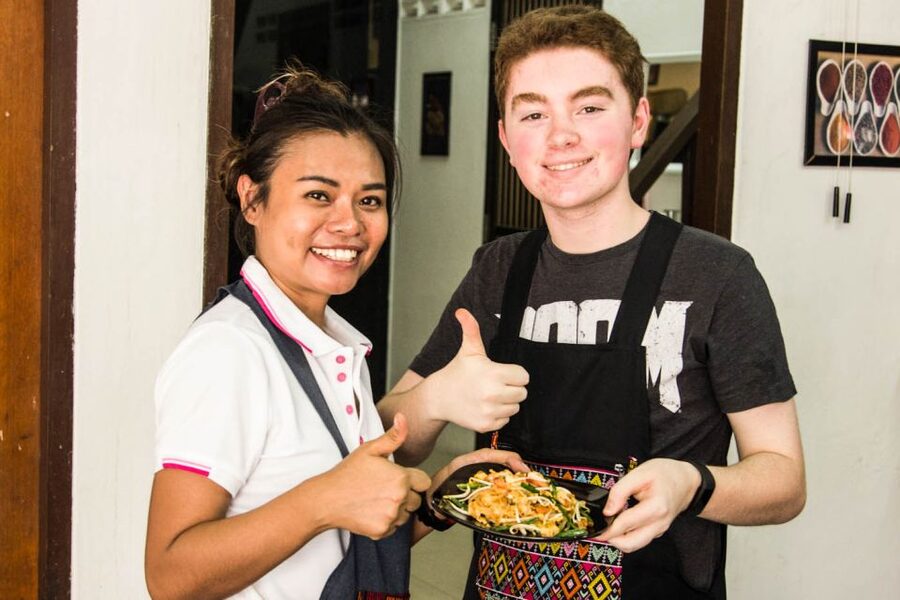
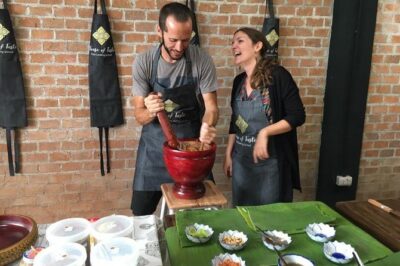
After the market, you head back to Pink Chili Thai Cooking School with your purchases. Then the cooking really begins. The class is set up so you can cook and learn at the same time, not just follow steps mechanically.
Your teacher explains the vegetables, spices, and herbs you bought, and then you start adding them into your dishes. That sequence is important. Many cooking classes teach recipes first and ingredient theory later. Here, you do ingredients first, then technique. It makes it easier to remember what you’re doing—and why.
The timing is tight, but the structure keeps it manageable. You’re cooking four dishes in one half-day. That’s an intense pace, and you won’t have hours to perfect one plate. But you do get something more useful: momentum and practical capability. By the end, you’ve gone from raw ingredients to finished dishes, multiple times, with coaching.
Since the group is small (limited to 8), you can ask follow-up questions when you get stuck. That’s one of the biggest differences between a cooking class and a cooking workshop you might do on your own. You’re not stuck guessing. You’re working alongside an instructor who can correct the common mistakes that affect flavor and texture.
What you’ll cook: Pad Thai, papaya salad, Thai curry, and mango sticky rice
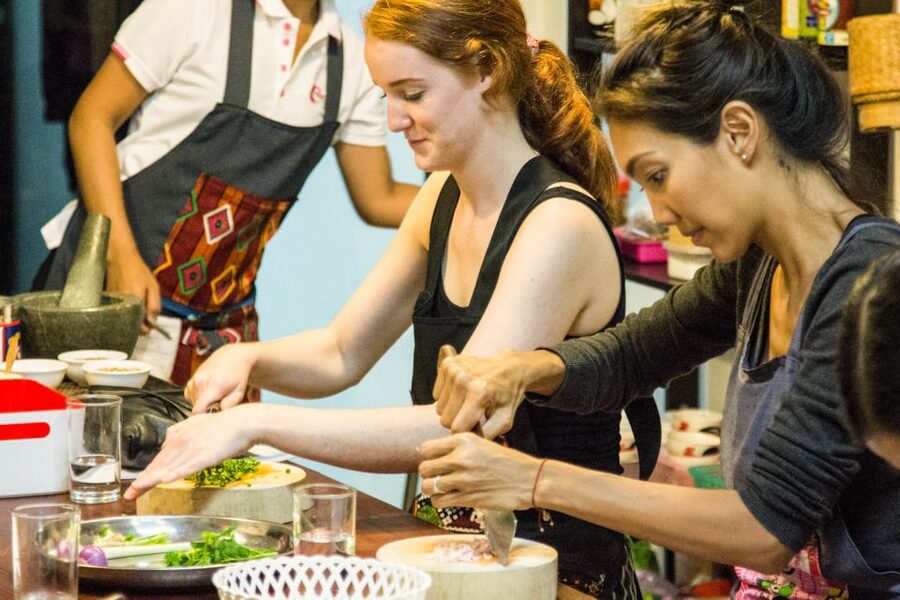
This is the heart of the experience. You’ll cook a set menu that includes Pad Thai, papaya salad, Thai curry, and sweet mango sticky rice. The exact menu can change day to day, but the dishes stay in this classic Thai lineup.
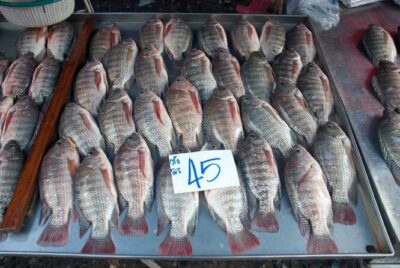
More markets and shophouse lanes





Pad Thai: noodles, balance, and the sauce factor
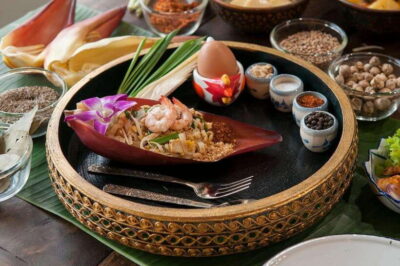
Pad Thai is famous for its mix of flavors—sweet, salty, tangy, and savory. In class, you’ll learn how the sauce and seasoning come together and how the noodles respond during cooking. The big value for you is getting hands-on with the timing. Noodles can go wrong fast if they’re overcooked or under-seasoned.
Since your teacher starts from market ingredients, you’ll also see how choosing the right items matters. You’re not just learning a method; you’re learning what parts contribute to the final taste.
Papaya salad: freshness plus the sour-salty-spicy equation
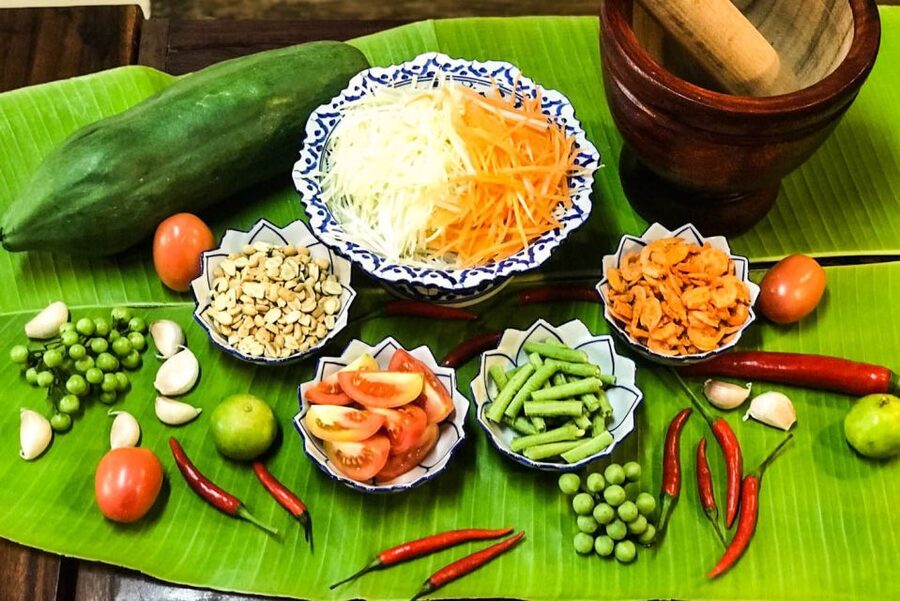
Papaya salad stands or falls on freshness and balance. You’ll cook it using vegetables and herbs you selected at the market. That helps you understand why crisp texture matters and why herbs aren’t interchangeable.
The learning payoff here is the flavor logic. Thai salads often feel loud and layered, but it’s not random. You’ll practice building that sour, salty, and spicy combination until it tastes right.
Thai curry: fragrance from spices and herbs
For Thai curry, the key theme is aroma. Curry paste and seasonings aren’t just salt and heat. They’re fragrance and depth. In class, you’ll cook with spices and herbs you purchased, then add them to build your curry.
This is where the market piece pays off again. When you can connect a spice or herb to what you taste later, you start learning Thai cooking beyond a single dish. You begin to understand which ingredients create warmth, which add brightness, and which build body.
Mango sticky rice: a sweet finish that actually makes sense
Mango sticky rice is the dessert you’ll end with. It’s not only about sweetness. It’s about texture—how the rice absorbs flavor and how the mango contributes freshness.
You’ll cook it as part of the same session, which is great if you think of Thai food as mostly savory. This dessert rounds out the meal and shows how Thai flavors shift from savory spice to sweet balance without losing the overall sense of harmony.
Eating together: tasting your cooking right away
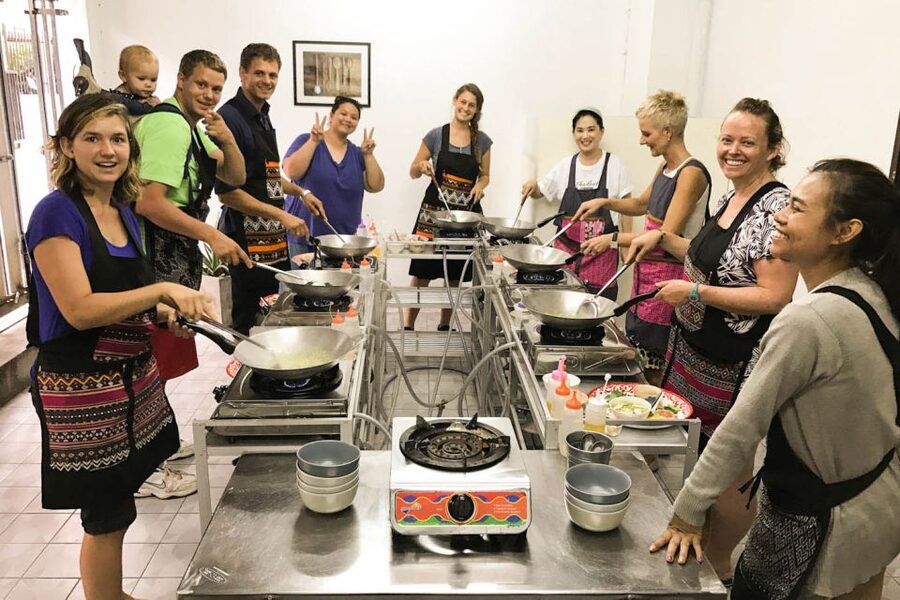
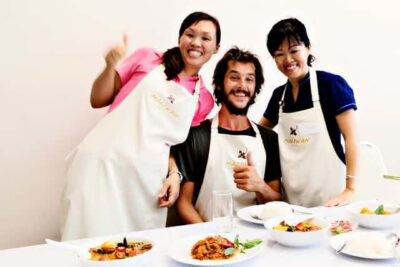
At the end, you sit down with the group and enjoy the meal you made. This part sounds simple, but it’s a smart design choice. You taste while the techniques are still fresh in your memory, so your brain links cause and effect.
You also get a shared experience with other students. The class includes unlimited tea, coffee, and water, so you can pace yourself between bites. And because you cook four different dishes, you get a built-in comparison. You can notice what ingredients carry through each recipe and what flavors behave differently in curry versus salad versus noodles.
Why the small group (8 max) matters more than you think
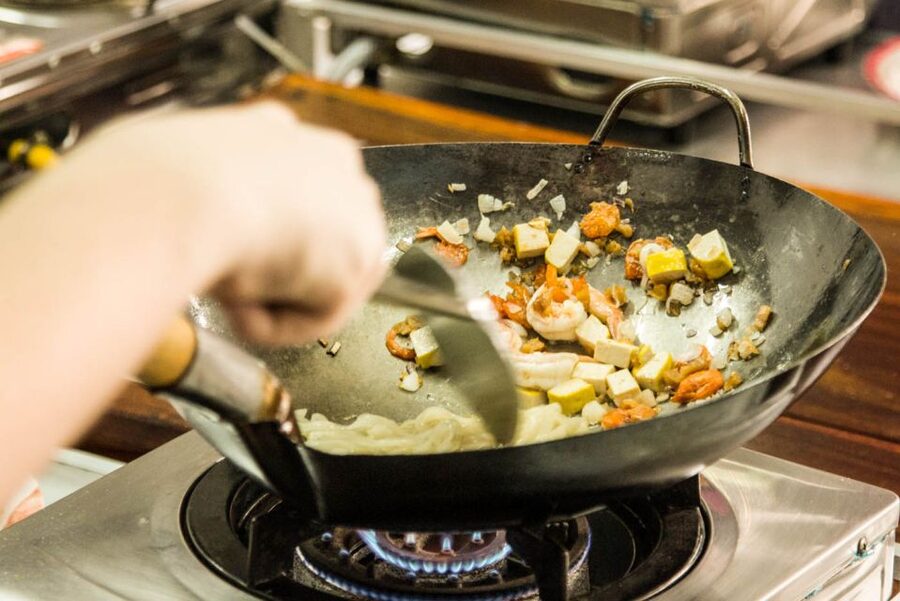
This class keeps the group limited to 8 participants. In practice, that means you get more teacher attention. You can ask questions while you’re cooking, not after the fact. It also helps with troubleshooting. If your spice mix seems off or your noodles aren’t cooperating, an instructor can guide you quickly.
This is also a better setup for learning Thai flavors. Thai cuisine is detail-heavy. Small changes in ingredient choices, seasoning amounts, and cooking timing can make the difference between a dish that tastes correct and one that tastes flat or too strong.
In a bigger class, you might still learn the steps, but you’d likely miss the explanations that connect technique to flavor. Here, you’re more likely to leave with real understanding—not just photos.
Price and value: what $43 buys you in Bangkok
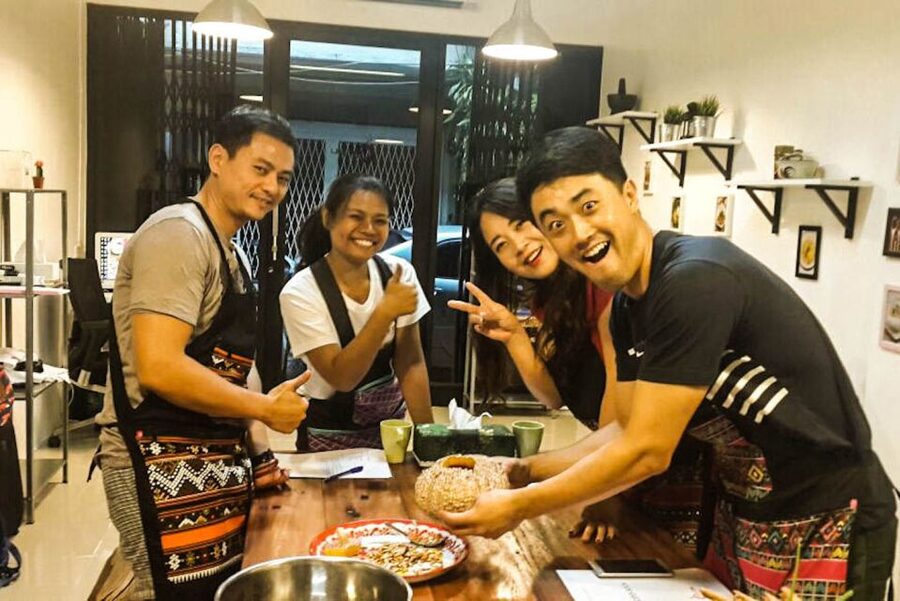
At $43 per person for about 4 hours, you’re paying for several things at once. You’re not just buying cooking instruction. You’re getting:
- a visit to Onnuch Market
- ingredients for the dishes
- cooking equipment
- a class led in English
- four dishes
- unlimited tea, coffee, and water
- WiFi
That package is usually where cooking classes become either a good deal or a frustrating one. Here, the value feels strong because the market visit isn’t a quick detour. It’s built into the workflow. You shop for the ingredients you’ll cook next. That reduces the typical problem of doing a recipe with ingredients that don’t match what the dish expects.
Alcohol isn’t included, so if you plan on drinks, you’ll need to handle that separately. But for a food-focused half-day, the included beverages and the fact you’ll actually eat what you cook make the overall experience feel more complete.
Who this tour is best for (and who should skip it)
I’d put this tour at the top of your list if you want a practical Thai food skill, not just a meal. You’ll love it if you like the idea of learning how to choose fresh ingredients and then cooking dishes you can recreate later. The market visit plus guided cooking is a great combo for that.
It also suits couples or small groups who prefer questions and interaction. With a maximum of 8 people, you’re less likely to feel like a spectator.
Skip it if you hate markets or you’re often late to timed activities. Because the market portion comes first, punctuality matters. Also, if you want a slow, leisurely food walk with tons of free time, a 4-hour total session may feel a bit compressed.
Quick practical tips before you go
- Be early for the meeting time at Pink Chili Thai Cooking School so you don’t miss the market tour.
- Wear comfortable shoes. You’ll be walking through a market area and then standing during cooking.
- Come hungry. You’ll be cooking and then eating the results at the end.
- Expect spice and strong flavors. Thai curries and salads are meant to taste bold, so don’t plan on eating only mild bites.
- If you have questions about ingredient substitutions for later at home, ask your teacher during the cooking steps. This class is set up for questions, not silent note-taking.
Should you book this Bangkok Thai cooking class and Onnuch Market tour?
If you want the fastest route to understanding Thai flavors, I think this is a smart booking. The combination of Onnuch Market ingredient picking and cooking four core dishes in a single half-day gives you more than just a nice meal. You walk away with practical steps and a clearer sense of what ingredients do in Thai cooking.
Book it if you’re excited by Pad Thai, papaya salad, Thai curry, and mango sticky rice—and if you can make the meeting time. The main drawback is the tight schedule. If punctuality isn’t your thing, it can feel stressful.
Otherwise, this is the kind of experience you’ll remember because you made it, ate it, and learned how to shop and cook for it.
FAQ
Where do we meet for this Bangkok experience?
You meet at the Pink Chili Thai Cooking School in Bangkok.
What time does the class start?
There are two start times: 8:45am for the morning class and 1:45pm for the afternoon class.
How long is the experience?
The duration is 4 hours.
How many people are in the group?
It’s a small group limited to 8 participants.
What dishes will I cook?
You’ll cook 4 Thai dishes: Pad Thai, papaya salad, Thai curry, and sweet mango sticky rice. The menu can be different each day.
Is the class taught in English?
Yes, the instructor is English.
What’s included, and are alcoholic drinks included?
Included items are the market visit, cooking ingredients, cooking equipment, the class, the 4 dishes, unlimited tea/coffee/water, and WiFi. Alcoholic drinks are not included.
More Tours in Bangkok


More Tour Reviews in Bangkok

Cook It Yourself: Thai Classes

Just In: Fresh Bangkok Reviews



Thai Cooking Classes, compared.
 ★ 4.9Hands-on Thai Cooking Class and Market TourFrom $451,614 reviews
 ★ 4.9Tingly Thai Cooking School Half-Day Cooking ClassFrom $411,191 reviews
 ★ 4.9Maliwan Thai Cooking Class with Market TourFrom $401,133 reviews
 ★ 5.0Hands on Thai Cooking Class and Market TourFrom $45660 reviews
 ★ 5.0Tingly Thai Cooking Class with Morning Market TourFrom $42589 reviews
 ★ 5.0Hands-on Thai Cooking Class & Market Tour in SukhumvitFrom $45571 reviews
 ★ 5.0Pink Chili – Thai Cooking Class and Market Tour in BangkokFrom $38416 reviews
 ★ 5.0Authentic Thai Cooking with the Largest market visit &TukTuk rideFrom $44350 reviews
Browse the lists this tour appears in