
Review · THAI COOKING CLASSES
Bangkok: White Lotus Thai Cooking Class with Market Tour
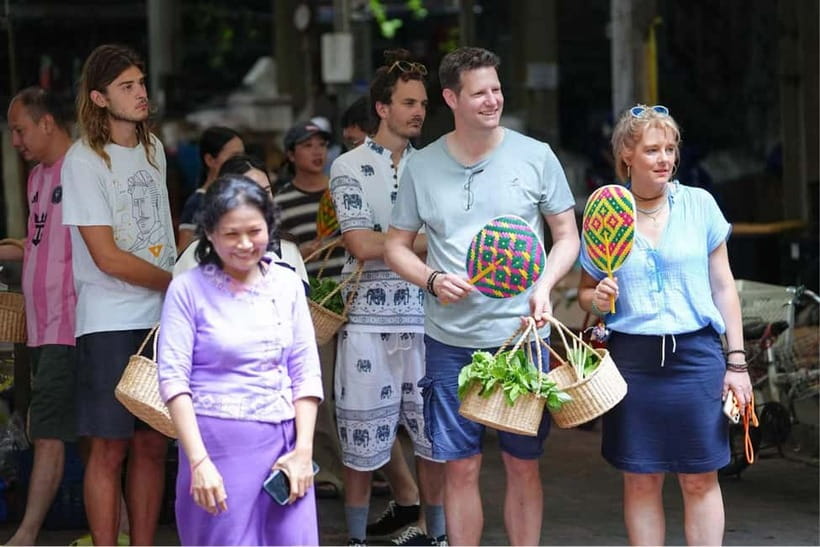
Cooking in Bangkok beats eating out. This White Lotus Thai Cooking Class mixes a local market walk with real hands-on cooking, so you learn Thai ingredients and recipes in one smooth 210-minute session.
I especially liked two things: the chance to shop, smell, and taste ingredients during the market portion, and the fact that you cook four full dishes you’ll actually sit down to eat—Tom Yam Goong, Pad Thai, Som Tam, and mango sticky rice. One thing to consider: it’s a busy, hands-on 3.5 hours, so if you need long breaks to recover from heat, crowds, or chopping, plan for that in advance.
In This Review
- Key Points You’ll Care About
- Finding White Lotus Thai Cooking School in Paak Klong Talad
- Market Tour: Wholesale Produce and Bangkok’s Flower Market
- Back in the Kitchen: Making Fresh Coconut Milk for Sticky Rice
- Cooking 4 Thai Classics: Tom Yam Goong, Pad Thai, Som Tam, Mango Sticky Rice
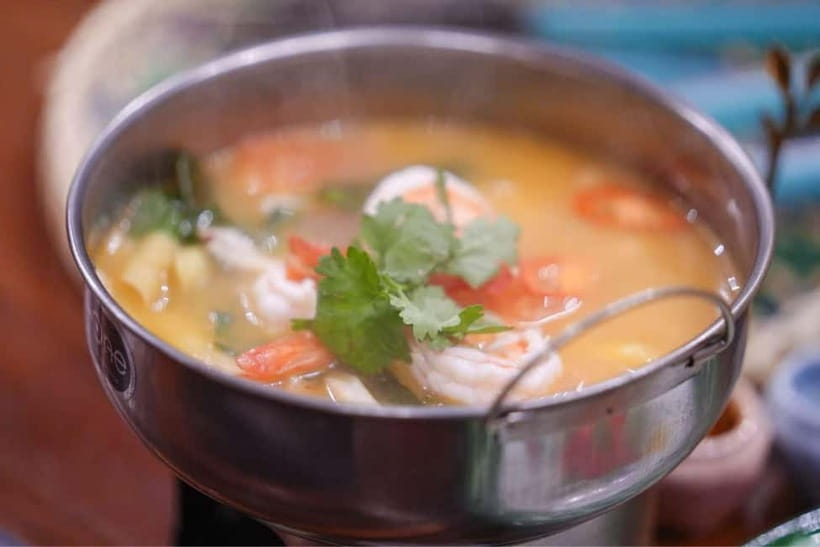
- Tom Yam Goong
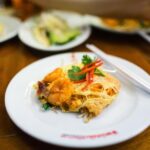
- Pad Thai
- Som Tam (Green Papaya Salad)
- Mango Sticky Rice
- Eating Together, Choosing Spice, and Folding the White Lotus
- Price and Value: Why $35 Can Actually Make Sense
- Who This Works Best For (And Who Should Skip)
- Should You Book White Lotus Thai Cooking Class?
- FAQ
- How long is the Bangkok White Lotus Thai Cooking Class?
- What dishes will I cook in the class?
- Does the class include a market tour?
- Where is the meeting point?
- What languages are used during the class?
- Is transportation included?
- Is the class wheelchair accessible?
- Is there a certificate at the end?
- Is the class suitable for children?
- Can I control the spice level?
Key Points You’ll Care About
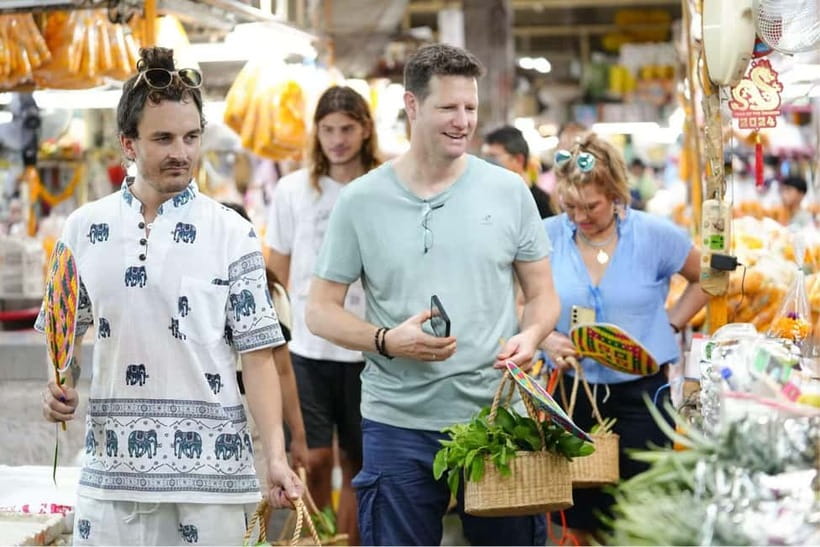
- Market tour first: wholesale produce, fruit, and Bangkok’s biggest flower market before the cooking starts
- Fresh coconut milk lesson: you learn how to make it from scratch for sweet sticky rice
- 4 dishes, not demos: hands-on cooking of Tom Yam Goong, Pad Thai, Som Tam, and Mango Sticky Rice
- Homestyle setting: cozy, home-like vibe with a group meal at the end
- Lucky lotus + certificate: a white lotus folding activity and a certificate to take home
- Easy for all levels: English instruction and clear step-by-step guidance, including spice customization
Finding White Lotus Thai Cooking School in Paak Klong Talad
This class starts in a practical, easy-to-find spot: White Lotus Thai Cooking School on the 2nd floor of The Market Organization (Paak Klong Talad). If you’re using public transit, it’s about 150 meters from Sanamchai MRT station, and roughly 60 meters from a 7/11. That kind of close landmark matters in Bangkok, because getting “lost on purpose” can eat up your energy.
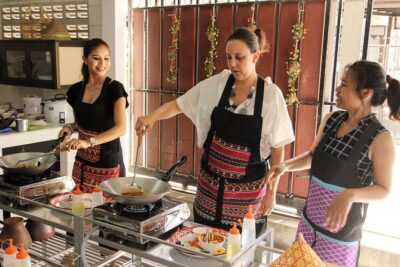
What I like about this location is the feeling you get right away: markets are not just a photo backdrop here. You’re stepping into the real supply chain for Thai food—produce, herbs, fruits, flowers, and the little things cooks actually care about. One recent group even described the setting as clean and stylish, above the market, which matches the overall vibe you’re aiming for: learn, cook, eat, and leave full.
Aprons on for another Thai kitchen
- Bangkok: Hands-on Thai Cooking Class and Market Tour
★ 4.9 · 1,614 reviews - Bangkok: Tingly Thai Cooking School Half-Day Cooking Class
★ 4.9 · 1,191 reviews - Bangkok: Maliwan Thai Cooking Class with Market Tour
★ 4.9 · 1,133 reviews
Market Tour: Wholesale Produce and Bangkok’s Flower Market
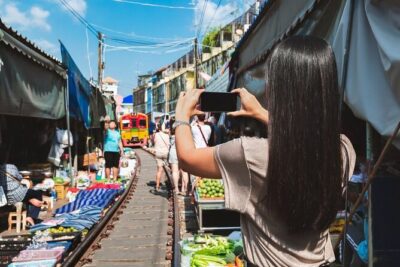
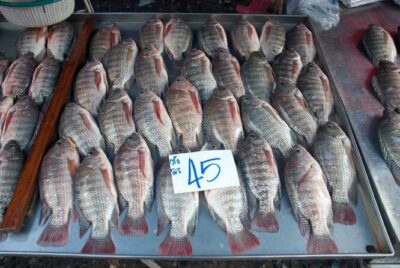
The experience begins with a walk through local wholesale vegetable and fruit markets, plus the biggest flower market in Bangkok. This is where you stop guessing what Thai cooks are reaching for.
Here’s what you can expect during the market time:
- You’ll see, touch, and smell ingredients used in Thai cuisine.
- You may also get small tastings, which is a great shortcut for understanding flavors like citrusy notes, herbal aromas, and how sourness and sweetness get balanced in Thai dishes.
- You’ll meet local vendors and get context that makes the recipes make sense later.
The flower market piece is especially worth your attention. In Thai cooking, flowers aren’t just decoration; they show up in everyday food culture and in how Thai people think about presentation and ingredients. Even when you don’t get into “flower gastronomy” in the dishes you cook, seeing what’s for sale—and how it’s sold—changes how you look at Thai food after.
In several real experiences, instructors (like Jaeb, Sasi, and Pat) guided the market portion with real practical advice: what to pick, how to recognize quality, and how those choices affect flavor. And yes, there’s also a bit of fun: you get the feeling of walking with someone who knows what shoppers usually miss.
Back in the Kitchen: Making Fresh Coconut Milk for Sticky Rice
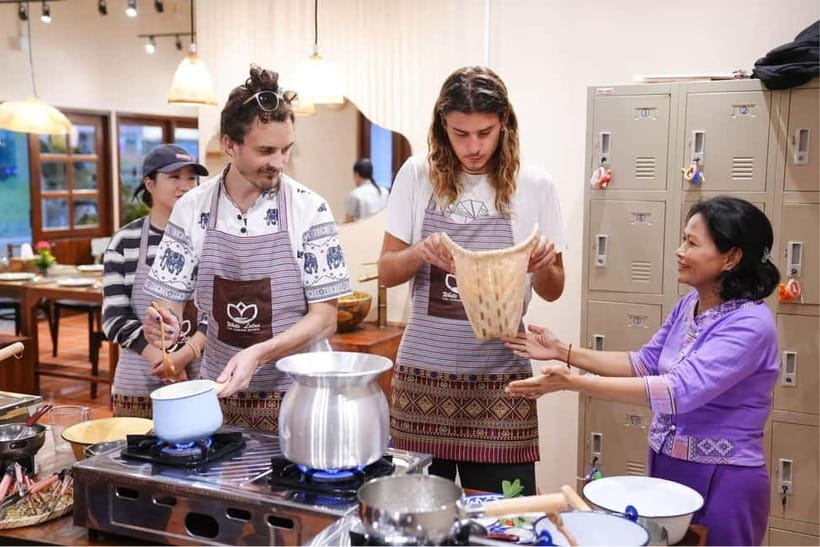
After the market, you move to the cooking school kitchen. This is where you go from “Thai food as a dish” to “Thai food as technique.”
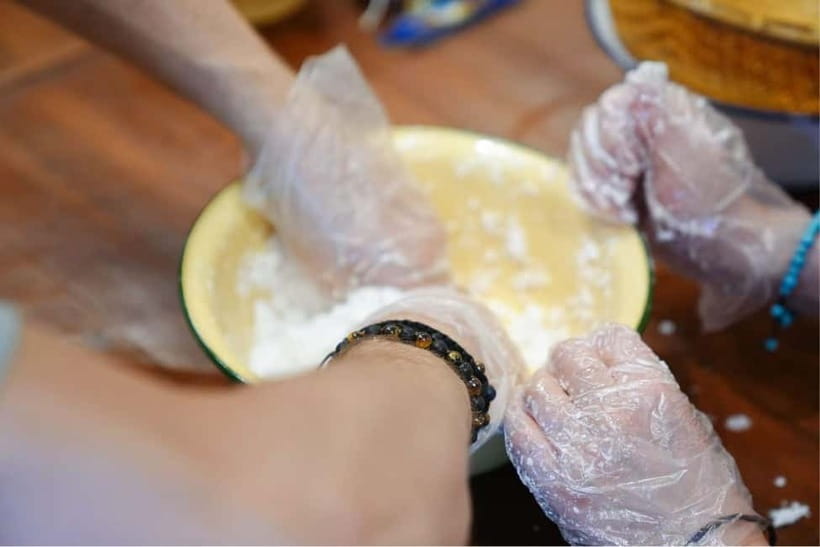
The standout skill here is making fresh coconut milk from scratch. You’re not just adding an ingredient from a can. You learn the process that leads to that smooth, sweet, slightly rich coconut flavor that makes mango sticky rice so addictive.
Why this matters for you: Thai coconut-based desserts can be tricky at home. Store-bought coconut milk isn’t always the same, and you can end up with something too thin or too flat. Learning the fresh method during class gives you a better chance of recreating that balance later.
You’ll also prep for the meal you’ll eat during the experience. The kitchen portion is designed to be hands-on but not stressful. Many past sessions mention that instructions are clear and that the pace isn’t a sprint, which helps if you’re a beginner or just slow with a cutting board.
Cooking 4 Thai Classics: Tom Yam Goong, Pad Thai, Som Tam, Mango Sticky Rice
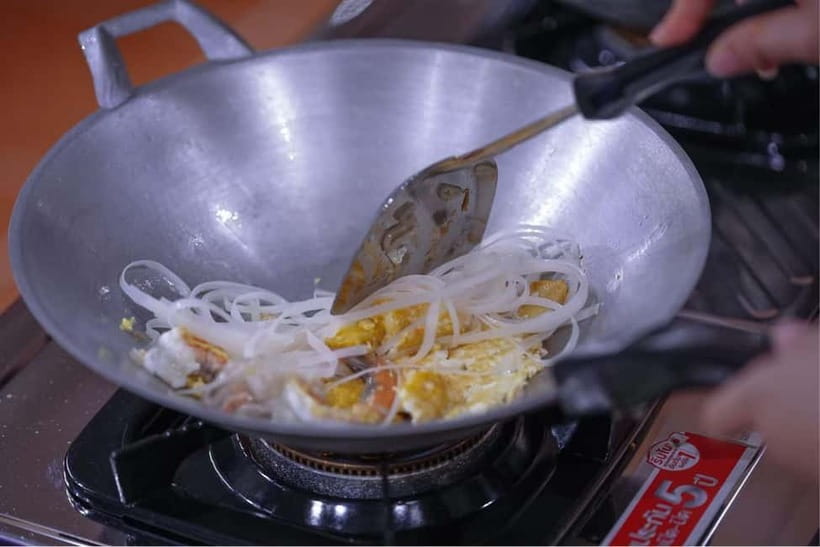
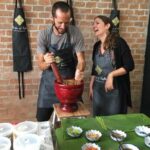
You cook four authentic dishes, and the key is that you’re doing the work, not watching the work. That changes everything—your brain remembers flavors better when your hands have made the sauce.
More markets and shophouse lanes





Tom Yam Goong
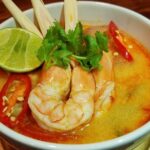
Tom Yam Goong is the “make it or break it” dish for many Thai beginners. You’ll learn how the soup builds its signature balance—sour, savory, aromatic heat—so it tastes like the real deal and not like a bland broth with spice.
A practical benefit: if you’re planning to cook Thai at home, this dish shows you how Thai flavor layers work. Once you understand that logic, the next dishes become easier.
Pad Thai
Pad Thai is the comfort-food superstar of Thailand, but it’s also an ingredient puzzle. The class structure helps you connect the market ingredients to the final taste—so you’re not just following a recipe, you’re learning the why.
Some groups highlight that instructors like Chon and Jeab explain each step clearly and patiently. If you’re worried about making mistakes, this is where that calm teaching approach really pays off.
Som Tam (Green Papaya Salad)
Som Tam is where Thai food gets physical. You’re working with texture, sourness, and spice. Many people like this dish because it’s interactive and you can adjust it to your preference.
Multiple recent experiences mention spice customization—so you can set your heat level rather than feeling stuck with someone else’s level of bravery.
Mango Sticky Rice
This is the sweet finale—and the fresh coconut milk lesson is your secret weapon. Mango sticky rice isn’t just dessert; it’s a confidence builder. You’ll see how coconut sweetness and sticky rice texture work together, and you’ll taste it right after you make it.
In a few experiences, people came hungry and left satisfied in a way that felt more like a proper meal than a snacky “experience.” That’s the point: you leave knowing what Thai dessert is supposed to taste like.
Eating Together, Choosing Spice, and Folding the White Lotus
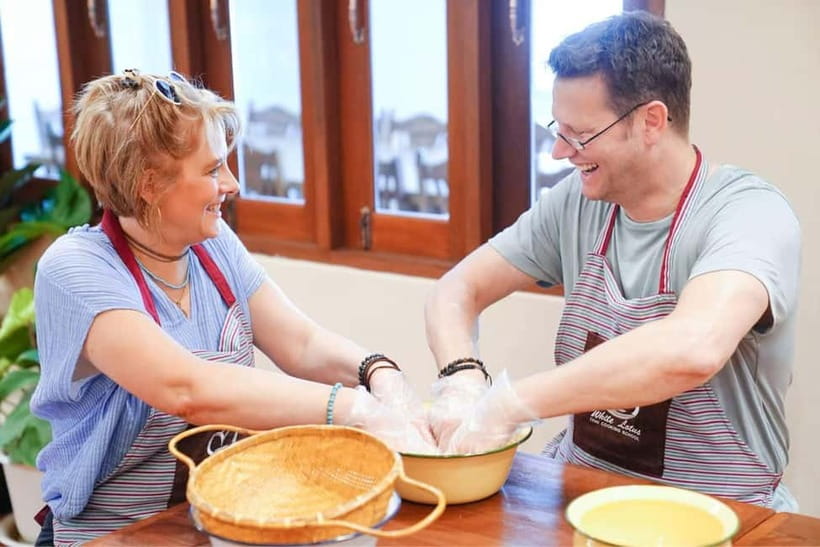
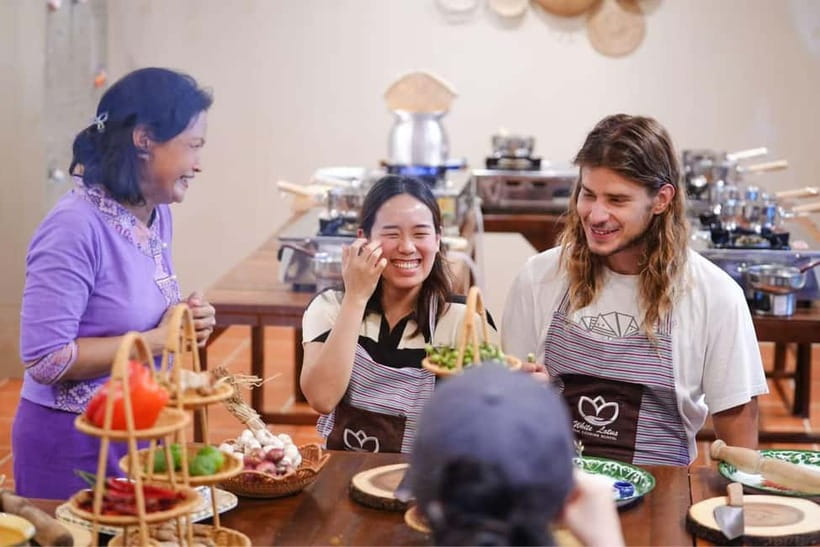
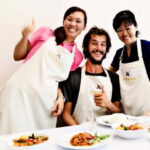
After each dish is cooked, you sit down and enjoy the meal together. This is one of the most enjoyable parts of the class because it’s not just culinary; it’s social.
A few details that keep showing up in recent reports:
- The atmosphere feels cozy and home-like, not formal.
- Groups are small enough that you’re not stuck watching someone else cook while you wait.
- Instructors are friendly, and many mention humor or a warm teaching style (names like Jeab, Sasi, and Ploy show up in different sessions).
Then comes the extra cultural fun: a lucky draw and learning how to fold a white lotus. It’s not the kind of souvenir you forget in a drawer. It’s a small “I was there” moment, tied to Thai symbolism.
Finally, you receive a certificate to take home. Some people also mention a small souvenir in addition to the certificate. Even if you don’t treat that as a reason to book, it’s a nice extra.
Price and Value: Why $35 Can Actually Make Sense
At $35 per person for about 210 minutes, this class can feel like a steal—if what you want is both food and context.
Here’s what you’re getting for the money, in practical terms:
- Market tour (wholesale produce + flower market)
- Instruction in English (with Thai also used by staff)
- Hands-on cooking of 4 dishes
- A specific technique lesson: fresh coconut milk
- A meal that includes what you cook
- A certificate (and often extra small keepsakes)
Also, you’re not paying extra for “just watching.” The core value is the hands-on part. That’s what lets you repeat the results at home, not just remember the flavors.
Two value tips for you:
- Go hungry. Seriously. This is a meal experience, not a light bite.
- Think about your spice tolerance before you start. Since spice customization is possible, decide your target heat so the food stays fun.
Transportation to and from the school is not included, so factor that into your plan. Fortunately, the location is very close to MRT Sanamchai, so you’re not forced into a complicated logistics puzzle.
Who This Works Best For (And Who Should Skip)
This class fits almost everyone who wants a Thai cooking lesson with real market context.
It’s especially good if:
- You’re a beginner and want clear guidance through a full meal
- You love food markets and want to understand ingredients, not just taste them
- You want a social activity that’s still hands-on
- You care about learning techniques like fresh coconut milk
It’s not a fit if:
- You want zero hands-on time. You’ll be cooking.
- You’re traveling with very young kids. It’s not suitable for children under 6.
One more real-world note: several experiences mention vegetarian options being handled. If you’re vegetarian or have dietary needs, ask when booking so the team can guide you to the right version of each dish.
Should You Book White Lotus Thai Cooking Class?
Book it if you want a Bangkok activity that combines three things well: market insight, hands-on cooking, and a real meal at the end. The market tour plus the coconut milk skill gives you more than a simple recipe workshop. And cooking four classic dishes means you leave with a stronger grasp of Thai flavors than you would from one dish alone.
Skip it only if you’d rather do Thai food by restaurant-hopping and you don’t care about learning how the ingredients turn into sauces and salads. In that case, this won’t feel as relaxing.
If you do book, show up ready to cook, ask about spice levels, and pay attention to the ingredient tips during the market walk—those are the details that make your future Thai cooking work.
FAQ
How long is the Bangkok White Lotus Thai Cooking Class?
The duration is 210 minutes, about 3.5 hours.
What dishes will I cook in the class?
You’ll cook four authentic Thai dishes: Tom Yam Goong, Pad Thai, Som Tam, and Mango Sticky Rice (with coconut milk preparation included).
Does the class include a market tour?
Yes. You visit a local wholesale vegetable and fruit market and also visit the biggest flower market in Bangkok.
Where is the meeting point?
Meet at White Lotus Thai Cooking School on the 2nd floor of The Market Organization (Paak Klong Talad). It’s about 150 meters from Sanamchai MRT station and about 60 meters from a 7/11.
What languages are used during the class?
The instructor speaks English and Thai.
Is transportation included?
No. Transportation to and from the cooking school isn’t included.
Is the class wheelchair accessible?
Yes, the activity is listed as wheelchair accessible.
Is there a certificate at the end?
Yes. You receive a certificate to take home.
Is the class suitable for children?
It’s not suitable for children under 6 years.
Can I control the spice level?
Yes. You can choose how spicy or not spicy you want your dishes.
More Tours in Bangkok


More Tour Reviews in Bangkok

Cook It Yourself: Thai Classes

Just In: Fresh Bangkok Reviews



Thai Cooking Classes, compared.
 ★ 4.9Hands-on Thai Cooking Class and Market TourFrom $451,614 reviews
 ★ 4.9Tingly Thai Cooking School Half-Day Cooking ClassFrom $411,191 reviews
 ★ 4.9Maliwan Thai Cooking Class with Market TourFrom $401,133 reviews
 ★ 5.0Hands on Thai Cooking Class and Market TourFrom $45660 reviews
 ★ 5.0Tingly Thai Cooking Class with Morning Market TourFrom $42589 reviews
 ★ 5.0Hands-on Thai Cooking Class & Market Tour in SukhumvitFrom $45571 reviews
 ★ 5.0Pink Chili – Thai Cooking Class and Market Tour in BangkokFrom $38416 reviews
 ★ 5.0Authentic Thai Cooking with the Largest market visit &TukTuk rideFrom $44350 reviews
Browse the lists this tour appears in