
Review · WALKING TOURS
Bangkok’s Hidden Treasures Walking Tour
Bangkok can feel like a maze of streets and noise. This tour helps you make sense of it fast by mixing klong boat transit with temple stops and local-shop streets.
I like the way the route leans into everyday Bangkok: you cruise the canal (a real transport shortcut), then wander Bangkok’s first shopping street for temple supplies, and even pause at a community that has been making monk alms bowls for generations.
One thing to plan for: you’ll be walking in real Bangkok heat and humidity, and the foot massage is intense. If you’re heat-sensitive or you hate pain-to-pleasure treatments, build in extra water and take it easy.
In This Review
- Key things to know before you go
- Klong Saen Saeb canal, Elephant Head Bridge, and the calm before the temples
- Golden Mount (Wat Saket): the hilltop views with a construction twist
- Loha Prasat and the Silver Pagoda: 37 spires and a Sri Lanka connection
- Bamrung Muang temple-supplies street: where Bangkok shops for monks
- Baan Bat alms bowl community: craft that’s tied to daily religious life
- Sao Chingcha (the Giant Swing): ceremony, accident history, and a dramatic frame
- Wat Suthat: royal-era temple building, finished slowly
- Tuk-tuk to Wat Pho: Old Bangkok navigation plus the medicine-murals angle
- Wat Pho Thai Traditional Massage School: the 30-minute foot massage (and what to prepare)
- Chao Phraya river boat and skytrain return: the easy finish
- Duration, price, and value: $100.15 for a day that isn’t just checklists
- Guides who set the tone: street-smart and flexible
- Is this Bangkok Hidden Treasures tour right for you?
- FAQ
- How long is the Bangkok Hidden Treasures Walking Tour?
- Where does the tour start, and what time?
- Is hotel pickup and drop-off included?
- What transportation do you use during the tour?
- Is the traditional Thai foot massage included?
- Are temple and attraction admissions included?
- Which stops are free during the tour?
- Is this tour private?
- Can I cancel and get a full refund?
Key things to know before you go
- Klong Saen Saeb by boat: a practical “skip the traffic” route in old Bangkok
- Golden Mount (Wat Saket): panoramic city views from an artificial hill tied to royal timelines
- Loha Prasat / Silver Pagoda: 37 metal spires linked to virtues, plus a design with Sri Lanka echoes
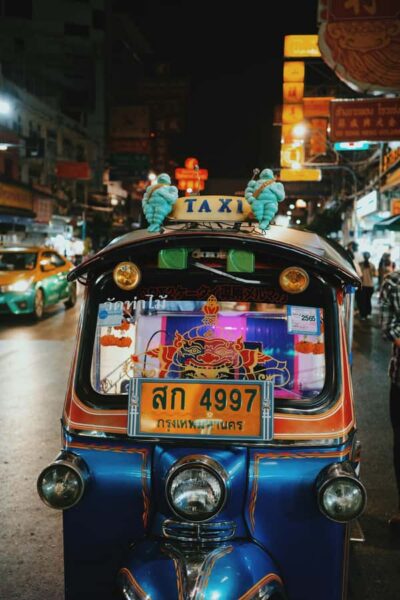
- Old Bangkok streets by tuk-tuk: short rides that save your legs between temples
- 30-minute Thai foot massage: included, but not recommended for pregnant women
Klong Saen Saeb canal, Elephant Head Bridge, and the calm before the temples
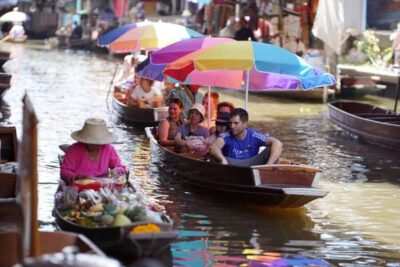
Start at MBK Center (444 Phaya Thai Rd) at 8:30am. From there, you meet your local guide, then head to Elephant Head Bridge to board a boat for the Saen Saeb canal ride.
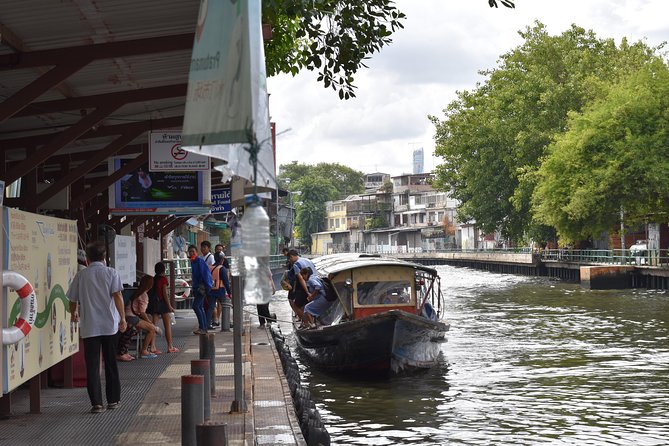
This is one of the smartest parts of the day. The canal was built in 1837 by order of King Rama III for military transport during the war over Cambodia. Today it’s still used because it’s faster and usually easier than battling traffic, which means you start the tour with motion and momentum instead of standing in the heat.
If you’re sensitive to crowds, this early timing helps. You’ll also get an “in motion” view of the old city edges, not just photos from sidewalks.
Practical tip: wear grippy shoes. Canal transfers and temple steps can be uneven, and you’ll walk more than you might expect from the word walking.
Bangkok at walking pace, more routes
- Bangkok: City Highlights Temple and Market Walking Tour
★ 4.5 · 3,990 reviews - Bangkok: Grand Palace and Wat Phra Kaew Guided Walking Tour
★ 4.4 · 2,417 reviews - Bangkok: Wat Pho and Wat Arun Guided Walking Tour
★ 4.6 · 1,720 reviews
Golden Mount (Wat Saket): the hilltop views with a construction twist
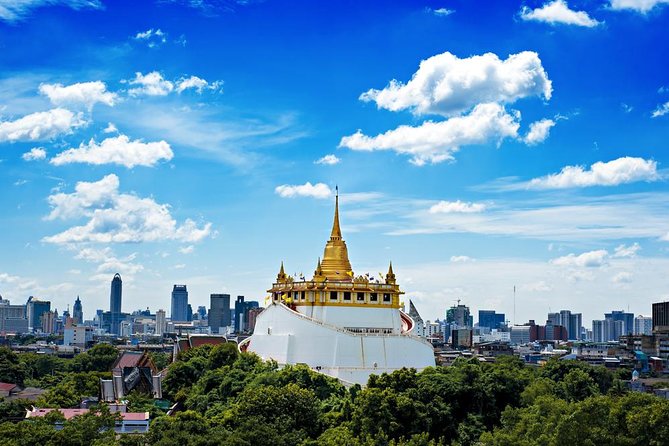
Next up is Golden Mount (Wat Saket), where you’ll learn why this place sits where it does. The pagoda is on an artificial hill originally tied to King Rama III. The first structure didn’t finish cleanly because land subsidence caused the earlier building to collapse, and it wasn’t completed until the reign of King Rama V.
That story matters because it changes how you look at the site. You’re not just seeing a viewpoint—you’re seeing a temple shaped by geology, royal planning, and time.
The big payoff is the panoramic view over Bangkok. Even if the air has that familiar haze, the sightlines help you understand where everything sits: river routes, dense neighborhoods, and the sprawl beyond.
Possible drawback: if you dislike height or crowds on viewpoints, you may want to take your time here and not rush to the best photo angles. Think slow, breathe, and let the view come to you.
Loha Prasat and the Silver Pagoda: 37 spires and a Sri Lanka connection
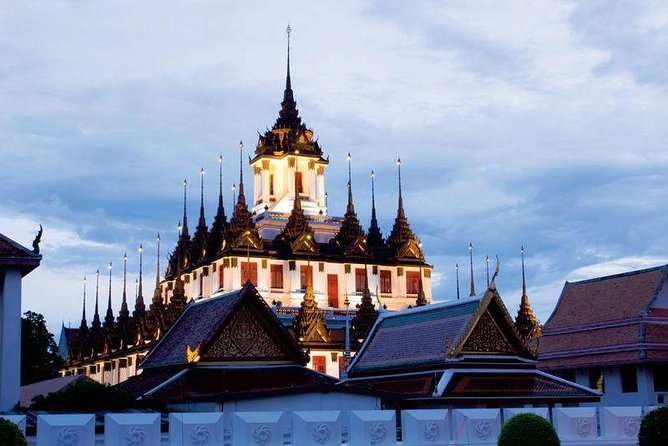
From the hilltop, you move toward the Silver Pagoda, also known through the Loha Prasat stop. This temple was built during King Rama III’s reign in 1846 for a royal granddaughter. The headline feature is the 37 metal spires, which symbolize 37 virtues.
What I love about this stop is that it’s visual but not abstract. You can count the spires, read the symbolism, and then notice how the architecture feels almost Burmese—but isn’t. The design is described as a copy of older Buddhist design from Sri Lanka, which gives you a clear cultural thread to hold onto while you’re looking.
This visit is relatively short, which can be a plus in heat. You’ll still get the key details without turning the day into a marathon.
Watch-outs: dress codes apply in temples. Cover shoulders and knees, and keep your bag closed and secure—some indoor spaces can feel tight.
Bamrung Muang temple-supplies street: where Bangkok shops for monks
After temples, you shift to a street that feels more like real life. You’ll head to Bamrung Muang, described as Bangkok’s first shopping street. Today it caters to temple supplies: monk robes, candles, incense sticks, books, and gold Buddha statues.
This is one of those stops that helps you understand why Bangkok temples look the way they do. When you see the items being sold—right where people go to buy them—it all stops feeling like set dressing.
The practical side is great too: it’s a short walk segment, and the indoor shade of shop fronts can offer relief from direct sun.
If you’re buying small souvenirs: this is where you’ll find things that look purpose-made, not mass-produced. Still, compare prices quickly. Bangkok has plenty of variation block to block.

Baan Bat alms bowl community: craft that’s tied to daily religious life
Next, you’ll slip down a small side street to Baan Bat, a local community that has made hand-made monk’s alms bowls for centuries. It’s a simple stop, but it gives you something meaningful: the sense that Bangkok’s religion isn’t only about big monuments. It’s about tools, craft, and routine.
You’ll see the idea of giving material form, literally. People who make items like this are serving a system that’s still active, which is why the place feels grounded rather than “staged for tourists.”
Time check: this portion is brief, so use it like a reset. Take a moment, look around, then keep moving.
Sao Chingcha (the Giant Swing): ceremony, accident history, and a dramatic frame
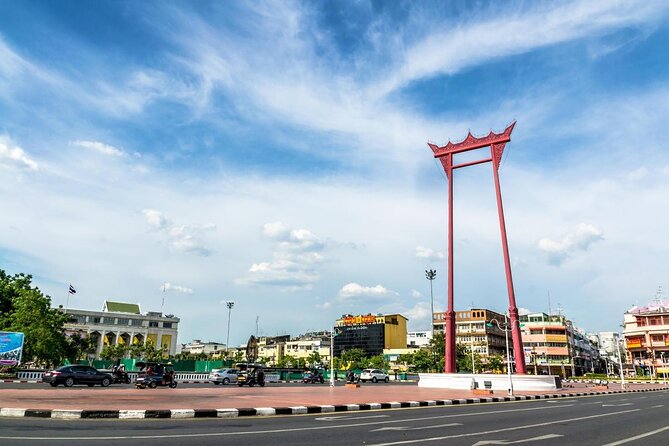
At the end of the road you reach Sao Chingcha, the Giant Swing. It was constructed in 1784 and originally used in a Brahmin ceremony where swingers tried to grab a bag of coins placed on a pillar.
Then comes an important context note: the ceremony was discontinued in 1935 after several fatal accidents. That detail matters because it turns the swing from “a landmark to pose with” into something with consequences and a real change in tradition over time.
Even if you’re not into ceremony history, the swing’s shape gives you a strong visual anchor in the Old Bangkok area.
Good to know: this stop stays short, so it won’t drain your energy before the next big temple.
Wat Suthat: royal-era temple building, finished slowly
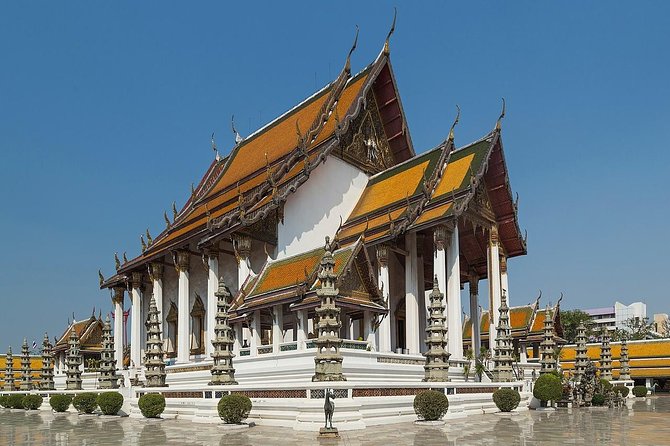
You’ll continue with Wat Suthat, a royal temple built during King Rama I’s reign, but completed later during King Rama III’s reign. That long timeline gives the place a “still-in-progress” feel, even when it’s clearly finished. You can sense how royal projects took time, and how plans stretched across reigns.
This stop works well after Sao Chingcha because it shifts you from an outdoor symbol to an indoor-and-structure experience. You’ll have time here—about one hour with admission included—so you can slow down.
Possible drawback: if you’re temple fatigued by this point, ask yourself if you’re here to learn details or just get the atmosphere. This tour gives you time for both, but the day is active.
Tuk-tuk to Wat Pho: Old Bangkok navigation plus the medicine-murals angle
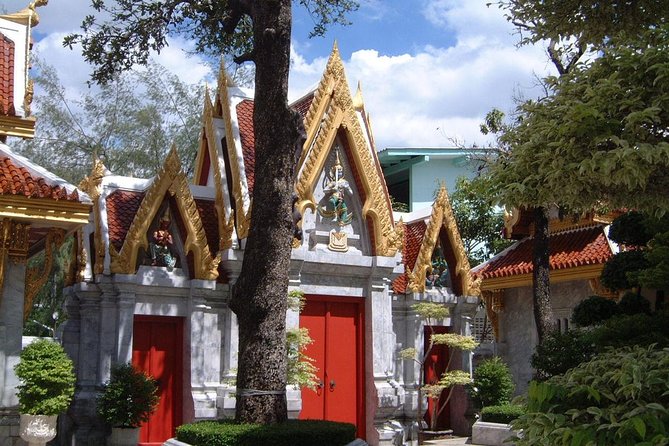
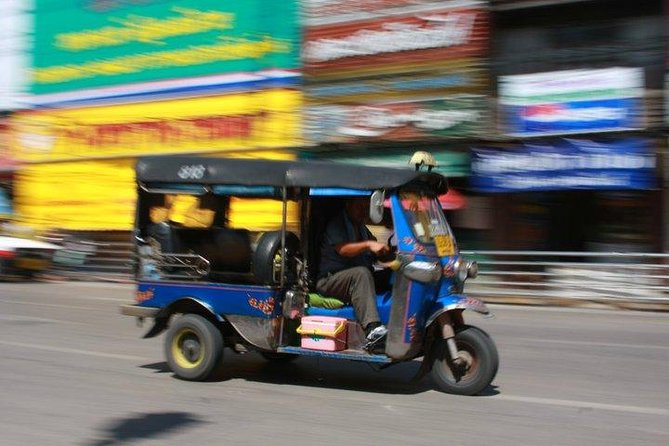
Now it’s time for a leg break. You’ll ride a tuk-tuk through small streets to Wat Pho, which is tied to the name Wat Phra Chetuphon on this route.
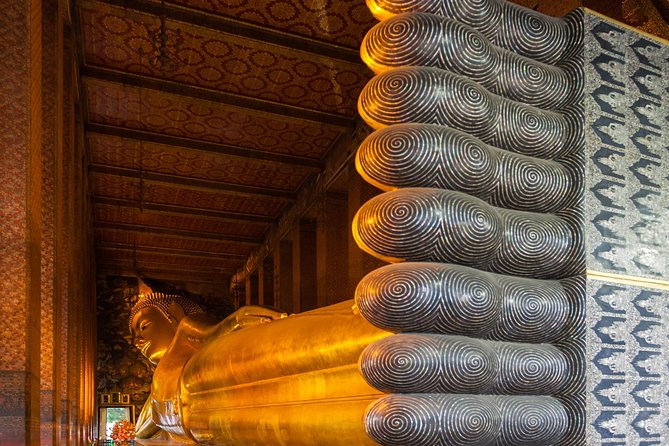
Wat Pho is described as the oldest and largest monastery in Bangkok, and it’s also linked to education as an early “university” teaching religion, science, and literature through murals and sculptures. You’ll also hear about its reputation as the home of the first school of medicine in Bangkok.
This stop is about one hour and includes admission, which is long enough to see major areas without feeling rushed.
Why this matters for you: Wat Pho isn’t only famous. It’s also a place where you can connect the dots between art, learning, and health. That becomes especially clear right before the massage portion.
Tuk-tuk note: the ride helps with navigation and leg fatigue. It’s also a chance to see alley-scale Old Bangkok streets that you might miss if you were on foot the whole time.
Wat Pho Thai Traditional Massage School: the 30-minute foot massage (and what to prepare)
After temple walking, you’ll rest with a 30-minute traditional Thai foot massage at a nearby Thai massage school. This is a full included stop, not a “maybe if time allows” add-on.
The massage is described as based on ancient medicine: sensory nerves of internal organs are believed to gather around the soles of the feet, so foot work is said to help stimulate organ functions.
Here’s the practical truth: Thai foot massage can be firm. The time is set at 30 minutes, but the sensation can feel longer because you’re actively being worked on rather than passively “resting.”
Two important cautions from the tour info:
- It’s strictly not recommended for pregnant women.
- If you’re uncomfortable with pressure and stretching, tell the masseuse to go easier.
Packing mindset: bring your best “I can handle this” attitude for your feet, not just your photos. If your day includes a lot of walking before this, you’ll appreciate that your schedule ends with something physical you can actually feel improving.
Chao Phraya river boat and skytrain return: the easy finish
Once you’re relaxed, you head out again by river boat down the Chao Phraya River, then connect to the skytrain to return to the meeting point.
This pairing is smart because it gives you two different “Bangkok movement” styles: water first, then rail. It also helps you avoid turning the end of your trip into another long block of walking in the heat.
You should plan to leave Wat Pho area with time to settle into the rhythm of the return. Your feet will be tired; the transport sequence is meant to keep the day from ending with exhaustion.
Duration, price, and value: $100.15 for a day that isn’t just checklists
The price is $100.15 per person for about 5 hours 30 minutes. That can sound steep until you break down what you’re getting.
You’re not just paying for someone to walk with you. Your day includes:
- Snacks
- A local guide
- Thai foot massage (30 minutes)
- Transportation by tuk-tuk, boat, and skytrain
- Landing and facility fees
- Temple admissions at several key stops (Golden Mount, Silver Pagoda/Loha Prasat, Wat Suthat, Wat Pho, and the massage school)
Some stops are free (like Bamrung Muang, Baan Bat, and Sao Chingcha), which helps balance the day. But the value comes from the combo: canal transit, multiple temples/monuments, and massage, all stitched into a timed route.
Who gets the best value?
- You want a route that mixes major landmarks with lesser-seen local routines.
- You like the idea of learning the “why” behind places, not just collecting photos.
- You want transport support so you don’t spend the day figuring out logistics under humidity.
One consideration: if you’re only interested in the most famous sites, you might feel this is too varied. This tour is for people who enjoy variety with a real structure.
Guides who set the tone: street-smart and flexible
Good guides make all the difference in Bangkok. In this kind of route, you need someone who can steer you through streets where locals actually shop, and who can keep the pace light even when the sun is heavy.
The guides highlighted here include Mr Moo and Kat, both noted for being accommodating and making the tour feel more like getting shown favorites by a friend than following a strict script. That “friend energy” is useful in temples too, because you’re more likely to ask questions and slow down when something catches your eye.
Since this is a private tour/activity with only your group participating, you can often go at a pace that fits your comfort level rather than waiting for a larger crowd.
Is this Bangkok Hidden Treasures tour right for you?
Book it if you want a morning that mixes water transport, Old Bangkok streets, and temple variety, then lands on a included 30-minute foot massage to close the day clean.
Skip it (or go in with extra caution) if:
- You’re very heat-sensitive and don’t handle walking well.
- You’re pregnant (the foot massage is strictly not recommended).
- You hate firm, hands-on massages.
FAQ
How long is the Bangkok Hidden Treasures Walking Tour?
The tour runs for approximately 5 hours 30 minutes.
Where does the tour start, and what time?
The meeting point is MBK Center, 444 Phaya Thai Rd, Khwaeng Wang Mai, Krung Thep Maha Nakhon 10330, Thailand, and the start time is 8:30am.
Is hotel pickup and drop-off included?
No, hotel pickup and drop-off are not included.
What transportation do you use during the tour?
You use boat for the canal ride, tuk-tuk to move through Old Bangkok streets, and Skytrain for the return after the river boat down the Chao Phraya River.
Is the traditional Thai foot massage included?
Yes. A 30-minute Thai foot massage is included, and it is strictly not recommended for pregnant women.
Are temple and attraction admissions included?
Admissions are included for several stops, including Golden Mount (Wat Saket), Silver Pagoda/Loha Prasat, Wat Suthat, and Wat Phra Chetuphon (Wat Pho), plus the massage school stop.
Which stops are free during the tour?
Bamrung Muang Fashion, Ban Bat Community (monk’s alms bowls), and Sao Chingcha (the Giant Swing) are listed as free.
Is this tour private?
Yes. It’s a private tour/activity, and only your group will participate.
Can I cancel and get a full refund?
You can cancel for a full refund up to 24 hours before the experience’s start time. If you cancel less than 24 hours before, the amount paid will not be refunded.
If you want, tell me your travel dates and whether you prefer more temples or more local streets. I can help you decide if this 5.5-hour mix matches your style.
Bangkok on Foot: More Walks

More Tours in Bangkok

More Tour Reviews in Bangkok

Just In: Fresh Bangkok Reviews
Walking Tours, compared.
 ★ 4.5City Highlights Temple and Market Walking TourFrom $423,990 reviews
 ★ 4.4Grand Palace and Wat Phra Kaew Guided Walking TourFrom $172,417 reviews
 ★ 4.6Wat Pho and Wat Arun Guided Walking TourFrom $171,720 reviews
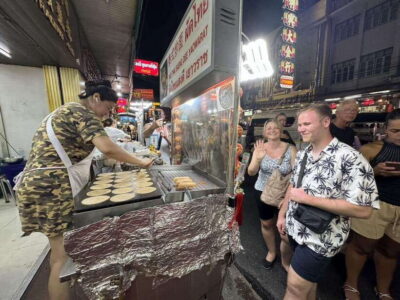 ★ 4.9Bangkok Authentic Tasting Thai-Chinatown Walking Food TourFrom $43852 reviews
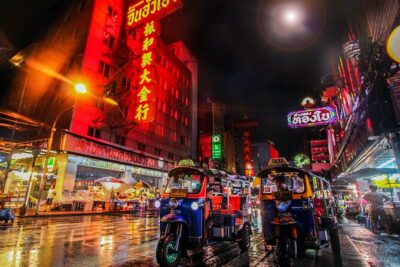 ★ 4.5Chinatown by Night Walking TourFrom $18162 reviews
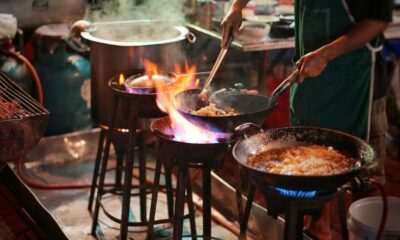 ★ 4.2Discover a Taste of Chinatown – 2 Hr Walking TourFrom $64152 reviews
 ★ 4.3City Highlights and Landmarks Private Walking TourFrom $70142 reviews
 ★ 4.7Local Life, Culture & Food Walking Tour at ChinatownFrom $75119 reviews
Browse the lists this tour appears in