
Review · THAI COOKING CLASSES
Hands-On Thai Cooking Class Bangkok with Local Chef (Small Group)
Thai food becomes personal when you cook it. This small-group class with Chef Joyce has you making Thai dishes from scratch, with fresh ingredients and step-by-step guidance so you feel confident from the first bite.
I love the hands-on setup (you cook at your own station) and the way Chef Joyce explains ingredients clearly, including how key flavor building blocks work. I also like that you leave with a PDF recipe booklet, so it is not just a one-day memory. The one drawback to plan for: the meeting point is in the Phasi Charoen area, so if you are staying far from public transport, you’ll spend time getting there.
In This Review
- What makes this class feel like Bangkok
- Key highlights you should care about
- Why this Bangkok cooking class beats the eat-and-run version
- Getting to Mahanakorn Thai Cooking Class (and why the neighborhood is part of the fun)
- Small-group cooking with Chef Joyce: what the teaching feels like
- Four courses of lunch: what you will likely cook and why it matters
- Course style 1: a warming soup (for balance, not just heat)
- Course style 2: a savory fried bite using Thai ingredients
- Course style 3: curry that teaches you the paste (not just the finished sauce)
- Course style 4: sweet mango sticky rice (the proof of your technique)
- The real lesson: how Thai flavors get built, ingredient by ingredient
- Cooking at your station: the part that helps you actually improve
- What you can take home to cook Thai food again
- Value check: is $38.72 worth it in Bangkok?
- Who this class suits best (and who might want to choose differently)
- Should you book this hands-on Thai cooking class in Bangkok?
- FAQ
- What is included in the Bangkok Thai cooking class?
- How long is the cooking class?
- Is the class beginner-friendly?
- How many people are in the group?
- Where is the meeting point?
- Does the price include alcoholic beverages?
- What is the cancellation policy?
What makes this class feel like Bangkok
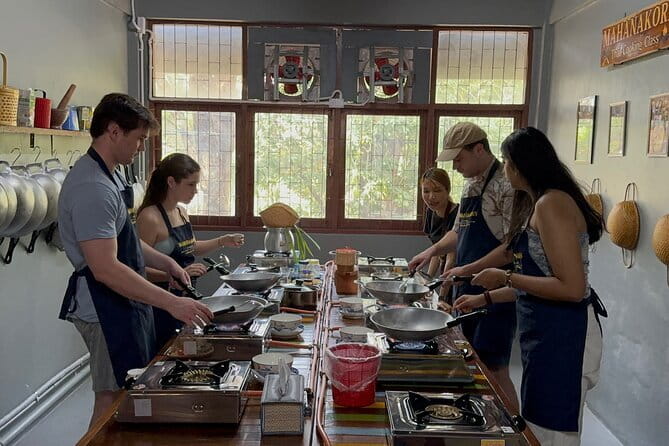
You are not treated like a spectator. You are guided through cooking, tasting, and technique tips in a relaxed, welcoming atmosphere, and it is described as beginner-friendly, with no experience needed. It is also built around eating what you make, with lunch included.
Key highlights you should care about
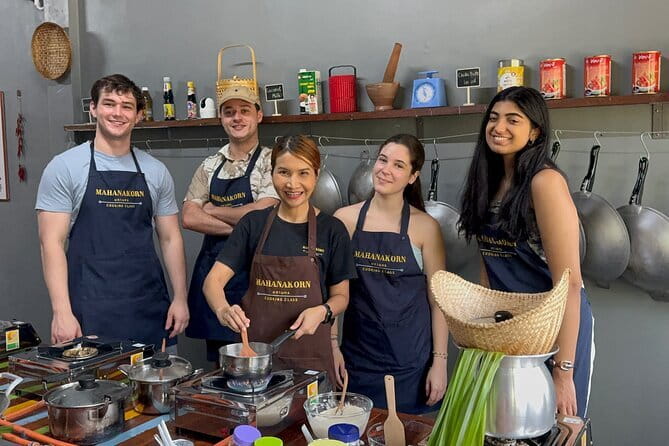
- Chef Joyce teaching approach: ingredients explained, plus encouragement to ask questions while you cook
- Small group size (max 8): more attention and less waiting around
- 4-course lunch included: you cook, then sit down to eat what you made
- From-scratch flavor work: you learn how Thai classics get their taste, including house-made chili paste
- Take-home support: photos from your experience and a recipe booklet (PDF)
Aprons on for another Thai kitchen
- Bangkok: Hands-on Thai Cooking Class and Market Tour
★ 4.9 · 1,614 reviews - Bangkok: Tingly Thai Cooking School Half-Day Cooking Class
★ 4.9 · 1,191 reviews - Bangkok: Maliwan Thai Cooking Class with Market Tour
★ 4.9 · 1,133 reviews
Why this Bangkok cooking class beats the eat-and-run version
In Bangkok, it is easy to fall into the trap of just eating. Delicious, yes. But you learn very little about why a dish tastes the way it does. This class is designed to fix that. It gives you the steps behind Thai flavor—how sauces and pastes get built, how herbs and aromatics behave, and how balance is created on purpose.
The big win is that you learn through doing. When you chop, toast, grind, stir, and taste in the moment, you stop guessing at home. You also learn what matters most, instead of memorizing a list of ingredients.
And since it is a small group (up to 8), the class does not turn into a cooking show. You get real help while you are mid-recipe.
Getting to Mahanakorn Thai Cooking Class (and why the neighborhood is part of the fun)
The class meets at Mahanakorn Thai Cooking Class, 139 35 Soi Ratchamongkhon Prasat 5, Pak Khlong Phasi Charoen, Phasi Charoen, Bangkok 10160. It is also noted as being near public transportation, which is a relief in a city where traffic can feel like a sport.
One reason I like this location for a cooking class: it is not in a high-gloss tourist strip. The area includes canals and bridges nearby, and there is a temple close by (Wat Parkman Temple) that many people plan to visit before or after. If your day in Bangkok has any empty time, you can fill it with a short temple stroll without needing a long detour.
Practical tip: if you hate feeling rushed, give yourself a little extra buffer for transit. You’ll want to arrive ready to cook, not already stressed.
Small-group cooking with Chef Joyce: what the teaching feels like
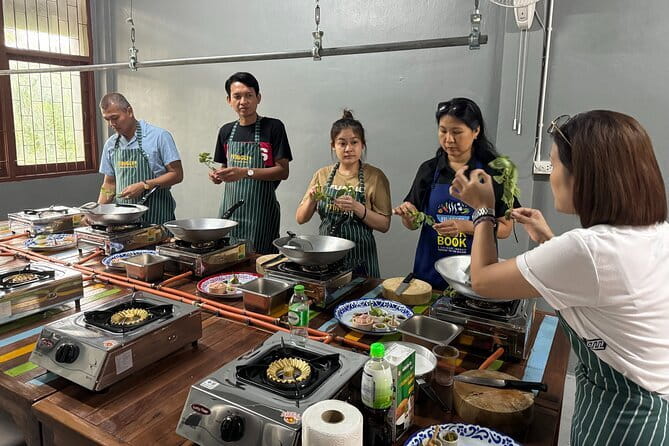
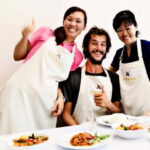
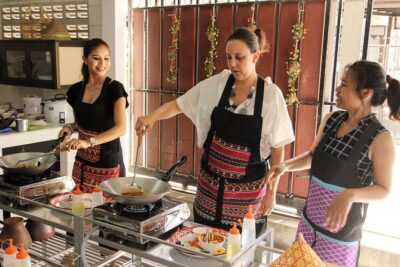
This is not a huge group where one person fries and everyone watches. Your session is structured so you can participate at your own station, and the chef checks in so you do not feel left behind.
Chef Joyce shows up in the feedback again and again, and the pattern is consistent: she is friendly, patient, and funny in a way that makes technique less intimidating. More importantly, she teaches you the why behind the recipe, not just the what. One example from the class experience: she takes people through ingredient names and encourages tasting along the way so you understand how different components contribute to the final flavor.
You’ll also see a “trust the process” vibe. That matters for Thai cooking, because the taste often depends on timing (toasting spices, blooming aromatics, simmering just long enough). When the chef explains what to watch for, you can replicate it later.
More time at the wok
Four courses of lunch: what you will likely cook and why it matters
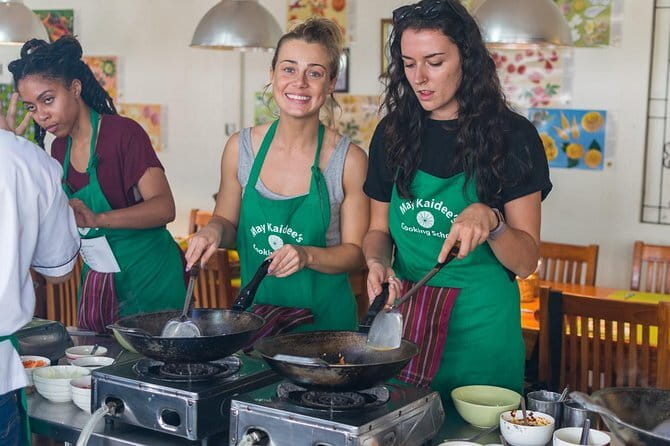
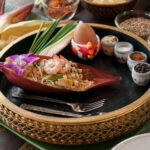
The class includes a lunch Thai cooking class with 4 courses. Exact dishes can vary by session, but the examples connected to the experience give you a strong idea of what kinds of recipes you will practice: Thai classics with a mix of savory, spicy, and sweet.
Here are the types of courses you should expect to work through:
Course style 1: a warming soup (for balance, not just heat)
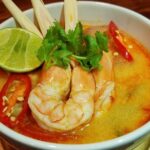
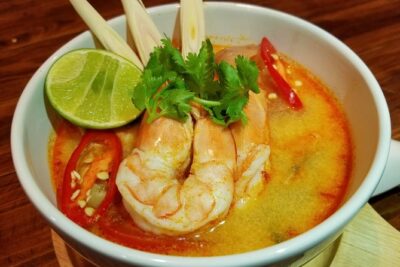
One of the dishes mentioned is Dongyin Gong soup. Soups are a great first course in Thai cooking because they teach balance early: how salty, sour, aromatic, and spicy can work together without tasting random. Even if you do not make the exact same soup at home later, the lesson about flavor order sticks.
Course style 2: a savory fried bite using Thai ingredients
You may also make Thai fried river flour (mentioned as part of a four-dish set). Fried items are useful training because Thai food can be both delicate and intense at once. You learn how texture changes with heat, and how the seasoning stays present even after cooking.
Course style 3: curry that teaches you the paste (not just the finished sauce)
Curry is where the class really earns its keep. Green curry chicken is specifically mentioned, and the key point is that you do not just rely on pre-made curry. You learn how the sauce gets its base from paste work.
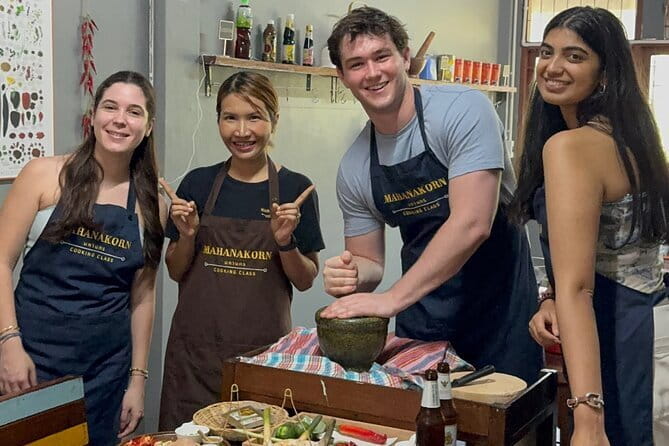
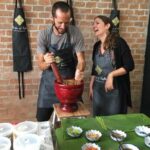
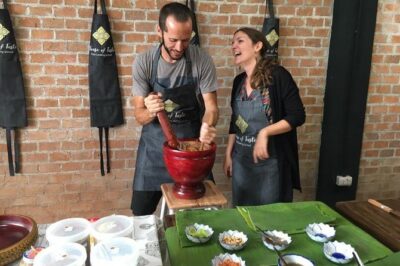
A particularly memorable detail from the experience: the paste work can be done in a traditional way using a stone mortar and pestle, and the class emphasizes doing it without a blender. That is not just “for authenticity.” It changes the texture and can make the final flavor feel fresher because aromatics are processed differently.
You may also learn about making Thai chili paste from scratch, which is one of those skills that pays off at home. It lets you adjust heat and thickness instead of settling for whatever is on the shelf.
Course style 4: sweet mango sticky rice (the proof of your technique)
For dessert, sweet mango glutinous rice (mango sticky rice) is repeatedly mentioned as one of the satisfying finales. This is more than a sweet stop. It teaches timing and proportion: how sticky rice becomes creamy, how coconut flavor behaves, and how sweetness should feel after a spicy meal.
By the end, you get a full Thai meal arc: savory heat, aromatics, satisfying texture, then the sweet finish that makes the whole menu feel complete.
The real lesson: how Thai flavors get built, ingredient by ingredient
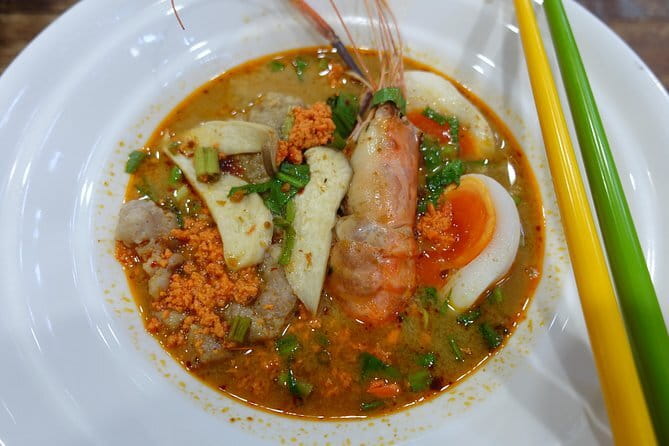
The class description highlights the “pillars” of Thai cuisine, and the cooking practice matches that. You should come away understanding that Thai food is not just spicy. It is organized flavor.
Here’s what you can expect to learn in a practical way:
- Chili and heat with control: you learn how chili paste and chili levels affect the whole dish, not just the last bite
- Curry paste fundamentals: aromatics and seasoning get combined into a base that carries flavor throughout
- Sweet-salty-sour balance: you taste components and learn what “balance” means when you adjust one ingredient
- Fresh ingredients matter: the class uses all fresh ingredients, plus bottled water and cooking equipment, so you practice with real inputs—not packaged shortcuts
- Technique tips you can repeat: the guide offers advice on how to improve cooking technique, which is what helps you reproduce results later
A subtle but important advantage: many Thai recipes rely on a few key steps that feel small when explained. In class, you see how those steps change the final result, so you understand what not to rush at home.
Cooking at your station: the part that helps you actually improve

You are not just learning recipes. You are learning workflow. Cooking at your own station is a big deal, especially in a hands-on class.
Why it matters:
- You can ask questions while you’re stuck, not after the chef moves on
- You get practice with real tools and steps
- You build confidence quickly because you are making progress dish by dish
This also helps if you already cook at home. One review example described someone who cooked Thai food often in the States and still found their previous understanding was off. That is exactly the point. Thai cooking often hinges on paste making, seasoning timing, and texture—not just the ingredient list.
What you can take home to cook Thai food again

The class includes a recipe booklet (PDF) and photos from your experience. That combination helps you recreate what you made without constantly guessing measurements or order.
The most valuable take-home skill is not one recipe. It is the method:
- Learn the flavor structure
- Understand how Thai chili paste and curry bases are built
- Adjust at home using the same balancing idea
If you want to recreate Thai food, this kind of class is one of the best values in Bangkok because it gives you a repeatable system. Instead of chasing individual recipes, you get the building blocks that explain why the dishes work.
Value check: is $38.72 worth it in Bangkok?
At $38.72 per person, this class is priced like a mid-range activity, but it feels more like a food experience because so much is included.
Here’s what you are getting for that price:
- Lunch with 4 courses you help cook
- All fresh ingredients (not a few “demo” items)
- Cooking and hygiene equipment
- A guide and hands-on teaching
- Bottled water
- Photos and a recipe booklet (PDF)
Also, the group size is capped at 8 travelers, which matters. Smaller groups reduce downtime and make it easier for the chef to notice when your paste or seasoning needs tweaking.
What is not included: alcoholic beverages. That is normal for many cooking classes, but it’s good to know so you do not assume your meal will come with drinks.
For most people, the math works because you are not just buying instruction—you are buying a full meal plus the skills to cook it again.
Who this class suits best (and who might want to choose differently)
This is a strong match if you:
- Want a beginner-friendly cooking experience that does not talk down to you
- Like learning techniques, not only recipes
- Prefer small-group attention
- Are excited to go beyond pad thai and learn how curry bases and chili paste get made
You might think twice if you:
- Hate cooking hands-on (this is the whole point)
- Have only a tiny window in Bangkok and cannot afford a trip to the Phasi Charoen area
- Expect a wheelchair-accessible setup (wheelchair is noted as not available)
Should you book this hands-on Thai cooking class in Bangkok?
Yes—if you want a real skill, not just a great lunch.
I’d book it when you want to connect to Thai food in a way that lasts. The combination of Chef Joyce’s step-by-step teaching, small-group size, and learning key flavor work like chili paste and curry bases makes it worth more than a typical “tourist cooking demo.”
One last practical check: plan your day so you are not rushing across the city. Show up rested, ready to cook, and you’ll get the most from the experience—both at the table and back at home.
FAQ
What is included in the Bangkok Thai cooking class?
The class includes lunch Thai cooking (4 courses), bottled water, cooking and hygiene equipment, a guide, all fresh ingredients, photos from your experience, hands-on cooking with a local Thai chef, and a recipe booklet in PDF format.
How long is the cooking class?
It is listed as about 3 hours.
Is the class beginner-friendly?
Yes. The class is described as accessible to cooks of all skill levels, and you can ask questions freely while cooking at your own station.
How many people are in the group?
The maximum group size is 8 travelers.
Where is the meeting point?
The class starts at Mahanakorn Thai Cooking Class, 139 35 Soi Ratchamongkhon Prasat 5, Pak Khlong Phasi Charoen, Phasi Charoen, Bangkok 10160, Thailand.
Does the price include alcoholic beverages?
No. Alcoholic beverages are not included, and alcohol is for travelers 20 years old and above.
What is the cancellation policy?
Free cancellation is available up to 24 hours in advance for a full refund. If you cancel less than 24 hours before the experience starts, the amount you paid will not be refunded.
Learn Another Thai Dish

More Tour Reviews in Bangkok




Cook It Yourself: Thai Classes
Just In: Fresh Bangkok Reviews


Thai Cooking Classes, compared.
 ★ 4.9Hands-on Thai Cooking Class and Market TourFrom $451,614 reviews
 ★ 4.9Tingly Thai Cooking School Half-Day Cooking ClassFrom $411,191 reviews
 ★ 4.9Maliwan Thai Cooking Class with Market TourFrom $401,133 reviews
 ★ 5.0Hands on Thai Cooking Class and Market TourFrom $45660 reviews
 ★ 5.0Tingly Thai Cooking Class with Morning Market TourFrom $42589 reviews
 ★ 5.0Hands-on Thai Cooking Class & Market Tour in SukhumvitFrom $45571 reviews
 ★ 5.0Pink Chili – Thai Cooking Class and Market Tour in BangkokFrom $38416 reviews
 ★ 5.0Authentic Thai Cooking with the Largest market visit &TukTuk rideFrom $44350 reviews
Browse the lists this tour appears in