
Review · WALKING TOURS
Private – China Town Walking Tour incl. secret herbal drink
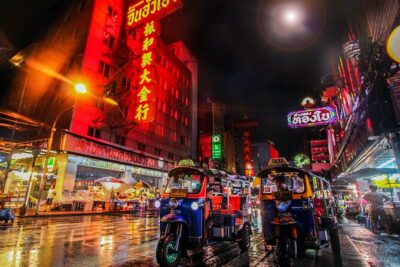
Bangkok’s Chinatown makes sense fast on foot. I like that this small-group walk starts with a traditional tuk tuk ride and then keeps you moving through real market streets, not just a quick photo loop. Guides here (one name you’ll hear often is Ms. Bow) tend to explain what you’re looking at as you go, so the chaos becomes readable.
My favorite part is the food-and-culture combo: the walk ends up at a Chinese herbs market where you can try the herbal drink, and you learn why it shows up in daily life, not just as a gimmick. One thing to consider is that the tour doesn’t include round-trip transport from your hotel, so you’ll need to get yourself to the meeting point near BTS National Stadium.
In This Review
- Key highlights before you go
- Bangkok’s Chinatown, made walkable in three hours
- Starting from National Stadium: BTS meet-up and the tuk tuk opener
- Sampeng Market and Song Wad Street: wholesale Bangkok in plain sight
- Yaowarat’s gold streets, hidden alleys, and the Chinese herbs market
- Wat Mangkon Kamalawat: the Chinese Buddhist temple that anchors the area
- Ban Kao Lao Rueng and the Charoen Chai craft lanes
- What’s included (and what you’ll still need to plan)
- Price check: is $96.22 worth it for Chinatown?
- Logistics that can trip you up (so you avoid the headache)
- Who this Chinatown walk suits best
- Should you book this Chinatown walk with the secret herbal drink?
- FAQ
- What time does the tour start?
- Where do I meet the guide?
- When does the tour end, and where?
- How long is the tour?
- Is the tour private?
- What does the price include?
- Is there a herbal drink on the tour?
- Can I cancel for a full refund?
Key highlights before you go

- Tuk tuk ride included so you don’t have to haggle for the first leg
- Sampeng Market + Song Wad Street for wholesale Bangkok vibes and bargain-energy streets
- Chinese herbs market stop with a chance to try a secret herbal drink
- Wat Mangkon Kamalawat visit, focused on Thai-Chinese beliefs and temple life
- Charoen Chai community joss paper crafts tied to Lunar New Year, the vegetarian festival, and funerals
- Small group pace (six people or fewer) that makes questions feel normal, not rushed
Bangkok’s Chinatown, made walkable in three hours
This tour is built for one simple goal: help you understand Chinatown without spending your whole afternoon trying to decode street signs and shipping alleys. It runs about three hours, with short stops timed so you can look, listen, and keep moving. You’ll cover a mix of market lanes, a big temple, and a craft community that many visitors never find on their own.
The value comes from the combo of pace and focus. You get a guide with in-depth commentary and you also get practical “walk this way” structure across several neighborhoods. That means you spend your time noticing what matters, instead of wandering until you find something interesting by luck.
And yes, you’ll be walking. This is the kind of tour where comfortable shoes are non-negotiable, especially in the heat and the tight lanes.
Bangkok at walking pace, more routes
- Bangkok: City Highlights Temple and Market Walking Tour
★ 4.5 · 3,990 reviews - Bangkok: Grand Palace and Wat Phra Kaew Guided Walking Tour
★ 4.4 · 2,417 reviews - Bangkok: Wat Pho and Wat Arun Guided Walking Tour
★ 4.6 · 1,720 reviews
Starting from National Stadium: BTS meet-up and the tuk tuk opener
You meet near BTS National Stadium Station, exit 2 (street level), around 1:00 pm. The tour ends at MRT Wat Mangkon Station, so it’s easy to keep going the rest of the day without backtracking.
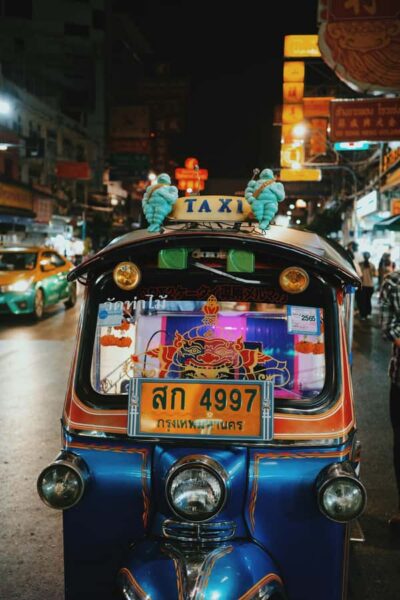
Right after you meet, you’ll take a traditional tuk tuk ride—and the cost is included. That matters because it sets the tone: you’re not “touring” Bangkok so much as using Bangkok’s own transport rhythm to get to where the action is.
One practical tip: the meeting point can be confusing if you’re staring at the wrong sign. In past experiences described with this route, the guidance was to make sure you locate the exact store listed in the instructions. If you show up early, do a quick check of that detail before the group arrives.
Sampeng Market and Song Wad Street: wholesale Bangkok in plain sight
The first stop centers on Sampeng Market, following the lane called Song Wad Street. This stretch is known for wholesale goods—think lots of products, lots of storefront energy, and a different speed than the tourist areas you might be used to.
Then you move into Sampeng market, described as the first wholesale market in Bangkok. The point of this stop isn’t just shopping. It’s to see how Chinatown functions day-to-day: the trade side, the supply chain side, and the street-level blend of commerce and community.
What I like about this segment is that it’s not trying to force a single “must-see” view. You’re guided through the street logic: where the trade concentrates, why the streets are laid out the way they are, and how it all connects back to the neighborhood’s role in the city.
What could be annoying? If you’re hoping for a slow, sit-down experience, this isn’t that. The market streets reward attention and quick decisions.
Yaowarat’s gold streets, hidden alleys, and the Chinese herbs market
Next you head toward Yaowarat, crossing Yao Wa Rat Street. Here the vibe shifts into what many people recognize instantly: jewelry and accessory shops, with rows of displays that make the street feel like a showroom with real commerce happening behind it.
After that, you’ll turn into a smaller alley and reach the Chinese herbs market. This is one of the most distinctive moments of the whole tour, because it connects the visual (herb stalls and shop signs) to the cultural idea behind it.
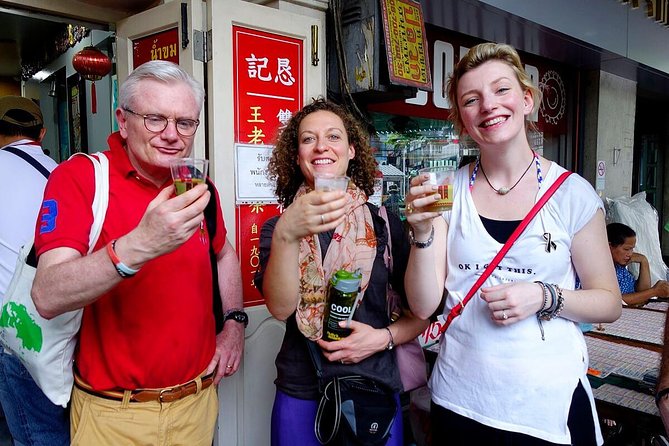
This is also where the tour’s signature treat lands: you can try an authentic herbal drink. You’re not just eating a sample; the guide explains why you’re there in the first place. That makes it feel like part of the Chinatown story instead of a random stop that lasts five minutes.
A quick expectation check: herbal flavors can be intense if you’re used to sweet drinks only. If you have a sensitive stomach or a strong dislike for bitter tastes, you can still watch what others are choosing—but consider going in with an open mind.
More private runs, just your group



Wat Mangkon Kamalawat: the Chinese Buddhist temple that anchors the area
From the market streets, you cross Charoen Krung Street, then visit Wat Mangkon Kamalawat. This temple is described as the most important Chinese Buddhist temple in Bangkok, and the guide’s job here is to connect architecture and rituals to Thai-Chinese faith.
You’ll spend time on-site learning how the community practices faith, and how that faith shows up in what you see at the temple. This stop is valuable because it gives Chinatown context beyond trade—belief, tradition, and the community’s social heart.
One reason I’d choose this tour over a DIY walk is that temple visits can turn into “look, take a photo, leave” if nobody explains what you’re seeing. Here, the commentary is built into the visit, so you know what to pay attention to while you’re standing in the middle of it.
Ban Kao Lao Rueng and the Charoen Chai craft lanes
The final neighborhood stop goes down a narrow alley off Bangkok’s oldest street, focusing on Ban Kao Lao Rueng – Charoen Chai Community. This area is known for handcrafted Chinese joss paper products made for more than a century.
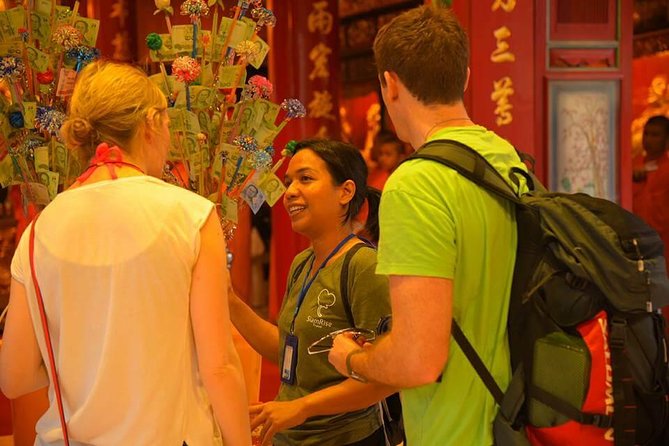
The tour points out details that are easy to miss if you’re just passing by: the gold and red envelopes used for gift-giving during Chinese Lunar New Year, the yellow flags and food trays associated with the annual vegetarian festival, and the elaborate paper offerings used for traditional Chinese funerals.
In other words, you’re not just seeing “paper crafts.” You’re seeing a system of symbols—objects that represent care, respect, and tradition. That’s what makes the stop stick with you after you leave the alley.
Downside? If your idea of a perfect tour is only mainstream highlights, this craft community lane might feel quieter than the gold streets. But if you like learning what daily tradition actually looks like, it’s a strong way to end.
What’s included (and what you’ll still need to plan)
You get a solid set of basics built into the price:
- English-speaking guide
- Water, coffee, tea, and snacks
- Bus fee (for transportation during the route)
- Entrance fees for the activities listed
- Travel insurance
You’ll also want to plan for what’s not included:
- No meals are mentioned, so don’t count on a full lunch or dinner being part of the tour.
- No round-trip transportation from your hotel/hostel is included. The meeting point is near public transit, which helps, but you still handle your own trip there.
For best comfort, bring a reusable water bottle if you like, but you should already get water provided. For photos, this route is friendly for cameras since you’ll be surrounded by shop signs and close street views.
Price check: is $96.22 worth it for Chinatown?
At $96.22 per person, this tour isn’t a bargain-basement deal. It is, however, priced like a guided experience that covers the stuff that usually costs extra when you DIY.
Here’s why it can feel worth it:
- Tuk tuk ride is included, which can add up fast on short tourist trips.
- You also get entrance fees and transport within the route covered (bus fee is included).
- The guide brings in-depth commentary, which is the real difference between wandering Chinatown and understanding it in a few hours.
- You’re in a small group (six or fewer), so it doesn’t feel like you’re trapped behind strangers.
If you’re traveling solo or as a small group, the private feel can be appealing. One practical “value” detail I picked up from experiences described with this company: the tour can run in a more private style when there’s only one customer. That means you may get the benefit of a small group even when the headcount is low.
If your budget is tight, you can still DIY Chinatown. But you’ll spend more time asking locals or guessing which alley is worth your attention—and you’ll miss the “why this matters” parts.
Logistics that can trip you up (so you avoid the headache)
This tour starts at BTS National Stadium and ends near MRT Wat Mangkon Station. That one-way flow is great—less backtracking—but it does mean you should plan what you’ll do after the tour.
Also, because the meeting point is near transit, it’s easy to find, but you should still follow the exact store/location instructions in your confirmation. There’s a real-world example of a meeting spot being easy to misread if you’re standing by a similarly branded chain store.
Language can also be worth noting. Even with an English-speaking guide, the communication quality can depend on the day and the guide. If you’re sensitive to accents or fast explanations, you may want to ask your questions early so you don’t lose the thread.
Who this Chinatown walk suits best
This is a strong match if you want:
- a guided, structured Chinatown route without overthinking
- market and food culture plus a temple visit with meaning
- a small group pace that makes it easier to ask questions
- an experience that includes a herbal drink moment tied to context
It’s especially good for first-timers in Bangkok who want Chinatown to feel understandable quickly. It also works well if you like street-level travel—shops, signage, neighborhood details—more than only big-ticket sights.
If you hate walking in heat, or you need lots of seated time, you might find the pace intense. The route is designed as a 3-hour circuit, so it keeps moving between stops.
Should you book this Chinatown walk with the secret herbal drink?
I’d book it if you want a Chinatown experience that feels intentional: tuk tuk arrival, market understanding, a temple with context, and a craft stop tied to real traditions. The included water, coffee, tea, snacks, and transport help keep it from turning into an extra-expense day.
I’d hesitate if you already know Chinatown well and you’re happy navigating streets on your own. In that case, you might prefer a self-guided walk and spend your money on a meal instead.
My practical take: if you’re short on time in Bangkok, this tour is a high-efficiency way to get the story behind Chinatown in just three hours—especially because the guide handles the connections.
FAQ
What time does the tour start?
The tour starts at 1:00 pm.
Where do I meet the guide?
You meet at BTS National Stadium Station, exit 2 (street level).
When does the tour end, and where?
The tour ends at MRT Wat Mangkon Station. The listed end time is around 4:00 pm.
How long is the tour?
The duration is about 3 hours.
Is the tour private?
This is listed as a private tour/activity, meaning only your group participates.
What does the price include?
The price includes an English-speaking guide, water and snacks, coffee and tea, a bus fee, entrance fees for the listed activities, and travel insurance. The tuk tuk ride price is also included.
Is there a herbal drink on the tour?
Yes. You’ll visit a Chinese herbs market, where you can try the authentic herbal drink.
Can I cancel for a full refund?
Yes. Free cancellation is available if you cancel up to 24 hours in advance of the experience start time.
Bangkok on Foot: More Walks

More Tours in Bangkok
More Tour Reviews in Bangkok


Just In: Fresh Bangkok Reviews


Walking Tours, compared.
 ★ 4.5City Highlights Temple and Market Walking TourFrom $423,990 reviews
 ★ 4.4Grand Palace and Wat Phra Kaew Guided Walking TourFrom $172,417 reviews
 ★ 4.6Wat Pho and Wat Arun Guided Walking TourFrom $171,720 reviews
 ★ 4.9Bangkok Authentic Tasting Thai-Chinatown Walking Food TourFrom $43852 reviews
 ★ 4.5Chinatown by Night Walking TourFrom $18162 reviews
 ★ 4.2Discover a Taste of Chinatown – 2 Hr Walking TourFrom $64152 reviews
 ★ 4.3City Highlights and Landmarks Private Walking TourFrom $70142 reviews
 ★ 4.7Local Life, Culture & Food Walking Tour at ChinatownFrom $75119 reviews
Browse the lists this tour appears in