
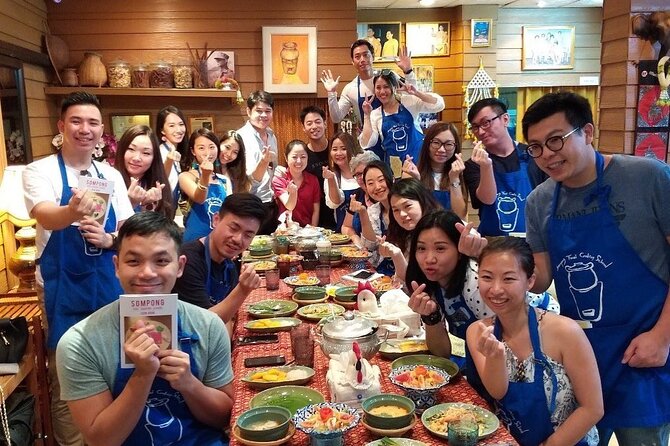
Review · THAI COOKING CLASSES
Sompong Thai Cooking School in Bangkok
Want dinner lessons that taste like Bangkok? You get a small-group class at Sompong Thai Cooking School, with your own station and hands-on help while you make homemade curry paste and several classic dishes. It’s the kind of cooking experience that teaches you technique, not just how to follow a worksheet.
I especially like how you work at an individual setup instead of crowding around one pot. And I like that you leave with a recipe book plus what you learn at the market (morning classes), so you can recreate the flavors later instead of chasing “what was in that curry?” The only catch is the menu changes by day, so your exact dishes may be different than what you expect.
In This Review
- Key highlights at Sompong Thai Cooking School
- Getting oriented: location, timing, and what the class actually feels like
- The market tour (morning classes): where Thai flavor starts
- Your cooking stations: why this setup matters
- The star lesson: curry paste from scratch
- What you actually cook: 3 main dishes plus dessert
- Vegetarian options and dietary needs: what to expect
- The class sizes and instructor attention you’ll feel
- Price and value: why $58.69 can make sense
- Logistics you should plan for (without the headache)
- Who this is best for (and who might want another option)
- Should you book Sompong Thai Cooking School?
- FAQ
- What is included in the cooking class?
- How long is the experience?
- Is it a small group?
- Do I visit a market?
- What dishes do we make?
- Are vegetarian options available?
- Is the instructor English speaking?
- What’s the cancellation and weather policy?
Key highlights at Sompong Thai Cooking School
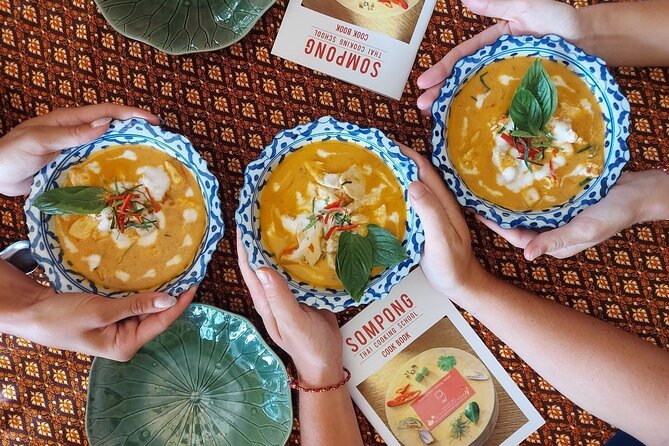
- Morning market tour to pick ingredients and learn how Thai cooking builds flavor
- Individual cooking station with the tools you need, so you’re not stuck watching
- Curry paste from scratch (not a shortcut) plus three main dishes and dessert
- Small group size (maximum 10) for real instructor attention
- English-speaking instructor and help for different skill levels
- Vegetarian options and dietary restrictions accommodated
Getting oriented: location, timing, and what the class actually feels like
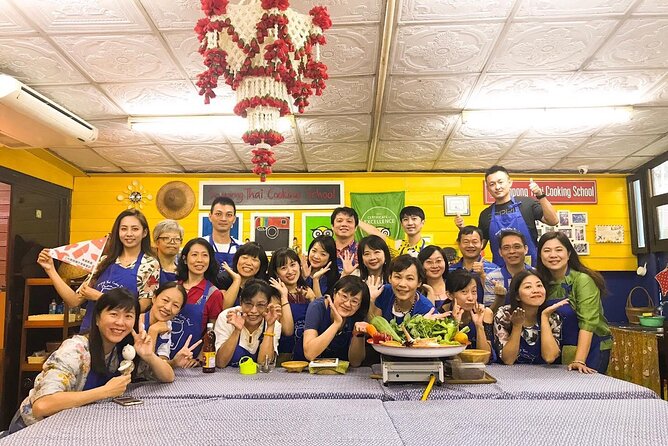
Sompong Thai Cooking School meets at Sompong Thai Cooking School2, 6-2/7 Si Lom soi 13, Si Lom (Khet Bang Rak), Bangkok. The class ends back at the meeting point, so you’re not hunting for a ride after you’ve just made dinner.
Plan on about 4 hours 45 minutes. That’s long enough to feel like you learned something real, but not so long you lose the plot. The “mobile ticket” detail is helpful because it keeps things simple when you’re moving around Bangkok, and you’ll be near public transportation.
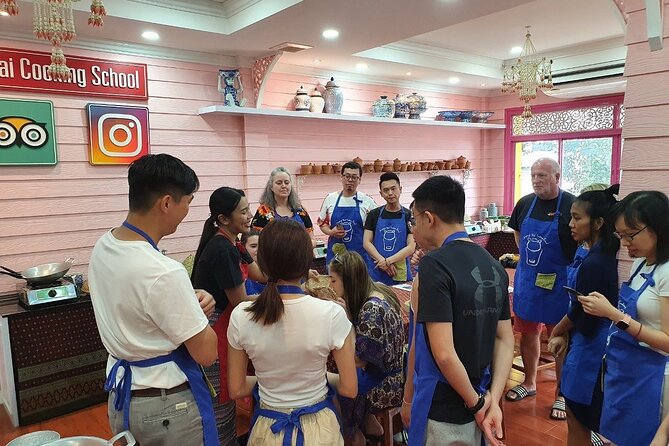
The vibe is hands-on and practical. This is not a cooking demo where you watch someone else do the hard part. You cook. You taste. You adjust. And because the group is capped at 10 travelers, you’re more likely to get the kind of coaching you need when something doesn’t quite work the first time.
One quick note: the menu changes depending on the day. That’s not a problem if you’re open-minded. It’s just something to keep in mind when you want a specific dish.
Aprons on for another Thai kitchen
- Bangkok: Hands-on Thai Cooking Class and Market Tour
★ 4.9 · 1,614 reviews - Bangkok: Tingly Thai Cooking School Half-Day Cooking Class
★ 4.9 · 1,191 reviews - Bangkok: Maliwan Thai Cooking Class with Market Tour
★ 4.9 · 1,133 reviews
The market tour (morning classes): where Thai flavor starts
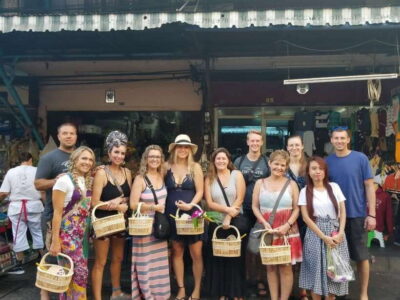
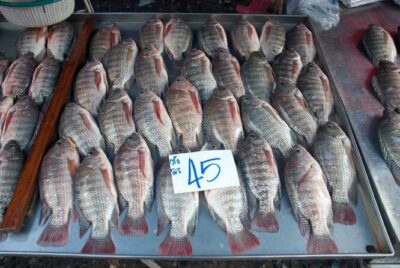
If you book the morning class, you’ll start with a local market visit. This is included, and it’s more than “look at vegetables.” The point is to learn how to select ingredients and understand why certain choices matter in Thai cooking.
In practical terms, you’ll be paying attention to things like texture, ripeness, and scent—because Thai dishes often rely on ingredients that can’t be swapped 1:1. You’ll also get context on the history behind traditional Thai dishes, which helps you understand why techniques exist in the first place. If you’ve ever wondered why a curry tastes right even when it’s not “spicy hot,” this market piece is part of the answer.
Market classes also tend to set you up mentally. You arrive at the kitchen with a clearer picture of what you’re making and why those flavors exist. If you’re the kind of traveler who enjoys food as a system (not just a result), you’ll probably love this part.
If you choose the afternoon tour, the market visit is not included—so you’ll start cooking without that ingredient scouting step.
Your cooking stations: why this setup matters
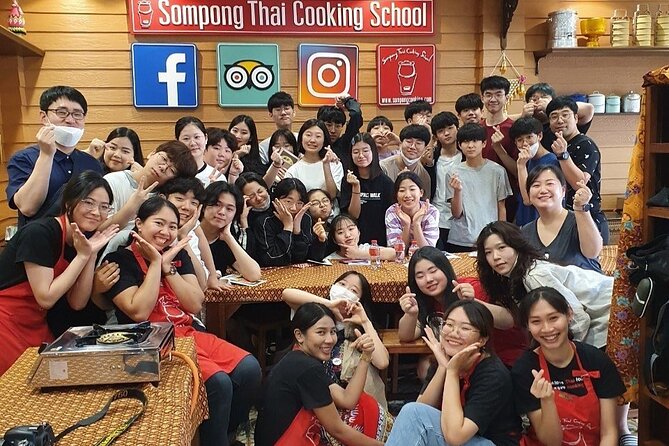
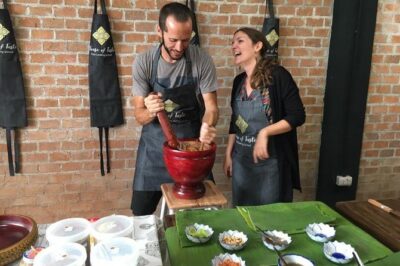
Back in the kitchen, the school gives you an individual cooking station and equipment. That detail sounds basic, but it changes everything.
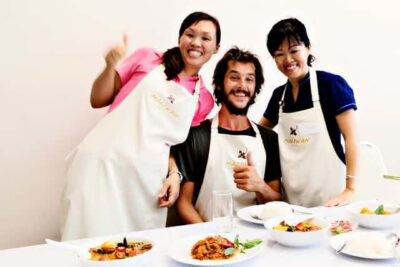
Instead of sharing space and waiting for turns, you’re actively working through the steps. You can focus on the technique—chopping, mixing, frying, seasoning—without the constant interruption of a group bottleneck. For beginners, it prevents that panicked feeling of being behind. For experienced home cooks, it makes it easier to compare your habits with Thai methods.
You’re also guided by an English speaking instructor, and the class is designed for all skill levels. That doesn’t mean the class is simplified. It means you’ll get the right kind of help when your comfort level doesn’t match the technique you’re doing.
The station setup also makes tasting and adjusting easier. Thai cooking often comes down to balance—salt, sour, sweetness, heat, aromatics. When you can taste and tweak right away, you actually learn.
The star lesson: curry paste from scratch
The biggest “wow” moment here is homemade curry paste from scratch. Most cooking classes use shortcuts, and you never really learn the guts of the flavor. Here, you do the work, and you’ll learn the process enough to feel confident recreating it later.
Curry paste is where Thai curry starts—before the coconut milk, before the protein, before the final seasoning. Making it yourself helps you understand texture and aroma, and why certain ingredients are handled in specific ways.
What you’ll take home isn’t just a recipe. It’s a mental model:
- What the paste should smell and look like at different stages
- How ingredients change as they’re ground and combined
- Why the paste’s balance affects everything afterward
Even if you’re not planning to grind paste at home with the same setup, you’ll know what to aim for in your own kitchen. That’s the difference between “I cooked something” and “I can cook this again.”
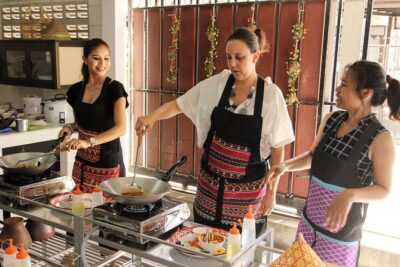
More time at the wok
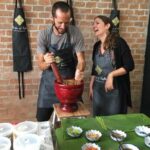
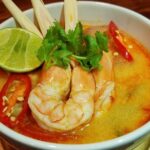
What you actually cook: 3 main dishes plus dessert
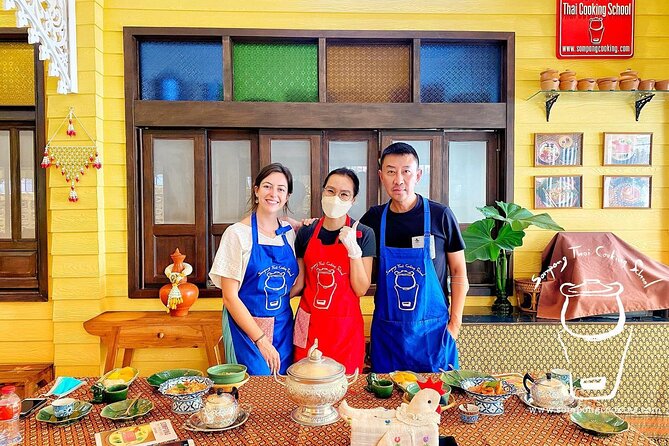
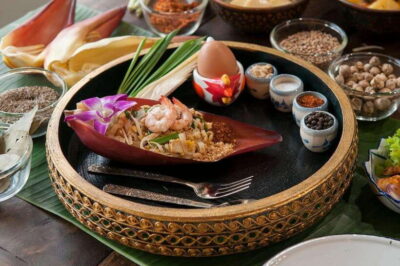
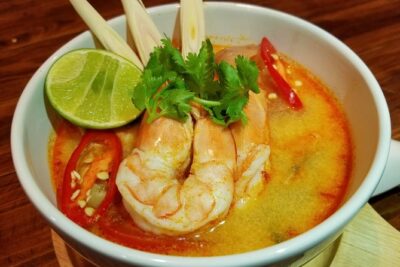
You’ll prepare three authentic main dishes and a dessert. The menu changes day to day, so your exact dishes won’t be identical from one date to another. Still, the structure stays consistent: build the curry paste, then use it in classic Thai cooking, then round it out with dessert.
Because you’re making multiple dishes, you’ll start noticing patterns. Thai flavors show up across courses—aromatics, acidity, sweetness, and heat appear again and again, just in different ratios and cooking methods. That’s how this class becomes more than a one-time meal. It teaches you to recognize flavor logic.
Dessert is a nice reset, too. It keeps the class from becoming only savory technique work. If you’ve only had Thai sweets as “whatever’s on the menu,” cooking one yourself makes it feel personal and doable.
And yes, you’ll get to enjoy what you make. Meals and beverages are included, so you’re not doing the annoying travel-school math of paying extra just to eat.
Vegetarian options and dietary needs: what to expect
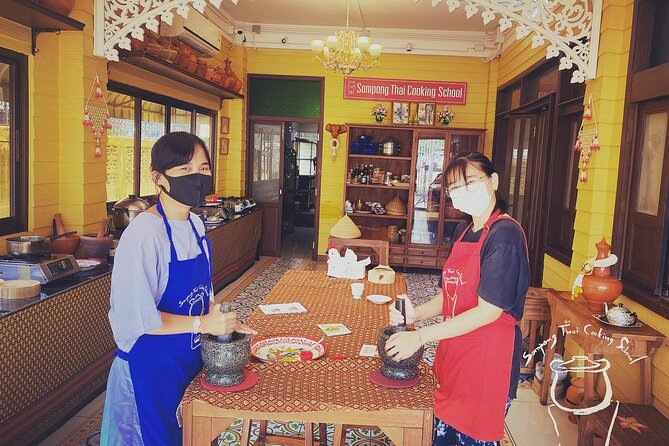
If you’re vegetarian or have dietary restrictions, you should be in good shape. Dietary restrictions are accommodated, and vegetarian options are available.
The exact way adjustments happen isn’t spelled out in the details you have, so it’s smart to confirm your specific needs when you book. But at least you know the class is designed to handle more than one eating style.
This matters for real value: a cooking class that forces you into a separate “sad” plate isn’t doing you any favors. Here, the goal is that you can cook along with the rest of the group.
The class sizes and instructor attention you’ll feel
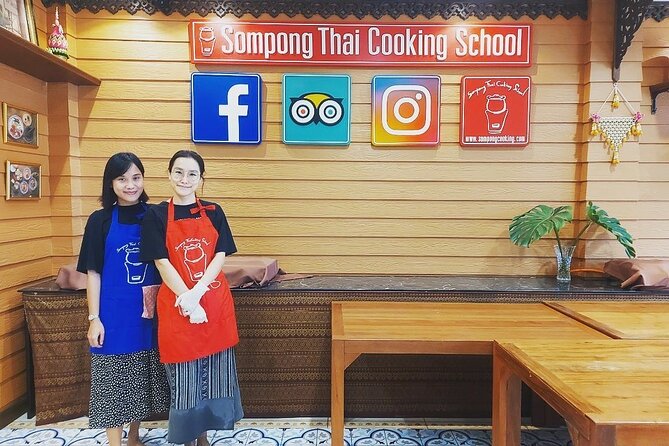
This is capped at a maximum of 10 travelers, which is a huge difference compared with bigger “hands-on” classes where you end up waiting your turn.
In a small group, the instructor can correct technique, not just offer encouragement. You can ask follow-up questions while your food is still in progress. And when you hit a snag—like paste texture or seasoning balance—you’re more likely to get immediate guidance.
One review notes June and the team provided the right amount of cooking techniques and hands-on recipes for four dishes. That lines up with what you’ll feel in the class structure: enough direction to succeed, and enough freedom to learn by doing.
Price and value: why $58.69 can make sense
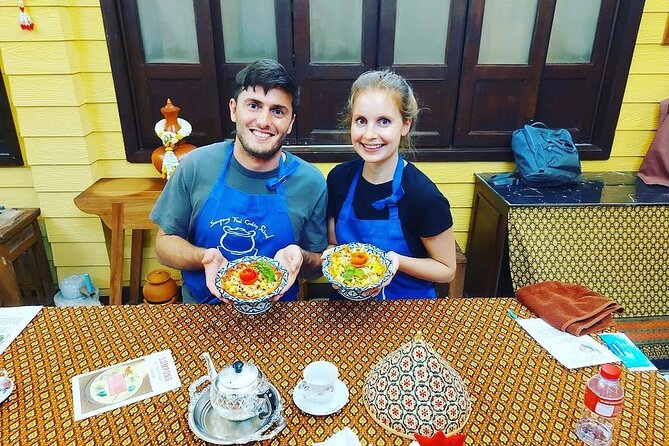
At $58.69 per person, this isn’t a “cheap and cheerful” class. But in Bangkok, cooking classes can swing wildly in quality. Here, the value comes from a few clear things you actually get:
- Four-course output in practice: three mains plus dessert
- Curry paste from scratch, which is labor-heavy and teaches real technique
- All necessary ingredients are included
- Recipe book so you can repeat the results
- Meals and beverages during the class
- Market tour included for morning departures
- English speaking instructor and small group attention
If you compare this to paying for a market tour + private cooking help + ingredients + dining out, it starts to look reasonable. The recipe book alone can offset a chunk of the cost if you’ll cook at home.
Also, the average booking window is about 55 days in advance. That’s a clue you might want to reserve earlier, especially if you want a morning slot or specific dietary needs handled smoothly.
Logistics you should plan for (without the headache)
There’s no roundtrip transfer included, so you’ll want to sort your own way to the meeting point on Si Lom. The good news: it’s near public transportation, so it should be easy to plug into your Bangkok plan.
You’ll meet at the school and finish back at the same spot. That keeps the “after class” stress low, and it makes it easier to pair the class with a nearby lunch or a shopping stop.
One more practical note: the experience requires good weather. That doesn’t automatically mean the whole class will cancel, but it does mean the operator is more cautious about conditions. If the class is canceled due to poor weather, you’ll be offered a different date or a full refund.
Finally, confirmation is received at booking. You’ll also use a mobile ticket, so save the details on your phone before you head out.
Who this is best for (and who might want another option)
I’d book this if you:
- Love food and want to learn cooking technique you can repeat
- Prefer a small group with instructor attention
- Want a curry class that actually builds paste from scratch
- Like the idea of combining a market visit with cooking (morning classes)
It’s also a strong choice if you’re traveling with mixed experience levels in your group. The class is designed for all skill levels, and vegetarian/dietary accommodations are available.
If you’re looking for a super-specific menu guarantee (like making one exact dish every time), note the menu can change by day. And if you hate markets or don’t want to start early, go afternoon so you’re not tied to the morning market rhythm.
Should you book Sompong Thai Cooking School?
Yes, if you want a cooking class that teaches more than “what to do.” The mix of individual stations, curry paste from scratch, and a recipe book makes it a practical souvenir you can use after you get home.
I’d lean toward booking the morning version if you enjoy ingredient shopping and learning how Thai cooking builds flavor from the ground up. I’d lean toward the afternoon if your schedule is tight and you’d rather skip the market step.
One last nudge: reserve early if you can. With a small group cap and menus that shift by day, booking sooner gives you better odds of getting the timing you want.
FAQ
What is included in the cooking class?
You get an English speaking instructor, meals and beverages, all necessary ingredients, and a recipe book. If you book the morning timing, you also get a market tour.
How long is the experience?
It’s about 4 hours 45 minutes (approx.).
Is it a small group?
Yes. The class has a maximum of 10 travelers.
Do I visit a market?
Only the morning class includes a market tour. The afternoon tour does not include the market visit.
What dishes do we make?
You’ll prepare three authentic main dishes and a dessert. You’ll also make homemade curry paste from scratch.
Are vegetarian options available?
Yes. Vegetarian options are available, and dietary restrictions can be accommodated.
Is the instructor English speaking?
Yes, the instructor speaks English.
What’s the cancellation and weather policy?
You can cancel for free up to 24 hours in advance of the experience start time for a full refund. The experience requires good weather, and if it’s canceled due to poor weather, you’ll be offered a different date or a full refund.
Learn Another Thai Dish

More Tour Reviews in Bangkok






Cook It Yourself: Thai Classes
Just In: Fresh Bangkok Reviews



Thai Cooking Classes, compared.
 ★ 4.9Hands-on Thai Cooking Class and Market TourFrom $451,614 reviews
 ★ 4.9Tingly Thai Cooking School Half-Day Cooking ClassFrom $411,191 reviews
 ★ 4.9Maliwan Thai Cooking Class with Market TourFrom $401,133 reviews
 ★ 5.0Hands on Thai Cooking Class and Market TourFrom $45660 reviews
 ★ 5.0Tingly Thai Cooking Class with Morning Market TourFrom $42589 reviews
 ★ 5.0Hands-on Thai Cooking Class & Market Tour in SukhumvitFrom $45571 reviews
 ★ 5.0Pink Chili – Thai Cooking Class and Market Tour in BangkokFrom $38416 reviews
 ★ 5.0Authentic Thai Cooking with the Largest market visit &TukTuk rideFrom $44350 reviews
Browse the lists this tour appears in