
Review · CHINATOWN TOURS
Bangkok: Chinatown By Night Walking Tour
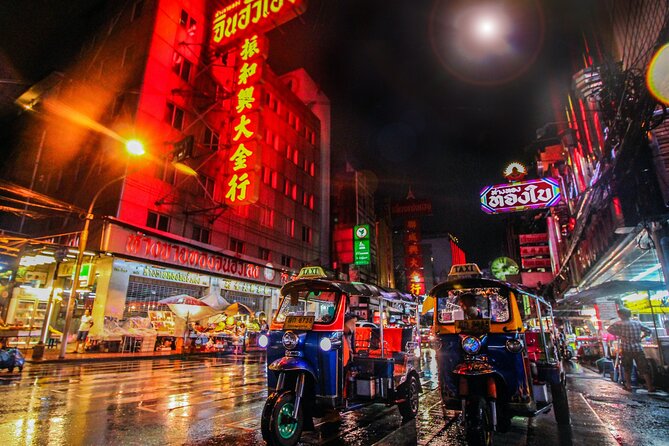
Chinatown at night is a whole different world. This guided walk is built for people who want street-level Bangkok plus storytelling—from Chinese-Thai community history to riverside shrines you’d likely miss on your own.
I especially like the focus on what you’re actually looking at: gold-trade and community background tied to real places like the Chareon Chai community museum and the So Heng Tai Mansion courtyard. I also like that you’re not just walking past food stands—your guide explains the dishes while you sample.
One thing to plan for: Chinatown is crowded and can feel hot and close even in the evening, so you’ll want to pace yourself and bring water.
In This Review
- Key things I’d mark on your map
- Why 6:30 pm makes this Chinatown walk feel real
- Meeting point at Hua Lamphong Rong Muang: what you should expect
- The street-food part: what’s included, what to plan, and how to spend
- Your night route: Chinatown stops that actually teach you something
- Chareon Chai community museum: how local life shaped the neighborhood
- An old mosque with a European-villa style: architecture with surprise factor
- Talat Kao (Chinatown’s Old Market): the long alley feel
- Temple sightline near the Chao Phraya orange express line
- So Heng Tai Mansion in Talat Noi: the courtyard-house look
- An old royal monastery from the Ayutthaya era
- Zhou Si Kong Shrine: 200-year-old river luck prayers
- How the guide shapes the experience (and why the right one matters)
- Price and value: why $15 works if you want a guided night
- Who should book this Chinatown by Night walk
- Should you book Bangkok Chinatown By Night Walking Tour?
- FAQ
- How long is the Bangkok Chinatown by Night Walking Tour?
- What time does the tour start, and where does it meet?
- How much does it cost?
- Is street food included?
- What’s included and what isn’t included?
- Can I cancel if my plans change?
Key things I’d mark on your map
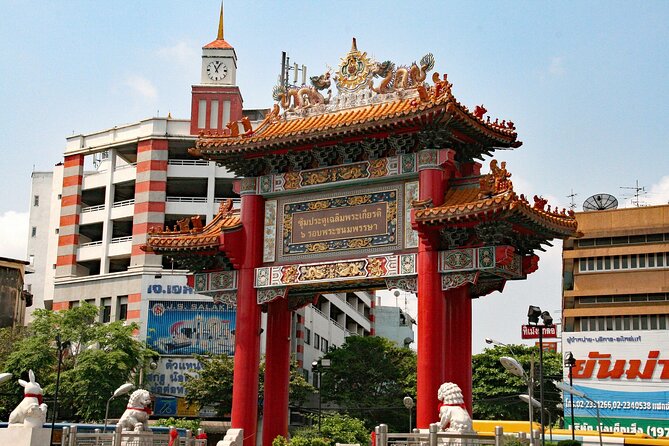
- Chinatown Gate-adjacent streets plus Talat Noi so you see more than just one famous block
- Street-food sampling with dish explanations, not random wandering
- Chareon Chai Community Museum stop adds context to the neighborhood
- European-villa style mosque—a surprising architectural twist in Chinatown
- Riverside Talat Noi landmarks including the Zhou Si Kong Shrine and a viewpoint near the Chao Phraya orange express line
Why 6:30 pm makes this Chinatown walk feel real
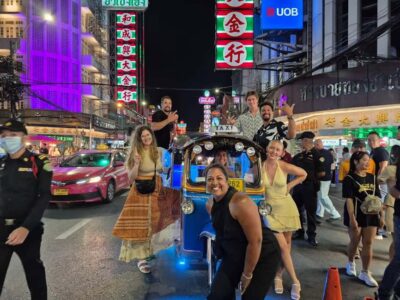
This tour starts at 6:30 pm, right when shop doors are open, neon lights start to glow, and nighttime crowds build. That timing matters in Bangkok because Chinatown changes fast: early evening is for last-minute shopping, later on it becomes a food-and-stall rhythm with constant movement.
You’ll be on foot for about 2 hours, which is long enough to get a real sense of the area, but short enough that you won’t feel stuck in one neighborhood the whole night. For first-timers, it’s also a smart way to build bearings quickly—especially if your day ended somewhere else in the city.
And since the walk is guided, you’re not left translating everything alone. The guide connects the dots between the looks of the streets and the stories behind them—like the way Chinese-Thai life shows up in shrines, courtyards, mosques, and markets.
Deeper into Yaowarat after dark
- Bangkok Authentic Tasting Thai-Chinatown Walking Food Tour
★ 4.9 · 852 reviews - Bangkok: Tuk Tuk Adventure Chinatown Michelin Food & Temples
★ 4.3 · 725 reviews - Bangkok Tuk-Tuk Tour by Night with Chinatown Street Food Meal
★ 5.0 · 635 reviews
Meeting point at Hua Lamphong Rong Muang: what you should expect
The meeting point is Hua Lamphong Rong Muang, Pathum Wan, and the tour ends back at the same place. That round-trip setup is practical: you don’t have to figure out where you’ll be dropped off later—an underrated win in a city where traffic can be unpredictable.
It’s also described as near public transportation, so you’re not forced into a long slog from a station. You’ll get a mobile ticket, and the tour group size tops out at 99 people. That’s big enough that you’ll likely be moving as a loose group, but small enough that you should still hear the guide’s main points and not disappear into a crowd.
One more real-world note: this is a night walk. Expect uneven sidewalks and lots of street activity. Wear comfortable shoes and keep your phone ready, but not in a way that invites trouble in a packed alley.
The street-food part: what’s included, what to plan, and how to spend
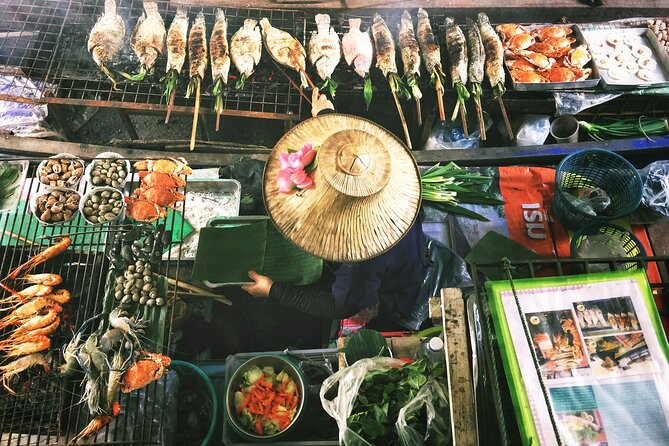
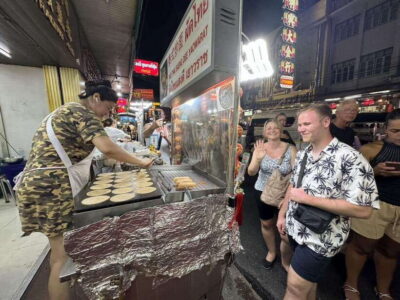
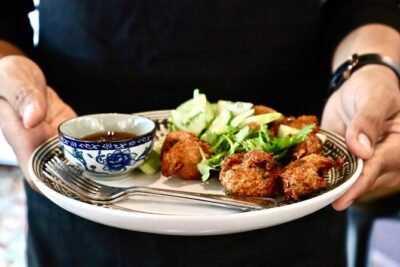
The overview is clear: your guide talks about the dishes along the way and you get to taste popular Thai street food. That’s the big reason this tour works for most people—it turns food into context, not just snacks.
Still, “taste” doesn’t automatically mean a full dinner. The tour doesn’t list full meals as an inclusion, and the practical way to handle this is to come hungry but stay flexible. Bring some cash or a card you’re comfortable using, because you may want to buy extra items if something grabs your attention.
Also, the tour notes headphones are not included. If you prefer audio support, plan to bring what you need for your own comfort. In many walking tours, the guide speaks normally at close range, but that’s not something you should assume.
If you like food but also want to learn, this format is a nice middle ground. You get samples, dish explanations, and route choices that aim you at the stalls worth noticing—without turning the night into a scavenger hunt.
Your night route: Chinatown stops that actually teach you something
The route is designed like a story you can walk through. You start with community memory, pass distinctive religious and architectural sights, then end in Talat Noi with river-linked shrines and old corners of Chinatown.
Bangkok at walking pace, more routes



Chareon Chai community museum: how local life shaped the neighborhood
One of the first stops is an old house turned into a community museum preserving the history and way of life of the Chareon Chai Community. This is the kind of stop that makes the rest of Chinatown click.
Instead of treating Chinatown as just neon and food, you get grounding: who lived here, how the neighborhood evolved, and why certain traditions show up in the street scene. Even if you only spend a short time here, it changes how you read the rest of the walk.
An old mosque with a European-villa style: architecture with surprise factor
Next is an old mosque built in an unusual European villa style. It’s exactly the sort of detail you’d miss if you were rushing through.
What I like about this stop is that it underlines how Bangkok isn’t one-note. Religious life and architectural influences can mix in unexpected ways. And as a visual break from stalls and alleys, it gives your eyes something different to process.
Talat Kao (Chinatown’s Old Market): the long alley feel
Then you head to Chinatown’s Old Market, also known as Talat Kao—a long, narrow alley off Yaowarat Road. This is where the walk feels most like Chinatown in motion.
Expect tight lanes, constant activity, and the sense that you’re walking through a living working market, not a stage set. It’s also a good spot for your guide to point out what to look for—types of goods, how shops operate, and why this alley layout matters to local commerce.
Temple sightline near the Chao Phraya orange express line
There’s a small temple near the Marine Department station on the Chao Phraya orange express line, and you can see it from the riverside. Even if you don’t go far out of your way, this stop adds a geographic layer.
It helps you remember Chinatown isn’t floating in place—it sits in a city connected by waterways. When you later see river shrines, you’ll understand why the river theme keeps showing up.
So Heng Tai Mansion in Talat Noi: the courtyard-house look
Next up is the So Heng Tai Mansion, a 19th-century Chinese courtyard house in the Talat Noi area. Courtyard houses are a big deal in Chinese architecture because they shape daily life around interior space.
Even if you mostly view from the outside, you’re learning the logic of the neighborhood’s building style. It’s one of the best ways to understand how families and commerce organized space in older Chinatown.
An old royal monastery from the Ayutthaya era
After that you visit an old royal monastery established during the Ayutthaya era. This stop shifts the emphasis from neighborhood life to older royal religious roots.
It’s a chance to see how older eras still leave traces in today’s street plan and community structures. If you enjoy cultural context, this is the part that makes your walk feel more meaningful than a food crawl.
Zhou Si Kong Shrine: 200-year-old river luck prayers
Finally, you reach Zhou Si Kong Shrine, an old shrine along the Chao Phraya River, about 200 years old. It’s linked to prayers for luck, good health, no illness, and strength throughout the year.
This is also a good “slow down” moment. The shrine helps you connect Chinatown’s daily rhythms to spiritual practice—something the street scenes alone don’t always reveal.
How the guide shapes the experience (and why the right one matters)
The single biggest improvement you’ll feel on this tour is the guide’s storytelling style. I’m using the guide names you can run into here as a clue: Nam stood out for passionate, engaging talking; Tony helped a family keep going when heat got tough; Jimmy and Bobby focused on food knowledge and dish clarity; Kim delivered history and Thai-Chinese cultural context; Bass felt careful and made people feel safe.
That adds up to a real pattern: the guide isn’t just naming places. They’re guiding how to look, what to taste, and how to understand what you’re seeing.
Also, some guides seem particularly good at taking you off the most obvious routes. That matters because Chinatown’s main streets can feel like a moving wall of people, while side lanes can feel more readable—less frantic, more interesting. When your guide points out small signs and explains what they mean, the night starts to feel like you’re in on the city’s secrets, not just watching from behind.
Price and value: why $15 works if you want a guided night
At $15 per person for roughly 2 hours, this is priced like an easy add-on night, not a major production. The value comes from three things working together: guided route planning, food sampling, and multiple meaningful stops (community museum, market alley, courtyard house, monastery, and a river shrine).
You also get extras through the Vox City app: 3 free self-guided tour options included. That’s a small bonus, but it can turn one guided experience into a longer evening plan—especially if you want to keep exploring after you’re back at the meeting point.
One practical consideration: the tour doesn’t include entry to attractions, and that means some stops may be mostly an exterior or brief viewing. That doesn’t make the tour worse—it just helps you set expectations so you’re not counting on long museum time.
Who should book this Chinatown by Night walk
This tour makes sense if you want:
- A first-night Chinatown orientation with local explanations
- A fun way to connect Chinese-Thai culture to actual street locations
- A guided street-food experience where someone tells you what you’re eating and why it matters
It’s also a solid pick if you like your evenings active but not exhausting. Two hours is a realistic target for families too, since the route isn’t designed to be a marathon.
If you want a deep, fully ticketed museum-and-temple day with long interior visits, you might find this style lighter than you expect. The tour is about walking, seeing, and learning in motion.
Should you book Bangkok Chinatown By Night Walking Tour?
Yes—if you’re going to Chinatown at night anyway and you want to make it more than just wandering with a growling stomach.
Book it especially if:
- You like street food with explanations, not random sampling
- You want a guided route through Talat Noi and riverside religious landmarks
- You value cultural context you can absorb while walking
Skip it or adjust expectations if:
- You strongly prefer attractions with included entry and extra time inside
- You expect headphones or constant audio tech support
- You’d rather explore on your own pace without a scheduled route
FAQ
How long is the Bangkok Chinatown by Night Walking Tour?
It lasts about 2 hours.
What time does the tour start, and where does it meet?
It starts at 6:30 pm and meets at Hua Lamphong Rong Muang, Pathum Wan, Bangkok 10330, Thailand. The tour ends back at the meeting point.
How much does it cost?
The price is $15.00 per person.
Is street food included?
The tour includes street-food tasting as your guide explains popular Thai street food dishes along the way.
What’s included and what isn’t included?
Included: Chinatown walking tour, local insights, expert storytelling, and 3 free self-guided tours in the Vox City app. Not included: headphones and entry to attractions.
Can I cancel if my plans change?
Yes, you can cancel for a full refund up to 24 hours before the experience starts. If you cancel less than 24 hours before, the amount paid isn’t refunded.
More Tours in Bangkok



More Tour Reviews in Bangkok




Deeper Into Yaowarat


Just In: Fresh Bangkok Reviews


Chinatown Tours, compared.
 ★ 4.9Bangkok Authentic Tasting Thai-Chinatown Walking Food TourFrom $43852 reviews
 ★ 4.3Tuk Tuk Adventure Chinatown Michelin Food & TemplesFrom $18725 reviews
 ★ 5.0Bangkok Tuk-Tuk Tour by Night with Chinatown Street Food MealFrom $40635 reviews
 ★ 5.0Bangkok by Night Food Tour with 10+ Tastings in ChinatownFrom $46545 reviews
 ★ 4.6Bangkok Tuk-Tuk by Night with Chinatown Street Food MealFrom $40263 reviews
 ★ 4.8Chinatown Food Tour with Michelin Food StallsFrom $36226 reviews
 ★ 5.0Bangkok Night Michelin Foodie Tour in Chinatown with 15+ tastingsFrom $56189 reviews
 ★ 5.0Night Street Food Tour of Bangkok’s ChinatownFrom $58173 reviews
Browse the lists this tour appears in