
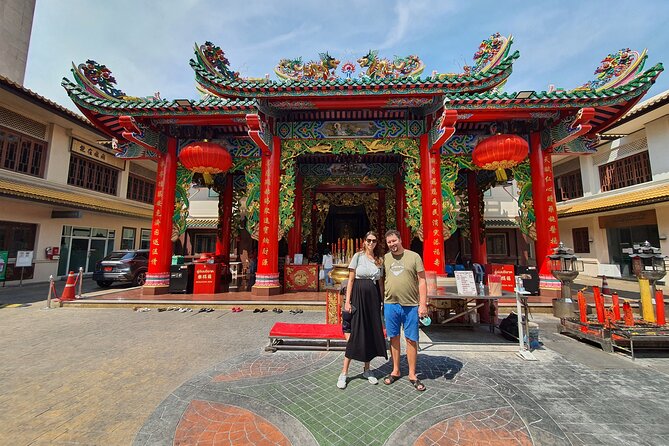
Review · CHINATOWN TOURS
Small-Group: Unseen Bangkok’s Chinatown Walking Tour
Bangkok’s Chinatown has tiny doors everywhere. This small-group walk threads you through Sampeng Market back lanes, temple and shrine stops, and real neighborhood rhythms, with a guide who keeps it moving at a human pace. You’ll be capped at a small crew of about eight (up to 10), so the experience feels close, not crowded, and you’re not just staring at shop signs from the sidewalk.
I love two things most: first, the way you get food sampling + a real lunch built into the route, so you’re not hunting for meals on your own. Second, I like the focus on everyday Chinatown life, including historic stops tied to the Chinese community. Guides such as Bobby and Aom come up often for clear storytelling and a comfortable tempo, and that matters when you’re walking for hours.
One possible drawback: this is more history and neighborhood life than a pure shopping haul. If you’re expecting a nonstop bargain-busting market spree, you may feel a bit underfed by the shopping side and more interested in the stories, temples, and guided tastings than in grabbing five bags and calling it a day.
In This Review
- Key things I’d circle before you book
- Getting started at Hua Lamphong without wasting morning time
- The early temple and shrine stops: learning the neighborhood’s language
- Sampeng Market alleys: snack breaks, small shops, and bargain instincts
- A walk through a complicated past: the former red-light district stop
- The 150-years-old fresh market: where you really see daily life
- Street art and old-town details: seeing Chinatown beyond shop signs
- Lunch at a long-running Thai-Chinese restaurant: the meal you’ll remember
- The value question: is $52.14 fair for what you get?
- What you’ll carry home: stories, not just photos
- Who this walk is perfect for (and who should skip it)
- Should you book this Unseen Bangkok Chinatown walking tour?
- FAQ
- How long is the Chinatown walking tour?
- Where and when does the tour start?
- Is lunch included?
- Are drinks included?
- What’s the group size limit?
- Does the tour run in bad weather?
Key things I’d circle before you book
- Small group size (about eight, capped at 10) keeps questions and photo stops from turning into a bottleneck.
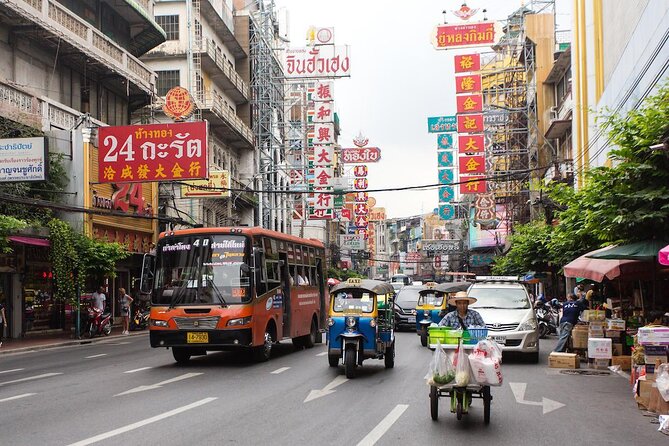
- Sampeng Market back lanes give you the alley experience, not the postcard version.
- Temple and shrine visits add context that makes the area easier to understand.
- Street snack sampling + Thai-Chinese lunch turns the walk into a full outing.
- Former red-light district stop adds a harder historical layer, handled respectfully as part of the walk.
Getting started at Hua Lamphong without wasting morning time
The tour meets at 10:00am near MRT Hua Lamphong (street level, Exit 1). There’s also a specific meeting pin at Better Coffee Bldg., 1st Fl, 320 TangHuaPak, so I’d make a quick habit of checking that you’re looking at the right corner before you head downstairs.
Once you’re with the guide, you’re not sent wandering. The day is structured so you start walking early, then layer in cultural stops and food breaks. That’s a big deal in Chinatown, where it’s easy to get “lost” in the chaotic way—standing still while traffic, scooters, and shoppers flow around you.
Good shoes matter here. You’ll be on uneven sidewalks and narrow lanes, and the tour asks for moderate physical fitness. If your plan is to wear nice-but-sad shoes, swap them. Chinatown can be unforgiving in the best way.
Deeper into Yaowarat after dark
- Bangkok Authentic Tasting Thai-Chinatown Walking Food Tour
★ 4.9 · 852 reviews - Bangkok: Tuk Tuk Adventure Chinatown Michelin Food & Temples
★ 4.3 · 725 reviews - Bangkok Tuk-Tuk Tour by Night with Chinatown Street Food Meal
★ 5.0 · 635 reviews
The early temple and shrine stops: learning the neighborhood’s language
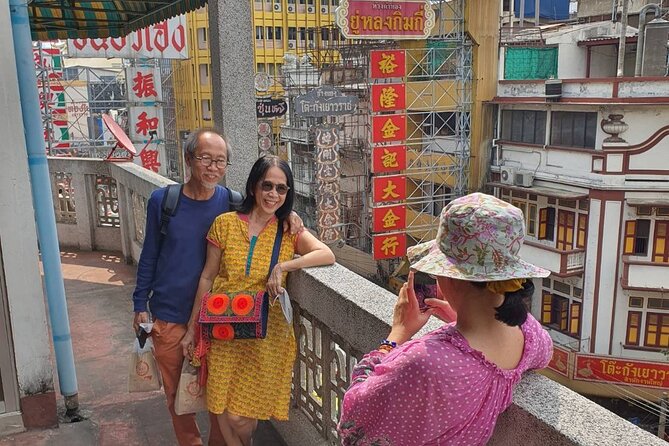
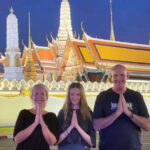
After meeting, the route includes stops around ancient Chinese temples, plus a Hidden school moment and a local coffee shop pause for a drink. Even if you’re not a “temple person,” this part helps you read what you’re seeing later. In Chinatown, the shrines and old buildings aren’t background decor; they’re part of how people mark community, family ties, and daily life.
Next, you’ll walk into the heart of the historic side: a Chinese shrine visit and the chance to see the oldest Chinese house in Bangkok. There’s also time framed around participating with the local Chinese community. That’s the difference between visiting as a spectator and understanding the place as lived-in.
Why I think this works: when you get the meaning behind the symbols, the area clicks faster. Without that context, you can still enjoy the sights, but you’ll miss how the community shaped the streets, shops, and rhythms you’re about to walk through.
Sampeng Market alleys: snack breaks, small shops, and bargain instincts
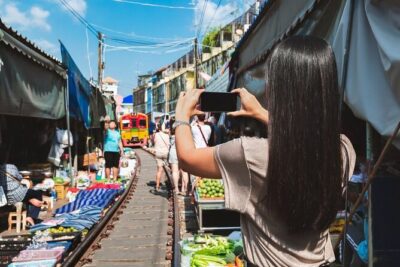
One of the main reasons to choose this walk is the way it gets you into Sampeng Market—specifically the smaller alleys and shop corridors where daily trade happens. You’re not only seeing one busy lane; you’re getting the “turning corners” experience, where every turn feels like a new little universe.
Along the way, you’ll see old-school commerce and wholesale-style storefronts. It’s a good place to practice bargain instincts, but you’ll do it in a guided setting where the guide can steer you toward what’s worth your attention. The point isn’t to force you into shopping. The point is to let you understand what people come here for and how the market works.
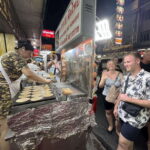
You’ll also get food and drink samples as part of the route. In past departures, guides like George and Eng have been praised for coffee and snack stops that felt well-timed rather than random. That timing matters: eat too early and you’ll be full while walking; eat too late and you’ll feel hangry in the middle of a narrow market crowd.
A walk through a complicated past: the former red-light district stop
There’s a stop that takes you to the former red-light district in Chinatown. This isn’t presented as entertainment. It’s part of the historical story of how neighborhoods evolve—how commerce, migration, and social change reshape streets over time.
This is the one part of the day that can feel emotionally heavier than the rest. If you prefer tours that avoid tough history, plan your mindset ahead of time. The benefit is that you’ll leave with a more complete picture of Chinatown than what you get from shopfront-only walking.
Also, keep your tone respectful. Even when you’re just passing through, your presence changes the temperature of a street scene. A good guide helps you read it correctly, and the guiding style here is repeatedly praised for clear explanation and professionalism.
Bangkok at walking pace, more routes

The 150-years-old fresh market: where you really see daily life
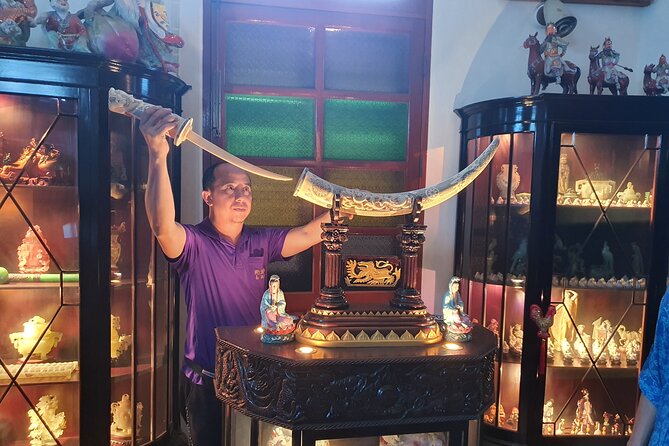
Another highlight is a walk to a fresh market that’s around 150 years old. Ten minutes might sound short on paper, but markets move fast. A short guided window works because you get a sense of the place without getting buried in it.
Expect to notice the textures: stacks of goods, quick transactions, and people who know exactly what they’re looking for. This is the kind of stop that turns Chinatown from a “place to visit” into a “place that functions.” You’ll also understand why certain areas feel more local than touristy—the daily needs are still at the center.
The drawback? Markets are busy. It’s not a quiet museum stroll. If you hate crowds or you get overwhelmed easily, give yourself a moment before you step into the densest parts and focus on what your guide is pointing out.
Street art and old-town details: seeing Chinatown beyond shop signs
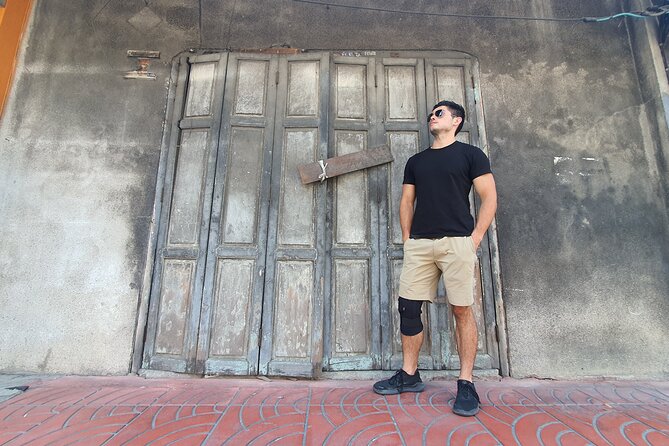
During the walk, you’ll also reach a street art area and see how modern creativity sits beside older buildings and shrines. I like this contrast because it proves the neighborhood isn’t frozen in time. It’s still creating, still changing.
That matters because Chinatown can feel overwhelming if you only expect tradition. This stop gives you a visual release valve. It also offers a practical benefit: it’s a natural place to pause, take photos, and reset your brain.
If you’re the type who reads walls and stories, you’ll likely enjoy how the guide ties the art and history into the same conversation. Guides named in comments—like Mai, Gee, and Pat—are praised for connecting details so the whole walk feels like one story instead of five unrelated errands.
Lunch at a long-running Thai-Chinese restaurant: the meal you’ll remember
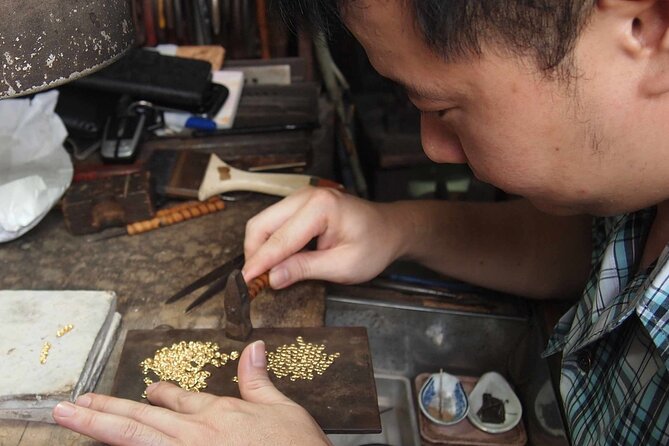
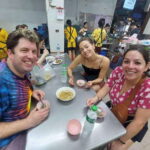
At the end of the walk, you’ll have lunch at a restaurant that’s been open for about 30 years. This is one of those underrated tour benefits: not every area has dependable, sit-down options that still feel local.
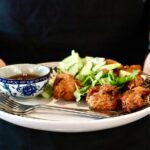
You’ll enjoy typical Thai-Chinese dishes, which is a smart way to experience Chinatown’s food culture without making your group choose between three random street stalls that might be great—or might be a gamble. And yes, there’s a plan for drinks too: drinks are available for purchase (alcoholic beverages aren’t part of what’s included).
In guide-led comments, people often mention standout bowls like noodle soup, plus treats and coffee breaks during the walk. I’d treat lunch here as the payoff—by the time you sit down, you’ll have walked off your appetite and you’ll recognize the ingredients and flavors that Chinatown is known for.
One practical note: if you’re sensitive to spice or strong flavors, eat slowly and ask your guide what to expect. The tour setup is designed to keep you comfortable, but Chinatown food can still be bold.
The value question: is $52.14 fair for what you get?
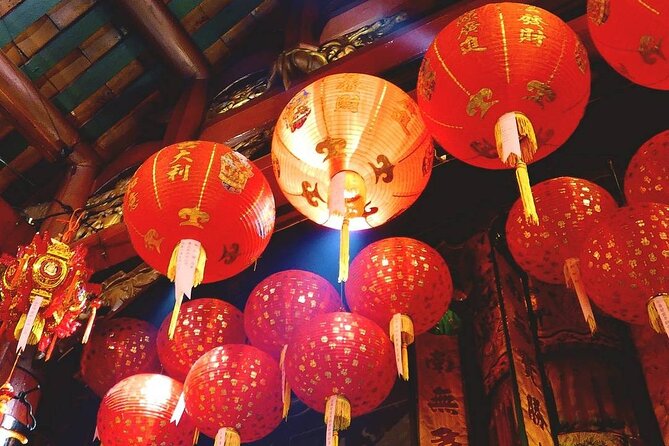
At $52.14 per person, this tour isn’t just a guided walk. You’re paying for:
- A local guide
- Food and drink samples during the walk
- Local transportation fee during the trip
- A guided route that includes temple/shrine and market-style stops
- A Thai-Chinese lunch at a long-running spot
On a solo day, you’d likely spend money on transit, multiple snacks, and at least one sit-down meal. The big value is that the guide makes the route efficient and meaningful—so you’re not wasting time figuring out what’s worth your attention.
It also helps that the booking pattern is strong—on average, people book about 28 days in advance. That doesn’t guarantee availability, but it’s a good sign this is a popular way to see Chinatown without getting lost in the chaos.
The only value mismatch I can see is for shoppers who want hours of market bargaining with minimal history. If that’s your goal, you might prefer a different style of tour or a self-guided market wandering day. This one is better when you want context plus food.
What you’ll carry home: stories, not just photos
The most praised part of the experience is the guide’s storytelling. Names like Bobby, Aom, Mai, Eng, Gee, George, and Pat show up repeatedly in comments, and the common thread is clear explanations, friendly energy, and a pace that feels right.
A good tour like this does something practical: it changes how you walk afterward. After seeing the oldest Chinese house, shrines, and the deeper historic layers of the area, you’ll notice details on your own—street layouts, old-school architectural touches, and where community life concentrates.
It’s also the kind of tour that makes you braver about returning. Several people describe leaving with ideas for what to eat next and where to go. Even if you just use that as inspiration, it’s a solid return on a half-day outing.
Who this walk is perfect for (and who should skip it)
This tour is a great fit if you want:
- A small-group experience where you can ask questions
- Food sampling plus a real lunch, not just snacks in passing
- Temple and shrine stops that add meaning to what you see
- A Chinatown day that includes both the pleasant and the complicated history
You might want to skip or reconsider if:
- You mainly want a shopping-only day with lots of free wandering time
- You dislike walking on crowded sidewalks and inside market zones
- You’re not interested in historical context and prefer purely scenic stops
The tour duration is about 3 to 4 hours, starting at 10:00am, so it works well as a morning or early afternoon plan. You’ll end back at the starting meeting point, which makes it easy to head to another part of Bangkok without complicated transit planning.
Should you book this Unseen Bangkok Chinatown walking tour?
I’d recommend booking if you want Chinatown to feel like a place you understand, not just a place you pass through. The combo of Sampeng Market alley time, temple/shrine context, and Thai-Chinese lunch is strong value for a guided half-day.
If you’re the kind of traveler who enjoys history, local daily life, and eating your way through neighborhoods, this tour hits the sweet spot. Just go in expecting a guided story and tasting route, not a solo shopping marathon.
If your ideal day in Bangkok is mostly about ticking off attractions with zero walking effort, or you want alcohol-forward nightlife vibes, look elsewhere. Chinatown can be intense, and this walk is designed for people who like being in the middle of it.
FAQ
How long is the Chinatown walking tour?
It runs about 3 to 4 hours.
Where and when does the tour start?
It starts at 10:00am at the MRT Hua Lamphong station (Exit 1, street level), with the meeting point also listed at Better Coffee Bldg., 1st Fl, 320 TangHuaPak.
Is lunch included?
Yes. You’ll have lunch of typical Thai-Chinese dishes at a restaurant open for about 30 years.
Are drinks included?
Non-alcoholic drinks are available for purchase with the lunch, and the tour includes food and drink samples as part of the walk. Alcoholic beverages are not included.
What’s the group size limit?
It’s a small-group tour limited to eight in the tour description, and the maximum size is listed as 10 travelers.
Does the tour run in bad weather?
Yes. It operates in all weather conditions, so wear appropriate clothing and comfortable walking shoes.
More Tours in Bangkok

More Tour Reviews in Bangkok



Deeper Into Yaowarat
Just In: Fresh Bangkok Reviews


Chinatown Tours, compared.
 ★ 4.9Bangkok Authentic Tasting Thai-Chinatown Walking Food TourFrom $43852 reviews
 ★ 4.3Tuk Tuk Adventure Chinatown Michelin Food & TemplesFrom $18725 reviews
 ★ 5.0Bangkok Tuk-Tuk Tour by Night with Chinatown Street Food MealFrom $40635 reviews
 ★ 5.0Bangkok by Night Food Tour with 10+ Tastings in ChinatownFrom $46545 reviews
 ★ 4.6Bangkok Tuk-Tuk by Night with Chinatown Street Food MealFrom $40263 reviews
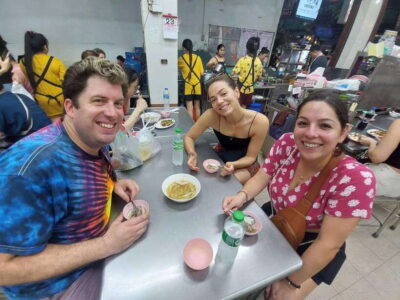 ★ 4.8Chinatown Food Tour with Michelin Food StallsFrom $36226 reviews
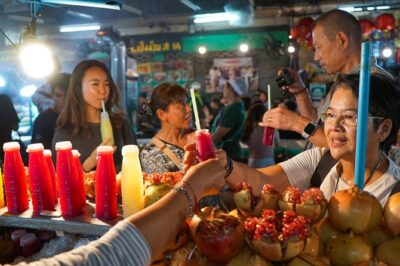 ★ 5.0Bangkok Night Michelin Foodie Tour in Chinatown with 15+ tastingsFrom $56189 reviews
 ★ 5.0Night Street Food Tour of Bangkok’s ChinatownFrom $58173 reviews
Browse the lists this tour appears in