
Review · BANGKOK FOOD & STREET EATS
Blue Elephant Sathorn Bangkok Cooking School with Michelin Guide
Your lunch starts in a market.
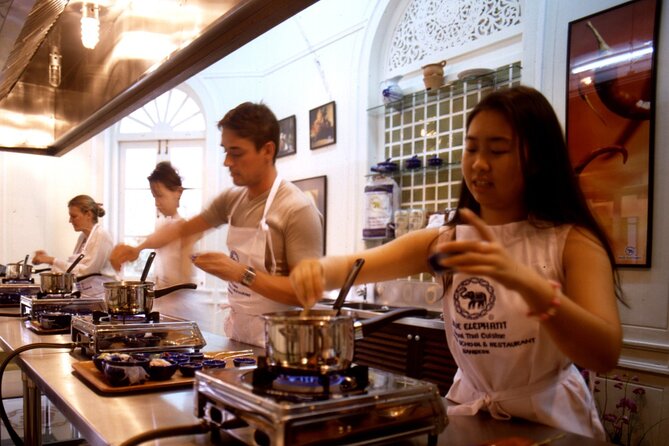
At Blue Elephant Sathorn Bangkok Cooking School, a half-day class turns ingredients and spices into dinner you actually make. You’ll shop the fresh local market (morning session only), then cook in a fully equipped kitchen with a tight group and serious chef guidance.
I especially like the market portion: you learn what to look for in key aromatics like kaffir lime leaves and galangal, not just what to buy. I also like the hands-on payoff—after prepping your dishes, you get to taste what you made in a restaurant setting, plus take home a certificate and a small giveaway.
One thing to plan around: there’s no hotel transfer, and rush-hour traffic can be rough—so build time for getting to BTS Surasak.
In This Review
- Key Highlights Worth Marking on Your Map
- Why This Sathorn Cooking Class Fits Bangkok Time
- The Morning Market Tour: Spices With a Purpose
- In the Kitchen: How the Chefs Help You Cook Four Dishes
- What You’ll Eat: Restaurant Tasting vs. Take-Home Sharing
- Price and Value: Paying for Ingredients and Instruction
- Getting There in Sathorn: BTS Surasak Is Your Best Friend
- Who This Cooking Class Works For (and Who Might Want Another Plan)
- The Menu Changes by Day: How to Pick the Best Day
- Should You Book This Blue Elephant Sathorn Cooking Class?
- FAQ
- How long is the half-day cooking class?
- Is the market tour included?
- How many dishes do I cook in the morning?
- Can the class accommodate vegetarian or other diets?
- Are kids allowed to join?
- Where do I meet, and is hotel pickup provided?
Key Highlights Worth Marking on Your Map
- Market visit first (morning only), so you start with ingredients, not recipes.
- Four Thai dishes in the morning session with a menu that changes by day.
- Herbal drink on arrival plus a towel to reset before you start cooking.
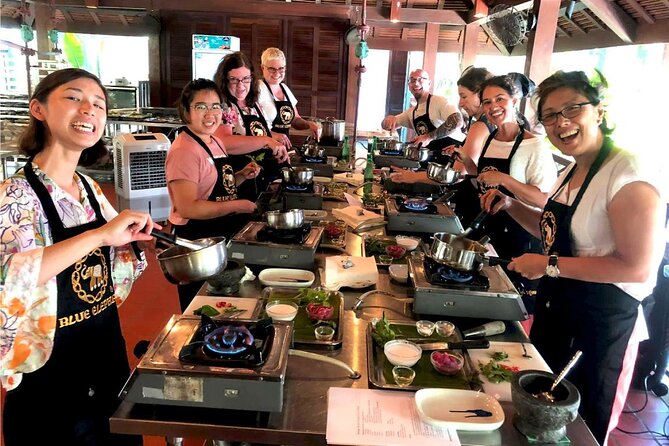
- Small groups, max 20 guests, which makes it easier to get real help while you cook.
- You leave with an apron, certificate, and a shopping bag with products from the experience.
- Dietary needs can be accommodated, including vegetarian and other restrictions.
Why This Sathorn Cooking Class Fits Bangkok Time
Sathorn is the kind of Bangkok neighborhood with sleek high-rises nearby and older temples just a short ride away. It’s an easy base area, and this class is placed right where you can mix business-district convenience with local flavor.
This experience runs about 4 hours, so it’s a solid “one meaningful activity” plan without eating your whole day. You’ll start at the Blue Elephant Bangkok Sathorn Cooking School & Restaurant near BTS Surasak, which matters because Bangkok traffic can be unpredictable. The good news: it’s close to public transit, and the class itself is designed to keep things moving.
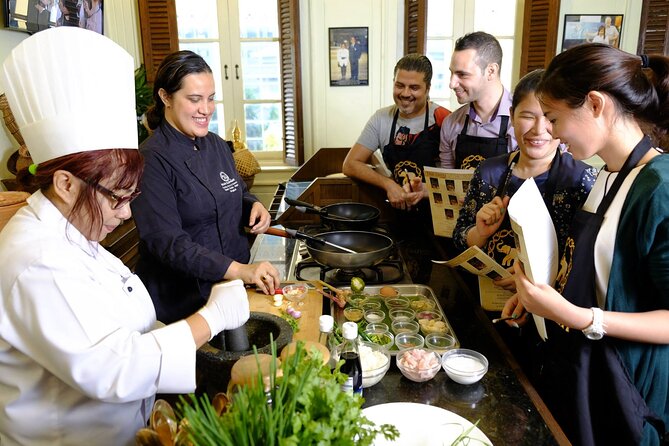
Also, the class is capped at 20 guests. In a cooking class, that’s a big deal. Fewer people means you’re less likely to be stuck watching while the pots boil and the rest of the group takes over the cutting boards.
Still hungry? More woks, stalls and night-market plates
- Bangkok: Backstreets Food Tour with 15+ Tastings
★ 4.9 · 2,880 reviews - Bangkok: Midnight Food Tour by Tuk-Tuk
★ 4.9 · 2,054 reviews - Bangkok Backstreets Food Tour with 15+ Tastings
★ 5.0 · 1,926 reviews
The Morning Market Tour: Spices With a Purpose
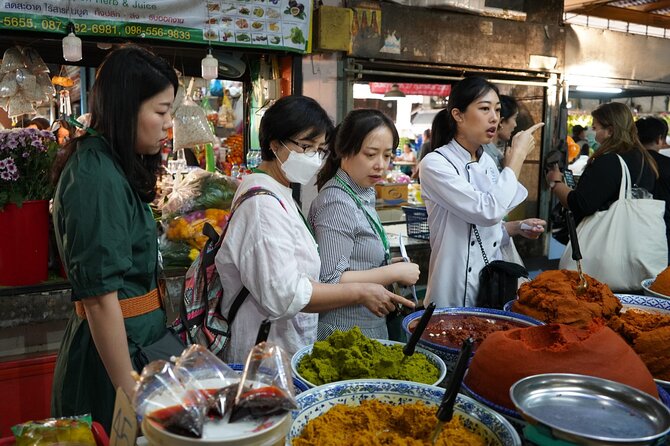
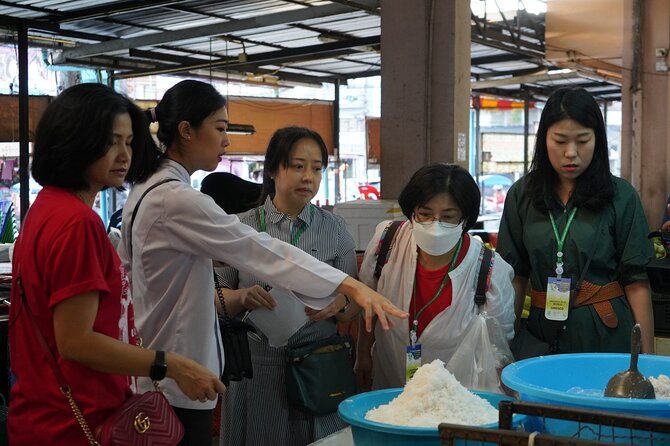
If you choose the morning session, you’ll begin with a fresh local market visit. This isn’t just a quick look around. The point is to help you understand what makes Thai cooking taste Thai—starting with produce and spices you can recognize later in your own kitchen.
You’ll learn practical ingredient selection skills, including what to look for in things like kaffir lime leaves and galangal. These are the types of ingredients people often buy incorrectly—or skip entirely—then wonder why the dish tastes flat. The market tour is where that mismatch gets fixed.
You’ll also get time to see how ingredients work together. Thai cooking isn’t only about heat. It’s balance—sour, salty, aromatic, and spicy in the same bowl. Seeing the raw ingredients up close helps you remember that balance when you’re standing over your wok later.
Finally, you’ll return to the cooking school and get a refreshing towel and Thai herbal drink on arrival. That’s more than a nice touch; it helps you reset before you start chopping, pounding, and stirring.
In the Kitchen: How the Chefs Help You Cook Four Dishes
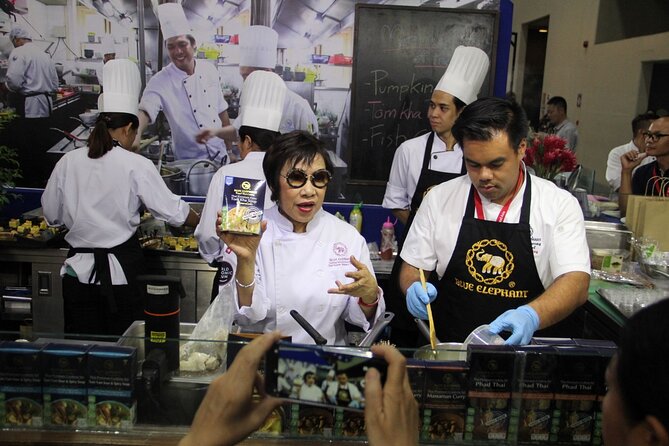
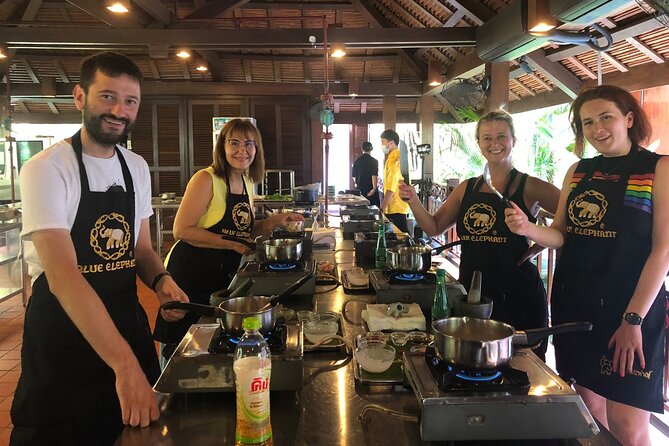
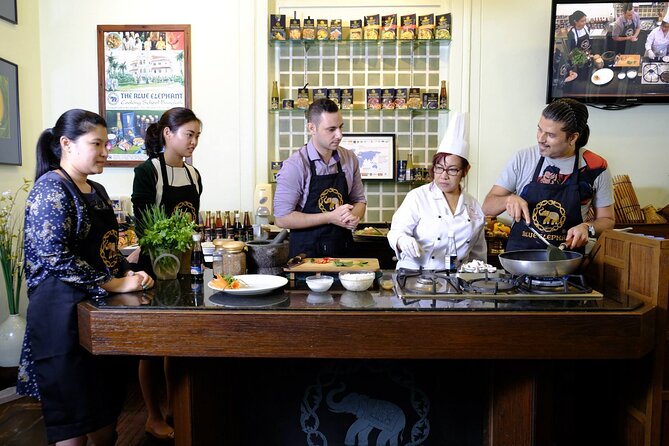
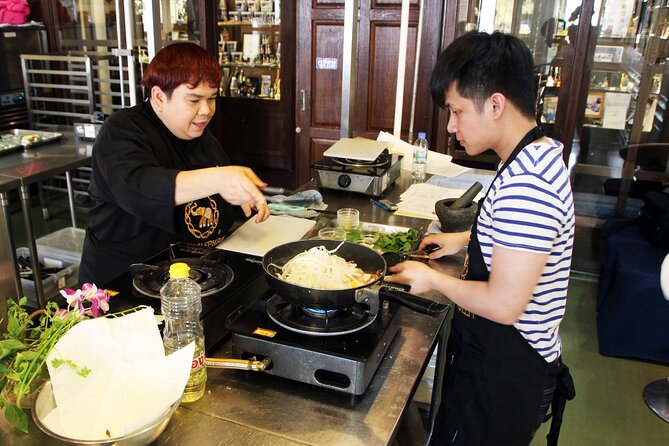
Back at the cooking school, you’ll work in a fully equipped kitchen with multilingual instruction. The class is guided by world-class chefs known for their expertise in Thai cuisine, and the format is built to keep you actively cooking.
Here’s what that means for you in real terms:
- You’re not only following steps. You’re learning techniques—how Thai flavors get built and timed.
- You’re working in small groups (max 20), so you can ask questions and get feedback while it still matters.
The cooking session focuses on four specially selected Thai dishes in the morning class. Your exact dishes depend on the day you join, and menus can change based on ingredient availability. That variability is normal in Thai food. It keeps the class tied to what’s fresh, and it also means you might not get your exact first-choice dish every single day.
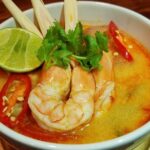
Your morning menu could include items like Laab Kai, Tom Yum Koong, Plaa Krapong Phad Cha, or Kaeng Karee Nua (Monday options). Other days include dishes such as Som Tum and Phad Thai Koong (Thursday options), or Tod Mun Koong and Tom Saeb Plaa Kra Pong (Friday options). The day-to-day menu change is part of the experience—think of it as tasting a slice of Thai variety rather than repeating one “default” template.
What You’ll Eat: Restaurant Tasting vs. Take-Home Sharing
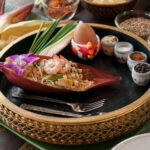
Once your dishes are ready, you’ll enjoy the meal in a restaurant setting or take what you made to share. That choice matters if you want a relaxed end to class rather than rushing to get back out into Bangkok traffic.
The meal itself is not a tiny snack. The experience notes that you should have a light breakfast or lunch, because there’s a larger meal provided for cooking and tasting. So plan your day so you don’t arrive starving or overfull.
Also, these dishes often include strong flavors—chili, sour notes, and aromatic herbs. If you’re sensitive to spicy food, you’ll still be fine; the class is designed around Thai cuisine variety. Just be ready to adjust expectations and tell the instructors about your preferences so they can guide you.
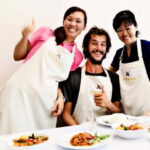
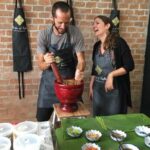
Aprons on for another Thai kitchen

Price and Value: Paying for Ingredients and Instruction
The price is $161.15 per person for about 4 hours. That number can look steep until you look at what’s included and what you’re actually buying: instruction time plus real ingredients plus a guided market start.
Here’s where the value comes from:
- Fresh local market visit (morning session only)
- Towel and Thai herbal drink
- Recipes with ingredients for cooking
- Apron and a culinary certificate
- A shopping bag with products
- Your cooked meal: four Thai dishes in the morning session
What’s not included is also useful to know. There’s no hotel transfer, and tip and personal expenses are not included. The experience also advises against taking a taxi due to traffic during rush hour, and notes traffic delays of 1–2 hours may happen—so the realistic value isn’t only the ticket price. It’s how smoothly you can get there on time.
If you’re comparing this to “watch a chef cook, then taste,” this class is better because you do the work. If you’re comparing it to a private cooking class, it’s less expensive and more social—without losing the chef guidance thanks to the group cap.
Getting There in Sathorn: BTS Surasak Is Your Best Friend
Your meeting point is at Blue Elephant Bangkok Sathorn Cooking School & Restaurant, near BTS Surasak (41 S Sathon Rd, Khwaeng Yan Nawa, Khet Sathon, Krung Thep Maha Nakhon 10120).
Two practical tips based on how the experience is set up:
- Plan to use public transportation rather than relying on a taxi, especially around rush hours.
- Since there’s no pickup/drop-off from your hotel, you’ll want to map the route from BTS Surasak ahead of time.
Think of this as the “easy part” of your day. Once you’re there, the schedule runs as a half-day block and you won’t be juggling transfers during your cooking.
Who This Cooking Class Works For (and Who Might Want Another Plan)
This class makes a lot of sense if you want Thai cooking you can repeat at home. You’ll leave with recipes, ingredient knowledge from the market, and technique practice from the kitchen. It’s also a good fit if you travel in a group type that likes structured fun: couples, friends, and families can all fit the format.
Families with kids should take note of the age rules: kids aged 6–12 years old can join with their parents at the cooking station. Under 6 isn’t allowed unless a caretaker is present.
If you’re someone who hates spicy food or strong aromatics, you can still go, because vegetarian and other dietary restrictions can be accommodated. But the dishes themselves are Thai, so you’ll want to communicate clearly about what you can and can’t handle.
The Menu Changes by Day: How to Pick the Best Day
Since the dishes rotate by day, the smart move is to choose your day based on the menu options you’d genuinely want to cook. For example:
- Monday includes Laab Kai and Tom Yum Koong
- Thursday includes Som Tum and Phad Thai Koong
- Sunday includes options like Toong Thong Kiew Waan and Koong Phad Prik Thai Dum
Also remember: menus could change without notice depending on ingredient availability. That’s normal in Thailand, but it’s why you should treat the menu as a guide, not a guaranteed set list.
Should You Book This Blue Elephant Sathorn Cooking Class?
Book it if you want a Thai cooking class with real structure: market start, chef guidance, four dishes in the morning, and a meal that ends the session. The biggest win for most people is that you don’t just learn names of ingredients. You learn how to select them and how they behave in real recipes.
I’d skip it or at least think twice if your biggest goal is maximum flexibility with transport. With no hotel transfer and warnings about taxi traffic, it’s easiest if you’re comfortable using BTS and walking a bit.
If you’re traveling to Bangkok and you want one activity that gives you skills (not only photos), this is a strong bet.
FAQ
How long is the half-day cooking class?
It lasts about 4 hours.
Is the market tour included?
Yes, but only for the morning session. The market tour isn’t available for the afternoon session.
How many dishes do I cook in the morning?
In the morning class, you cook 4 Thai dishes. (The afternoon class lists 5 Thai dishes.)
Can the class accommodate vegetarian or other diets?
Yes. Vegetarian and other dietary restrictions can be accommodated.
Are kids allowed to join?
Kids aged 6–12 can join with their parents. Below 6 aren’t allowed unless a caretaker is present.
Where do I meet, and is hotel pickup provided?
You meet at the Blue Elephant Bangkok Sathorn Cooking School & Restaurant near BTS Surasak. There’s no pickup/drop-off service from the hotel.
Time With the Elephants






Cook It Yourself: Thai Classes

Eat Bangkok: More Street Food
Just In: Fresh Bangkok Reviews






Bangkok Food & Street Eats, compared.
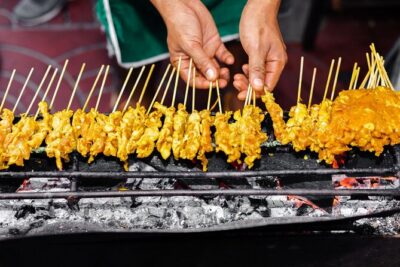 ★ 4.9Backstreets Food Tour with 15+ TastingsFrom $622,880 reviews
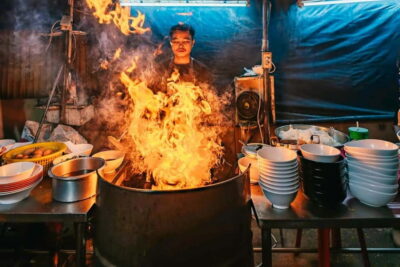 ★ 4.9Midnight Food Tour by Tuk-TukFrom $742,054 reviews
★ 5.0Bangkok Backstreets Food Tour with 15+ TastingsFrom $591,926 reviews
★ 4.9Midnight Food Tour by Tuk-TukFrom $742,054 reviews
★ 5.0Bangkok Backstreets Food Tour with 15+ TastingsFrom $591,926 reviews
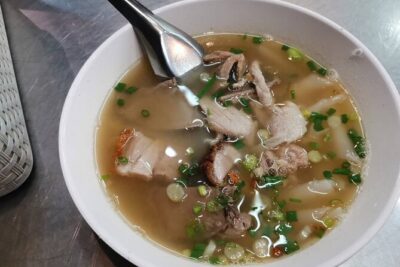 ★ 4.4Michelin Guide Street Food Tour by Tuk TukFrom $201,274 reviews
 ★ 5.0Old Siam Bangkok Food Tour with 15+ TastingsFrom $59867 reviews
 ★ 4.9Bangkok Authentic Tasting Thai-Chinatown Walking Food TourFrom $43852 reviews
 ★ 4.3Tuk Tuk Adventure Chinatown Michelin Food & TemplesFrom $18725 reviews
 ★ 5.0Bangkok Tuk-Tuk Tour by Night with Chinatown Street Food MealFrom $40635 reviews
Browse the lists this tour appears in